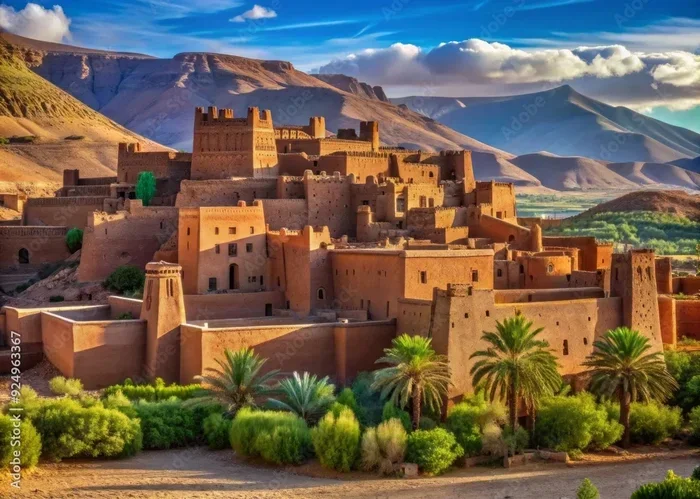
Featured image for Morocco desert kasbah landscape
Image source: as2.ftcdn.net
An 8-day tour from Tangier to Ait Ben Haddou is the perfect way to experience Morocco’s most iconic destinations in one unforgettable journey. This carefully crafted itinerary takes you through the northern coast, imperial cities of Fes and Meknes, the vast Sahara Desert, and the legendary Ait Ben Haddou kasbah. Ideal for first-time visitors, this tour balances culture, adventure, and authentic Moroccan experiences at a comfortable pace.
Marrakech and the Sahara Desert consistently rank among the world’s most sought-after travel destinations, and for good reason. Did you know that Morocco welcomed over 14.5 million tourists in 2023, with cultural and desert tours being the fastest-growing segment? The country’s unique position at the crossroads of Africa, Europe, and the Arab world creates a travel experience unlike anywhere else on the planet.
An 8-day tour from Tangier to Ait Ben Haddou represents the gold standard for experiencing Morocco’s highlights. Think of it like reading a great novel. You start at the beginning (the northern coast), build through exciting chapters (the imperial cities and Middle Atlas mountains), reach a thrilling climax (the Sahara Desert), and end with a memorable conclusion (Ait Ben Haddou and Marrakech). Each day reveals something new, yet everything connects into one beautiful story.
Whether you’re a solo traveler seeking adventure, a couple looking for a romantic getaway, or a family wanting to explore a new culture, this tour offers something special. The carefully planned route ensures you experience Morocco’s incredible diversity without the stress of planning every detail yourself.
Key Takeaways
- Comprehensive Route: The 8-day tour from Tangier to Ait Ben Haddou covers over 1,200 kilometers, showcasing Morocco’s diverse landscapes from Mediterranean coast to Sahara dunes.
- Cultural Immersion: Travelers visit four UNESCO World Heritage Sites, including the medinas of Fes and Marrakech and the kasbah of Ait Ben Haddou.
- Sahara Experience: A camel trek and overnight stay in a Berber desert camp is the highlight, offering authentic encounters with nomadic culture.
- Imperial Cities: The itinerary includes stops in Meknes, Fes, and Marrakech, each offering unique historical and architectural wonders.
- Best Travel Seasons: Spring (March-May) and autumn (September-November) provide the most comfortable weather for this multi-day tour.
- Group and Private Options: Tours are available in small group formats (typically 8-16 people) or as private excursions with customizable itineraries.
- Budget-Friendly: An 8-day tour is more economical than independent travel, often including accommodation, transport, guide services, and most meals.
📑 Table of Contents
What Is the 8-Day Tangier to Ait Ben Haddou Tour?
The 8-day tour from Tangier to Ait Ben Haddou is a guided or semi-guided journey that takes travelers through Morocco’s most spectacular regions. It starts in Tangier, the gateway between Africa and Europe on the Strait of Gibraltar, and ends in Marrakech or Ouarzazate, passing through Chefchaouen, Fes, the Sahara Desert, and the Atlas Mountains along the way.
This tour is essentially a “greatest hits” package of Morocco. Instead of spending weeks researching routes, booking hotels, and arranging transport, travelers follow a tested itinerary designed by experts who know the country intimately. It’s like having a local friend show you around their country, except this friend has planned everything perfectly.
Who Is This Tour For?
This particular tour attracts a diverse range of travelers:
- First-time visitors to Morocco who want to see the country’s most famous sites without missing anything important
- Time-conscious travelers who have limited vacation days but want maximum experiences
- Photography enthusiasts seeking diverse landscapes, from blue-washed villages to golden sand dunes
- Cultural explorers interested in Berber, Arab, and French colonial heritage
- Adventure seekers wanting camel treks, desert camping, and mountain drives
According to recent tourism statistics, multi-day tours from northern Morocco have grown by 35% over the past three years, indicating their rising popularity among international visitors.
When Is the Best Time to Take This Tour?
The ideal months for this tour are March through May and September through November. During these shoulder seasons, temperatures are mild across all regions, ranging from comfortable 60-75°F (15-24°C) in the cities to pleasant 80-90°F (27-32°C) in the desert.
Summer months (June-August) can be brutally hot, especially in the Sahara, where temperatures regularly exceed 115°F (46°C). Winter (December-February) brings snow to mountain passes and freezing nights in the desert, which some travelers enjoy but requires special preparation.
Detailed Day-by-Day Itinerary Breakdown
Understanding what each day brings helps you prepare mentally and physically. The journey unfolds like a carefully paced story, with each chapter offering unique experiences.
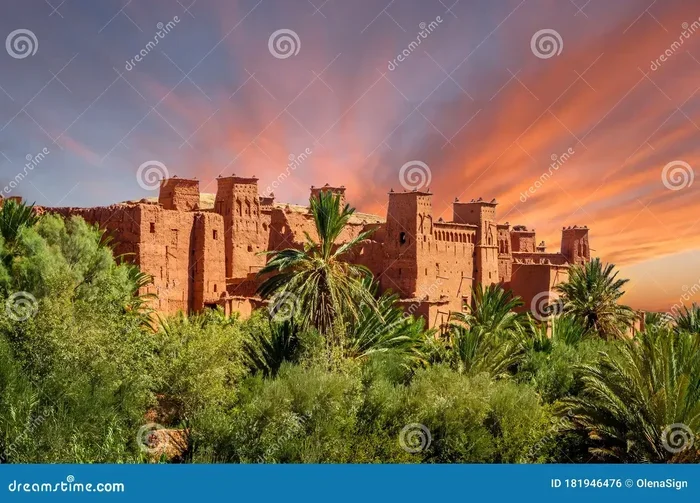
Visual guide about Morocco desert kasbah landscape
Image source: thumbs.dreamstime.com
Day 1-2: Tangier to Chefchaouen and Fes
The adventure begins in Tangier, a fascinating port city where the Mediterranean meets the Atlantic. After pickup, you travel through the scenic Rif Mountains to reach Chefchaouen, the famous “Blue City.” Did you know that Chefchaouen was painted blue in the 1930s by Jewish refugees, and the tradition stuck? Today, almost every surface in the medina glows in shades of blue and white.
Spend time wandering the narrow streets, photographing the colorful doorways, and sipping mint tea in a local café. The relaxed atmosphere here is the perfect introduction to Moroccan culture, gentle and welcoming.
Day two takes you through the Middle Atlas Mountains to Volubilis, a remarkably preserved Roman ruins site and UNESCO World Heritage location. Walk among ancient mosaics, triumphal arches, and crumbling columns that date back nearly 2,000 years. Think of it as a time machine that transports you to the days when the Roman Empire controlled this corner of Africa.
By evening, you arrive in Fes, Morocco’s spiritual and cultural capital, where you settle into a traditional riad (a restored mansion built around a courtyard) in the medieval medina.
Day 3-4: Exploring Fes and Journey to the Sahara
Fes requires a full day to appreciate properly. The city is home to the world’s oldest continuously operating university, the University of al-Qarawiyyin, founded in 859 AD, making it older than Oxford University. This makes Fes home to the oldest educational institution still in operation anywhere on Earth.
Your local guide leads you through the labyrinthine medina, where donkeys still carry goods through streets too narrow for cars. Visit the famous Chouara Tanneries, where leather has been produced using the same methods for nearly 1,000 years. The process involves soaking animal hides in large stone vats filled with natural dyes. It’s pungent but visually stunning, like a living painting.
Day four marks the transition from city to desert. The route passes through Ifrane, often called “the Switzerland of Morocco” for its alpine-style architecture and clean streets. Then you continue through the Middle Atlas, passing cedar forests where Barbary macaques, Morocco’s only native primate, roam freely.
The landscape gradually transforms from green mountains to rocky plateaus as you approach Merzouga, the gateway to the Erg Chebbi dunes. The sunset arrival at the desert edge is often described as a life-changing moment, when the first view of massive sand dunes appears on the horizon.
Day 5-6: Sahara Desert Experience and Todra Gorges
The Sahara experience is the emotional heart of the entire tour. In the late afternoon, you mount a camel (or a 4×4 vehicle, if you prefer) and ride into the dunes. The swaying motion of the camel, the silence of the desert, and the massive scale of the landscape create an almost meditative state.
As darkness falls, you reach your desert camp, where Berber hospitality awaits. Traditional drums play, a tagine dinner simmers over open coals, and the night sky reveals more stars than you ever imagined possible. Did you know that the Sahara has some of the darkest skies on Earth, with visibility reaching up to 5,000 stars on a clear night?
Day six begins with an unforgettable sunrise over the dunes, followed by camel trek back to Merzouga. The journey continues through dramatic Todra Gorges, where limestone cliffs rise 984 feet (300 meters) on either side of a narrow canyon. It’s nature’s cathedral, and rock climbers come from around the world to scale these walls.
Overnight in a charming kasbah hotel in the Dades Valley, often called the “Valley of a Thousand Kasbahs” for the numerous ancient fortresses dotting the landscape.
Day 7-8: Ait Ben Haddou and Marrakech Finale
The penultimate day brings you to Ait Ben Haddou, the iconic mud-brick kasbah that has served as a backdrop for Hollywood films like “Gladiator,” “Lawrence of Arabia,” and “Game of Thrones.” Did you know that Ait Ben Haddou is a UNESCO World Heritage Site and one of the most filmed locations in the world?
Walking through this ancient settlement feels like stepping onto a film set, because it essentially is one. The earthen buildings, decorative geometric patterns, and towering defensive structures have remained largely unchanged for centuries. Your guide explains the ingenious construction techniques that allow these buildings to stay cool in summer and warm in winter, using only mud, straw, and water.
Crossing the High Atlas Mountains via the spectacular Tizi n’Tichka pass (at 7,415 feet / 2,260 meters elevation) delivers you to Marrakech by late afternoon. The “Red City” hits your senses with its vibrant energy, from the snake charmers and storytellers in Jemaa el-Fnaa square to the aromatic food stalls and bustling souks.
Your final day includes a guided tour of Marrakech’s highlights: the stunning Bahia Palace, the imposing Koutoubia Mosque, the colorful Majorelle Garden, and the labyrinthine souks where bargaining is an art form. The tour typically concludes with airport transfer or accommodation in Marrakech.
Where Does the Tour Visit? Key Destinations Explained
Understanding the geographic scope helps you appreciate what this tour accomplishes. The route covers six distinct regions, each with its own climate, culture, and character.
Northern Morocco: Tangier and Chefchaouen
Northern Morocco enjoys a Mediterranean climate and has a distinctly different feel from the rest of the country. Tangier has a cosmopolitan, almost European vibe, while Chefchaouen feels like an artist’s retreat tucked into the mountains. This region is closer to Spain than to Marrakech, both geographically and culturally.
Imperial Cities: Fes and Meknes
Morocco’s four imperial cities are Fes, Meknes, Marrakech, and Rabat, each having served as the capital at different times. Fes is the most traditional and best preserved. Walking its medina is like traveling back to the Middle Ages. Meknes, often overlooked, has equally impressive monuments but with fewer tourists, offering a more relaxed experience.
Atlas Mountains and Desert
The Atlas Mountains form a natural barrier between the Mediterranean coast and the Sahara. The High Atlas range is among the most dramatic in Africa, with peaks exceeding 13,000 feet. On the other side lies the pre-Saharan region, a transitional zone of oases, palm groves, and eventually the endless sand sea of Erg Chebbi.
Why Choose a Guided 8-Day Tour?
You might wonder whether independent travel would be cheaper or more flexible. The truth is that for most visitors, a guided tour offers significant advantages.
Logistical Simplicity
Morocco’s transportation infrastructure outside major cities can be challenging for foreign visitors. Trains connect major cities, but reaching desert oases, mountain villages, and remote kasbahs typically requires private vehicles, local knowledge, and Arabic or French language skills. A tour eliminates these headaches completely.
Think of it this way: you could spend three weeks researching routes, booking riads, arranging airport transfers, and learning basic Arabic. Or you could arrive in Tangier and let experienced guides handle everything while you focus on enjoying the experience.
Safety and Local Knowledge
Morocco is generally very safe for tourists, but having a local guide adds an extra layer of security and cultural insight. Guides know which neighborhoods are welcoming to foreigners, which restaurants serve authentic cuisine, and which artisans create genuine handicrafts versus tourist traps.
Did you know that Morocco has consistently ranked among Africa’s safest countries for tourists, with a 2023 Global Peace Index score placing it in the top third of nations worldwide?
Cost Efficiency
When you factor in accommodation, transportation, entrance fees, guide services, and most meals, organized tours often cost less than independent travel, especially for first-time visitors. Tour operators benefit from wholesale rates and established relationships that individual travelers cannot access.
Cultural Depth
Local guides bring history and culture to life in ways guidebooks cannot. They share personal stories, explain religious customs, and introduce you to their friends and family. These human connections transform a sightseeing trip into a meaningful cultural exchange.
How to Prepare for Your 8-Day Tour
Proper preparation enhances your experience significantly. Here’s what you need to know before embarking on this adventure.
What to Pack
Morocco’s climate varies dramatically across regions, so layering is essential. Pack lightweight, breathable clothing for daytime, a warm jacket for cool desert nights, and modest attire for visiting religious sites. Comfortable walking shoes are a must, especially for exploring medina streets and climbing kasbah towers.
Essential items include sunscreen, a hat, sunglasses, a reusable water bottle, a small backpack for day trips, and a scarf or shawl that can serve multiple purposes (sun protection, warmth, or covering for mosque visits).
Health and Practical Tips
No vaccinations are required for Morocco, but staying updated on routine vaccines is recommended. Drink only bottled water, which is readily available throughout the country. Carry some cash in small denominations for tips, market purchases, and rural areas where cards aren’t accepted.
Most tour operators recommend tipping guides and drivers at the end of the tour. Standard practice is around 10-15% of the tour cost, distributed between the driver, main guide, and any local guides encountered along the way.
What to Expect with Group Dynamics
Small group tours typically include 8-16 travelers from various countries and backgrounds. This diversity enriches the experience, as you share perspectives and make friends from around the world. Private tours are also available for those preferring a more intimate experience, whether for families, couples, or small friend groups.
Choosing the Right Tour Operator
Not all tour companies offer the same quality. Here’s what to look for when selecting your 8-day tour.
Reputation and Reviews
Check independent review platforms like TripAdvisor, Trustpilot, and Google Reviews. Look for operators with consistently high ratings (4.5+ stars) and detailed reviews mentioning specific guides, accommodations, and experiences. Word-of-mouth recommendations from fellow travelers carry significant weight.
Inclusions and Exclusions
Carefully review what is included in the tour price. Most 8-day tours include accommodation, breakfast daily, some dinners, transportation, English-speaking guide, and entrance fees to major sites. International flights, travel insurance, lunches, and personal expenses are typically not included.
Accommodation Quality
Ask about the specific riads and hotels used. Authentic Moroccan riads in restored historic buildings offer a more memorable experience than international chain hotels. Desert camps vary from basic to luxurious, with options including private bathrooms, comfortable bedding, and traditional music performances.
Group Size and Flexibility
Smaller groups generally provide a more personalized experience, with more flexibility to adjust the pace and spend extra time at favorite locations. Some operators offer “small group” tours with maximum 8-12 participants, while others run larger groups of 15-20+ people.
Conclusion: Why This Tour Should Be on Your Bucket List
An 8-day tour from Tangier to Ait Ben Haddou is more than just a vacation. It’s a journey through time, culture, and landscape that leaves lasting impressions. From the blue-washed streets of Chefchaouen to the golden dunes of the Sahara, from ancient Roman ruins to bustling medinas, every day offers new wonders.
Morocco’s magic lies in its contrasts. Ancient and modern coexist. Mountains meet desert. Berber, Arab, and French influences blend into something uniquely Moroccan. You might find yourself bargaining for a carpet one moment, watching the sunset over sand dunes the next, and sharing mint tea with a local family the day after.
The logistics are handled, the route is proven, and the experiences are authentic. All you need to bring is curiosity, an open mind, and a sense of adventure. Thousands of travelers complete this tour each year, and the vast majority describe it as one of the most rewarding experiences of their lives.
Whether you’re seeking adventure, cultural immersion, photographic opportunities, or simply a break from routine, this 8-day journey delivers on every front. The Sahara stars, the call to prayer echoing through medina streets, the warm hospitality of Berber families, and the breathtaking architecture of Ait Ben Haddou are waiting for you.
Book your tour, pack your bags, and prepare for an experience that will change how you see the world, and perhaps how you see yourself.
Frequently Asked Questions
How much does an 8-day tour from Tangier to Ait Ben Haddou typically cost?
Most 8-day tours from Tangier to Ait Ben Haddou range from $800 to $1,500 per person, depending on accommodation quality, group size, and inclusions. Budget options using shared transport and standard hotels start around $600, while luxury private tours with premium riads can exceed $2,000.
Is it safe to take a guided tour through Morocco’s desert regions?
Yes, guided tours to the Sahara Desert are very safe and are the recommended way to visit. Tour operators use experienced drivers familiar with desert conditions, maintain communication equipment, and partner with established desert camps. Thousands of tourists complete these tours safely every year.
Do I need a visa for Morocco if I’m traveling on an organized tour?
Citizens of most Western countries, including the US, UK, Canada, and EU nations, do not need a visa for stays under 90 days in Morocco. You’ll simply need a passport valid for at least six months beyond your entry date. Your tour operator can provide specific guidance based on your nationality.
What is the camel ride like in the Sahara Desert?
The camel ride to your desert camp typically lasts 60-90 minutes, traveling through the Erg Chebbi dunes as the sun sets. Camels walk slowly and steadily, making the experience accessible even for first-time riders. The gentle swaying motion is surprisingly relaxing, and guides lead the caravan at a comfortable pace.
Can dietary restrictions be accommodated on these tours?
Yes, most tour operators accommodate dietary restrictions including vegetarian, vegan, gluten-free, and halal requirements with advance notice. Moroccan cuisine naturally features many vegetarian dishes, and cooks at desert camps and riads are accustomed to adapting meals. Inform your tour operator when booking to ensure proper preparation.
What is the best way to get from the tour endpoint back to Tangier?
Most tours end in Marrakech, which has excellent transportation connections. You can take a high-speed train back to Tangier (approximately 10 hours with transfer in Casablanca), fly directly to Tangier (1-hour flight), or book a return transfer through your tour operator. Many travelers choose to add a few extra days in Marrakech after the tour ends.