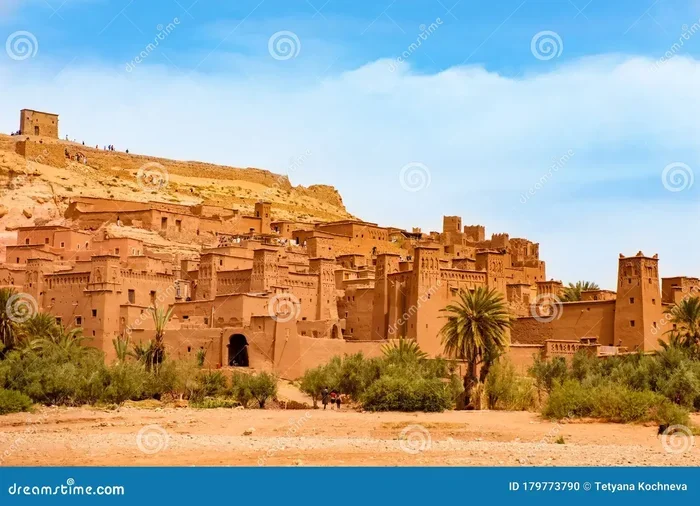
Featured image for Moroccan kasbah Ait Ben Haddou
Image source: thumbs.dreamstime.com
A 7 day tour from Tangier to Ait Ben Haddou is the perfect way to experience Morocco’s most iconic landscapes and cultural treasures in one unforgettable week. Starting from the Mediterranean coast and ending at the legendary UNESCO World Heritage Site, this journey covers imperial cities like Fes and Marrakech, the stunning Sahara Desert, and the dramatic Atlas Mountains. It’s hands down the best route for first-time visitors who want to see it all without rushing.
Picture this: you’re standing at the edge of the Sahara Desert, watching the sun melt into a sea of golden dunes. The call to prayer echoes from a nearby village. A camel stretches its long neck beside you. Behind you lies a week of ancient medinas, blue-washed mountain villages, and mountain passes that will take your breath away.
This is what a 7 day tour from Tangier to Ait Ben Haddou actually feels like. It’s not just a trip. It’s a journey through time, culture, and some of the most diverse landscapes you’ll ever see in a single week. Think of it like a greatest hits album of Morocco, with every track delivering something completely different.
In this guide, I’ll walk you through everything you need to know about this epic route. We’ll cover the daily itinerary, what to expect, how to prepare, and why this particular journey has become the gold standard for first-time visitors to Morocco. Let’s dive in.
Key Takeaways
- Comprehensive Route: The 7 day itinerary covers over 1,200 kilometers, taking you from Tangier’s Mediterranean shores through Chefchaouen, Fes, the Sahara, and finally to Ait Ben Haddou.
- Camel Trekking Included: Most tours include a camel ride into the Erg Chebbi dunes, where you’ll spend a night in a traditional Berber desert camp under the stars.
- UNESCO World Heritage Sites: You’ll visit at least four UNESCO-listed locations, including Ait Ben Haddou, the medinas of Fes, and the Roman ruins of Volubilis.
- Best Travel Seasons: Spring (March-May) and autumn (September-November) offer the most comfortable temperatures, with daytime highs between 20-28°C (68-82°F).
- Budget-Friendly Option: A week-long guided tour typically costs between $600-$1,200 per person, including accommodation, transport, and most meals.
- Cultural Immersion: The tour includes stays in traditional riads, visits to Berber villages, and authentic Moroccan cooking experiences.
- Small Group Advantage: Tours with 8-12 travelers offer the best balance of social experience, flexibility, and access to off-the-beaten-path locations.
📑 Table of Contents
- Why Choose a 7 Day Tour from Tangier to Ait Ben Haddou?
- The Complete Day-by-Day Itinerary
- What’s Included (And What’s Not)
- Best Time to Take This Tour
- What to Pack for the Journey
- Choosing the Right Tour Operator
- Safety and Cultural Etiquette
- Budgeting for Your 7 Day Tour
- Beyond the Standard Route: Optional Add-Ons
- Final Thoughts: Is This Tour Right for You?
Why Choose a 7 Day Tour from Tangier to Ait Ben Haddou?
Morocco is a country that rewards slow travel. You could spend a month here and still discover something new every day. But most of us don’t have a month. That’s where the 7 day tour from Tangier to Ait Ben Haddou comes in. It’s the sweet spot between seeing the highlights and actually experiencing them.
The Perfect Distance
Seven days gives you enough time to really soak in each destination without feeling like you’re sprinting from one photo stop to the next. You’ll spend 2-3 nights in some places, which means you can wander the medinas at your own pace, chat with locals, and stumble upon hidden gems that rushed tours always miss.
Think of it like this: a 3-day tour is like speed-reading a novel. You get the plot, but you miss the poetry. A 14-day tour is like reading with a dictionary beside you. A 7-day tour? It’s the audio book with the perfect narrator. You get the story, the emotion, and the details that make it memorable.
Unmatched Geographic Diversity
Did you know that within this single week-long route, you’ll experience four completely different climate zones? You’ll start in the Mediterranean coast, climb into the Rif Mountains, descend into the fertile Saïss plain, cross the Middle Atlas, traverse the High Atlas mountains, and end in the pre-Saharan zone. That’s like traveling from Spain to the Mojave Desert in a single road trip.
The Ait Ben Haddou Finale
Ait Ben Haddou is the perfect ending point, and there’s a good reason for that. This ancient ksar (fortified village) has been featured in Hollywood blockbusters like Gladiator, Lawrence of Arabia, and Game of Thrones. Watching the sun set over its mud-brick towers after a week of adventure feels like the ultimate cinematic reward.
The Complete Day-by-Day Itinerary
Now let’s get into the meat and potatoes of this tour. I’ll break down each day, what you’ll see, and what makes it special. Most tour operators follow a similar route, though exact stops can vary.
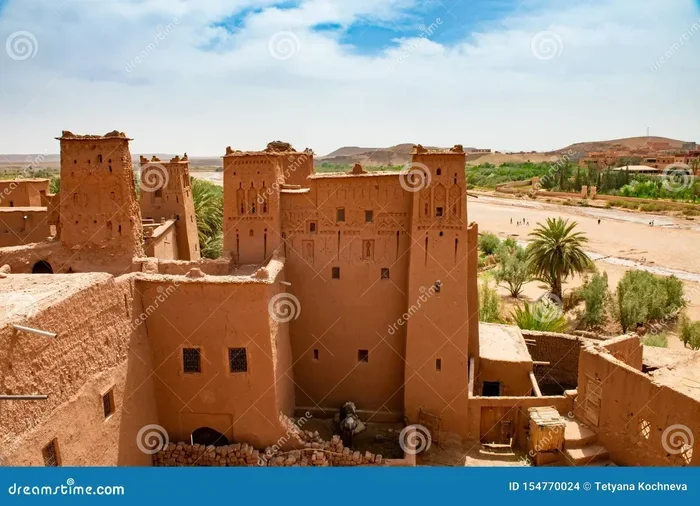
Visual guide about Moroccan kasbah Ait Ben Haddou
Image source: thumbs.dreamstime.com
Day 1: Tangier to Chefchaouen
Your adventure begins in Tangier, Morocco’s gateway to Europe. After meeting your guide and group, you’ll hit the road toward Chefchaouen, the famous “Blue Pearl” of Morocco. The drive takes about 2.5 hours through the rolling hills of the Rif Mountains.
Chefchaouen is one of those places that looks like it was painted by an artist with an unlimited supply of blue paint. Every corner you turn reveals another Instagram-worthy scene. But there’s more to it than pretty walls. The town was founded in 1471 and has a fascinating blend of Spanish, Moorish, and Berber influences.
Pro tip: Take a walking tour through the medina with a local guide. The narrow alleys are confusing on purpose. They were designed to confuse invaders centuries ago. Today, they just confuse tourists, which is where a guide becomes invaluable.
Day 2: Chefchaouen to Fes via Volubilis
Day two takes you to Fes, but not before a stop at Volubilis, Morocco’s best-preserved Roman ruins. This UNESCO World Heritage Site dates back to the 3rd century BC and features stunning mosaics still intact after 2,000 years.
Did You Know? Volubilis was once the administrative center of the Kingdom of Mauretania and housed about 20,000 people at its peak. The site covers 42 hectares, making it one of the largest Roman ruins in North Africa.
After exploring the ruins, you’ll continue to Fes, arriving in the late afternoon. Fes is Morocco’s spiritual and cultural capital, home to the world’s oldest continuously operating university (the University of al-Qarawiyyin, founded in 859 AD). Your evening is free to explore the medina, which has nearly 10,000 alleys and is officially a UNESCO site itself.
Day 3: Exploring Fes
Day three is dedicated entirely to Fes. This is a full immersion day. You’ll visit the famous tanneries, where leather has been processed the same way for nearly a thousand years. The smell is intense, but the view from the surrounding balconies is unforgettable.
You’ll also see the Al-Qarawiyyin Mosque, the Bou Inania madrasa, and the stunning Al-Attarine madrasa. Your guide will navigate you through the medina’s labyrinthine streets, explaining the history behind each turn.
Fun fact: The Fes medina has over 9,000 alleyways. If you wandered randomly, you could get lost for days. That’s why every successful visit requires either a guide or a very good sense of direction.
Day 4: Fes to Merzouga (Sahara Desert)
This is the day everyone anticipates and remembers most. The drive from Fes to Merzouga takes about 7-8 hours, with breaks along the way. You’ll cross the Middle Atlas Mountains, passing through the cedar forests of Azrou where Barbary macaques roam freely.
As you continue south, the landscape transforms. The green mountains give way to rocky plateaus, then to sand. By the time you reach Merzouga, you’ll see the first dunes of Erg Chebbi rising from the desert floor like waves frozen in time.
Here’s where the magic happens: you’ll mount a camel and ride into the dunes as the sun begins to set. After about an hour, you’ll reach your desert camp, where you’ll enjoy a traditional Berber dinner, listen to drums around a campfire, and sleep under a blanket of stars that’s impossible to describe until you’ve seen it.
Did You Know? The Sahara Desert covers 9.2 million square kilometers, making it the largest hot desert in the world. Erg Chebbi’s dunes reach heights of 150 meters (492 feet), and on clear nights, you can see the Milky Way so clearly it looks 3D.
Day 5: Sahara Desert to Dades Valley
Wake up early for sunrise over the dunes. Trust me, this is the alarm clock you’ll never regret setting. After breakfast at camp, you’ll ride your camel back to Merzouga, where your driver awaits. Today’s destination is the Dades Valley, sometimes called the “Valley of a Thousand Kasbahs.”
The drive takes you through Todra Gorge, a spectacular canyon with walls reaching 400 meters high. Rock climbers come from around the world to tackle these limestone cliffs. Even if you’re not a climber, the walk through the gorge is breathtaking.
The Dades Valley itself is famous for its bizarre rock formations and lush oases. It’s like driving through a geological theme park. You’ll stay tonight in a traditional kasbah hotel, where you can swim in the pool and enjoy home-cooked tagine on the terrace.
Day 6: Dades Valley to Ait Ben Haddou via Ouarzazate
Day six brings you closer to your final destination. You’ll drive the famous “Road of a Thousand Kasbahs” to Ouarzazate, often called the “Hollywood of Africa” because so many films have been shot here.
You’ll stop at the Taourirt Kasbah, a sprawling mud-brick fortress that was once home to the Glaoui family, the lords of the southern trade routes. Then it’s on to Ait Ben Haddou, the crown jewel of your journey.
Walking through Ait Ben Haddou is like stepping onto a movie set, because it essentially is one. This UNESCO World Heritage Site has stood for over 1,000 years and has been featured in films ranging from Lawrence of Arabia (1962) to Gladiator (2000) to Game of Thrones (2012-2017). The village is still inhabited by a handful of families, though most residents have moved to the modern village across the river.
Day 7: Ait Ben Haddou to Marrakech
Your final day takes you across the High Atlas Mountains via the spectacular Tizi n’Tichka pass, which reaches 2,260 meters (7,415 feet) at its highest point. The road twists and turns through stunning landscapes, with Berber villages clinging to hillsides along the way.
You’ll arrive in Marrakech by late afternoon, where your tour officially ends. Marrakech is a fitting final stop, with its famous Jemaa el-Fnaa square, the Koutoubia Mosque, and the beautifully restored Bahia Palace. Many travelers choose to add an extra night or two here to decompress before flying home.
What’s Included (And What’s Not)
Understanding what’s covered in your tour price helps you budget properly and avoid surprises. Here’s the typical breakdown:
Standard Inclusions
- Transportation: Air-conditioned minivan or 4×4 vehicle with driver/guide
- Accommodation: 6 nights in mid-range hotels, riads, and 1 night in desert camp
- Meals: Breakfast and dinner daily (lunch is usually on your own)
- Activities: Camel trek, guided medina tours, Volubilis entry fees
- Local Guides: Official guides in Fes, Ait Ben Haddou, and other major sites
Common Exclusions
- Flights to/from Tangier: International airfare is usually separate
- Lunch and Drinks: Budget around $10-15 per day for lunch and beverages
- Tipping: Customary in Morocco. Budget $5-10 per day for drivers and guides
- Entry Fees: Some monuments charge extra, typically $2-5 per site
- Travel Insurance: Highly recommended but not usually included
Pro tip: Bring small bills for tipping. Moroccan dirham notes are preferred, but euros and dollars are often accepted in tourist areas. A good rule of thumb is to tip your driver about $5 per day and your guide $8-10 per day.
Best Time to Take This Tour
Morocco’s climate varies dramatically by region, so timing your trip matters. The 7 day tour from Tangier to Ait Ben Haddou crosses several climate zones, so you’re looking for the overall best compromise.
Peak Season (March-May, September-November)
These shoulder seasons offer the most comfortable temperatures across all regions. Spring brings wildflowers in the Atlas Mountains and comfortable highs in the desert (25-30°C / 77-86°F). Autumn offers similar conditions with harvest season in the oases.
Did you know that Marrakech and the Sahara can reach 45°C (113°F) in July and August? Conversely, the Atlas Mountains can drop below freezing in winter. The shoulder seasons avoid both extremes.
Off-Season Considerations
Winter (December-February) brings snow to the passes and cold nights in the desert. Summer (June-August) brings extreme heat, especially in Merzouga. That said, off-season travel means fewer crowds and lower prices. If you go in winter, pack warm layers. If you go in summer, accept that the camel ride will be sweaty.
Ramadan Considerations
If your tour coincides with Ramadan, some restaurants may be closed during the day. However, the evenings come alive with special celebrations. It’s actually a fascinating time to experience Moroccan culture, just be respectful by avoiding eating in public during daylight hours.
What to Pack for the Journey
Packing for a week-long Morocco tour requires some thought, especially since you’ll experience everything from Mediterranean coast to desert. Here’s what I recommend:
Clothing Essentials
- Light layers: Mornings can be cold, afternoons hot. A fleece or light jacket is essential.
- Modest clothing: Morocco is conservative. Cover shoulders and knees, especially in rural areas.
- Comfortable walking shoes: You’ll walk on cobblestones, sand, and uneven terrain.
- Sandals or flip-flops: Perfect for desert camp and riads.
- Scarf or shemagh: Doubles as sun protection and warmth.
- Sunglasses and hat: The desert sun is intense.
Practical Items
- Sunscreen (SPF 50+): The sun here is no joke.
- Reusable water bottle: Stay hydrated. Your driver will make frequent stops.
- Headlamp or flashlight: Desert camps and riads can be dark.
- Power adapter: Morocco uses Type C and E plugs (European style).
- Small backpack: For day trips and excursions.
- Wet wipes and hand sanitizer: Bathrooms in remote areas may lack supplies.
What to Leave Behind
Skip the hairdryer (most riads provide them), expensive jewelry (you’ll stick out), and too many clothes (laundry services are cheap and quick). Also, leave your drones at home unless you have special permits. Moroccan authorities are strict about drone usage.
Choosing the Right Tour Operator
Not all Morocco tours are created equal. The difference between a magical experience and a disappointing one often comes down to the operator. Here’s what to look for:
Red Flags to Avoid
- No reviews or only reviews on their own website
- Pressure to pay cash only
- Vague itineraries or “surprise stops”
- Unusually low prices (under $400 for a week usually means cuts in quality)
- No clear cancellation policy
Green Flags to Look For
- TripAdvisor, Google, or GetYourGuide reviews of 4.5+ stars
- Small group sizes (8-12 people maximum)
- Clear breakdown of inclusions and exclusions
- Responsive communication before booking
- Local ownership or strong local partnerships
Types of Tours
Group Tours: Most economical. You’ll share a van with 8-15 other travelers. Great for solo travelers and those wanting social experiences.
Private Tours: More expensive but completely customizable. Ideal for families, couples, or anyone wanting flexibility.
Luxury Tours: Top-tier accommodations, private guides, and upgraded vehicles. Perfect for special occasions or travelers wanting comfort.
Budget Tours: Hostel-style accommodations and larger groups. Fine for backpackers but expect fewer amenities.
Pro tip: Book directly with Moroccan operators when possible. You’ll often save 15-20% compared to booking through Western intermediaries, and your money goes further in supporting local communities.
Safety and Cultural Etiquette
Morocco is one of the safest countries in North Africa for tourists, but understanding local customs will enrich your experience and show respect for your hosts.
General Safety
Morocco welcomes over 13 million tourists annually, and tourist areas are generally very safe. Petty theft can happen in crowded medinas, so keep valuables secure. Women traveling solo should expect some attention but rarely face serious problems. Dressing modestly helps minimize unwanted attention.
Did you know that Morocco was ranked the 28th safest country in the world in the 2023 Global Peace Index? That’s safer than several European nations and most US states.
Cultural Do’s and Don’ts
- Do ask permission before photographing people
- Do use your right hand for eating and greeting
- Do remove shoes when entering homes or mosques
- Don’t eat in public during Ramadan daylight hours
- Don’t discuss the king or religion critically
- Don’t refuse tea. It’s considered rude.
Bargaining in the Medinas
Bargaining is expected in Moroccan markets, but keep it friendly. Start at about 40% of the asking price and work toward 60-70%. Never agree to a price you don’t intend to pay, and remember that a few dirham to you might be a lot to the seller.
Budgeting for Your 7 Day Tour
Let’s talk money. Morocco offers excellent value compared to Europe, but costs add up over a week. Here’s a realistic breakdown:
Tour Cost Tiers
- Budget: $500-700 per person (shared rooms, basic hotels)
- Mid-Range: $800-1,200 per person (comfortable riads, small groups)
- Luxury: $1,500-2,500+ per person (5-star riads, private guides)
Additional Expenses to Budget
- Tipping (drivers/guides): $70-100 total
- Lunches: $70-105 (about $10-15 per day)
- Souvenirs: $50-200 depending on your shopping habit
- Personal expenses: $50-100 (snacks, drinks, extras)
All in, a mid-range traveler should budget around $1,200-1,500 for the full experience, including the tour, tips, and personal spending. That’s roughly $170-215 per day for an unforgettable adventure.
Beyond the Standard Route: Optional Add-Ons
Once you’ve experienced the classic 7 day tour from Tangier to Ait Ben Haddou, you might want to extend or customize. Here are popular add-ons:
Essaouira Extension
Add 2-3 days to visit Essaouira, a laid-back coastal town with Portuguese architecture and excellent seafood. It’s where Jimi Hendrix once lived and where Game of Thrones filmed the Astapor scenes.
Chefchaouen Extension
Many tours rush Chefchaouen. If you love the blue city, add an extra night to explore the surrounding hiking trails and Spanish-influenced architecture.
Marrakech Deep Dive
Marrakech deserves more than an afternoon. Consider adding 2 days to explore the Majorelle Garden, the Saadian Tombs, and the Yves Saint Laurent Museum.
Cooking Class in Fes
Several riads in Fes offer authentic Moroccan cooking classes. Learn to make tagine, couscous, and pastilla from local chefs. It’s a wonderful souvenir that you can recreate at home.
Final Thoughts: Is This Tour Right for You?
If you’re a first-time visitor to Morocco with a week to spare, this is hands down the best tour you can take. You’ll see the country’s most iconic landscapes, meet incredible people, and experience a culture that has been welcoming travelers for centuries.
It’s not the cheapest trip you’ll ever take, but it’s one of the best values in adventure travel. Where else can you ride a camel into the Sahara, explore a 1,000-year-old kasbah, and wander the world’s oldest library all on the same vacation?
Book your tour 2-3 months in advance, especially for spring and fall travel. Pack light, bring an open mind, and prepare for a week of sensory overload. Morocco will surprise you, challenge you, and ultimately win your heart.
The 7 day tour from Tangier to Ait Ben Haddou isn’t just a trip. It’s the beginning of a lifelong love affair with a country that defies expectations at every turn.
Frequently Asked Questions
What is the best time of year for a 7 day tour from Tangier to Ait Ben Haddou?
The best times are spring (March-May) and autumn (September-November) when temperatures are mild across all regions. Summer brings extreme desert heat, while winter can bring snow to the mountain passes. These shoulder seasons also have fewer crowds and more comfortable temperatures for activities like camel trekking and medina exploration.
How much does a 7 day tour from Tangier to Ait Ben Haddou typically cost?
Prices range from $500-700 for budget tours to $1,200-2,500 for luxury experiences, with mid-range tours typically costing $800-1,200 per person. This usually includes accommodation, transport, breakfast, dinner, and major activities. Budget an additional $200-300 for tips, lunches, and personal expenses.
Is the 7 day tour from Tangier to Ait Ben Haddou suitable for families with children?
Yes, this tour works well for families with children aged 6 and up. The long drives are broken up with engaging stops, and most children love the camel rides and desert camping experience. Private tours are recommended for families wanting flexibility with meal times and rest stops.
Do I need a visa for Morocco?
Citizens of most Western countries (US, UK, EU, Canada, Australia) can enter Morocco visa-free for stays up to 90 days. Your passport must be valid for at least 6 months beyond your entry date. Always check the latest requirements with your local Moroccan embassy before traveling.
What should I wear on this Morocco tour?
Pack modest, comfortable clothing that covers shoulders and knees, especially for visiting religious sites. Layers are essential since temperatures vary dramatically between regions and times of day. Light fabrics work for daytime, while warm layers are needed for desert nights and mountain passes. A scarf or shemagh is incredibly versatile for sun and sand protection.
Is Morocco safe for tourists?
Morocco is considered one of the safest countries in Africa and North Africa for tourists, welcoming over 13 million visitors annually. Tourist areas have strong security presence, and violent crime against tourists is extremely rare. Standard precautions apply: watch your belongings in crowded medinas, dress modestly, and use registered guides for medina navigation.