
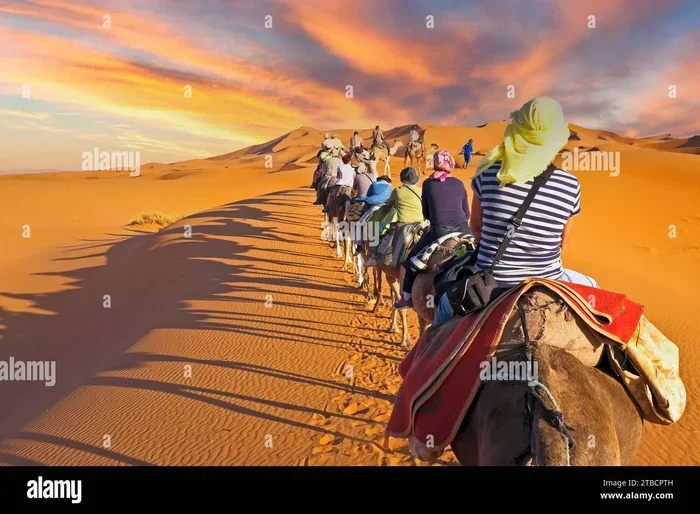
Featured image for Sahara camel caravan dunes
Image source: c8.alamy.com
The Marrakech to Merzouga tour with camel trek is one of Morocco’s most iconic adventures, taking you on a 3 to 4-day journey through the Atlas Mountains, ancient kasbahs, and the stunning Erg Chebbi dunes. Travelers ride camels into the Sahara Desert, sleep under star-filled skies in Berber camps, and experience authentic Moroccan culture along the way. This unforgettable expedition blends breathtaking scenery, rich history, and once-in-a-lifetime memories for adventure seekers and culture lovers alike.
Imagine this: you wake up before sunrise, the air crisp and cool against your face. Around you, golden sand dunes stretch endlessly in every direction, their ridges glowing amber as the first rays of light paint the Sahara. You sip sweet mint tea brewed over an open fire while your camel chews peacefully nearby. This isn’t a dream. This is what awaits you on a Marrakech to Merzouga tour with camel trek, one of the world’s most extraordinary travel experiences.
The journey from the bustling medina of Marrakech to the silent Sahara Desert covers roughly 560 kilometers of diverse landscapes. You’ll cross snow-capped mountains, drive through lush palm oases, explore ancient fortified villages, and finally reach the towering dunes of Erg Chebbi. Think of it as Morocco’s ultimate sampler platter, where every kilometer brings a completely different scene, sound, and smell.
Whether you’re a solo backpacker, a couple seeking romance, or a family craving adventure, this desert tour delivers something special. In this guide, you’ll learn exactly what to expect, how to prepare, what it costs, and how to choose the perfect tour for your travel style. Let’s dive in.
Key Takeaways
- Duration Variety: Tours range from 2-day express trips to 5-day luxury expeditions, with 3 to 4 days being the most popular option.
- Camel Trek Highlight: Riding a dromedary camel into Erg Chebbi dunes is the centerpiece experience, typically lasting 1-2 hours each way.
- Scenic Route: The journey crosses the High Atlas Mountains via the stunning Tizi n’Tichka pass at 2,260 meters elevation.
- Cultural Immersion: Travelers visit UNESCO World Heritage kasbahs, Berber villages, and traditional nomadic communities.
- Best Travel Season: October through April offers the most comfortable temperatures for desert adventures.
- Budget Range: Tours cost between $150-$800+ per person depending on accommodation style and tour length.
- Desert Camp Options: Choose between basic nomadic tents, mid-range Berber camps, or luxury glamping experiences.
📑 Table of Contents
- What Is the Marrakech to Merzouga Tour with Camel Trek?
- Who Should Take This Tour and When to Go
- How Long Is the Tour and What’s the Itinerary?
- What to Expect During the Camel Trek Experience
- How Much Does the Tour Cost and What’s Included?
- How to Choose the Best Tour Operator
- Essential Packing List and Preparation Tips
- Frequently Asked Questions About the Marrakech to Merzouga Tour
- Final Thoughts: Is This Tour Worth It?
What Is the Marrakech to Merzouga Tour with Camel Trek?
A Marrakech to Merzouga tour with camel trek is a multi-day guided expedition that takes travelers from the imperial city of Marrakech across central Morocco to the edge of the Sahara Desert near the Algerian border. The trek component refers to the traditional camel ride into the dunes of Erg Chebbi, where visitors spend at least one night in a desert camp.
The Classic Route Explained
The most popular route follows the “Road of a Thousand Kasbahs” through the Atlas Mountains and Draa Valley. Think of it like driving through a living museum, where every turn reveals another layer of Moroccan history. The path typically includes stops at:
- Ouarzazate: Known as the “Hollywood of Africa” for its famous film studios
- Ait Benhaddou: A UNESCO-listed earthen clay village dating back to the 17th century
- Todra Gorge: Dramatic canyon walls rising 400 meters high
- Erfoud: A desert gateway town famous for fossils and date palms
- Merzouga: The small village sitting at the edge of Erg Chebbi’s massive dunes
Did you know? The dunes of Erg Chebbi reach heights of up to 150 meters, making them among the tallest in North Africa. Some dunes stretch 22 kilometers long and 5 kilometers wide.
Why a Camel Trek Specifically?
You might wonder, why camels? In a world of jeeps and 4×4 vehicles, camels remain the authentic way to traverse the Sahara. These “ships of the desert” have been used by Berber and Arab traders for over 3,000 years. Riding one isn’t just transportation; it’s a connection to centuries of nomadic tradition. Plus, there’s something undeniably magical about swaying gently atop a camel as the sun sets behind you.
Who Should Take This Tour and When to Go
The Marrakech to Merzouga tour with camel trek appeals to a remarkably wide range of travelers. Adventure enthusiasts love the physical challenge of dune climbing and camel riding. Culture seekers treasure the chance to meet Berber nomads and explore ancient kasbahs. Photographers find endless inspiration in the dramatic landscapes. Even families with children as young as 6 years old can comfortably enjoy this experience.
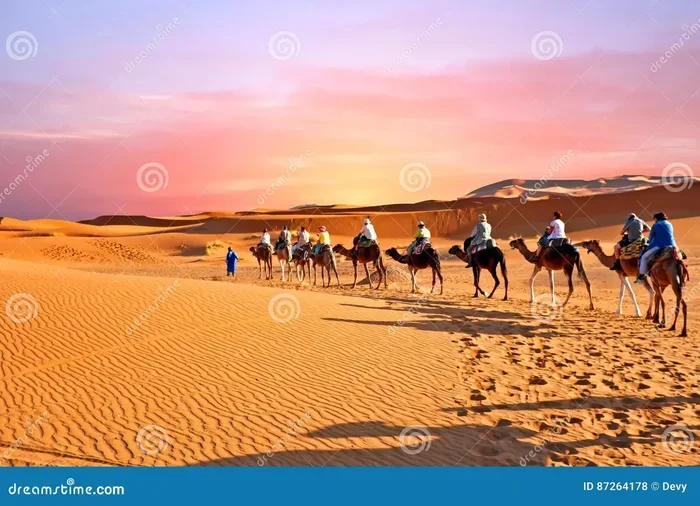
Visual guide about Sahara camel caravan dunes
Image source: thumbs.dreamstime.com
Best Time of Year for Your Desert Adventure
Timing matters enormously for this trip. The Sahara’s climate is extreme, with summer temperatures soaring above 45°C (113°F) and winter nights dropping near freezing. Here’s a simple breakdown:
- October to November: Ideal temperatures (25°C daytime, cool nights), clear skies, and tourist crowds begin to thin
- December to February: Cool but pleasant days (15-20°C), chilly desert nights, perfect for stargazing
- March to April: Warm days, blooming landscapes in the Atlas Mountains, comfortable for camel trekking
- May to September: Hot to extremely hot; many travelers find summer uncomfortable despite lower prices
The sweet spot for most visitors is mid-October through mid-November and March through April. These shoulder seasons offer pleasant weather without the peak crowds of Christmas and Easter holidays.
Who Should Consider Alternatives?
While this tour welcomes most travelers, it may not suit everyone. People with severe back problems might find long camel rides uncomfortable. Those with extreme mobility challenges may struggle with dune climbing. If you have strict time constraints, consider a 2-day express tour or a day-trip alternative that flies into the desert region instead.
How Long Is the Tour and What’s the Itinerary?
Tour durations vary based on your available time and desired pace. The journey itself is substantial, so rushing through defeats much of the magic. Let’s explore the most common options.
The Popular 3-Day, 2-Night Itinerary
This is the most booked format and offers a balanced experience. Picture it as a fast-paced but rewarding sprint through Morocco’s highlights:
- Day 1: Early morning departure from Marrakech, drive through Tizi n’Tichka pass, visit Ait Benhaddou, overnight in Ouarzazate or Boumalne Dades
- Day 2: Travel through Todra Gorge and Tinghir, continue to Merzouga via Erfoud, evening camel trek into the dunes, overnight in desert camp
- Day 3: Sunrise camel trek back, drive directly back to Marrakech (approximately 9 hours), or split with overnight en route
The Recommended 4-Day, 3-Night Itinerary
This pace allows you to breathe and truly absorb each location. It’s like the difference between speed-walking through an art museum versus taking time to study each masterpiece. The extra day typically includes:
- A visit to the Draa Valley with its stunning palm groves
- Exploration of Todra or Dades Gorge with hiking opportunities
- Time to experience sunrise AND sunset in the desert
- A relaxed return journey with an overnight stop
The Luxury 5-Day Option
For those wanting to slow down completely, 5-day tours add cultural immersion, cooking classes, and stays in traditional riads. Think of it as the deluxe edition, where comfort and depth replace speed and efficiency.
Did you know? The round-trip drive from Marrakech to Merzouga covers approximately 1,120 kilometers. That’s like driving from New York to Chicago and back, all in just a few days!
What to Expect During the Camel Trek Experience
The camel trek is the heart of your Marrakech to Merzouga tour. Most travelers describe it as one of the most memorable experiences of their lives. Here’s exactly what happens.
The Trek Logistics
Your camels will be waiting at a meeting point near the village of Merzouga, usually late in the afternoon to catch cooler temperatures and better light. A local Berber guide, called a “camel driver” or “trekker,” will lead the group. Each camel typically carries one passenger, with the camels tied together in a line. The trek into the dunes takes about 1 to 1.5 hours, covering approximately 2-3 kilometers.
Riding Comfort Tips
Let’s be honest: camels aren’t the most comfortable ride. The animals walk with a distinctive rocking gait that takes some getting used to. Think of it like riding a slow, gentle horse that occasionally lurches. Here are practical tips to make it easier:
- Wear long pants to prevent chafing against the saddle
- Hold on to the saddle handle, especially when the camel stands up or sits down (the initial lurch is the biggest jolt)
- Stay relaxed and move with the camel’s rhythm
- Avoid looking at your phone or camera too much; enjoy the moment
- Bring a scarf to protect against sun and sand
The Desert Camp Experience
After your trek, you’ll arrive at a desert camp as the sun begins to set. Most camps feature traditional nomadic tents with comfortable mattresses, blankets, and shared or private bathrooms. Evening activities typically include:
- Berber music performances around a campfire
- Traditional tagine dinner under the stars
- Stargazing in the exceptionally clear desert sky
- Optional drum circles with local nomads
The silence of the Sahara at night is profound. Many travelers say it’s the quietest place they’ve ever experienced, broken only by wind, distant drums, and the occasional camel snore.
How Much Does the Tour Cost and What’s Included?
Pricing for the Marrakech to Merzouga tour with camel trek varies widely based on accommodation choices, group size, and tour operator quality. Understanding the cost breakdown helps you budget wisely.
Price Ranges by Tour Type
- Budget Tours ($150-$250): 3-day shared group tours, basic desert camping, shared transportation in a minibus
- Mid-Range Tours ($300-$500): 3-4 day small group tours, comfortable riad accommodation, standard desert camp with private tent options
- Luxury Tours ($600-$800+): Private 4-5 day tours, premium riads, luxury desert glamping with en-suite bathrooms and gourmet meals
What’s Typically Included
Most standard tours include:
- Transportation in air-conditioned vehicle from/to Marrakech
- English-speaking driver/guide
- Two or three nights’ accommodation (hotels, riads, and desert camp)
- Camel trek to and from the desert camp
- Breakfast and dinner daily (lunch is often at your own expense)
What’s Usually Not Included
- Drinks and bottled water
- Lunch meals and snacks
- Tips for drivers, guides, and camel handlers (budget $20-$40 total)
- Personal expenses and souvenirs
- Travel insurance
- Entry fees to certain monuments or kasbahs
Hidden Costs to Watch For
Some tours advertise low prices but tack on extras. Always confirm whether your tour includes the Ait Benhaddou entrance fee, Todra Gorge guide, and any “activity supplements.” A reputable operator will be transparent about all costs upfront.
How to Choose the Best Tour Operator
With hundreds of companies offering the Marrakech to Merzouga tour with camel trek, choosing the right one can feel overwhelming. Here’s a simple framework to make smart choices.
Research and Reviews
Start by reading verified reviews on platforms like TripAdvisor, Viator, and GetYourGuide. Look for patterns rather than individual complaints. If multiple reviews mention “amazing guide” or “comfortable transport,” that’s a good sign. If reviews consistently mention “rushed itinerary” or “dirty camp,” keep looking.
Key Questions to Ask Before Booking
- What is the maximum group size? (Smaller groups, 12 or fewer, generally offer better experiences)
- Is the desert camp shared or private? Can you upgrade?
- What type of vehicle is used, and is air conditioning included?
- Are meals dietary-restriction friendly?
- What happens if weather cancels the camel trek?
- Is insurance included or recommended?
Red Flags to Avoid
Some warning signs indicate an unreliable operator:
- No physical address or verifiable contact information
- Pressure to pay cash only or full payment upfront
- Refusal to provide written itineraries
- Prices significantly lower than competitors (if it seems too good to be true, it usually is)
- Poor communication during the booking process
Booking Channels
You can book through international platforms (Viator, GetYourGuide, TourRadar), local Moroccan agencies, or direct with operators found through recommendations. Each has pros and cons. International platforms offer buyer protection and easy cancellation. Local agencies may offer better prices and more flexibility. Direct booking with reputable operators often provides the most authentic experience.
Essential Packing List and Preparation Tips
Packing smartly makes a massive difference on this trip. The desert’s climate and the varied landscapes require thoughtful preparation. Think of packing for this tour like preparing for a camping trip with a touch of cultural diplomacy thrown in.
Clothing Essentials
- Light, breathable layers: Days can be warm while desert nights are surprisingly cold
- Warm jacket or fleece: Especially for October through March evenings
- Long pants and long-sleeved shirts: For sun protection and cultural respect
- Comfortable walking shoes: Plus sandals for the desert
- Scarf or shemagh: Protects against sun, sand, and cold
- Sun hat and sunglasses: The desert sun is intense
Health and Safety Items
- High-SPF sunscreen (50+ recommended)
- Lip balm with SPF
- Personal medications and a basic first-aid kit
- Hand sanitizer and wet wipes
- Reusable water bottle (1-2 liter capacity)
- Motion sickness medication if you’re prone to it (mountain roads can be winding)
Tech and Practical Gear
- Camera with extra batteries (cold nights drain batteries quickly)
- Power bank for charging devices
- Headlamp or flashlight for the desert camp
- Universal adapter for Moroccan outlets
- Small daypack for daily excursions
- Cash in small denominations for tips and souvenirs
What to Leave Behind
Avoid bringing expensive jewelry, unnecessary electronics, or heavy hardcover books. Desert sand is fine and gets into everything. Think of your luggage as a delicate time capsule that will spend hours bouncing on dusty roads.
Frequently Asked Questions About the Marrakech to Merzouga Tour
Below are the most common questions travelers ask before booking this adventure.
Is the Marrakech to Merzouga tour with camel trek safe?
Yes, this tour is generally very safe for travelers of all ages. Tour operators maintain strict safety standards, and the routes are well-traveled. The biggest risks are sunburn, dehydration, and minor camel-related discomfort. Following your guide’s instructions and using common sense ensures a safe, enjoyable experience.
How fit do I need to be for the camel trek?
Basic fitness is sufficient. You don’t need to be athletic, but you should be able to mount a camel (with help) and walk on uneven sand. Climbing dunes can be moderately challenging, especially in soft sand or heat. Most travelers of average fitness handle it well.
Can children participate in this tour?
Absolutely. Children as young as 5 or 6 years old commonly join family tours. Kids often love the camel experience. However, very young children may struggle with long drive days, and parents should ensure kids can handle the heat and basic desert conditions.
What type of camel will I ride?
You’ll ride a dromedary camel, which has one hump. Despite the popular phrase, these aren’t “Arabian camels” versus regular camels. Dromedaries make up about 90% of the world’s camel population and are the species adapted to North Africa’s deserts.
Do I need to speak Arabic or French?
No, but learning a few basic phrases enhances the experience. Tour guides typically speak English, French, Spanish, and sometimes German. In rural areas and desert camps, knowing “salaam alaikum” (peace be upon you) and “shukran” (thank you) goes a long way toward connecting with locals.
What happens if it rains during the tour?
Rain is rare in the desert but possible, especially in winter. Light rain creates spectacular photo opportunities as the dunes darken dramatically. However, heavy rain can make dune climbing dangerous and may affect camel treks. Reputable operators have backup plans, including 4×4 transfers to the camp.
Final Thoughts: Is This Tour Worth It?
Absolutely, without hesitation. The Marrakech to Merzouga tour with camel trek consistently ranks among travelers’ most cherished experiences worldwide. Few journeys compress such geographic and cultural diversity into just a few days. You leave Marrakech knowing nothing about Morocco and return home with stories that last a lifetime.
The combination of stunning landscapes, welcoming Berber hospitality, the timeless rhythm of camel travel, and the profound silence of the Sahara creates something genuinely transformative. Many travelers describe it as humbling, awakening, or even spiritual. Whether those words resonate with you or not, you’ll definitely leave with a deeper appreciation for Morocco’s beauty and its people.
If you’re considering this tour, here’s my honest advice: book it. Choose a reputable mid-range operator for the best balance of comfort and authenticity. Pack thoughtfully, stay flexible, and prepare to be amazed. The Sahara has been waiting for you for thousands of years, and it rarely disappoints.
Your camel is ready. The dunes are calling. All that’s left is for you to take the first step.