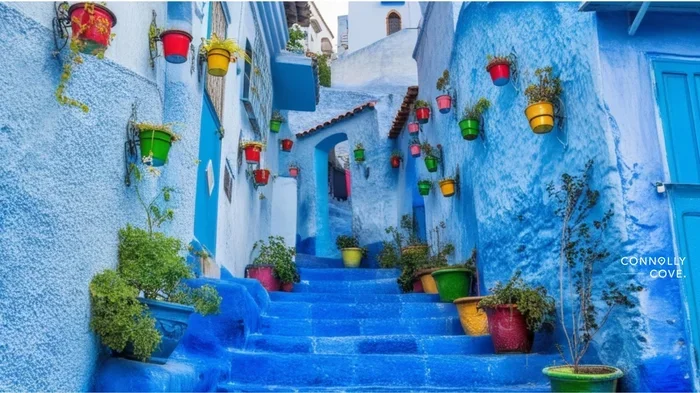
Featured image for Chefchaouen blue streets morocco
Image source: connollycove.com
A 9 day tour from Tangier to Chefchaouen is the ultimate way to experience Morocco’s diverse landscapes and cultures. Starting from the Mediterranean port city of Tangier and ending in the famous “Blue City,” this itinerary covers imperial cities, ancient medinas, the Sahara Desert, and stunning coastlines. Perfect for travelers who want a balanced mix of history, adventure, and authentic Moroccan experiences.
Picture this: you’re standing at the edge of the Sahara Desert, golden sand stretching endlessly before you, camels silhouetted against a fiery sunset. Just nine days earlier, you were sipping mint tea in a bustling Tangier café, watching ships sail across the Mediterranean. This is the magic of a 9 day tour from Tangier to Chefchaouen, a journey that takes you through Morocco’s most spectacular destinations in just over a week.
Morocco is like a living museum mixed with an adventure playground. Every city tells a different story, every landscape shifts like turning pages in a picture book. From the blue-washed streets of Chefchaouen to the ancient medinas of Fez, from the towering Atlas Mountains to the Atlantic waves of Essaouira, this tour packs an incredible variety into nine memorable days.
Whether you’re a first-time visitor to Morocco or a returning traveler wanting to see more, this itinerary strikes the perfect balance. You’ll experience the country’s imperial heritage, Berber traditions, and natural wonders without the exhaustion that comes with cramming too much into too little time. Let’s walk through what makes this 9-day adventure so special.
Key Takeaways
- Comprehensive Coverage: A 9-day itinerary allows you to explore Tangier, Chefchaouen, Fez, Merzouga Sahara, Marrakech, and Essaouira without feeling rushed.
- Diverse Experiences: The tour blends cultural immersion, historical sightseeing, desert adventures, and coastal relaxation in one trip.
- Optimal Pacing: Nine days provides enough time to truly absorb each destination rather than just passing through.
- Best Time to Travel: Spring (March-May) and autumn (September-November) offer the most comfortable weather for this multi-city journey.
- Transportation Included: Most tours include private air-conditioned vehicles, drivers, and accommodations for a hassle-free experience.
- Sahara Highlight: Camel trekking and overnight camping under the stars in Merzouga is the trip’s most unforgettable moment.
- Book in Advance: Popular tours fill up quickly during peak seasons, so early booking ensures availability and better rates.
📑 Table of Contents
- Why Choose a 9 Day Tour from Tangier to Chefchaouen?
- Detailed Day-by-Day Breakdown of the 9-Day Itinerary
- What Makes Each Destination Special
- Planning Your 9-Day Tour: Practical Tips and Advice
- Cultural Etiquette and Insider Tips
- Beyond the Standard Itinerary: Optional Add-Ons
- Final Thoughts: Is the 9 Day Tour from Tangier to Chefchaouen Right for You?
Why Choose a 9 Day Tour from Tangier to Chefchaouen?
You might wonder why nine days specifically. Well, think of it like this: trying to see Morocco in three days is like trying to read a novel by skimming every page. You get the gist but miss the good stuff. A 9 day tour from Tangier to Chefchaouen gives you enough time to actually experience each place.
Morocco attracted over 14.5 million tourists in 2023, making it one of Africa’s most visited countries. Many of these travelers opt for multi-day tours because the country’s highlights are spread across vast distances. The route from Tangier in the north to the Sahara in the east covers over 1,000 kilometers, and trying to do it quickly means missing out on the journey itself.
The Perfect Balance of Time and Exploration
Nine days is the sweet spot for several reasons. It’s long enough to include major destinations like the Sahara Desert and Marrakech without rushing. It’s short enough to fit into most vacation schedules. And it allows for rest days or flexible exploration when energy levels dip.
Did you know that Chefchaouen, your final destination, was painted blue in the 1930s? Jewish refugees who settled there during World War II are often credited with starting the tradition, though locals say it began earlier as a symbol of the sky and heaven. Today, walking through Chefchaouen’s blue streets is like stepping into a dream.
Who Is This Travel Ideal For?
This tour works wonderfully for several types of travelers:
- Couples seeking romance in exotic settings
- Families wanting cultural enrichment for their children
- Solo travelers craving adventure with built-in company
- Photography enthusiasts hunting stunning visuals
- History buffs fascinated by ancient civilizations
- Food lovers exploring Moroccan cuisine
Whether you’re 25 or 75, this itinerary adapts to your pace and interests. Private tours can be customized, while group tours offer built-in socialization.
Detailed Day-by-Day Breakdown of the 9-Day Itinerary
Let’s get into the specifics. While exact itineraries vary by operator, most 9 day tours from Tangier to Chefchaouen follow a similar pattern. Think of it as a carefully crafted recipe where removing one ingredient changes the entire dish.
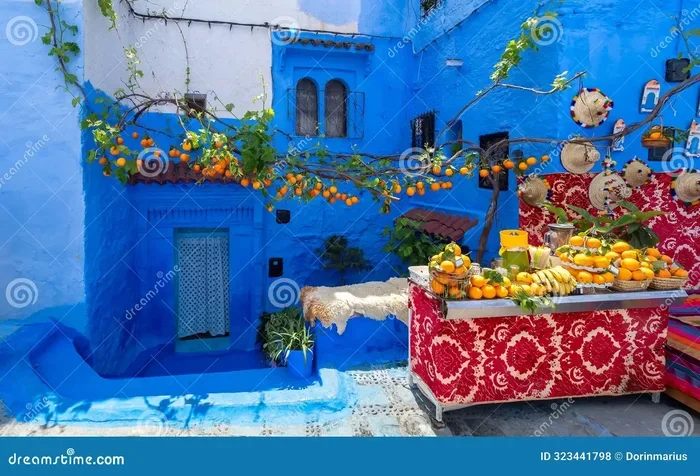
Visual guide about Chefchaouen blue streets morocco
Image source: thumbs.dreamstime.com
Day 1: Arrival in Tangier
Your adventure begins in Tangier, Morocco’s gateway to Africa. This port city has welcomed travelers for centuries, from ancient Phoenicians to modern-day tourists. After arriving at Ibn Battuta Airport or the port, you’ll be transferred to your hotel to settle in.
Spend your first day exploring Tangier’s medina, where narrow alleys wind between whitewashed buildings. Visit the famous Café Hafa, where artists like The Rolling Stones and Paul Bowles once sat sipping Moroccan tea while gazing at the Strait of Gibraltar. From here, Spain is just 14 kilometers away, so close you can almost touch it.
Did You Know? Tangier was an international zone from 1923 to 1956, governed by eight different countries simultaneously. This unique history created a cultural melting pot that still influences the city today.
Day 2: Tangier to Chefchaouen via the Rif Mountains
After breakfast, you’ll head south through the scenic Rif Mountains. The drive takes about three hours, winding through rolling green hills and small Berber villages. This isn’t just transportation; it’s part of the experience.
Chefchaouen awaits, nestled in the foothills like a sapphire hidden in a mountain’s palm. Known as the “Blue Pearl of Morocco,” this town captivates visitors immediately. Every corner reveals another photo opportunity, from blue walls adorned with flower pots to cats lounging in sunny spots.
Spend the afternoon exploring Plaza Uta el-Hammam, the main square where locals gather and restaurants serve traditional Moroccan dishes. The kasbah museum offers insight into the region’s history, while the Spanish Mosque provides panoramic views perfect for sunset.
Day 3: Chefchaouen Exploration Day
Day three is all about soaking in Chefchaouen’s unique atmosphere. Unlike larger Moroccan cities, Chefchaouen feels calm and peaceful. The pace here is slower, the air cooler, and the welcome warmer.
Many tours include a hike to the Spanish Mosque hilltop for sunrise or sunset. Others offer weaving workshops or cooking classes. The local artisan scene is thriving, with shops selling everything from colorful textiles to handcrafted leather goods.
Practical Tip: Wear comfortable shoes. Chefchaouen’s medina has many steps and slopes. The blue paint is also kept fresh with regular touch-ups, so don’t worry if you see paint buckets around; it’s normal!
Day 4: Chefchaouen to Fez via Volubilis
Today you’ll travel to Fez, one of Morocco’s most ancient cities. The route includes a stop at Volubilis, a UNESCO World Heritage Site featuring remarkably preserved Roman ruins. Walking among 2,000-year-old mosaics and columns gives you a tangible connection to history.
Fez (or Fes) is Morocco’s spiritual and cultural capital. Founded in 789 AD, it houses the world’s oldest continuously operating university, the University of al-Qarawiyyin, established in 859 AD. That’s older than Oxford University by about 200 years!
The medina of Fez is a labyrinth of over 9,000 alleys. You’ll need a local guide to navigate it effectively. Highlights include the Chouara Tanneries, where leather has been processed the same way for nearly a thousand years.
Day 5: Full Day in Fez
Dedicate your fifth day to deeper exploration of Fez. Start with the Royal Palace gates, then venture into the medina. Visit the Al-Qarawiyyin Mosque and University, the Bou Inania Medersa (ancient theological school), and the Nejjarine Museum of Wooden Arts and Crafts.
Lunch offers a chance to try traditional dishes like tagine or pastilla in a restored riad courtyard. In the afternoon, explore the mellah (Jewish quarter) or take a pottery-making workshop. Fez is also famous for its ceramics, metalwork, and zellige tilework.
Interesting Fact: The Chouara Tanneries process about 12,000 cowhides daily during peak season. Workers use natural dyes from poppy (red), indigo (blue), saffron (yellow), and mint (green) to color the leather.
Day 6: Fez to Merzouga Sahara Desert
This is the longest travel day, taking about 8-9 hours, but it’s spectacular. You’ll pass through the Middle Atlas Mountains, seeing cedar forests where Barbary macaques play. Ifrane, known as “Morocco’s Switzerland” for its alpine architecture, makes a lovely lunch stop.
By late afternoon, you’ll arrive in Merzouga, where the Sahara begins. Here, you’ll trade your vehicle for a camel and ride into the Erg Chebbi dunes. These massive sand mountains rise up to 150 meters high, creating an otherworldly landscape.
Your overnight accommodation is a traditional Berber camp, complete with desert tents, communal dining, and Berber music around a campfire. Watching the stars from the Sahara is genuinely one of life’s must-see experiences. With virtually no light pollution, you can see the Milky Way stretching across the sky like spilled diamonds.
Day 7: Sahara Desert to Todra Gorge and Dades Valley
Wake early for sunrise over the dunes. After breakfast and a camel ride back, you’ll begin your journey west toward the Todra Gorge. This dramatic canyon features 400-meter-high limestone walls that narrow to just 10 meters apart in places.
The Dades Valley, sometimes called the “Valley of a Thousand Kasbahs,” offers stunning scenery with its rose-colored rock formations and ancient fortified villages. Spend the night in a traditional kasbah hotel or riad.
Day 8: Dades Valley to Marrakech via Ait Ben Haddou
Day eight takes you through the stunning landscapes of southern Morocco. Cross the High Atlas Mountains via the Tizi n’Tichka pass, stopping at Ait Ben Haddou, a UNESCO-listed ksar (fortified village) that has served as a filming location for movies like “Gladiator” and “Game of Thrones.”
Arriving in Marrakech feels like entering a different world. The “Red City” pulses with energy, from the famous Jemaa el-Fnaa square where snake charmers, musicians, and food stalls create nightly chaos, to the serene Majorelle Garden with its striking blue accents.
Day 9: Marrakech to Essaouira to Tangier or Chefchaouen
Depending on your tour operator, the final day might include a stop in Essaouira, a charming coastal town known for its white-washed buildings, blue shutters, and fresh seafood. Its ramparts have protected the city since the 18th century, and the medina is much calmer than Marrakech’s.
From Essaouira, you’ll travel back to Tangier or directly to Chefchaouen, depending on the route. Most 9 day tours from Tangier to Chefchaouen end back in Tangier, while some loop differently. The final evening offers a farewell dinner reflecting on an incredible journey.
What Makes Each Destination Special
Each stop on this itinerary offers something unique. Think of the tour as a nine-course meal, where each dish builds on the last to create a complete experience.
Tangier: The Crossroads of Cultures
Tangier sits where Africa meets Europe, literally. From the Cape Spartel promontory, you can see the meeting point of the Atlantic Ocean and Mediterranean Sea. The city’s history as an international zone created a cosmopolitan atmosphere uncommon in other Moroccan cities.
Chefchaouen: The Blue Pearl
Chefchaouen’s blue color isn’t just aesthetic. Locals say the blue keeps mosquitoes away and symbolizes the sky and heaven. The town also serves as a gateway to the Talassemtane National Park, with hiking trails through cedar forests and along mountain rivers.
Fez: The Spiritual Capital
Fez represents Morocco’s intellectual heritage. The medina is a living museum where craftsmen still practice trades their great-grandparents mastered. The sound of hammers on copper, the sight of weavers creating intricate textiles, and the smell of fresh bread from centuries-old bakeries create an immersive cultural experience.
Merzouga: The Sahara Gateway
The Sahara Desert covers approximately 9.2 million square kilometers across North Africa, making it almost the size of the United States. Merzouga offers an accessible way to experience this vast wilderness without extreme expedition-style travel.
Marrakech: The Vibrant Heart
Marrakech embodies Morocco’s famous “Brand.” The rose-colored buildings, bustling souks, and lively squares make it visually striking. It’s also the commercial hub, where Berber, Arab, and French influences blend in food, architecture, and fashion.
Planning Your 9-Day Tour: Practical Tips and Advice
Proper preparation transforms a good trip into a great one. Here are essential tips for your 9 day tour from Tangier to Chefchaouen.
When to Go
The best times to visit Morocco are spring (March to May) and autumn (September to November). Temperatures are moderate, ranging from 20-28°C (68-82°F). Summer can be brutally hot, especially in the desert, while winter brings snow to the mountains and cold desert nights.
Ramadan considerations: If traveling during Ramadan, some restaurants may be closed during daylight hours, but tour operators adjust schedules accordingly. The festive atmosphere after sunset is special to witness.
What to Pack
Packing smart makes a huge difference. Here’s a practical list:
- Clothing: Light, breathable fabrics for daytime, layers for cool evenings, modest options for religious sites
- Footwear: Comfortable walking shoes plus sandals or slip-ons
- Accessories: Sunglasses, sunhat, scarf for desert sand and mosque visits
- Essentials: Sunscreen, reusable water bottle, basic first aid kit
- Tech: Camera, power adapter (Morocco uses Type C and E plugs), portable charger
- Documents: Passport (valid 6+ months), travel insurance, tour confirmations
Budget Considerations
Tour prices vary significantly based on accommodation level, group size, and inclusions. Budget tours start around €700-900 per person, mid-range tours run €1,200-1,800, and luxury experiences can exceed €2,500. Always check what’s included: meals, entrance fees, camel rides, and camping accommodations should be clarified upfront.
Choosing a Tour Operator
Research matters. Look for operators with strong reviews on platforms like TripAdvisor, Viator, or GetYourGuide. Verify they’re licensed by Morocco’s Ministry of Tourism. Ask about group size limits (smaller groups offer more flexibility) and vehicle quality for long-distance travel.
Red Flags to Avoid:
- Operators without proper licensing
- Unusually low prices that seem too good to be true
- Poor communication or vague itineraries
- No reviews or references available
- Pressure to pay large deposits immediately
Health and Safety
Morocco is generally safe for tourists. Standard precautions apply: watch your belongings in crowded areas, drink bottled water, and use sunscreen liberally. The tap water in major cities is generally safe for tourists, but bottled water is widely available and recommended for sensitive stomachs.
No special vaccinations are required for Morocco, though hepatitis A and typhoid are sometimes recommended. Consult your doctor 4-6 weeks before travel for personalized advice.
Cultural Etiquette and Insider Tips
Understanding local customs enriches your experience and shows respect for Moroccan culture. Morocco is a Muslim country, and while it’s quite liberal and welcoming to tourists, awareness of local norms is appreciated.
Dress Code Considerations
For religious sites, covering shoulders and knees is respectful. Women don’t need to cover their hair in most mosques (most are closed to non-Muslims anyway), but modest dress is appreciated. In medinas, conservative clothing helps you blend in and avoid unwanted attention.
Bargaining in the Souks
Moroccan markets expect negotiation. Start at about 50-60% of the asking price and work toward a fair middle ground. Bargaining should be friendly and fun, not aggressive. If you can’t agree on a price, it’s perfectly acceptable to walk away.
Insider Tip: Tea is offered everywhere as a sign of hospitality. Accept it when offered; refusing can seem rude. When drinking tea, hold the glass with your right hand, as the left hand is considered impure in local culture.
Photography Etiquette
Always ask permission before photographing people, especially women and elders. Some Berber communities in southern Morocco prefer not to be photographed at all. Respect signs at military or government buildings where photography is prohibited.
Language Tips
While Arabic and Berber languages are official, French is widely spoken in cities. English is common in tourist zones. Learning a few phrases in Arabic like “Salam alaikum” (peace be upon you) and “Shukran” (thank you) goes a long way in connecting with locals.
Beyond the Standard Itinerary: Optional Add-Ons
Most tour operators offer customization options. If nine days isn’t enough, consider extending or adjusting.
Cooking Classes and Workshops
Fez and Marrakech offer excellent cooking classes where you learn to prepare tagine, couscous, and pastilla. These hands-on experiences include market visits to select ingredients, providing deeper cultural insight.
Hammam Experiences
Traditional Moroccan baths offer relaxation and cultural immersion. Many riads and hotels offer tourist-friendly hammam experiences, combining steam rooms, scrubs, and massages.
Surfing in Essaouira
If you’re visiting Essaouira, consider adding a surfing lesson. The coastal town has consistent waves suitable for beginners, and several surf schools offer half-day or full-day sessions.
Hot Air Balloon Rides
Marrakech offers sunrise hot air balloon flights over the Palmeraie and surrounding countryside. These typically last about an hour and include traditional Berber breakfast afterward.
Final Thoughts: Is the 9 Day Tour from Tangier to Chefchaouen Right for You?
After exploring all the details, the answer is likely yes, especially if you want comprehensive coverage of Morocco’s highlights without extreme rushing. This itinerary provides genuine immersion in each location while maintaining comfortable pacing.
Morocco consistently ranks among the world’s most popular travel destinations, and for good reason. The country offers remarkable diversity within relatively compact geography. Within nine days, you’ll experience mountains, deserts, coastlines, imperial cities, and charming villages, each with distinct character and charm.
The 9 day tour from Tangier to Chefchaouen works particularly well because it includes both major urban centers and natural wonders, balancing cultural sightseeing with adventure activities. The desert experience alone justifies the journey, but adding Fez, Marrakech, and the blue city creates a complete Moroccan narrative.
Book with reputable operators, prepare adequately, embrace the unexpected, and you’ll return home with memories lasting a lifetime. Morocco isn’t a destination; it’s an experience that stays with you, calling you back to its blue streets, golden dunes, and warm hospitality.
Your 9-day Moroccan adventure awaits. The blue streets of Chefchaouen, the silence of the desert, and the spice-scented air of Marrakech are ready to welcome you. All you need to do is take that first step.
Frequently Asked Questions
What is the best time of year to take a 9 day tour from Tangier to Chefchaouen?
The best times are spring (March to May) and autumn (September to November) when temperatures are mild and comfortable. Summer can be extremely hot, especially in the Sahara, and mountain passes may have snow in winter. Shoulder seasons offer pleasant weather, fewer crowds, and lower prices than peak summer travel.
How much does a 9 day tour from Tangier to Chefchaouen typically cost?
Prices vary widely based on accommodation level and inclusions. Budget tours start around €700-900 per person, mid-range options run €1,200-1,800, and luxury experiences exceed €2,500. Most tours include transportation, accommodation, breakfast, driver/guide services, and major activity fees like camel trekking.
Is the camel ride in the Sahara included in most 9-day tours?
Yes, the camel ride to your desert camp is typically included in the tour price. You’ll ride camels into the Erg Chebbi dunes in Merzouga, spend the night in a traditional Berber camp, and ride back the next morning. Some operators offer 4×4 alternatives for those who prefer not to ride camels.
Do I need a visa for Morocco as a tourist?
Many nationalities, including citizens of the US, UK, EU, Canada, and Australia, can enter Morocco visa-free for stays up to 90 days. Your passport must be valid for at least six months beyond your entry date. Always check current requirements with your local Moroccan consulate before traveling.
What should I wear on a 9 day tour from Tangier to Chefchaouen?
Pack modest, comfortable clothing suitable for both warm days and cool evenings. Bring layers for desert nights, modest options for religious sites (covered shoulders and knees), comfortable walking shoes, and a scarf for sun protection and desert sand. Avoid shorts and sleeveless tops in conservative areas to respect local customs.
Is it safe to travel to Morocco on a guided tour?
Yes, Morocco is generally considered very safe for tourists, and guided tours add an extra layer of security and convenience. Petty crime can occur in crowded areas, so standard precautions apply. Tour operators handle logistics, provide local knowledge, and ensure you visit safe, reputable establishments throughout your journey.