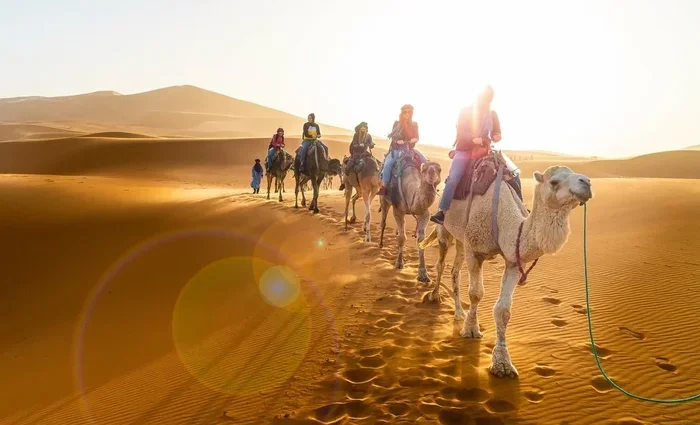
Featured image for Sahara desert camel sunset Merzouga
Image source: cdn.kimkim.com
A 7-day excursion from Marrakech to Merzouga is the ultimate Moroccan adventure, taking you from vibrant imperial cities to the golden Sahara dunes. This week-long journey covers approximately 1,000 kilometers through the Draa Valley, Atlas Mountains, and Erg Chebbi desert. Expect camel treks, luxury desert camps, ancient kasbahs, and unforgettable Berber cultural experiences.
Imagine standing atop a towering sand dune as it glows burnt orange under the setting sun. Behind you, a line of camels rests quietly. Around you, silence stretches endlessly in every direction. This isn’t a dream. This is day five of your excursion de 7 dias desde Marrakech a Merzouga.
Morocco’s southern route from Marrakech to Merzouga is one of the most iconic travel experiences in North Africa. It takes you through four distinct climate zones in just seven days. You’ll cross snow-capped mountains, lush palm groves, rocky gorges, and endless sand dunes. Every day brings a completely new landscape.
Whether you’re a solo traveler, a couple seeking romance, or a family wanting adventure, this journey delivers. This guide covers everything you need to know: routes, costs, packing tips, daily itineraries, and insider advice from people who have actually made the trip.
Key Takeaways
- Total Distance: The round-trip covers roughly 1,000 km (620 miles) through diverse landscapes including mountains, valleys, and desert.
- Best Travel Time: October to April offers the most comfortable temperatures, with cool desert nights and warm sunny days.
- Budget Range: Expect to pay between €400-€900 per person depending on accommodation level, from standard riads to luxury desert camps.
- Cultural Highlights: The route includes UNESCO World Heritage sites like Ait Ben Haddou and visits to traditional Berber villages.
- Physical Activity: Moderate fitness is recommended, especially for camel treks and walking through dune fields.
- What to Pack: Layers are essential—desert temperatures can swing from 35°C days to near-freezing nights.
- Booking Tip: Reserve at least 2-3 months in advance for peak season (March-April and October-November).
📑 Table of Contents
- What Is a 7-Day Marrakech to Merzouga Excursion?
- Who Should Take This Trip?
- When Is the Best Time to Go?
- What Does the Itinerary Look Like Day by Day?
- How Much Does It Cost?
- Where to Stay Along the Way
- What Should You Pack?
- Why Choose a Guided Tour?
- Common Mistakes to Avoid
- Frequently Asked Questions About Excursions
- Final Thoughts: Is This Trip Worth It?
What Is a 7-Day Marrakech to Merzouga Excursion?
A 7-day excursion from Marrakech to Merzouga is a guided tour that crosses southern Morocco, ending at the famous Erg Chebbi dunes near the Algerian border. Think of it as a road trip through a living museum. Every turn reveals something ancient, beautiful, or surprising.
The Route at a Glance
The classic route follows this path:
- Day 1: Marrakech to Ait Ben Haddou via the High Atlas Mountains
- Day 2: Ouarzazate to the Todra or Dades Gorges
- Day 3: Gorges to Merzouga, arriving at the Sahara
- Day 4: Full day exploring Erg Chebbi desert
- Day 5: Desert to Erfoud, then to the Draa Valley
- Day 6: Draa Valley back toward Ouarzazate
- Day 7: Return to Marrakech
Some operators reverse this order, starting with shorter driving days and ending with the desert experience fresh in your memory.
What Makes This Trip Special?
Did you know that Merzouga’s Erg Chebbi dunes reach heights of 150 meters (492 feet)? That’s taller than the Great Pyramid of Giza. The Sahara isn’t just flat sand—it’s a sea of mountains made of golden grains.
The trip combines three elements that rarely appear together:
- Cultural depth: Visits to Berber villages, kasbahs, and film studios
- Natural beauty: From rose-colored canyons to star-filled desert skies
- Adventure activities: Camel rides, sandboarding, and 4×4 desert excursions
Who Should Take This Trip?
Almost anyone! But the trip suits certain travelers especially well.
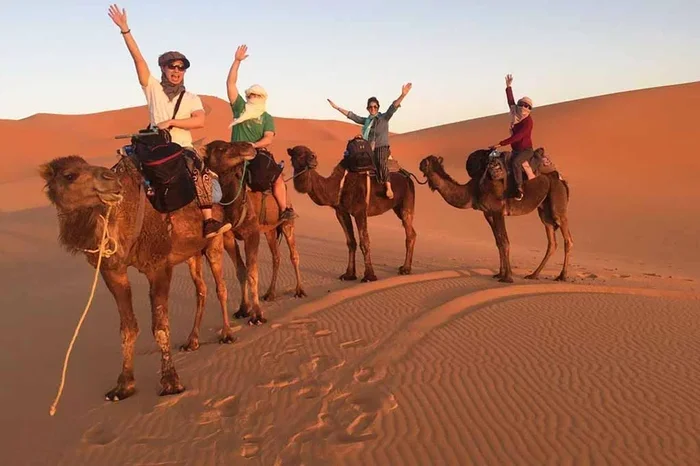
Visual guide about Sahara desert camel sunset Merzouga
Image source: cameltripssahara.com
Perfect For
- First-time Morocco visitors who want to see the country’s highlights in one trip
- Photography enthusiasts chasing dramatic light and landscapes
- Culture lovers interested in indigenous Berber traditions
- Adventure seekers wanting sandboarding, camel trekking, and star-gazing
- Honeymooners seeking unique, romantic experiences
Less Ideal For
- Travelers with severe mobility issues (the dunes and mountain roads can be challenging)
- Those seeking luxury beach vacations (this is rugged, scenic travel)
- People uncomfortable with basic amenities (though luxury upgrades exist)
According to a 2024 survey by the Moroccan Ministry of Tourism, 68% of visitors who book multi-day desert tours rate the experience as “excellent”—the highest satisfaction score of any tour type in the country.
When Is the Best Time to Go?
Timing makes a huge difference in your experience. The Sahara has two seasons: comfortable and extreme.
Peak Season: October to April
The cooler months are overwhelmingly the best choice. Daytime temperatures hover between 20-28°C (68-82°F). Nights cool down to 5-12°C (41-54°F). You’ll need a warm jacket for desert evenings, but days are pleasant for exploring.
Sweet spots:
- March-April: Wildflowers bloom in the Draa Valley. Temperatures are perfect.
- October-November: Harvest season. Markets are lively. Skies are crystal clear.
Shoulder Season: December to February
Winter brings cold desert nights—sometimes below freezing. Mountain passes like the Tizi n’Tichka can see snow. But the trade-off is fewer tourists and lower prices. Pack thermals and a heavy coat.
Avoid: May to September
Summer temperatures in Merzouga regularly exceed 45°C (113°F). Sand can reach 60°C (140°F). Even locals retreat indoors midday. Unless you’re a heat-loving extreme traveler, skip these months.
Did You Know?
The Sahara Desert is roughly the size of the United States. Yet Erg Chebbi represents just a tiny fraction—about 22 kilometers long and 5 kilometers wide. It’s a single sand dune system in a vast ocean of stone and gravel.
What Does the Itinerary Look Like Day by Day?
Here’s a realistic day-by-day breakdown. Operators vary, but most follow this rhythm.
Day 1: Marrakech to Ait Ben Haddou
You leave Marrakech early, crossing the High Atlas Mountains via the Tizi n’Tichka pass at 2,260 meters (7,415 feet). The winding road offers stunning views of Berber villages clinging to hillsides. By afternoon, you reach Ait Ben Haddou, a UNESCO World Heritage kasbah that has appeared in films like Gladiator and Game of Thrones.
Distance: 180 km (112 miles)
Drive time: 4-5 hours
Day 2: Ouarzazate to the Dades or Todra Gorges
Today you visit the “Hollywood of Africa” in Ouarzazate, home to Atlas Film Studios. Then drive through the Valley of a Thousand Kasbahs. The Dades Gorge features stunning rock formations called “monkey fingers.” If your route goes to Todra Gorge, you’ll walk between towering 400-meter cliffs.
Distance: 160-200 km (100-125 miles)
Drive time: 3-4 hours
Day 3: Gorges to Merzouga and Erg Chebbi
The landscape flattens as you approach the desert. You’ll pass through Errachidia and Erfoud, known for its date festivals. By late afternoon, you arrive at Merzouga. Camels await. The one-hour ride into the dunes feels timeless. Your desert camp sits among the Erg Chebbi sands.
Distance: 250 km (155 miles)
Drive time: 4-5 hours
Day 4: Full Day in the Sahara
This is the heart of your trip. Wake early to watch sunrise over the dunes—colors shift from pink to gold to white. After breakfast, options include:
- Sandboarding down dune faces
- Visiting nomadic Berber families
- 4×4 excursions to hidden oases
- Swimming at a desert swimming hole
- Simply relaxing with mint tea under a Berber tent
Day 5: Merzouga to the Draa Valley
Say goodbye to the dunes and travel through Rissani’s bustling market. The Draa Valley stretches south for 200 kilometers, lined with date palms and ancient kasbahs. It’s one of Morocco’s most underrated landscapes.
Distance: 200 km (124 miles)
Drive time: 4 hours
Day 6: Draa Valley to Ouarzazate or Skoura
A slower day with time to explore. Visit the Agdz palm groves, the Kasbah of Tamnougalt, or simply relax by a pool. Many tours include a cooking class here.
Day 7: Return to Marrakech
Drive back through the Atlas Mountains. Stop for last-minute photos and souk shopping. Most tours arrive in Marrakech by late afternoon.
Distance: 350 km (217 miles)
Drive time: 6-7 hours
How Much Does It Cost?
Let’s talk money. Prices vary widely based on accommodation, group size, and inclusions.
Budget Tours: €400-€550 per person
- Shared 4×4 or minivan transport
- Standard hotel and riad accommodations
- Shared desert camp (sometimes basic tents)
- Breakfast and dinner included
Mid-Range Tours: €600-€800 per person
- Smaller groups (4-8 people)
- Charming riads and boutique hotels
- Private tent with shared bathroom at the camp
- Most meals included
Luxury Tours: €900-€1,500+ per person
- Private vehicle and driver-guide
- 4-star and 5-star riads throughout
- Private luxury tent with en-suite bathroom
- All meals, drinks, and activities included
- Possibly hot air balloon ride or private 4×4 excursion
What’s Not Usually Included
- Drinks (other than water at meals)
- Lunch (often stops at roadside restaurants)
- Tips for driver and camel guide (€5-€10 per person per day is fair)
- Personal expenses and souvenirs
- Travel insurance
Pro tip: A 2025 industry report found that booking directly with local Moroccan operators saves 20-30% compared to international tour marketplaces. Just verify reviews on TripAdvisor or Google first.
Where to Stay Along the Way
Accommodations shape the trip. Each stop has its character.
Marrakech
Stay in a traditional riad in the medina. These are old merchant houses built around courtyards. They offer peace inside the chaotic city. Popular areas include the Mouassine and Kasbah districts.
Ait Ben Haddou Area
Many tours overnight in Ouarzazate or the surrounding area. Look for properties with views of the kasbah. Some restored kasbahs themselves now function as boutique hotels.
Dades or Todra Gorges
Accommodations here blend into the cliffs. Some have terraces overlooking the canyon. Hot water is sometimes solar-powered, so evening showers are best.
Merzouga Desert Camps
This is the highlight. Camps range from basic Berber-style tents to luxury “glamping” with king beds, private bathrooms, and electricity. The best camps are a 30-45 minute camel ride into the dunes—far from roads and noise.
Draa Valley
Stay in family-run kasbahs surrounded by palm groves. Many feature rooftop terraces perfect for stargazing.
Did You Know?
Morocco has over 5,000 traditional riads across the country. Many are centuries old. Staying in one feels like living inside a piece of history.
What Should You Pack?
Packing smart makes the difference between a good trip and a great one.
Clothing Essentials
- Layered clothing: Desert temperatures swing wildly between day and night
- Warm jacket: Even in spring, nights can drop to 5°C (41°F)
- Long pants and long sleeves: Protect against sun and sand
- Sun hat and sunglasses: The desert sun is intense
- Swimwear: Some hotels and riads have pools
- Comfortable walking shoes: For gorges and village exploration
Useful Gear
- Scarf or shemagh: Doubles as sun protection and dust cover
- Headlamp: Desert camps often have limited lighting
- Power bank: Charging opportunities are limited in remote areas
- Reusable water bottle: Stay hydrated
- Camera with extra batteries: You’ll shoot constantly
Health and Personal Items
- Sunscreen (SPF 30+)
- Lip balm with SPF
- Basic first aid kit
- Hand sanitizer
- Toilet paper and tissues (for desert stops)
- Motion sickness medication (mountain roads are winding)
Smart tip: Pack a small daypack with essentials for the desert camp. Your main luggage typically stays in the vehicle.
Why Choose a Guided Tour?
You might wonder: should I go alone or with a guide?
The Case for Guided Tours
Think of it this way: a guide is like a translator for an entire country. They decode customs, history, and hidden spots you’d miss alone. Specifically:
- Local knowledge: Drivers know which roads are safe and scenic
- Language help: Berber and Arabic don’t translate well through phone apps
- Cultural access: Guides can introduce you to local families
- Logistics: They handle hotel bookings, meals, and timing
- Safety: Remote areas require local expertise
What About Independent Travel?
It’s possible. You can rent a car, book riads yourself, and arrange camel treks in Merzouga. But you’ll face challenges:
- Mountains and desert roads can be intimidating
- Police checkpoints require passport checks
- Language barriers in rural areas
- More stressful than relaxing for first-timers
Did You Know?
Morocco has over 2,000 registered tour guides. The best ones hold a national “Guide Touriste” license, which requires passing exams in history, geography, and languages.
Common Mistakes to Avoid
Even seasoned travelers slip up. Here are pitfalls to dodge.
Mistake 1: Underestimating the Desert Cold
Temperatures drop 20°C or more after sunset. That sunny afternoon warmth disappears fast. Bring layers.
Mistake 2: Skipping Travel Insurance
Medical evacuation from remote Morocco is expensive. Comprehensive insurance is essential. Choose a policy covering adventure activities like camel trekking.
Mistake 3: Not Booking Desert Camp in Advance
Good desert camps fill up months ahead, especially in October and March. Last-minute options are usually the basic ones.
Mistake 4: Drinking Only Bottled Water
Tap water isn’t safe for tourists. Brush teeth with bottled water too.
Mistake 5: Overpacking
You’ll be moving luggage almost daily. Bring one medium-sized bag, not a giant suitcase. Soft bags fit better in 4×4 vehicles.
Mistake 6: Ignoring Local Customs
Ask before photographing people. Dress modestly in villages. Learn a few Arabic or Berber greetings. Small efforts earn big smiles.
Frequently Asked Questions About Excursions
Before we wrap, let’s address the most common concerns.
Is the excursion de 7 dias desde Marrakech a Merzouga suitable for families with kids?
Yes, especially for children aged 6 and up. Kids love camel rides and sandboarding. Make sure little ones can handle long car rides. Bring entertainment for the road.
What is the food like on these tours?
Expect tagines (slow-cooked stews), couscous, fresh salads, and grilled meats. Berber pizza is a regional specialty. Most tours include dinner and breakfast. Lunch stops are at local restaurants—simple, fresh, and delicious.
Can I customize a 7-day itinerary?
Absolutely. Private tours can adjust stops, accommodation levels, and pacing. Want to add a hot air balloon ride over the desert? A cooking class? A visit to a Berber music festival? Most operators accommodate requests.
How safe is the desert excursion?
Very safe. Crime against tourists is rare. The biggest risks are sunburn, dehydration, and getting lost in dunes at night. Stay with your group and follow guide instructions.
Is tipping expected?
Tipping is customary but not mandatory. For drivers and guides, €5-€10 per person per day is appreciated. Camel guides and camp staff typically receive €3-€5 per person. Restaurant tips are 10%.
What language do they speak in Morocco?
Morocco speaks multiple languages. Arabic and Berber (Amazigh) are official. French is widely used in business and tourism. English is increasingly common in tourist areas. Learning “Salam alaikum” (peace be upon you) opens doors.
Final Thoughts: Is This Trip Worth It?
After 7 days crossing southern Morocco, you’ll return home changed. Not dramatically. Just shifted. The pace of desert life, the warmth of Berber hospitality, the vastness of the Sahara—they stay with you.
An excursion de 7 dias desde Marrakech a Merzouga isn’t the cheapest trip you’ll take. But it might be among the most memorable. You’ll see landscapes that look computer-generated. You’ll meet people who welcome strangers like family. You’ll watch stars you’ve never seen before.
The Sahara has drawn travelers for thousands of years. Caravans crossed it seeking gold, salt, and knowledge. Today, you can trace their path in comfort, with hot showers and air conditioning along the way. But the desert itself remains unchanged. The dunes still shift. The stars still burn. The silence still speaks.
Ready to start planning? Book at least three months ahead for the best selection. Choose a reputable operator with verified reviews. Pack your sense of adventure—and an extra layer for cold desert nights.
The dunes are waiting.