
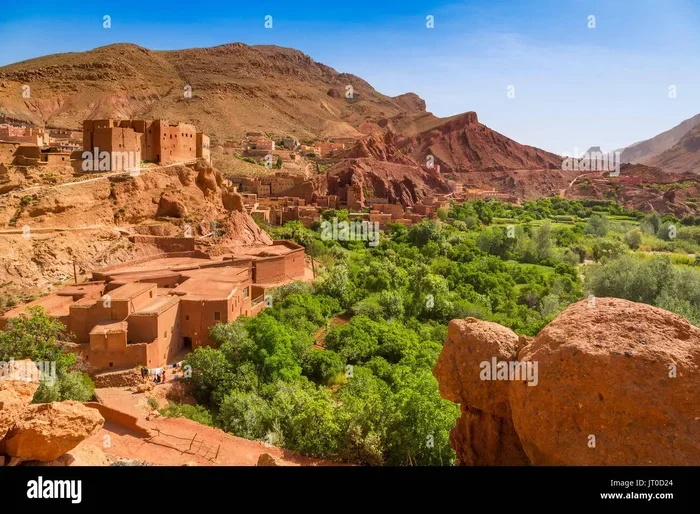
Featured image for Dades Valley Morocco landscape
Image source: c8.alamy.com
The Marrakech to Dades Valley tour is one of Morocco’s most spectacular journeys, crossing the High Atlas Mountains via the Tizi n’Tichka pass before descending into ancient kasbahs, rose gardens, and dramatic gorges. This 3-5 day itinerary typically includes stops at Ait Ben Haddou, Ouarzazate, the Rose Valley, and ends in the breathtaking Dades Valley. Whether you choose a guided group tour or a private driver, the route offers stunning landscapes, cultural encounters with Berber communities, and unforgettable photo opportunities. Most travelers complete the journey in 3 days, though 4-5 days allows for deeper exploration of Todra Gorge and the surrounding desert regions.
Marrakech’s bustling medina fades in your rearview mirror as your vehicle begins climbing into the High Atlas Mountains. Within an hour, the city’s honking scooters and crowded souks feel like another world. Ahead lies a journey that has captivated travelers for centuries: the road from Marrakech to the Dades Valley, winding through ancient kasbahs, desert oases, and some of North Africa’s most dramatic landscapes.
Think of this itinerary like reading a great novel, where each chapter reveals something new. The first pages take you up into snow-capped mountains. The middle introduces you to Hollywood-famous film sets and silent desert fortresses. The final chapters unfold in rose-scented valleys and towering red gorges that look painted by an artist’s hand. Every kilometer tells a story of Berber heritage, trading caravans, and landscapes that haven’t changed in a thousand years.
This comprehensive guide covers everything you need to plan the perfect Marrakech to Dades Valley adventure. You’ll discover the best routes, top stops, accommodation options, and practical tips that locals wish every traveler knew. Whether you have three days or five, this itinerary transforms a simple transfer into the highlight of your Moroccan journey.
Key Takeaways
- The route crosses the Atlas Mountains: The Tizi n’Tichka pass reaches 2,260 meters, making it Morocco’s highest major mountain road and a dramatic starting point for the journey south.
- A UNESCO World Heritage Site awaits: Ait Ben Haddou, a fortified village dating to the 17th century, is a must-see stop and has appeared in over 20 Hollywood films.
- 3 days is the sweet spot: Most travelers find 3-4 days ideal for this itinerary, balancing travel time with meaningful exploration of kasbahs and valleys.
- Private drivers offer flexibility: Unlike group tours, hiring a private driver allows you to stop for photos, visit hidden Berber villages, and adjust your pace.
- Spring and autumn are the best seasons: March-May and September-November offer comfortable temperatures, blooming rose gardens, and clear mountain views.
- The Dades Valley is famous for its gorges: The “Road of a Thousand Kasbahs” winds through towering red rock formations that are 300 million years old.
- Budget ranges from $50-$200 per day: Costs vary based on tour style, accommodation choices, and whether you opt for guided or independent travel.
📑 Table of Contents
Why Take a Marrakech to Dades Valley Tour?
You might wonder why so many travelers dedicate multiple days to a journey that technically takes only 6-7 hours by car. The answer lies in what you’d miss if you rushed. This route passes through four distinct geographical regions, each with its own climate, culture, and character. Skipping the stops is like fast-forwarding through your favorite movie, technically seeing it, but missing everything that made it special.
Morocco’s tourism statistics reveal that over 70% of visitors who leave Marrakech head south on this exact corridor. The region attracts adventure seekers, photographers, history buffs, and cultural travelers in equal measure. The Dades Valley, your final destination, has been called Morocco’s “Grand Canyon lite,” a place where the desert meets dramatic geology in ways that surprise even experienced travelers.
The Cultural Significance of the Route
For centuries, this pathway served as a crucial connection between the Atlas Mountains and the Sahara Desert. Caravans loaded with goods traveled these roads for trade, and the kasbahs you see today were built to protect these valuable cargoes. When you drive this route, you’re literally following in the footsteps of merchants who shaped North African history.
Did You Know? The word “kasbah” comes from the Arabic word for “citadel.” Many of the kasbahs along this route are over 400 years old and were once home to powerful local chieftains who controlled the surrounding territories.
What Makes This Journey Unforgettable
The Marrakech to Dades Valley route packs an astonishing variety of experiences into a compact timeframe. One morning you might be watching artisans craft pottery in a centuries-old workshop, and by afternoon you’re standing in a gorge so deep that sunlight only reaches the bottom for a few hours each day. This variety is what makes the journey so memorable, and why most travelers return home already planning their next trip.
Planning Your Marrakech to Dades Valley Itinerary
Before you pack your bags, understanding your options helps you craft the perfect trip. The two main decisions involve your travel style (guided tour versus private driver) and your timeframe (3, 4, or 5 days). Each combination offers a different experience, and what works best depends on your budget, interests, and comfort preferences.
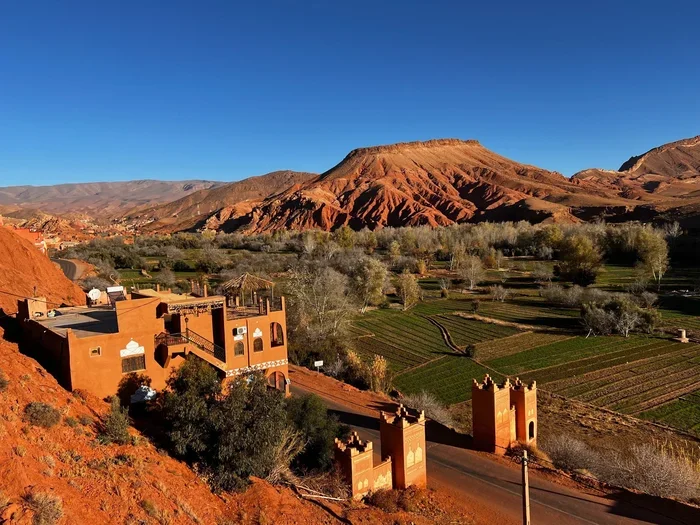
Visual guide about Dades Valley Morocco landscape
Image source: images.squarespace-cdn.com
Choosing Your Tour Type
Guided Group Tours are the most budget-friendly option, typically costing between $50-$80 per person per day with shared accommodation. These tours follow a set itinerary with 8-15 other travelers and an English-speaking guide. The advantages include lower costs, built-in social interaction, and a guide who handles all logistics. The disadvantages are fixed schedules and less flexibility for spontaneous stops.
Private Driver Tours cost more, usually $120-$200 per day for the entire vehicle and driver, but split between 3-4 travelers, the price becomes reasonable. You control the pace, choose where to stop for photos, and can modify the route on the fly. This option works especially well for photographers or travelers who dislike rigid schedules.
Self-Drive Adventures offer maximum freedom but require confidence on winding mountain roads. Rental cars cost $30-$50 per day, and the roads are generally well-maintained. However, navigating medina exits in Marrakech can be challenging, and you’ll miss out on local knowledge a guide provides.
Best Time of Year to Travel
Morocco’s climate varies dramatically by region and season, making timing important for an enjoyable experience. The ideal windows are spring (March-May) and autumn (September-November), when temperatures hover between 20-28°C (68-82°F) during the day. These months also bring blooming flowers in the Rose Valley and clear visibility for mountain photography.
Summer (June-August) brings extreme heat, especially in the valleys where temperatures regularly exceed 40°C (104°F). Winter (December-February) can be surprisingly cold at higher elevations, with snow occasionally blocking the Tizi n’Tichka pass. If you travel in winter, pack warm layers and check weather forecasts before departure.
What to Pack for the Journey
Think of packing for this trip like preparing for three different climates in one suitcase. You’ll need lightweight clothing for valley days, warm layers for mountain mornings, and modest attire for visiting religious sites. Comfortable walking shoes are essential, as many stops involve climbing through kasbahs or exploring uneven terrain.
Essential items include sunscreen (the Moroccan sun is intense), a refillable water bottle, a headscarf for women visiting religious sites, a camera with extra batteries, and a small daypack for excursions. Most accommodations provide towels and basic toiletries, so you can save space for the things that matter most.
The Ultimate 4-Day Marrakech to Dades Valley Itinerary
This 4-day itinerary strikes the perfect balance between comprehensive exploration and comfortable pacing. While 3 days work for travelers short on time, 4 days allows you to truly absorb each location without feeling rushed. For those with extra time, I’ve included suggestions for extending to 5 days at the end of this section.
Day 1: Marrakech to Ait Ben Haddou via the Atlas Mountains
Your adventure begins with an early morning departure from Marrakech, ideally around 7:00 AM to avoid city traffic and catch the best mountain light. The first leg takes you southwest toward the High Atlas Mountains, climbing steadily through changing landscapes. The journey takes you through the Tizi n’Tichka pass, which sits at 2,260 meters (7,415 feet) above sea level.
The drive itself becomes a highlight as you wind through traditional Berber villages where life has changed little over the centuries. Children wave at passing vehicles, shepherds guide their flocks along ancient paths, and terraced farms cling to hillsides too steep for machinery. Stop at one of the viewpoint pull-offs for your first photos of the snow-capped Atlas range.
After crossing the pass, you’ll descend toward Ait Ben Haddou, a UNESCO World Heritage Site and arguably Morocco’s most famous ksar (fortified village). This earthen clay citadel dates to the 17th century and served as a vital stop for caravans transporting salt, gold, and slaves across the Sahara. Today, it’s a living museum and filming location, having appeared in productions like “Gladiator,” “Lawrence of Arabia,” and “Game of Thrones.”
Did You Know? The current inhabitants of Ait Ben Haddou abandoned the old village decades ago, moving to modern homes across the river. However, several families still maintain shops and homes within the ancient walls, and some offer overnight stays in traditional riads.
Cross the river and climb into the kasbah’s narrow passageways. Every corner reveals a new photo opportunity, from intricately carved doorways to rooftop terraces with sweeping valley views. Allow at least two hours for exploration, and don’t miss the climb to the top of the highest tower, where the panoramic view justifies every step.
Overnight near Ait Ben Haddou or continue 30 minutes further to Ouarzazate, known as the “Gateway to the Sahara.” This modern town offers more accommodation options and restaurants, plus the option to visit the Atlas Film Studios, where many famous movies were created.
Day 2: Ouarzazate to the Rose Valley and Skoura
Day two begins with breakfast overlooking Ouarzazate, then heads east into the Valley of a Thousand Kasbahs. This stretch of road earns its dramatic name honestly, with earthen fortresses appearing every few kilometers, each telling stories of power struggles and desert kingdoms.
Your first major stop is the Taourirt Kasbah in Ouarzazate, once the residence of the Glaoui clan who controlled the region until Moroccan independence in 1956. The kasbah’s maze of rooms, courtyards, and secret passages offers a fascinating glimpse into how Morocco’s elite lived. The painted ceilings in some rooms showcase the craftsmanship that made these buildings so important.
Continue toward Skoura, a fertile oasis known for its palm groves and hidden kasbahs. The Amerhidil Kasbah, one of Morocco’s most photographed buildings, stands here surrounded by date palms and traditional farmland. Unlike busier tourist stops, Skoura feels authentically Moroccan, with locals going about daily life largely unaffected by tourism.
By afternoon, you’ll reach the Rose Valley, named for the Damascus roses that bloom here each spring. The valley produces roughly 4,000 tons of roses annually, used to make rose water, oils, and cosmetics sold throughout Morocco. Visit during the annual Rose Festival in May, when the valley explodes with color, music, and celebration. Even outside festival season, local cooperatives welcome visitors to learn about rose production and purchase products directly from the source.
Overnight in the Rose Valley or push on to Boumalne Dades, the gateway to your final destination. The choice depends on your energy level and whether you want to enjoy a quieter evening in a smaller town.
Day 3: Dades Valley Exploration
Wake up to spectacular views as you enter the Dades Valley proper, often called the “Valley of Figs” for the orchards that line the river. The landscape shifts dramatically here, with the road threading between towering rock formations that glow red and orange in the morning sun. These 300-million-year-old geological wonders create a setting that feels more American Southwest than North Africa.
The morning’s main attraction is the famous “Road of a Thousand Kasbahs” winding through the valley floor. Take your time on this drive, stopping frequently to photograph the dramatic scenery. Local children often appear at viewpoints selling fossils and minerals, a tradition that has continued for generations. While purchasing is optional, polite negotiation supports local families.
By mid-morning, arrive at the Dades Gorge, where the road climbs through a series of hairpin turns carved into solid rock. The switchbacks are an engineering marvel, and the views from the top reward every curve. At the summit, several small cafes serve mint tea with panoramic vistas that stretch for miles. This is the spot where most travelers agree their cameras ran out of storage space.
Did You Know? The Dades Gorge walls contain marine fossils dating back 300 million years, when this entire region lay beneath a prehistoric ocean. You can spot these fossils embedded in the rocks, visible evidence of Earth’s dramatic transformation over geological time.
Spend the afternoon hiking through the gorge or visiting one of the traditional Berber villages tucked into the valley walls. The hiking trails range from easy riverside walks to challenging climbs that reward hikers with untouched views. Your guide can recommend routes based on your fitness level and available time.
For your final night, choose between staying in a valley riad with garden views or a cliff-side hotel offering sunset panoramas. Many accommodations in the Dades Valley feature rooftop terraces where you can watch the sunset paint the gorge walls in shades of gold and crimson, a perfect ending to your Moroccan adventure.
Day 4: Return to Marrakech (or Continue to Merzouga)
On your final day, you have two main options. Most travelers return to Marrakech via the same route, a 6-7 hour drive that can be broken up with stops in Ouarzazate for lunch and at the Tizi n’Tichka pass for final mountain photos. If you have additional time, consider continuing east to the Sahara Desert at Merzouga, adding 2-3 more days to your journey.
For those returning to Marrakech, the drive back feels surprisingly fast, likely because you’re now familiar with the route and what to look for. Many travelers use this return trip to photograph locations they passed quickly on the outbound journey. Arrive in Marrakech by late afternoon, giving you time to freshen up before a final dinner in the famous Jemaa el-Fnaa square.
For those continuing to the Sahara, you’ll drive from the Dades Valley to Merzouga via Todra Gorge and Erfoud, a journey that takes you deeper into Morocco’s most iconic landscapes. The Erg Chebbi dunes rise suddenly from the desert floor, creating a sea of sand that stretches to the horizon. Camel treks, overnight desert camps, and stunning sunrises await those who extend their adventure.
Essential Stops Along the Route
While the main itinerary covers the highlights, several smaller stops deserve attention. These lesser-known locations add depth to your journey and provide opportunities to connect with local culture in ways that major tourist sites cannot match.
Telouet Kasbah
Located just off the main road between Marrakech and Ait Ben Haddou, the Telouet Kasbah often gets overlooked by travelers focused on reaching the more famous sites. This kasbah was the principal seat of the Glaoui power, and its interior decorations rival anything in Morocco. The elaborate cedar ceilings, intricate stucco work, and colorful tiles show what wealth and influence could create in the early 20th century. Unlike Ait Ben Haddou, which is partially restored, Telouet feels wonderfully authentic, with crumbling walls that speak to its complicated history.
Toufenfte and the Berber Markets
Every village along the route has its own market day, and timing your visit to coincide with one creates a memorable cultural experience. These souks (markets) bring together farmers, artisans, and traders from surrounding villages, creating lively scenes of commerce and community. The markets typically operate one day per week, rotating between different villages, so check the schedule with your accommodation or guide.
The Salt Mines of Ouarzazate
While not as famous as the kasbahs, the salt mining operations near Ouarzazate offer fascinating insights into traditional industries that have operated for centuries. Local miners extract salt from ancient deposits, working in conditions that have changed little over generations. The nearby markets sell these salts in various forms, and visitors can purchase samples to take home.
Where to Stay: Accommodation Guide
Accommodation along the Marrakech to Dades Valley route ranges from basic guesthouses to luxury riads, with options to suit every budget and preference. The key is booking in advance during peak season (March-May, September-November) when the best properties fill quickly.
Budget Options ($20-$50 per night)
Budget travelers will find clean, comfortable guesthouses throughout the route, particularly in smaller villages. These family-run establishments offer simple rooms, shared or private bathrooms, and home-cooked meals. The hospitality more than compensates for modest facilities, with hosts often inviting guests to share mint tea and conversation. Examples include Chez Talout in Ait Ben Haddou and several well-rated options in Boumalne Dades.
Mid-Range Options ($50-$120 per night)
Mid-range accommodations offer the best value, providing comfortable rooms, often with traditional Moroccan decor, private bathrooms, and excellent meals. Many feature rooftop terraces, swimming pools, and stunning views. Properties like Dar Ahlam in the Dades Valley or Riad Caravane in the Rose Valley deliver memorable experiences without luxury prices.
Luxury Options ($120-$300+ per night)
Luxury travelers will find exceptional properties along the route, including restored kasbahs and boutique hotels that offer world-class amenities in spectacular settings. These properties typically include gourmet dining, spa services, and personalized experiences like private cooking classes or guided hikes. Examples include the Kasbah Bab Ourika and various high-end options in the Skoura region.
Practical Tips for a Memorable Journey
After years of traveling this route, both as a guide and a traveler, I’ve compiled tips that make the difference between a good trip and an unforgettable one. These insights come from real experiences, both successful and challenging, and they address the practical questions that arise before and during your journey.
Money and Tipping
Carry cash in small denominations, as many rural locations don’t accept credit cards and ATMs can be unreliable outside major towns. Moroccan Dirham (MAD) is the local currency, and exchanging money at official bureaus offers better rates than hotels or restaurants. Tipping is customary and appreciated, with 10-15% being standard at restaurants and 20-50 dirhams per day appropriate for guides and drivers.
Staying Connected
Purchase a local SIM card upon arrival in Marrakech, as mobile coverage along the route is generally good and data is affordable. The main providers (Maroc Telecom, Orange, and Inwi) all offer tourist packages with generous data allowances. Wi-Fi is available at most accommodations but can be slow, making a local SIM a reliable backup for navigation and communication.
Health and Safety
The Marrakech to Dades Valley route is generally very safe, with friendly locals and well-maintained roads. Standard travel precautions apply: keep valuables secure, avoid drinking tap water (stick to bottled), and carry basic medications for stomach issues, as changes in food and water can affect sensitive stomachs. The mountain roads can be winding, so if you’re prone to motion sickness, bring appropriate medication.
Photography Tips
This route is a photographer’s paradise, but capturing its beauty requires some planning. The light is best in early morning and late afternoon, when the sun creates warm tones and dramatic shadows. Midday light can be harsh, particularly in the valleys, so plan indoor activities or travel during these hours. Always ask permission before photographing people, and respect signs indicating where photography is restricted.
Cultural Etiquette
Morocco is a Muslim country with conservative customs, and respecting local traditions enhances your experience. Dress modestly, particularly when visiting religious sites or rural communities. Remove shoes when entering mosques or traditional homes. During Ramadan, avoid eating, drinking, or smoking in public during daylight hours. Learning a few Arabic or Berber phrases like “salaam alaikum” (peace be upon you) goes a long way in building goodwill.
As your journey concludes and the Dades Valley’s red gorges fade in your rearview mirror, you’ll carry memories that last a lifetime. The Marrakech to Dades Valley tour offers something rare in modern travel: a genuine adventure through landscapes and cultures that have remained largely unchanged for centuries. The mountains, kasbahs, and warm Berber hospitality create an experience that feels both timeless and personal.
Whether you spent three days or five, watched the sunrise over the Atlas Mountains or explored hidden villages along the way, this journey connects you to Morocco’s heart in ways that no urban experience can match. The friendships you build with fellow travelers, the conversations with local guides, and the moments of wonder at nature’s beauty all combine into something truly special. This isn’t just a tour; it’s a story you’ll tell for years to come, and one that will draw you back to Morocco again and again.