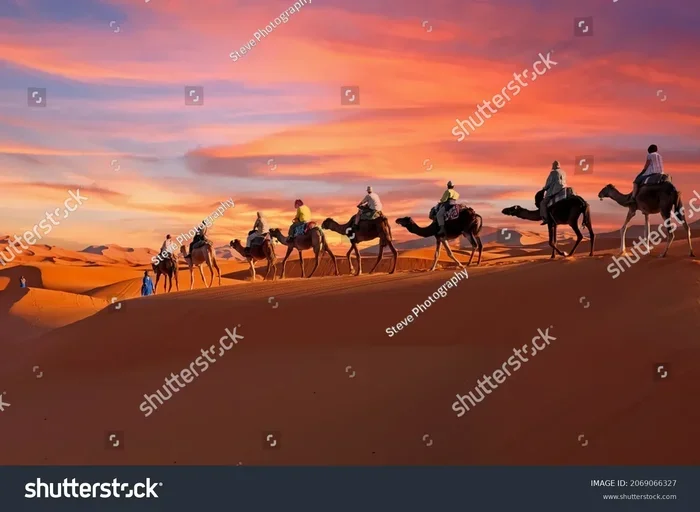
Featured image for Sahara Desert camel caravan sunset
Image source: shutterstock.com
A Fes to Sahara Desert 15 Day Tour is the ultimate Moroccan adventure, weaving together ancient imperial cities, dramatic mountain passes, and the breathtaking golden dunes of the Sahara. This extended journey allows travelers to fully immerse themselves in Berber culture, explore UNESCO World Heritage Sites, and experience iconic camel treks into Erg Chebbi or Erg Chigaga. Perfect for slow travelers and culture enthusiasts, this tour balances guided exploration with authentic local encounters across Morocco’s most stunning landscapes.
Magine spending fifteen unforgettable days traveling from the spiritual heart of Fes to the endless golden waves of the Sahara Desert. This is not just a tour, it’s a journey through time, culture, and some of the most breathtaking scenery on Earth. Think of it like reading a great novel where every chapter reveals something new and exciting.
Morocco sits at the crossroads of Africa, Europe, and the Middle East, and a Fes to Sahara Desert 15 Day Tour captures all of these influences in one spectacular route. You’ll wander through medieval medinas, stand before Roman ruins, cross snow-capped mountains, and sleep under a blanket of stars in the desert. This is the kind of trip that changes how you see the world.
Whether you’re a solo adventurer, a couple seeking a romantic escape, or a family hungry for cultural discovery, this comprehensive guide will help you understand exactly what to expect, how to prepare, and why this particular Moroccan experience deserves a spot at the top of your travel bucket list. Let’s dive in!
Key Takeaways
- Comprehensive Route: A 15-day itinerary covers Fes, Meknes, Volubilis, the Middle Atlas, Merzouga/Erg Chebbi, Todra Gorge, Ouarzazate, Ait Benhaddou, and Marrakech.
- Diverse Landscapes: Travelers experience cedar forests, sand dunes, gorges, valleys, and bustling medinas all in one trip.
- Cultural Immersion: The tour includes authentic Berber experiences like mint tea rituals, traditional music, and overnight stays in desert camps.
- Balanced Pacing: 15 days allows deeper exploration without rushing, ideal for travelers aged 30-70 who want depth over speed.
- Best Travel Seasons: Spring (March-May) and autumn (September-November) offer the most comfortable temperatures for desert crossings.
- Budget Range: Prices typically range from $1,200-$3,500 per person depending on accommodation style (standard to luxury).
- Physical Requirements: Moderate fitness is recommended for camel rides and walking through medina alleyways, though no extreme hiking is required.
📑 Table of Contents
- What Is a Fes to Sahara Desert 15 Day Tour?
- The Detailed 15-Day Itinerary Breakdown
- Why Choose a 15 Day Tour Over Shorter Options?
- What Makes the Sahara Desert Experience Special?
- How to Choose the Right Tour Operator
- When to Book and What to Pack
- Budget Breakdown: What Does a 15 Day Tour Cost?
- Sustainable and Responsible Tourism
- Final Thoughts: Is This Tour Right for You?
What Is a Fes to Sahara Desert 15 Day Tour?
A Fes to Sahara Desert 15 Day Tour is a guided overland journey that begins in the imperial city of Fes and ends either back in Fes or in Marrakech, depending on the route. It covers roughly 1,800 to 2,200 kilometers and includes transportation, accommodation, most meals, and a licensed local guide.
Unlike shorter 3-day or 7-day desert trips, the 15-day version gives you breathing room. You won’t feel like you’re racing from one postcard view to the next. Instead, you settle into each destination, talk to locals, sip mint tea, and really absorb the rhythm of Moroccan life.
Did You Know? Morocco welcomed approximately 14.5 million international tourists in 2023, with cultural and desert tours ranking among the top three reasons visitors choose the country. The Sahara region alone attracts over 40% of all tourists who visit Morocco.
The Core Experience
At its heart, this tour is about contrast. One day you’re walking through a 9th-century medina filled with donkey carts and spice merchants. A few days later, you’re watching the sun set behind sand dunes that stretch as far as the eye can see. It’s like traveling through different countries in a single vacation.
Who Is This Tour For?
This itinerary appeals to travelers who want depth, not just snapshots. It’s perfect for:
- Culture enthusiasts who love history, architecture, and storytelling
- Nature lovers drawn to mountains, deserts, and dramatic landscapes
- Photographers seeking golden light and unique cultural portraits
- Slow travelers (typically aged 30-70) who prefer immersive experiences over whirlwind tours
- Families with children over 10, especially those interested in adventure
The Detailed 15-Day Itinerary Breakdown
Let’s walk through what a typical 15-day route looks like. Think of this as your roadmap, though every tour operator tweaks it slightly based on local conditions and guest preferences.
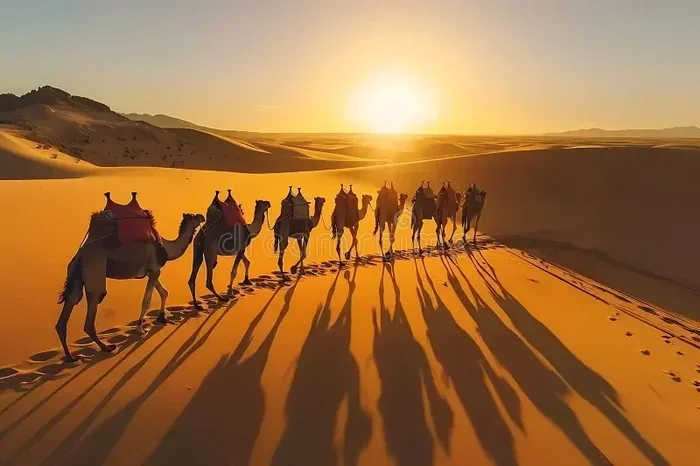
Visual guide about Sahara Desert camel caravan sunset
Image source: thumbs.dreamstime.com
Days 1-2: Exploring Fes and Meknes
Your adventure starts in Fes, Morocco’s oldest imperial city and a UNESCO World Heritage Site since 1981. A local guide leads you through the famous Fes el Bali medina, a labyrinth of more than 9,000 alleys where GPS often fails. You’ll visit the Al-Qarawiyyin University, founded in 859 AD and recognized by Guinness World Records as the oldest continuously operating university in the world.
Day two often includes a side trip to Meknes and the nearby Roman ruins of Volubilis. Picture the Roman Empire’s North African capital, with mosaics still intact after nearly 2,000 years. It’s like stepping into an open-air museum.
Days 3-4: Middle Atlas Mountains
Heading south, you climb into the Middle Atlas Mountains. The scenery shifts dramatically from urban medinas to cedar forests and volcanic craters. In Ifrane, often called “Little Switzerland of Morocco,” you’ll notice European-style architecture and clean streets, a surprising contrast to the bustling cities.
The Azrou Cedar Forest is home to the endangered Barbary macaque, the only primate species native to North Africa. Stopping here feels like a National Geographic moment, especially if a curious monkey approaches your vehicle.
Days 5-7: Journey to the Sahara Desert
This is the heart of the tour, the part travelers dream about. The route passes through the Ziz Valley, a stunning palm oasis that looks like a green river cutting through the desert. By day six or seven, you arrive in Merzouga or M’Hamid, the gateways to the Sahara.
Here’s where the magic happens. You mount a camel (or “ship of the desert,” as locals call it) and ride into Erg Chebbi, where some dunes rise 150 meters high. The silence is profound, broken only by the wind and the soft footfall of your camel.
Did You Know? The Sahara Desert covers approximately 9.2 million square kilometers across 11 countries. Morocco’s portion includes two major dune seas: Erg Chebbi (near Merzouga) and Erg Chigaga (near M’Hamid), each with distinct personalities.
Days 8-10: Desert Exploration and Todra Gorge
After a sunrise camel ride and a traditional Berber breakfast in the desert camp, you head west toward Todra Gorge, a massive canyon with walls reaching 400 meters high. Rock climbers from around the world come here, but most visitors simply marvel at the scale.
The Dades Valley, with its bizarre “monkey fingers” rock formations, offers some of the most photographed landscapes in Morocco. It’s a bit like the American Southwest, but with kasbahs (fortified houses) dotting the horizon.
Days 11-13: Ait Benhaddou and Ouarzazate
Few places capture the imagination quite like Ait Benhaddou, a UNESCO-listed earthen clay village that has served as the backdrop for films like Gladiator, Lawrence of Arabia, and Game of Thrones. Walking through it feels like entering a movie set, except it’s real and people still live here.
Ouarzazate, known as the “Hollywood of Africa,” houses the largest film studio in the world, Atlas Studios. Movie buffs love this stop, but even non-film fans appreciate the fascinating Taourirt Kasbah and the stunning surrounding desert.
Days 14-15: Marrakech or Return to Fes
The final stretch typically ends in Marrakech, Morocco’s most vibrant city. The famous Jemaa el-Fnaa square comes alive at night with snake charmers, storytellers, food stalls, and musicians. It’s sensory overload in the best possible way.
Alternatively, some tours loop back to Fes, especially if you’d rather avoid Marrakech’s hustle. Either way, day fifteen is bittersweet, because by now, Morocco has likely captured your heart.
Why Choose a 15 Day Tour Over Shorter Options?
You might wonder why 15 days specifically. Why not 7 or 10? The answer is simple: the journey from Fes to the Sahara and back (or onward to Marrakech) covers vast distances, and rushing through it would mean missing the soul of Morocco.
Depth Over Speed
Imagine trying to understand a symphony by listening to 30-second clips. That’s what a 3-day Sahara tour feels like. A 15-day itinerary lets you hear the full composition, with all its movements, harmonies, and quiet pauses.
According to a 2023 survey by the Adventure Travel Trade Association, travelers aged 35-65 rate “authentic cultural interaction” as their top priority when choosing multi-day tours. A longer itinerary simply provides more opportunities for genuine connection.
Comfort and Pacing
Driving distances in Morocco can be long. The stretch from Fes to Merzouga alone takes about 8-9 hours. On a short tour, that drive eats up most of your time. On a 15-day tour, you break it up with overnight stops in scenic towns, making the journey part of the adventure rather than a chore.
Value for Money
While a 15-day tour costs more upfront than a 3-day trip, the per-day cost is often significantly lower. You’re also getting far more inclusions: guided medina tours, multiple camel rides, cooking classes, traditional music performances, and museum entries that shorter tours charge extra for.
What Makes the Sahara Desert Experience Special?
The Sahara isn’t just a place. It’s a feeling. Standing on a dune at sunset, watching the sand shift from gold to orange to deep purple, is something photos can never fully capture. It’s like trying to describe the taste of salt to someone who has never eaten.
The Camel Trek
Camels have been the transportation choice in the Sahara for thousands of years. They’re beautifully adapted to the harsh environment, able to go days without water and survive on thorny desert plants. Riding one feels oddly smooth, rocking side to side like a boat on gentle waves.
Most tours include a 1-2 hour camel ride into the dunes, followed by an overnight stay in a desert camp. Luxury camps feature private tents with en-suite bathrooms, while standard camps offer shared facilities but equally stunning starry skies.
Stargazing in the Desert
With virtually no light pollution, the Sahara offers some of the best stargazing on the planet. On a clear night, you can see the Milky Way stretching across the sky, along with thousands of stars and even the occasional shooting star. Many tours include astronomy sessions with local Berber guides who explain the constellations through traditional stories.
Did You Know? The Sahara’s skies are so dark that they’ve been recognized by the International Dark-Sky Association as a premier destination for astrotourism. Some camps now offer professional telescopes for guests.
Berber Culture Encounters
The indigenous people of the Sahara are the Berbers (or Amazigh, meaning “free people”). During your desert stay, you’ll likely experience:
- Traditional Gnawa music performances
- Henna painting ceremonies
- Berber bread baked in sand ovens
- Talking drums around a campfire
- Authentic tagine meals cooked over open flames
How to Choose the Right Tour Operator
Not all tour operators are created equal. Selecting the right one can make the difference between a magical trip and a disappointing one.
Look for Licensed Guides
In Morocco, official guides must carry a license from the Ministry of Tourism. Licensed guides speak multiple languages, undergo background checks, and receive ongoing training. Always confirm your guide’s credentials before booking.
Check Reviews and References
Platforms like TripAdvisor, Google Reviews, and GetYourGuide offer insights from previous travelers. Look for operators with consistently high ratings (4.5+ stars) and detailed reviews mentioning specific guides, drivers, and experiences.
Understand What’s Included
Before booking, get a clear breakdown of inclusions:
- Transportation (4×4 vehicle vs. minibus)
- Accommodation type and star rating
- Daily breakfast and dinner inclusion
- Camel trek and desert camp fees
- Entry fees to monuments and parks
- Tip expectations for guides and drivers
Compare Price vs. Value
The cheapest tour isn’t always the best deal. A $900 tour might exclude meals, charge extra for the camel ride, or use substandard camps. A $1,800 tour might include everything plus airport transfers and a cooking class. Focus on value, not just price.
When to Book and What to Pack
Timing matters. Booking 3-6 months in advance is wise, especially if you plan to travel during peak season (October-April) or want specific luxury desert camps.
Best Months for the Tour
Spring (March-May) and autumn (September-November) offer the most comfortable temperatures. Summer (June-August) can be brutally hot in the desert, with temperatures exceeding 45°C (113°F). Winter (December-February) brings cold desert nights, sometimes dropping below 5°C (41°F), though days remain pleasant.
Essential Packing List
Think layers. Morocco’s climate varies dramatically from cold mountain passes to scorching desert days. Bring:
- Lightweight, breathable clothing for daytime
- A warm jacket for desert nights and mountain evenings
- Comfortable walking shoes (medina alleys are uneven)
- A scarf or shemagh for sand protection
- Sunscreen (SPF 30+ minimum)
- A reusable water bottle
- Power adapter (Morocco uses Type C and E plugs)
- A headscarf for women visiting religious sites
- Personal medications and basic first aid
Health and Safety Considerations
Morocco is generally safe for tourists. Petty crime exists in crowded areas, so keep valuables secure. The U.S. State Department rates Morocco as Level 2 (“Exercise Increased Caution”), primarily due to petty theft rather than violent crime. Tap water isn’t recommended, but bottled water is widely available.
Vaccinations aren’t required for entry, though hepatitis A and typhoid are sometimes suggested. Consult your doctor 4-6 weeks before departure.
Budget Breakdown: What Does a 15 Day Tour Cost?
Pricing varies based on accommodation, group size, and inclusions. Here’s a realistic breakdown:
- Budget tours: $1,200-$1,800 per person (shared rooms, basic desert camp, group of 12+)
- Mid-range tours: $1,800-$2,500 per person (private or small group, standard desert camp, 3-4 star hotels)
- Luxury tours: $2,500-$3,500+ per person (private guide, luxury desert camp with private bathroom, 4-5 star riads)
These prices typically include the guide, driver, vehicle, accommodation, breakfast and dinner daily, camel trek, desert camp, and monument fees. Lunch, drinks, souvenirs, and tips are usually extra.
Did You Know? Tipping is customary in Morocco. Budget around $10-15 per day for your driver and $15-20 per day for your guide. Desert camp staff and camel handlers also appreciate small tips ($5-10).
Sustainable and Responsible Tourism
As tourism grows in Morocco, so does the importance of traveling responsibly. The Sahara’s fragile ecosystem and traditional Berber communities benefit when visitors choose ethical operators.
Supporting Local Communities
Choose tour operators that employ Moroccan guides, stay in locally-owned riads and camps, and partner with Berber cooperatives. Your tourism dollars directly support families and preserve traditional ways of life.
Environmental Considerations
The desert environment is delicate. Avoid littering, stick to marked trails, and respect wildlife. Some tours now include visits to solar-powered desert camps and eco-friendly accommodations, reducing the environmental footprint.
Respecting Cultural Norms
Morocco is a Muslim country with conservative values in many areas. Dress modestly, especially when visiting religious sites or rural villages. Ask permission before photographing people, and respect prayer times when shops and restaurants may briefly close.
Final Thoughts: Is This Tour Right for You?
A Fes to Sahara Desert 15 Day Tour is more than a vacation. It’s a journey into one of the world’s most fascinating cultures, landscapes, and histories. From the chaotic beauty of Fes medina to the silent majesty of Erg Chebbi, every day brings something memorable.
If you’re the kind of traveler who wants to truly understand a place rather than just photograph it, who values meaningful conversations over checklist sightseeing, and who dreams of sleeping under desert stars, this tour was designed for you.
The combination of imperial cities, mountain passes, ancient ruins, and Saharan dunes creates a travel experience unlike any other. It’s the kind of trip you’ll talk about for years, the one your friends ask about when they’re planning their own adventures.
So, is a Fes to Sahara Desert 15 Day Tour on your bucket list? With proper planning, the right operator, and an open heart, it absolutely should be. Morocco is waiting, and the Sahara has stories to tell.
Frequently Asked Questions
How much does a Fes to Sahara Desert 15 Day Tour typically cost?
A 15-day tour from Fes to the Sahara usually costs between $1,200 and $3,500 per person, depending on accommodation quality and group size. Budget tours use shared transport and basic camps, while luxury options include private guides and premium desert camps with en-suite facilities.
What is the best time of year to do a Fes to Sahara Desert 15 Day Tour?
Spring (March to May) and autumn (September to November) are the best seasons. Temperatures are comfortable for both desert crossings and mountain drives. Summer can be dangerously hot in the Sahara, while winter nights can be surprisingly cold.
Do I need a visa for Morocco to join this tour?
Citizens of over 60 countries, including the US, UK, Canada, Australia, and most EU nations, can enter Morocco visa-free for stays up to 90 days. Always check your specific country’s requirements before booking, as rules occasionally change.
Is the camel ride in the Sahara safe for beginners?
Yes, camel rides in Merzouga are very safe and suitable for beginners. Camels are well-trained, handlers assist you throughout, and rides typically last 1-2 hours. The motion can feel unusual at first, but most travelers adapt within minutes.
What type of accommodations can I expect on this tour?
Accommodations range from traditional riads (Moroccan guesthouses) in cities, to mid-range hotels in smaller towns, to Berber desert camps in the Sahara. Standard camps offer shared bathrooms, while luxury camps feature private tents with proper beds and en-suite facilities.
Can I customize a 15-day Fes to Sahara tour to end in Marrakech instead of returning to Fes?
Absolutely. Most operators offer flexible routes that end in either Fes or Marrakech. Many travelers prefer finishing in Marrakech to explore its famous souks, gardens, and vibrant nightlife before flying home from Marrakech Menara Airport.