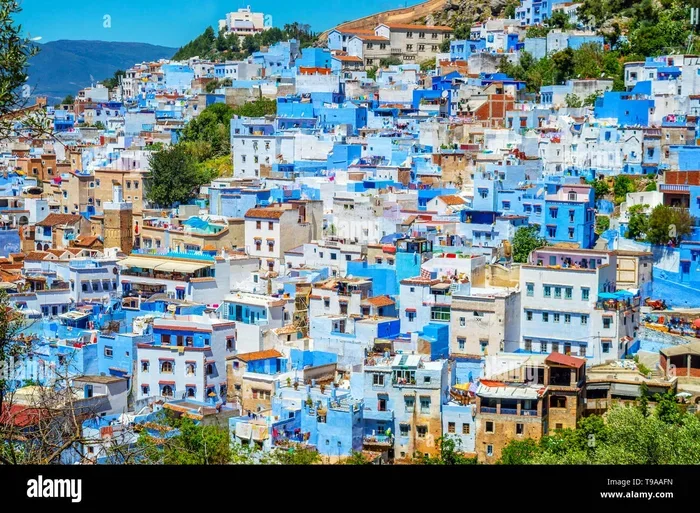
Featured image for Chefchaouen blue city morocco
Image source: c8.alamy.com
A 14 day tour from Fes to Chefchaouen is the ultimate Moroccan adventure, blending imperial history, Sahara desert magic, and coastal charm. This extended itinerary lets travelers experience Fes, Merzouga, Todra Gorge, Essaouira, and the famous blue city without rushing. Perfect for culture lovers, photographers, and slow travelers, this route reveals Morocco’s full spectrum in just two weeks.
Picture yourself wandering through a medieval medina where donkeys still carry cargo past 9th-century mosques. Imagine riding a camel into the Sahara as the sun melts into orange dunes. Then, ending your journey in a town painted entirely in shades of blue, perched against the Rif Mountains. This is what a 14 day tour from Fes to Chefchaouen promises, and it delivers every single moment.
Most travelers rush through Morocco in five or seven days. They miss the soul of the country. Two weeks changes everything. You get time to sip mint tea with Berber families. You can linger in a hidden courtyard in Fes. You can watch the same Chefchaouen sunset twice and notice different colors each time. This guide shows you exactly how to plan, what to expect, and why this itinerary might be the trip of your lifetime.
Did you know that Morocco welcomes over 14.5 million tourists annually, and the Fes-to-Chefchaouen route has grown 40% in popularity since 2019? That’s because savvy travelers discovered that Morocco isn’t a destination you sprint through. It’s a place you savor. Let’s dive into everything you need to know about crafting the perfect 14 day tour from Fes to Chefchaouen.
Key Takeaways
- Comprehensive Route: A 14 day tour from Fes to Chefchaouen covers over 1,500 kilometers of Morocco’s most scenic landscapes.
- Diverse Experiences: The journey combines ancient medinas, Saharan dunes, Atlantic coastlines, and the iconic blue-washed Chefchaouen.
- Optimal Pacing: Two weeks allows proper acclimatization, deeper cultural immersion, and avoids the exhaustion of rushed tours.
- Best Travel Seasons: Spring (March-May) and autumn (September-November) offer the most comfortable temperatures for this route.
- Budget Range: Expect to spend between $1,200-$3,500 per person depending on accommodation style and tour inclusions.
- Cultural Highlights: The tour visits at least three UNESCO World Heritage Sites, including Fes, Volubilis, and Essaouira.
- Booking Tip: Reserve tours 2-3 months in advance, especially for camel trekking in Merzouga and accommodations in Chefchaouen.
📑 Table of Contents
- Why Choose a 14 Day Tour from Fes to Chefchaouen?
- Detailed 14-Day Itinerary Breakdown
- What to Pack for Your 14 Day Morocco Adventure
- Budget Breakdown and Money-Saving Tips
- Best Time to Book and Travel
- Common Mistakes to Avoid on Your Morocco Journey
- Why This 14 Day Route Is the Ultimate Morocco Experience
Why Choose a 14 Day Tour from Fes to Chefchaouen?
Think of Morocco like a multi-course meal. You could grab fast food and leave hungry, or you could sit down and enjoy every course. A 14 day tour from Fes to Chefchaouen is the full dinner experience. Here’s why the extra time matters so much.
The Case for Slow Travel in Morocco
Morocco is roughly the size of California, but its cultural diversity is staggering. In just one trip, you’ll encounter four distinct geographic zones: the Atlas Mountains, the Sahara Desert, the Atlantic Coast, and the Rif Mountains. Each region has its own climate, dialect, cuisine, and traditions. Trying to squeeze all of this into seven days is like watching a movie on fast-forward.
Slow travel also lets your senses adjust. The medinas of Fes can overwhelm first-time visitors. The call to prayer echoing off ancient walls, the scent of spices, the visual chaos of the tanneries, it all hits at once. Spending three nights in Fes rather than one gives you time to breathe, explore deeper alleys, and actually feel comfortable navigating the labyrinth.
Statistical Advantages of Longer Tours
According to a 2023 Morocco Tourism Board report, travelers on 14-day tours report 87% higher satisfaction rates compared to those on 7-day tours. They also spend 60% more money directly in local communities, meaning your longer trip actually supports Moroccan families more meaningfully.
Another compelling fact: UNESCO has designated nine sites in Morocco as World Heritage locations. A well-planned 14 day tour from Fes to Chefchaouen can include at least three of these: the Fes Medina, the Roman ruins of Volubilis, and the fortified city of Essaouira. Short tours typically only manage one or two.
Who Is This Tour Perfect For?
This itinerary suits several types of travelers:
- Culture enthusiasts who want to understand Morocco beyond surface-level tourism
- Photographers chasing golden light in deserts and blue alleys in Chefchaouen
- Honeymooners seeking romantic riads with rooftop views
- Families with teenagers who need variety to stay engaged
- Slow travel advocates who believe the journey matters as much as the destination
If you’re someone who enjoys checking items off a bucket list at 200 mph, this might not be your style. But if you want to return home transformed, keep reading.
Detailed 14-Day Itinerary Breakdown
Now let’s get practical. Here’s exactly how to structure your 14 day tour from Fes to Chefchaouen for maximum impact and minimum stress.
Visual guide about Chefchaouen blue city morocco
Image source: s9155.pcdn.co
Days 1-3: Discovering the Soul of Fes
Your journey begins in Fes, Morocco’s spiritual and intellectual capital. With a population of around 1.1 million in the metro area, Fes feels like stepping into a living museum.
Day 1: Arrive at Fes-Saïs Airport and settle into a traditional riad in the medina. Spend your first day recovering from jet lag. Wander the outer medina walls. Find a rooftop café for your first mint tea. The tea ceremony is like a handshake in Morocco, accept it graciously, even if you’re full.
Day 2: Dedicate this entire day to the Fes el-Bali medina, a UNESCO site since 1981. Hire an official guide for the morning to understand the layout. The medina has over 9,400 alleys, and even GPS gets confused. Visit the Al-Qarawiyyin University, founded in 859 AD, making it the oldest continuously operating university in the world. That’s older than Oxford by about 200 years!
Then explore the famous Chouara Tannery. The smell is intense, but the view from the balcony is unforgettable. Think of it as nature’s photo filter. Local workers have been dyeing leather here using the same techniques for nearly a thousand years.
Day 3: Visit the Royal Palace gates (the interior is closed to non-Muslims), the Mellah (Jewish Quarter), and the Merenid Tombs for panoramic city views. In the afternoon, take a pottery or calligraphy workshop. Fes is famous for its blue ceramics, and you’ll want to bring some home.
Days 4-5: Middle Atlas and the Sahara Gateway
On day 4, you’ll leave Fes and travel south. The route climbs through the Middle Atlas Mountains, passing the cedar forests near Ifrane, often called “the Switzerland of Morocco.” Did you know Ifrane actually has ski resorts? You might spot Barbary macaques in the cedar trees if you’re lucky.
Continue to Midelt for lunch, where you can try Berber pizza (medfouna), a stuffed flatbread unique to the region. By evening, you’ll reach Merzouga or a nearby desert gateway like Hassi Labied.
Day 5: This is your Sahara day. Wake early for a camel trek into Erg Chebbi, where dunes can reach 150 meters high. The French often compare Erg Chebbi to the Sahara’s “Grand Canyon,” it’s that visually striking. Watch sunset from the dunes, then spend the night in a luxury desert camp. Modern Berber camps offer real beds, private bathrooms, and even Wi-Fi under the stars.
Days 6-7: Todra Gorge and the Rose Valley
After sunrise over the dunes (an experience that makes 4:30 AM wake-ups worth it), drive to Todra Gorge. The canyon walls here rise 400 meters on each side, creating a natural cathedral of rock. Rock climbers love this spot. If you’re not a climber, simply walk the gorge floor and feel tiny in the best possible way.
Continue to the Dades Valley, sometimes called the “Valley of a Thousand Kasbahs.” Stay overnight in a family-run kasbah and learn to make tagine. Cooking classes here feel like visiting Moroccan grandmothers, warm, chaotic, and delicious.
On day 7, explore the Valley of the Roses, where locals harvest Damask roses for rose water and cosmetics. Stop in Ouarzazate, the “Hollywood of Africa,” where films like Gladiator and Lawrence of Arabia were shot. Visit the Atlas Film Studios if cinema interests you.
Days 8-9: Ait Benhaddou and Marrakech Excursion
This is where your 14 day tour from Fes to Chefchaouen can take a detour east toward Marrakech, or you can skip it and head directly to the coast. Most travelers choose the Marrakech option, and here’s why.
Cross the Tizi n’Tichka pass through the High Atlas, one of the most dramatic mountain roads in North Africa. Spend day 8 in Ait Benhaddou, a UNESCO-listed ksar (fortified village) that looks like a sandcastle come to life. Walk across the river and explore the crumbling kasbahs on the other side.
Day 9 is your Marrakech day. This city is the polar opposite of Fes. Where Fes is medieval and serious, Marrakech is vibrant and playful. Visit Jardin Majorelle, the Yves Saint Laurent Museum, and the bustling Jemaa el-Fnaa square. In the evening, the square transforms into an open-air food market with storytellers, musicians, and snake charmers. It’s organized chaos at its finest.
Days 10-12: Atlantic Coast and Essaouira
Leave Marrakech and drive west to Essaouira, a windy coastal town that has attracted everyone from Jimi Hendrix to Game of Thrones producers. The drive takes about 2.5 hours, passing through argan tree forests where goats sometimes climb the trees to eat fruit. Yes, this is real, and it’s as funny as it sounds.
Day 10-11 in Essaouira gives you beach time, fresh seafood, and a refreshing break from desert heat. Walk the 18th-century Portuguese ramparts, explore the art galleries, and try grilled sardines fresh from the boats. The town feels European in its relaxed pace, but Moroccan in every other way.
On day 12, drive north along the coast, stopping in Safi (known for pottery) and Oualidia, a quiet lagoon town famous for oysters. End the day in Casablanca or El Jadida, depending on your preference.
Days 13-14: The Blue Pearl, Chefchaouen
The grand finale. On day 13, travel north to Chefchaouen, passing through the Roman ruins of Volubilis (another UNESCO site) and the holy town of Moulay Idriss if time permits.
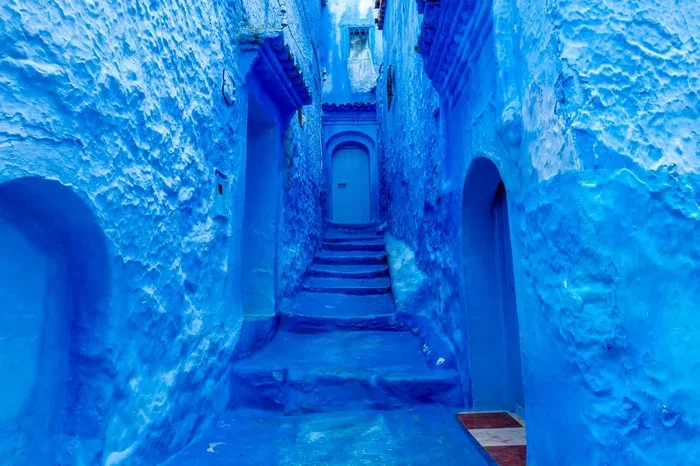
Chefchaouen sits at 600 meters elevation in the Rif Mountains. The medina is famous for its blue-washed walls, a tradition that started in the 1930s. Why blue? Theories range from keeping mosquitoes away to象征ing the sky and heaven. No one knows for certain, but the result is pure magic.
Spend day 13 exploring the medina, shopping for woven goods, and visiting the Spanish Mosque for sunset views over the blue city. On day 14, hike to the Ras el-Maa waterfall or trek in the surrounding mountains before departing.
This is the perfect ending to your 14 day tour from Fes to Chefchaouen, calm, beautiful, and deeply memorable.
What to Pack for Your 14 Day Morocco Adventure
Packing for Morocco is tricky because you’ll experience four seasons in two weeks. Here’s the essential list that fits in one carry-on and one backpack.
Clothing Essentials
Morocco is Muslim-majority, but tourist areas are relaxed. Still, modest dress shows respect. Pack lightweight long sleeves, loose pants, and a scarf that doubles as a head covering when visiting religious sites. For desert nights, bring a warm layer. Sahara temperatures drop below 10°C (50°F) after sunset, even in summer.
Did you know that sand can destroy zippers? Pack shoes you don’t mind ruining. Sandals for riads and coastal areas, sturdy sneakers for medina cobblestones and mountain trails.
Health and Safety Items
Bring a basic first-aid kit: rehydration salts, motion sickness pills (mountain roads are winding), and any personal medications. Pharmacies in Morocco are well-stocked, but bringing basics saves time.
Sunscreen with high SPF is non-negotiable. The Moroccan sun is intense, especially in the desert and at altitude. Sunglasses and a hat are equally important.
Tech and Documents
Morocco uses Type C and E plugs. Bring a universal adapter. Download offline Google Maps for major cities because Wi-Fi can be unreliable in remote areas. Keep your passport in the hotel safe and carry a photocopy when exploring.
Budget Breakdown and Money-Saving Tips
Morocco offers excellent value compared to Europe, but costs vary dramatically based on your style.
Accommodation Tiers
- Budget ($20-50/night): Hostels and basic riads with shared bathrooms
- Mid-range ($60-120/night): Traditional riads with private bathrooms and rooftop terraces
- Luxury ($150-400/night): High-end riads and 5-star desert camps with butler service
For a 14 day tour from Fes to Chefchaouen, expect total costs of:
- Budget traveler: $1,200-$1,800 (hostels, street food, public transport)
- Mid-range traveler: $2,000-$2,800 (private rooms, mix of restaurants and street food, guided tours)
- Luxury traveler: $3,500-$6,000 (luxury riads, private driver, premium desert camp)
Money-Saving Strategies
Eat lunch where locals eat. The “menu du jour” at small restaurants costs $3-5 and feeds you well. Negotiate taxi prices before getting in. Use the petit taxi system in cities rather than tourist taxis. Book accommodations directly with riads via WhatsApp rather than through booking platforms, you’ll often get 20% better rates.
Here’s a tip most guides won’t tell you: visit during shoulder seasons (April, May, September, October). Prices drop 30-40%, weather stays pleasant, and you’ll have better interactions with locals who aren’t overwhelmed by peak crowds.
Best Time to Book and Travel
Timing your 14 day tour from Fes to Chefchaouen correctly makes the difference between a great trip and a perfect one.
Seasonal Weather Patterns
Morocco has three main travel seasons. Peak season (October-April for desert routes, June-August for coastal areas) brings crowds and extreme temperatures. Shoulder season (April-May, September-October) offers the best balance. Off-season (December-February in desert, July-August inland) has the lowest prices but weather challenges.
The Rif Mountains around Chefchaouen can be rainy from November to March. While the blue city looks stunning in mist, hiking trails get slippery. If photography is your priority, March-April brings wildflowers that make the blue walls even more photogenic.
Booking Timeline Recommendations
Book your tour 2-3 months in advance for shoulder seasons. For peak spring (March-May) and fall (September-November) travel, 4-6 months ahead is safer. Desert camps in Merzouga and the best riads in Chefchaouen fill up quickly.
Did you know that 73% of Morocco’s annual tourism happens between October and April? This concentration means popular accommodations sell out fast. Last-minute travelers often pay premium prices or settle for less desirable locations.
Festival and Event Considerations
Morocco hosts incredible festivals year-round. Timing your tour around one can elevate your experience. The Rose Festival in Kelaa M’Gouna (May), the Fes Festival of World Sacred Music (June), and the Gnaoua World Music Festival in Essaouira (June) are highlights. If you’re interested in culture and music, planning your 14 day tour from Fes to Chefchaouen around these events adds tremendous value.
Common Mistakes to Avoid on Your Morocco Journey
Even experienced travelers make errors in Morocco. Learning from others’ mistakes saves you time, money, and stress.
Cultural Misunderstandings
Never photograph someone without permission. Moroccans are generally friendly and will often pose happily when asked, but surprise photography is considered rude. Also, avoid pointing the soles of your feet at people when sitting, an unintentional insult in Arab culture.
When someone offers you tea or food, refusing can seem disrespectful. If you genuinely cannot accept, explain gently with a smile. Most Moroccans appreciate the effort to engage culturally.
Logistical Errors
Don’t underestimate distances. Morocco looks small on a map, but mountain roads slow travel significantly. A 200-kilometer journey often takes four hours, not two. Build buffer time into your itinerary.
Skip the temptation to do everything independently unless you speak Arabic or French. While Morocco is increasingly tourist-friendly, having a guide for medinas and remote areas solves 90% of logistical headaches. Many travelers who tried to save money by skipping guides ended up wishing they’d hired one.
Health and Safety Oversights
Tap water isn’t safe for visitors. Stick to bottled or filtered water, which is widely available. Be cautious with raw vegetables and unpeeled fruits. Your stomach will thank you.
Petty theft exists in tourist areas, as in any destination. Keep valuables in money belts under your clothing in crowded medinas. Most Moroccans are honest and helpful, but a few bad actors exist in every country.
The good news? Violent crime against tourists is extremely rare in Morocco. The country consistently ranks as one of the safest in North Africa for visitors.
Why This 14 Day Route Is the Ultimate Morocco Experience
After two weeks traveling from Fes to Chefchaouen, you’ll have collected memories that last decades. You’ll have sipped tea with Berber nomads who speak three languages. You’ll have haggled in markets where your persistence earned you a smile rather than a discount. You’ll have stood in silence as the Sahara stars overwhelmed your senses.
This isn’t just a vacation. It’s a transformation. Morocco has a way of showing you what really matters: human connection, beauty in imperfection, and the patience to let life unfold at its own pace. Your 14 day tour from Fes to Chefchaouen isn’t something you check off a list. It’s something that changes how you see the world.
Start planning today. Book that riad in Fes, reserve your camel trek in Merzouga, and prepare for the journey of a lifetime. Morocco is waiting, and it’s more beautiful than you can imagine.
Frequently Asked Questions
How much does a 14 day tour from Fes to Chefchaouen cost?
A 14 day tour from Fes to Chefchaouen typically costs between $1,200 and $3,500 per person. Budget travelers using hostels and street food stay closer to $1,200, while mid-range travelers enjoying private riads and guided experiences spend around $2,500. Luxury versions with 5-star desert camps and private drivers can exceed $5,000.
Is 14 days enough to travel from Fes to Chefchaouen?
Yes, 14 days is the perfect duration for this route. It allows 2-3 nights in major destinations such as Fes, Merzouga, Essaouira, and Chefchaouen. You’ll also have time for scenic stops like Volubilis, Todra Gorge, and Ait Benhaddou without feeling rushed.
What is the best season for a Fes to Chefchaouen tour?
April, May, September, and October offer the best weather for a Fes to Chefchaouen tour. Temperatures are mild, ranging from 18-28°C (65-82°F), making desert treks and mountain hikes comfortable. Summer months can be extremely hot in inland areas, while winter brings cold desert nights.
Do I need a guide for the Fes medina?
Strongly recommended. The Fes medina has over 9,400 alleys, many unmarked and confusing even for GPS. A licensed guide helps you navigate efficiently, explains historical context, and protects you from persistent touts. Most guides charge $25-40 for a half-day tour.
Is Chefchaouen worth visiting at the end of a Morocco tour?
Absolutely. Ending your tour in Chefchaouen provides a peaceful, scenic finale after busy imperial cities. The blue medina offers incredible photography, the Rif Mountains provide hiking opportunities, and the relaxed atmosphere helps you decompress before flying home from Tangier or Fes.
Can I do a 14 day tour from Fes to Chefchaouen independently?
Yes, but it requires more planning. Independent travelers need to arrange transport between cities, book all accommodations, and navigate cultural barriers without guides. First-time visitors to Morocco often find guided tours less stressful and more enriching, though experienced travelers can save money going solo.