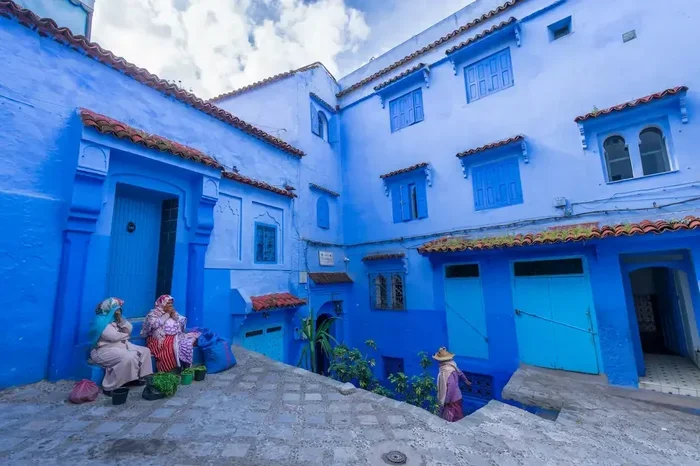
Featured image for Chefchaouen blue medina
Image source: egyptunitedtours.com
A 12 day tour from Fes to Chefchaouen offers the most complete Moroccan adventure, blending imperial cities, the Sahara Desert, and the famous blue-washed streets of Chefchaouen into one unforgettable journey. This itinerary is perfect for travelers who want depth, variety, and authentic cultural experiences without rushing. From camel rides over Erg Chebbi dunes to exploring medieval medinas, this tour captures Morocco’s soul in just under two weeks.
Morocco is a country that grabs you by the senses and never quite lets go. The smell of mint tea wafting through ancient medinas. The sound of call-to-prayer echoing over sandstone walls. The sight of camels crossing ochre dunes at sunset. And somewhere along a 12 day tour from Fes to Chefchaouen, you’ll realize this country has rewritten your definition of adventure.
This particular route is special because it threads together Morocco’s three greatest contrasts: the imperial cities of the north, the otherworldly Sahara Desert, and the dreamy blue village of Chefchaouen tucked into the Rif Mountains. Think of it like a greatest hits album, except every track is a masterpiece and the encore keeps going.
Whether you’re a solo traveler, a couple, or a family, this guide will walk you through exactly what to expect, where to go, what to pack, and how to make the most of every single day. By the end, you’ll have a clear picture of why a 12 day tour from Fes to Chefchaouen is considered the gold-standard Moroccan itinerary.
Key Takeaways
- Comprehensive Coverage: A 12 day tour from Fes to Chefchaouen hits every major highlight, including Fes, Merzouga, the Todra Gorge, and the Rif Mountains.
- Optimal Duration: Twelve days is the sweet spot, long enough to go deep but short enough for most vacation schedules.
- Cultural Immersion: You’ll experience Berber, Arab, and Andalusian cultures in one seamless trip.
- Scenic Diversity: Expect snow-capped mountains, golden dunes, lush valleys, and ocean breezes.
- Best Value: Multi-day tours from Fes cost significantly less per day than independent travel with private guides.
- Flexibility: Choose between private tours, small group tours, or fully customized itineraries.
- Photo Paradise: From the blue streets of Chefchaouen to Sahara sunrises, every day brings new photo opportunities.
📑 Table of Contents
- Why Choose a 12 Day Tour from Fes to Chefchaouen?
- The Classic 12 Day Tour from Fes to Chefchaouen Itinerary
- What to Expect on a 12 Day Tour from Fes to Chefchaouen
- Best Time of Year for a 12 Day Tour from Fes to Chefchaouen
- Practical Tips for Your 12 Day Tour from Fes to Chefchaouen
- Choosing the Right Tour Operator
- The Cultural Heart of a 12 Day Tour from Fes to Chefchaouen
- Final Thoughts: Is a 12 Day Tour from Fes to Chefchaouen Worth It?
Why Choose a 12 Day Tour from Fes to Chefchaouen?
Morocco packs an absurd amount of variety into a country slightly smaller than California. You can ski in the Atlas Mountains in the morning and sip tea in the Sahara by evening. You can wander through Roman ruins, medieval medinas, and blue-painted hillside villages all in one week. So why twelve days specifically?
The Sweet Spot of Travel Duration
Travel experts often talk about the “Goldilocks zone” of trip length. Too short, and you’re rushing. Too long, and travel fatigue sets in. Twelve days hits the perfect balance. According to a 2023 survey by the World Travel & Tourism Council, travelers reported the highest satisfaction rates on trips lasting between 10 and 14 days.
A 12 day tour from Fes to Chefchaouen lets you slow down without losing momentum. You can spend two full days in Fes alone, which is rare on shorter tours. You can do a proper camel trek in the Sahara instead of a rushed drive-by. And you can actually unwind in Chefchaouen, instead of snapping a few photos and running.
What Makes This Route So Popular?
Did you know that Fes is home to the world’s oldest continuously operating university? Al-Qarawiyyin, founded in 859 AD, is still teaching students over 1,160 years later. A tour that starts in Fes gives you front-row access to this living museum.
Meanwhile, Chefchaouen was largely unknown to international tourists until the 1990s. Today, it’s one of the most Instagrammed places in Africa, with over 3 million hashtags on Instagram. But photos don’t do it justice. Walking those blue streets feels like stepping into a watercolor painting.
The Classic 12 Day Tour from Fes to Chefchaouen Itinerary
Every tour operator tweaks their route slightly, but the core itinerary remains remarkably consistent. Here’s a day-by-day breakdown of what a typical 12 day tour from Fes to Chefchaouen looks like, so you know exactly what’s coming.
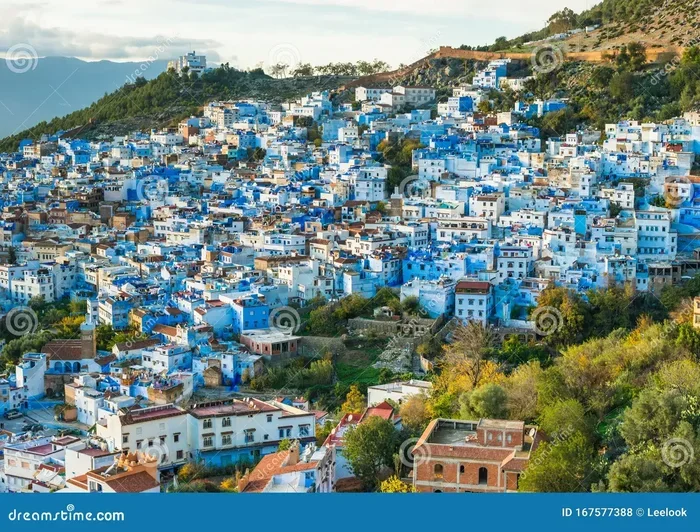
Visual guide about Chefchaouen blue medina
Image source: thumbs.dreamstime.com
Days 1-2: Exploring Fes, Morocco’s Spiritual Capital
Your adventure begins in Fes, the cultural and spiritual heart of Morocco. With a population of roughly 1.1 million in the metropolitan area, Fes is the second-largest city in the country and arguably the most atmospheric.
Day one usually involves arriving, settling into your riad (a traditional Moroccan house with an interior courtyard), and taking a gentle guided walk through the medina. The Fes el-Bali medina is a UNESCO World Heritage Site and a labyrinth of over 9,000 alleys. If you tried to explore it alone, you’d probably get wonderfully lost within ten minutes.
Day two dives deeper. You’ll visit the famous Al-Qarawiyyin University, the Bou Inania Medersa (a stunning 14th-century Islamic school), the Chouara Tanneries, and the Nejjarine Museum of Wooden Arts and Crafts. Lunch is typically a traditional tagine in a hidden courtyard restaurant.
Days 3-4: The Middle Atlas and Ifrane
Leaving Fes, the tour heads south through the Middle Atlas Mountains. Along the way, you’ll pass through Ifrane, often called “the Switzerland of Morocco” because of its alpine-style architecture and clean, cool climate. At 1,665 meters above sea level, Ifrane gets snow in winter, which feels surreal in North Africa.
The Cedar Forest near Azrou is another highlight. Here, you’ll find Barbary macaques, North Africa’s only native primate. Did you know these monkeys can live up to 30 years and are considered vulnerable due to habitat loss? Watching them climb the ancient cedars is one of the trip’s quieter, sweeter moments.
Overnight stops are typically in Midelt or Errachidia, small towns that feel a world away from Fes’s bustle.
Days 5-6: The Sahara Desert and Merzouga
Most travelers agree the Sahara portion is the emotional peak of any 12 day tour from Fes to Chefchaouen. Merzouga, a small village on the edge of Erg Chebbi, is your gateway to the dunes.
You’ll swap your van for a camel and ride into the desert as the sun begins to set. The dunes here can reach 150 meters tall, and the silence is absolute. Your overnight camp is a mix of traditional Berber tents and modern comforts. Dinner is usually cooked over an open fire, followed by Berber drumming under a blanket of stars.
The Sahara has about 330 clear nights per year, making it one of the best stargazing spots on the planet. Bring a camera with manual settings because your phone won’t do the Milky Way justice.
Days 7-8: Todra Gorge and the Dades Valley
After the desert, the landscape shifts dramatically. You’ll drive through dramatic desert scenery toward Todra Gorge, a canyon with walls rising 400 meters on either side. Rock climbers travel from around the world just to scale these limestone cliffs.
The Dades Valley is sometimes called the “Valley of a Thousand Kasbahs.” Kasbahs are fortified clay houses, and the region is dotted with them. Many tours stop at a family-run kasbah for tea, bread, and conversation. This is where Morocco’s warmth really shines.
Days 9-10: Ait Benhaddou and the Atlas Crossing
Ait Benhaddou is a UNESCO-listed ksar (fortified village) made almost entirely of rammed earth. If it looks familiar, that’s because you’ve probably seen it in Gladiator, Lawrence of Arabia, or Game of Thrones. It’s one of the most filmed locations on Earth.
Crossing the High Atlas Mountains via the Tizi n’Tichka pass at 2,260 meters is one of the most scenic drives in Africa. Snow-capped peaks, terraced fields, and Berber villages clinging to hillsides make every kilometer worth photographing.
You’ll typically spend the night in Marrakech, Morocco’s most energetic city. A guided walk through Jemaa el-Fnaa square at night is essential. Snake charmers, storytellers, sizzling food stalls, and live music create a scene that hasn’t changed in 1,000 years.
Days 11-12: Chefchaouen, the Blue Pearl
The final leg of your 12 day tour from Fes to Chefchaouen is the calmest and most photogenic. After the chaos of Marrakech, Chefchaouen feels like a deep exhale.
Tucked into the Rif Mountains, Chefchaouen was painted blue in the 1930s, though theories vary on why. Some say the blue keeps mosquitoes away. Others say it symbolizes the sky and heaven. Locals will simply tell you it looks beautiful. They’re not wrong.
Spend your last day hiking to the Spanish Mosque for panoramic views, shopping for woven goods in the medina, and sipping mint tea on a rooftop terrace as the sun goes down.
What to Expect on a 12 Day Tour from Fes to Chefchaouen
Knowing the route is one thing. Knowing what daily life on the road feels like is another. Here’s a behind-the-scenes look at how the trip actually flows.
Transportation and Drivers
Most multi-day tours use air-conditioned minivans or 4×4 vehicles. Drivers double as informal guides, sharing history, jokes, and tea stops. Moroccan drivers are skilled, but mountain roads can be winding. If you get carsick, bring medication.
Accommodation Variety
Expect a mix of traditional riads, desert camps, kasbah hotels, and standard tourist-class hotels. Riads are almost always the most charming. They feature tile work, fountains, and rooftop terraces. The desert camp is typically a shared Berber tent with private or shared bathrooms depending on your package.
Food and Meals
Most tours include breakfast daily and several dinners. Lunches are often stops along the road. Moroccan cuisine is hearty and flavorful. Tagines (slow-cooked stews) and couscous are staples. Mint tea is everywhere, and refusing it is almost impossible.
Group Dynamics
Small group tours typically have 8 to 16 travelers. Private tours are just you, your party, and the guide. Either way, expect to share meals, stories, and many photos with strangers who often become friends.
Best Time of Year for a 12 Day Tour from Fes to Chefchaouen
Morocco is a year-round destination, but seasons matter.
Spring (March to May)
Spring is widely considered the best time. Temperatures are mild, flowers bloom in the valleys, and the Atlas Mountains are green. Average highs range from 20°C to 28°C (68°F to 82°F). It’s also peak tourist season, so book early.
Autumn (September to November)
Autumn is the runner-up. Crowds thin out, prices drop slightly, and the Sahara is comfortable rather than scorching. This is when many photographers prefer to visit because of soft golden light.
Summer (June to August)
Summer can be brutally hot, especially in the Sahara, where daytime temperatures can hit 45°C (113°F). Chefchaouen and the coast stay cooler. If summer is your only option, choose a tour that minimizes desert exposure during midday.
Winter (December to February)
Winter is magical but cold, especially at altitude. Snow sometimes closes mountain passes. The Sahara can drop below freezing at night. It’s the quietest season, with the lowest prices.
Practical Tips for Your 12 Day Tour from Fes to Chefchaouen
A little preparation goes a long way. Here’s what experienced travelers wish they had known before starting.
What to Pack
- Layers: Mornings are cold, afternoons hot, evenings unpredictable.
- Comfortable walking shoes: Medinas are cobblestoned and hilly.
- Scarf or shawl: Useful for sun, sand, and conservative sites.
- Power adapter: Morocco uses Type C and E plugs at 220V.
- Reusable water bottle: Tap water is not drinkable.
- Headlamp or flashlight: Useful in desert camps and riads.
Money Matters
The Moroccan dirham (MAD) is the local currency. Roughly 10 MAD equals 1 USD. Cash is king in rural areas and small shops. Credit cards work in cities and upscale hotels. ATMs are widely available in Fes, Marrakech, and Chefchaouen.
Tipping is customary. Plan to tip drivers, guides, riad staff, and restaurant servers. A common rule of thumb is 10% at restaurants and 100 to 200 MAD per day for drivers and guides.
Health and Safety
Morocco is generally safe for tourists. Petty scams exist, especially in big medinas. Common sense rules apply. Drink bottled water, wear sunscreen, and carry hand sanitizer. Travel insurance is strongly recommended, especially for desert excursions.
Language Tips
Arabic and Berber are official languages. French is widely spoken. English is increasingly common in tourist areas. Learning a few Arabic phrases like shukran (thank you) and salaam alaikum (hello) goes a long way.
Choosing the Right Tour Operator
Not all 12 day tours from Fes to Chefchaouen are created equal. Here’s how to pick the right one.
Read the Fine Print
Look at what’s included: accommodation type, meals, entrance fees, transportation, and guide services. Hidden costs can add up quickly. Some tours advertise low prices but charge extra for entry tickets, which in Morocco average 20 to 70 MAD per site.
Check Reviews
Platforms like TripAdvisor, GetYourGuide, and Viator offer real reviews. Look for consistent feedback about guide quality, vehicle condition, and itinerary accuracy.
Decide Between Group or Private
Group tours are budget-friendly and social. Private tours offer flexibility and customization but cost more. A 12 day private tour typically ranges from $1,500 to $3,000 per person. Group tours can start around $800.
Ask About Customization
The best operators will tweak the itinerary based on your interests. Love photography? They’ll schedule sunrise shoots. Love food? They’ll add cooking classes. Avoid operators with rigid “one-size-fits-all” packages.
The Cultural Heart of a 12 Day Tour from Fes to Chefchaouen
More than anything else, this trip is about people. Morocco’s hospitality tradition is legendary. It’s so embedded in the culture that the country has its own UNESCO-recognized “Moroccan Couscous” tradition.
You’ll be invited into homes for tea. You’ll be offered bread at roadside stalls. Children will wave from hilltops. Elders will bless your journey. These moments, more than the monuments, are what travelers remember years later.
Approach the trip with curiosity rather than a checklist. Slow down. Say yes to unexpected detours. Try the unfamiliar food. Talk to strangers. The 12 day tour from Fes to Chefchaouen isn’t really a vacation. It’s a conversation with one of the world’s most fascinating cultures.
Final Thoughts: Is a 12 Day Tour from Fes to Chefchaouen Worth It?
In a word: absolutely. Few trips pack so much variety, beauty, and meaning into such a manageable window. You leave with sun-burned shoulders, a phone full of photos, and a head full of stories.
Morocco is a country that rewards travelers who give it time. And twelve days is exactly enough time to fall in love.
Book your 12 day tour from Fes to Chefchaouen, pack an open mind, and get ready for the trip of a lifetime.
Frequently Asked Questions
How much does a 12 day tour from Fes to Chefchaouen cost?
Prices vary widely depending on group size and tour style. Budget group tours start around $800 per person, while private luxury tours can reach $3,000 or more. Most mid-range tours fall between $1,200 and $1,800 per person and include accommodation, transportation, guide services, and most meals.
Is a 12 day tour from Fes to Chefchaouen suitable for families with kids?
Yes, this itinerary works well for families with children over the age of six. The camel ride, desert camp, and blue streets of Chefchaouen are especially magical for kids. Just note that long driving days can be tiring for very young children, so consider a slower-paced private tour.
What is the best season for a 12 day tour from Fes to Chefchaouen?
Spring (March to May) and autumn (September to November) are ideal. Temperatures are mild, crowds are manageable, and landscapes are at their most photogenic. Summer brings extreme desert heat, while winter can be cold in the mountains and desert.
Do I need a visa for Morocco?
Most Western travelers, including those from the US, UK, EU, Canada, and Australia, do not need a visa for stays under 90 days. You simply need a valid passport with at least six months of validity remaining. Check your specific country’s requirements before booking.
What should I wear on a 12 day tour from Fes to Chefchaouen?
Modest, comfortable clothing is best. Loose pants, long skirts, and shirts that cover shoulders are respectful, especially in religious sites. Bring a light scarf for sun protection and cooler evenings. Layers are essential because temperatures swing dramatically between day and night.
Is the Sahara Desert portion of the tour safe?
Yes, the Sahara portion is very safe for tourists. The camel rides are led by experienced Berber guides, and desert camps are well-equipped with security and medical support. Just follow your guide’s instructions and bring sun protection, warm layers, and any personal medications.