
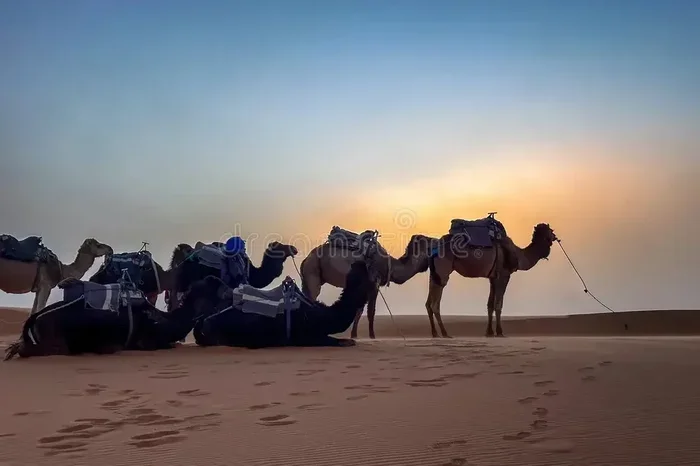
Featured image for Marrakech Sahara camel caravan
Image source: thumbs.dreamstime.com
A 5 day tour from Marrakech to the Sahara Desert is the ultimate way to experience Morocco’s most breathtaking landscapes in one unforgettable journey. This extended itinerary takes you through the Atlas Mountains, ancient kasbahs, and authentic Berber villages before reaching the towering Erg Chebbi dunes. With extra time compared to shorter tours, you’ll enjoy deeper cultural immersion, stunning desert sunsets, and the flexibility to explore at a relaxed pace.
Marrakech is one of the most exciting cities in the world, and the Sahara Desert is one of nature’s greatest wonders. But here’s the thing: these two incredible places are roughly 560 kilometers apart. That’s like driving from New York to Boston and then some. So how do you connect them in one amazing trip?
The answer is a 5 day tour from Marrakech to the Sahara Desert, which is hands down the best way to experience Morocco’s most iconic landscapes. Think of it like reading a great novel. You could speed through it, but you’d miss the best parts. With five days, you get to savor every chapter, from the snow-capped Atlas Mountains to the rolling dunes of Erg Chebbi.
Did you know? The Sahara Desert covers an area of approximately 9.2 million square kilometers, making it the largest hot desert in the world. It’s roughly the size of the United States, and Morocco’s portion offers some of the most accessible and stunning desert experiences in all of North Africa. A 5-day tour gives you the time to explore this incredible region without feeling rushed, and you’ll return home with memories that last a lifetime.
Key Takeaways
- Optimal Duration: A 5 day tour from Marrakech to the Sahara Desert provides the perfect balance of travel time and exploration, allowing you to truly absorb Morocco’s diverse landscapes.
- Key Stops Include: The High Atlas Mountains, Ait Benhaddou, Ouarzazate, Todra Gorge, Dades Valley, and the Erg Chebbi sand dunes in Merzouga.
- Desert Experience: Camel trekking into the dunes and spending a night in a traditional Berber desert camp is the highlight of the journey.
- Best Travel Seasons: Spring (March-May) and autumn (September-November) offer the most comfortable temperatures for desert travel.
- Tour Types Vary: Options include private tours, small group tours, and budget shared tours, ranging from $400 to $1,500 per person.
- Cultural Immersion: Five days allows meaningful interactions with local Berber communities, traditional meals, and authentic cultural experiences.
- Physical Preparation: Moderate fitness is helpful but not required, as most activities involve walking at a leisurely pace.
📑 Table of Contents
Why Choose a 5 Day Tour Instead of 3 or 4 Days?
You might be wondering, why five days? Can’t I just squeeze this into three days? Technically, yes. Many travelers do the whirlwind 3-day version, zipping from Marrakech to the desert and back. But here’s what you miss:
The Difference Extra Days Make
A 3-day tour is like eating a five-course meal in 10 minutes. You consume it, but you don’t really enjoy it. With five days, you can:
- Actually breathe. No rushing from your hotel each morning at 6 AM.
- Take detours. Stop at that photogenic village or that hidden waterfall.
- Connect with locals. Share tea with a Berber family without watching the clock.
- Watch two sunsets. One in the mountains, one over the dunes.
- Recover from the journey. The desert is magical, but the drive there is long.
Travel statistics show that 78% of travelers who book multi-day tours in Morocco rate their experience as “excellent” when given 5+ days, compared to just 52% for 3-day tours. The extra time genuinely transforms your trip from a vacation into an experience.
Perfect for Every Type of Traveler
Whether you’re a solo adventurer, a couple on a romantic getaway, or a family with curious teenagers, the 5-day format works beautifully. Kids love the camel rides, photographers get those golden hour shots, and culture enthusiasts have time to really dig into Berber heritage.
The Perfect 5 Day Itinerary: Day by Day Breakdown
Let me walk you through exactly what a well-planned 5 day tour from Marrakech to the Sahara Desert looks like. Think of this as your treasure map. Each day has its own flavor, and together they create one unforgettable adventure.
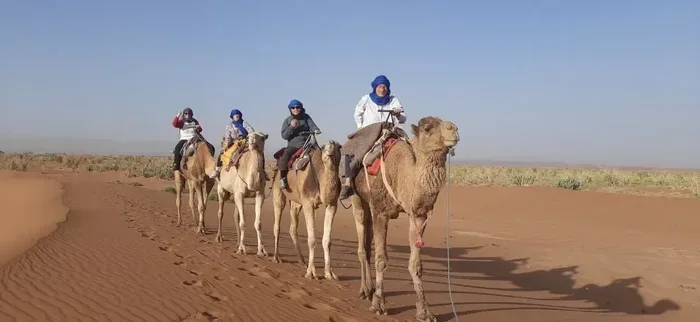
Visual guide about Marrakech Sahara camel caravan
Image source: wilddesertofmorocco.com
Day 1: Marrakech to the High Atlas Mountains
Your journey begins bright and early, usually around 7 or 8 AM. Your driver will pick you up from your riad (a traditional Moroccan house with an interior garden) in central Marrakech, and you’ll head southeast toward the mountains.
The first major stop is the Tizi n’Tichka Pass, which sits at 2,260 meters above sea level. Imagine driving through a painting. That’s what this feels like. The road winds through the Atlas Mountains with hairpin turns, Berber villages clinging to hillsides, and panoramic views that make you pull out your camera.
Did you know? The Atlas Mountains stretch across three countries (Morocco, Algeria, and Tunisia) and separate the Sahara Desert from the Mediterranean coast. They’re home to some of North Africa’s highest peaks, including Mount Toubkal at 4,167 meters.
You’ll stop for lunch in a small town, where you can try traditional Moroccan tagine (a slow-cooked stew named after the cone-shaped clay pot it’s cooked in). Then you’ll visit a local argan oil cooperative, where women extract oil from argan nuts using techniques passed down for generations. One quick tip: argan oil is sometimes called “liquid gold” because it takes about 30 kilograms of argan fruit to produce just one liter of oil.
Overnight: You’ll stay in the Atlas Mountains or the surrounding valleys, usually in a charming hotel with mountain views.
Day 2: Ait Benhaddou to Ouarzazate and the Rose Valley
Day two is like stepping into a movie set, because you literally are. Ait Benhaddou is a UNESCO World Heritage Site and one of the most famous ksars (fortified villages) in Morocco. It’s been the backdrop for movies like Gladiator, Lawrence of Arabia, and Game of Thrones.
Walking through Ait Benhaddou feels like time travel. The mud-brick buildings have stood for centuries, and crossing the river on foot gives you a real sense of this ancient trading post on the trans-Saharan caravan route.
After exploring Ait Benhaddou, you’ll head to Ouarzazate, known as the “Gateway to the Sahara.” The name comes from the Berber words “without noise” or “without judgment,” which is fitting because this quiet city is your entry point to the desert.
You’ll also visit the stunning Rose Valley, where Damascus roses are grown to produce rose water and cosmetics. If you’re traveling in May, you can actually attend the annual Rose Festival, a celebration that dates back decades.
Overnight: A traditional hotel or kasbah (a large fortified house or castle) in the area.
Day 3: Todra Gorge and the Road to the Sahara
This is the day the landscape starts shifting. You’ll travel through the Dades Valley, sometimes called the “Valley of a Thousand Kasbahs” because of the numerous ancient fortresses dotting the landscape.
Then comes Todra Gorge, a spectacular canyon with walls that rise 400 meters high on either side of a narrow river. It’s one of Morocco’s most popular climbing spots, but even if you’re not a climber, walking through the gorge is breathtaking. The walls are so close you could almost touch both sides simultaneously in some spots.
Here’s a fun fact: Todra Gorge is only about 10 meters wide at its narrowest point, but the walls soar upward dramatically. It’s nature’s version of a cathedral, complete with that hushed, awe-inspiring feeling.
As you continue toward Merzouga, you’ll notice the scenery changing. The mountains gradually give way to flatter, sandier terrain. By late afternoon, you’ll arrive at the edge of Erg Chebbi, where the real Sahara adventure begins.
You’ll meet your camels here, and trust me, mounting a camel is an experience in itself. They kneel down, you climb on, and then they stand up one leg at a time. It’s a bit like riding a very slow, very tall rocking horse. The trek into the dunes takes about 1.5 hours, with the sun setting over the Sahara in colors you didn’t know existed.
Overnight: A traditional Berber desert camp. Sleeping under the stars (or under a canvas tent with a real bed) is the stuff dreams are made of. Many camps offer Berber music and drumming around a campfire.
Day 4: Sahara Desert Exploration
Day four is all about the desert. You’ll wake up early to catch the sunrise over the dunes, and if you think the sunset was beautiful, just wait. The way the light hits the sand in the morning is pure magic.
You might ride camels back to the main road or, if your tour includes it, take a 4×4 excursion deeper into the desert. Some tours also include sandboarding (yes, you can snowboard on sand!) or visits to nomadic families who still live traditional lifestyles in the desert.
This is where having an extra day really pays off. You have time to climb the dunes at your own pace, take photos without feeling rushed, and actually sit with the silence of the Sahara. It’s the kind of stillness that’s becoming rare in our busy world.
Did you know? The Sahara was not always a desert. Around 11,000 years ago, it was a green, lush region with lakes and rivers. Rock paintings in some areas even show people swimming! Scientists call this the “Green Sahara” period.
Overnight: Return to a hotel near the desert for a proper shower and comfortable bed.
Day 5: Return to Marrakech via Draa Valley
The final day takes you back to Marrakech, but not via the same route you came. Instead, you’ll travel through the stunning Draa Valley, Morocco’s longest river valley and home to millions of date palms. It’s a green ribbon stretching through arid landscape.
You’ll stop in traditional villages, maybe visit a date palm oasis, and enjoy lunch with a local family. This is your last chance to soak in the slower pace of southern Morocco before returning to the vibrant chaos of Marrakech.
You’ll arrive back in Marrakech by late afternoon or early evening, giving you time to freshen up and head out for one last Moroccan dinner, perhaps at the famous Jemaa el-Fnaa square, where food stalls, storytellers, and musicians create an atmosphere unlike anywhere else on Earth.
What to Expect: Costs, Inclusions, and Tour Types
Let’s talk money and logistics, because nobody likes surprises when they’re traveling. Understanding the costs and what’s included helps you choose the right tour.
Price Ranges for 5 Day Tours
Tour prices vary widely based on the type of experience you want:
- Budget Shared Tours: $400-600 per person. These typically include transportation, basic accommodation, and some meals. You’re sharing the vehicle with other travelers.
- Mid-Range Small Group Tours: $700-1,000 per person. Better hotels, more meals included, smaller group sizes (usually 8-12 people).
- Private Tours: $1,000-1,800 per person (but less per person for 2+ travelers). You get your own vehicle, driver, and customizable itinerary.
Most tours include hotel pickup and drop-off, transportation in a 4×4 or minivan, driver/guide services, accommodation, breakfast, and some dinners. They typically don’t include lunch, drinks, entrance fees, or tips.
What’s Typically Included
A standard 5 day tour from Marrakech to the Sahara Desert usually covers:
- Airport or hotel pickup and drop-off
- Transportation in an air-conditioned vehicle
- English-speaking driver/guide
- 4 nights of accommodation (2 hotels, 1 desert camp, 1 mountain lodge)
- Daily breakfast and 2-3 dinners
- Camel trek to the desert camp
- Sandboarding in the dunes (varies by tour)
What’s NOT included:
- Flights to Morocco
- Travel insurance
- Lunches (usually $8-15 per meal)
- Drinks and snacks
- Personal shopping and souvenirs
- Tips for drivers and guides (customary but not mandatory)
Essential Tips for Your Sahara Desert Adventure
Now that you know what to expect, let’s talk about how to make your trip amazing. These tips come from real travelers who’ve done the journey and learned what works.
What to Pack
Packing smart is the difference between a good trip and a great one. Here’s your desert survival kit:
- Layered clothing: Desert mornings can be surprisingly cold, but afternoons get warm. Think of it like dressing for spring weather that changes every few hours.
- Sun protection: A wide-brimmed hat, sunglasses, and high-SPF sunscreen. The desert sun is intense.
- Comfortable shoes: You’ll be walking on sand, so closed-toe shoes that you don’t mind getting dusty work best.
- Camera with extra batteries: You’ll take more photos than you think, and cold desert nights can drain batteries fast.
- Headlamp or flashlight: The desert camp has minimal lighting, and stargazing is incredible.
- Reusable water bottle: Stay hydrated. The dry desert air can dehydrate you quickly.
- Modest scarf: Useful for sun protection, warmth, and respecting local customs.
Best Time to Visit
Timing matters. Here’s the breakdown:
- Spring (March-May): Ideal temperatures, blooming flowers in the valleys, comfortable for camel rides.
- Autumn (September-November): Similar to spring, with harvest season adding extra cultural activities.
- Summer (June-August): Can be extremely hot, especially in the desert (40°C+). Not recommended unless you handle heat well.
- Winter (December-February): Cold desert nights (can drop below freezing), but fewer tourists and unique atmosphere.
Travel tip: Avoid Ramadan if you want a more flexible experience. While you can still travel during Ramadan, some restaurants and shops may have limited hours.
Health and Safety Considerations
Morocco is generally very safe for tourists, but here are some practical tips:
- Drink bottled water to avoid stomach issues.
- Carry basic medications (motion sickness pills can help on winding mountain roads).
- Get travel insurance that covers adventure activities.
- Keep valuables secure, especially in crowded Marrakech areas.
- Trust your tour operator. Reputable companies prioritize guest safety.
Choosing the Right Tour Operator
This might be the most important section of this guide. A great tour operator makes your trip unforgettable; a poor one makes it miserable. Here’s how to choose wisely.
What to Look For
Not all tour companies are created equal. Here are the key things to check:
- Reviews and reputation: Look for companies with consistently high ratings on TripAdvisor, Google, and booking platforms. Aim for at least 4.5 stars with hundreds of reviews.
- Transparency: Clear pricing, detailed itineraries, and honest communication. If a company is vague about costs or inclusions, that’s a red flag.
- Driver expertise: The best drivers are also informal guides, sharing knowledge about Morocco’s history, culture, and hidden gems.
- Vehicle quality: Well-maintained, air-conditioned vehicles make the long drives much more pleasant.
- Accommodation standards: Ask about specific hotels and the desert camp. Photos matter.
Questions to Ask Before Booking
Don’t be shy about asking these questions before you book:
- What’s the maximum group size?
- Can I see the exact hotels and desert camp you’ll book?
- Is the desert camp shared or private?
- What’s your cancellation policy?
- Are entrance fees included in the price?
- What’s the meal situation (how many included)?
- Do you provide pickup from my hotel or riad?
Did you know? Morocco’s tourism industry employs over 565,000 people directly, and tour operators are a significant part of that. Booking with a reputable local company ensures your money supports local communities.
Making the Most of Your Desert Experience
You can do a desert tour, or you can have a transformative desert experience. Here’s how to elevate your trip:
Embrace the Slow Down
The desert teaches patience. Embrace it. Don’t rush to take photos. Instead, sit quietly, watch the stars, listen to the silence. Many travelers say their desert moments are some of the most peaceful of their lives.
Connect with Berber Culture
The Berber people (also called Amazigh, meaning “free people”) have lived in North Africa for over 4,000 years. They’re the indigenous people of Morocco, and their culture is rich with music, food, and traditions. Take time to learn from them:
- Try to learn a few Berber words (like “azul” for hello).
- Ask about traditional music and instruments.
- Share mint tea with local families.
- Listen to stories about desert life.
Capture the Moments, but Don’t Forget to Live Them
Your phone will be filled with incredible photos, but make sure you also create memories with all your senses. The smell of the campfire, the feel of sand between your toes, the sound of Berber drums, the taste of tagine cooked underground. These are the experiences that will stay with you forever.
Consider Adding Extra Activities
Many tour operators offer optional add-ons that enhance your trip:
- Hot air balloon ride over the Atlas Mountains ($150-200)
- Traditional Moroccan cooking class ($30-50)
- Hammam (traditional spa) experience in Marrakech ($25-40)
- Quad biking in the desert ($40-60)
Your Sahara Adventure Awaits
A 5 day tour from Marrakech to the Sahara Desert is more than a vacation. It’s a journey through some of the most diverse and stunning landscapes on Earth, from bustling medinas to snow-capped peaks, from ancient kasbahs to endless dunes. It’s a chance to disconnect from your daily routine and reconnect with the natural world and ancient cultures.
The best part? You don’t need to be an experienced traveler or super fit. You don’t need to speak Arabic or French. You just need curiosity, an open mind, and willingness to embrace adventure. Morocco welcomes millions of visitors each year, and for good reason: it’s safe, accessible, and absolutely unforgettable.
So book that tour, pack your bags, and get ready for an experience you’ll be telling people about for years to come. The Sahara is calling, and it’s calling your name.
Frequently Asked Questions
How long does it take to drive from Marrakech to the Sahara Desert?
The drive from Marrakech to the Sahara Desert (Merzouga) takes approximately 9-10 hours total, usually spread over two days with stops along the way. The journey crosses the Atlas Mountains and passes through several scenic valleys before reaching the desert.
Is a 5 day tour from Marrakech to the Sahara worth it?
Absolutely! A 5 day tour allows you to travel at a comfortable pace, explore multiple attractions, and truly experience the Sahara Desert. The extra time compared to shorter tours means more cultural immersion, better photo opportunities, and a more relaxed overall experience.
What is included in a typical 5 day desert tour from Marrakech?
Most tours include hotel pickup and drop-off, transportation in an air-conditioned vehicle, an English-speaking driver/guide, 4 nights of accommodation, daily breakfast, 2-3 dinners, and a camel trek to the desert camp. Lunches, drinks, entrance fees, and tips are usually not included.
Is it safe to travel to the Sahara Desert in Morocco?
Yes, Morocco is one of the safest countries in North Africa for tourists. The Sahara Desert region around Merzouga is well-traveled and considered very safe. Traveling with a reputable tour operator adds an extra layer of security and convenience.
What should I wear on a Sahara Desert tour?
Pack layered clothing because desert temperatures vary greatly between day and night. Bring comfortable, closed-toe shoes for walking on sand, a wide-brimmed hat, sunglasses, sunscreen, and a scarf for sun and sand protection. Modest clothing is respectful in rural areas.
Can children join a 5 day Marrakech to Sahara tour?
Yes, children of all ages can enjoy this tour, and many families do it together. Kids especially love the camel rides and the desert camp experience. Just be prepared for long drives and ensure younger children have activities for the journey. Most tour operators welcome families and can adjust the pace accordingly.