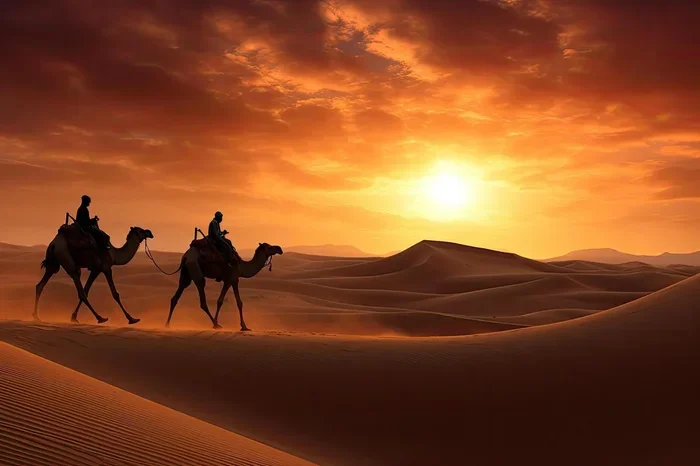
Featured image for Desert dunes camel caravan sunset
Image source: static.vecteezy.com
A 7-day tour from Marrakech to Erg Chebbi is the perfect way to experience Morocco’s most stunning landscapes. This week-long journey takes you through the Atlas Mountains, ancient kasbahs, lush oases, and ends with unforgettable nights in the Sahara Desert. You’ll discover Berber culture, ride camels over golden dunes, and explore UNESCO World Heritage sites along the way.
Imagine waking up to a sky full of stars brighter than you’ve ever seen. Around you, golden sand dunes stretch as far as your eyes can see. This is what awaits you at the end of a 7-day tour from Marrakech to Erg Chebbi. It’s not just a trip. It’s a journey through time, culture, and some of nature’s most breathtaking creations.
Morocco is a land of contrasts. Snow-capped mountains meet scorching deserts. Ancient medinas buzz with life next to silent, sweeping sands. A week-long tour gives you enough time to soak it all in. You won’t just see Morocco. You’ll feel its heartbeat, taste its spices, and hear the stories its people have told for thousands of years.
This guide will walk you through everything you need to know. From what you’ll see each day to how much it costs, we’ve got you covered. Think of this as your roadmap to one of the world’s great adventures. Let’s dive in.
Key Takeaways
- Route Overview: The journey covers roughly 900 km, crossing the Atlas Mountains via Tizi n’Tichka pass and ending at the towering Erg Chebbi dunes.
- Best Time to Go: October through May offers the most comfortable temperatures for desert travel.
- Budget Range: Expect to pay between €400-€900 per person depending on accommodation and tour style.
- Camel Trek Duration: Most tours include a 1-2 hour camel ride into the desert camp.
- Cultural Highlights: You’ll visit Ait Ben Haddou, Todra Gorge, and traditional Berber villages.
- Physical Demand: Moderate fitness is needed, especially for walking in the dunes.
- What to Pack: Layered clothing, sunscreen, a headscarf, and a sense of adventure are essential.
📑 Table of Contents
Why Choose a 7-Day Tour from Marrakech to Erg Chebbi?
You might wonder, “Why seven days? Why not just fly to the desert?” Great question. Here’s the thing: the journey is just as amazing as the destination. A 7-day tour lets you experience the full magic of Morocco’s diverse landscapes. It’s like reading a great novel instead of just reading the last chapter.
Did You Know? Morocco has over 12 distinct geographical regions, and this tour passes through at least 5 of them. Each one feels like a different world.
A week gives you time to:
- Cross the High Atlas Mountains through dramatic mountain passes
- Visit ancient kasbahs that have stood for hundreds of years
- Explore lush oases hidden between rocky cliffs
- Walk through Todra and Dades Gorges, nature’s own cathedrals
- Experience Saharan sunsets that paint the sky in impossible colors
- Sleep under the stars in a traditional Berber desert camp
Think of it like a layer cake. Each day adds a new layer of experience. By day seven, you have a rich, satisfying whole that no quick trip could match.
The Difference Between Erg Chebbi and Erg Chigaga
Not all Sahara dunes are the same. Morocco has two main dune seas that tourists visit. Erg Chebbi is near Merzouga, close to the Algerian border. Erg Chigaga is further west, near M’Hamid. So what’s the difference?
Erg Chebbi has dunes that reach up to 150 meters high. That’s taller than a 40-story building! The sand is famous for its fine, golden texture. Many travelers say it feels like walking on silk. Erg Chebbi is also more accessible, which means better infrastructure for tourists.
Erg Chigaga is more remote and feels wilder. The dunes there can reach 60 meters high. Getting there takes more effort, usually involving 4×4 vehicles over rough terrain.
For most travelers, Erg Chebbi is the top choice. It’s stunning, accessible, and offers that classic Sahara experience you’ve seen in movies.
The Complete 7-Day Itinerary: Day by Day
Let me walk you through a typical week-long adventure. While exact routes may vary slightly between tour operators, the structure remains similar. Think of this as your treasure map, with each day revealing a new gem.
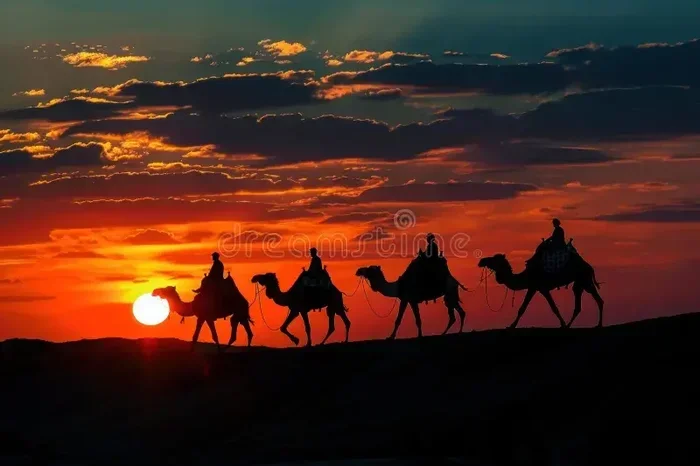
Visual guide about Desert dunes camel caravan sunset
Image source: thumbs.dreamstime.com
Day 1: Marrakech to Ait Ben Haddou via the Atlas Mountains
Your adventure begins early in Marrakech. After breakfast, you’ll meet your driver and hit the road. The first stop? The mighty Atlas Mountains.
The drive takes you over the Tizi n’Tichka pass, which sits at 2,260 meters above sea level. That’s higher than most clouds! The road winds through Berber villages where life hasn’t changed much in centuries. You’ll see farmers working terraced fields, children walking to school, and goats climbing trees (yes, really, Morocco has tree-climbing goats!).
Did You Know? Morocco is home to the famous “tree-climbing goats” of Essaouira. They climb Argan trees to eat the fruit. Local farmers actually use these goats to help harvest Argan nuts!
By afternoon, you’ll arrive at Ait Ben Haddou. This ancient fortified village (called a ksar) is a UNESCO World Heritage Site. It’s been the backdrop for famous movies like Gladiator, Lawrence of Arabia, and Game of Thrones. Walking through its narrow alleys feels like traveling back to medieval times.
You’ll spend the night in nearby Ouarzazate, often called the “Hollywood of Africa” because so many films are shot here.
Day 2: Ouarzazate to Todra Gorge via the Valley of the Roses
Day two starts with a visit to the Taourirt Kasbah in Ouarzazate. This impressive mud-brick castle was once the home of a powerful Glaoui family. Then it’s back on the road.
You’ll travel through the Valley of the Roses, a fragrant region famous for producing rose water and beauty products. Each spring, the valley turns pink with blooming damask roses. Even if you visit outside bloom season, you can still smell the products in local cooperatives.
The road continues to the Dades Valley, sometimes called the “Valley of a Thousand Kasbahs.” The rock formations here look like fingers reaching for the sky. They’re sometimes called “monkey fingers” because of their shape.
By evening, you reach Todra Gorge. This is where cliffs rise 400 meters straight up from a narrow river bed. Imagine standing between two giant walls of rock, with just a sliver of sky above. That’s Todra Gorge.
Overnight in a hotel near the gorge, often with stunning mountain views right from your window.
Day 3: Todra Gorge to Merzouga via Erfoud
Today is the day you’ve been waiting for. The desert awaits!
After breakfast, you’ll drive through the Tafilalet oasis, one of the largest palm groves in the world. It contains over 200,000 date palms. The drive passes through small towns like Erfoud, famous for its fossil workshops. Yes, fossils! This region was once covered by an ancient sea, and you can find marine fossils millions of years old.
As you get closer to Merzouga, you’ll start seeing sand dunes on the horizon. The first glimpse of Erg Chebbi is unforgettable. It’s like watching the ocean appear from a distance, except this ocean is made of sand.
You’ll arrive in Merzouga by late afternoon. This small desert village sits right at the edge of the dunes. Here, you’ll mount your camel for the trek into the desert. The ride takes about 1.5 to 2 hours, with the sun setting behind you.
Pro Tip: Hold onto your camera but also your phone. The sunset light on the dunes creates moments you want to capture forever.
You’ll arrive at your desert camp just as darkness falls. The camp is a small collection of traditional Berber tents. Dinner is served under the stars, usually with traditional music from local Berber musicians playing drums and singing.
Day 4: Sahara Desert Experience
Wake up early to catch the sunrise. Trust me, you don’t want to sleep through this. The way the sun paints the dunes in shades of orange, pink, and gold is something you’ll remember forever.
After breakfast at the camp, you have options. Some tours include a full day of desert activities:
- Sandboarding down the dunes (like snowboarding, but on sand)
- Quad biking across the desert
- Visiting a Nomad family in their traditional tent
- Exploring Khemliya Village to hear Gnawa music (a spiritual music style recognized by UNESCO)
- Walking in the dunes to experience the silence of the Sahara
Did You Know? The Sahara Desert is roughly the size of the United States. It covers about 9.2 million square kilometers. You could fit the entire country of India inside it with room to spare!
You’ll spend another night in the desert camp. Some travelers choose to sleep under the open sky instead of in tents. The stars in the Sahara are incredible. With no city lights for hundreds of kilometers, the Milky Way stretches across the sky like a cosmic river.
Day 5: Merzouga to Midelt via Ziz Valley
Time to leave the desert, but the adventure isn’t over. After a final sunrise (yes, they’re all amazing), you’ll ride your camel back to Merzouga.
The drive back north takes you through the stunning Ziz Valley. This lush palm oasis cuts through the desert like a green ribbon. You’ll see hundreds of thousands of date palms, traditional mud-brick villages, and dramatic cliffs.
Midelt sits between the Middle Atlas and High Atlas mountain ranges. It’s known as the “Apple City” because of its apple orchards. The town sits at about 1,500 meters elevation, so expect cooler temperatures, especially at night.
This is a good place to rest and recharge before the final push back to Marrakech.
Day 6: Midelt to Marrakech via the Middle Atlas
The journey continues through the Middle Atlas Mountains. This region feels completely different from the desert. It’s covered in cedar forests, lakes, and small Berber villages.
You’ll pass through Ifrane, often called the “Switzerland of Morocco.” The city has clean streets, Alpine-style architecture, and even ski resorts in winter. At 1,665 meters elevation, it’s one of the highest towns in Morocco.
Fun Fact: Ifrane is home to the Barbary macaques, North Africa’s only species of monkey. You might spot them in the nearby Azrou Cedar Forest.
Stop in Azrou to see the famous Cedar Forest. These ancient trees are home to playful monkeys who are experts at stealing snacks from tourists. Watch your food!
The drive continues through scenic mountain landscapes. By evening, you’ll arrive back in Marrakech. After days of quiet desert nights, the bustling medina will feel like stepping into another world.
Day 7: Exploring Marrakech
Your final day is for exploring the “Red City.” Marrakech gets its nickname from the red sandstone used to build its buildings.
Highlights include:
- Jemaa el-Fnaa: The famous main square that comes alive at night with storytellers, musicians, snake charmers, and food stalls
- Majorelle Garden: A stunning blue garden created by French painter Jacques Majorelle
- Bahia Palace: A beautiful 19th-century palace with intricate tilework
- Saadian Tombs: Royal tombs hidden for centuries, rediscovered in 1917
- Koutoubia Mosque: The city’s most famous landmark, with a 77-meter minaret
This is your day to shop for souvenirs, get lost in the medina, and savor your last tastes of Moroccan mint tea and tagine.
What Does a 7-Day Tour Cost?
Money matters, so let’s talk numbers. The cost of a tour from Marrakech to Erg Chebbi varies based on several factors. Think of it like buying a car. There are basic models and luxury versions, and the price reflects the experience.
Budget Tours (€400-€550 per person)
These tours focus on essentials. You’ll travel in a shared minivan with other travelers. Accommodation includes simple hotels and a standard desert camp. Meals are basic but filling. Camel rides to the camp are included.
This option is perfect for backpackers and budget-conscious travelers who care more about experiences than luxury.
Mid-Range Tours (€550-€750 per person)
Mid-range tours offer smaller groups (usually 4-8 people) and better accommodations. You’ll stay in charming riads (traditional Moroccan guesthouses) and upgraded desert camps with private tents and ensuite bathrooms.
Meals are more varied, and the pace is more relaxed. This is the sweet spot for most travelers.
Luxury Tours (€750-€1500+ per person)
Luxury tours are the full experience. Think private 4×4 vehicles, the finest riads, gourmet Moroccan cuisine, and premium desert camps with king-sized beds and private bathrooms. Some even include private camel rides at sunrise.
For special occasions or once-in-a-lifetime trips, luxury delivers.
What’s Usually Not in the Price:
- Drinks (other than water with meals)
- Tips for drivers and guides
- Personal shopping
- Entry fees to certain attractions
- Travel insurance
Best Time to Book Your Tour
Timing is everything. Morocco is a year-round destination, but some seasons are better than others for desert travel.
The Sweet Spot: October to May
These months offer the most comfortable temperatures. Daytime highs range from 20°C to 28°C (68°F to 82°F). Nights can be cold in the desert, dropping to 5°C to 10°C (41°F to 50°F), so pack layers.
Spring (March-May) brings wildflowers and pleasant weather. The Valley of the Roses blooms in April.
Autumn (October-November) offers clear skies and comfortable temperatures.
Winter (December-February) can be cold, especially at night in the desert. But the skies are the clearest of the year, making it the best time for stargazing.
The Months to Avoid: June to September
Summer in the Sahara is brutal. Temperatures regularly exceed 45°C (113°F). Sand can feel hot enough to cook an egg. While some tours do operate, it’s not comfortable.
Did You Know? The Sahara Desert can have temperature swings of 30°C (54°F) between day and night. That’s why layered clothing is crucial, even in “warm” months.
Essential Packing List for Your Tour
Packing smart makes your trip much more enjoyable. Here’s what to bring:
Clothing
- Light layers: Days can be warm, nights cold
- Long pants and long-sleeved shirts: For sun protection and modesty at religious sites
- Warm jacket: Especially for evenings in the desert
- Comfortable walking shoes: For exploring villages and gorges
- Sandals or easy-off shoes: For the camel ride
- Headscarf or bandana: For sun and sand protection
Health and Safety
- Sunscreen (SPF 30+): The desert sun is intense
- Sunglasses: Sand reflects sunlight powerfully
- Lip balm: The dry air will chap your lips
- Hand sanitizer: Limited facilities in remote areas
- Basic first aid kit: Band-aids, pain relievers, etc.
- Reusable water bottle: Stay hydrated!
Tech and Misc
- Camera with extra batteries: Cold nights drain batteries fast
- Power bank: Not all stops have reliable electricity
- Universal adapter: Morocco uses Type C and E plugs
- Flashlight or headlamp: Useful in the desert camp at night
- Small daypack: For daily essentials during excursions
Pro Tip: Pack less than you think you’ll need. You can buy basic items in Morocco if needed, and you’ll appreciate not lugging heavy bags.
Choosing the Right Tour Operator
Not all tour companies are created equal. Here’s how to pick the right one:
Look for These Qualities
- Local expertise: Moroccan-owned companies often have deeper local knowledge
- Small group sizes: 4-12 people is ideal for a personal experience
- Clear pricing: No hidden fees or surprise charges
- Good reviews: Check TripAdvisor, Google Reviews, and travel forums
- Responsive communication: They answer your questions promptly and thoroughly
- Licensed and insured: This protects you if something goes wrong
Questions to Ask Before Booking
- What’s the maximum group size?
- What type of vehicle will we use?
- Are entrance fees included?
- What kind of desert camp will we stay in?
- Is the camel ride included?
- What’s the cancellation policy?
- Do you provide any meals, and how many?
Red Flags to Watch Out For
- Pressure to book immediately
- Unusually low prices (often means cut corners)
- No written itinerary
- Reluctance to answer questions
- No online presence or reviews
Booking tip: Book directly with tour operators when possible. Going through third-party sites often adds fees without adding value. Many reputable Moroccan operators have websites with online booking and WhatsApp contact for quick responses.
Conclusion: Your Moroccan Adventure Awaits
A 7-day tour from Marrakech to Erg Chebbi is more than just a vacation. It’s an immersion into one of the world’s most fascinating countries. You’ll cross mountains that took millions of years to form. You’ll walk through villages where time seems to have paused. You’ll ride camels across dunes that have witnessed empires rise and fall. And you’ll sleep under stars that travelers have navigated by for thousands of years.
From the bustling souks of Marrakech to the silent majesty of the Sahara, every day brings something new. You’ll taste tagine cooked over open fires. You’ll hear Berber music that echoes ancient traditions. You’ll see sunsets that photographers travel the world to capture.
Morocco has a way of staying with you long after you’ve gone home. The colors, the sounds, the smells, the warmth of its people, they all become part of your story. So what are you waiting for?
Start planning your 7-day tour from Marrakech to Erg Chebbi today. The Sahara is calling, and it’s a call you won’t want to ignore.
Frequently Asked Questions
How long does it take to drive from Marrakech to Erg Chebbi?
The direct drive takes about 9-10 hours, but that’s not recommended in one day. A 7-day tour breaks this into manageable, scenic drives with stops at amazing locations along the way, making the journey part of the adventure.
Is a 7-day tour from Marrakech to Erg Chebbi safe?
Yes, this route is very safe for tourists. Morocco welcomes millions of visitors each year and has well-developed tourism infrastructure. The main roads are good, and tour drivers know them well. You’ll meet friendly locals throughout your journey.
What should I wear on a Marrakech to Erg Chebbi tour?
Pack light, breathable clothes for daytime and warm layers for cold desert nights. Modest clothing is respectful, especially in villages. Comfortable walking shoes are essential. A headscarf protects against sun and sand. Dress in layers because temperatures can vary dramatically.
Can I do the tour independently instead of with a guide?
Technically yes, but it’s challenging. The route includes unpaved sections, and renting a 4×4 is expensive. Public transport exists but is slow. A guided tour is more practical, safer, and often costs less than doing it alone. Plus, local guides share insights you wouldn’t get otherwise.
What’s the camel ride like in Erg Chebbi?
The camel ride to the desert camp takes about 1.5-2 hours. Camels are surprisingly smooth to ride, though getting on and off can be awkward. The ride happens at sunset, offering spectacular photo opportunities. It’s bumpy but not uncomfortable, and most people find it a highlight of their trip.
Are there ATMs and good internet on the tour route?
ATMs are available in larger towns like Ouarzazate, Erfoud, and Merzouga, but not in remote areas. Bring enough cash for small purchases. Wi-Fi is available in most hotels but rarely in the desert camp. Consider getting a Moroccan SIM card for data coverage throughout your journey.