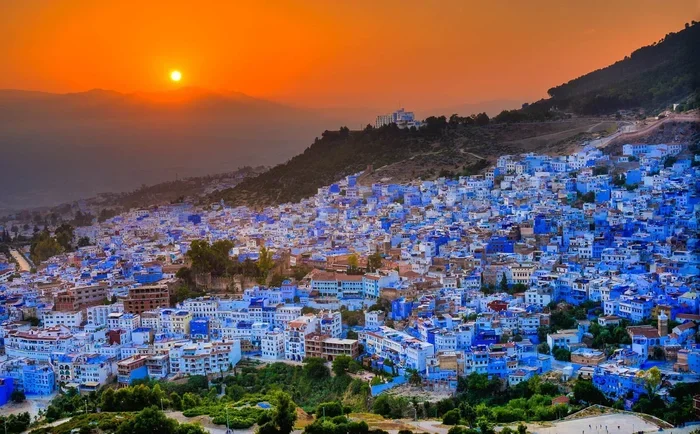
Featured image for Marrakech Chefchaouen Morocco tour
Image source: saharaluxurytours.com
A 10-day Marrakech to Chefchaouen tour is the perfect way to see Morocco’s most iconic landscapes and cities in one unforgettable trip. You’ll journey from the bustling souks of Marrakech through the Atlas Mountains, across sweeping desert dunes, and into the cool coastal highlands where Chefchaouen’s blue-painted streets await. This guide breaks down the best route, top stops, practical tips, and budget insights to help you plan with confidence.
Marrakech pulses with energy the moment you arrive. Snake charmers play in Jemaa el-Fnaa square, the air smells of grilled lamb and fresh mint tea, and the souks stretch forever in every direction. But beyond this sensory overload lies the rest of Morocco, a country of snow-capped mountains, golden deserts, ancient medinas, and one famously blue-painted town tucked into the Rif Mountains.
The best 10 day tour from Marrakech to Chefchaouen is more than a vacation. It’s a journey across four distinct landscapes, each with its own rhythm, language, and cuisine. You start in the imperial south, climb over the Atlas Mountains, sleep under Saharan stars, lose yourself in Fes’s medieval medina, and end in the calm, blue-washed serenity of Chefchaouen.
This guide will walk you through everything you need to plan this trip. You’ll learn what to expect each day, where to stop, how much to budget, and how to avoid the common mistakes travelers make. Whether you’re a first-time visitor or returning to Morocco for a deeper experience, a 10-day itinerary gives you the time to actually connect with each place, rather than rushing past them.
Key Takeaways
- Route Overview: The classic route runs south-to-north: Marrakech → Ait Benhaddou → Sahara Desert → Fes → Chefchaouen.
- Travel Duration: 10 days allows 2–3 nights each in Marrakech, the Sahara, Fes, and Chefchaouen, with travel days in between.
- Best Season: Spring (March–May) and autumn (September–November) offer comfortable temperatures across all regions.
- Transport Options: Private drivers, small-group tours, or self-drive routes all work well, depending on budget and comfort level.
- Budget Range: Expect $1,000–$2,500 per person for a mid-range tour including accommodation, transport, and guided activities.
- Cultural Highlights: Berber villages, UNESCO kasbahs, camel trekking, and the blue medina of Chefchaouen are must-experience moments.
- Why 10 Days? This length balances deep cultural immersion with efficient travel, avoiding rushed 5–7 day itineraries.
📑 Table of Contents
Why Choose a 10-Day Marrakech to Chefchaouen Tour?
Morocco is a country that rewards slow travel. While you can technically drive from Marrakech to Chefchaouen in about 9 hours, doing so means missing the soul of the journey. A 10-day tour gives you room to breathe.
The Case for Slow Travel in Morocco
Think of Morocco like a good book. You could skim the highlights in a few days, but you’d miss the texture, the subplots, the small details that make it unforgettable. A 10-day itinerary allows you to spend two or three nights in each major destination, which means you can wake up without an alarm, wander at your own pace, and have time for unexpected experiences, like a spontaneous invitation to tea with a Berber family or an unplanned sunset walk along a kasbah wall.
According to the Moroccan Ministry of Tourism, the average length of stay for international visitors has increased from 4.2 nights in 2015 to 7.8 nights in 2024. Travelers are realizing what locals have always known: Morocco’s magic lives in the details, and those details take time to uncover.
What Makes This Route Special
The Marrakech-to-Chefchaouen route is the most geographically diverse path in Morocco. You cross:
- The High Atlas Mountains (peaks over 4,000 meters)
- The edge of the Sahara Desert (Erg Chebbi or Erg Chigaga dunes)
- The Middle Atlas cedar forests (home to Barbary macaques)
- The Rif Mountains (where Chefchaouen sits at 600 meters elevation)
In a single trip, you experience desert, mountain, forest, coast, and four UNESCO World Heritage Sites. That’s hard to beat anywhere in the world.
The Best 10-Day Itinerary: Day-by-Day Breakdown
Here’s the route I’d recommend based on years of traveler feedback and on-the-ground experience. It balances iconic sights with authentic local stops, and it flows logically from south to north.
Visual guide about Marrakech Chefchaouen Morocco tour
Image source: moroccotoursgates.com
Day 1: Arrival in Marrakech
Land at Marrakech-Menara Airport and settle into a riad in the medina. Riads are traditional Moroccan houses built around an interior courtyard, and staying in one feels like stepping into a living museum. After checking in, head to Jemaa el-Fnaa at sunset. The square comes alive with food stalls, musicians, and storytellers.
Pro tip: Book a riad near the medina but not directly on Jemaa el-Fnaa. The square is fun to visit but loud at night. A 5-minute walk away gives you peace without losing access.
Day 2: Exploring Marrakech
Dedicate this full day to the city. Visit the Bahia Palace, the Saadian Tombs, and the Koutoubia Mosque (exterior only, as non-Muslims can’t enter). In the afternoon, lose yourself in the souks. The souks are divided by trade, so you’ll find the leather workers in one area, the metalworkers in another, and the dyers in yet another. Each has its own smell, sound, and color palette.
Did You Know? The Marrakech medina has over 18,000 shops across 30+ different souks, making it one of the largest pedestrian marketplaces in the world.
Day 3: Marrakech to Ait Benhaddou via the Atlas Mountains
This is your first long travel day, but it’s also one of the most scenic. You’ll cross the Tizi n’Tichka Pass at 2,260 meters, stopping for photos of valleys that look like they’ve been painted onto the landscape. Ait Benhaddou, a UNESCO-listed kasbah, is your overnight stop. Many famous films have been shot here, including Gladiator, Lawrence of Arabia, and Game of Thrones.
Day 4: Ait Benhaddou to the Sahara Desert
Continue south through Ouarzazate (the “Hollywood of Africa”) and into the desert. By late afternoon, you’ll arrive at the edge of Erg Chebbi, where camels are waiting. Ride into the dunes as the sun sets, then spend the night in a Berber desert camp. The silence here is something you have to experience to understand.
Did You Know? The Sahara Desert covers 3.6 million square miles across 11 countries, but the dunes of Erg Chebbi rise up to 150 meters tall, making them some of the most dramatic in North Africa.
Day 5: Sahara to Todra Gorge
p>Wake early to watch sunrise over the dunes, then drive to Todra Gorge, a massive canyon with walls rising 400 meters on either side. It’s a favorite spot for rock climbers, but even non-climbers will be awed by the scale. Stay overnight in a small hotel or guesthouse nearby.
Day 6: Todra Gorge to Fes via the Middle Atlas
Today’s drive takes you through cedar forests where Barbary macaques (Morocco’s only native primate) roam freely. Stop in Ifrane, known as “Little Switzerland of Morocco” for its alpine-style architecture and clean streets. Arrive in Fes by evening and check into a riad in the medina.
Day 7: Exploring Fes
Fes is Morocco’s cultural and spiritual capital, and its medina is the largest car-free urban zone in the world. Hire a local guide for this day; the alleys are a maze, and having someone explain the history makes a huge difference. Visit the Al-Qarawiyyin University (founded in 859 AD, often cited as the world’s oldest continuously operating university), the Chouara Tanneries, and the Bou Inania Medersa.
Did You Know? The Al-Qarawiyyin University was founded in 859 AD by Fatima al-Fihri, making it older than the University of Bologna (founded 1088) and Oxford (founded 1096).
Day 8: Fes to Chefchaouen via Volubilis
Leave Fes in the morning and stop at Volubilis, the best-preserved Roman ruins in Morocco. Wander among the mosaics, triumphal arches, and crumbling columns before continuing to Chefchaouen. You’ll arrive in the late afternoon, just in time to see the blue-washed buildings glow in the golden light.
Day 9: Exploring Chefchaouen
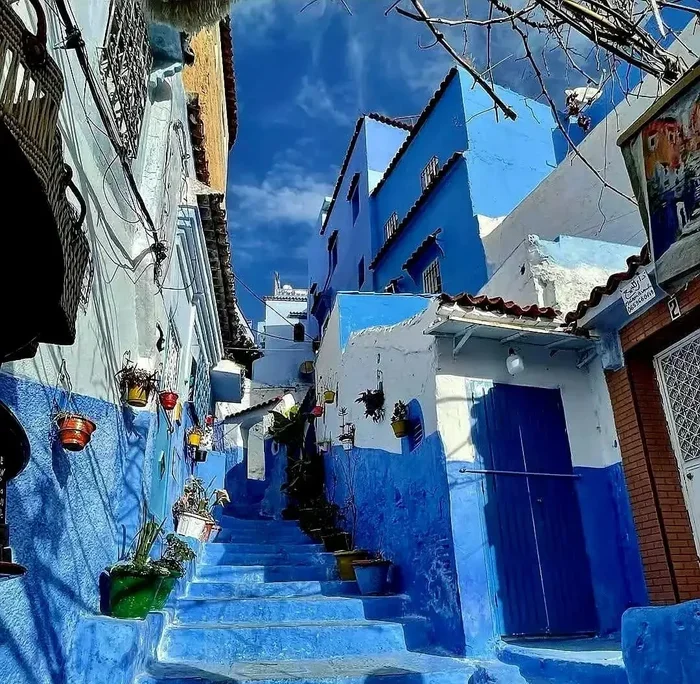
p>Spend a full day in Chefchaouen. Wander the medina’s blue alleys, hike to the Spanish Mosque for panoramic views, and visit the Ras El Ma waterfall just outside town. Chefchaouen is also famous for its artisan weaving and goats cheese, so don’t miss a tasting session at a local shop.
Did You Know? Chefchaouen was painted blue in the 1930s by Jewish refugees who believed the color symbolized the sky and heaven. Today, the tradition continues, and almost every building in the old medina is some shade of blue.
Day 10: Return to Casablanca or Tangier
Most travelers fly out from either Casablanca or Tangier on the final day. Chefchaouen is just 1.5 hours from Tangier, making it the easier choice. From Tangier, you can catch flights to Europe, or take a quick train to Casablanca for international connections.
How to Travel: Transport Options Explained
Choosing how to get around Morocco is one of the biggest decisions you’ll make. Each option has pros and cons depending on your budget, comfort level, and sense of adventure.
Private Driver Guide
This is the most popular option for 10-day tours. A private driver handles all the long-distance driving, knows the best stops, and can adjust the itinerary on the fly. Costs typically range from $100–$150 per day, which is split among 2–4 travelers.
Best for: Couples, families, and anyone who wants a stress-free experience.
Small-Group Tours
Companies like Intrepid, G Adventures, and local operators run fixed-departure tours with 8–16 travelers. These are more affordable than private tours and offer built-in social experiences. Prices range from $800–$1,500 per person for 10 days.
Best for: Solo travelers and budget-conscious tourists who still want structure.
Self-Drive
Renting a car in Morocco is possible and affordable (around $30–$50 per day). Roads are generally good, but mountain passes require caution. Self-driving gives you total freedom but means you miss out on local insights.
Best for: Experienced travelers comfortable with foreign road signs and driving conditions.
Public Transport
Buses and trains connect major cities (Marrakech, Fes, Casablanca, Tangier), but reaching smaller destinations like Ait Benhaddou or the Sahara requires private arrangements. A 10-day trip using only public transport would be challenging but not impossible.
Best for: Backpackers with flexible schedules and lots of time.
Budget Breakdown: What to Expect
Morocco offers excellent value compared to Europe or North America, but costs vary widely based on your travel style.
Budget Traveler ($60–$90 per day)
- Hostels or budget riads ($15–$25 per night)
- Street food and local restaurants ($5–$10 per meal)
- Public transport and shared tours
Mid-Range Traveler ($100–$200 per day)
- Mid-range riads and 3–4 star hotels ($50–$100 per night)
- Mix of local restaurants and nicer establishments
- Private driver for the 10-day route
Luxury Traveler ($250+ per day)
- High-end riads and 5-star hotels ($150–$400 per night)
- Private guides and exclusive experiences
- Premium desert camps with private tents
For most travelers, a comfortable mid-range budget of $1,200–$2,000 per person covers everything for 10 days, including accommodation, transport, meals, and entry fees.
Practical Tips for a Smooth Trip
After years of hearing what works and what doesn’t, here are the tips that consistently make a difference.
Pack Smart
Morocco’s climates vary wildly. Marrakech can hit 40°C (104°F) in summer, while Chefchaouen sits at a cool 20°C (68°F) in the evenings. Layering is essential. Bring a light jacket even in summer, and pack modest clothing that covers shoulders and knees for entering religious sites.
Learn a Few Arabic Phrases
Even “Salaam alaikum” (peace be upon you) and “Shukran” (thank you) open doors. Moroccans appreciate effort, and a small attempt at the language often leads to warmer interactions.
Bargain, but Politely
Haggling is expected in the souks, but keep it friendly. Start at about 50% of the asking price and meet somewhere in the middle. Walking away often brings a better offer, but never bargain for things you don’t intend to buy.
Stay Hydrated and Sun-Protected
The sun is stronger than it feels, especially in the desert and at altitude. Carry water, wear sunscreen, and bring a hat.
Respect Local Customs
Morocco is a Muslim country, and while it’s very welcoming to tourists, respecting local customs matters. Ask before photographing people, dress modestly in rural areas, and avoid public displays of affection.
Frequently Asked Questions
Is 10 days enough for Marrakech to Chefchaouen?
Yes, 10 days is the sweet spot for this route. It gives you 2–3 nights in each major destination without rushing. Anything less than 7 days feels hurried, and more than 14 days starts to repeat experiences.
What’s the best season for this trip?
Spring (March–May) and autumn (September–November) are ideal. Summer can be brutally hot in the desert and Marrakech, while winter nights in the Sahara and Atlas Mountains drop below freezing.
Do I need a visa for Morocco?
Most nationalities (including US, EU, UK, Canada, Australia) get a 90-day visa on arrival. Just make sure your passport is valid for at least 6 months beyond your travel dates.
Is Morocco safe for tourists?
Yes, Morocco is one of the safest countries in North Africa. Petty crime exists (like anywhere), but violent crime against tourists is rare. The Moroccan government invests heavily in tourism safety, and tourist police are present in major areas.
Can I do this trip independently without a tour?
Absolutely. Many travelers use a combination of trains, buses, and private drivers for individual legs. However, a guided tour removes the stress of logistics, especially for the desert section where public transport is limited.
What’s the food like on this route?
Expect tagines (slow-cooked stews), couscous, fresh bread, mint tea, and pastries. Each region has its specialty: Marrakech is famous for tanjia, Fes for its sweets, and Chefchaouen for its goat cheese. Vegetarians will find plenty of options, especially in tourist areas.
Final Thoughts
A 10-day tour from Marrakech to Chefchaouen is more than a checklist of destinations. It’s a journey through Morocco’s most contrasting landscapes, from the chaos of Jemaa el-Fnaa to the calm of Chefchaouen’s blue alleys. With 10 days, you have enough time to slow down, connect with locals, and actually feel the rhythm of each place.
Whether you choose a private driver, a small-group tour, or plan it yourself, the route is the same. Start in the south, work your way north, and end where the mountains meet the Mediterranean sky. That’s the magic of Morocco, and 10 days is just enough to taste it all.
Start planning today. Your Moroccan adventure is waiting.