A Tour 3 Dias Desde Marrakech a El Desierto Del Sahara is the most popular way to experience Morocco’s iconic dunes in a short time. This 3-day adventure takes you through the Atlas Mountains, ancient kasbahs, and ends with a magical camel trek into the Erg Chebbi or Erg Chigaga desert. Perfect for travelers who want culture, scenery, and adventure in one unforgettable package.
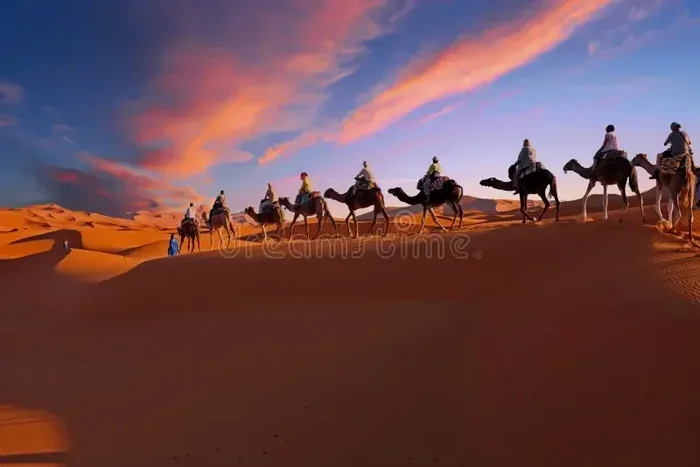
Featured image for Sahara Desert camel caravan sunset
Image source: thumbs.dreamstime.com
Picture this: you’re riding a camel across golden dunes, the sun dipping below the horizon, and the only sound you hear is the soft crunch of sand beneath your feet. That’s exactly what awaits you on a Tour 3 Dias Desde Marrakech a El Desierto Del Sahara.
Did you know that the Sahara Desert covers over 9.2 million square kilometers? That’s roughly the size of the United States! Yet, in just three days, you can experience its most breathtaking part, the Erg Chebbi dunes in Merzouga, while also discovering Morocco’s rich culture along the way.
This guide will walk you through everything you need to know: where you’ll go, what you’ll see, who runs these tours, when to travel, why this route is so popular, and how to make the most of your journey. Whether you’re a solo traveler, a couple, or a family, this comprehensive breakdown will help you plan the adventure of a lifetime.
Key Takeaways
- Route Overview: The classic Marrakech to Sahara Desert 3-day tour crosses the High Atlas via Tizi n’Tichka pass and visits Aït Benhaddou, Ouarzazate, Todra Gorge, and ends at the Erg Chebbi dunes.
- Desert Highlight: You’ll ride a camel into the Sahara at sunset, spend the night in a Berber desert camp, and enjoy traditional music under the stars.
- Best Time to Go: October to April offers the most comfortable weather; summers can exceed 45°C (113°F) in the desert.
- What to Pack: Bring layers, sunscreen, a scarf for sand, comfortable shoes, and a camera with extra batteries.
- Group vs. Private: Shared tours are budget-friendly (around €100-150); private tours offer flexibility and start at €250+.
- Physical Demand: The tour is moderate; suitable for most ages, though long drives (5-7 hours daily) require patience.
- Booking Tip: Book at least 2-4 weeks in advance during high season (October-April) to secure the best desert camps.
📑 Table of Contents
- What Is a 3-Day Marrakech to Sahara Desert Tour?
- Where Does the Tour Go? The Classic Itinerary
- When Is the Best Time to Take This Tour?
- Why Choose a Guided Tour Instead of Going Alone?
- How to Choose the Right Tour Operator
- What to Pack for Your 3-Day Desert Adventure
- How Much Does a 3-Day Marrakech to Sahara Tour Cost?
- Tips for an Unforgettable Desert Experience
- Common Mistakes to Avoid
- Alternative Routes to Consider
- Conclusion: Your Sahara Adventure Awaits
What Is a 3-Day Marrakech to Sahara Desert Tour?
A 3-day Marrakech to Sahara Desert tour is a guided round-trip journey that takes you from the bustling imperial city of Marrakech deep into the Moroccan Sahara. Think of it like a sampler platter, but instead of small bites of food, you get small bites of everything Morocco has to offer: mountains, valleys, kasbahs, oases, and endless dunes.
The tour typically includes transportation in a 4×4 vehicle or minivan, an English-speaking driver-guide, two nights of accommodation (one hotel and one desert camp), camel rides, and most meals. It’s the most efficient way to see the country’s diverse landscapes without renting a car or navigating unfamiliar roads yourself.
Who Is This Tour For?
This tour is designed for travelers who want maximum experience in minimum time. It’s perfect for:
- First-time visitors to Morocco who want a complete overview
- Time-conscious travelers with limited vacation days
- Adventure seekers who dream of camel rides and desert camping
- Culture lovers interested in Berber heritage and ancient kasbahs
- Photographers chasing dramatic landscapes and golden hour shots
Most tours are suitable for ages 8 and up, though the long drives mean younger kids should be prepared with entertainment. If you have back problems or mobility issues, let your tour operator know in advance, as some desert camps require short walks on uneven sand.
What Makes This Route So Popular?
The Marrakech-Merzouga route is the most-booked desert tour in Morocco for good reason. It offers the perfect blend of accessibility and authenticity. Marrakech is Morocco’s main tourist hub with an international airport, making it the natural starting point. The route south crosses dramatic mountain passes, passes through famous movie locations, and ends at some of the most spectacular dunes in the world.
Where Does the Tour Go? The Classic Itinerary
While exact stops vary by operator, the classic 3-day Marrakech to Sahara Desert itinerary follows a well-established route. Imagine drawing a line from Marrakech south to the Algerian border, then looping back, that’s essentially your journey.
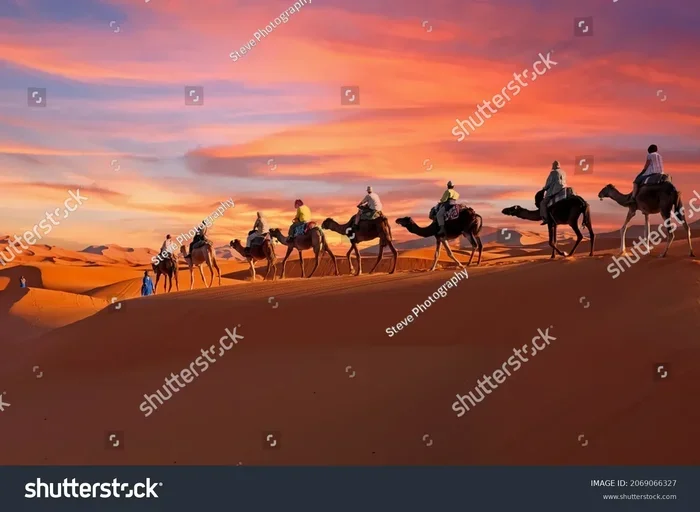
Visual guide about Sahara Desert camel caravan sunset
Image source: shutterstock.com
Day 1: Marrakech to the Dades Valley
Your adventure begins early, usually around 7:00 or 8:00 AM, when your driver picks you up from your hotel or a designated meeting point in Marrakech. The first major landmark is the Tizi n’Tichka pass, which sits at 2,260 meters (7,415 feet) above sea level. The winding mountain road offers stunning views of the High Atlas Mountains, with Berber villages clinging to hillsides.
After crossing the pass, you’ll stop at the Aït Benhaddou, a UNESCO World Heritage Site since 1987. This fortified village (ksar) has been featured in films like Gladiator, Lawrence of Arabia, and Game of Thrones. Walking through its narrow clay pathways feels like stepping back in time.
Next, you’ll continue to Ouarzazate, known as the “Gateway to the Sahara” and home to the famous Atlas Studios. From there, the road winds through the Valley of the Roses and into the stunning Dades Valley, where you’ll spend your first night in a traditional riad or hotel.
Tip: Bring a light jacket for the evening. Mountain temperatures drop significantly after sunset, sometimes to 10°C (50°F) even in spring.
Day 2: Dades Valley to the Sahara Desert
Day two is often called the “scenic day” because every turn reveals a new postcard-worthy view. After breakfast, you’ll drive through the Todra Gorge, a massive canyon with 400-meter (1,300-foot) limestone walls. Adventure lovers can take a short walk along the river, while rock climbers can book guided climbs.
The journey continues through Berber villages and date palm oases until you reach Merzouga, the gateway to the Erg Chebbi dunes. Here, you’ll trade your 4×4 for a camel, yes, an actual camel!, and ride into the desert as the sun begins its descent.
Your overnight stay is in a Berber desert camp, where traditional tents (both simple and luxury options are available) sit among the dunes. After a tagine dinner, you’ll gather around a campfire to enjoy live Gnawa music, an ancient spiritual music tradition recognized by UNESCO as part of humanity’s intangible heritage.
Did You Know? The Erg Chebbi dunes rise up to 150 meters (492 feet) high and stretch over 30 kilometers long. Some of the dunes sing! When sand slides down certain angles, it produces a humming sound called “singing sand.”
Day 3: Sahara Desert Back to Marrakech
Most tours offer an optional early-morning wake-up to watch the sunrise over the dunes, and trust me, it’s worth the 5:30 AM alarm. The way light paints the Sahara in shades of pink, orange, and gold is something you’ll never forget.
After sunrise and breakfast at camp, you’ll ride camels (or 4x4s, depending on your preference) back to Merzouga, where your driver awaits. The return journey follows a different route, often passing through Alnif, N’kob, and the Draa Valley, a lush palm oasis that looks straight out of a fairy tale.
You’ll arrive back in Marrakech by early evening, usually between 6:00 and 8:00 PM, depending on traffic and stops. That gives you just enough time to freshen up before heading to the famous Jemaa el-Fnaa square for a final Moroccan dinner.
When Is the Best Time to Take This Tour?
Timing can make or break your Sahara experience. Morocco’s desert has two distinct seasons, hot and less hot, but the “best” time depends on what you’re looking for.
October to April: The Ideal Window
The most comfortable months for a Tour 3 Dias Desde Marrakech a El Desierto Del Sahara are October, November, March, and April. Daytime temperatures hover between 20-28°C (68-82°F), and nights are cool but not freezing.
December and January can be chilly, with desert nights dropping to 5°C (41°F) or below. But if you don’t mind bundling up, winter offers crystal-clear skies and the chance to see snow-capped Atlas Mountains alongside the dunes, a surreal contrast.
May to September: The Hot Season
Summer in the Sahara is no joke. From June to August, daytime temperatures regularly exceed 40°C (104°F), and sand can reach 60°C (140°F). Many travelers find this uncomfortable, but others love the dramatic empty landscapes and lower prices.
July and August are also peak domestic travel months in Morocco, so desert camps book up quickly. If you’re set on summer travel, book at least 6-8 weeks ahead.
Quick Tip: Avoid Ramadan dates if you want a full experience with music and lively camps. Many desert camps reduce performances during the holy month.
Special Considerations for 2025-2026
With increasing global interest in Morocco, the post-COVID tourism boom shows no signs of slowing. Statistics from the Moroccan Ministry of Tourism show that 14.5 million tourists visited Morocco in 2023, with Marrakech consistently ranking as the top destination. Expect tours to sell out faster, especially during Easter (March-April) and the October-November shoulder season.
Why Choose a Guided Tour Instead of Going Alone?
You might be wondering: “Can I just rent a car and do this myself?” The short answer is yes, you can. But there are several reasons why most travelers opt for a guided Tour 3 Dias Desde Marrakech a El Desierto Del Sahara.
Safety and Navigation
The roads from Marrakech to Merzouga include mountain passes, desert stretches, and remote areas with limited signage. While the main roads are paved, conditions vary, and GPS can be unreliable. Local drivers know the terrain, weather patterns, and safe stopping points.
Local Knowledge
A good driver-guide transforms your trip from a sightseeing drive into a cultural experience. They can explain Berber traditions, point out hidden viewpoints, recommend the best photo spots, and introduce you to local families. This kind of authentic insight is hard to get from a guidebook.
Logistics Made Simple
Booking accommodation in remote desert towns like Merzouga or the Dades Valley independently can be tricky, especially during peak season. Tours handle all reservations, ensuring you stay in vetted, quality accommodations. They also coordinate camel treks, meals, and camp activities seamlessly.
Cost-Effectiveness
When you factor in fuel (around €80-100 round-trip), accommodation (€30-60/night), camel rental (€30-50), and meals, doing it yourself often costs similar to (or more than) a group tour. Plus, you’ll need a 4×4 for the final stretch to many desert camps, adding rental costs.
How to Choose the Right Tour Operator
Not all tours are created equal. Here’s how to pick one that matches your style and budget.
Shared Group Tours
These are the most affordable option, typically ranging from €100-180 per person. Groups usually have 10-16 people, and itineraries follow a set schedule. They’re great for solo travelers and backpackers looking to meet others.
Pros: Budget-friendly, social, hassle-free
Cons: Fixed schedule, less flexibility, larger groups
Private Tours
Private tours start around €250-400 per person (based on 2-4 travelers) and offer complete customization. You choose your departure time, stops, and even accommodation level. Perfect for couples, families, and photographers who want flexibility.
Pros: Total flexibility, personalized pace, privacy
Cons: Higher cost, still need to coordinate with driver
Luxury Tours
For travelers seeking premium experiences, luxury tours (€500-900+ per person) include high-end riads, private luxury desert camps with en-suite bathrooms, gourmet meals, and sometimes extras like private camels, hot air balloon rides, or spa treatments.
Questions to Ask Before Booking
- Is the camel trek included, or is it an extra cost?
- What type of accommodation is used in the desert camp?
- Are meals included? Which ones?
- What’s the maximum group size?
- Is there an extra fee for solo travelers?
- What’s the cancellation policy?
- Are tips for the driver and camel guide included?
Pro Tip: Reputable operators include driver and guide tips in their pricing or recommend a standard amount (around €15-20 per person per day). If a tour seems suspiciously cheap, ask why, fuel costs have risen significantly in Morocco.
What to Pack for Your 3-Day Desert Adventure
Packing smart can make the difference between a good trip and a great one. Here’s your desert survival kit:
Clothing Essentials
- Layers: Mountain mornings are cold, desert afternoons are warm, and nights can be chilly. A light jacket plus a scarf is essential.
- Sun protection: Wide-brim hat, sunglasses, and SPF 30+ sunscreen. The desert sun is intense.
- Comfortable walking shoes: Sandals for the camp, sneakers for hikes.
- Long sleeves and pants: Protect against sun and sand, even in summer.
- Swimwear: Some hotels have pools; surprise bonus!
Gear and Accessories
- Headscarf or shemagh: Doubles as sun protection, sand barrier, and cold-weather wrap.
- Reusable water bottle: Stay hydrated. You’ll be offered plenty of refills.
- Power bank: Some desert camps have limited electricity.
- Camera with extra memory cards: You’ll shoot more than you think.
- Flashlight or headlamp: Handy for nighttime camp walks.
Health and Hygiene
- Basic first-aid kit: Band-aids, pain relievers, motion sickness pills (for mountain roads).
- Hand sanitizer and wet wipes: Limited shower access at some camps.
- Lip balm and moisturizer: Desert air is dry.
- Toilet paper: Some remote stops lack supplies.
What to Leave Behind
- Heavy suitcases: Pack light. Most tours allow one medium bag per person.
- Expensive jewelry: Leave it at home. You’ll stand out and risk losing it.
- Single-use plastics: Morocco is cracking down on plastic waste; bring reusable alternatives.
How Much Does a 3-Day Marrakech to Sahara Tour Cost?
Tour prices vary widely based on type, season, and inclusions. Here’s a realistic breakdown for 2025-2026:
- Budget group tours: €100-150 per person (shared, basic camps)
- Mid-range group tours: €150-250 per person (smaller groups, better hotels)
- Private tours (2 people): €250-450 per person
- Private tours (4+ people): €180-300 per person
- Luxury tours: €500-900+ per person
What’s Usually Included
- Transportation in air-conditioned vehicle
- English-speaking driver-guide
- 2 nights accommodation (1 hotel + 1 desert camp)
- Camel trek to camp
- Breakfast daily, 2-3 dinners
- Pickup and drop-off in Marrakech
What’s Usually NOT Included
- Lunches (around €5-10 per meal)
- Drinks and snacks
- Entry fees to attractions (Aït Benhaddou is typically free; some museums charge €2-5)
- Tips for driver and guides (recommended €15-20/day total)
- Personal expenses and souvenirs
- Travel insurance
Ways to Save Money
- Travel in shoulder season (October or April)
- Join a shared group tour instead of booking private
- Book directly with Moroccan operators rather than European resellers
- Eat at local spots your driver recommends instead of touristy restaurants
- Bargain respectfully at souks, but don’t expect huge discounts on fixed-price tours
Tips for an Unforgettable Desert Experience
Beyond logistics, here are insider tips to make your Tour 3 Dias Desde Marrakech a El Desierto Del Sahara truly magical.
Embrace the Silence
The Sahara is one of the quietest places on Earth. When you’re at camp, take a moment to walk away from the group and just listen. The silence is deafening and transformative. Many travelers say this is their most meaningful memory.
Try the Stargazing
With virtually no light pollution, the Sahara offers some of the best stargazing on the planet. On a clear night, you can see the Milky Way with the naked eye. Bring a star app on your phone (download it before you go; no signal in the desert).
Respect Local Customs
The Berber people (also called Amazigh) are the indigenous inhabitants of North Africa. Dress modestly, ask before photographing people, and avoid pointing at someone with your finger (use your whole hand instead). These small gestures earn big respect.
Stay Hydrated, But Smartly
Drink water regularly but avoid tap water. Stick to bottled or filtered water. Your tour vehicle will have plenty of stops, and your guide will keep you supplied.
Prepare for Sand
Sand gets everywhere. In your shoes, your camera, your nose, your hair, embrace it. Bring a soft brush for electronics, and consider covering your phone camera lens often. Most modern phones handle sand fine, but older models can struggle.
Connect with Your Guides
Many drivers have been leading these tours for decades. They have incredible stories, from historical anecdotes to personal family histories. Ask questions, share tea, and engage. These human connections often become the highlight of the trip.
Try a Sandboard
Many desert camps offer sandboarding for free or a small fee. Even if you’ve never snowboarded, the dunes are forgiving, and sliding down a sandy slope is pure joy.
Common Mistakes to Avoid
Even experienced travelers make errors on this trip. Here’s what to skip:
- Booking the cheapest tour without checking reviews: €90 tours often cut corners on accommodation and food.
- Underestimating the drive times: Day 1 involves 6-7 hours of driving. Bring music, podcasts, and patience.
- Wearing white or expensive clothes: Sand and red dust will mark everything.
- Skipping travel insurance: Medical evacuation from remote areas is expensive.
- Assuming everyone speaks English: In remote areas, French or Arabic is more common. Learn a few basic words.
- Not telling your bank you’re traveling: Card freezes in Morocco are common.
Alternative Routes to Consider
While the Marrakech to Merzouga (Erg Chebbi) route is the classic, alternatives exist:
Erg Chigaga (3 Days)
This route heads southwest instead of southeast and reaches the more remote Erg Chigaga dunes. It’s longer (7-9 hours of off-road driving) but less crowded. Best for adventurous travelers seeking solitude.
Fes to Marrakech (Reverse, 3 Days)
If you’re flying into Fes instead, this reverse itinerary lets you see the same sites with different lighting and crowds. Many travelers prefer ending in Marrakech for nightlife and shopping.
Marrakech to Fes via Sahara (4-5 Days)
If you have extra time, extending to 4 or 5 days lets you visit less-touristy spots like the Draa Valley, Tafraoute, or Essaouira.
Conclusion: Your Sahara Adventure Awaits
A Tour 3 Dias Desde Marrakech a El Desierto Del Sahara is more than just a trip; it’s a journey through time, culture, and some of the most spectacular landscapes on Earth. From the bustling medinas of Marrakech to the silent dunes of Erg Chebbi, every kilometer tells a story.
Whether you choose a budget-friendly group tour or a luxurious private adventure, the magic of the Sahara remains the same: the call to prayer echoing through ancient kasbahs, the rhythmic sway of a camel’s gait, the infinite stars overhead, and the warm hospitality of the Berber people who call this desert home.
Remember to pack smart, book with a reputable operator, respect local customs, and leave room in your itinerary for spontaneous moments. Some of the best memories come from unplanned stops, a roadside tea with a Berber family, an unexpected sunset, a conversation with a stranger who becomes a friend.
So, are you ready to answer the call of the desert? The Sahara has been waiting for centuries. It can wait a little longer, just long enough for you to pack your bags.
Frequently Asked Questions
Is a 3-day Marrakech to Sahara Desert tour worth it?
Absolutely. A 3-day tour is the most efficient way to experience the Sahara while also seeing Morocco’s iconic landscapes like Aït Benhaddou and the Atlas Mountains. It’s perfect for travelers with limited time who still want a complete adventure.
How long is the camel ride in the Sahara?
The camel trek typically lasts 60-90 minutes each way, covering about 3-4 kilometers to reach the desert camp. Some camps offer 4×4 transfers as an alternative for those who prefer not to ride camels.
Are the desert camps safe and clean?
Yes, reputable desert camps are safe, well-maintained, and cater to international tourists. Luxury camps offer en-suite bathrooms and hot showers, while standard camps have shared facilities. Always book through a trusted operator.
Can children join the 3-day Marrakech to Sahara tour?
Most tours welcome children aged 5 and up. However, the long drives (6-7 hours daily) require patience. Bring snacks, entertainment, and motion sickness remedies if needed. Private tours are best for families with young kids.
What should I wear on a Sahara Desert tour?
Wear comfortable, modest clothing suited to weather. Layers are essential: light fabrics for daytime, a warm jacket for cold desert nights. A scarf protects against sun and sand. Avoid white clothes (sand stains) and bring sturdy walking shoes.
How do I book a reliable 3-day Marrakech to Sahara tour?
Book through reputable Moroccan operators with verified reviews on platforms like TripAdvisor, GetYourGuide, or Viator. Compare 3-4 options, check what’s included, and confirm cancellation policies. Book at least 2-4 weeks ahead during peak season (October-April).