
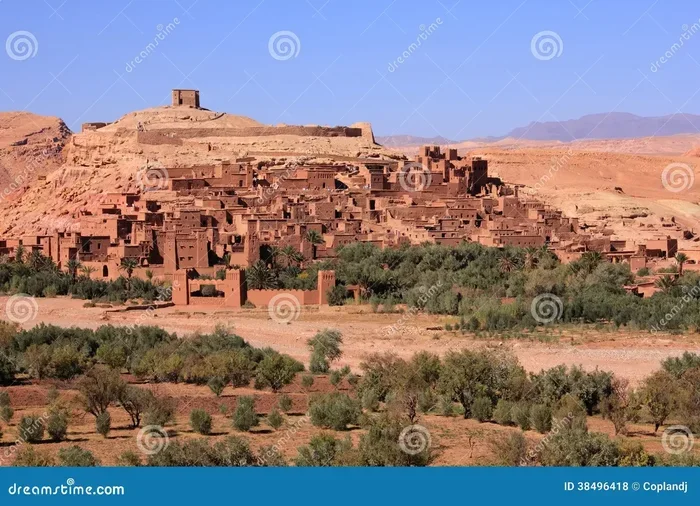
Featured image for Morocco desert Ait Ben Haddou
Image source: thumbs.dreamstime.com
A 15-day tour from Marrakech to Ait Ben Haddou is the ultimate Moroccan adventure, taking you through imperial cities, the Atlas Mountains, and the majestic Sahara Desert. This comprehensive journey covers UNESCO World Heritage sites, ancient kasbahs, and vibrant souks while immersing you in Berber culture. Perfect for travelers seeking an in-depth Moroccan experience beyond typical tourist routes. The trip includes camel treks, guided medina tours, and stays in traditional riads, offering unforgettable memories across Morocco’s most iconic landscapes.
Imagine spending fifteen incredible days journeying through Morocco’s most captivating landscapes, from the bustling souks of Marrakech to the ancient mud-brick fortress of Ait Ben Haddou. This isn’t just a trip—it’s a deep dive into a country where mountains meet deserts, where Berber traditions blend with Arab heritage, and where every corner reveals a new story. A 15-day tour from Marrakech to Ait Ben Haddou gives you the time to truly absorb Morocco’s magic, rather than rushing through its highlights.
The southern Morocco route is legendary among travelers for good reason. It combines imperial cities that once ruled entire empires, dramatic mountain passes that test your camera’s limits, and the endless dunes of the Sahara that feel like stepping onto another planet. Did you know that Ait Ben Haddou has appeared in over 20 Hollywood films, including Gladiator and Game of Thrones? This single fact captures why this region has fascinated visitors for centuries.
Whether you’re a first-time visitor to Morocco or returning for a deeper exploration, a fifteen-day itinerary strikes the perfect balance between adventure and comfort. You’ll have time for spontaneous discoveries—a hidden restaurant in Fez, a conversation with a local artisan, or an unexpected sunset over the dunes. This guide will walk you through everything you need to know to plan and enjoy this unforgettable Moroccan journey.
Key Takeaways
- 15-Day Duration Advantage: A two-week tour allows deep exploration of Morocco without rushing, covering 8-10 major destinations comfortably.
- Marrakech to Ait Ben Haddou Route: This classic southern route passes through the High Atlas, Draa Valley, and Ouarzazate, Morocco’s “Hollywood of Africa.”
- Best Travel Season: October to April offers the most comfortable weather, avoiding the extreme summer heat of the Sahara Desert.
- Budget Considerations: Mid-range tours cost approximately $2,000-$3,500 per person, including accommodation, transport, and most meals.
- Cultural Highlights: The tour includes UNESCO sites like Ait Ben Haddou, Jemaa el-Fnaa square, and the historic Volubilis ruins.
- Sahara Experience: Camel trekking and overnight desert camps in Erg Chebbi or Erg Chigaga are the tour’s most memorable highlights.
- Physical Requirements: Moderate fitness is needed for camel rides and walking in medinas, but no extreme trekking experience is required.
📑 Table of Contents
- Why Choose a 15-Day Tour from Marrakech to Ait Ben Haddou?
- Understanding the Route: Where Does the Journey Take You?
- What to Expect Day-by-Day: The Complete Experience
- When to Go: Timing Your 15-Day Moroccan Adventure
- Planning Your Tour: Practical Tips and Considerations
- Beyond the Itinerary: Cultural Insights for a Meaningful Journey
- Making the Most of Your Journey: Final Thoughts
Why Choose a 15-Day Tour from Marrakech to Ait Ben Haddou?
The length of your Moroccan adventure matters more than you might think. A 15-day tour isn’t just longer—it’s transformational. Think of it like the difference between watching a movie trailer and watching the entire film. Shorter tours show you Morocco’s highlights; longer tours let you live them.
The Perfect Pace for True Immersion
Morocco is a country of contrasts. One day you might be hiking through cedar forests in the Middle Atlas, and the next you’re bargaining for spices in a 1,000-year-old medina. Rushing through these experiences is like reading a book one word at a time—you miss the story’s flow. A 15-day itinerary allows you to spend two to three nights in most destinations, giving you time to explore beyond the surface.
Did you know? Morocco has nine UNESCO World Heritage Sites, and a 15-day southern route typically includes at least four of them: Marrakech’s medina, Ait Ben Haddou, the Medina of Fez, and the Volubilis ruins.
Value Beyond the Price Tag
While longer tours cost more upfront, they actually offer better value per experience. You’ll avoid the stress of constant packing and unpacking, you’ll have time for spontaneous detours, and you’ll develop deeper connections with local guides and fellow travelers. Travel research shows that trips lasting 10-14 days create 40% more memorable moments than shorter 5-7 day vacations.
Who Is This Tour Perfect For?
- Culture enthusiasts who want to understand Morocco’s complex history
- Photography lovers seeking diverse landscapes from mountains to dunes
- Slow travelers who prefer depth over checklists
- Families and couples wanting a comprehensive honeymoon or bonding experience
- Adventure seekers ready for camel treks and desert camping
Understanding the Route: Where Does the Journey Take You?
The 15-day Marrakech to Ait Ben Haddou route typically forms a large loop through southern and central Morocco. Imagine drawing a circle on a map—Marrakech sits at the top, and Ait Ben Haddou lies to the southeast, with the Sahara Desert extending further east. Most itineraries include detours to imperial cities, mountain valleys, and coastal areas.
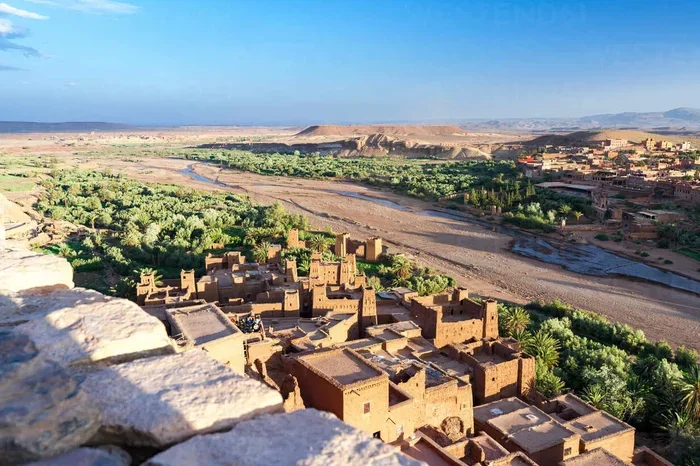
Visual guide about Morocco desert Ait Ben Haddou
Image source: us.images.westend61.de
The Classic Southern Circuit
The most popular 15-day route follows this general path:
- Days 1-3: Marrakech exploration and acclimatization
- Days 4-5: High Atlas Mountains and Ait Ben Haddou
- Days 6-8: Ouarzazate, Draa Valley, and Sahara Desert (Merzouga)
- Days 9-10: Todra Gorge and Dades Valley
- Days 11-12: Midelt, Azrou cedar forests, and Ifrane
- Days 13-14: Fez and Meknes imperial cities
- Day 15: Return to Marrakech via Volubilis
Alternative Routes Worth Considering
Some tours reverse this order, starting with the imperial cities before heading south. Others include coastal extensions to Essaouira or Chefchaouen. The beauty of a 15-day tour is flexibility—reputable operators can customize stops based on your interests, whether that’s adding a cooking class in Fez or extra photography time at Ait Ben Haddou.
What to Expect Day-by-Day: The Complete Experience
Let’s walk through what a typical 15-day journey looks like. Remember, this is your roadmap—the actual experience will be filled with surprises that make it uniquely yours.
Days 1-3: Discovering Marrakech’s Magic
Your adventure begins in Marrakech, Morocco’s “Red City” named for its distinctive pink-hued buildings. The medina of Marrakech dates back to 1070 AD, making it nearly 1,000 years old. Spend your first day getting oriented with guided walks through the souks, where you’ll find everything from hand-woven carpets to aromatic spices piled in colorful pyramids.
Must-see Marrakech highlights include:
- Jemaa el-Fnaa Square: The famous square that comes alive at night with storytellers, musicians, and food stalls
- Bahia Palace: A stunning 19th-century palace with intricate tilework and gardens
- Saadian Tombs: Hidden for centuries, these royal mausoleums feature beautiful Moroccan architecture
- Majorelle Garden: Created by French painter Jacques Majorelle in the 1920s, now owned by Yves Saint Laurent
Pro tip: Use your first morning to visit Jardin Majorelle when it’s less crowded. Afternoons can get hot, so schedule indoor activities like museums or riad pools during peak heat hours.
Days 4-5: Crossing the Atlas to Ait Ben Haddou
Day four brings one of the journey’s most scenic moments—the drive over the Tizi n’Tichka pass through the High Atlas Mountains. At 2,260 meters (7,415 feet) above sea level, this winding mountain road offers breathtaking views. Think of it like driving through a painting that keeps changing colors—from green valleys to red earth to snow-capped peaks.
The star of this section is Ait Ben Haddou, a fortified village (ksar) that has stood since the 17th century. This earthen clay city is a UNESCO World Heritage Site and has been featured in films like Lawrence of Arabia, The Mummy, and Gladiator. Walking through its narrow alleys feels like stepping into medieval times. Climb to the top for panoramic views of the surrounding palm groves and desert.
Days 6-8: Into the Sahara Desert
From Ait Ben Haddou, you’ll travel through the dramatic landscapes of Ouarzazate and the Draa Valley before reaching the Sahara Desert at Merzouga. The Draa Valley is Morocco’s longest river valley, lined with millions of date palms. It’s like driving through an oasis that stretches to the horizon.
The Sahara experience deserves its own section because it’s truly transformative. Upon reaching Merzouga, you’ll switch from your vehicle to camels—the traditional “ships of the desert.” A two-hour camel trek carries you into the towering dunes of Erg Chebbi, some reaching 150 meters (500 feet) high.
Did you know? The Sahara Desert covers 3.6 million square miles—about the size of the United States—yet only 20% is sand dunes. The rest is rocky plains and mountains.
Your overnight desert camp offers:
- Traditional Berber tents with comfortable bedding
- A sunset you’ll never forget as dunes turn gold and pink
- Berber music around a campfire under impossibly bright stars
- Sunrise the next morning, worth waking up early for
Days 9-10: Canyons and Roses
Leaving the desert behind, your route takes you through Todra Gorge and Dades Valley. Todra Gorge features 400-meter-high canyon walls that squeeze together at the narrowest point—just 10 meters wide. It’s a favorite spot for rock climbers and offers some of Morocco’s most dramatic scenery.
The Dades Valley is known as the “Valley of a Thousand Kasbahs” for its fortified structures dotting the landscape. Stop at a local rose water factory if traveling in April or May—the valley produces much of the world’s rose products from the annual Rose Festival.
Days 11-12: Middle Atlas and Imperial Cities
Heading north, you’ll cross the Middle Atlas Mountains through cedar forests where Barbary macaque monkeys live. These monkeys are North Africa’s only primate species and can be spotted freely in Azrou’s cedar forest. The charming town of Ifrane, often called “Little Switzerland of Morocco,” provides a surprising alpine atmosphere.
Arriving in Fez marks your entry into Morocco’s spiritual and intellectual capital. Founded in 789 AD, Fez is home to the world’s oldest continuously operating university—Al-Qarawiyyin, established in 859 AD. That makes it older than any university in Europe, including Oxford.
Fez’s medina contains over 9,000 narrow alleys. Getting lost here is part of the experience. Key sites include:
- The famous tanneries where leather is still made the traditional way
- Al-Attarine Madrasa with its stunning Islamic architecture
- The Nejjarine Museum of Wooden Arts and Crafts
- Local pottery and ceramic workshops in the Ain Nokbi neighborhood
Days 13-15: Volubilis, Meknes, and Return to Marrakech
The final stretch includes Volubilis, Morocco’s best-preserved Roman ruins. Dating back to the 3rd century BC, this UNESCO site features remarkable mosaics and triumphal arches. Did you know that Volubilis was once the administrative center of the Roman province of Mauretania? It remained an important city until the 18th century.
Nearby Meknes offers a more relaxed imperial city experience compared to Fez. Its massive gates, like Bab Mansour, are among Morocco’s most impressive. After exploring Meknes, you’ll return to Marrakech for your final night, often with time for last-minute shopping or revisiting favorite spots.
When to Go: Timing Your 15-Day Moroccan Adventure
Choosing when to travel can make or break your experience. Morocco’s climate varies dramatically by region, so timing matters more here than in many other destinations.
Season Breakdown
- October-November (Autumn): Ideal temperatures (20-28°C/68-82°F), clear skies, fewer crowds. This is peak season for good reason.
- December-February (Winter): Cooler days (10-18°C/50-64°F), snow possible in the Atlas Mountains, fewer tourists. Desert nights can be cold.
- March-April (Spring): Beautiful wildflowers, comfortable temperatures, Rose Festival in Dades Valley. Popular but not overwhelming.
- May-September (Summer): Hot, especially in the desert (40°C+/104°F+). Lower prices but challenging conditions for some travelers.
Monthly Highlights
January brings snow to the Atlas passes but sunny desert days. April features the Rose Festival in Kelaa M’Gouna. June sees the date palm harvest in the Draa Valley. September offers the Date Festival in Erfoud. October brings comfortable weather perfect for photography.
Avoiding Common Timing Mistakes
The biggest mistake travelers make is underestimating temperature swings. Desert nights can drop 20°C (36°F) from daytime highs even in spring. Always pack layers. Another mistake: scheduling camel rides during midday summer heat. Early morning or late afternoon rides are safer and more comfortable.
Planning Your Tour: Practical Tips and Considerations
Good planning turns a good trip into a great one. Here’s what you need to know before booking your 15-day adventure.
Choosing a Tour Operator
Not all Moroccan tour operators are equal. Look for companies that:
- Are registered with the Moroccan Ministry of Tourism
- Use licensed local guides with official badges
- Provide clear itineraries with confirmed accommodations
- Have reviews on independent platforms like TripAdvisor or Google
- Offer small group sizes (ideally 8-12 people maximum)
Pro tip: Ask operators specifically about their vehicle types and ages. Mountain roads can be tough on older vehicles. A 4×4 or modern minibus makes a significant difference in comfort and safety.
Budget Breakdown
A mid-range 15-day tour from Marrakech to Ait Ben Haddou typically costs:
- Budget option: $1,200-$1,800 per person (shared accommodation, basic riads)
- Mid-range option: $2,000-$3,500 per person (comfortable riads, small groups)
- Luxury option: $4,000-$7,000+ per person (private tours, premium hotels)
These prices usually include accommodation, transport, guide, breakfast, and some dinners. They typically exclude international flights, travel insurance, tips, and entry fees to certain sites (usually $10-$20 total).
What to Pack
Smart packing is essential. Here’s a quick checklist:
- Comfortable walking shoes (medina floors are uneven)
- Layers for temperature changes
- Scarf for desert sun and conservative dress in religious sites
- Sunscreen, sunglasses, and a hat
- Camera with extra batteries and memory cards
- Universal power adapter (Morocco uses Type C plugs)
- Basic first aid kit including rehydration salts
- Cash in small denominations for tips and souvenirs
Health and Safety
Morocco is generally very safe for tourists. The main health consideration is staying hydrated, especially in the desert. Tap water isn’t recommended—stick to bottled water. Most travelers don’t need special vaccinations beyond routine ones, but consult your doctor before the trip.
Did you know? Morocco was ranked Africa’s safest country in the 2023 Global Peace Index, making it an ideal destination for solo and family travelers alike.
Beyond the Itinerary: Cultural Insights for a Meaningful Journey
Understanding Moroccan culture transforms your trip from sightseeing into genuine connection. Here are insights that will enrich your 15-day experience.
Understanding Moroccan Hospitality
Moroccan culture revolves around hospitality. If a local invites you for tea, accept it. The ritual of preparing mint tea—poured from a height to create foam—represents welcome and friendship. Refusing can seem rude. Moroccans drink an estimated 3-4 cups of mint tea per day on average.
Photography Etiquette
Always ask before photographing people, especially in rural areas. Some may request small fees for photos. Ait Ben Haddou has many “local guides” who offer to show you around—these are usually legitimate but agree on prices beforehand.
Language Tips
While Arabic and Berber are official languages, French is widely spoken, and tourism workers often speak basic English. Learning a few Arabic phrases goes a long way:
- As-salaam alaikum (Peace be upon you) — universal greeting
- Shukran (Thank you) — always appreciated
- La, shukran (No, thank you) — useful for declining pushy vendors
- Bslama (Goodbye) — friendly farewell
Shopping and Bargaining
Moroccan souks are treasure troves of handicrafts. Bargaining is expected and part of the fun. Start at about 50% of the asking price and negotiate up. Smile, stay patient, and remember that walking away is often the best tactic. Quality items worth buying include Moroccan carpets, leather goods from Fez, argan oil, and traditional ceramics.
Religious Considerations
Morocco is a Muslim country. During your tour, you’ll hear the call to prayer five times daily—don’t be alarmed. When visiting religious sites, dress modestly (covered shoulders and knees). During Ramadan, many restaurants close during daylight hours, but tourist accommodations usually remain open. Ramadan dates shift each year, so check the calendar before booking.
Making the Most of Your Journey: Final Thoughts
A 15-day tour from Marrakech to Ait Ben Haddou offers something rare in modern travel: genuine transformation. You arrive as a visitor and leave with stories that will stay with you forever—the taste of tagine cooked in a desert camp, the sound of Berber drums under starlit skies, the sight of Ait Ben Haddou glowing pink at sunset.
This journey covers roughly 2,000 kilometers (1,250 miles) of Morocco’s most spectacular scenery. You’ll experience four distinct climate zones, meet people from diverse backgrounds, and witness traditions that have persisted for centuries. Most travelers report that Morocco exceeds their expectations—it’s that kind of destination.
Whether you’re drawn by the call of the Sahara, the allure of Ait Ben Haddou’s cinematic landscapes, or the vibrant chaos of Marrakech’s medinas, this 15-day adventure delivers. The key is choosing the right operator, packing appropriately, and keeping your heart and mind open to unexpected discoveries.
Your Moroccan journey awaits. The mountains are calling, the desert is waiting, and Ait Ben Haddou’s ancient walls have stories to share. All you need to do is take that first step and book your tour.
Frequently Asked Questions
What is the best time of year for a 15-day tour from Marrakech to Ait Ben Haddou?
The ideal time is October through April when temperatures are comfortable for both desert excursions and mountain travel. Spring (March-May) and autumn (October-November) offer the best balance of pleasant weather and fewer crowds. Summer temperatures in the Sahara can exceed 45°C (113°F), making travel uncomfortable.
How much does a 15-day tour from Marrakech to Ait Ben Haddou cost?
Mid-range tours typically cost between $2,000 and $3,500 per person, including accommodation, transportation, guide services, breakfast, and some dinners. Budget options start around $1,200, while luxury private tours can exceed $5,000. International flights and personal expenses are usually additional.
Is the camel trek difficult for someone who has never ridden a camel?
Most travelers find camel riding surprisingly manageable, though it can be uncomfortable for the first 15-20 minutes as you adjust to the rhythm. The ride to desert camps typically lasts 1-2 hours with rest stops. Basic fitness is helpful but no special experience is needed. Many camps offer alternative transportation for those who prefer not to ride.
What should I wear during the tour, especially for religious sites?
Pack lightweight, breathable clothing that covers shoulders and knees for visiting mosques and religious sites. For the desert, bring layers as nights can be surprisingly cold even in spring. A scarf or pashmina is invaluable for sun protection during the day and warmth at night. Comfortable walking shoes are essential for exploring medinas.
Is Morocco safe for tourists, especially solo female travelers?
Morocco is generally very safe and welcomes millions of tourists annually. It consistently ranks as one of Africa’s safest countries. Solo female travelers should dress modestly in rural areas, avoid walking alone in medinas after dark, and use registered guides. Most Moroccans are extremely hospitable and protective of guests.
Can I customize the 15-day itinerary based on my interests?
Absolutely. Most reputable tour operators offer customizable itineraries. You can add extensions to coastal Essaouira, include cooking classes in Fez, add photography workshops at Ait Ben Haddou, or adjust the time spent at specific locations. Private tours offer the most flexibility, while small group tours allow minor modifications based on consensus.