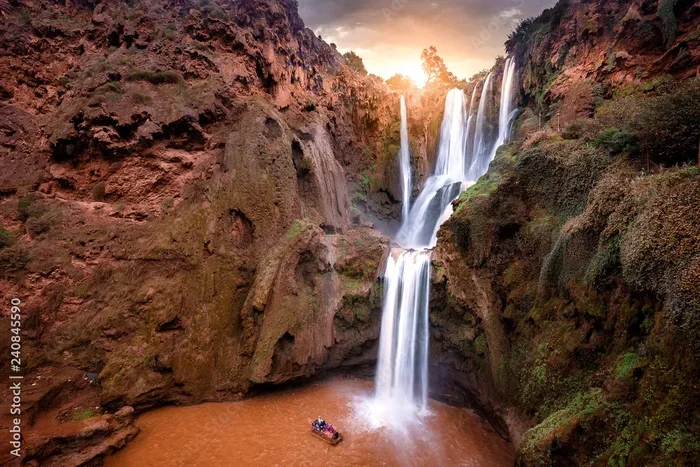
Featured image for Cascades d’Ouzoud waterfalls Morocco
Image source: as2.ftcdn.net
The Tangier to Cascades d’Ouzoud day trip is one of Morocco’s most breathtaking adventures, covering roughly 560 km of scenic landscapes from the northern coast to the Atlas Mountains. You’ll discover North Africa’s tallest waterfall chain, watch wild Barbary macaques in their natural habitat, and explore traditional Berber villages along the way. While the journey is long, proper planning transforms it into an unforgettable experience that combines nature, culture, and Moroccan hospitality.
Imagine standing at the edge of a 110-meter waterfall, mist cooling your face, while playful monkeys swing through olive trees just inches away. This isn’t a dream. It’s what awaits you on a Tangier to Cascades d’Ouzoud day trip, one of Morocco’s most spectacular hidden adventures.
Most travelers visiting Tangier focus on the blue-washed streets of Chefchaouen or the bustling medinas of Fez. But venture south instead, and you’ll discover something truly magical. The Cascades d’Ouzoud (pronounced “oo-zoom”) are North Africa’s tallest waterfalls, and they’re surprisingly accessible from the northern coast.
Here’s the thing: this day trip requires commitment. You’ll spend more time traveling than at the destination itself. But ask anyone who’s made the journey, and they’ll tell you it’s worth every minute. Think of it like driving from New York to Washington D.C. for a single meal at an amazing restaurant. Sometimes, the best experiences require effort.
Key Takeaways
- Distance and Duration: The trip covers about 560 km one way, taking 6-7 hours by car or organized tour, so early starts are essential.
- Best Time to Visit: Spring (March-May) and autumn (September-October) offer the best waterfall flow and comfortable hiking temperatures.
- Top Attraction: Cascades d’Ouzoud features 110-meter waterfalls across three tiers, the tallest in North Africa.
- Wildlife Spotting: Free-roaming Barbary macaques inhabit the area, offering one of Morocco’s best primate viewing experiences.
- Budget Planning: Expect to spend $80-150 per person for a day tour, or $40-70 if driving independently with shared fuel costs.
- Cultural Stops: Traditional Berber markets and olive groves along the route provide authentic cultural experiences.
- Physical Activity: Moderate hiking is involved, including approximately 200 steps down to the falls, so wear sturdy shoes.
📑 Table of Contents
Who, What, Where, When, and Why: Understanding the Journey
Let’s break this trip down using the classic five W’s framework. This makes planning so much easier.
Who Should Take This Trip?
This adventure is perfect for travelers who love nature, don’t mind long drives, and want to see a side of Morocco most tourists miss. It’s ideal for adventure seekers, photography enthusiasts, and anyone wanting to escape the typical tourist trail. Families with older children do too, but very young kids might struggle with the long car ride.
If you’re someone who gets car sick easily, bring medication. The roads wind through the Rif and Atlas Mountains, and curves come frequently. Solo travelers, couples, and small groups all find this trip rewarding.
What Are the Cascades d’Ouzoud?
The Cascades d’Ouzoud are a series of three stunning waterfalls dropping 110 meters into a gorge. The name “Ouzoud” means “olive” in Berber, referring to the surrounding olive groves. These waterfalls are among the most photographed natural wonders in Morocco.
Here’s a fun fact: Did you know that Morocco has over 50 major waterfall systems, but Cascades d’Ouzoud is the only one accessible as a long-distance day trip from Tangier? That makes this journey unique in North African travel.
Where Exactly Are They Located?
The waterfalls sit in the Middle Atlas Mountains, near the village of Tanaghmeilt in the Béni Mellal Province. They’re about 150 km northeast of Marrakech and roughly 560 km southeast of Tangier. The closest major city is Azilal, about 30 km away.
Think of Morocco’s geography like a layered cake. Tangier sits at the top (the coast), Marrakech sits in the middle layer, and the Atlas Mountains form the bottom layer with their dramatic peaks. You’re essentially traveling from top to bottom and back in one day.
When Is the Best Time to Go?
Spring (March through May) offers the best experience. Water flow is strong from snowmelt, temperatures stay comfortable around 20-25°C, and wildflowers bloom along the trails. Autumn (September through October) is equally beautiful, with warm days and fewer crowds.
Summer can be brutally hot, with temperatures exceeding 40°C in some areas. Winter brings cooler temperatures but reduced water flow. Avoid July and August if possible. Weekdays are less crowded than weekends, when Moroccan tourists flock to the site.
Why Take a Day Trip Instead of Staying Overnight?
An overnight stay lets you enjoy the falls at sunset and sunrise, when crowds thin and lighting is magical. However, a day trip works perfectly for travelers short on time. You still get 2-3 hours at the falls, which is enough for the main viewpoints, a boat ride, and a meal.
Here’s an analogy: staying overnight is like watching a movie in IMAX, while a day trip is like watching it on your laptop. Both deliver the story, but one is more immersive. Choose based on your schedule and budget.
Planning Your Route and Getting There
You have three main options for this journey. Each has pros and cons.
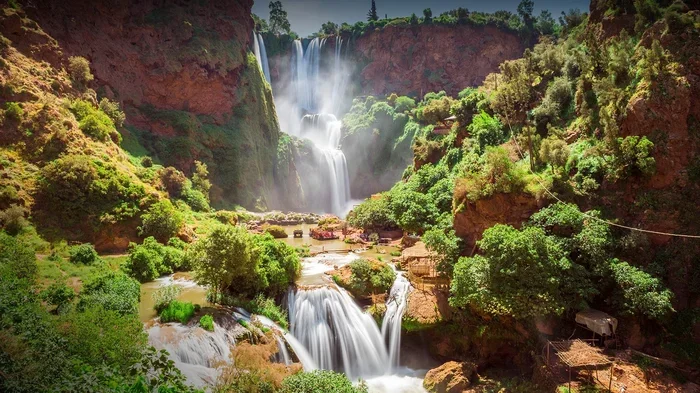
Visual guide about Cascades d’Ouzoud waterfalls Morocco
Image source: windows10spotlight.com
Option 1: Organized Day Tour
This is the most popular choice for good reason. Tour companies handle everything: pickup from your Tangier hotel, transportation, a guide, lunch, and return. Prices range from $80-150 USD per person.
Pros: Stress-free, includes guide commentary, no navigation worries, often includes stops at other attractions.
Cons: Fixed schedule, limited flexibility, crowded buses sometimes, less authentic experience.
Reputable operators include “Morocco Desert Tours,” “Tangier Day Trips,” and various hotels can arrange bookings. Book at least 48 hours in advance, especially during peak season (April-May, September-October).
Option 2: Self-Drive Adventure
Renting a car gives you complete freedom. Rental costs run $40-70 per day, plus fuel (around $60-80 for the round trip). The drive takes 6-7 hours each way.
Pros: Total flexibility, stop wherever you want, potentially cheaper for groups, deeper cultural immersion.
Cons: Stressful navigation, tiring long drive, need international driving permit, dealing with parking and tolls.
If you choose this option, download offline Google Maps before leaving. Cell service disappears in mountain regions. Also, fill up fuel in Tangier because gas stations are scarce along the route.
Option 3: Combination Bus and Taxi
Budget travelers sometimes take a bus from Tangier to Beni Mellal, then a taxi to the falls. Total cost: $30-50 per person. However, this option requires catching early buses and coordinating transfers, making timing tricky.
The most common route is Tangier → Rabat → Casablanca → Beni Mellal → Ouzoud. Total bus journey takes 8-9 hours with transfers. Not recommended for a single day unless you’re extremely efficient.
The Driving Route Explained
The standard route follows Morocco’s A1 motorway south from Tangier through Rabat and Casablanca, then connects to roads heading toward Beni Mellal. The first 300 km is smooth highway driving. The final 150 km becomes mountainous and winding.
Total distance: approximately 560 km each way, or 1,120 km round trip. At 1.609 kilometers per mile, that’s nearly 700 miles. Yes, it’s a marathon drive.
Key landmarks along the way include the Hassan II Mosque in Casablanca (the world’s third-largest mosque), the agricultural plains of the Tadla region, and eventually the olive groves surrounding Ouzoud village.
What to Expect at Cascades d’Ouzoud
After your long journey, arriving at the falls feels like stepping into paradise. Here’s what awaits you.
The Main Waterfalls
Three main cascades tumble over red sandstone cliffs into a series of natural pools. The top cascade drops 75 meters, the middle adds another 20 meters, and the final plunge creates the misty finale at 15 meters. Together, they form the iconic view in every Morocco travel brochure.
You can walk along well-maintained paths that hug the cliff edges. Handrails keep you safe, and multiple viewpoints offer different angles. The bottom viewpoint, reached by descending approximately 200 stone steps, gives you the classic photo opportunity with the falls behind you.
Meeting the Barbary Macaques
Here’s where it gets exciting. Wild Barbary macaques live in the surrounding forests and freely approach visitors. These are the only monkey species in Africa, and they exist nowhere else in the wild. Did you know there are only about 8,000 of these primates left in the wild? The Ouzoud population is one of the largest remaining groups.
Important: Don’t feed the monkeys. Despite vendors selling peanuts, feeding them causes aggressive behavior and health problems. Simply sit quietly, and they’ll often approach within arm’s reach. Keep your phone in your pocket. These curious creatures love grabbing shiny objects.
Safety tip: Keep your backpack closed and zipped. The macaques are skilled at unzipping bags and stealing food. One traveler reported losing an entire sandwich in seconds.
Boat Rides to the Base
For about 20 dirhams ($2), local boatmen will row you right up to the base of the falls. The 10-minute ride gets you close enough to feel the full spray of water. It’s magical on hot days. Wear clothes you don’t mind getting wet.
The boatmen are skilled at navigating the pools and know exactly where to position you for the best photos. Tipping 10-20 dirhams is appreciated for good service.
Traditional Lunch with a View
Several restaurants perch on the cliff edges overlooking the falls. Most serve tagine (Morocco’s famous slow-cooked stew) for 80-120 dirhams ($8-12). The setting makes even simple food feel special.
One highly recommended spot is “La Cascade d’Ouzoud” restaurant, known for its terrace views and fresh ingredients. Another is “Riad Ouzoud,” which offers traditional Berber dishes. Both provide the experience of eating with the falls roaring in the background.
Vegetarian options are limited but available. Lentil soup and vegetable tagine work well. Drink bottled water only. The local water source, while pristine, can upset tourist stomachs.
Practical Tips for a Successful Day Trip
After years of traveler reports, here are the tips that make the biggest difference.
What to Pack
- Sturdy walking shoes with good grip (the steps are uneven)
- Light layers (temperatures vary between Tangier and the mountains)
- Sun protection (hat, sunglasses, SPF 50+)
- Water bottle (at least 1.5 liters per person)
- Camera with extra battery (you’ll take hundreds of photos)
- Cash in small dirham notes (ATMs are unreliable at the falls)
- Snacks for the journey (the drive gets long)
- Phone charger for car use
Leave jewelry at home. It attracts both the monkeys and pickpockets. Also, avoid bringing food items that are easy to grab, like chips in open bags.
Budget Breakdown
Here’s a realistic budget for one person on an organized tour:
- Tour cost: $80-150
- Lunch: $8-12
- Boat ride: $2
- Tips: $5-10
- Snacks and water: $5-10
- Souvenirs: $5-20
- Total: $105-202
Self-drive travelers typically save $30-50 by sharing fuel costs across multiple passengers.
Best Photo Spots
The most iconic shot comes from the bottom viewpoint, looking up at all three cascades with the mist rising. Another great angle is from the boat, looking straight up at the tallest fall. For landscape photography, head to the top viewpoint at sunrise or late afternoon for warm lighting.
Tip: The light is best between 10 AM and 2 PM when the sun illuminates the falls directly. Early morning shots work well too, but the path can be slippery with morning dew.
Safety Considerations
The Cascades d’Ouzoud are generally safe, but keep these points in mind. Stay on marked paths. The cliff edges, while fenced, have gaps. Watch children carefully near the water. Don’t swim in the pools. Currents are dangerous, and the water is freezing cold from mountain snowmelt.
Medical facilities are basic. The nearest hospital is in Beni Mellal, 150 km away. Travel insurance that covers mountain activities is wise, though the falls themselves aren’t particularly dangerous.
Cell phone coverage is spotty. Tell someone your plans. Most tour companies check in with base regularly, so this matters more for independent travelers.
Cultural Experiences Along the Way
The journey itself offers rich cultural encounters beyond just the waterfalls.
Berber Village Visits
Small Berber communities live along the route, particularly in the Atlas foothills. If your tour stops in one, you’ll see traditional homes, watch women weaving carpets, and possibly share mint tea with a local family.
The Berber (or Amazigh) people are Morocco’s indigenous population, predating Arab arrival by thousands of years. Their language, culture, and traditions remain strong in mountain regions. Respecting local customs makes the experience richer.
Olive Groves and Local Agriculture
The Ouzoud region produces some of Morocco’s finest olive oil. You might see families harvesting during autumn months. The olive trees, some over 500 years old, create a beautiful landscape of gnarled trunks and silver-green leaves.
Did you know Morocco produces approximately 140,000 tons of olive oil annually, making it one of the world’s top producers? The Ouzoud region contributes significantly to this output.
Traditional Markets (Souks)
If you stop in Beni Mellal or smaller towns along the way, you’ll encounter weekly markets where locals sell everything from spices to livestock. These markets happen on specific days, typically rotating by region.
Markets are loud, crowded, and absolutely fascinating. Bring your camera but ask before photographing people. Most vendors appreciate the interaction and may even pose for you.
Language Tips
Arabic and Berber are the main languages. French serves as the commercial language in cities. English is increasingly common in tourist areas. Learning a few Arabic phrases goes a long way:
- Hello: Salam Alaikum
- Thank you: Shukran
- Please: Min fadlak
- How much?: Bhal l’qimah?
- Beautiful: Jameel/Jameela
Locals deeply appreciate any attempt to speak their language, even if imperfect. A simple “Salam” and smile opens doors.
Frequently Asked Questions and Final Thoughts
Let’s address the most common questions travelers have about this journey.
Is one day really enough? Honestly, two days would be better. But one day works if you start early (6-7 AM departure) and return late (8-9 PM arrival). You’ll have 2-3 hours at the falls, which is enough for the main experiences.
Can elderly travelers manage this? It depends on fitness level. The long car ride is harder than the falls themselves, which require only moderate walking. Those with mobility issues might struggle with the steps down to the base viewpoint.
Are there alternatives if the falls are dry? Yes, the area offers hiking trails, traditional Berber villages, and natural swimming holes that work as alternatives. But honestly, the falls rarely dry completely because of consistent mountain water sources.
Should I worry about altitude sickness? The falls sit at about 1,000 meters elevation. Altitude sickness is rare at this height. Most travelers experience no issues.
Here’s what makes this trip special: it’s not just about the waterfalls. It’s about the journey through Morocco’s diverse landscapes, the encounters with Berber culture, the thrill of seeing wild monkeys, and the satisfaction of completing a challenging day. Most travelers who attempt this adventure describe it as a highlight of their Morocco experience.
Picture yourself six months from now. Will you remember standing at the edge of a 110-meter waterfall watching Barbary macaques play in ancient olive groves? Or will you remember sitting in your hotel wishing you’d taken that day trip? The decision is yours, and the falls aren’t going anywhere.
Start planning today. Check tour availability for your travel dates. Book your lunch reservation. Charge your camera batteries. Because some experiences are worth every kilometer of the journey. The Tangier to Cascades d’Ouzoud day trip is one of those experiences. See you at the falls!