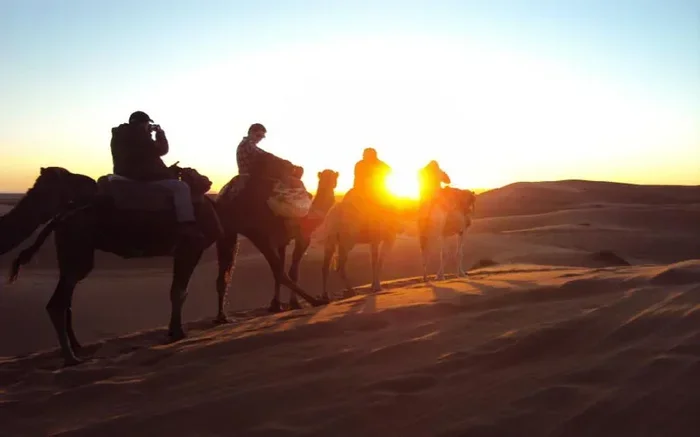
Featured image for Zagora desert camels sunset
Image source: sahararelax.com
The Marrakech to Zagora 9 day tour is one of Morocco’s most rewarding desert adventures, taking you from the bustling medina of Marrakech through the Atlas Mountains, across dramatic valleys, and into the heart of the Sahara Desert. This extended journey allows travelers to fully immerse themselves in Berber culture, explore ancient kasbahs like Ait Ben Haddou, ride camels across golden Erg Chebbi or Zagora dunes, and sleep under star-filled desert skies. Perfect for travelers seeking an authentic Moroccan experience beyond the typical quick excursions, this 9-day tour offers the perfect balance of adventure, culture, and relaxation.
Imagine standing at the edge of a vast sea of golden sand, the sun setting in brilliant shades of orange and red, while your camel rests quietly beside you. This isn’t a dream—it’s what awaits you on the Marrakech to Zagora 9 day tour, one of Morocco’s most unforgettable travel experiences.
The Sahara Desert has called to adventurers for centuries, and this 9-day journey answers that call in the most complete way possible. Unlike shorter excursions that barely scratch the surface, a full 9-day tour gives you time to slow down, connect with local Berber communities, watch the landscape transform from snow-capped mountains to palm-lined oases to endless dunes, and truly absorb the magic of North Africa.
Whether you’re a solo traveler seeking adventure, a couple looking for a romantic getaway, or a family wanting to introduce your children to different cultures, this comprehensive guide will walk you through everything you need to know. We’ll cover the route, the highlights, practical tips, and insider advice to help you plan the trip of a lifetime.
Key Takeaways
- Duration & Distance: The Marrakech to Zagora 9 day tour covers approximately 1,200 kilometers round-trip, making it one of the most comprehensive Sahara desert journeys available.
- Best Travel Season: October through April offers the most comfortable temperatures, with winter days being pleasant (15-22°C) and nights requiring warm layers.
- Cultural Highlights: The route passes through UNESCO World Heritage sites, traditional Berber villages, and ancient kasbahs dating back to the 11th century.
- Desert Experience: Travelers spend at least 1-2 nights in the Sahara, with opportunities for camel treks, sandboarding, and traditional Berber music performances.
- Physical Requirements: Moderate fitness is needed for camel riding and walking on sand, but the tour is suitable for most ages from 12 to 70+.
- Budget Considerations: Prices typically range from $800-$1,500 per person, including accommodation, meals, transport, and desert activities.
- Booking Tips: Book at least 2-3 months in advance during peak season (October-April) and choose operators with verified reviews and proper licensing.
📑 Table of Contents
- What Is the Marrakech to Zagora 9 Day Tour?
- Who Should Take This Tour?
- When to Go: Best Seasons and Timing
- Day-by-Day Itinerary Overview
- What to Expect: Accommodations, Food, and Transportation
- Practical Tips and Essential Information
- Why This Tour Is Worth the Investment
- Conclusion: Your Sahara Adventure Awaits
What Is the Marrakech to Zagora 9 Day Tour?
The Marrakech to Zagora 9 day tour is a guided overland expedition that takes travelers from the imperial city of Marrakech through Morocco’s diverse landscapes, ending at the edge of the Sahara Desert near the town of Zagora. Think of it as a carefully curated road trip that covers mountains, valleys, gorges, kasbahs, and finally, the famous desert dunes.
The Route at a Glance
Your journey will wind through several distinct regions:
- The High Atlas Mountains: Crossing the Tizi n’Tichka pass at 2,260 meters above sea level
- The Rose Valley: Famous for its annual Rose Festival in May
- The Dades Valley: Known as the “Valley of a Thousand Kasbahs”
- The Todra Gorges: Towering canyon walls reaching 400 meters high
- The Draa Valley: Morocco’s longest river valley with millions of date palms
- The Zagora Desert: Gateway to the Sahara with iconic star-shaped dunes
Why 9 Days Makes a Difference
A common question travelers ask is why choose 9 days when shorter tours exist. The answer is simple: depth versus speed. Like trying to read a book by only reading the first chapter, a 3-day tour shows you the Sahara but doesn’t let you experience it. The 9-day format allows you to:
- Spend quality time in each location rather than rushing through
- Recover from long driving days with proper rest
- Engage with local guides and learn about Berber heritage
- Take optional hikes, swims in natural pools, or extended camel rides
- Handle unexpected weather or road conditions without stress
Did You Know? Morocco’s Sahara Desert region receives over 100,000 international visitors annually, with Zagora being one of the top three desert gateways alongside Merzouga and M’Hamid.
Who Should Take This Tour?
This 9-day desert adventure appeals to a wide range of travelers, but it’s especially perfect for certain types of people.
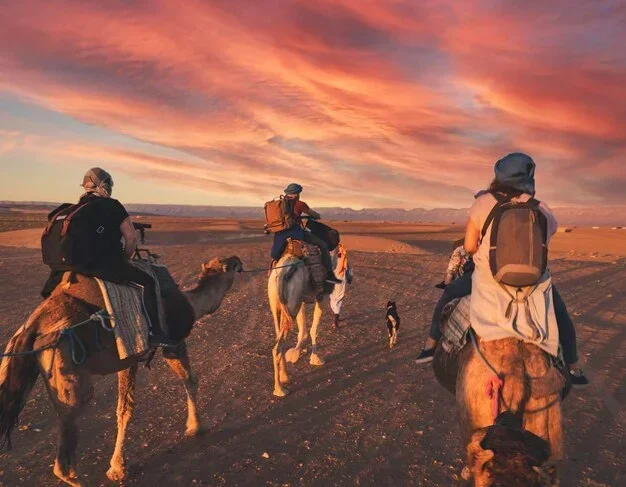
Visual guide about Zagora desert camels sunset
Image source: img.freepik.com
Adventure Seekers and Culture Lovers
If you’re someone who gets excited about trying new foods, meeting people who live completely different lifestyles, and stepping outside your comfort zone, this tour was designed for you. You’ll eat tagine cooked over open fires, sleep in traditional Berber tents, and learn phrases in Tamazight (the Berber language) that will make your hosts smile with delight.
The tour suits travelers of all ages, though it’s most popular with people in their 20s through 60s. Children aged 10 and up generally do well, especially since camel riding feels like a storybook adventure for them.
Photography Enthusiasts
Morocco is a photographer’s paradise, and this route passes through some of the most photogenic landscapes on Earth. From the blue-hued streets of Chefchaouen (if extended) to the red earth of the Anti-Atlas, every turn of the road presents a new composition. The golden hour light in the desert is particularly magical, making sunrise and sunset your most rewarding shooting times.
Who Might Want a Different Tour
Honestly, this tour isn’t ideal if you have severe back problems (the long drives can be challenging), extreme time constraints, or if you prefer beach vacations over cultural exploration. Travelers seeking a luxury experience might also consider private tours with upgraded riads, though these come at higher prices.
When to Go: Best Seasons and Timing
Timing your Marrakech to Zagora 9 day tour properly can make the difference between a good trip and an extraordinary one.
Peak Season: October to April
The cooler months from October through April are considered the best time for desert tours. Daytime temperatures are pleasant, ranging from 15°C to 25°C (59°F to 77°F), making outdoor activities comfortable. Nights in the desert can be cold, sometimes dropping to 5°C (41°F) or below in winter, but this is actually part of the charm—blankets are provided in desert camps, and the cold nights mean incredibly clear, star-filled skies.
Did You Know? The Sahara Desert is one of the best places in the world for stargazing due to virtually no light pollution. On a clear night, you can see the Milky Way with the naked eye, along with thousands of stars that simply aren’t visible in urban areas.
Shoulder Season: March, April, October, November
These months offer a sweet spot with moderate temperatures, fewer crowds than peak winter holidays, and beautiful natural scenery. April is particularly special because the Rose Valley blooms with pink Damascus roses, creating stunning landscapes and a wonderful rose-like fragrance in the air.
Summer Months: May to September
Summer tours are possible but challenging. Temperatures in the desert can exceed 45°C (113°F), which makes daytime activities difficult and potentially dangerous. However, summer tours are cheaper and less crowded, making them appealing to budget travelers and those who don’t mind heat. If you travel in summer, tours typically adjust itineraries to do activities in early morning and late afternoon, avoiding the midday sun.
Ramadan Considerations
Traveling during Ramadan is a unique cultural experience, but it affects tour operations. Many restaurants close during the day, and the pace of life slows considerably. Some travelers find this restrictive, while others find it fascinating to experience Islamic traditions firsthand. If you do travel during Ramadan, expect earlier breakfasts, late dinners after sunset, and a generally quieter atmosphere in smaller towns.
Day-by-Day Itinerary Overview
While specific itineraries vary by operator, most Marrakech to Zagora 9 day tours follow a similar pattern. Here’s what you can typically expect.
Day 1: Marrakech to the High Atlas
Your adventure begins with an early morning pickup from your hotel or riad in Marrakech. The first leg takes you through the High Atlas Mountains via the spectacular Tizi n’Tichka pass. You’ll stop at a women’s argan oil cooperative to learn how this “liquid gold” is produced, then continue to the stunning Ait Ben Haddou kasbah—a UNESCO World Heritage Site that has served as a filming location for Hollywood movies like Gladiator, Lawrence of Arabia, and Game of Thrones.
Your overnight stop is typically in Ouarzazate, known as the “Gateway to the Sahara.”
Day 2-3: Dades Valley and Todra Gorges
Days 2 and 3 take you deeper into the “Valley of a Thousand Kasbahs,” where ancient fortified villages dot the landscape like something from a fairy tale. You’ll drive through dramatic gorges, visit traditional Berber villages, and have opportunities for short hikes. The Todra Gorges are a highlight, with their towering 400-meter rock walls creating a natural cathedral of stone.
Many tours include a night in a kasbah hotel, where you can experience traditional Moroccan architecture and hospitality firsthand.
Day 4-5: Into the Sahara Desert
This is the moment you’ve been waiting for. You’ll travel through the Draa Valley—Morocco’s longest valley, lined with millions of date palms—before reaching Zagora or the desert camp location. Here, you’ll mount your camel (or take a 4×4 if available) and ride into the dunes as the sun begins its descent.
The Sahara portion typically includes:
- A camel trek into the dunes at sunset
- A night in a Berber desert camp with traditional tents
- Live Gnawa music performances around a campfire
- Sandboarding on the dunes (if conditions permit)
- An early morning sunrise camel ride back to the meeting point
Did You Know? Camels can drink up to 40 gallons of water in just 15 minutes, and they store fat in their humps (not water, as commonly believed) to survive long periods without food.
Day 6-7: Return Journey Through Different Landscapes
The return trip often takes a slightly different route, allowing you to see landscapes you missed on the way out. Many tours include stops at:
- The anti-Atlas mountains and their dramatic rock formations
- The town of Taliouine, famous for saffron production
- The Souss Valley with its argan forests
- Coastal towns if the tour extends that far
Day 8-9: Final Stops and Return to Marrakech
The final days bring you back to Marrakech, often with stops at interesting sites along the way. You’ll arrive in Marrakech with enough time to explore the famous Jemaa el-Fnaa square, with its snake charmers, storytellers, food stalls, and musicians—a perfect ending to your desert adventure.
What to Expect: Accommodations, Food, and Transportation
Understanding what your tour includes helps set proper expectations and ensures you get the best experience possible.
Accommodation Types
The Marrakech to Zagora 9 day tour typically includes a mix of accommodation styles:
- Riads and Kasbahs: Traditional Moroccan guesthouses with beautiful architecture, often featuring interior courtyards and rooftop terraces
- Desert Camps: Either luxury camps with private bathrooms and proper beds, or traditional Berber tents with shared facilities and thin mattresses on the ground
- Standard Hotels: Comfortable 3-star equivalent accommodations in larger towns
Accommodation quality varies significantly between budget and mid-range tours. If comfortable lodging is important to you, look for operators advertising “comfort” or “luxury” categories, though these come at higher prices.
Food and Dining
Most tours include breakfast and dinner daily, with lunch often being a stop at local restaurants along the route (you pay for these yourself). Typical meals include:
- Tagine: A slow-cooked stew with meat, vegetables, and aromatic spices, named after the distinctive cone-shaped clay pot it’s cooked in
- Couscous: Especially popular on Fridays (the holy day in Islam), served with vegetables and meat
- Harira: A hearty tomato-based soup often served as a starter
- Mint Tea: The national drink, served everywhere with characteristic ceremony
- Fresh Bread: Baked daily in community ovens
Vegetarian travelers should communicate their needs in advance, as traditional Moroccan cuisine heavily features meat, but alternatives can always be arranged.
Transportation
Tour vehicles are typically air-conditioned 4x4s or minivans, depending on group size and tour category. For the camel trek portion, you’ll obviously be on a camel (or in a 4×4 if you prefer not to ride). The drives are long—sometimes 5-6 hours—but the scenery is so spectacular that the journey itself becomes part of the adventure.
Pro tip: Sit on the left side of the vehicle when traveling south for the best views, as most scenic spots face that direction.
Practical Tips and Essential Information
After understanding the basics, it’s time to focus on the practical details that make the difference between a smooth trip and a stressful one.
What to Pack
Packing smart is crucial for this tour. Here’s what experienced travelers recommend:
- Clothing: Light layers for daytime, warm layers for desert nights, modest clothing for visiting villages
- Footwear: Comfortable walking shoes plus sandals for the desert
- Sun Protection: Hat, sunglasses, high-SPF sunscreen
- Headlamp or Flashlight: Essential for desert camp nights
- Camera and Extra Batteries: You’ll photograph constantly
- Power Bank: Charging opportunities are limited in remote areas
- Personal Medications: Including motion sickness remedies for winding mountain roads
- Small Backpack: For daily essentials during activities
One crucial packing tip: leave space in your luggage. You’ll inevitably want to buy Moroccan carpets, ceramics, spices, and other treasures along the way.
Health and Safety
Morocco is generally a safe country for tourists, with low violent crime rates. However, petty theft can occur, particularly in crowded markets. Standard safety practices apply:
- Keep valuables in hotel safets
- Use a money belt or hidden pouch for passports and extra cash
- Be cautious with cameras and phones in crowded areas
- Drink bottled water only (provided in tour vehicles)
- Pack a basic first-aid kit including rehydration salts
The biggest health concern for most travelers is mild stomach upset from adjusting to new foods and bacteria. This usually resolves within a few days.
Money Matters
The Moroccan currency is the Dirham (MAD). As of recent exchange rates, 1 USD equals approximately 10 MAD, though rates fluctuate. Credit cards are accepted in larger hotels and restaurants, but cash is essential for smaller establishments, markets, and tipping.
Budget for these additional expenses beyond tour costs:
- Tips for guides and drivers (typically $5-10 per day total)
- Lunches (approximately $10-15 per meal)
- Souvenirs and shopping
- Optional activities and entrance fees
- Personal expenses like drinks and snacks
Choosing the Right Tour Operator
Not all tour operators are created equal. Look for these markers of quality:
- Verified Reviews: Check TripAdvisor, Google Reviews, and independent travel forums
- Proper Licensing: Moroccan tourism authorities require official registration
- Clear Itineraries: Detailed day-by-day plans with specific accommodations
- Inclusions and Exclusions: Transparent pricing without hidden fees
- Small Group Sizes: 4-12 people typically offers the best experience
- Local Expertise: Guides who actually know the regions intimately
Avoid operators offering prices significantly below market rate—this often means poor accommodations, rushed itineraries, or hidden costs that surface later.
Cultural Etiquette
Understanding a few cultural norms enhances your experience and shows respect:
- Always accept offered tea: Refusing is considered impolite
- Dress modestly: Especially in rural areas and religious sites
- Ask permission before photographing people: Many will expect a small tip if you do
- Use your right hand for eating and greeting: The left hand is considered less clean in traditional culture
- Remove shoes when entering homes or mosques
Did You Know? Morocco’s population is approximately 37 million people, with Arab-Berbers making up about 99% of the population. French and Arabic are the most commonly spoken languages, though English is increasingly common in tourist areas.
Why This Tour Is Worth the Investment
You might wonder if a 9-day tour is really necessary or if a shorter trip would suffice. Let me share why this extended journey is truly worth it.
The Magic of Slow Travel
In a world obsessed with cramming destinations into shorter trips, the Marrakech to Zagora 9 day tour represents a return to meaningful travel. Instead of rushing from photo spot to photo spot, you have time to sit with a Berber family, share bread and stories, and actually understand what life is like in these remote communities.
One traveler described it perfectly: “On day three, I stopped seeing Morocco as a place I was visiting and started seeing it as a place I was experiencing. That shift only happens when you slow down enough.”
Value for Money
When you calculate what a 9-day tour includes—transportation, accommodation, meals, guides, camel rides, desert experiences, and entrance fees—the value becomes clear. Organizing the same trip independently would typically cost 30-50% more and require significant research, language skills, and logistical planning.
Memories That Last Forever
Ask anyone who’s taken a Sahara tour about their experience, and watch their face light up. The combination of otherworldly landscapes, warm hospitality, challenging camel rides, and star-filled nights creates memories that simply can’t be replicated elsewhere. Many travelers describe their desert tour as a “once-in-a-lifetime” experience, though many return for more.
A Journey Through Time
This route has been traveled for thousands of years, once connecting sub-Saharan Africa with Mediterranean civilizations through trans-Saharan trade routes. Walking these same paths, seeing the same kasbahs that protected goods and people for centuries, and spending nights in places where caravans once rested creates a powerful connection to history that shorter tours simply can’t provide.
Conclusion: Your Sahara Adventure Awaits
The Marrakech to Zagora 9 day tour represents everything that makes travel meaningful: stunning natural beauty, rich cultural exchange, physical adventure, and moments of quiet wonder. From the moment you leave the bustling medinas of Marrakech until you return with sand still in your shoes, this journey engages every sense and creates memories that will stay with you forever.
This tour works because it strikes the perfect balance. It’s long enough to truly experience the desert and the cultures along the way, but not so long that it becomes exhausting. It’s adventurous enough to feel exciting, but well-organized enough to feel safe. It includes iconic experiences like camel rides and desert camping, but also offers moments of quiet discovery in mountain villages and ancient kasbahs.
If you’ve been dreaming of the Sahara, of standing on a dune watching the sun set over endless sand, of sharing mint tea with Berber families, of sleeping under the Milky Way—this tour makes those dreams real. The landscapes are real. The people are real. The experience is absolutely, undeniably real.
Start your planning today, choose a reputable operator, pack thoughtfully, and prepare for the adventure of a lifetime. The Sahara is waiting, and 9 days is just enough time to fall completely under its spell.
Frequently Asked Questions
How long does the Marrakech to Zagora 9 day tour take, and what’s the distance covered?
The tour takes 9 days and 8 nights, covering approximately 1,200 kilometers round-trip from Marrakech to Zagora and back. The actual driving time is around 20-25 hours total, spread across multiple days with stops at attractions along the route.
What’s the difference between Zagora and Merzouga desert tours?
Zagora offers smaller, more accessible dunes (about 50-100 meters high) and is closer to Marrakech, making it easier to reach. Merzouga features the massive Erg Chebbi dunes (up to 150 meters high) but requires longer travel time. Both offer authentic desert experiences, but Zagora is better for shorter tours while Merzouga is ideal for travelers wanting dramatic dune landscapes.
Is the Marrakech to Zagora 9 day tour suitable for children and elderly travelers?
Yes, most travelers aged 10-75 can comfortably enjoy this tour. The main considerations are the long driving days (3-6 hours), which may be tiring for very young children or those with back issues. Camel riding requires basic balance but isn’t physically demanding. Many families with children and older travelers complete this tour successfully each year.
What should I budget beyond the tour cost?
Beyond the tour price, budget approximately $200-400 for lunches, tips for guides and drivers ($5-10 per day), souvenirs, drinks, optional activities, and personal expenses. The tour typically includes breakfast, dinner, accommodation, transport, and major entrance fees, but lunches and gratuities are usually extra.
What type of camel riding should I expect during the tour?
Most tours include a 1-2 hour camel ride into the desert camp at sunset and another ride back at sunrise. The camels are well-trained and led by experienced guides. While the ride can be bumpy as camels stand up and sit down, it requires no special skills. Travelers with back problems or those pregnant can usually arrange 4×4 transport instead.
When is the best time of year to book the Marrakech to Zagora 9 day tour?
The best months are October through April, with peak season being December-February and March-April offering ideal weather. Book at least 2-3 months in advance for peak season travel, as quality operators fill up quickly. Last-minute bookings are sometimes possible but may have limited availability or higher prices.