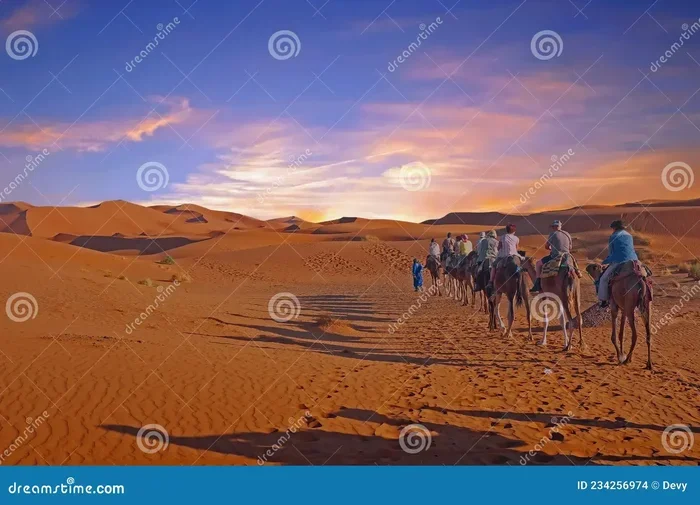
Featured image for Desert camel caravan Morocco
Image source: thumbs.dreamstime.com
A 12-day Marrakech to Zagora tour is the ultimate Moroccan adventure, blending imperial cities, ancient kasbahs, vibrant souks, and breathtaking Sahara desert landscapes into one unforgettable journey. This extended route allows travelers to explore at a comfortable pace, experiencing everything from the snow-capped Atlas Mountains to the towering Erg Chigaga dunes. It’s perfect for travelers seeking an authentic, in-depth Moroccan experience that goes beyond the typical highlights.
Imagine standing atop a towering sand dune in the Sahara, watching the sun paint the sky in brilliant shades of orange and pink. Behind you lies a trail of camel footprints, and ahead, a 12-day Marrakech to Zagora tour that has already transformed your understanding of Morocco. This isn’t just a trip; it’s a journey through time, culture, and some of the most stunning landscapes on Earth.
Most travelers rush through this region in 4-7 days, but that pace barely scratches the surface. A 12-day adventure gives you room to breathe, to linger in a quiet Berber village, to bargain properly in a medina, to watch the stars from a desert camp without worrying about tomorrow’s early departure. Think of it like reading a great novel versus skimming the summary; the depth makes all the difference.
Did you know that Morocco receives over 13 million tourists annually, and Sahara desert excursions rank among the top three most-booked experiences? Yet only about 15% of visitors opt for extended tours of 10 days or more, meaning the 12-day route remains a path less traveled, offering more authentic encounters and quieter moments.
Key Takeaways
- Duration & Pace: 12 days provides the perfect balance between exploration and relaxation, avoiding the rushed feeling of shorter tours.
- Route Highlights: The journey covers Marrakech, Ait Benhaddou, Ouarzazate, Zagora, Erg Chigaga, and several imperial cities like Fes and Meknes.
- Sahara Experience: Erg Chigaga offers a more remote, authentic desert experience compared to the busier Erg Chebbi dunes.
- Cultural Immersion: The tour includes Berber village visits, traditional music performances, and authentic Moroccan cuisine experiences.
- Best Travel Season: October to April offers the most comfortable temperatures for both mountain crossings and desert camping.
- Budget Range: Prices typically range from $1,200 to $2,500 per person depending on accommodation levels and inclusions.
- Physical Requirements: Moderate fitness is needed for camel treks and walking in medinas, but no extreme hiking is required.
📑 Table of Contents
- What Exactly Is a Marrakech to Zagora 12 Day Tour?
- Why Choose a 12 Day Tour Over Shorter Options?
- What Are the Must-See Highlights Along the Route?
- How Do You Prepare for a 12 Day Morocco Tour?
- What Does a Typical 12 Day Itinerary Look Like?
- How Much Does a 12 Day Tour Cost and What Affects Pricing?
- What Should You Know About Choosing a Tour Operator?
- Conclusion: Is the Marrakech to Zagora 12 Day Tour Right for You?
What Exactly Is a Marrakech to Zagora 12 Day Tour?
A Marrakech to Zagora 12 day tour is a comprehensive overland journey through southern and central Morocco, covering approximately 2,000 kilometers of diverse terrain. The route typically forms a loop, starting and ending in Marrakech while venturing deep into the Sahara Desert region near Zagora.
Who Is This Tour Designed For?
This extended tour caters to travelers who want more than just a quick desert selfie. It’s ideal for:
- Culture enthusiasts who want to understand Moroccan heritage beyond surface-level tourism
- Photography lovers seeking dramatic landscapes from mountain passes to sand dunes
- Slow travel advocates who believe the journey matters as much as the destination
- Families with older children who can appreciate the historical and geographical lessons
- Solo travelers looking for a structured yet immersive experience
Where Does the Tour Go?
The classic route follows a southward trajectory from Marrakech through the High Atlas Mountains, stopping at the UNESCO World Heritage site of Ait Benhaddou, continuing to Ouarzazate (the “Hollywood of Africa”), and then to Zagora. From Zagora, travelers venture into the Erg Chigaga dunes, some of the most remote and pristine sand dunes in Morocco.
Unlike shorter tours that only cover the Marrakech-Zagora corridor, the 12-day version often includes imperial cities like Fes, Meknes, and Volubilis, plus the stunning Todra and Dades Gorges. It’s a complete Moroccan mosaic rather than a single slice.
When Is the Best Time to Travel?
The optimal window runs from October through April, when temperatures are mild across both elevation zones. Summer months (June-August) can see desert temperatures exceeding 45°C (113°F), making midday activities uncomfortable, while winter nights in the desert can drop below freezing.
Spring (March-May) and autumn (October-November) are particularly magical, with wildflowers blooming in the valleys and comfortable daytime temperatures ranging from 20-28°C (68-82°F).
Why Choose a 12 Day Tour Over Shorter Options?
The main advantage of a 12-day tour is depth. Shorter 3-5 day tours force travelers into a constant state of motion, packing and unpacking daily, with little time to absorb their surroundings. It’s like speed-reading a 400-page novel; you’ll know what happened, but you won’t feel it.
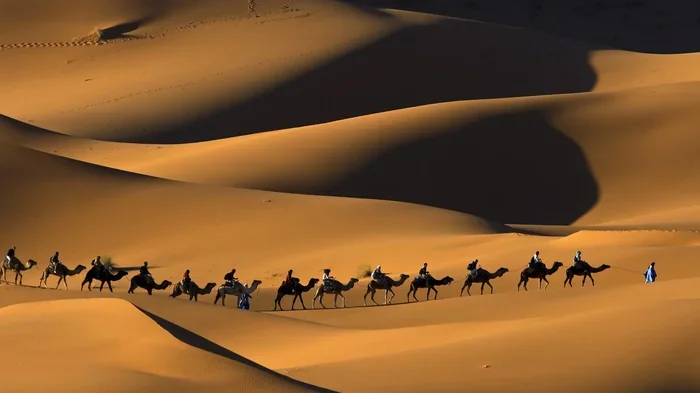
Visual guide about Desert camel caravan Morocco
Image source: images.alphacoders.com
The Pacing Difference
On a 12-day journey, you typically spend 2 nights in each major location, allowing for full days of exploration plus relaxed evenings. Compare this to a 5-day tour where you might change locations every 12-18 hours. Your body adjusts better, your mind processes experiences, and you actually remember details years later.
Hidden Gems Access
Extended tours can include lesser-known stops like:
- Skoura Palmeraie: A stunning oasis with thousands of palm trees
- Tafraoute: A Berber village famous for painted rocks and almond trees
- M’hamid El Ghizlane: The last town before the deep desert
- Todra Gorge: Towering canyon walls reaching 400 meters high
Did you know that Morocco has over 9,000 kilometers of recorded trails and ancient caravan routes? A longer tour allows you to walk sections of these historical paths, literally following in the footsteps of traders who crossed the Sahara centuries ago.
Value for Money
While the upfront cost is higher, 12-day tours often provide better value. Daily costs drop significantly when accommodation, meals, and transport are bundled for a longer period. Plus, you’re not paying for expensive last-minute arrangements when a shorter tour doesn’t satisfy your wanderlust.
What Are the Must-See Highlights Along the Route?
The Marrakech to Zagora 12 day tour is packed with bucket-list experiences, each more memorable than the last. Let’s break down the standout moments that travelers consistently rate as life-changing.
The High Atlas Crossing
The journey begins with a dramatic drive over the Tizi n’Tichka pass, reaching 2,260 meters (7,415 feet) above sea level. Think of it as Morocco’s version of crossing the Alps, but with red earth, traditional Berber villages clinging to hillsides, and views that stretch for hundreds of kilometers on clear days.
Did you know the Atlas Mountains stretch across three countries (Morocco, Algeria, and Tunisia) and contain some of the most diverse ecosystems in North Africa, including Barbary macaques, the only primate species native to Europe or Africa north of the Sahara?
Ait Benhaddou: The Living Museum
This UNESCO World Heritage site has stood for over 1,000 years and served as a backdrop for films like “Gladiator,” “Lawrence of Arabia,” and “Game of Thrones.” Walking through the ancient kasbah feels like stepping onto a film set because, often, you literally are.
The earthen clay architecture is constructed using traditional methods that have remained unchanged for centuries. Local guides explain how the buildings are repaired annually, a community effort that preserves this remarkable place for future generations.
The Dades and Todra Gorges
These natural wonders showcase nature’s sculpting power at its finest. The Todra Gorge features walls that rise 400 meters vertically on either side of a narrow passage, creating a slot canyon that echoes with the calls of cliff-nesting birds. It’s nature’s cathedral, and the acoustics prove it.
Erg Chigaga: The Real Sahara
Most tourists visiting Morocco experience Erg Chebbi, the more accessible dunes near Merzouga. But the 12-day tour typically ventures to Erg Chigaga, which requires a 4×4 journey of 2-3 hours from the nearest road. Why does this matter? Because reaching it takes effort, meaning fewer crowds and a more pristine experience.
Standing atop a 50-meter dune at Erg Chigaga, you might be the only person for miles. The silence is profound, broken only by wind shaping sand grains. At night, the stars are so bright they cast shadows on the desert floor, a phenomenon few people have witnessed in our light-polluted modern world.
Zagora and the Draa Valley
Zagora itself is more than just a jumping-off point for the desert. The surrounding Draa Valley features a stunning palm oasis stretching over 200 kilometers, one of the longest in the world. Ancient kasbahs dot the landscape, and date palms provide both food and shelter for traditional Berber communities.
How Do You Prepare for a 12 Day Morocco Tour?
Preparation makes the difference between a good trip and a great one. Think of it like packing for a camping trip; you don’t need everything, but you definitely need the right things.
What to Pack
Smart packing is essential because you’ll be moving frequently. Here’s what experienced travelers recommend:
- Clothing: Layers are crucial. Temperatures can swing from 5°C at night in the desert to 35°C during the day. Pack a mix of light fabrics, one warm jacket, and a scarf for sand and sun protection
- Footwear: Comfortable walking shoes for medinas and gorges, plus sandals for the desert
- Sun Protection: High-SPF sunscreen, sunglasses, and a wide-brimmed hat
- Health Kit: Basic medications, hand sanitizer, wet wipes, and rehydration salts
- Tech Gear: Camera, power bank, universal adapter (Morocco uses Type C and E plugs), and a torch for desert nights
Health Considerations
Most travelers don’t realize that Morocco’s geography creates distinct health considerations. The altitude at mountain passes can cause mild altitude-related symptoms, while the dry desert air dehydrates you faster than you expect. Drink at least 3-4 liters of water daily during the desert portions.
Did you know that travelers from certain countries need visas for Morocco, but citizens of over 60 countries can enter visa-free? Always check current requirements at least 60 days before departure.
Cultural Preparation
Morocco is a Muslim country with conservative social norms in rural areas. Understanding basic etiquette enhances your experience:
- Dress modestly, especially when visiting religious sites
- Ask permission before photographing people
- Use your right hand for greetings and eating
- Bargaining is expected in souks, but always with a smile and respect
- Tipping is customary; budget around 10-15% for guides and drivers
What Does a Typical 12 Day Itinerary Look Like?
While every tour operator customizes their route, the classic 12-day Marrakech to Zagora tour follows a proven path that balances adventure, culture, and relaxation. Here’s a day-by-day breakdown of what you can expect.
Days 1-2: Marrakech Arrival and Exploration
You’ll typically arrive in Marrakech on Day 1, with time to settle into your riad (traditional Moroccan house with interior garden). Day 2 is usually dedicated to exploring the medina, including:
- Jemaa el-Fnaa square, the famous UNESCO-recognized performance space
- The Bahia Palace and Saadian Tombs
- The Majorelle Garden and Yves Saint Laurent Museum
- The bustling souks organized by trade (leather, spices, textiles)
Days 3-4: The Atlas Mountains and Ait Benhaddou
Day 3 begins with the scenic drive over the Atlas Mountains, with stops for photos and a traditional Berber lunch. By afternoon, you’ll reach Ait Benhaddou for a guided tour of the ancient kasbah. Day 4 continues to Ouarzazate, exploring film studios and the Taourirt Kasbah.
Days 5-7: The Gorges and Desert Gateway
This stretch covers the Rose Valley, Todra Gorge, and Dades Gorge, often called Morocco’s “Grand Canyon lite.” By Day 7, you’ll reach the Draa Valley and Zagora, where you prepare for the desert expedition.
Days 8-9: Sahara Desert Immersion
Days 8-9 are the heart of the journey, involving a 4×4 transfer into Erg Chigaga, a camel trek to a luxury desert camp, and a full day experiencing the Sahara. Activities include sandboarding down dunes, Berber music around the campfire, and sleeping under stars so bright they seem close enough to touch.
Days 10-12: Return Journey and Farewell
The return route often includes stops in the Anti-Atlas region, the scenic town of Taroudant (sometimes called “mini Marrakech”), and finally back to Marrakech for departure or onward travel.
Flexibility Within Structure
Most operators allow customization within the 12-day framework. Want to add a cooking class in Marrakech? An extra night in Fes? Most companies accommodate requests, especially for private tours. The key is communicating preferences during the booking process.
How Much Does a 12 Day Tour Cost and What Affects Pricing?
Tour pricing varies significantly based on several factors, but understanding these variables helps you budget accurately and avoid surprises.
Standard Price Ranges
As of recent data, a 12-day Marrakech to Zagora tour typically costs:
- Budget Tours: $1,200-$1,600 per person (shared groups, standard hotels, basic desert camp)
- Mid-Range Tours: $1,700-$2,200 per person (smaller groups, 3-4 star riads, comfortable desert camp)
- Luxury Tours: $2,300-$3,500+ per person (private tours, luxury riads, premium desert camp with private tents)
What’s Usually Included
Most comprehensive packages cover transportation (including 4×4 for desert portions), accommodation, breakfast and dinner daily, English-speaking guide/driver, camel trek, and entrance fees to major attractions. International flights are typically not included.
Hidden Costs to Watch For
Smart travelers budget for expenses not always included:
- Lunches (usually $8-15 per meal)
- Drinks beyond water (Morocco has a unique alcohol availability structure)
- Tips for guides and drivers ($50-100 total is standard)
- Personal shopping in souks
- Optional activities like henna painting or quad biking
- Travel insurance (highly recommended)
Did you know that tipping in Morocco is considered essential, and guides often rely on tips as their main income source? Budgeting for tips isn’t optional; it’s part of the experience economy.
What Should You Know About Choosing a Tour Operator?
Selecting the right tour operator can make or break your experience. With hundreds of companies offering similar itineraries, knowing what to look for saves both money and disappointment.
Red Flags to Avoid
The tourism industry in Morocco is generally reliable, but watch for these warning signs:
- Operators requiring full payment upfront with no cancellation policy
- Vague itineraries that don’t specify accommodation names
- No reviews or testimonials from previous clients
- Pressure tactics or “today only” pricing
- Operators who avoid answering specific questions about logistics
Green Flags That Signal Quality
Reputable operators typically demonstrate:
- Detailed written itineraries with named accommodations
- Transparent pricing with clear inclusions/exclusions
- Responsive communication before booking
- Local guides with official licenses
- Flexible payment terms (deposit + balance)
- Strong review presence on independent platforms
Questions to Ask Before Booking
Smart questions reveal operator quality:
- What is the maximum group size?
- Which drivers and guides will be assigned?
- Can you provide recent client references?
- What happens if weather disrupts the desert portion?
- Is travel insurance included or recommended?
- What is the cancellation and refund policy?
Conclusion: Is the Marrakech to Zagora 12 Day Tour Right for You?
The 12-day Marrakech to Zagora tour represents the gold standard for experiencing southern Morocco’s full majesty. It’s not the cheapest or fastest way to see the country, but it’s the most rewarding for travelers who want depth over checklists.
This journey delivers more than photos; it delivers perspective. You’ll understand why the Sahara has captivated human imagination for millennia, why Berber culture has survived thousands of years in challenging terrain, and why Morocco sits at the crossroads of Africa, Europe, and the Middle East both geographically and culturally.
Think of this tour as a 12-day masterclass in Moroccan geography, history, and hospitality, all taught by locals whose families have called this land home for generations. You’ll leave with sand still in your shoes, mint tea memories on your tongue, and a camera full of images that your friends will envy for years.
Whether you’re celebrating a milestone birthday, taking a sabbatical, or simply refusing to rush through one of the world’s most fascinating regions, the 12-day Marrakech to Zagora tour offers an experience that shorter journeys simply cannot match. It’s not just a vacation; it’s the kind of trip you talk about for decades.
Start planning today, pack thoughtfully, keep an open mind, and prepare for the adventure of a lifetime. Morocco is waiting, and the path from Marrakech to Zagora has never been more inviting.
Frequently Asked Questions
How physically demanding is the Marrakech to Zagora 12 day tour?
The tour is moderately active but not extreme. You’ll walk through medinas (often on uneven surfaces), ride camels for 1-2 hours, and navigate sand dunes. Anyone with reasonable mobility can enjoy it, but those with severe back problems or mobility issues should discuss adaptations with their tour operator.
Is the Erg Chigaga desert portion safe for tourists?
Yes, Erg Chigaga is considered very safe. Tours use experienced drivers with specialized 4×4 vehicles, and the desert camps are staffed by trained guides. The main safety concerns are heat-related, which is why tours operate during cooler months and provide adequate hydration and shade.
What is the best month for a Marrakech to Zagora 12 day tour?
October and April are often considered optimal, offering mild temperatures (20-28°C during the day), minimal rainfall, and comfortable desert nights. March and November are also excellent, though mountain passes occasionally have weather disruptions in winter months.
Do I need a visa for Morocco?
Citizens of over 60 countries including the US, UK, Canada, EU nations, and Australia can enter Morocco visa-free for stays up to 90 days. Always verify current requirements with the Moroccan embassy or consulate in your country at least 60 days before travel.
Can dietary restrictions be accommodated on the tour?
Most tour operators can accommodate vegetarian, vegan, halal, and gluten-free diets with advance notice. However, options become more limited in remote desert areas. Communicate dietary needs clearly during booking, and consider carrying supplemental snacks for very restricted diets.
What is the cancellation policy for most 12-day tours?
Cancellation policies vary by operator, but typical terms include a 20-30% non-refundable deposit, with full payment due 30-60 days before departure. Cancellations 30+ days before usually receive partial refunds, while those within 30 days often forfeit the full amount. Travel insurance is strongly recommended to protect against unexpected cancellations.