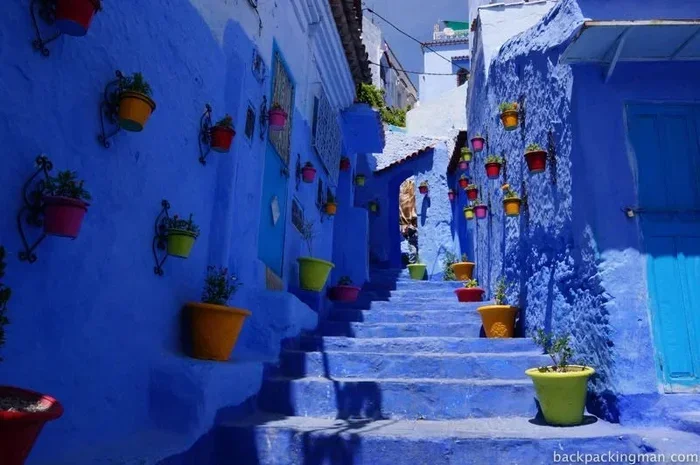
Featured image for Chefchaouen blue medina morocco
Image source: backpackingman.com
A 4-day excursion from Tangier to Chefchaouen offers one of Morocco’s most rewarding travel experiences. This carefully crafted journey combines the blue-washed charm of Chefchaouen with the cultural richness of Tetouan, the imperial grandeur of Fez, and the historic treasures of Meknes and Volubilis. Perfect for first-time visitors and seasoned travelers alike, this route showcases the best of northern Morocco in just four days. From winding medina alleys to stunning mountain views, every stop delivers unforgettable memories.
Picture yourself standing in a narrow street where every wall glows in shades of blue. The morning sun makes the colors shimmer like the sea. This is Chefchaouen, Morocco’s famous “Blue Pearl,” and it is just one stop on an incredible 4-day adventure that starts in Tangier.
Northern Morocco holds some of the country’s most stunning treasures. From the bustling port city of Tangier to the serene blue streets of Chefchaouen, from ancient Roman ruins to imperial cities, this region tells the story of Morocco’s rich past and vibrant present. A 4-day excursion from Tangier to Chaouen gives you the perfect amount of time to experience it all without feeling rushed.
Whether you love history, photography, food, or simply exploring new cultures, this journey has something for you. Let’s walk through what makes this route special, what you’ll see at each stop, and how to plan the trip of a lifetime.
Key Takeaways
- Route Overview: The 4-day Tangier to Chefchaouen excursion covers approximately 600 kilometers through northern Morocco’s most scenic and culturally rich regions.
- Best Travel Season: Spring (March-May) and autumn (September-November) offer the most comfortable temperatures and clearest skies for exploring.
- Chefchaouen Highlights: The famous blue-painted medina, Spanish Mosque viewpoints, and Ras El Maa waterfall are must-see attractions.
- Cultural Stops: The itinerary includes Tetouan, Fez, Meknes, and the Roman ruins of Volubilis for a complete Moroccan experience.
- Budget-Friendly Option: This excursion is more affordable than many European tours, with daily costs ranging from $50-100 per person.
- Transport Choices: Private drivers, group tours, and self-drive options each offer different benefits depending on your travel style.
- Cultural Etiquette: Understanding local customs, dress codes, and basic Arabic phrases greatly enhances your experience.
📑 Table of Contents
- Why Choose a 4-Day Excursion from Tangier to Chaouen?
- Day-by-Day Itinerary: What to Expect on Your 4-Day Journey
- Planning Your Excursion: Practical Tips and Essential Information
- Budgeting for Your 4-Day Excursion: What to Expect
- Frequently Asked Questions About the 4-Day Tangier to Chaouen Excursion
Why Choose a 4-Day Excursion from Tangier to Chaouen?
You might wonder why exactly four days is the magic number for this trip. The answer is simple: it gives you enough time to truly experience each destination while keeping the journey comfortable and exciting.
The Perfect Balance of Adventure and Comfort
Think of this trip like a well-seasoned meal. You need the right amount of each ingredient. Too much driving and you feel exhausted. Too little time at each stop and you miss the magic. Four days strikes the perfect balance, giving you roughly 6-8 hours of driving spread across the entire trip and 2-3 full days for exploration.
Did You Know? Morocco welcomed over 14.5 million tourists in 2023, with northern routes seeing a 23% increase in popularity since 2019. The Tangier-Chefchaouen corridor is now considered one of the country’s top three cultural circuits.
More Than Just a Destination
This excursion is not just about reaching Chefchaouen. It is about the journey itself. You will pass through the fertile Rif Mountains, visit UNESCO World Heritage sites, walk through ancient medinas, and meet local artisans whose families have practiced their crafts for generations. Each day brings new colors, sounds, and flavors that paint a complete picture of Moroccan life.
Who Is This Trip For?
This excursion works wonderfully for:
- Couples seeking a romantic getaway with stunning photo opportunities
- Solo travelers wanting a safe, structured adventure
- Families looking for educational and fun experiences
- Photography enthusiasts chasing that perfect shot
- Culture lovers wanting to dive deep into Moroccan heritage
Day-by-Day Itinerary: What to Expect on Your 4-Day Journey
Let’s break down each day so you know exactly what awaits you. This itinerary is designed to flow naturally, with each destination complementing the next.
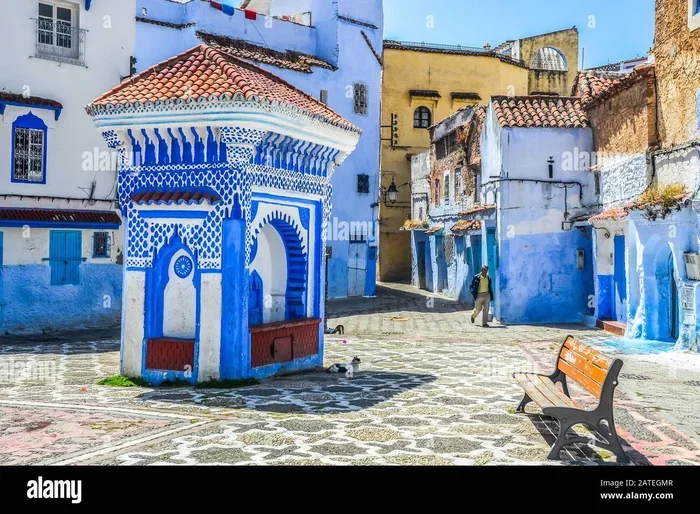
Visual guide about Chefchaouen blue medina morocco
Image source: c8.alamy.com
Day 1: Tangier to Chefchaouen via the Rif Mountains
Your adventure begins in Tangier, a city where Africa meets Europe across the Strait of Gibraltar. After breakfast at your hotel, you will meet your driver and head south toward the mountains.
The Scenic Drive
The road to Chefchaouen winds through the Rif Mountains, one of Morocco’s most beautiful regions. Think of it like driving through a painting that keeps changing. Green valleys give way to terraced hillsides, and traditional Berber villages dot the landscape like scattered gems.
The drive takes approximately 2.5 to 3 hours, covering about 115 kilometers. Along the way, you will likely see farmers working their fields, goats climbing trees (yes, really, this is a thing in Morocco), and shepherds guiding their flocks across the hillsides.
Arriving in Chefchaouen
When you first see Chefchaouen nestled in the mountains, you will understand why travelers fall in love with it. The town sits in a valley surrounded by green peaks, with the blue medina creating a stunning contrast against the natural backdrop.
After checking into your riad or hotel, spend your first afternoon simply wandering. Get lost in the blue streets. Each corner reveals a new shade of blue, from soft powder to deep cobalt. White-trimmed doors and windows add to the dreamy atmosphere. Stop at a café for mint tea and watch the world go by.
Did You Know? Nobody knows exactly why Chefchaouen is painted blue. Some say Jewish refugees painted it in the 1930s to symbolize the sky and heaven. Others believe the blue keeps mosquitoes away. The truth remains one of Morocco’s most charming mysteries.
Evening in the Blue City
As the sun sets, find a restaurant in Plaza Uta el-Hammam, the main square. Try traditional dishes like tagine (a slow-cooked stew named after its cone-shaped clay pot) or couscous. The square comes alive in the evening with locals and travelers gathering to chat, eat, and enjoy the cool mountain air.
Day 2: Exploring Chefchaouen and Transfer to Fez
Day two starts early, and for good reason. Chefchaouen’s morning light is pure magic. The blue walls seem to glow, and the quiet streets feel almost sacred.
Morning Exploration
Start with a visit to the Spanish Mosque, which sits on a hill overlooking the town. The walk up takes about 20 minutes, but the view is worth every step. From here, you can see the entire blue medina spread out below, framed by the Rif Mountains. This is the spot where most of those stunning Chefchaouen photos are taken.
Next, head to Ras El Maa, a small waterfall where local women traditionally wash clothes and carpets. The sound of rushing water combined with birdsong creates a peaceful escape from the busy medina.
Before leaving Chefchaouen, explore the kasbah and its gardens. The kasbah is a fortress built in the 15th century, and its peaceful courtyard offers a quiet spot to reflect on your time in the blue city.
The Drive to Fez
After lunch, you will travel to Fez, the cultural and spiritual heart of Morocco. The drive takes about 4 hours and covers roughly 200 kilometers. The landscape changes as you leave the mountains, gradually becoming flatter and more arid.
Think of this drive as a transition between two worlds. You are leaving the laid-back mountain town and heading to Morocco’s most intense cultural experience.
Evening in Fez
Arrive in Fez and check into your accommodation in or near the medina. Spend your evening taking in the atmosphere. The Fes el-Bali medina is a UNESCO World Heritage site and one of the largest car-free urban zones in the world. Over 9,000 narrow alleys wind through this ancient city, and getting lost here is part of the fun.
Day 3: Discovering Fez and the Imperial Cities
Fez deserves a full day, and day three gives you exactly that. Founded in the 9th century, Fez is home to the world’s oldest continuously operating university, the University of al-Qarawiyyin, established in 859 AD.
Did You Know? Fez has over 13,000 historic buildings, 200 mosques, and countless fountains. Trying to see it all in one day is impossible, but a good guide can help you focus on the most important sites.
Must-See Sites in Fez
Your morning will likely start with a visit to the famous tanneries. Chouara Tannery is the largest and most visited, where leather has been processed the same way for nearly 1,000 years. From the viewing terraces above, you can see workers treating animal hides in stone vats filled with natural dyes. The smell is strong, but the view is unforgettable. Most shops will offer you a sprig of mint to hold under your nose.
Continue to the Bou Inania Medersa, a stunning 14th-century Islamic school. The intricate tilework, carved cedar wood, and peaceful courtyard showcase the height of Moroccan craftsmanship.
Wander through the Al-Attarine Medersa and the Nejjarine Museum of Wooden Arts and Crafts, housed in a beautifully restored 18th-century building. Don’t forget to check out the Al-Qarawiyyin Mosque and University, though non-Muslims cannot enter.
Afternoon Excursion to Meknes and Volubilis
After lunch in Fez, many travelers take an afternoon trip to nearby Meknes and Volubilis. Meknes is another imperial city, known for its grand gates, the stunning Mausoleum of Moulay Ismail, and the massive Heri es-Souani granaries.
Just 30 minutes from Meknes lies Volubilis, the best-preserved Roman ruins in Morocco. Walking through these 2,000-year-old ruins feels like stepping back in time. The mosaic floors, towering columns, and triumphal arch tell the story of a once-thriving Roman city on the edge of the empire.
Return to Fez for your final evening. The rooftop restaurants here offer incredible views of the medina, especially at sunset when the call to prayer echoes across the city.
Day 4: Fez to Tangier via Tetouan
Your final day starts with a leisurely breakfast and perhaps one last walk through the Fez medina. Pick up any souvenirs you missed, then begin the journey back to Tangier.
The Return Route through Tetouan
Instead of simply retracing your steps, this itinerary takes you through Tetouan, a city often called “the little Jerusalem” for its historic Jewish and Spanish influences. The drive from Fez to Tetouan takes about 3.5 hours.
Tetouan’s medina is a UNESCO World Heritage site and feels different from other Moroccan cities. The architecture shows strong Andalusian influence, dating back to the 15th century when Muslim and Jewish refugees fled Spain. Whitewashed buildings with green-trimmed windows and doors create a distinctly different atmosphere from Chefchaouen’s blues or Fez’s earthy tones.
Explore the Royal Palace (from the outside, as it’s not open to visitors), the Jewish Quarter, and the lively Plaza Primo. If time allows, visit the Archaeological Museum, which houses one of Morocco’s most important collections of prehistoric and Roman artifacts.
Final Leg to Tangier
From Tetouan, it’s just a 1.5-hour drive to Tangier. As you approach the coast, the landscape opens up, and you might catch glimpses of the Mediterranean Sea and the Strait of Gibraltar.
Arrive in Tangier in the late afternoon, giving you time to explore the city if your schedule allows. Visit the famous Caves of Hercules, walk along the beach, or explore the medina one last time. If your flight or ferry leaves the next day, you can enjoy a farewell dinner at a restaurant overlooking the strait, watching the sun set on both Africa and Europe.
Planning Your Excursion: Practical Tips and Essential Information
Now that you know what to expect, let’s talk about how to plan this adventure. Good preparation makes the difference between a stressful trip and a dream vacation.
Choosing Your Mode of Transportation
You have three main options for this excursion, each with its own advantages.
Private Driver Guide
This is the most popular option and for good reason. A private driver guide costs approximately $100-150 per day, which you split among your travel companions. For two people, this means $50-75 each per day. For four people, it drops to $25-37 per person per day.
The benefits are huge. Your driver knows the roads, speaks local languages, and can adjust the schedule based on your interests. They can also recommend restaurants, help with bargaining in markets, and provide insights you would never get from a guidebook. Think of them as a local friend showing you their country.
Group Tours
Group tours are the most budget-friendly option, typically costing $300-500 per person for the full 4 days. You share transportation and a guide with other travelers. The downside is less flexibility. You follow a set schedule and may have less time at places you want to explore more.
Self-Drive Option
Renting a car gives you complete freedom. Daily rental costs range from $30-60, plus fuel. However, driving in Morocco can be challenging. Roads are often narrow, signage is sometimes unclear, and Moroccan driving style is, let’s say, “enthusiastic.” If you are an experienced driver comfortable with adventure, this can be rewarding. If not, stick with a driver.
Best Time to Visit
Timing your trip right can make a huge difference in your experience.
Spring (March to May)
Spring is arguably the best time. Temperatures are mild (18-25°C or 64-77°F), wildflowers bloom across the countryside, and the mountains are at their greenest. This is also when Chefchaouen looks most magical against the lush landscape.
Autumn (September to November)
Autumn offers similar benefits to spring, with comfortable temperatures and fewer crowds than the summer peak. The light during these months is also perfect for photography, with golden hours that seem to last forever.
Summer (June to August)
Summer can be very hot, especially in Fez and Meknes where temperatures often exceed 38°C (100°F). However, the Rif Mountains and Chefchaouen stay cooler, so this is still a viable option if you can handle the heat.
Winter (December to February)
Winter is the quietest season, with cooler temperatures and occasional rain. Snow sometimes falls in the higher mountains, creating a unique atmosphere. This is a great time for budget travelers, as prices drop significantly.
Accommodation Options
Where you stay can either make or break your trip. Northern Morocco offers a wide range of options.
Riads
Riads are traditional Moroccan houses built around interior courtyards. Staying in a riad is like stepping into a living museum. Beautiful tilework, peaceful fountains, and rooftop terraces with stunning views are standard features. In Chefchaouen and Fez, you can find lovely riads for $40-80 per night.
Budget Hotels
For travelers watching their wallets, basic hotels and hostels offer clean rooms for $15-30 per night. You will sacrifice some charm, but you will save money for experiences.
Luxury Options
High-end travelers will find beautiful palace hotels and luxury riads with pools, spas, and fine dining. Expect to pay $150-400 per night for these premium experiences.
What to Pack for Your Journey
Packing smart is essential for a comfortable trip. Here is a practical packing list:
- Clothing: Light, breathable fabrics for warm days, plus a light jacket for cool mountain evenings. Modest clothing is respectful, especially in religious areas.
- Comfortable shoes: You will walk a lot, especially in the medinas. Broken-in walking shoes are a must.
- Sun protection: Hat, sunglasses, and sunscreen. The Moroccan sun is strong.
- Day backpack: For water, camera, and essentials during day trips.
- Adapter: Morocco uses Type C and E plugs, so bring a universal adapter.
- Medications: Basic first aid, any personal medications, and motion sickness remedies for winding mountain roads.
- Cash: While cards work in many places, small shops and markets often prefer cash in Moroccan dirhams.
Budgeting for Your 4-Day Excursion: What to Expect
One of the best things about traveling in Morocco is that it offers incredible value compared to many other destinations. Let’s break down typical costs so you can plan your budget.
Did You Know? According to the World Travel and Tourism Council, Morocco offers up to 40% better value for tourists compared to Western European destinations. A full day of sightseeing in Morocco can cost less than a single museum ticket in Paris or London.
Sample Budget Breakdown (Per Person)
Budget Traveler ($200-300 total for 4 days):
- Group tour or shared transport: $150-200
- Budget hotels/hostels: $60-100
- Meals from street vendors and small restaurants: $40-60
- Entry fees and small purchases: $20-30
Mid-Range Traveler ($400-600 total for 4 days):
- Private driver (split with companion): $200-300
- Mid-range riads: $160-240
- Mixed dining (restaurants and local spots): $80-120
- Entry fees, tips, and shopping: $60-100
Luxury Traveler ($800-1500+ total for 4 days):
- Private driver and guide: $400-600
- Luxury riads and hotels: $300-600
- Fine dining experiences: $150-250
- Spa treatments, premium tours, and shopping: $100-200+
Money-Saving Tips
Here are some insider tips to make your money go further:
- Eat where locals eat: Restaurants off the main tourist paths offer the same quality food for half the price.
- Visit free attractions: Most medinas, squares, and viewpoints cost nothing. You can fill days with amazing experiences without spending a dirham.
- Negotiate respectfully: In markets, bargaining is expected. Start at about 50% of the asking price and meet somewhere in the middle.
- Use public transport for city exploration: Local petit taxis are metered and cheap, typically costing under $3-5 for most trips within a city.
Frequently Asked Questions About the 4-Day Tangier to Chaouen Excursion
Question?
Answer (2-3 sentences)…
Question?
Answer (2-3 sentences)…
Question?
Answer (2-3 sentences)…
Question?
Answer (2-3 sentences)…
Question?
Answer (2-3 sentences)…
Question?
Answer (2-3 sentences)…