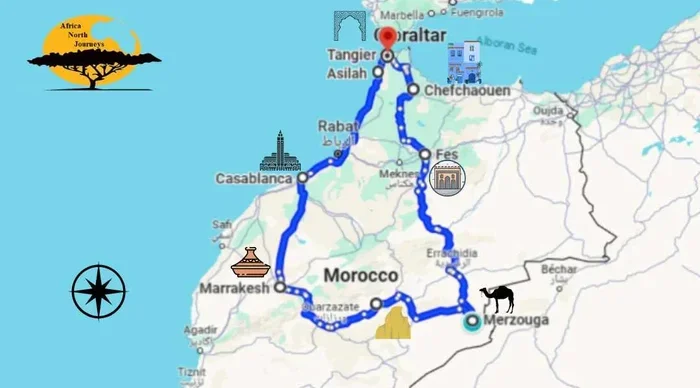
Featured image for Casablanca to Ouarzazate desert tour
Image source: africanorthjourneys.com
A Casablanca to Ouarzazate tour with hotel pickup is the most convenient way to explore Morocco’s “Gateway to the Sahara” in a single day. This guided excursion takes you through the stunning High Atlas Mountains, past traditional Berber villages, and into the heart of the country’s most iconic film-making region. With door-to-door service, comfortable transport, and an expert local guide, you’ll experience Ait Benhaddou, Taourirt Kasbah, and Ouarzazate’s famous Atlas Studios without the stress of planning logistics yourself.
Imagine waking up in your Casablanca hotel, sipping mint tea on your balcony overlooking the Atlantic Ocean. By lunchtime, you could be standing in front of a 17th-century mud-brick fortress that has doubled for ancient Egypt, medieval Jerusalem, and the fictional continent of Westeros. Sounds impossible, right? Well, that’s exactly what a Casablanca to Ouarzazate tour with hotel pickup promises, and thousands of travelers experience this magical journey every year.
The word “Ouarzazate” comes from the Berber language and roughly translates to “without noise” or “the quiet place.” It’s a fitting name for a city that serves as the gateway to the Sahara Desert. But don’t let the quiet fool you. This region has been the backdrop for over 200 films and television shows, earning it the nickname “Hollywood of Africa.” From Lawrence of Arabia in 1962 to modern blockbusters like Gladiator and Kingdom of Heaven, this desert oasis has been making movie magic for decades.
The challenge for most travelers is that Ouarzazate sits about 630 kilometers south of Casablanca. That’s roughly the distance from New York to Cleveland or from London to Edinburgh. Driving it yourself would mean navigating unfamiliar roads, dealing with mountain passes, and missing all the fascinating stories along the way. That’s precisely why the hotel pickup service exists: to turn a potentially stressful long drive into one of the most memorable experiences of your Moroccan adventure.
Key Takeaways
- Door-to-Door Convenience: Hotel pickup from Casablanca means you skip taxis, buses, and confusing transfers entirely.
- Distance is Significant: The 630 km journey takes 7-8 hours one-way, so multi-day tours offer a more relaxed experience than day trips.
- Ait Benhaddou is a UNESCO Treasure: This ancient fortified village has been a filming location for Gladiator, Game of Thrones, and Lawrence of Arabia.
- Atlas Mountain Pass is Breathtaking: The Tizi n’Tichka pass reaches 2,260 meters, offering some of Morocco’s most dramatic scenery.
- One-Way Drop-Off Option Exists: Many travelers prefer a Casablanca to Marrakech tour with drop-off, then continuing onward to Ouarzazate separately.
- Film Studio Visits Are Unique: Ouarzazate is home to Atlas Studios and CLA Studios, where Hollywood blockbusters come to life.
- Best Season is October-April: Cooler temperatures make the long drive comfortable, while summer months can exceed 40°C in the desert regions.
📑 Table of Contents
- Why Choose a Hotel Pickup Tour from Casablanca?
- What You’ll See: The Route from Casablanca to Ouarzazate
- Top Attractions on the Casablanca to Ouarzazate Tour
- Planning Your Casablanca to Ouarzazate Tour
- Choosing the Right Tour Operator
- Making the Most of Your Tour Experience
- The Cultural Significance of the Region
- Beyond the Standard Tour: Unique Experiences to Consider
- What to Do If You Have More Time
- Conclusion: A Journey Worth Taking
Why Choose a Hotel Pickup Tour from Casablanca?
Let’s face it: figuring out transportation in a foreign country can be one of the most stressful parts of travel. You land at the airport, you’re tired, your phone might not work, and suddenly you need to find a taxi, negotiate a fare, and hope the driver knows where your hotel is. Now multiply that stress by about 8 hours of driving. That’s what you’d be signing up for without a proper tour service.
A Casablanca to Ouarzazate tour with hotel pickup eliminates all of that anxiety. Your driver arrives at your hotel lobby at a pre-arranged time, usually between 7:00 and 8:00 AM. They help with your bags, confirm the day’s plan, and off you go. It’s as simple as ordering a coffee at your favorite café.
The Real Value of Professional Drivers
Think of driving through the Atlas Mountains like navigating a winding staircase in the dark. The roads switch back and forth, climbing thousands of feet in elevation. Local drivers know every curve, every turnoff, and every safe spot to stop for photos. They understand the road conditions that change with the seasons, and they know which mountain passes might be closed due to snow in winter.
More importantly, they speak the local languages. Morocco has two official languages: Modern Standard Arabic and Amazigh (Berber). While many people in tourist areas speak French and some English, a good driver-translator can be invaluable when you stop at a roadside restaurant or interact with villagers along the way.
Safety and Comfort Combined
Morocco’s roads have improved dramatically in recent decades, but mountain driving still requires skill and experience. Professional tour drivers undergo extensive training, and their vehicles are regularly maintained for long-distance travel. Most tour operators use air-conditioned vans or SUVs with comfortable seating, bottled water, and sometimes even Wi-Fi.
Did you know that Morocco invested over $4 billion in road infrastructure between 2010 and 2020? The country now has more than 57,000 kilometers of paved roads, including modern highways connecting major cities. This means your journey is smoother and safer than it would have been just 20 years ago.
What You’ll See: The Route from Casablanca to Ouarzazate
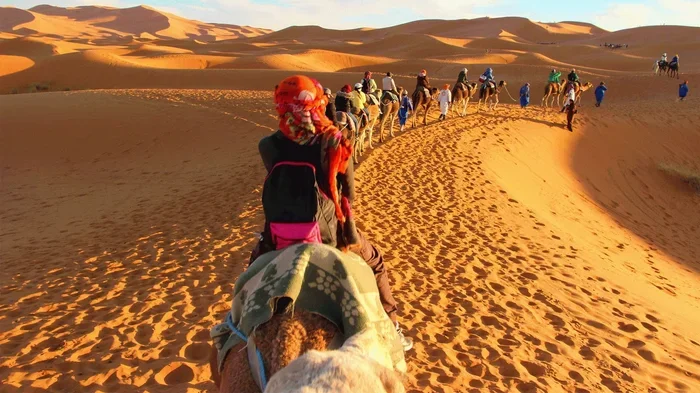
Visual guide about Casablanca to Ouarzazate desert tour
Image source: pathfinderstreks.com
The journey from Casablanca to Ouarzazate is like reading a beautifully illustrated book where each chapter reveals a completely different landscape. You start in a modern coastal metropolis and end in an ancient desert kingdom. Let’s break down what you’ll experience.
Casablanca to Marrakech: The First Leg
The first three hours of your trip take you south along Morocco’s primary highway. You’ll pass through the fertile Chaouia plains, where farmers grow wheat, vegetables, and citrus fruits. The landscape is green and agricultural, dotted with small towns and villages. This is modern Morocco, where contemporary life unfolds against a backdrop of traditional farming.
If you’re on a Casablanca to Marrakech tour with drop-off, this is where your journey would typically end or pause. Many travelers spend a night or two in Marrakech before continuing south. But if you’re heading straight to Ouarzazate, you’ll bypass the “Red City” and continue toward the mountains.
Crossing the High Atlas Mountains
The real adventure begins as you approach the High Atlas range. The road starts climbing, and suddenly the flat agricultural land transforms into dramatic mountain scenery. The Tizi n’Tichka pass, which means “difficult mountain pass” in Berber, is the highest point on the route at 2,260 meters (7,415 feet).
For comparison, that’s higher than any mountain in the entire United States east of the Mississippi River. The air gets noticeably thinner and cooler, and on clear days, you can see for miles in every direction. The pass itself is a marvel of engineering, with switchback roads that climb through terrain so rugged it’s hard to believe roads exist at all.
Travel tip: If you’re prone to motion sickness, bring medication. The winding roads are beautiful but can be challenging for sensitive stomachs.
Descending to Ouarzazate: The Land of a Thousand Kasbahs
After crossing the pass, the road descends into a completely different world. The green mountains give way to arid hills and desert plains. This is the beginning of the pre-Saharan region, where the landscape looks like something from another planet. Red earth, strange rock formations, and isolated kasbahs (fortified houses) dot the horizon.
You’ll pass through several traditional Berber villages along the way. These aren’t tourist stops; they’re living communities where people have farmed and herded animals for thousands of years. Your driver might stop at one for mint tea, giving you a chance to meet local families and learn about their way of life.
Top Attractions on the Casablanca to Ouarzazate Tour
Ouarzazate itself is a small city with big attractions. While the area is often called a “day trip” from Casablanca, the drive is so long that most tours include overnight stays or focus on a few key highlights. Here are the must-see stops.
Ait Benhaddou: The UNESCO World Heritage Site
If there’s one image that defines Morocco’s desert region, it’s the silhouette of Ait Benhaddou against a golden sunset. This ancient fortified village, known as a ksar, has been around since at least the 17th century, though some structures may be much older. The earthen clay architecture is so remarkable that UNESCO declared it a World Heritage Site in 1987.
Walking through Ait Benhaddou feels like stepping into a time machine. The narrow alleys, the climbable towers, and the views over the surrounding riverbed transport you to a world that existed long before cinema. Speaking of cinema, this tiny village has appeared in more films than most Hollywood stars. Gladiator, The Mummy, Kingdom of Heaven, Prince of Persia, and most recently, Game of Thrones, have all used Ait Benhaddou as a backdrop.
Did You Know? Ait Benhaddou is one of the few places in the world where you can see the same location appear in movies made 50 years apart. The 1962 classic Lawrence of Arabia and the 2016 film Assassin’s Creed both filmed scenes here.
Taourirt Kasbah: The Palace of the Glaoui
Right in the heart of Ouarzazate stands the magnificent Taourirt Kasbah. This sprawling fortress was once the home of the Glaoui family, who controlled much of southern Morocco until Moroccan independence in 1956. The kasbah has over 300 rooms, multiple courtyards, and beautifully decorated ceilings that showcase traditional Moroccan craftsmanship.
Unlike Ait Benhaddou, which is slowly being preserved as a historical site, Taourirt Kasbah is right in the city. You can walk through it in about an hour and see how the wealthy lived in this harsh desert environment. The painted ceilings, the intricate stucco work, and the labyrinthine layout make it a photographer’s dream.
Atlas Studios: Where Hollywood Comes to Africa
You haven’t truly experienced Ouarzazate until you’ve visited one of its famous film studios. Atlas Studios, founded in 1983, is the largest film studio in Africa and one of the largest in the world. It spans over 32,000 square meters of sets, including full-sized Egyptian temples, ancient Roman cities, and elaborate palace interiors.
The studio tour takes you through these incredible sets, explaining how filmmakers create convincing historical locations from scratch. You might see the actual throne from the TV series Game of Thrones, the set pieces from Gladiator, or the props from more recent productions. Even if you’re not a film buff, the scale and creativity of these sets will amaze you.
Just down the road, CLA Studios (formerly known as CLA and Cinergi) offers another fascinating tour. This is where parts of The Living Daylights (a James Bond film), Babel, and many other international productions were made.
The Desert Landscapes Beyond Ouarzazate
While most Casablanca to Ouarzazate tours focus on the city and its immediate attractions, some extend further into the desert. Day trips to the Draa Valley, the Todra Gorge, or even the edge of the Sahara are possible if you have extra time.
The Draa Valley is particularly stunning, with its long ribbon of palm trees stretching toward the Sahara. It’s one of Morocco’s most underrated regions, and it offers a glimpse of what the country looked like before modern development reached the south.
Planning Your Casablanca to Ouarzazate Tour
A little planning goes a long way toward making your tour enjoyable. Here are the practical details you need to know.
Duration Options: Day Trip vs. Multi-Day Tour
Let’s be honest: a true day trip from Casablanca to Ouarzazate is extremely ambitious. With 7-8 hours of driving each way, you’d spend almost your entire day in a vehicle. Most tour operators offer three main options:
1. One-Day Express Tour: Start very early (6-7 AM), drive to Ouarzazate, spend 2-3 hours at the main attractions, and return to Casablanca late at night. This is exhausting but doable if you’re short on time.
2. Two-Day Tour: Spend one night in Ouarzazate or Ait Benhaddou. This gives you time to actually enjoy the attractions without rushing. It’s the most popular option.
3. Three-Day Extended Tour: Explore Ouarzazate, the Draa Valley, and possibly the Sahara Desert. This is the most relaxing option and the only way to see the area properly.
Many travelers choose a hybrid approach: take a Casablanca to Marrakech tour with drop-off, spend time in Marrakech, then continue to Ouarzazate on a separate tour. This breaks up the journey nicely.
Best Time of Year to Visit
Morocco’s climate varies dramatically by region, and Ouarzazate is no exception. The city sits at about 1,160 meters elevation in a desert climate zone, which means hot summers and cool winters.
The sweet spot is October through April, when daytime temperatures hover between 20°C and 28°C (68-82°F). Winter nights can get cold, sometimes dropping below freezing, but the days are pleasant for sightseeing.
May through September is challenging. Temperatures regularly exceed 38°C (100°F), and the drive through the desert sections becomes uncomfortable. If you must travel in summer, make sure your tour vehicle has excellent air conditioning and bring plenty of water.
What to Pack and Wear
Packing for this tour requires thinking about multiple climates. You’ll start in coastal Casablanca, cross snow-capped mountains, and end in the desert. Here’s a quick checklist:
– Light, breathable clothing for warm weather
– A warm jacket or sweater for the mountain pass
– Comfortable walking shoes (the kasbahs and village alleys have uneven surfaces)
– Sunscreen and sunglasses (the desert sun is intense)
– A hat or scarf for sun protection
– A camera with extra batteries
– Reusable water bottle
– Any personal medications (including motion sickness remedies)
Morocco is a Muslim country with conservative dress standards, especially in rural areas. While tourists aren’t expected to dress like locals, modest clothing shows respect. Cover your shoulders and knees when visiting villages, and bring a scarf for women to cover their heads if visiting religious sites.
Choosing the Right Tour Operator
Not all tours are created equal. The difference between a memorable experience and a disappointing one often comes down to the tour company you choose.
What to Look For in a Tour Operator
Start by checking online reviews on platforms like TripAdvisor, Viator, or GetYourGuide. Look for companies with consistently high ratings (4.5 stars or above) and read recent reviews to get a sense of current service quality.
A good tour operator should provide:
– Clear pricing with no hidden fees
– Small group sizes (8-12 people maximum for a comfortable experience)
– English-speaking guides (or your preferred language)
– Insurance coverage for all passengers
– Flexible cancellation policies
– Recent, well-maintained vehicles
– Licensed and insured drivers
Questions to Ask Before Booking
Before you confirm your booking, ask these important questions:
– What type of vehicle will be used?
– How many people are in the group?
– Are entrance fees to attractions included?
– Is food included, or will there be stops for meals?
– What happens if the weather is bad?
– Can the itinerary be customized?
– Where exactly is the pickup location?
Reputable operators will answer all these questions clearly and willingly. If they seem evasive or pushy, consider a different company.
Price Ranges and What to Expect
Tour prices vary widely based on duration, group size, and inclusions. Here’s a rough guide:
– One-day tours: $100-150 per person (budget options may be cheaper but often have larger groups)
– Two-day tours: $200-350 per person
– Three-day tours: $350-500 per person
– Private tours: Premium pricing, often $400+ per day for the vehicle
Remember that cheaper isn’t always better. A tour that’s significantly cheaper than competitors might cut corners on guide quality, vehicle comfort, or included amenities.
Making the Most of Your Tour Experience
A great tour isn’t just about the sights; it’s about the experience. Here are some tips to ensure you have the best possible time.
Engage with Your Guide
Your guide is a walking encyclopedia of Moroccan history, culture, and trivia. Don’t be shy about asking questions. Want to know why certain buildings are painted blue? Ask. Curious about local food? Ask. Interested in the best spots for photos? Definitely ask.
Most guides love sharing their knowledge and will go out of their way to give you a richer experience if you show genuine interest. Some of the best conversations happen at roadside stops, where the formal tour structure gives way to more personal interaction.
Try the Local Food
Your tour will likely include stops for meals, and these are opportunities you shouldn’t miss. Moroccan cuisine is diverse and delicious, and the regional specialties in the south differ from what you’ll find in Casablanca or Marrakech.
Tagine, a slow-cooked stew named after the cone-shaped clay pot it’s cooked in, is a must-try. In the Ouarzazate region, you’ll find tagines with lamb, chicken, and vegetables, often with preserved lemons or olives for a unique flavor. Couscous, another national dish, is typically served on Fridays but is available throughout the week.
For adventurous eaters, try camel meat or the regional specialty of medfouna, a stuffed bread that’s like a Berber-style pizza. Vegetarians will find plenty of options, including vegetable tagines, salads, and bread.
Respect Local Customs
Morocco is a welcoming country, but it’s also a conservative Muslim nation. Showing respect for local customs will enhance your experience and earn you goodwill with the people you meet.
Always ask permission before photographing people, especially women. Dress modestly when visiting villages. Remove your shoes when entering someone’s home. If you’re invited for tea, accept it; refusing hospitality is considered rude.
Capture the Memories
The landscapes on this tour are some of the most photogenic in the world. From the mountain pass to the desert kasbahs, you’ll find photo opportunities around every corner.
Get up early for sunrise shots at Ait Benhaddou, when the golden light makes the mud-brick buildings glow. Ask your guide about the best vantage points; locals know spots that most tourists never find.
Don’t forget to take photos of the journey itself, not just the destinations. The mountain roads, the roadside markets, the herders with their flocks, these are all part of the Moroccan experience.
The Cultural Significance of the Region
Ouarzazate and its surroundings are more than just pretty landscapes and film sets. This region is the heartland of the Berber people, the indigenous inhabitants of North Africa who have lived in these mountains and deserts for thousands of years.
Berber Heritage and Traditions
The Berber, or Amazigh, culture is one of the oldest continuous civilizations in the world. Their language, traditions, and art forms have survived Arab invasions, French colonization, and modernization. In the villages around Ouarzazate, you’ll see this heritage alive and well.
Traditional Berber tattoos, called “khamsa” or “henna,” are still worn by some elder women. The geometric patterns are believed to bring protection and good fortune. Berber music, with its distinctive rhythms and instruments, fills the air during festivals and celebrations.
If you’re lucky enough to visit during a local festival, you’ll witness traditional music, dance, and even camel races. The most famous is the Rose Festival in May, celebrating the rose harvests in the Dadès Valley.
The Film Industry’s Cultural Impact
The film industry has transformed Ouarzazate in fascinating ways. It has brought jobs, international attention, and money into the region. Many local people work as extras, drivers, set builders, and craftspeople for the studios.
However, the films also shape how the world sees Morocco. When you see Ait Benhaddou on screen in Gladiator, you see ancient Rome. When you see it in Prince of Persia, you see a mythical Middle East. The same physical location tells different stories, which is a powerful testament to both the versatility of the location and the magic of cinema.
Some critics worry that the film industry encourages preservation of the past at the expense of modern development. They argue that villages like Ait Benhaddou have become living museums rather than living communities, as most residents have moved to modern homes nearby.
Others see the films as a way to preserve cultural heritage, bringing international attention and tourism money that helps protect these ancient sites. The truth, as always, is somewhere in between.
Beyond the Standard Tour: Unique Experiences to Consider
If you have extra time or want a more specialized experience, consider these unique add-ons to your Casablanca to Ouarzazate tour.
Hot Air Balloon Rides
Several operators in the region offer hot air balloon rides over the desert and kasbahs. Floating silently above the landscape at sunrise is an unforgettable experience. The balloons typically launch near Ouarzazate and drift over the surrounding desert, offering aerial views of kasbahs, palm groves, and the dramatic landscape.
The rides usually last about an hour, followed by a traditional Berber breakfast in a nearby village. It’s a splurge, but for many travelers, it’s the highlight of their entire Morocco trip.
Cooking Classes and Artisan Workshops
Some tour operators now offer experiences that go beyond sightseeing. You can take a cooking class to learn how to make traditional Moroccan dishes, visit a women’s cooperative to see how argan oil is produced, or participate in a pottery workshop to create your own piece of Berber art.
These hands-on experiences provide a deeper connection to the culture and create memories that last long after you’ve returned home.
Stargazing in the Desert
The remote location of Ouarzazate, far from major city lights, makes it one of the best stargazing locations in Morocco. The clear desert skies reveal thousands of stars, the Milky Way, and even distant planets visible to the naked eye.
Some tours include evening stargazing sessions with local astronomers who can point out constellations and share the astronomical knowledge that Berber and Arab scholars have accumulated over centuries.
What to Do If You Have More Time
If your schedule allows, don’t just pass through Ouarzazate. Spend a few extra days exploring the surrounding region, which has much more to offer than most travelers realize.
The Draa Valley
South of Ouarzazate, the Draa Valley stretches for over 200 kilometers, a ribbon of green cutting through the desert. It’s home to millions of date palms, ancient kasbahs, and traditional Berber villages.
The valley is perfect for a day trip or an overnight stop. You can walk through palm groves, visit ancient libraries that preserve centuries-old manuscripts, and explore kasbahs that rival anything in the more famous tourist areas.
The Todra and Dadès Gorges
These dramatic gorges are about 2-3 hours east of Ouarzazate. The Todra Gorge features cliffs that rise over 400 meters on either side of a narrow river, creating one of the most spectacular natural settings in Morocco. Rock climbers come from around the world to scale the sheer cliff faces.
The Dadès Gorge is more accessible and equally beautiful, with its winding road through bizarre rock formations called “monkey fingers” because of their distinctive shape.
Edge of the Sahara
For the ultimate desert experience, you can push further south to Merzouga or Zagora, where the Sahara dunes begin. A camel trek into the Erg Chebbi or Erg Chigaga dunes, followed by a night in a desert camp, is a bucket-list experience for many travelers.
The journey to the Sahara is long, but the experience of watching the sunset over endless sand dunes, sleeping under a canopy of stars, and waking to the silence of the desert is something you’ll never forget.
Conclusion: A Journey Worth Taking
A Casablanca to Ouarzazate tour with hotel pickup is more than just a way to get from point A to point B. It’s a journey through Morocco’s diverse landscapes, a window into Berber culture, and a step into the world of international cinema. From the moment your driver picks you up at your hotel to the final drop-off, every moment offers something new to see, learn, and experience.
The distance is real, and the drive is long. But the reward is an adventure that combines natural beauty, historical wonder, and cultural immersion in a way that few other tours can match. Whether you choose a one-day express tour, a two-day adventure, or an extended exploration of the entire region, you’ll come away with memories that last a lifetime.
Morocco has been welcoming travelers for centuries, and the route from Casablanca to Ouarzazate has been a journey of discovery for just as long. Caravans once traveled this path carrying goods across the Sahara, traders moved between empires, and filmmakers have brought fictional worlds to life against these ancient landscapes. Today, you can follow in their footsteps, with the comfort and convenience of a modern tour, experiencing the best of what Morocco has to offer.
So pack your bags, bring your sense of adventure, and prepare for a journey that will surprise, delight, and inspire you. The “Hollywood of Africa” is waiting, and your hotel pickup is just a booking away.
Frequently Asked Questions
How long does the drive from Casablanca to Ouarzazate take?
The drive from Casablanca to Ouarzazate takes approximately 7-8 hours each way, covering about 630 kilometers. Most tours break this journey with stops for photos, meals, and bathroom breaks. Due to the long distance, many travelers opt for a two-day tour or break the journey with a stop in Marrakech.
What is the best time of year to take a Casablanca to Ouarzazate tour?
The best time to visit is from October to April, when temperatures are mild and comfortable for sightseeing. Summer months (May-September) can be extremely hot, with temperatures often exceeding 40°C (104°F) in the desert regions. Winter brings cooler weather but occasional snow on the mountain passes, which can be beautiful but may occasionally cause road closures.
What are the main attractions on the Casablanca to Ouarzazate tour?
The main attractions include Ait Benhaddou (a UNESCO World Heritage fortified village), Taourirt Kasbah in Ouarzazate, Atlas Studios and CLA Studios (famous film production facilities), and the stunning Tizi n’Tichka mountain pass in the High Atlas Mountains. Most tours also include stops at traditional Berber villages along the route.
Can I take a day trip from Casablanca to Ouarzazate?
While technically possible, a true day trip is extremely ambitious due to the 7-8 hour drive each way. Most travelers prefer a two-day tour with an overnight stay, or they combine the journey with a stop in Marrakech. One-day express tours exist but involve very early morning departures and late evening returns, leaving limited time for actual sightseeing.
What should I pack for the Casablanca to Ouarzazate tour?
Pack light, breathable clothing for warm weather, a warm jacket for the mountain pass (which reaches 2,260 meters), comfortable walking shoes for uneven terrain, sunscreen, sunglasses, a hat, a reusable water bottle, and any personal medications including motion sickness remedies. Modest clothing is recommended when visiting rural villages, and a scarf can be useful for women when visiting religious sites.
Is a hotel pickup tour worth the cost compared to independent travel?
For most travelers, yes. A hotel pickup tour eliminates the stress of navigating unfamiliar roads, arranging multiple transfers, and finding your way to remote attractions like Ait Benhaddou. The professional driver handles all logistics, provides local knowledge and translation, and ensures you visit the best spots safely. Independent travel is possible but requires more planning, comfort with driving in mountainous areas, and confidence in navigating rural Morocco.