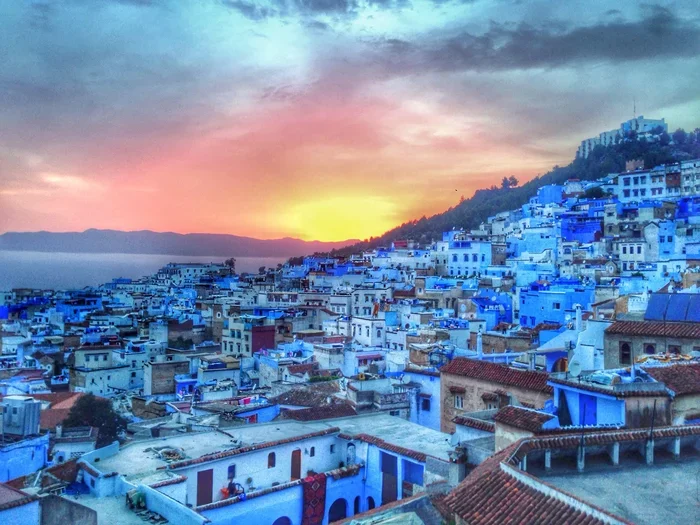
Featured image for Blue Chefchaouen Morocco cityscape
Image source: i.pinimg.com
A 10 day tour from Marrakech to Chefchaouen is the ultimate Moroccan adventure, blending vibrant souks, golden dunes, ancient medinas, and the famous blue streets of Chefchaouen. This itinerary covers UNESCO World Heritage sites, camel treks in the Sahara, and cultural gems like Fes and Meknes. Perfect for travelers who want a complete Morocco experience without rushing, it balances guided exploration with free time for personal discovery. Whether you’re a first-time visitor or a seasoned traveler, this route reveals Morocco’s diversity, beauty, and warm hospitality in just ten unforgettable days.
Imagine starting your morning in the chaos of Marrakech’s Jemaa el-Fnaa square, where snake charmers, storytellers, and sizzling food stalls compete for your attention. Now imagine ending your journey ten days later in the serene, blue-washed alleys of Chefchaouen, where cats nap on cobblestones and mountains frame every window. This is the magic of a 10 day tour from Marrakech to Chefchaouen—a journey that captures Morocco’s contrasts in one unforgettable loop.
Morocco attracts over 13 million tourists annually, according to the Ministry of Tourism, and many of them follow similar north-south routes. But few itineraries combine imperial cities, desert adventures, coastal vibes, and mountain charm quite like this one. Whether you’re drawn by the call of the Sahara, the blue streets of Chefchaouen, or the ancient ruins of Volubilis, this tour is your ticket to Morocco’s greatest hits—and some hidden treasures along the way.
Let’s break down exactly what makes this 10-day route the gold standard for Morocco travel, what you’ll experience each day, and how to choose the right tour for your style.
Key Takeaways
- Comprehensive Route: A 10 day tour covers Marrakech, the Sahara, Fes, Meknes, Volubilis, Rabat, and Chefchaouen, giving you the full Moroccan experience.
- Sahara Desert Highlight: Camel trekking and overnight camping in Erg Chebbi dunes is the trip’s most iconic moment.
- Blue City Finale: Chefchaouen’s painted blue streets provide a peaceful, photogenic conclusion to the journey.
- Cultural Depth: You’ll explore four UNESCO World Heritage Sites, ancient ruins, and traditional medinas.
- Best Travel Seasons: Spring (March-May) and autumn (September-November) offer the most comfortable temperatures.
- Budget Flexibility: Tours range from budget-friendly group trips to luxury private experiences, accommodating all travel styles.
- Local Connection: Staying in riads, eating tagine, and meeting Berber families creates authentic cultural exchanges.
📑 Table of Contents
- Why a 10 Day Tour from Marrakech to Chefchaouen Is the Perfect Morocco Itinerary
- Day-by-Day Breakdown of the Ultimate 10 Day Marrakech to Chefchaouen Tour
- How to Choose the Right Tour Operator
- Best Time to Take This Tour
- What to Pack for Your 10 Day Marrakech to Chefchaouen Adventure
- Budget Breakdown: What Does a 10 Day Tour Actually Cost?
- Tips for Making the Most of Your Journey
- Cultural Etiquette You Should Know
- Sustainable Travel in Morocco
- Common Mistakes to Avoid
- Final Thoughts: Why This 10 Day Tour Changes You
Why a 10 Day Tour from Marrakech to Chefchaouen Is the Perfect Morocco Itinerary
You might wonder: why ten days? Why not a quick week or a leisurely two weeks? The answer lies in Morocco’s geography. The country stretches over 1,000 kilometers from the Sahara dunes to the Mediterranean coast. Trying to cover Marrakech to Chefchaouen in less than a week feels rushed. More than ten days, and you risk padding the itinerary with unnecessary stops.
Think of it like baking bread. You need enough time for the dough to rise, but leave it too long and it collapses. Ten days is the sweet spot—long enough to savor each destination, short enough to keep the adventure exciting.
The Variety Factor
In just ten days, you’ll experience:
- Imperial cities with centuries-old palaces and mosques
- Sahara desert with camel rides and starlit camping
- Berber villages tucked into the Atlas Mountains
- Coastal charm in Essaouira or along northern beaches
- The blue city of Chefchaouen, Morocco’s most photographed destination
Few countries offer this much geographic and cultural diversity in such a compact route. Morocco’s diversity is why it consistently ranks among the world’s top travel destinations, appearing on National Geographic’s “Best of the World” list multiple times.
Balanced Pacing
A well-designed 10 day tour includes 2-3 major stops per day, with built-in rest periods. You’ll spend about 3-5 hours driving between cities, but the landscapes are so stunning that the journey becomes part of the adventure. Picture winding through the High Atlas passes, where waterfalls cascade down red cliffs, or cruising past cedar forests where Barbary apes swing through the trees.
Day-by-Day Breakdown of the Ultimate 10 Day Marrakech to Chefchaouen Tour
Here’s a typical itinerary that balances must-see highlights with off-the-beaten-path experiences. Of course, every tour operator tweaks the route slightly, but this gives you a solid framework.
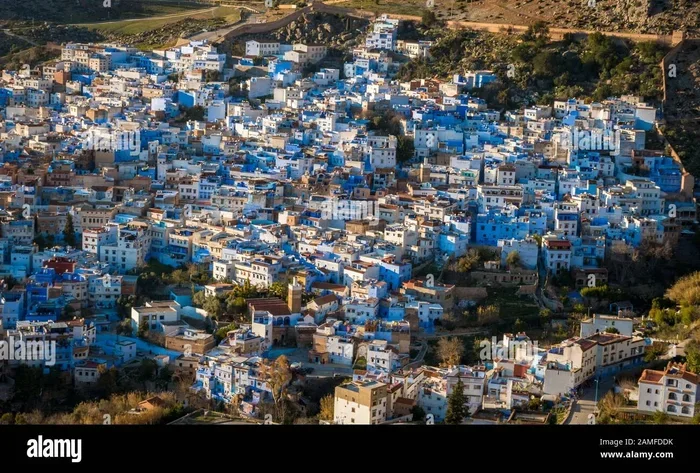
Visual guide about Blue Chefchaouen Morocco cityscape
Image source: c8.alamy.com
Days 1-2: Marrakech – The Red City
Most tours begin in Marrakech, and for good reason. The medina is a sensory playground. Start at the famous Jemaa el-Fnaa square, where food stalls serve everything from sheep’s head to sweet mint tea. As the sun sets, the square transforms into an open-air theater of musicians, dancers, and storytellers.
Spend your first full day exploring:
- Bahia Palace: A 19th-century masterpiece with intricate tilework and peaceful courtyards
- Saadian Tombs: Hidden for centuries, now a stunning glimpse into royal history
- Koutoubia Mosque: Marrakech’s iconic 12th-century landmark with a 77-meter minaret
- Majorelle Garden: A vibrant blue garden that once belonged to fashion designer Yves Saint Laurent
Pro tip: Bargaining is expected in the souks. Start at half the asking price and negotiate with a smile. It’s not shopping—it’s theater.
Days 3-4: Sahara Desert via the Atlas Mountains
Day three usually involves crossing the Tizi n’Tichka pass in the High Atlas Mountains. At over 2,200 meters, the pass offers dramatic views and a noticeable temperature drop. You’ll pass through Berber villages where life moves at the rhythm of sheep herding and pottery making.
By day four, you’ll reach the edge of the Sahara at Merzouga, gateway to the Erg Chebbi dunes. These golden sand mountains rise up to 150 meters high and stretch as far as the eye can see.
Highlights include:
- Camel trek into the dunes at sunset (about 1-2 hours)
- Overnight Berber camp with traditional music around a campfire
- Sandboarding on the dune slopes
- Stargazing in one of the clearest night skies in the world
Did you know? The Sahara Desert covers over 9 million square kilometers—roughly the size of the United States. Yet only about 20% of it is sand dunes. The rest is rocky plains and gravel.
Days 5-6: Fes – The Spiritual Heart
After the desert, you’ll travel north to Fes, Morocco’s oldest imperial city and its cultural and spiritual capital. Founded in 789 AD, Fes boasts the world’s largest car-free urban area—the medina is a labyrinth of 9,400 alleys that even Google Maps struggles to map.
Must-see spots in Fes:
- Al-Qarawiyyin University: Founded in 859 AD, it’s the oldest continuously operating university in the world
- Chouara Tanneries: The famous leather-dyeing pits, best viewed from a balcony above
- Bou Inania Medersa: A stunning 14th-century theological school
- Nejjarine Museum: Housed in a beautifully restored fondouk (inn)
The tanneries can be overwhelming—the smell of pigeon droppings used to soften leather hits you hard. Your guide will likely hand you a sprig of mint to hold under your nose. It’s weird, but it works.
Days 7: Meknes and Volubilis – Roman Ruins and Imperial Grandeur
Many travelers overlook Meknes, but it’s a hidden gem. Less crowded than Fes, it offers:
- Heri es-Souani: Enormous granaries and stables that once stored food for the entire royal court
- Bab Mansour: One of North Africa’s most spectacular gates
- Mausoleum of Moulay Ismail: The final resting place of Morocco’s most powerful sultan
Just 30 minutes from Meknes lies Volubilis, a UNESCO World Heritage Site featuring some of the best-preserved Roman ruins in North Africa. You’ll see towering columns, intricate mosaics, and triumphal arches dating back to the 3rd century. It’s like walking through a history book—but in real life, with sunshine and roaming wildflowers.
Day 8: Rabat – The Modern Capital
Morocco’s actual capital, Rabat, often gets skipped on shorter tours, but a 10-day itinerary gives you time to explore it. Highlights include:
- Hassan Tower: An unfinished 12th-century minaret that would have been the world’s tallest
- Chellah Necropolis: Roman ruins merged with medieval Islamic tombs
- Kasbah of the Udayas: A fortress with whitewashed streets and ocean views
- Mausoleum of Mohammed V: A masterpiece of modern Moroccan architecture
Rabat has a more relaxed vibe than Marrakech or Fes. It’s where Moroccan government workers live, students study, and locals enjoy mint tea overlooking the Bou Regreg river. Think of it as the calm pause before the visual feast of Chefchaouen.
Days 9-10: Chefchaouen – The Blue Pearl
Finally, the moment you’ve been waiting for. Tucked into the Rif Mountains near the Mediterranean, Chefchaouen feels like a dream painted in blue. There are several theories about why the buildings are blue:
- It keeps mosquitoes away
- It symbolizes the sky and heaven
- It was introduced by Jewish refugees in the 1930s
- It simply looks beautiful
Whatever the reason, the effect is magical. Spend your first afternoon wandering the medina, photographing doorways draped in bougainvillea, and sipping coffee on rooftop terraces.
On day ten, before heading back to Tangier or Casablanca for departure, take a morning hike to the Spanish Mosque for panoramic views, or visit the Kasbah Museum with its peaceful gardens and ethnographic exhibits.
Did you know? Chefchaouen has become so popular on Instagram that tourism has grown by over 300% in the last decade. It’s now one of the most photographed places in Africa.
How to Choose the Right Tour Operator
Not all tours are created equal. Here’s what to look for:
Group vs. Private Tours
Group tours are budget-friendly and great for solo travelers. Expect 12-18 people, a set schedule, and shared accommodations. Prices typically range from $800 to $1,500 per person.
Private tours offer flexibility and intimacy. You choose your departure dates, customize stops, and travel at your own pace. Expect to pay $2,500 to $5,000 for two people.
Accommodation Standards
Most reputable tours include stays in riads—traditional Moroccan guesthouses built around interior courtyards. They’re far more charming than chain hotels. Top-tier tours upgrade to luxury desert camps with private tents, en-suite bathrooms, and even hot showers in the Sahara.
Guide Quality
A good Moroccan guide can transform your trip. Look for operators with licensed, English-speaking guides who know the history, culture, and best photo spots. Many tours also include local guides in specific cities for deeper insights.
Transport
You’ll spend a lot of time in a vehicle. Make sure it’s a comfortable, air-conditioned minivan or 4×4, especially for the desert stretch. Some operators use vintage Mercedes or Land Rovers for a more adventurous feel.
Best Time to Take This Tour
Timing matters. Morocco’s climate varies dramatically by region, so the best time depends on what you value most.
Spring (March to May)
This is peak season for good reason. Temperatures are mild (20-28°C), flowers bloom in the Atlas Mountains, and the desert is comfortable. Book early—this is when most European tourists arrive.
Autumn (September to November)
Another excellent window. The summer heat fades, and Chefchaouen’s mountain air becomes crisp and photogenic. October is arguably the best month overall.
Summer (June to August)
The Sahara can hit 45°C, making daytime desert activities brutal. However, the coast and mountains stay cooler. If summer is your only option, focus on the northern half of the itinerary.
Winter (December to February)
Snow occasionally closes mountain passes, but cities remain pleasant (15-20°C). The desert gets cold at night, but days are sunny. It’s the cheapest and least crowded season.
What to Pack for Your 10 Day Marrakech to Chefchaouen Adventure
Packing smart makes the trip smoother. Here’s a practical checklist:
Clothing
- Modest layers: Morocco is Muslim-majority, so cover shoulders and knees in religious sites
- Lightweight scarf: Useful for sun protection, warmth, and visiting mosques
- Comfortable walking shoes: Medinas have uneven cobblestones
- Warm jacket: Desert nights and mountain passes get cold, even in summer
- Swimwear: Some riads have small pools or hammams
Gear
- Sunglasses and sunscreen: The Moroccan sun is intense
- Reusable water bottle: Tap water isn’t drinkable, but you’ll want to stay hydrated
- Power adapter: Morocco uses Type C and E plugs (European standard)
- Headlamp: Useful for desert camps and power-outage moments
- Camera: You’ll take hundreds of photos—trust us
Health and Safety
- Hand sanitizer: Markets and tanneries can be germ-heavy
- Basic first-aid kit: Band-aids, motion sickness pills, pain relievers
- Cash: Smaller vendors don’t accept cards. Bring Moroccan dirhams or exchange on arrival
Budget Breakdown: What Does a 10 Day Tour Actually Cost?
Prices vary wildly depending on style. Here’s a rough breakdown:
Budget Tours ($700-$1,200)
- Shared rooms in basic riads
- Group of 12-18 travelers
- Standard desert camp with shared bathrooms
- Most meals included
Mid-Range Tours ($1,500-$2,500)
- Private rooms in charming riads
- Smaller groups (6-10 people)
- Upgraded desert camp with private tents
- All meals and entry fees included
Luxury Tours ($3,000-$6,000+)
- 5-star riads and boutique hotels
- Private driver and guide
- Luxury desert camp with en-suite bathrooms
- Gourmet meals and wine tastings
Did you know? Tipping is customary in Morocco. Budget around 10-15% for guides, drivers, and restaurant staff. It’s a meaningful supplement to local incomes.
Tips for Making the Most of Your Journey
After ten days on the road, small habits make a big difference.
Learn a Few Arabic Phrases
A simple “Salaam alaikum” (peace be upon you) opens doors. So does “Shukran” (thank you). Moroccans deeply appreciate even basic efforts to speak their language.
Stay Hydrated but Smart
Bottled water is everywhere. Avoid ice in drinks unless you’re sure it’s filtered. Mint tea is safe and delicious—it’s also a social ritual. Refuse it at your peril.
Respect Photography Rules
Always ask before photographing people. Many Berber and Bedouin communities prefer not to be photographed. In return, you’ll find locals incredibly warm and welcoming.
Embrace the Slow Moments
The best parts of Morocco aren’t the monuments—they’re the unexpected pauses. A grandfather teaching his grandson to play drums. A woman handing you fresh figs from her tree. A camel sighing under the stars. These moments don’t fit into itineraries, but they’re what you’ll remember most.
Cultural Etiquette You Should Know
Understanding local customs earns you respect and richer interactions.
- Use your right hand for eating and greeting. The left is considered impolite
- Remove shoes when entering homes or mosques
- Dress modestly, especially at religious sites
- Friday is the holy day. Some shops close briefly during prayers
- Alcohol is available in licensed restaurants and hotels, but not in most medinas
Sustainable Travel in Morocco
Tourism brings income to local communities, but it can also strain fragile environments. Here’s how to travel responsibly:
- Choose locally-owned riads over international chains
- Buy directly from artisans rather than resellers
- Skip plastic bottles—bring a refillable filter bottle
- Respect wildlife—especially the Barbary macaques in the Atlas Mountains
- Support conservation tours that protect the Sahara and its nomadic communities
Common Mistakes to Avoid
Even seasoned travelers slip up. Here are pitfalls to dodge:
Overpacking
You’ll be moving every 1-2 days. Bring one bag you can carry yourself. Laundry is cheap and available everywhere.
Skipping Travel Insurance
Roads are winding, activities are adventurous. Get coverage that includes medical evacuation and adventure sports.
Trusting Unofficial “Guides”
In medinas, friendly strangers may offer to guide you—and then demand payment. Only hire licensed guides through your tour operator or accommodation.
Underestimating Drive Times
Morocco’s roads are improving but still slow. Don’t plan tight connections. Always add buffer time.
Final Thoughts: Why This 10 Day Tour Changes You
A 10 day tour from Marrakech to Chefchaouen isn’t just a vacation. It’s a story you’ll tell for years. You’ll come home with sand still in your shoes, the taste of mint tea on your lips, and memories that don’t fade.
Morocco has a way of slowing you down while simultaneously exciting every sense. One moment you’re lost in a desert sunset. The next, you’re bargaining for a handwoven rug. Then you’re standing in a 1,000-year-old library, realizing how small your daily worries really are.
Whether you go in spring bloom or autumn gold, with a backpack or a suitcase, solo or with friends, this itinerary rewards you. It shows you Morocco’s past and future, its chaos and calm, its deserts and mountains, its people and their unmatched hospitality.
So, book that tour. Pack that bag. And get ready to fall in love with one of the most beautiful countries on Earth.
The blue streets of Chefchaouen are waiting for you. So is the Sahara. So is Morocco itself.
Frequently Asked Questions
Is 10 days enough to travel from Marrakech to Chefchaouen?
Yes, 10 days is the ideal duration for a Marrakech to Chefchaouen tour. It gives you enough time to explore imperial cities, the Sahara Desert, and northern Morocco without feeling rushed. You’ll also have rest days and buffer time built into the itinerary.
What is the best season for a 10 day tour in Morocco?
Spring (March-May) and autumn (September-November) are the best seasons. Temperatures are mild, landscapes are beautiful, and weather conditions are ideal for desert treks and mountain drives. Avoid peak summer if you’re sensitive to extreme heat.
Do I need a visa for Morocco?
Most Western travelers, including those from the US, EU, UK, and Canada, do not need a visa for stays under 90 days. You’ll just need a valid passport with at least six months of remaining validity. Check your specific country’s requirements before departure.
Is it safe to travel in Morocco?
Morocco is generally very safe for tourists. Petty crime like pickpocketing can happen in crowded souks, but violent crime against tourists is rare. Stick to licensed guides, respect local customs, and use common sense. Many solo travelers, including women, explore Morocco without issues.
What should I wear on a Morocco tour?
Modest, comfortable clothing is best. Cover your shoulders and knees, especially in religious areas. Lightweight fabrics work for the day, but bring a warm layer for cool desert nights and mountain drives. A pair of comfortable walking shoes is essential for exploring medinas.
Can I customize the itinerary or travel independently?
Yes, many tour operators offer customizable private tours. If you prefer independent travel, you can rent a car or use public transport, but a guided tour provides deeper cultural insights, safer desert access, and stress-free logistics. For first-timers, a guided 10 day tour is highly recommended.