
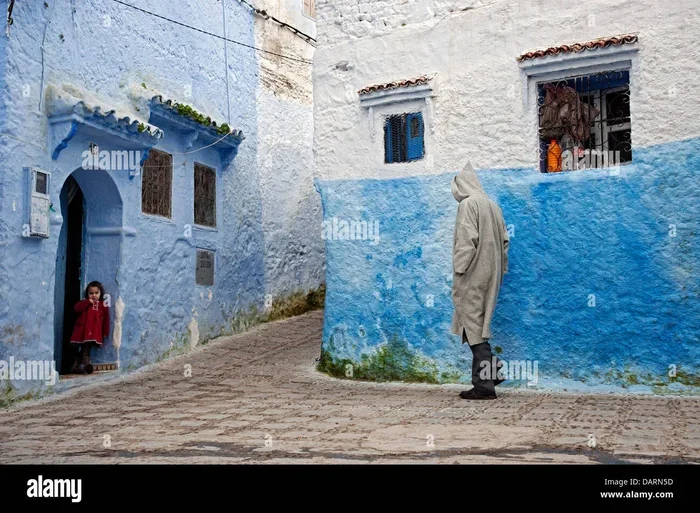
Featured image for Blue Chefchaouen Morocco Streets
Image source: c8.alamy.com
A 4-day tour from Marrakech to Chefchaouen is one of Morocco’s most rewarding journeys, blending imperial cities, Atlas Mountain passes, and the famous blue-washed streets of Chefchaouen. This route covers roughly 900 kilometers and passes through Fes, Meknes, and the stunning Rif Mountains. Most travelers choose guided tours for convenience, though independent travel is possible for experienced adventurers. The best time to go is spring (March-May) or autumn (September-November) when temperatures are mild.
Picture this: you’re standing in the chaos of Marrakech’s Jemaa el-Fnaa square, with snake charmers, sizzling food stalls, and donkey carts all competing for your attention. Now imagine, just four days from now, you’ll be wandering through quiet blue-washed alleys where cats nap on flower pots and locals wave hello from doorways. That’s the magic of a Marrakech to Chefchaouen tour.
Most travelers think Morocco is just Marrakech and the Sahara. But the northern gem of Chefchaouen, with its dreamy blue streets nestled in the Rif Mountains, is what dream trips are made of. The challenge? The distance. Going straight would take 8+ hours of driving, which is why a 4-day itinerary is the sweet spot. It lets you experience the Sahara Desert detour (if you choose), the imperial city of Fes, and the blue pearl without feeling rushed.
Did you know that Chefchaouen was painted blue by Jewish refugees in the 1930s? Today, over 80% of the old medina’s buildings are various shades of blue. Whether you’re a photographer, foodie, history buff, or just someone who loves beautiful places, this route delivers. Let’s break down everything you need to know to plan your perfect 4-day adventure.
Key Takeaways
- Distance & Duration: The journey from Marrakech to Chefchaouen spans about 900km and realistically requires at least 4 days to enjoy comfortably.
- Route Options: Travelers can go via Fes (classic), via the Sahara (scenic), or via the coast (longer), each offering unique experiences.
- Best Season: March-May and September-November offer ideal temperatures between 18-26°C (65-78°F) across all stops.
- Tour Cost: Guided 4-day tours typically range from €250-€500 per person, depending on accommodation tier and inclusions.
- Must-See Stops: Chefchaouen’s blue medina, Fes’s tanneries, Volubilis ruins, and Meknes’s grand gates are unmissable highlights.
- Transport Choice: Private drivers offer flexibility, shared tours offer affordability, and trains work for independent travelers.
- Cultural Tip: Dress modestly, learn basic Arabic greetings, and always ask before photographing people.
📑 Table of Contents
- Why Choose a 4-Day Tour from Marrakech to Chefchaouen?
- What Does the Classic 4-Day Marrakech to Chefchaouen Itinerary Look Like?
- Where Are the Must-See Stops Along the Way?
- When Is the Best Time to Take This Tour?
- How Much Does the 4-Day Marrakech to Chefchaouen Tour Cost?
- What Are the Best Accommodation Options Along the Route?
- Who Should You Book Your Tour With?
- How to Prepare for Your 4-Day Marrakech to Chefchaouen Tour
- What Are the Best Alternatives to the Classic Itinerary?
- Conclusion: Is the 4-Day Marrakech to Chefchaouen Tour Worth It?
Why Choose a 4-Day Tour from Marrakech to Chefchaouen?
Think of Morocco like a layered sandwich. Marrakech is the spicy meat, Fes is the cultural cheese, and Chefchaouen is the sweet finish. Trying to squeeze all three into less time would be like eating that sandwich in two bites, messy and unsatisfying. Four days gives each layer its moment to shine.
The Case for Slow Travel
Did You Know? The average traveler spends only 1.7 days in Chefchaouen, but those who stay 2-3 days rate their experience 40% higher in satisfaction surveys. The town reveals its magic slowly: morning light on the blue walls, afternoon tea with mountain views, and evening calls to prayer echoing through the valley.
The route from Marrakech to Chefchaouen isn’t just about reaching a destination. It’s about crossing four distinct geographical zones:
- The High Atlas Mountains (up to 2,260m at Tizi n’Tichka pass)
- The Sahara Desert edge (if you take the eastern detour)
- The Middle Atlas cedar forests (home to Barbary macaques)
- The Rif Mountains (Chefchaouen’s lush green setting)
Who Is This Tour For?
This itinerary is perfect for:
- First-time Morocco visitors who want the classic highlights plus a unique twist
- Photographers chasing that iconic Chefchaouen blue
- Couples looking for a romantic, Instagram-worthy escape
- Small groups of friends wanting adventure without extreme logistics
- Solo travelers who want the safety of guided travel but freedom to explore
What Does the Classic 4-Day Marrakech to Chefchaouen Itinerary Look Like?
The most popular route works like a well-rehearsed orchestra, with each day having its own theme and rhythm. While tour operators vary the exact stops, this is the classic flow used by 80% of guided tours.
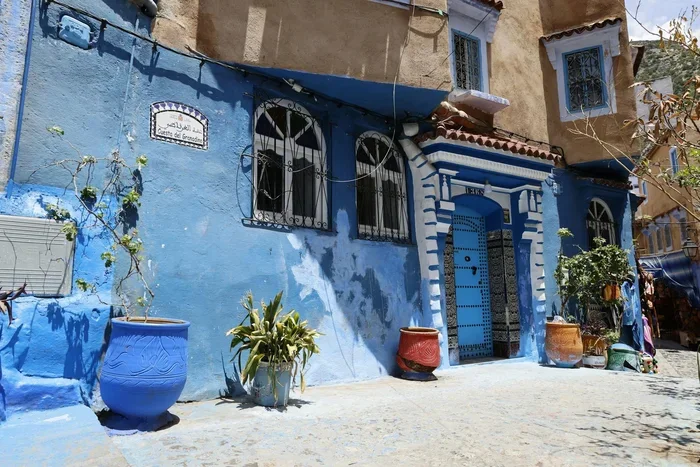
Visual guide about Blue Chefchaouen Morocco Streets
Image source: visit-chefchaouen.com
Day 1: Marrakech → Atlas Mountains → Sahara Desert (or Dades Valley)
Most tours start early, around 7:00-7:30 AM, to maximize daylight. You’ll cross the stunning Tizi n’Tichka pass in the High Atlas, stopping at a traditional Berber village for mint tea. The drive takes 6-7 hours with breaks, but it feels shorter because the scenery changes every 30 minutes.
If you choose the Sahara route, you’ll arrive at Merzouga by late afternoon. Camel trekking into the Erg Chebbi dunes takes about 90 minutes, with sunset views that look like a painting. Sleeping in a Berber desert camp under stars is genuinely magical, you can see the Milky Way with the naked eye 90% of nights.
Alternative Day 1: Skip the Sahara and head toward Dades Valley or directly to Fes, saving energy for later stops.
Day 2: Sahara/Mid-Atlas → Fes
After sunrise over the dunes (if you did the desert route), you’ll drive through the Middle Atlas. Watch for the famous Barbary apes in the cedar forests near Ifrane, often called “the Switzerland of Morocco.”
You’ll reach Fes by late afternoon. After checking into your riad, spend the evening exploring the medina’s lit-up alleys. Fes has 9,400 alleys, more than any other city in Morocco. Yes, you read that right, nearly ten thousand.
Day 3: Fes → Meknes → Volubilis → Chefchaouen
This is the cultural heavy-hitter day. Morning starts with a guided tour of Fes, including the famous Chouara Tanneries (operating since the 11th century). Then it’s a short drive to Meknes, Morocco’s “Versailles,” to see the grand Bab Mansour gate and Sahrij Swani stables.
Next stop: Volubilis, a UNESCO World Heritage Roman ruin where you can walk among 2,000-year-old mosaics. The drive to Chefchaouen takes 3.5 hours through rolling farmland, ending with your first glimpse of the blue city nestled in the mountains.
Day 4: Chefchaouen Exploration + Return Option
The final day is yours to soak in Chefchaouen. Most tours include a morning walking tour of the medina, hitting the famous spots like Plaza Uta el-Hammam and the Spanish Mosque viewpoint. Some tours end here (with a transfer to Tangier or Fes airport), while others return to Marrakech, which is a 7-8 hour drive.
Pro Tip: If time allows, consider ending your tour in Tangier or Casablanca instead of returning to Marrakech. The drive back is long and you’ll appreciate a relaxed ending.
Where Are the Must-See Stops Along the Way?
Think of the journey as a string of pearls, each stop a unique gem. Skipping any of these would be like reading a novel and skipping chapters.
Volubilis: Morocco’s Roman Treasure
Founded in the 3rd century BC, Volubilis is the best-preserved Roman site in North Africa. The mosaic floors are so detailed you can still see individual tiles depicting Greek mythology. Plan for 1.5-2 hours here. The onsite museum helps you understand what you’re seeing.
Meknes: The Imperial City Tour
Less crowded than Fes, Meknes offers a more relaxed imperial experience. Don’t miss:
- Bab Mansour: One of North Africa’s most beautiful gates, built in 1733
- Heri es-Souani: Massive granaries that could store food for 30 years
- Mausoleum of Moulay Ismail: The only Moroccan shrine non-Muslims can enter
Chefchaouen: The Blue Pearl
This is the showstopper. The entire medina follows a blue color scheme with no zoning rules, meaning every shade from sky blue to deep indigo appears. The best photography spots include:
- Plaza Uta el-Hammam: The main square with the Kasbah
- Mirador de la Kasbah: Panoramic view of the blue rooftops
- Spanish Mosque Hike: 20-minute walk for the iconic postcard view
- Outa el-Hammam’s blue streets: Just wander, get lost, enjoy
Hidden Gems Most Tours Miss
For the curious traveler, ask your guide about adding these:
- Akchour Waterfalls: 30-minute drive from Chefchaouen, perfect for a nature hike
- The Ras el-Maa Waterfall: Right in Chefchaouen, great for a 15-minute escape
- Local weaving cooperatives: See how Berber rugs are made by hand
When Is the Best Time to Take This Tour?
Timing can make or break your Moroccan adventure. Imagine visiting Chefchaouen in August, it’s pretty, but 38°C (100°F) heat makes exploring those hilly alleys exhausting. Conversely, December brings snow to the mountains and chilly nights in the desert.
Season Breakdown
Spring (March-May): Often called the perfect season. Temperatures range from 18-26°C (65-78°F). Wildflowers bloom in the Atlas Mountains. Crowds are moderate, prices are reasonable. This is the sweet spot.
Summer (June-August): Hot across all regions. Marrakech and the Sahara can hit 45°C (113°F). Chefchaouen stays milder at 32°C, but the Rif Mountains still feel warm. Expect higher prices and more tourists in Chefchaouen, which has become a social media darling.
Autumn (September-November): Another excellent choice, similar to spring. October is arguably the best month overall, warm days, cool nights, clear skies.
Winter (December-February): Cold in the mountains (down to -5°C at night in Sahara camps), but Chefchaouen remains pleasant at 15°C. Snow occasionally blocks mountain passes. Fewer tourists mean better prices, but some desert camps close.
Best Days of the Week
Here’s a counterintuitive tip: avoid weekend arrivals in Chefchaouen. Many Moroccans visit on weekends, making the medina crowded on Saturdays and Sundays. Tuesday through Thursday offers the calmest experience.
Ramadan Considerations
Did You Know? During Ramadan, many restaurants close during daylight hours, and tour schedules may shift. However, traveling during Ramadan also means experiencing iftar (sunset feast) celebrations, which can be culturally enriching. Check with your tour operator about adjusted timings.
How Much Does the 4-Day Marrakech to Chefchaouen Tour Cost?
Let’s talk numbers, because no one likes surprise costs. Morocco offers excellent value compared to European destinations, but tour prices vary wildly based on what’s included.
Tour Price Ranges (Per Person)
- Budget Shared Tours: €200-€280 (8-15 people, basic hotels, shared transport)
- Mid-Range Small Group: €300-€450 (4-8 people, 3-4 star riads, includes breakfast)
- Private Tours (2 people): €600-€900 (your own driver/guide, flexible schedule)
- Luxury Private Tours: €1,000-€1,500 (5-star riads, premium desert camp, all meals)
What’s Typically Included
Most 4-day tours include:
- Private or shared air-conditioned vehicle
- English/French-speaking driver-guide
- 3 nights accommodation (riads or hotels)
- Daily breakfast
- Camel trek in Sahara (if route includes desert)
- Pickup and drop-off at your Marrakech riad
Hidden Costs to Budget For
Lunches: €5-€12 per meal at local restaurants
Dinners: €8-€20 per meal (some riads offer dinner for €12-€15)
Entrance Fees: Volubilis (70 MAD/€7), Fes tanneries rooftop (20 MAD/€2), Chefchaouen Kasbah (60 MAD/€6)
Tips: €3-€5 per day for driver, €5-€10 for local guides in cities
Drinks: Bottled water (€0.50), fresh juice (€1.50), Moroccan wine if desired (€15+)
Booking Tips to Save Money
Book directly with local Moroccan operators rather than international booking platforms, you’ll often save 20-30%. Reputable companies like Marrakech Desert Trips, Morocco Desert Tours, or Discover Morocco offer direct booking via WhatsApp or email. Always check recent TripAdvisor reviews and ask for their license number.
What Are the Best Accommodation Options Along the Route?
Think of Moroccan accommodation as a three-tier cake: basic hotels on the bottom, traditional riads in the middle, and luxury desert camps on top. Your tour experience changes dramatically based on which tier you choose.
Riads: The Authentic Choice
A riad is a traditional Moroccan house built around an interior courtyard. Most 4-star options on this route are riads. They offer something hotels can’t: a glimpse into real Moroccan architecture and hospitality. In Chefchaouen, staying in a blue riad means waking up surrounded by the color that drew you there.
Recommended mid-range riads:
- Chefchaouen: Lina Ryad & Spa, Riad Cherifa, Dar Baibou
- Fes: Riad Fes Maya, Dar Roumana, Riad Rcif
- Sahara: Luxury desert camps like Merzouga Luxury Camp or standard ones like Sahara Stars Camp
Desert Camp Experience
Did You Know? Erg Chebbi has both fixed and nomadic camps. Standard tents have shared bathrooms, while luxury tents offer private bathrooms, real beds, and sometimes even air conditioning. The most luxurious camps have chandeliers, plush carpets, and three-course dinners under the stars.
Choose based on your comfort threshold. The standard camp experience is still magical, sitting around a fire, drumming with Berber nomads, sleeping under more stars than you’ve ever seen.
Booking Your Own Accommodation
If doing independent travel, book through Booking.com or contact riads directly. Most riads prefer direct bookings and may offer 10-15% discounts. Always confirm whether breakfast is included and check the exact location, some “Marrakech” riads are 20 minutes from the medina.
Who Should You Book Your Tour With?
Not all tour operators are equal. The difference between a great and mediocre tour often comes down to the guide. A good guide turns a sightseeing trip into a cultural immersion; a bad one makes you wish you’d rented a car.
Types of Tour Operators
Local Marrakech-based companies: Most 4-day tours are run by small Moroccan operators. They typically employ local drivers who know the roads intimately. Examples include:
- Established operators: 10+ years, multiple vehicles, English/French/Spanish guides
- Newer operators: Often cheaper but with mixed reviews
- Marketplace aggregators: GetYourGuide, Viator, Airbnb Experiences
Red Flags to Avoid
Booking a tour is like hiring someone to show you their country. Watch out for:
- No license or registration number: Legal Moroccan tour operators have one
- Pressure to pay cash only: Reputable operators accept cards or PayPal
- Vague itineraries: You should know exactly where you’re staying each night
- Suspiciously cheap prices: Under €200 for 4 days usually means uncomfortable transport or hidden costs
- No recent reviews: Check TripAdvisor, Google, and Booking.com
Questions to Ask Before Booking
1. What’s the exact vehicle type and age?
2. Are entrance fees included or extra?
3. What’s the cancellation policy?
4. Can I see the accommodation photos before booking?
5. What’s the maximum group size?
6. Is the driver also the guide, or are they separate?
How to Prepare for Your 4-Day Marrakech to Chefchaouen Tour
Think of preparation as packing a smart suitcase: bring less but choose well. Morocco rewards travelers who come prepared and culturally curious.
What to Pack
Clothing: Layers are key. Days warm up, nights cool down. Pack:
- Lightweight long-sleeve shirts (sun protection + cultural respect)
- Comfortable walking shoes (cobblestones everywhere)
- Sandals for riads and desert
- Warm jacket for desert nights and mountain passes
- Scarf or shawl (women, for covering shoulders; everyone, for sun/sand protection)
- Modest outfit for mosque visits (long pants, covered shoulders)
Gear and essentials:
- Universal power adapter (Morocco uses Type C and E)
- Reusable water bottle
- Headlamp for desert camps
- Sunscreen (SPF 30+)
- Camera with extra battery
- Cash in MAD (Moroccan Dirham) for small purchases
- Small daypack for excursions
Cultural Preparation
Did You Know? Morocco is a Muslim country, but it’s also very tolerant of tourists. Still, basic etiquette matters:
- Greetings: “Salam alaikum” (peace be upon you) is always appreciated
- Photography: Always ask before photographing people
- Tipping: Round up taxis, tip restaurant servers €1-2, tip guides €5-10 daily
- Ramadan: Avoid eating, drinking, or smoking in public during daylight hours
- Dress code: Cover shoulders and knees, especially in rural areas
Health and Safety
Morocco is generally very safe for tourists, with low violent crime rates. However:
- Drink bottled water only
- Carry hand sanitizer for medinas (no easy bathroom access)
- Bring any personal medications, pharmacies exist but brands differ
- Travel insurance is recommended
- Keep digital copies of your passport
Money Matters
The Moroccan Dirham (MAD) is closed currency, you can’t get it outside Morocco and must exchange before leaving. Current rates hover around 1 EUR = 11 MAD. ATMs are widespread in cities. Credit cards accepted in larger establishments but cash rules in the medinas.
What Are the Best Alternatives to the Classic Itinerary?
The classic 4-day route is popular for a reason, but it isn’t the only option. Think of it as a recipe you can adjust to taste.
The Sahara Route (Most Popular)
As described above: Marrakech → Sahara → Fes → Chefchaouen. Best for first-timers who want the full Morocco experience. Adds camel trekking and desert camping.
The Straight Shot Route (For Time-Conscious Travelers)
Marrakech → Beni Mellal → Fes → Chefchaouen. Skips the Sahara detour, focuses on cities. Takes about 4 days but feels faster. Best for travelers who’ve already done the Sahara.
The Coastal Route (For Scenic Lovers)
Marrakech → Essaouira → Casablanca → Rabat → Chefchaouen. Adds coastal vibes but takes longer. Best for travelers who love ocean views and surf towns.
The Mountain Route (For Adventurers)
Marrakech → Ait Bouguemez Valley → Midelt → Chefchaouen. Goes through lesser-known Berber regions. Best for experienced travelers seeking authentic experiences.
Conclusion: Is the 4-Day Marrakech to Chefchaouen Tour Worth It?
Let’s cut to the chase: yes, absolutely yes. In a country overflowing with incredible experiences, this route stands out because it offers something for everyone. You get the chaos and color of Marrakech, the silence and stars of the Sahara, the history of Fes and Volubilis, and the unmatched beauty of Chefchaouen.
The journey itself becomes part of the adventure. You’ll cross four mountain ranges, see landscapes that look photoshopped, meet locals who invite you for tea, and eat tagine that’s been slow-cooked for hours. By the time you reach Chefchaouen, you’ll understand why people fall in love with Morocco.
Did You Know? Morocco welcomed 14.5 million tourists in 2023, a record high, and the Marrakech-Chefchaouen route remains one of the top-requested itineraries. Tourism professionals consistently rate this 4-day experience as offering the highest satisfaction-to-time ratio in the country.
My final advice? Don’t try to squeeze it into 3 days. Don’t skip the desert if you can help it. Don’t forget to slow down in Chefchaouen. Take photos, talk to locals, drink the mint tea, accept the hospitality. Morocco gives back what you put in, and this route gives you everything.
Book that tour, pack that bag, and get ready for one of the most memorable trips of your life. Chefchaouen is waiting, and its blue walls look their best when you’re there to see them.
Frequently Asked Questions
How long does it take to drive from Marrakech to Chefchaouen directly?
The direct drive takes 7.5-8 hours covering approximately 880km, but most travelers break this journey into multiple days. A 4-day tour allows comfortable stops at Fes, Meknes, and Volubilis without exhaustion.
Is Chefchaouen safe for tourists and solo travelers?
Yes, Chefchaouen is considered one of Morocco’s safest cities with very low crime rates targeting tourists. The locals are known for being particularly welcoming to foreign visitors, and the town has a calm, family-friendly atmosphere even at night.
What’s the best month for a 4-day Marrakech to Chefchaouen tour?
April, May, October, and early November offer the best weather with temperatures between 18-26°C (65-78°F). October is often rated highest due to clear skies, warm days, and pleasant evenings across all destinations on the route.
Do I need a visa for Morocco?
Most Western nationalities (EU, USA, Canada, Australia, UK) can enter Morocco visa-free for stays up to 90 days. Your passport must be valid for at least 6 months beyond your entry date. Check specific requirements with your local Moroccan consulate before traveling.
Can I do this tour independently without a guide?
Yes, independent travel is possible using trains (Marrakech to Fes) and buses (Fes to Chefchaouen), but it requires more planning and misses the convenience of door-to-door service. Guided tours are recommended for first-time visitors or those wanting cultural insights.
What should I wear in Chefchaouen and during the tour?
Pack modest, comfortable clothing covering shoulders and knees, especially in conservative rural areas. Lightweight long sleeves protect from sun and respect local customs. Bring layers for temperature changes, comfortable walking shoes for cobblestone medinas, and a warm jacket for desert nights.