
Featured image for Marrakech Sahara camel sunset
Image source: planningtomorocco.com
An 8 days tour from Marrakech to Sahara Desert is the ultimate way to explore Morocco’s diverse landscapes, vibrant souks, and ancient kasbahs in one unforgettable journey. This extended itinerary allows travelers to experience everything from the bustling medinas of Fes to the towering dunes of Erg Chebbi, with comfortable stops in desert camps and traditional riads. Perfect for first-time visitors, this route balances cultural immersion, scenic drives, and once-in-a-lifetime desert adventures.
Imagine waking up to the sunrise over golden sand dunes that stretch as far as your eyes can see. Picture yourself wandering through ancient medinas where the scent of spices fills the air and donkey carts still outnumber cars. An 8 days tour from Marrakech to Sahara Desert promises exactly this kind of magic, blending Morocco’s imperial history with its breathtaking natural wonders.
Morocco sits at the crossroads of Africa, Europe, and the Arab world, and this 8-day journey captures that cultural fusion beautifully. You’ll travel from the vibrant “Red City” of Marrakech across the mighty Atlas Mountains, through rose-colored valleys and palm-fringed oases, all the way to the edge of the mighty Sahara. Whether you’re a solo traveler, a couple seeking romance, or a family looking for adventure, this itinerary offers something special for everyone.
Did You Know? The Sahara Desert covers an area roughly the size of the United States, yet most travelers only see a tiny fraction of it. The Erg Chebbi dunes near Merzouga rise up to 150 meters high, making them among the tallest in North Africa. Getting there is half the adventure, and that’s exactly what this 8-day tour is designed to deliver.
Key Takeaways
- Duration & Distance: An 8-day route covers roughly 1,800 km, looping from Marrakech through the Sahara and back via different scenic paths.
- Best Travel Season: October through April offers the most comfortable temperatures for desert exploration.
- Cultural Highlights: You’ll visit 4 UNESCO World Heritage Sites, including Ait Benhaddou and the medina of Fes.
- Desert Experience: Sleeping in a Berber camp under the Sahara stars is the highlight of any Morocco trip.
- Budget Range: Prices typically range from €600 to €1,200 per person, depending on accommodation and tour style.
- Physical Demand: The tour involves moderate walking, camel rides, and long scenic drives with photo stops.
- Group vs Private: Small group tours (8-15 people) offer the best balance of cost and authentic local experience.
📑 Table of Contents
- Why Choose an 8-Day Itinerary Instead of a Shorter Trip?
- The Complete Day-by-Day Breakdown
- What to Pack for Your 8-Day Marrakech to Sahara Tour
- Choosing the Right Tour Operator
- Budget Breakdown and Value Analysis
- Best Time of Year to Travel
- Safety Tips and Cultural Etiquette
- Frequently Asked Questions About the 8-Day Marrakech to Sahara Tour
- Conclusion: Why This Trip Changes People
Why Choose an 8-Day Itinerary Instead of a Shorter Trip?
You might be wondering, “Can’t I just do a 3-day desert trip?” Of course you can, but you’ll miss out on so much. Think of it like choosing between a quick coffee and a full dinner. A short desert dash gives you a taste. An 8 days tour from Marrakech to Sahara Desert gives you the complete meal, with appetizers, main dishes, and dessert included.
The Problem with Rushed Itineraries
Most 3 to 4-day tours from Marrakech spend more than 8 hours a day in a vehicle. You arrive at the Sahara exhausted, spend one night in the desert, and rush back. That’s like flying to Paris just to take a selfie at the Eiffel Tower. You see it, but you don’t really experience it.
An 8-day itinerary solves this by spreading the journey across comfortable daily drives of 3 to 5 hours. You get time to explore Ait Benhaddou properly. You can wander the blue streets of Chefchaouen. You can sip mint tea with a Berber family and actually learn their names. Did You Know? Studies show that travelers who spend longer in fewer places report 40% higher satisfaction than those rushing through many destinations.
What Makes This Route Special
This particular itinerary forms a grand loop. You leave Marrakech heading south over the Tizi n’Tichka pass, then sweep east toward the Sahara. After two nights in the desert, you turn north toward Fes, the cultural capital. Then you journey through the Middle Atlas and return to Marrakech via a different road. This loop design means you see new landscapes every single day. No backtracking. No boring repetition.
The Complete Day-by-Day Breakdown
Let’s walk through exactly what your 8 days will look like. I’ll share what happens each day, where you’ll sleep, and what you’ll see. This way, you can picture yourself on this trip before you even book it.
Visual guide about Marrakech Sahara camel sunset
Image source: media-cdn.tripadvisor.com
Day 1: Marrakech Arrival and City Exploration
Your adventure begins in Marrakech, where most international flights land at Menara Airport. After settling into your traditional riad, a Moroccan guesthouse with a courtyard, you’ll step into the medina. The medina is a UNESCO World Heritage Site and a sensory wonderland. You’ll visit the Koutoubia Mosque (from outside, as non-Muslims can’t enter), the bustling Jemaa el-Fnaa square, and the colorful Majorelle Garden.
In the evening, head to the food stalls at Jemaa el-Fnaa. Did You Know? This square transforms at night into an open-air restaurant with hundreds of stalls serving everything from grilled lamb heads to sweet snail soup. It’s been a meeting place since the 11th century. Don’t knock it until you try the freshly squeezed orange juice. It’s just 4 dirhams (about 40 cents) and tastes nothing like the stuff back home.
Day 2: Marrakech to Ait Benhaddou via the Atlas Mountains
After breakfast, your driver picks you up for the first leg of the journey. The drive crosses the High Atlas Mountains through the stunning Tizi n’Tichka pass at 2,260 meters above sea level. The road zigzags dramatically, and every turn reveals a new valley. Snow-capped peaks in winter, wildflowers in spring, and sweeping views year-round make this one of the most scenic drives in Africa.
By afternoon, you’ll reach Ait Benhaddou, a fortified village (ksar) that has served as a backdrop for Hollywood films like Gladiator and Lawrence of Arabia. Walking through its ancient clay towers feels like stepping onto a movie set, except the setting is real. You’ll spend the night in a nearby hotel or riad, often with views of the kasbah lit up at sunset.
Day 3: Ait Benhaddou to Ouarzazate and Todra Gorge
This day mixes cinema with nature. In the morning, you’ll visit Ouarzazate, known as the “Hollywood of Africa.” Atlas Film Studios have produced everything from Game of Thrones to The Mummy here. Then the route takes you east toward the Todra Gorge, where towering limestone cliffs rise 400 meters on either side of a narrow river.
Think of Todra Gorge as nature’s cathedral. The cliffs act like walls, and the small stream below acts like the aisle. Climbers from around the world come to test their skills here, but you don’t need any gear to enjoy the views. A gentle walk along the river path takes about 30 minutes and is suitable for all ages.
Day 4: Todra Gorge to Merzouga and the Sahara Desert
This is the day you’ve been waiting for. The morning drive takes you through the date palm oases of Tafilalet, one of the largest palm groves in the world. Did You Know? This region has over one million date palms and produces dates so sweet they’re famous throughout Morocco. As you get closer to Merzouga, the landscape gradually shifts from green to golden, and the dunes of Erg Chebbi appear on the horizon like a sea of sand.
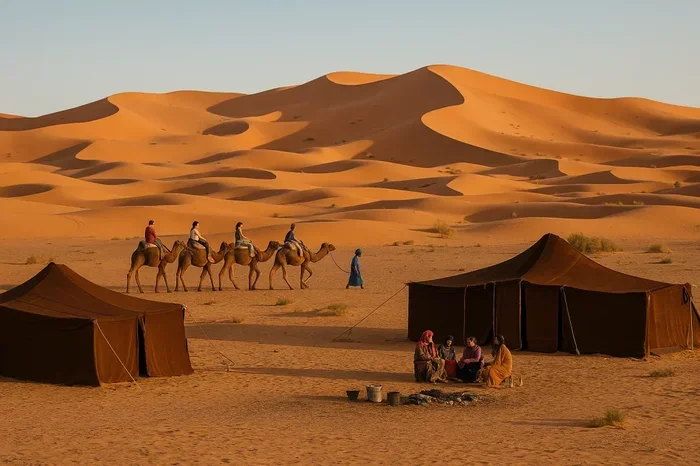
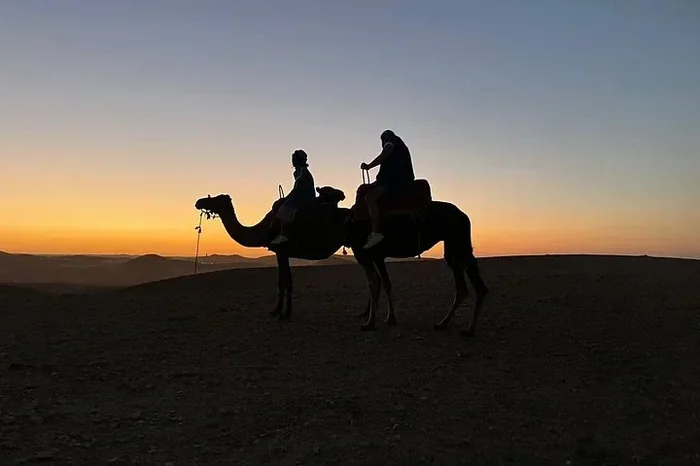
In the late afternoon, you’ll mount your camel for the traditional trek into the desert. The ride takes about 90 minutes, with plenty of stops for photos. Watching your shadow grow longer as the sun sets is a memory that sticks with you forever. By nightfall, you’ll arrive at your desert camp, where Berber drums and a starlit sky await.
Day 5: Sahara Desert Immersion
Unlike shorter tours, your 8-day itinerary gives you a full day in the Sahara. Wake up early to catch the sunrise. The dunes change color from gold to pink to orange as the sun rises. After breakfast at camp, you can try optional activities like sandboarding (imagine snowboarding, but on sand), quad biking, or simply climbing the dunes barefoot.
The silence of the Sahara is something special. In our noisy world, standing on a dune with no sound but the wind is almost spiritual. Did You Know? The Sahara is actually expanding southward at a rate of about 0.8 km per year, but the Erg Chebbi dunes have existed for thousands of years and are unlikely to disappear anytime soon. That night, you’ll sleep in your second desert camp or upgrade to a luxury camp with private bathrooms and hot showers.
Day 6: Merzouga to Fes via the Middle Atlas
Saying goodbye to the Sahara is tough, but Fes awaits. The drive takes you north through the Middle Atlas mountains, with stops in Ifrane, known as “the Switzerland of Morocco” for its alpine-style architecture and clean streets. You’ll also pass through the cedar forests near Azrou, where wild Barbary macaques roam freely.
By evening, you’ll arrive in Fes, Morocco’s oldest imperial city and the spiritual heart of the country. Check into your riad in the medina and enjoy a well-earned rest. The medina of Fes is the world’s largest car-free urban area, so donkeys are still the main delivery vehicles here.
Day 7: Exploring the Medina of Fes
Today is dedicated entirely to Fes, with a local guide leading you through the labyrinthine medina. The medina has over 9,000 alleys, so trying to navigate alone is like trying to solve a maze blindfolded. Your guide will show you the famous Al-Qarawiyyin University, founded in 859 AD, making it the oldest continuously operating university in the world.
You’ll also visit the Chouara Tanneries, where leather has been processed the same way for nearly a thousand years. The smell is strong, so they hand you a sprig of mint to hold under your nose. It’s a rite of passage for every Morocco traveler. In the afternoon, browse the souks for ceramics, spices, and textiles. Fes is famous for its blue pottery, and the craftsmanship here rivals anything in Europe or Asia.
Day 8: Fes to Marrakech via the Middle Atlas
The final day returns you to Marrakech, but the route is different from the way you came. This southern loop takes you through Beni Mellal and the scenic Ouzoud Falls area. While the falls themselves are a detour, you’ll stop at viewpoints overlooking rolling hills and Berber villages perched on cliffsides.
By late afternoon, you’re back in Marrakech. After eight days of travel, you have one last evening to revisit your favorite spots or find new ones. Some travelers prefer to relax at a rooftop bar overlooking the Koutoubia Mosque. Others head back to Jemaa el-Fnaa for one final round of street snacks. Either way, you’ll leave Morocco with stories to tell for years.
What to Pack for Your 8-Day Marrakech to Sahara Tour
Packing smart makes the difference between a good trip and a great one. Morocco’s climate varies wildly from snow-capped mountains to scorching desert. Layering is the secret.
Clothing Essentials
- Light layers: Days can be warm, but desert and mountain nights get surprisingly cold, especially from November to March.
- Modest attire: Morocco is a Muslim country. Cover your shoulders and knees, especially when visiting religious sites.
- Comfortable shoes: You’ll walk a lot on uneven medina streets and rocky paths.
- Scarf or shemagh: Useful for sun protection, warmth, and dust during camel treks.
Health and Practical Items
Sunscreen, a hat, and sunglasses are non-negotiable. The Saharan sun is intense. A small first-aid kit with motion sickness pills helps on winding mountain roads. Did You Know? Morocco uses Type C and Type E electrical plugs, the same as France and Spain. If you’re coming from the UK or US, bring an adapter.
Most importantly, bring a sense of adventure and patience. Wi-Fi exists in most hotels, but signal can be weak in remote areas. Embrace the digital detox. You’ll have the best conversations when nobody’s staring at a screen.
Choosing the Right Tour Operator
The quality of your tour depends heavily on who runs it. Not all operators offer the same experience, and the difference between a budget tour and a mid-range tour is often huge.
What to Look For
A good operator provides air-conditioned vehicles, English-speaking drivers who double as guides, and accommodations in riads rather than generic hotels. They should include breakfast and dinner daily, plus camel treks. Avoid operators who seem suspiciously cheap, as they often cut corners on desert camp quality or vehicle maintenance.
Did You Know? Morocco’s tourism industry employs over 500,000 people directly. Booking with a locally-owned company ensures your money supports Moroccan families, not foreign corporations. Look for operators registered with the Ministry of Tourism and check reviews on multiple platforms like TripAdvisor and Google.
Group Size Matters
Small groups (8 to 15 people) strike the best balance. You get the camaraderie of traveling with others, but the vehicle isn’t so crowded that you fight for window seats. Private tours offer maximum flexibility but cost 30 to 50% more. For first-time visitors, a small group tour is ideal because the logistics are handled for you.
Budget Breakdown and Value Analysis
Let’s talk money. An 8 days tour from Marrakech to Sahara Desert isn’t the cheapest vacation, but it’s incredible value compared to similar experiences elsewhere. The Sahara alone, with its luxury camps, gourmet food, and unforgettable experiences, would cost a fortune if booked independently.
Typical Price Ranges
- Budget tours: €400 to €600 per person. Basic hotels, shared transport, standard desert camp.
- Mid-range tours: €700 to €1,000 per person. Comfortable riads, smaller groups, upgraded desert camp with private tents.
- Luxury tours: €1,200 to €2,000+ per person. Private guides, 4-star riads, luxury desert camps with private bathrooms and hot showers.
What’s included matters more than the price tag. A €900 tour that includes all meals, airport transfers, entrance fees, and camel rides is better value than a €700 tour that nickel and dimes you for every activity. Always check the fine print.
Hidden Costs to Watch For
Lunches are often not included. Bottled water adds up. Tips for drivers and guides aren’t mandatory but are appreciated. A fair tip is around 100 to 200 dirhams per day for your driver, divided among the team. Souvenir shopping is where most travelers overspend, so set a budget before entering the souks. Bargaining is expected, so start at about 40% of the asking price and meet in the middle.
Best Time of Year to Travel
Morocco is a year-round destination, but your experience changes dramatically with the seasons. The 8 days tour from Marrakech to Sahara Desert can work in any month, but some periods shine brighter than others.
Spring (March to May)
This is peak season for good reason. Temperatures are mild, ranging from 20°C to 28°C during the day. Wildflowers bloom in the Atlas Mountains. The desert is comfortable, and rain is rare. Did You Know? The rose harvest in the Dadès Valley happens every May, when the entire valley smells like roses. It’s one of the most Instagram-worthy events in Morocco.
Autumn (September to November)
Many experienced travelers consider autumn the best time. The summer heat has passed, but it’s still warm. Crowds thin out after the European summer holidays. Prices drop, and the desert is gorgeous in October.
Winter (December to February)
Winter brings snow to the Atlas Mountains and cold nights in the desert. Temperatures can drop below freezing in the Sahara, which sounds brutal, but clear skies make for stunning stargazing. Days are sunny and pleasant. Just pack warmer layers.
Summer (June to August)
Summer is hot everywhere in Morocco. The desert regularly hits 45°C. Most travelers find this uncomfortable, but if you can handle the heat, prices are at their lowest and crowds disappear. Early morning and evening activities become the norm.
Safety Tips and Cultural Etiquette
Morocco is one of the safest countries in North Africa for tourists. Violent crime against travelers is rare. That said, being a smart traveler makes your trip smoother and more enjoyable.
General Safety
Petty theft, like pickpocketing in crowded souks, can happen. Keep your valuables in a money belt and leave your passport in the hotel safe. Carry a photocopy of your passport for ID checks. Did You Know? Morocco has more CCTV cameras per capita than most European countries. Police presence is visible, especially in tourist areas.
Women traveling solo often ask about safety. Morocco is generally welcoming, but dress modestly to avoid unwanted attention. Walking confidently and learning a few Arabic phrases like “La, shukran” (No, thank you) helps deter persistent shopkeepers and “guides” who aren’t really guides.
Cultural Do’s and Don’ts
- Always use your right hand when greeting people, eating, or giving/receiving items.
- Ask before photographing people, especially women and religious figures.
- Refuse politely but firmly if you don’t want something. Saying “No thank you” firmly is better than polite hesitation, which is taken as a yes.
- Try the local mint tea when offered. Refusing hospitality can be considered rude.
- Bargain with a smile. Haggling is a game, not a fight.
Frequently Asked Questions About the 8-Day Marrakech to Sahara Tour
Is the 8-day Marrakech to Sahara tour suitable for families with children?
Yes, this itinerary is family-friendly and works well for kids aged 6 and up. The camel rides are gentle, and children love the desert experience. Just be prepared for long drives and bring entertainment for the road. Many operators provide booster seats on request.
What is the food like on the tour?
Moroccan cuisine is one of the highlights. Expect tagines (slow-cooked stews with meat and vegetables), couscous, fresh salads, and Moroccan bread at every meal. The food is mild and flavorful, rarely spicy. Vegetarians are well-catered for. Most tours include breakfast and dinner, with lunches on the road at local restaurants.
Do I need a visa to visit Morocco?
Citizens of the US, UK, EU, Canada, Australia, and most Western countries do not need a visa for stays under 90 days. Your passport must be valid for at least 6 months beyond your entry date. Did You Know? Morocco was the first country to recognize American independence in 1777, and the two countries have maintained diplomatic relations ever since.
Can I customize the 8-day itinerary?
Absolutely. Most tour operators offer customizable private tours. You can add Chefchaouen, extend your desert stay, include cooking classes, or skip certain cities. Private tours give you full control over your schedule and pace.
Is it safe to ride camels in the Sahara?
Yes, camel rides are safe and well-organized. The camels are well-trained and used to tourists. The ride is gentle, though you may feel some soreness in your legs afterward. If you have back problems or are pregnant, consider a 4×4 transfer to the camp instead.
What should I wear in the Sahara Desert?
Light, loose-fitting clothing during the day and warm layers at night. A scarf protects your face from sand and sun. Closed-toe shoes are better than sandals for walking on dunes. The key is layers because desert temperatures swing 20°C or more between day and night.
Conclusion: Why This Trip Changes People
An 8 days tour from Marrakech to Sahara Desert isn’t just a vacation. It’s a journey through time, across landscapes that feel otherworldly, and into a culture that has welcomed travelers for centuries. From the moment you step into Marrakech’s chaos to the moment you watch the sun dip behind Erg Chebbi, every day brings something new.
The beauty of this itinerary lies in its variety. You’ll find yourself sipping mint tea with mountain villagers one day and sleeping under a million stars the next. You’ll bargain in ancient souks and climb sand dunes that look painted onto the sky. You’ll eat food that makes your taste buds dance and meet people whose warmth stays with you long after you leave.
Did You Know? Many travelers who visit Morocco once end up returning again and again. The country has a way of calling you back. Maybe it’s the colors. Maybe it’s the call to prayer echoing across medinas at sunset. Or maybe it’s the realization that somewhere between Marrakech and the Sahara, you found a piece of yourself you didn’t know was missing.
So pack your bags, charge your camera, and prepare yourself. Morocco is waiting. And trust me, after eight days together, you’ll never see the world quite the same way again.