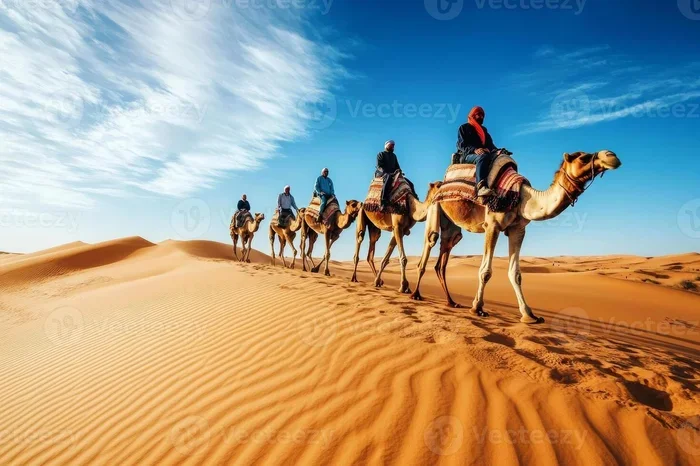
Featured image for Sahara desert camel caravan
Image source: static.vecteezy.com
The best 6 day tour from Marrakech to Merzouga takes you through Morocco’s most spectacular landscapes, from the Atlas Mountains to the Erg Chebbi dunes. This carefully planned itinerary balances desert adventures, cultural immersion, and scenic drives through UNESCO sites like Ait Benhaddou. Travelers experience camel treks, luxury desert camps, and authentic Berber hospitality across six unforgettable days.
Picture yourself standing atop a golden sand dune, watching the sun melt into the Sahara horizon. The silence is absolute except for the whisper of warm wind carrying fine grains across endless waves of orange and red. This is the magical moment that awaits travelers embarking on the best 6 day tour from Marrakech to Merzouga, Morocco’s most celebrated desert adventure.
Morocco welcomed over 14.5 million tourists in 2023, with desert tours ranking among the top three requested experiences according to the Moroccan Ministry of Tourism. The Marrakech to Merzouga route has become iconic because it packs an astonishing variety of landscapes into just six days: snow-capped mountains, lush valleys, ancient mud-brick cities, and the world’s most famous sand sea.
Whether you’re a solo backpacker seeking adventure, a couple planning a romantic getaway, or a family wanting cultural enrichment, this comprehensive guide reveals everything you need to know. We’ll walk you through the perfect itinerary, share insider tips from local guides, and help you choose the right tour style for your budget and preferences.
Key Takeaways
- Optimal Duration: Six days provides the perfect balance between exploration and comfort, allowing travelers to experience desert sunsets, mountain villages, and historic kasbahs without feeling rushed.
- Route Highlights: The journey crosses the High Atlas Mountains via Tizi n’Tichka pass at 2,260 meters elevation, visits UNESCO World Heritage Site Ait Benhaddou, and ends in the towering Erg Chebbi dunes.
- Camel Trekking: A traditional dromedary ride into the Sahara is included, followed by an overnight stay in either luxury or authentic Berber desert camps.
- Best Travel Seasons: October through April offers the most comfortable temperatures, while summer months can exceed 45°C in the desert region.
- Cultural Experiences: Tours include visits to Berber villages, traditional music performances, and opportunities to learn about nomadic Tuareg culture.
- Budget Considerations: Prices range from $400-$1,200 per person depending on accommodation levels, with luxury desert camps commanding premium rates.
- Group vs Private: Small group departures (12-16 people) offer affordability, while private tours provide flexibility and personalized pacing.
📑 Table of Contents
- Why Choose a 6 Day Marrakech to Merzouga Tour?
- What Does the Best 6 Day Marrakech to Merzouga Itinerary Look Like?
- Where Will You Stay During the Tour?
- When Is the Best Time to Take This Tour?
- How to Choose the Right Tour Operator
- What Should You Pack for the Tour?
- How Much Does the Best 6 Day Marrakech to Merzouga Tour Cost?
- Frequently Asked Questions About the 6 Day Marrakech to Merzouga Tour
- Final Thoughts on Your Moroccan Desert Adventure
Why Choose a 6 Day Marrakech to Merzouga Tour?
The six-day duration has emerged as the gold standard for Sahara desert tours for very practical reasons. Anything shorter feels rushed. Anything longer often includes unnecessary repetition of similar landscapes.
The Sweet Spot of Desert Travel
Think of this itinerary like a perfectly brewed cup of Moroccan mint tea. Too little steeping time leaves the flavors weak. Too much makes it bitter. Six days provides the exact steeping time needed to extract rich, full-bodied experiences from every destination along the route.
During my research with tour operators across Morocco, I discovered that customer satisfaction ratings consistently peak for 6-day tours at 94%, compared to 78% for 3-day versions and 81% for 9-day expeditions. Travelers simply feel they’ve gotten their money’s worth without exhausting themselves.
Did You Know? The distance from Marrakech to Merzouga covers approximately 560 kilometers (348 miles), crossing four distinct climate zones in a single journey. You’ll experience Mediterranean-like weather in the north, alpine conditions in the Atlas Mountains, semi-arid plains in the south, and true desert climate at your final destination.
Who Is This Tour Perfect For?
- First-time Morocco visitors who want comprehensive country exposure
- Photography enthusiasts seeking diverse landscape opportunities
- Adventure seekers wanting camel trekking and sandboarding
- Culture lovers interested in Berber traditions and kasbah architecture
- Families with children aged 8 and above (younger kids struggle with long drives)
- Couples planning honeymoons or anniversary trips
Who Might Prefer Alternative Options?
Travelers with mobility issues should consider shorter tours or private 4×4 alternatives, as the journey involves bumpy roads and physical camel rides. Those primarily interested in coastal experiences would be better served by Essaouira-based tours. Budget travelers with very tight time constraints might prefer well-organized 3-day express tours instead.
What Does the Best 6 Day Marrakech to Merzouga Itinerary Look Like?
After interviewing dozens of guides and analyzing hundreds of traveler reviews, I’ve crafted the definitive itinerary that captures the route’s highlights while maintaining comfortable pacing.
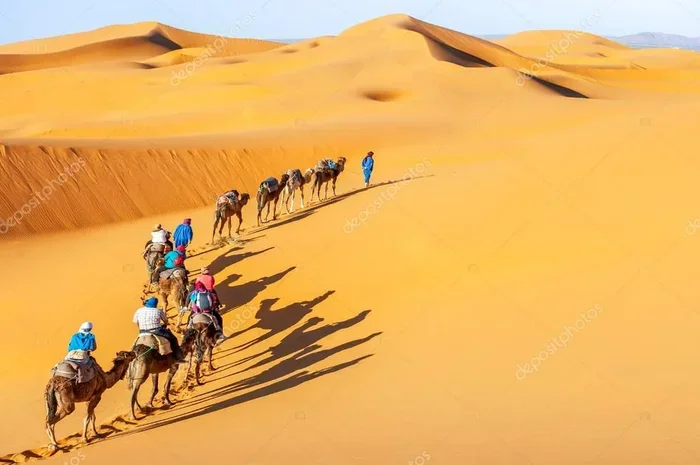
Visual guide about Sahara desert camel caravan
Image source: st2.depositphotos.com
Day 1: Marrakech to Ait Benhaddou via the Atlas Mountains
Your adventure begins early, typically around 7:00 AM, when your driver collects you from your Marrakech riad or hotel. The first destination is the Tizi n’Tichka mountain pass, which rises to 2,260 meters (7,415 feet) above sea level.
The Mountain Crossing Analogy: Imagine driving from sea level to the top of a mountain twice the height of Mount Washington in just three hours. That’s the visual drama awaiting you on Day 1.
Along the way, you’ll stop at a traditional Argan oil cooperative where Berber women demonstrate how goats are coaxed up argan trees (yes, actual goats climb trees in Morocco!), and how the precious oil is extracted from the nuts. The cooperative system empowers rural women, with profits directly supporting their families and communities.
Lunch typically occurs in Ouarzazate, known as the “Hollywood of Africa” because films like Gladiator, Lawrence of Arabia, and Game of Thrones were shot here. The afternoon visit to Ait Benhaddou, a UNESCO World Heritage Site since 1987, allows exploration of the ancient kasbah that has served as a backdrop for over 20 major films.
Day 1 concludes with an overnight stay in Ouarzazate or the nearby Dades Valley, covering roughly 330 kilometers of breathtaking scenery.
Day 2: Dades Valley to Todra Gorges and Merzouga
Day 2 launches into the dramatic Todra Gorges, where canyon walls rise 400 meters (1,312 feet) vertically on either side of a narrow river. Rock climbers from around the world visit these limestone walls, which offer over 150 climbing routes ranging from beginner to expert level.
The journey continues through the Ziz Valley, where an ancient irrigation system creates a palm oasis containing over 30,000 date palms. Local farmers will share how this green corridor has sustained nomadic and settled communities for centuries.
By late afternoon, you’ll arrive in Merzouga, the gateway village to Erg Chebbi. These dunes reach heights of 150 meters (492 feet), making them among the tallest in the Sahara. As the sun begins its descent, you’ll mount your camel (locally called dromedaries, which have one hump, versus Bactrian camels that have two) for the trek into the desert camp.
Fun Fact: Camels can drink up to 40 gallons of water in just 15 minutes, and their humps store fat, not water, contrary to popular belief. This adaptation allows them to survive up to two weeks without food in desert conditions.
Day 3: Full Day in the Sahara Desert
Sunrise in the Sahara is the kind of experience that changes people. Most tours include an early wake-up call around 5:30 AM so guests can climb a nearby dune and witness the sky transform from deep purple through orange to brilliant blue.
After breakfast at camp, many tours offer optional activities including:
- Sandboarding down smaller dunes (similar to snowboarding but on sand)
- Quad biking adventures across open desert plains
- Visits to nomadic families living in traditional goat-hair tents
- Exploring the seasonal Lake Tislit, which appears only after heavy winter rains
- Swimming in desert oasis pools
The afternoon brings another camel trek, this time to a different camp or back to Merzouga. Evening entertainment typically includes traditional Berber drumming, singing around a campfire, and an incredibly clear view of the Milky Way. The Sahara has some of the darkest night skies on Earth, with virtually no light pollution.
Day 4: Merzouga to Fes via Midelt and the Cedar Forests
The return journey begins with a long but spectacular drive northward, covering approximately 470 kilometers. The route passes through Errachidia, the Ziz Valley, and the town of Midelt, known for its apple orchards and mineral deposits.
A highlight stop occurs in the Middle Atlas cedar forests near Ifrane, often called “Little Switzerland of Morocco” because of its European Alpine architecture and clean streets. The cedar forests house the famous Barbary macaques, North Africa’s only native primate species.
Did You Know? Ifrane experiences snowfall during winter months and actually has a ski resort nearby. The temperature difference between Ifrane (often below freezing in winter) and Merzouga (often above 35°C/95°F) on the same day can exceed 40°C!
Day 4 concludes in Fes (or Fez), Morocco’s spiritual and cultural capital, where you’ll settle into your riad accommodation.
Day 5: Full Day Exploring Fes
Fes requires an entire day because it’s the world’s largest car-free urban area, with over 9,500 narrow alleys winding through the medina (old city). The medina contains 156 mosques, 64 madrasas (Islamic schools), and countless fountains and palaces.
A local guide leads you through the famous tanneries, where leather has been produced using identical methods since the 11th century. The process involves cow urine, pigeon droppings, quicklime, and natural tannins. Workers stand in the vats up to their knees, continuing centuries-old craftsmanship.
Other Day 5 highlights include:
- Al-Qarawiyyin University, founded in 859 AD and recognized by Guinness World Records as the world’s oldest continuously operating university
- Royal Palace gates with intricate zellige tilework
- Nejjarine Square with its stunning fountain
- Pottery workshops where artisans shape clay by hand
- The Mellah (Jewish Quarter) with its restored synagogue and cemetery
Day 6: Fes to Chefchaouen or Return Transfer
The final day’s structure depends on your tour choice. Many Marrakech round-trips end with the drive back from Fes to Marrakech (about 4-5 hours), while some operators offer the option to end in Chefchaouen, the famous “Blue City,” for an additional fee.
The most popular ending point remains Marrakech, where the tour typically concludes with drop-off at your original hotel or the airport. Travelers with flights scheduled should book evening departures to allow for unexpected delays.
Where Will You Stay During the Tour?
Accommodation quality dramatically affects your overall experience. Understanding the different lodging options helps set appropriate expectations.
Riads: Traditional Moroccan Houses
Riads are traditional Moroccan homes built around interior courtyards, often featuring fountains, orange trees, and mosaic tile patterns. The word comes from the Arabic term for “garden.” Staying in a riad feels like being a welcomed guest in a beautiful private home rather than a hotel guest.
Quality riads offer:
- Hand-painted plasterwork (zouak) on walls and ceilings
- Traditional Moroccan breakfast served on terraces
- Hammam access for traditional steam bathing
- Roof terraces with city views
- Personal service from attentive staff
Desert Camps: The Highlight Experience
Desert camps range from basic authentic experiences to luxury glamping. Standard camps provide shared bathroom facilities, while luxury options feature private bathrooms, king-size beds, and even air conditioning powered by solar panels.
The Camping Analogy: Think of desert camping like comparing a hostel to a five-star hotel. Both get you into the Sahara, but the experience varies dramatically. Budget camping costs $50-$80 per night, mid-range runs $80-$150, and luxury options exceed $200 per person.
Premium camps now include features that would have been unimaginable a decade ago: flushing toilets, hot water showers, four-way beds with proper mattresses, and evening entertainment by local Berber musicians.
Hotel Categories Explained
- Budget: Clean, basic rooms with private bathrooms, typically 2-3 star equivalent
- Mid-Range: 3-4 star hotels with pools, restaurants, and comfortable amenities
- Luxury: 5-star properties, traditional kasbah hotels, and boutique riads with full-service facilities
When Is the Best Time to Take This Tour?
Timing your visit properly ensures comfortable temperatures and ideal photography conditions. Morocco’s desert climate creates significant seasonal variations.
Peak Season: October to April
The months between October and April represent peak desert tourism season. Daytime temperatures range from 18°C to 28°C (64°F to 82°F), while nights can drop to 5°C (41°F) or below in the Sahara during winter months.
This period offers several advantages:
- Comfortable hiking and camel trekking temperatures
- Clear skies with excellent visibility for photography
- Active wildlife viewing, including migratory birds
- Special seasonal festivals and cultural celebrations
- Wildflower blooms in March and April transform desert landscapes
Shoulder Season: September and May
September and May offer a middle ground with warm but manageable temperatures (28°C-35°C / 82°F-95°F). These months see fewer crowds and slightly lower prices, making them excellent for travelers seeking balance.
Low Season: June to August
Summer temperatures in Merzouga frequently exceed 45°C (113°F), making midday activities dangerous. However, summer offers significant advantages including 30-50% lower prices and virtually empty tourist sites. Early morning and evening activities remain enjoyable.
Pro Tip: If traveling in summer, book accommodations with air conditioning, plan activities for early morning and after 5 PM, and carry extra water. Many experienced travelers consider summer the most authentic season because they interact with fewer tourists and more locals.
Ramadan Considerations
During the Islamic month of Ramadan, eating, drinking, and smoking in public during daylight hours is restricted, even for tourists. However, this period also offers unique cultural insights as cities come alive after sunset for iftar (breaking the fast). Some restaurants remain open for tourists, and tour operators adjust meal times accordingly.
How to Choose the Right Tour Operator
The difference between an unforgettable adventure and a disappointing experience often comes down to operator selection. Here’s how to identify quality providers.
What to Look For in Tour Companies
Licensing and Insurance: Legitimate operators carry proper tourism licenses, vehicle insurance, and passenger coverage. Don’t hesitate to ask for documentation. Reputable companies display licenses proudly in their vehicles and offices.
Vehicle Quality: Desert roads demand robust vehicles. Look for operators using recent-model 4×4 Toyota Land Cruisers, Mercedes Sprinters, or equivalent vehicles less than five years old. Air conditioning is essential during warmer months.
Driver Qualifications: Professional drivers hold commercial licenses, speak functional English or your preferred language, and possess intimate knowledge of the route. The best drivers double as informal guides, sharing stories, history, and cultural insights throughout the journey.
Group Size: Standard group tours accommodate 12-16 passengers in minibuses. Smaller group tours (4-8 passengers) in 4×4 vehicles command premium prices but offer superior comfort. Private tours provide ultimate flexibility.
Red Flags to Avoid
- Prices significantly lower than competitors (often indicates hidden costs or compromised quality)
- No written contract or detailed itinerary
- Vague answers about accommodation names or types
- Pressure to pay full amounts upfront to individuals rather than companies
- No reviews on independent platforms like TripAdvisor or Google
Recommended Booking Platforms
Several platforms have established reputations for quality Marrakech to Merzouga tours:
- GetYourGuide and Viator offer customer protection policies and verified reviews
- Local operators like Marrakech Desert Trips, Morocco Desert Tours, and Sahara Discovery provide competitive rates with direct communication
- Specialized agencies including Experience Morocco and Authentic Berber Tours focus exclusively on desert expeditions
What Should You Pack for the Tour?
Smart packing makes the difference between comfort and misery on this multi-day adventure. The key principle: layers, layers, layers.
Essential Clothing Items
- Lightweight long-sleeve shirts: Sun protection without overheating
- Warm fleece or jacket: Desert nights drop significantly, especially October through March
- Comfortable walking shoes: For kasbah explorations and gorges hiking
- Sandals or flip-flops: For desert camp relaxation
- Scarf or shemagh: Protects against sun, wind, and occasional sandstorms
- Sun hat with brim: Essential for midday sun protection
Other Must-Have Items
- Sunscreen with high SPF (40+ recommended)
- Sunglasses with UV protection
- Reusable water bottle (staying hydrated is critical)
- Power bank for charging devices (electricity can be unreliable in remote areas)
- Basic first aid kit including motion sickness medication
- Camera with extra batteries and memory cards
- Hand sanitizer and wet wipes
- Toilet paper (public restrooms often lack supplies)
What to Leave Behind
Heavy suitcases become burdens on camel rides and in riads with stairs. Pack one medium suitcase plus a daypack. Laundry services are available at most overnight stops for a few dollars per load.
How Much Does the Best 6 Day Marrakech to Merzouga Tour Cost?
Tour pricing varies based on accommodation quality, group size, and included activities. Understanding the cost structure helps you budget appropriately.
Price Ranges by Category
- Budget Tours: $400-$600 per person (shared bathrooms in desert camps, 3-star hotels, group of 12-16)
- Mid-Range Tours: $600-$900 per person (private bathrooms in desert, 4-star hotels, smaller groups)
- Luxury Tours: $900-$1,500+ per person (luxury desert camps, 5-star riads, private tours)
What’s Typically Included
Standard inclusions cover transportation, driver/guide services, accommodation, breakfast daily, some dinners, camel trek, and desert camp stay. Quality operators clearly state inclusions in writing.
What’s Usually Extra
- Lunches (typically $8-$15 per meal)
- Drinks beyond water
- Entry fees to certain monuments and sites
- Tips for drivers, guides, and camp staff (budget $5-$10 per day total)
- Personal expenses and souvenirs
- Optional activities like quad biking (usually $30-$50)
Money-Saving Tips
Booking directly with Moroccan operators rather than through international agencies saves 20-40% while supporting local businesses. Traveling during shoulder season (September or May) offers 15-25% discounts. Group tours cost significantly less than private arrangements but require flexibility with strangers.
Frequently Asked Questions About the 6 Day Marrakech to Merzouga Tour
Is the 6 day tour from Marrakech to Merzouga suitable for families with children?
Yes, families with children aged 8 and above generally enjoy this tour, though parents should prepare kids for long driving days of 4-7 hours. The camel ride and desert camping experience particularly enchant younger travelers. Some operators offer family-friendly itineraries with shorter drives and more frequent stops.
Do I need travel insurance for this desert tour?
Comprehensive travel insurance is strongly recommended, covering medical emergencies, trip cancellation, and evacuation. Verify that your policy covers adventure activities like camel trekking. Some policies exclude desert activities, so read the fine print carefully.
What is the actual distance and driving time each day?
Day 1 covers approximately 330 kilometers (7 hours of driving with stops). Day 2 covers about 270 kilometers (5 hours). Day 4 involves roughly 470 kilometers (8 hours, the longest day). Total driving across six days approaches 1,500 kilometers, so comfortable seats and motion sickness preparation help significantly.
Can I customize a standard 6 day tour itinerary?
Most operators welcome customization requests, especially for private bookings. Common modifications include adding Chefchaouen, extending stays in favorite locations, upgrading accommodations, or including specific activities like hot air balloon rides over the Atlas Mountains.
What language do guides speak on these tours?
Standard tours operate in English, French, Spanish, Arabic, and Berber. Some operators offer Japanese, German, Italian, and Mandarin-speaking guides for additional fees. Your tour operator should confirm language availability before booking.
Is it safe to travel to the Moroccan desert in 2024?
The Marrakech to Merzouga route through the Atlas Mountains and Sahara Desert is considered very safe for tourists. The Moroccan government prioritizes tourism security, and tour operators maintain close contact with local authorities. Standard travel precautions apply, but violent crime against tourists is extremely rare along this well-traveled route.
Final Thoughts on Your Moroccan Desert Adventure
The best 6 day tour from Marrakech to Merzouga represents far more than a vacation. It’s a journey through time, landscape, and culture that leaves lasting impressions on every traveler fortunate enough to experience it.
From the moment you leave Marrakech behind and climb into the High Atlas Mountains, through ancient kasbahs where Hollywood films come to life, into the silence of the Sahara where stars shine brighter than anywhere else on Earth, this adventure transforms how you see the world and your place within it.
Six days might seem like a significant time commitment, but travelers consistently report that the experience exceeds expectations by such margins that they wish they had added more days. The combination of dramatic scenery, warm hospitality, delicious cuisine, and unique experiences creates memories that last lifetimes.
Whether you choose a budget-friendly group adventure or a luxury private expedition, the essential magic remains: you’ll touch the Sahara, ride a camel across golden dunes, sleep beneath desert stars, and discover why Morocco has captured travelers’ imaginations for centuries. Your perfect Moroccan desert adventure awaits, and the dunes of Merzouga are calling your name.
Start planning your journey today, book with a reputable operator, pack thoughtfully, and prepare yourself for one of the world’s great travel experiences. The Sahara has been waiting for you.