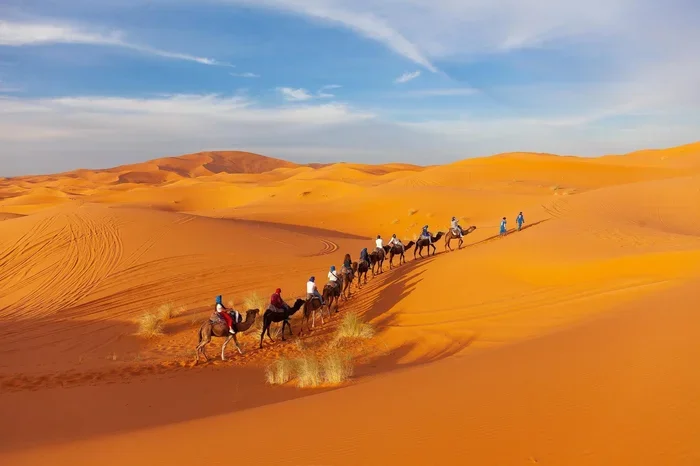
Featured image for Marrakech Sahara desert camels
Image source: media.tacdn.com
An 8 day tour from Marrakech to Sahara Desert is the perfect way to experience Morocco’s diverse landscapes, ancient medinas, and the magical Erg Chebbi dunes. This extended itinerary allows travelers to journey through the Atlas Mountains, explore Berber villages, and visit iconic cities like Aït Benhaddou and Ouarzazate at a relaxed pace. With comfortable riads, camel treks, and cultural encounters along the way, this 8-day route offers the most complete Saharan adventure from Marrakech.
Marrakech is loud, colorful, and full of energy. The moment you step into its medina, the smell of grilled spices, fresh mint, and donkey carts fills the air. But beyond the busy souks and humming squares, the Sahara Desert waits, silent, golden, and impossibly vast. Getting there is half the adventure.
An 8 day tour from Marrakech to Sahara Desert gives you just enough time to slow down and truly experience the country. You are not racing across Morocco on a tight schedule. Instead, you are watching snow melt on the Atlas Mountains in the morning and counting stars over the dunes at night. Eight days is the sweet spot where every kilometer feels meaningful.
This guide walks you through everything you need to know. From routes and costs to packing tips and the best months to travel, you will find practical, honest advice. Think of it as your friendly travel companion who has already made the trip and wants to make sure yours is even better.
Key Takeaways
- Duration Sweet Spot: 8 days is the ideal length to travel from Marrakech to the Sahara Desert, allowing time for scenic stops, cultural immersion, and rest without feeling rushed.
- Route Diversity: The tour passes through the High Atlas Mountains, UNESCO World Heritage Sites, Todra Gorge, and the towering Erg Chebbi dunes.
- Camel Trekking Included: A traditional camel ride to a Berber desert camp is a signature experience on this itinerary.
- Best Travel Seasons: Spring (March–May) and autumn (September–November) offer the most comfortable weather for desert travel.
- Budget-Friendly Option: Compared to longer 10–14 day tours, an 8-day trip balances cost and experience, typically ranging from $800–$1,500 per person.
- Cultural Encounters: Travelers visit Berber villages, kasbahs, and local souks, gaining authentic insight into Moroccan life.
- Highly Shareable Experience: Sahara sunsets, star-filled skies, and cinematic landscapes make this one of the most photographed trips in Africa.
📑 Table of Contents
- 1. Who Should Take an 8 Day Tour from Marrakech to Sahara Desert?
- 2. What Does an 8 Day Marrakech to Sahara Itinerary Look Like?
- 3. Where Does the Tour Go? Key Stops and Highlights
- 4. When Is the Best Time to Take This Tour?
- 5. Why Choose an 8 Day Tour Instead of a Shorter or Longer Option?
- 6. How to Plan and Book Your 8 Day Marrakech to Sahara Tour
- 7. What Makes the Sahara Desert Experience So Special?
- Conclusion
1. Who Should Take an 8 Day Tour from Marrakech to Sahara Desert?
Let us start with the basics. This trip is for almost everyone, but it suits certain travelers especially well.
First-Time Visitors to Morocco
If Morocco is new to you, this route is the best classroom. In eight days, you will see the imperial cities, mountain passes, ancient kasbahs, and finally, the endless desert. It is like watching a documentary come to life, except you are standing in the middle of it.
Photography Lovers
Morocco is a photographer’s dream. Every turn reveals a new color, shadow, or texture. The blue streets of Chefchaouen are not on this route, but you will still find plenty of magic. Terracotta villages, golden dunes, and silver rivers give you endless material for stunning shots.
Families and Couples
Traveling with kids or a partner? Eight days is comfortable. You are not stuck in a vehicle for hours on end, and the desert camp experience feels like a small adventure story all on its own. Many tour operators offer family-friendly options with shorter drives and more stops.
Solo Travelers
Morocco is one of the safest countries in Africa for solo travel, especially on organized tours. Joining a small group tour is a great way to meet people from around the world. By day three, you are already swapping stories over mint tea like old friends.
Adventure Seekers
Camel trekking, sandboarding, hiking through gorges. If you love the outdoors, this tour delivers. The Sahara is not just a place. It is an experience that makes your heart beat a little faster and your mind go very quiet at the same time.
2. What Does an 8 Day Marrakech to Sahara Itinerary Look Like?
Here is a typical day-by-day breakdown. Keep in mind that exact routes vary, but the highlights stay the same.
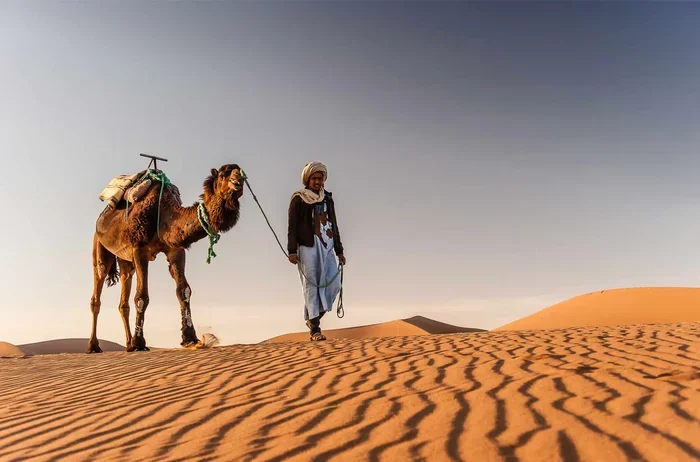
Visual guide about Marrakech Sahara desert camels
Image source: moroccanjourneys.com
Day 1: Marrakech Exploration
Start in Marrakech. Visit Jemaa el-Fnaa square, the Koutoubia Mosque, and the colorful Bahia Palace. Get lost in the medina on purpose. The winding alleys hide tiny shops selling lanterns, leather slippers, and argan oil. End the day with tagine on a rooftop terrace overlooking the souk.
Day 2: Crossing the High Atlas Mountains
Leave the city behind and drive south. The Tizi n’Tichka pass rises to over 2,200 meters. The road winds through Berber villages, terraced fields, and dramatic cliffs. Stop at a local argan oil cooperative where women press nuts by hand. Did you know that argan trees only grow in southwestern Morocco? They are sometimes called “the tree of life” because every part is useful.
Day 3: Aït Benhaddou and Ouarzazate
Visit the UNESCO-listed Aït Benhaddou, a centuries-old earthen village that has appeared in movies like Gladiator and Game of Thrones. Then continue to Ouarzazate, known as the “Hollywood of Africa” because of its famous film studios. Stay overnight in a traditional kasbah hotel.
Day 4: Todra Gorge and the Road to the Dunes
Travel east through the Rose Valley and the stunning Todra Gorge, where canyon walls rise 400 meters high. In the afternoon, head toward Merzouga and Erg Chebbi. By evening, you will see the dunes for the first time, glowing orange in the setting sun. It is a moment that makes every traveler’s jaw drop.
Day 5: Sahara Desert Experience
This is the big day. Ride a camel into the dunes. The rhythm of the camel’s walk feels almost like sailing on sand. Reach your Berber camp before sunset, climb a high dune, and watch the sky change color. After dinner, sit around a fire and listen to traditional drums under a sky full of stars. You will see more stars than you have ever seen in your life. The Sahara has some of the clearest skies on Earth, with light pollution almost zero.
Day 6: Sunrise and Return to the Dunes Edge
Wake up early for sunrise. There is no alarm clock needed. The sky simply glows and the dunes turn pink. After breakfast, ride your camel back or take a 4×4 option. Spend the day relaxing at a desert hotel with a pool.
Day 7: Skoura and the Valley of a Thousand Kasbahs
Head west through palm-filled oases. The Skoura oasis is a hidden gem with crumbling kasbahs surrounded by date palms. Continue to the Dades Valley, famous for its dramatic rock formations sometimes called “monkey fingers.”
Day 8: Return to Marrakech
Drive back through the Atlas Mountains, with one last stop in a Berber village. Arrive in Marrakech by late afternoon, just in time to enjoy a final dinner in the medina before your trip ends.
3. Where Does the Tour Go? Key Stops and Highlights
Understanding the geography helps you appreciate the journey. Here are the major stops on the route.
The High Atlas Mountains
The natural barrier between Marrakech and the Sahara. Expect sharp turns, mountain villages, and snow-capped peaks depending on the season. The highest pass, Tizi n’Tichka, offers panoramic views that look like paintings.
Aït Benhaddou
A fortified village made of mud bricks, listed by UNESCO in 1987. It is one of the most recognizable landmarks in Morocco and a favorite filming location for Hollywood blockbusters.
Ouarzazate
A desert city that doubles as a movie set. The Atlas Film Studios have produced legendary films here since the 1980s. Even if you are not a movie buff, the kasbahs and old streets are worth exploring.
Todra Gorge
A 600-meter deep canyon with walls so close you can almost touch both sides. Rock climbers love it. Even if you do not climb, walking through the gorge is an unforgettable experience.
Erg Chebbi
The star of the show. These dunes can reach 150 meters high, the tallest in Morocco. The fine, golden sand makes them a natural wonder. You will not find Erg Chebbi anywhere else in the country, and it is the main reason people book this 8-day tour.
Merzouga and Hassi Labyad
Small desert towns that serve as gateways to the dunes. Most desert camps are located within 30–60 minutes of Merzouga.
4. When Is the Best Time to Take This Tour?
Timing matters. The Sahara has extreme temperatures, so choosing the right season makes a huge difference.
Spring (March to May)
Warm days, cool nights, and blooming wildflowers in the valleys. Temperatures range from 20°C to 30°C in the desert, perfect for camel treks. This is widely considered the best season for desert travel.
Autumn (September to November)
Similar to spring, with comfortable temperatures and clear skies. October is especially popular because the heat of summer is gone but winter has not yet arrived.
Summer (June to August)
Can be brutally hot, with desert temperatures exceeding 45°C. Some travelers still come during summer, but it is not ideal. If you must travel in summer, book a tour with air-conditioned vehicles and shorter midday drives.
Winter (December to February)
Cold desert nights, sometimes near freezing, but sunny days. The Atlas Mountains may have snow, which makes for beautiful scenery. Desert camps provide blankets, but pack warm layers just in case.
Did You Know?
The Sahara Desert covers an area of 9.2 million square kilometers, making it the largest hot desert in the world. Yet, surprisingly, only about 25% of it is sand. The rest is mostly rocky plains and mountains.
5. Why Choose an 8 Day Tour Instead of a Shorter or Longer Option?
Morocco offers tours of every length, from 3-day quick getaways to 14-day grand adventures. So why 8 days?
More Comfortable Pacing
Three-day tours rush you to the desert and back. They feel more like a checklist than a journey. Five-day tours are better but still tight. Eight days gives you breathing room. You can spend a few hours wandering a medina, take a nap in a kasbah garden, or sit quietly watching shepherds move their goats through the mountains.
Better Cultural Immersion
Longer tours allow you to actually talk to people. A short stop at a Berber home might feel rushed on a 3-day trip, but on an 8-day tour, you can share mint tea, hear local stories, and learn a few words of Amazigh.
Optimal Cost-to-Experience Ratio
According to travel industry data, the average cost of an 8-day private tour from Marrakech to the Sahara ranges from $800 to $1,500 per person, depending on accommodation levels. This is only slightly more than a 5-day tour but includes far more experiences.
Scenic Variety
With 8 days, you can take alternate routes in and out of the desert. Most operators use different roads for going and returning, so you see new landscapes each day. This avoids the feeling of “going back the same way.”
Perfect for First-Time Visitors
Statistically, over 70% of first-time visitors to Morocco choose tours between 7 and 10 days. It is long enough to see the highlights but short enough to fit within a typical vacation allowance.
6. How to Plan and Book Your 8 Day Marrakech to Sahara Tour
Planning is simple if you know what to look for.
Choose Between Private and Group Tours
Private tours offer flexibility, personalized stops, and your own driver-guide. They are great for families, couples, or anyone who values privacy. Small group tours are budget-friendly and social, with 4–12 travelers sharing a minivan.
Decide Your Accommodation Style
Options range from standard riads to luxury desert camps with private bathrooms and king-sized beds. Luxury desert camps in Erg Chebbi can cost $200–$400 per night but offer glamping experiences under the stars. Mid-range options provide comfort without the premium price.
Book Through Reputable Operators
Look for companies with verified reviews on platforms like TripAdvisor, GetYourGuide, or Viator. Local Moroccan agencies often provide the best value, while international companies may offer more polished service. Always check what is included. Meals, transport, accommodation, and camel trek should be clearly listed.
Pack Smart
Here is a simple packing list for the trip:
- Light layers for warm days and cool desert nights
- Comfortable walking shoes and sandals
- Scarf or shemagh for sand and sun protection
- Camera, power bank, and extra memory cards
- Reusable water bottle
- Sunhat, sunglasses, and sunscreen
- Headlamp for the desert camp at night
Budget Tips
Tipping is customary in Morocco. Budget around $5–$10 per day for your driver-guide and $5–$10 for camel handlers and camp staff. Carry small Moroccan dirhams in cash, as rural areas rarely accept cards.
Health and Safety
Morocco is generally very safe for tourists. Drink bottled water, avoid tap water, and carry basic medication. Travel insurance is highly recommended, especially for activities like camel trekking and sandboarding.
7. What Makes the Sahara Desert Experience So Special?
You have probably seen Sahara photos online. Golden dunes, camel silhouettes, and orange sunsets. But nothing prepares you for the real thing.
The Silence
Out in the dunes, there is no traffic, no phones, no chatter. Just wind. Real silence feels almost uncomfortable at first, like a sound you forgot existed. After a few minutes, your mind relaxes in a way it cannot in daily life.
The Sky
Without light pollution, the Milky Way stretches across the sky like spilled milk. You can see thousands of stars, shooting stars, and sometimes even the International Space Station passing silently overhead.
The Culture
Berber nomads have lived in the Sahara for thousands of years. Visiting their camp is not a theme park experience. It is a genuine cultural exchange where you share food, music, and stories around a fire.
The Sense of Scale
Standing on top of a 150-meter dune makes you feel small, but in a good way. It puts daily worries into perspective. Many travelers describe their desert night as a life-changing moment, and it is easy to understand why.
Did You Know?
The word “Sahara” comes from the Arabic word for desert, sahra. Yet, surprisingly, the Sahara was not always a desert. About 10,000 years ago, it was a green landscape with lakes, rivers, and forests.
Conclusion
An 8 day tour from Marrakech to Sahara Desert is more than a vacation. It is a journey through time, culture, and breathtaking nature. You will cross mountains, walk through ancient kasbahs, ride camels into golden dunes, and sleep under a sky full of stars.
This itinerary works because it balances adventure with comfort, structure with freedom. You are not just checking off a list. You are living the experience, day by day, at the right pace.
Whether you are a solo backpacker, a couple on a romantic getaway, or a family looking for a meaningful trip together, this 8-day route delivers. Book with a trusted operator, pack light, and bring an open mind. Morocco will do the rest.
One day soon, you will be sitting at home, scrolling through your photos, smiling at that sunset over Erg Chebbi. And you will think, “I am so glad I took that trip.”
Frequently Asked Questions
How long does it take to travel from Marrakech to the Sahara Desert?
The drive from Marrakech to the Sahara Desert (Merzouga) takes about 9 to 10 hours if done in one stretch, but most tours spread the journey over two to three days to include scenic stops and prevent fatigue. The 8-day itinerary makes the road trip comfortable and enjoyable.
Is 8 days enough to visit the Sahara from Marrakech?
Yes, 8 days is widely considered the ideal length for a Marrakech to Sahara tour. It provides enough time to visit key landmarks like Aït Benhaddou, Todra Gorge, and Erg Chebbi, while still allowing relaxed travel and meaningful cultural experiences along the way.
What is included in a typical 8-day Marrakech to Sahara tour?
Most 8-day tours include private transport with a driver-guide, accommodation in riads and hotels, daily breakfast and dinner, a camel trek to a desert camp, sandboarding, and entry fees to major attractions. Always confirm inclusions before booking.
What is the best time of year for a Sahara Desert tour?
The best months are March, April, May, September, October, and November. During these months, desert temperatures are pleasant, ranging between 20°C and 30°C during the day, and cool at night. Summer months can be excessively hot, while winter nights are cold.
Do I need a visa for Morocco?
Citizens of over 60 countries, including the United States, Canada, the UK, and most EU nations, can enter Morocco visa-free for stays up to 90 days. Always check with your local Moroccan embassy for the latest entry requirements before traveling.
Is it safe to travel to the Sahara Desert in Morocco?
Yes, the Sahara Desert regions near Merzouga and Erg Chebbi are considered very safe for tourists. Local guides and tour operators follow strict safety standards. Traveling with a reputable tour company adds an extra layer of security and convenience.