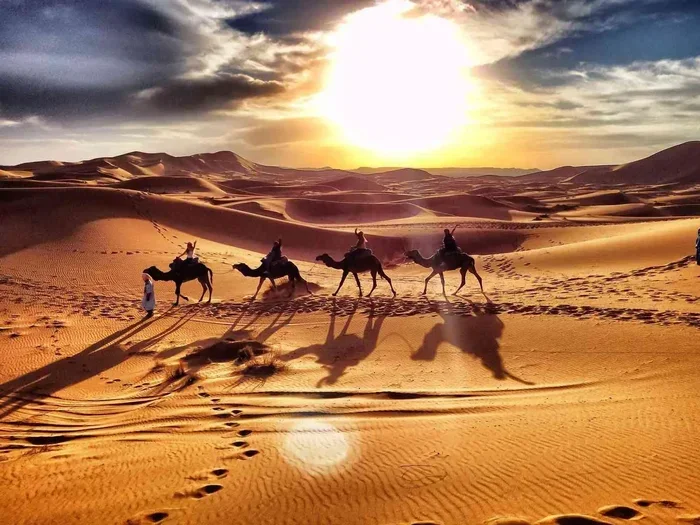
Featured image for Marrakech Sahara desert camels
Image source: marrakech-desert-trips.com
An 11-day tour from Marrakech to the Sahara Desert offers the most complete Moroccan adventure, combining imperial cities, Atlas Mountain passes, Berber culture, and unforgettable camel treks into the Erg Chebbi dunes. This carefully designed itinerary balances cultural sightseeing with authentic desert experiences, giving travelers time to truly absorb the landscapes and traditions of southern Morocco. From the vibrant souks of Marrakech to the silent golden dunes of Merzouga, every day reveals a new chapter of Morocco’s rich story.
Imagine waking up before sunrise in the Sahara Desert, where the sky stretches endlessly and the golden dunes of Erg Chebbi rise like ocean waves frozen in time. Picture yourself riding a camel across ancient trade routes that caravans have followed for nearly a thousand years. This is not a dream. This is what awaits you on an 11-day tour from Marrakech to the Sahara Desert.
Morocco sits at the crossroads of Africa, Europe, and the Middle East, and few tours capture this geographical crossroads as completely as an 11-day Marrakech to Sahara Desert itinerary. You will journey from the imperial cities of the north to the vast emptiness of the world’s largest hot desert. Along the way, you will walk through medieval medinas, sleep in Berber villages tucked into the Atlas Mountains, and watch the sunset paint the desert sky in shades of orange, pink, and gold.
Did you know that the Sahara Desert covers an area roughly the size of the United States? Yet most travelers only see a tiny fraction of it. An 11-day tour gives you enough time to experience the desert meaningfully rather than rushing through it. This comprehensive guide will walk you through everything you need to know about this incredible journey, from what to expect each day to practical tips that will make your adventure smoother and more enjoyable.
Key Takeaways
- Duration and Distance: An 11-day itinerary covers roughly 1,800-2,000 kilometers, allowing deeper exploration than shorter tours.
- Best Travel Seasons: October through April offers the most comfortable weather, avoiding the extreme summer heat of the Sahara.
- Cultural Highlights: The tour includes UNESCO World Heritage sites like Ait Ben Haddou and the historic medina of Fes.
- Desert Experience: Erg Chebbi’s dunes reach up to 150 meters tall, providing the iconic Sahara experience travelers seek.
- Physical Requirements: The tour is suitable for most fitness levels, though camel rides require basic mobility.
- Budget Considerations: Mid-range tours typically cost between €800-1,500 per person, including accommodation and meals.
- Group vs. Private: Small groups (4-12 people) and private options both offer distinct advantages depending on your travel style.
📑 Table of Contents
- Who Is This Tour For and Why Choose 11 Days?
- What Does the 11-Day Itinerary Include?
- Where Does the Tour Take You?
- When Is the Best Time to Take This Tour?
- Why This Tour Offers Authentic Cultural Experiences
- How to Prepare for Your 11-Day Adventure
- Making the Most of Your Journey
- Final Thoughts: Why This Tour Changes People
Who Is This Tour For and Why Choose 11 Days?
The 11-day Marrakech to Sahara Desert tour is designed for travelers who want more than a surface-level experience of Morocco. If you are the kind of person who enjoys slowing down to absorb a place rather than racing from one photo stop to the next, this itinerary is for you.
Who Should Consider This Tour
This extended tour appeals to several types of travelers. First-time visitors to Morocco benefit greatly from the slower pace, which helps prevent “cultural shock fatigue” that often hits tourists on shorter trips. Senior travelers appreciate the manageable daily distances and comfortable accommodations. Families with teenagers find the camel rides and desert camping particularly memorable. Photographers and nature lovers get ample time to capture the changing landscapes.
Solo travelers also thrive on this itinerary. Group tours naturally bring together like-minded adventurers, and many lasting friendships form over shared experiences like climbing dunes or eating tagine together under desert stars.
Why 11 Days Instead of Shorter Options
Think of the difference between tasting one spoonful of soup and enjoying a full bowl. A 3-day desert tour gives you a taste. An 11-day tour gives you the full meal. The extra days allow you to explore places that shorter tours simply skip, such as the Todra Gorge, the Dades Valley, and the cultural heart of Fes.
Did you know that Morocco has nine UNESCO World Heritage Sites? The 11-day itinerary typically visits four or five of them, including the Medina of Fes, Ait Ben Haddou, and the Majorelle Garden. Shorter tours usually only manage one or two.
More importantly, the longer duration reduces travel fatigue. Instead of spending 8 hours on a bus one day and 7 hours the next, you can settle into each region and explore at a comfortable pace. This makes the journey more enjoyable for everyone, especially those traveling with children or older family members.
What Does the 11-Day Itinerary Include?
A well-designed 11-day tour from Marrakech to the Sahara Desert follows a logical route that minimizes backtracking while maximizing variety. Most tours start in Marrakech and either loop back or end in Fes, the cultural capital of Morocco.
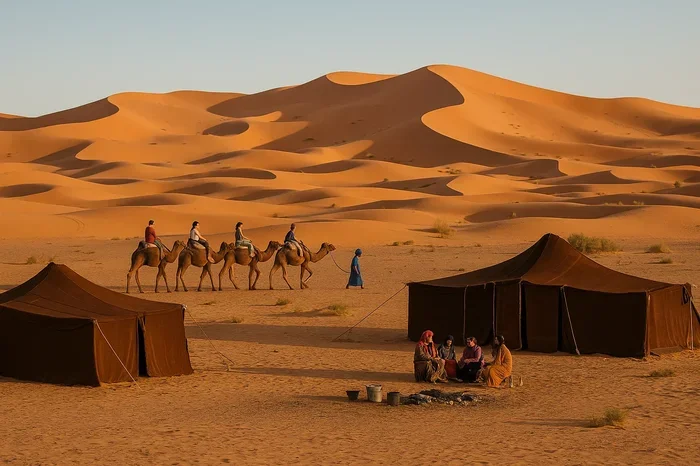
Visual guide about Marrakech Sahara desert camels
Image source: planningtomorocco.com
Typical Route Overview
The journey generally flows like this: Marrakech to the Atlas Mountains and Ait Ben Haddou, then to Ouarzazate (the “Gateway to the Sahara”), through the Dades Valley and Todra Gorge, into the desert at Merzouga, north to the Ziz Valley and Midelt, through the Middle Atlas cedar forests, and finally to Fes. Some itineraries reverse this route or include variations through Essaouira or the coastal regions.
Daily Highlights You Can Expect
Day 1 usually begins with exploration of Marrakech itself, including the famous Jemaa el-Fnaa square, the Koutoubia Mosque, and the labyrinthine souks. Day 2 takes you over the Tizi n’Tichka pass in the High Atlas Mountains, reaching 2,260 meters above sea level. Day 3 explores Ouarzazate and the kasbahs of Ait Ben Haddou, famous as filming locations for movies like “Gladiator” and “Game of Thrones.”
Day 4 brings you through the Rose Valley and into the Dades Valley, where dramatic rock formations create a landscape unlike anywhere else in Morocco. Day 5 features the spectacular Todra Gorge, where canyon walls rise 400 meters on either side of a narrow river. Day 6 is the desert highlight, with a camel trek into the Erg Chebbi dunes and an overnight stay in a desert camp.
Did you know that some sand dunes in Erg Chebbi reach heights of 150 meters? That is taller than the Statue of Liberty without its pedestal. Standing on top of one of these dunes at sunrise is an experience that stays with travelers forever.
Day 7 typically allows time to explore the desert region further, perhaps visiting the Khamlia village known for its Gnawa music traditions. Day 8 begins the journey north through the Ziz Valley and into the Middle Atlas Mountains. Day 9 features the cedar forests near Ifrane, sometimes called the “Switzerland of Morocco,” where wild Barbary macaques live. Day 10 explores the medieval medina of Fes, with its famous tanneries and Al-Qarawiyyin University, considered the oldest continuously operating university in the world. Day 11 might include departure or additional exploration depending on your package.
Accommodations Throughout the Journey
Accommodations range from traditional riads (restored Moroccan houses with interior gardens) in cities to simple but comfortable hotels in smaller towns. The desert camp experience is the highlight for many travelers. Luxury camps offer private tents with ensuite bathrooms, while standard camps provide shared facilities. Both options include traditional Berber music around a campfire and meals cooked over open flames.
Where Does the Tour Take You?
The geographical scope of this tour is one of its greatest strengths. You will traverse four distinct geographical regions of Morocco, each with its own character and climate.
The Imperial Cities
Marrakech and Fes are the crown jewels of Morocco’s four imperial cities (the others being Meknes and Rabat). Marrakech, founded in 1062, is known as the “Red City” because of its distinctive red sandstone buildings. Fes, founded in 789 AD, houses the world’s oldest university and the most complete medieval city in the Arab world. Walking through the Fes medina feels like stepping back 800 years in time.
The Atlas Mountains
The Atlas Mountains divide Morocco into distinct climate zones and have protected Berber communities for centuries. The High Atlas contains Mount Toubkal, North Africa’s highest peak at 4,167 meters. While you will not climb it on this tour, you will cross through its lower passes and valleys, where traditional Berber villages perch on hillsides exactly as they have for generations.
Think of the Atlas Mountains as Morocco’s spine, holding together the fertile coastal regions to the north and the vast Sahara to the south. Without this mountain barrier, the desert would have swallowed the country’s north long ago.
The Desert Frontier
The transition from mountains to desert is dramatic and unforgettable. Within just a few hours, you can leave green valleys and snow-capped peaks behind and enter a landscape of bare rock, scattered oases, and eventually, sand. The pre-Saharan regions like the Dades Valley and Todra Gorge serve as appetizers before the main course of the Erg Chebbi dunes.
When Is the Best Time to Take This Tour?
Timing your tour correctly can make the difference between an excellent experience and an exceptional one. Morocco’s climate varies dramatically by region and season.
Optimal Travel Months
The best time for an 11-day Marrakech to Sahara Desert tour is from October to April. During these months, daytime temperatures in the desert range from comfortable to pleasantly warm (20-28°C), while nights can be cool but rarely freezing. This temperature range makes activities like camel riding and dune climbing enjoyable rather than exhausting.
March and April are particularly special because the desert occasionally blooms with wildflowers after winter rains. This phenomenon, sometimes called the “desert bloom,” transforms the usually barren landscape into carpets of color.
Seasons to Avoid
Summer months (June through August) bring extreme heat to the desert region, with temperatures often exceeding 45°C. Sandstorms are also more common during this period. While the cities remain relatively comfortable, the desert portions of the tour can become genuinely dangerous, especially for elderly travelers or those with health conditions.
Winter (December-February) brings cold nights in the desert, sometimes dropping below freezing. However, the dramatic temperature swings and clearer skies create stunning photographic opportunities. Just pack warm layers for early morning desert activities.
Ramadan Considerations
If your tour coincides with Ramadan, the Islamic holy month of fasting, expect some schedule adjustments. Many restaurants close during daylight hours, and the pace of life slows considerably. However, the evening iftar celebrations are magical, and you will experience authentic Moroccan culture in a way that is impossible during other times of year.
Why This Tour Offers Authentic Cultural Experiences
What sets a quality 11-day tour apart from rushed alternatives is the depth of cultural immersion. You will not just see Morocco from a bus window. You will live it, however briefly.
Meeting Berber Communities
The Berber people (who call themselves Amazigh, meaning “free people”) are the indigenous inhabitants of North Africa. Their culture predates the Arab conquest by thousands of years. Along your route, you will visit Berber villages, share mint tea with local families, and learn about traditions that have survived centuries of outside influence.
Think of Berber hospitality like an unwritten law: a guest in your home is a gift from the universe. This cultural value means you will often be welcomed with warmth and curiosity wherever you go, especially in smaller villages away from the main tourist routes.
Craftsmanship and Markets
Morocco’s souks (markets) are living museums of craftsmanship. The 11-day itinerary includes visits to markets where artisans practice trades passed down through generations. Watch carpet weavers create intricate patterns knot by knot. Observe metalworkers hammering lanterns by hand. See leather tanners processing hides using methods unchanged since medieval times.
Did you know that the Fes tanneries process leather using pigeon droppings and cow urine, just as they did 800 years ago? While the smell is intense, the resulting leather is among the finest in the world, and watching the process is unforgettable.
Food as Cultural Connection
Moroccan cuisine tells the story of the country’s diverse influences. Tagines (slow-cooked stews named after the conical clay pots they cook in) blend Berber, Arab, Andalusian, and French culinary traditions. Couscous, traditionally eaten on Fridays after mosque, represents communal sharing. Mint tea, Morocco’s national drink, symbolizes friendship and hospitality.
On this tour, you will eat in family-run restaurants, learn to prepare tagines in cooking classes, and share meals with fellow travelers. Food becomes a gateway to understanding culture that no museum visit can match.
How to Prepare for Your 11-Day Adventure
Proper preparation transforms a good trip into a great one. Here are practical tips drawn from experienced travelers and tour operators.
What to Pack
Pack layers, not thick clothes. Desert temperatures swing dramatically between day and night, sometimes by 25°C or more. Light, breathable fabrics work best for daytime, while a warm jacket or sweater is essential for desert nights and mountain passes.
Essential items include: comfortable walking shoes (broken in before your trip), a scarf or shemagh for sand and sun protection, sunscreen with high SPF, sunglasses, a reusable water bottle, basic medications, and a universal power adapter. If traveling during cooler months, pack thermal underwear for desert camping nights.
Leave space in your suitcase for purchases. Moroccan carpets, leather goods, spices, and ceramics are world-famous, and you will likely want to bring some home.
Health and Safety Considerations
Morocco is generally safe for tourists, with low violent crime rates and welcoming local populations. However, common-sense precautions apply. Drink bottled or filtered water rather than tap water to avoid stomach issues. Carry hand sanitizer and use it before meals. Keep valuables secure, especially in crowded souks where pickpockets occasionally operate.
The desert environment requires special attention. Stay hydrated even when you do not feel thirsty. Apply sunscreen frequently, as desert sun reflects intensely off sand. Listen to your guide during camel rides, as the animals can be unpredictable around sudden noises.
Choosing Your Tour Operator
Not all tour operators are created equal. Research carefully before booking. Look for companies with strong reviews on independent platforms like TripAdvisor and Google. Verify that they are licensed by the Moroccan Ministry of Tourism. Ask about group sizes, as smaller groups (8-12 people) generally offer better experiences than large buses of 20+ travelers.
Did you know that Morocco has over 2,000 registered tour operators, but only a fraction offer truly authentic experiences? Choosing the right company can elevate your trip from a standard tour to a transformative journey.
Read recent reviews specifically. The quality of guides varies enormously. A knowledgeable guide who speaks excellent English, understands local culture, and genuinely cares about your experience is worth more than a cheaper price tag. Don’t hesitate to ask operators direct questions about their guides’ experience and training.
Budget and Value
For an 11-day tour from Marrakech to the Sahara Desert, expect to pay between €800 and €1,500 per person for mid-range options. This typically includes accommodation, most meals, transportation, guide services, and camel trek. Luxury tours can run €2,000-3,500 or more, while budget options may dip below €700 with more basic accommodations.
Consider what matters most to you. If comfortable beds and private bathrooms are priorities, invest in mid-range or luxury. If cultural experiences and meeting locals matter more, even budget tours can be excellent. Always clarify exactly what is included before booking to avoid surprises.
Making the Most of Your Journey
Beyond logistics, the right mindset makes an 11-day tour truly memorable. Approach each day with curiosity rather than expectation. Things will not always go according to plan in Morocco. Roads may close, weather may shift, schedules may change. Flexibility turns potential frustrations into adventures.
Connect with Fellow Travelers
Group tours create instant communities. Take time to know your fellow travelers. Share meals together, exchange stories, and learn from each other’s perspectives. Many travelers report that the friendships formed on tour became among the most meaningful aspects of their trip.
Engage with Locals
Learn a few words of Arabic or Berber. Even basic greetings like “Salam alaikum” (peace be upon you) and “Shukran” (thank you) open doors and warm hearts. Ask questions about customs you observe. Show genuine interest in people’s lives rather than treating them as photo opportunities.
Capture Memories Mindfully
Take photos, but also put the camera down sometimes. Some moments are best experienced fully present rather than through a screen. The taste of mint tea in a mountain village, the silence of the desert at night, the call to prayer echoing across a medina. These sensory experiences cannot be captured but will stay with you forever.
Final Thoughts: Why This Tour Changes People
Travel has a way of revealing who we are when stripped of our daily routines. An 11-day journey from Marrakech to the Sahara Desert is more than a vacation. It is a passage through landscapes that have inspired poets, traders, and adventurers for millennia.
You will return home with more than photographs. You will carry stories of conversations with Berber shopkeepers, the taste of freshly baked bread in a desert camp, and the profound silence of the Sahara under a canopy of stars. You will have crossed mountain passes, walked ancient medinas, and ridden camels into the sunset.
Morocco has a way of staying with travelers long after they leave. The colors, sounds, smells, and warmth of its people create impressions that deepen with time rather than fading. An 11-day tour gives this country the space to work its magic on you.
If you have been dreaming of Morocco, of vast deserts and ancient cities, of mountain valleys and starlit nights, this is your invitation. The 11-day Marrakech to Sahara Desert tour awaits. Pack your sense of adventure, leave your expectations behind, and prepare for one of the most rewarding journeys of your life.
Book your tour, prepare thoughtfully, and embrace every moment. The Sahara has been waiting for you for thousands of years.
Frequently Asked Questions
How physically demanding is the 11-day Marrakech to Sahara Desert tour?
The tour is suitable for most fitness levels, requiring only basic mobility for activities like walking in medinas and riding camels. The camel trek into the desert typically lasts 1-2 hours, and optional dune climbs can be as challenging or easy as you choose.
What is the best month to visit the Sahara Desert from Marrakech?
March, April, October, and November offer the most pleasant temperatures for desert travel, ranging from 20-28°C during the day and cooler nights. These shoulder seasons avoid both the extreme summer heat and the coldest winter nights.
Is it safe for solo travelers to join this tour?
Yes, Morocco is generally very safe for solo travelers, and group tours provide additional security and social connection. Reputable tour operators maintain strict safety standards, and Moroccan culture treats guests with exceptional hospitality.
What type of accommodation should I expect in the desert camp?
Desert camps range from basic shared tent accommodations to luxury private tents with ensuite bathrooms and proper beds. Most include traditional Berber meals, music around a campfire, and shared bathroom facilities in standard options, or private facilities in luxury upgrades.
Can I customize the 11-day itinerary?
Many tour operators offer customizable private tours where you can adjust the route, accommodation level, and activities. Group tours typically follow fixed itineraries but may allow some flexibility for optional excursions.
Do I need a visa to travel to Morocco?
Most Western nationalities, including EU citizens, US, UK, Canadian, and Australian passport holders, do not need a visa for stays under 90 days. However, your passport should be valid for at least six months beyond your entry date. Always check current requirements with your local Moroccan embassy before traveling.