
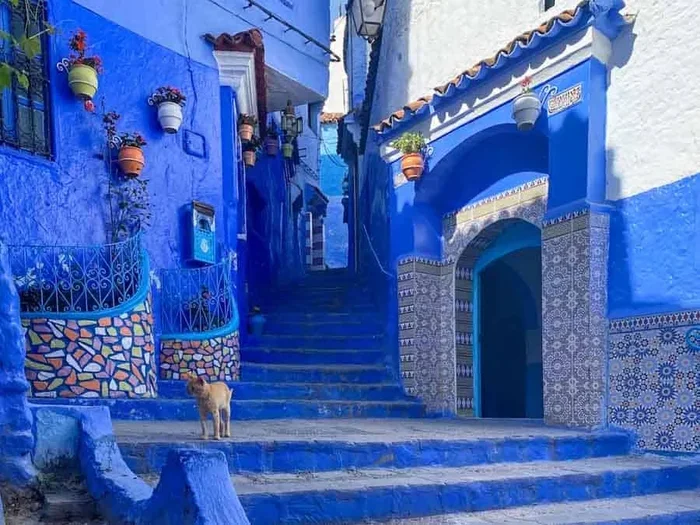
Featured image for Marrakech to Chefchaouen blue city
Image source: travelnotesandbeyond.com
A 1-day tour from Marrakech to Chefchaouen covers roughly 745 km, which is too far for a comfortable round trip in 24 hours. Most travelers choose a 2-day tour instead, with an overnight stop in Fes or Casablanca. The journey passes through stunning landscapes, including the Middle Atlas Mountains and the Rif Mountains. If you’re short on time, a private car or guided tour offers the most flexibility and comfort.
Picture this: you’re standing in the vibrant, sun-drenched chaos of Marrakech, with its bustling souks, snake charmers, and the call to prayer echoing across the medina. Just a few hundred kilometers north lies a completely different world, a town painted in every shade of blue you can imagine, nestled in the cool, green mountains of northern Morocco.
Chefchaouen, often called the “Blue City” or “Blue Pearl,” has become one of the most photographed spots in all of North Africa. Its Instagram-famous blue-washed streets, relaxed vibe, and stunning mountain backdrop draw travelers from every corner of the globe. But here’s the thing most people don’t realize until they’re already booking: getting there from Marrakech is no small feat.
That’s exactly why we’ve created this guide. Whether you’re dreaming of blue-painted doorways or you’re actively planning a Moroccan adventure, we’ll walk you through everything you need to know about traveling from Marrakech to Chefchaouen, including the honest truth about whether a 1-day tour is even realistic (spoiler: it’s a stretch!), what your options actually look like, and how to make the most of your journey.
Key Takeaways
- Distance Reality: Chefchaouen is about 745 km from Marrakech, making a true 1-day round trip extremely challenging (around 15+ hours of driving).
- Best Alternative: A 2-day tour with an overnight stop is the most popular and practical way to experience Chefchaouen from Marrakech.
- Scenic Route Highlights: The drive crosses the Middle Atlas and Rif Mountains, offering breathtaking views, cedar forests, and Berber villages.
- Travel Options: Private drivers, guided group tours, and public transport (train + bus) are the three main options, each with different price points.
- Best Time to Visit: Spring (March-May) and autumn (September-November) offer mild weather, while summer can be uncomfortably hot.
- Photo Paradise: Chefchaouen’s blue-painted streets make it one of the most Instagram-worthy destinations in Morocco.
- Cultural Etiquette: Modest dress and respectful photography habits are essential in this conservative region of northern Morocco.
📑 Table of Contents
- Who, What, Where, When, and Why: Understanding the Marrakech to Chefchaouen Journey
- The Honest Truth About 1-Day Tours from Marrakech to Chefchaouen
- Planning Your Tour: Routes, Options, and Logistics
- What to See and Do in Chefchaouen
- Essential Tips for a Smooth Journey
- Sample Itineraries: Making Your Trip Work
- Final Thoughts: Is This Trip Worth It?
Who, What, Where, When, and Why: Understanding the Marrakech to Chefchaouen Journey
Let’s break this down using the classic five W’s, because understanding the basics will save you a lot of headaches later.
Who Should Take This Trip?
This journey is perfect for travelers who want to experience two completely different sides of Morocco in one trip. It’s ideal for photographers, culture lovers, nature enthusiasts, and anyone with a flexible schedule. If you’re the kind of person who likes ticking multiple destinations off your bucket list, this trip is calling your name.
What Exactly Is a Marrakech to Chefchaouen Tour?
It’s a guided or self-organized journey that takes you from the imperial city of Marrakech in central-southern Morocco to the picturesque blue mountain town of Chefchaouen in the country’s northwest. Think of it like driving from Rome to a hidden Alpine village, but with desert-to-mountain scenery thrown in for good measure.
Where Is Chefchaouen?
Chefchaouen sits in the Rif Mountains of northwest Morocco, near the Mediterranean coast. It’s about 745 kilometers (463 miles) from Marrakech as the crow flies, but the actual driving distance is closer to 800-850 km (500-530 miles) depending on your route. To put that in perspective, that’s roughly the distance from New York City to Detroit, or from London to Edinburgh and back.
When Is the Best Time to Go?
The best months are March through May and September through November. Spring brings wildflowers and mild temperatures, while autumn offers clear skies and comfortable hiking weather. Summer (June-August) can hit 35-40°C (95-104°F) in the lowlands, while winter (December-February) brings snow to Chefchaouen, which is actually magical but can make roads tricky.
Did You Know? Chefchaouen only got reliable paved road access in the 1970s, and it wasn’t until 2016 that Morocco removed visa requirements for many nationalities, leading to a tourism boom in this once-sleepy mountain town.
Why Visit Chefchaouen?
Beyond the obvious “it’s incredibly photogenic” answer, Chefchaouen offers a slower pace of life, authentic Moroccan culture, delicious local goat cheese, and some of the friendliest people you’ll meet anywhere. It’s also a gateway to the Talassemtane National Park, home to the endangered Barbary macaque and the legendary Marjana (a.k.a. Cannabis) plant.
The Honest Truth About 1-Day Tours from Marrakech to Chefchaouen
Alright, let’s have a real talk moment. When people search for “tour di 1 giorni da Marrakech a Chefchaouen” (which is Italian for “1-day tour from Marrakech to Chefchaouen”), they’re usually imagining a relaxed day trip. The reality? It’s more like a marathon.
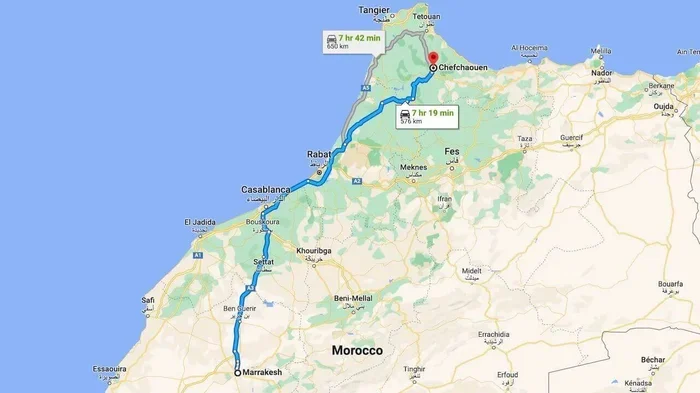
Visual guide about Marrakech to Chefchaouen blue city
Image source: thebroadlife.com
The Math Problem
Let’s do some simple math together. The round-trip distance is roughly 1,500 km (932 miles) of driving. At a comfortable average speed of 80 km/h (50 mph) on Moroccan roads, that’s about 18-19 hours of driving alone. Add in stops for meals, photos, bathroom breaks, and actually spending time in Chefchaouen, and you’re looking at a 22-24 hour day.
That’s not a tour. That’s basically a sleep-deprived endurance test. Unless you’re one of those people who treat their vacation like a military operation, a true 1-day round trip from Marrakech to Chefchaouen is generally not recommended.
The Smart Alternative: 2-Day Tours
Most reputable tour operators offer 2-day, 1-night tours instead, which makes the journey infinitely more enjoyable. You’ll typically stop overnight in Fes or Casablanca, breaking up the drive and giving you time to actually experience Chefchaouen rather than just snap a photo and run.
Did You Know? The high-speed train (Al Boraq) between Casablanca and Tangier, launched in 2018, can travel at 320 km/h (200 mph), making it the fastest train in Africa. This has dramatically changed travel logistics for northern Morocco.
Who Might Consider a True 1-Day Tour?
If you’re a business traveler with extremely limited time, or you’re already staying in a city closer to Chefchaouen (like Fes or Tangier), a long 1-day trip might make sense. Some travelers also opt for a one-way car drop-off service, where they drive up to Chefchaouen in a rental car and don’t return to Marrakech.
Planning Your Tour: Routes, Options, and Logistics
Now that we’ve set realistic expectations, let’s dive into the practical details of how to actually make this trip happen.
Route Option 1: The Direct Drive (Through Casablanca and Rabat)
This is the most common route, taking roughly 8-9 hours one way. You’ll drive north through Settat, Casablanca, and Rabat before turning northeast toward Chefchaouen. The roads are generally well-maintained highways, especially once you pass Casablanca.
Pros: Fastest route, best road conditions, plenty of services along the way
Cons: Less scenic, you’ll miss the inland mountain experience
Route Option 2: The Scenic Drive (Through the Middle Atlas)
This route takes you through Beni Mellal, Azrou, Ifrane (often called “Little Switzerland of Morocco”), and then west through the Middle Atlas Mountains before reaching Chefchaouen. It’s about 10-11 hours of driving one way, but the scenery is absolutely spectacular.
Pros: Stunning mountain views, cedar forests where you can see Barbary macaques, charming towns like Ifrane
Cons: Longer drive, more winding roads
Travel Options Breakdown
Private Driver: The most comfortable option, costing roughly 800-1,200 EUR ($850-$1,300 USD) for a 2-day trip including overnight. You set your own pace and can stop whenever you want.
Group Tour: Budget-friendly at 100-200 EUR ($110-$220 USD) per person, but you’re on a fixed schedule with 10-15 other travelers. Great for solo travelers or those who enjoy meeting new people.
Public Transport: The cheapest option. Take the train from Marrakech to Casablanca (2.5 hours), then to Tangier (2 more hours), then a bus or grand taxi to Chefchaouen (2-3 hours). Total cost: around 30-50 EUR ($33-$55 USD) one way.
Rental Car: Costs around 40-70 EUR ($44-$77 USD) per day for a basic car, plus fuel (about 80-100 EUR for the full trip). Gives you maximum flexibility but requires confidence with Moroccan road conditions.
What to See and Do in Chefchaouen
Once you’ve made the journey (the hard part!), Chefchaouen rewards you with an almost meditative charm. Here are the must-see spots and experiences.
The Blue Medina: A Photographer’s Dream
The old medina is the heart of Chefchaouen, and every corner feels like a painting. The tradition of painting buildings blue has several origin stories. Some say Jewish refugees introduced the practice in the 1930s as a symbol of the sky and heaven. Others claim it keeps mosquitoes away. Either way, the effect is magical.
Pro tip: The blue looks most vibrant during the “golden hour” just before sunset, when the white-blue walls glow with warm light. Mornings are quieter and better for crowd-free photos.
Plaza Uta el-Hammam
This is the main square in the medina, surrounded by cafes, restaurants, and the historic kasbah. Grab a mint tea at one of the rooftop cafes and watch the world go by. A cup of Moroccan mint tea typically costs just 10-15 MAD (about $1-1.50 USD), and the views are priceless.
The Spanish Mosque (Ras el-Maa)
For the best panoramic view of Chefchaouen, take the short but steep hike up to the Spanish Mosque on the hill above town. It’s about a 20-30 minute walk from the medina. The view at sunset is unforgettable. Bring a light jacket; it gets cooler up there even in summer.
Local Cuisine You Must Try
- Goat Cheese: Chefchaouen is famous for its local goat cheese, which is creamy, fresh, and unlike anything you’ll find elsewhere in Morocco.
- Tagine: The local version often features locally foraged ingredients and is slow-cooked to perfection.
- Msemen: These flaky, square-shaped pancakes are perfect for breakfast.
- Fresh Orange Juice: Sold everywhere, freshly squeezed for about 4 MAD (less than $0.50 USD).
Essential Tips for a Smooth Journey
After all that planning, you want your trip to actually go smoothly, right? Here are the insider tips that will make the difference between a good trip and a great one.
Booking and Timing Tips
- Book in advance during peak season: March-May and September-November see the most tourists. Book your tour 2-3 months ahead to get the best prices and availability.
- Weekday travel: Tuesdays and Wednesdays are typically less crowded in Chefchaouen compared to weekends.
- Currency exchange: Get some Moroccan Dirham (MAD) before you arrive. Most places in Chefchaouen don’t accept credit cards, especially in the medina.
- Travel insurance: Always a good idea, especially for long-distance road trips.
What to Pack
Even though Marrakech is desert-hot, Chefchaouen is in the mountains and can be surprisingly cool, especially at night. Pack layers! Here’s a quick checklist:
- Comfortable walking shoes (those blue streets are cobblestones)
- A light jacket or sweater (even in summer)
- Modest clothing that covers shoulders and knees (respectful in this conservative area)
- Sunscreen and sunglasses
- Power bank for your phone (you’ll be taking a LOT of photos)
- Small daypack for excursions
- Reusable water bottle
Cultural Etiquette and Photography
Chefchaouen is a real, living town, not just a backdrop for Instagram. Always ask permission before photographing people, especially women and elders. The locals are generally friendly and used to tourists, but respect goes a long way. Avoid taking photos of military or police installations, as this is restricted throughout Morocco.
Health and Safety
Chefchaouen is one of the safest towns in Morocco, with very low crime rates. The main risks are minor: pickpocketing in crowded areas (rare but possible) and the occasional stomach issue if you’re not used to the food and water. Stick to bottled water, eat at busy restaurants (high turnover = fresh food), and bring any personal medications you might need.
Did You Know? Morocco is considered one of the safest countries in Africa for tourists, with violent crime being extremely rare. The country’s tourism police (Brigade touristique) operate in major cities to assist travelers.
Sample Itineraries: Making Your Trip Work
Let’s put everything together into actual sample itineraries so you can picture exactly what your trip will look like.
Itinerary A: The Classic 2-Day Group Tour
Day 1: Early morning departure from Marrakech (around 7:00 AM). Drive through Casablanca and Rabat with a quick photo stop. Lunch break in a traditional restaurant. Continue through the Rif Mountains, arriving in Chefchaouen by late afternoon. Check into your hotel or riad, then enjoy a sunset walk through the blue medina. Dinner at a local restaurant with traditional Moroccan cuisine.
Day 2: Morning exploration of Chefchaouen. Visit Plaza Uta el-Hammam, the kasbah, and the Spanish Mosque viewpoint. Free time for shopping (Chefchaouen is famous for woven goods, leather, and local crafts). Early afternoon departure back to Marrakech, arriving around 10-11 PM.
Itinerary B: The Flexible 3-Day Private Trip
Day 1: Depart Marrakech in the morning. Take the scenic route through the Middle Atlas, stopping in Ifrane for lunch and to see the famous cedar forest with Barbary macaques. Overnight stay in a traditional riad.
Day 2: Continue to Chefchaouen in the morning. Spend a full day exploring the medina, hiking, and experiencing local culture. Overnight in Chefchaouen.
Day 3: Morning at leisure, then return to Marrakech via the direct highway, stopping in Rabat or Casablanca if time permits. Evening arrival in Marrakech.
Itinerary C: The Budget Backpacker Route
For the adventurous traveler, you can do this trip on a shoestring budget using public transport. Take the train from Marrakech to Casablanca (2.5 hours, around 100 MAD), then connect to Tangier (2 hours, around 200 MAD). From Tangier, take a grand taxi or bus to Chefchaouen (2-3 hours, around 80-100 MAD). Total one-way cost: roughly 380-400 MAD ($40-45 USD), not including accommodation.
Final Thoughts: Is This Trip Worth It?
Absolutely, yes. Despite the long journey, experiencing both Marrakech and Chefchaouen in one trip offers a fascinating contrast between two completely different versions of Morocco. Marrakech is sensory overload in the best way possible: loud, colorful, bustling, and energetic. Chefchaouen is the opposite: quiet, cool, photogenic, and contemplative.
The journey itself becomes part of the adventure, whether you’re winding through the Atlas Mountains or cruising along modern highways. You’ll see Morocco in all its diversity: from desert landscapes to lush green peaks, from imperial cities to sleepy mountain villages.
Just go in with realistic expectations. If you can spare 2-3 days, you’ll have a much more enjoyable experience than trying to cram everything into one exhausting 24-hour marathon. And remember, the whole point of travel is to slow down and savor the experience, not just collect passport stamps.
Whether you choose a guided tour, private driver, or independent adventure, the blue streets of Chefchaouen are waiting for you. Pack your camera, bring your sense of adventure, and prepare for one of the most visually stunning journeys you’ll ever take. Morocco’s Blue City has a way of capturing hearts, and we bet you’ll be planning your return visit before you’ve even left.
Frequently Asked Questions
Is a 1-day tour from Marrakech to Chefchaouen really possible?
A true 1-day round trip from Marrakech to Chefchaouen is extremely challenging due to the 800+ km driving distance. Most travelers opt for a 2-day tour with an overnight stop, which is more realistic and enjoyable. Expect 15+ hours of total travel time if attempting a single-day trip.
How much does a tour from Marrakech to Chefchaouen cost?
Group tours typically cost 100-200 EUR ($110-$220 USD) per person for a 2-day trip. Private driver services range from 800-1,200 EUR ($850-$1,300 USD) for the whole vehicle. Public transport options start around 60-80 EUR ($65-$88 USD) one way for budget travelers.
What is the best time of year to visit Chefchaouen?
Spring (March-May) and autumn (September-November) offer the most pleasant weather, with temperatures between 15-25°C (59-77°F). Summer can be very hot, while winter occasionally brings snow, which is beautiful but can affect road conditions.
Do I need a visa to travel from Marrakech to Chefchaouen?
Since both cities are within Morocco, no separate visa is needed. Your entry visa to Morocco covers all domestic travel. Citizens of many countries, including the US, EU, UK, and Canada, can enter Morocco visa-free for stays up to 90 days.
Is it safe to drive from Marrakech to Chefchaouen?
Yes, the main highways are generally safe and well-maintained. However, driving in Morocco can be challenging due to aggressive overtaking, donkey carts on roads, and varying road conditions. First-time visitors often prefer hiring a driver for comfort and safety.
What should I wear when visiting Chefchaouen?
Chefchaouen is in a conservative region of Morocco, so modest clothing is recommended. Cover your shoulders and knees, especially when entering religious sites. Comfortable walking shoes are essential due to the cobblestone streets and hilly terrain.