A 14-day Marrakech to Dades Valley tour is the ultimate way to experience Morocco’s diverse landscapes and rich culture. This extended journey takes you from vibrant imperial cities through the Atlas Mountains, into the heart of the Sahara Desert, and along the famous Road of a Thousand Kasbahs. Perfect for travelers who want depth, not just snapshots, this itinerary balances guided exploration with authentic local encounters across Morocco’s most iconic regions.
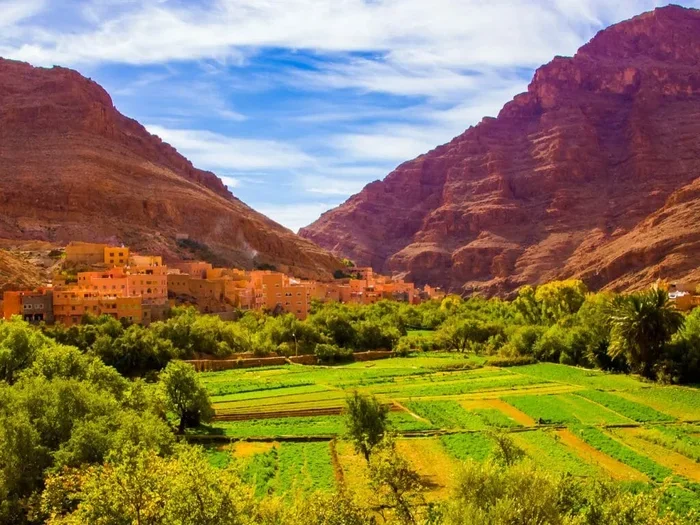
Featured image for Marrakech Dades Valley landscape
Image source: steppestravel.com
Picture this: you’re sipping fresh mint tea on a rooftop terrace, the call to prayer echoing across a thousand-year-old medina. Behind you rise the snow-capped Atlas Mountains. In front of you stretches the world’s largest sand sea, glowing amber in the sunset. Welcome to Morocco, a country that feels like stepping into a living painting.
If you’ve ever dreamed of exploring North Africa but worried that standard 7-day tours rush through too quickly, a 14-day Marrakech to Dades Valley journey might be your perfect match. Think of it like reading a novel instead of skimming a travel brochure. You get the chapters, the characters, the quiet moments between the big scenes.
Did You Know? Morocco’s Atlas Mountains are actually three separate ranges, and the highest peak, Mount Toubkal, stands at 4,167 meters, taller than any mountain in the Alps or Pyrenees!
This guide walks you through everything you need to know: where you’ll go, what you’ll see, when to travel, how to prepare, and why 14 days hits the sweet spot for first-time visitors and seasoned travelers alike.
Key Takeaways
- 14 Days of Variety: From Marrakech’s souks to Sahara dunes and Dades Valley’s rose-colored gorges, every day offers a completely different experience.
- Best Travel Seasons: Spring (March-May) and autumn (September-November) provide ideal weather for desert crossings and mountain drives.
- Distance Covered: Expect to travel roughly 1,800-2,200 kilometers, with most journeys taking 4-6 hours by air-conditioned vehicle.
- Cultural Immersion: You’ll visit Berber villages, ancient kasbahs, and UNESCO World Heritage sites while meeting local artisans.
- Adventure Highlights: Camel trekking at Erg Chebbi, hiking in the Todra Gorge, and exploring Ait Ben Haddou are signature experiences.
- Budget Range: A mid-range 14-day tour typically costs between $1,500-$2,800 per person, including accommodations and most meals.
- Why Extended? A 14-day itinerary removes the rushed feeling of shorter tours, allowing genuine rest and deeper cultural connection.
📑 Table of Contents
- What Is a 14-Day Marrakech to Dades Valley Tour?
- Where Does This Tour Take You? The Full Route Explained
- When Should You Travel? Best Seasons and Timing
- Why Choose 14 Days Instead of Shorter Tours?
- How to Choose the Right Tour Operator
- What to Pack and How to Prepare
- Frequently Asked Questions About Marrakech to Dades Valley 14 Day Tours
- Conclusion: Why This Journey Matters
What Is a 14-Day Marrakech to Dades Valley Tour?
A 14-day tour from Marrakech to the Dades Valley is a guided (or self-guided) overland journey through southern Morocco’s most iconic landscapes and cultural sites. Unlike shorter 5 or 7-day routes that cram highlights into tight schedules, this extended format allows for slower pacing, deeper exploration, and meaningful rest days.
The Core Concept
Think of this tour as a slowly unfolding story. Each day introduces a new chapter: bustling medinas, mountain passes, desert silence, and finally the dramatic red-rock gorges of Dades Valley. You’ll typically start in Marrakech, travel through the Atlas Mountains via the Tizi n’Tichka pass, visit Ait Ben Haddou, head into the Sahara at Merzouga or Zagora, and then loop north through Todra and Dades Gorges before returning to Marrakech via Ouarzazate.
The “tours from Fes” category often includes routes that begin or end in Fes, but many operators offer Marrakech-to-Marrakech loops that pass near Fes, or Marrakech-to-Fes transfers that follow a similar southern route. If you’re searching “tours from Fes” and considering this itinerary, you’ll find that the Dades Valley segment is a common connector point between desert experiences and northern imperial cities.
Who Is This Tour Designed For?
This 14-day format works beautifully for several types of travelers:
- Slow travel enthusiasts who want time to absorb rather than snap photos from a moving vehicle
- Families with teens who benefit from built-in rest days and varied activities
- Photography lovers chasing golden hour light in different landscapes
- Culture seekers wanting genuine interaction with Berber, Arab, and nomadic communities
- Hikers and nature lovers who appreciate time in the Todra Gorge or Draa Valley
Did You Know? The Dades Valley is sometimes called the “Valley of a Thousand Kasbahs” because of the concentration of ancient fortified family homes built from rammed earth along its winding river.
Where Does This Tour Take You? The Full Route Explained
The geographic scope of this tour is what makes it special. You’ll traverse roughly 2,000 kilometers of Morocco’s most diverse terrain. Let me walk you through each major stop, like flipping through pages of an atlas.
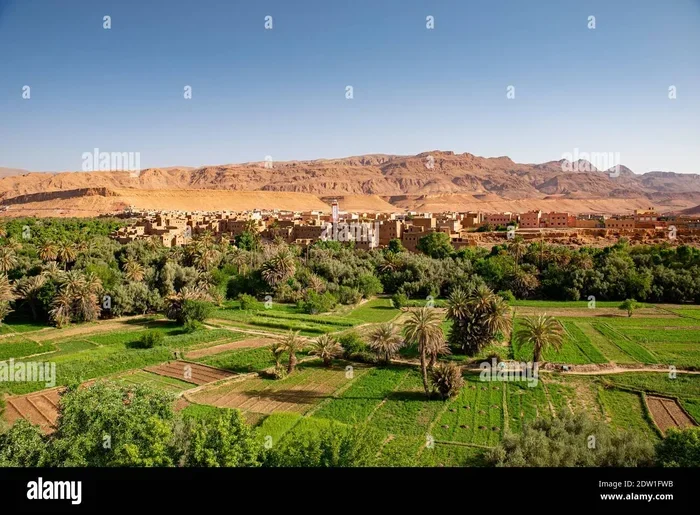
Visual guide about Marrakech Dades Valley landscape
Image source: c8.alamy.com
Marrakech: The Vibrant Starting Point
Your adventure begins in Marrakech, Morocco’s fourth-largest city and arguably its most photogenic. The medina is a UNESCO World Heritage Site, packed with the famous Jemaa el-Fnaa square, snake charmers, story-tellers, and food stalls serving everything from grilled lamb to snail soup. Give yourself at least two full days here. Don’t miss the Majorelle Garden, the Bahia Palace, and the Saadian Tombs.
The High Atlas Crossing
Leaving Marrakech, you’ll drive southwest over the Tizi n’Tichka pass at 2,260 meters. The road winds dramatically through Berber villages where you might see children walking to school, women carrying bundles of firewood, and shepherds guiding goats across rocky slopes. Stop at a local argan oil cooperative where women demonstrate how they extract oil from nuts by hand, a process unchanged for centuries.
Ait Ben Haddou and Ouarzazate
This fortified village (ksar) has appeared in films like Gladiator, Lawrence of Arabia, and Game of Thrones. Walk across the river, climb to the top of the ancient granary, and imagine how caravan traders once stored their goods here. Nearby Ouarzazate, called the “Gateway to the Sahara,” is home to the Atlas Film Studios, where many Hollywood blockbusters were made.
The Sahara Desert: Erg Chebbi or Erg Chigaga
This is the heart of the journey. Most 14-day tours include two nights in the desert, either at the famous Erg Chebbi dunes near Merzouga (taller dunes, more tourist infrastructure) or Erg Chigaga (more remote, fewer crowds). You’ll ride camels at sunset, sleep in traditional Berber tents under stars, and wake to silence so deep it rings in your ears.
Analogy Alert: Standing on top of a Sahara dune at sunrise is like being on top of a warm, golden ocean frozen in place, with waves of sand stretching in every direction as far as you can see.
Todra and Dades Gorges
After the desert, the landscape shifts dramatically to towering limestone cliffs. The Todra Gorge has walls that rise 400 meters straight up, with a narrow stream running between them, perfect for gentle walks or rock climbing. Continuing to Dades Valley, you’ll see bizarre rock formations called “monkey fingers” and kasbahs built into cliffsides. This is where many tours end their southward journey, allowing time for hiking and relaxation before the return to Marrakech.
The Return Loop
From Dades Valley, you’ll typically drive through the Valley of the Roses, visit Skoura’s palm groves, and return to Marrakech via Ouarzazate. Some tours extend north to Fes via the Middle Atlas, passing through Ifrane (called “Little Switzerland of Morocco”) and the cedar forests of Azrou, where wild Barbary macaques live.
When Should You Travel? Best Seasons and Timing
Morocco’s climate varies wildly by region, but timing your trip right can make the difference between a magical journey and a sweaty, uncomfortable one.
Peak Season: March to May and September to November
Spring and autumn are the sweet spots. Temperatures in Marrakech hover around 20-25°C (68-77°F), the Atlas passes are snow-free, and the desert is warm but not scorching. October is particularly special because it coincides with the date harvest, when you’ll see fresh dates sold at every roadside stand.
Shoulder Season: December to February
Winter brings cooler temperatures (down to 5°C at night in the desert) and occasional snow on mountain passes. However, this is also when you can see the Atlas peaks covered in snow while the desert remains sunny. Bring warm layers for desert nights.
Summer: June to August
Summer is challenging. Marrakech can hit 45°C (113°F), and desert temperatures regularly exceed 50°C (122°F). If summer is your only option, focus on coastal extensions and book accommodations with pools. Most experienced travelers avoid July and August.
Day-by-Day Pacing Tips
A 14-day itinerary typically follows this rhythm:
- Days 1-2: Marrakech arrival and city exploration
- Day 3: Atlas Mountains crossing to Ait Ben Haddou
- Day 4: Ouarzazate and Draa Valley
- Days 5-6: Sahara desert (camel trek, overnight camp)
- Day 7: Desert to Todra Gorge
- Days 8-9: Dades Valley exploration and rest
- Days 10-11: Return via Rose Valley and Skoura
- Day 12: Optional extension to Ait Ben Haddou film studios
- Days 13-14: Return to Marrakech, departure
Why Choose 14 Days Instead of Shorter Tours?
You might wonder: why not just do a 7-day tour? The answer lies in what we call “experience depth.” Let me explain with a simple analogy.
The Movie vs. The Book Analogy
A 7-day tour is like watching a movie adaptation of a great book. You see the highlights, the dramatic scenes, and the famous quotes. But a 14-day tour is like reading the actual book. You get the quiet moments, the descriptive passages, the subplots. You understand why characters act the way they do.
In practical terms, this means:
- More meaningful cultural exchanges: You have time to share tea with a Berber family, learn a few words of Tashelhit, and watch artisans work without rushing
- Better photography opportunities: You can return to a location at the right time of day for perfect light
- Physical recovery: Long drives and heat can be exhausting; 14 days lets you build in rest
- Weather flexibility: If one day gets rained out, you have backup days for activities
- Deeper desert experience: Two nights in the Sahara instead of one transforms a tourist moment into a memory
Did You Know?
Studies on travel satisfaction show that journeys lasting 10-14 days consistently score higher on “cultural immersion” and “emotional connection to destination” than shorter trips, according to research published in the Journal of Sustainable Tourism. There’s something neurologically satisfying about having time to truly settle into a place.
The Cost-Benefit Reality
While a 14-day tour costs more upfront than a 7-day tour, the per-day cost is often lower because you’re not paying for rapid logistics. You’re paying for one continuous experience with the same guide, driver, and often the same small group. Many operators offer 15-20% discounts on extended itineraries.
How to Choose the Right Tour Operator
Not all tour companies are created equal. Here’s what to look for when booking your 14-day Marrakech to Dades Valley tour.
What to Look For
- Small group sizes: Maximum 12-16 people, ideally fewer. Larger groups feel more like cattle drives than cultural journeys
- Local guides: Moroccan-born guides who speak English, French, and Arabic, plus local Berber dialects
- Mix of accommodations: Riads (traditional guesthouses), kasbahs, and desert camps rather than chain hotels
- Transparent pricing: Look for operators who clearly state what’s included (meals, entrance fees, tips)
- Verified reviews: Check TripAdvisor, Google, and travel forums like the Lonely Planet Thorn Tree
Red Flags to Avoid
- “Shopping stops” built into daily itineraries: Some operators earn commissions by taking you to specific shops
- Unclear cancellation policies: Reliable operators offer clear terms
- No physical office or registration: In Morocco, licensed tour operators must be registered with the Ministry of Tourism
- Pressure to pay in cash only with no receipt: Always get written confirmation
Sample Budget Breakdown
For a mid-range 14-day tour, expect approximately:
- Tour cost: $1,500-$2,800 per person (double occupancy)
- International flights: $600-$1,200 from Europe or North America
- Travel insurance: $50-$150
- Spending money: $300-$500 for souvenirs, tips, and extras
- Total estimate: $2,450-$4,650 per person
Tipping Etiquette
Tipping is appreciated in Morocco. A general guideline:
- Tour guide: $5-10 per person per day
- Driver: $3-5 per person per day
- Camel handler: $5-10 total per person
- Restaurant staff: 10% if service isn’t already included
- Riad housekeeping: $1-2 per night
What to Pack and How to Prepare
Packing smart can make or break your experience. Morocco’s climate shifts between snow-capped mountains and scorching desert, sometimes in the same day.
Clothing Essentials
- Modest, loose-fitting layers: Light fabrics for daytime, warm jackets for desert nights
- Long pants and long-sleeved shirts: Respectful in conservative areas and protects from sun
- A warm fleece or down jacket: Desert nights can drop to 5°C even in spring
- Comfortable walking shoes: For medina exploration and gorge hikes
- Sandals or easy-off shoes: You’ll remove shoes entering mosques and many homes
- A scarf or shemagh: Protects from sun, sand, and cold; also useful for women in conservative areas
Health and Practical Items
- Sunscreen (SPF 50+): The desert sun is intense
- Lip balm and moisturizer: The dry air dehydrates skin quickly
- Reusable water bottle: Tap water isn’t safe; bottled water is everywhere but plastic waste is a concern
- Hand sanitizer and wet wipes: Public restrooms vary in quality
- Basic first aid kit: Band-aids, pain relievers, anti-diarrheal medication
- Prescription medications: Bring enough for the full trip plus a week extra
Cultural Preparation
Morocco is a Muslim country, but it’s also a relatively liberal one by regional standards. Still, showing respect goes a long way:
- Ask before photographing people: Especially women and elders
- Dress modestly in rural areas: Shorts and tank tops are fine in resorts but not in villages
- Learn a few Arabic greetings: “Salaam alaikum” (peace be upon you) opens many doors
- Accept mint tea when offered: Refusing can be considered rude
- Bargain gently in souks: It’s expected, but keep it friendly
Did You Know?
Morocco is one of only three nations to have a non-member observer status at the Organization of Islamic Cooperation, alongside Thailand and Russia. Yet it remains one of the most progressive Muslim-majority countries regarding women’s rights, with the country’s family code (Moudawana) reformed significantly in 2004.
Frequently Asked Questions About Marrakech to Dades Valley 14 Day Tours
Let me answer some of the most common questions travelers ask before booking.
Is 14 days too long for a Morocco trip?
Not at all. While 7-day tours cover highlights, 14 days allows you to experience Morocco’s rhythm. You’ll have time for rest days, spontaneous discoveries, and meaningful connections. Most travelers on extended tours report wishing they had even more time, not less.
What is the average group size on these tours?
Reputable operators cap groups at 12-16 people for a comfortable experience. Smaller boutique tours (4-8 people) offer more intimacy but cost slightly more. Private tours are also available for couples and families.
Can I customize the itinerary?
Most operators offer customization, especially for private tours. You might add cooking classes in Marrakech, hot air balloon rides, or extra hiking days in the Atlas Mountains. Discuss your interests when booking.
Is the Sahara safe for tourists?
Yes, the Sahara regions around Merzouga and Zagora are well-established tourist destinations with good infrastructure. Your tour operator will use experienced local guides who know the desert intimately. Petty crime is rare, and the Berber communities are welcoming.
Do I need travel insurance?
Absolutely. Choose a policy that covers medical evacuation, trip cancellation, and adventure activities like camel trekking. Some policies exclude desert activities, so read the fine print carefully.
What currency should I bring?
The Moroccan Dirham (MAD) is the local currency. Bring euros or US dollars to exchange at banks or official exchange offices. Credit cards are accepted in cities and larger hotels but not in remote areas, so carry cash for small purchases.
Conclusion: Why This Journey Matters
A 14-day tour from Marrakech to the Dades Valley isn’t just a vacation. It’s an immersion into one of the world’s most fascinating cultural crossroads, where Africa meets the Mediterranean, where ancient trade routes still pulse with energy, where every mountain pass reveals a different shade of ochre and every medina tells a thousand stories.
By choosing the extended format, you’re giving yourself a gift that modern travel often forgets: the gift of time itself. Time to sit with a Berber family and share bread. Time to watch the sun set twice over sand dunes. Time to wander a medina without checking your watch. Time to feel, not just see.
Did You Know? The Moroccan phrase “Inshallah” (God willing) is used so often that visitors begin saying it automatically within days. It reflects a cultural embrace of patience and acceptance, a beautiful counterbalance to our rushed, scheduled lives.
Whether you’re a first-time visitor to Morocco or a returning traveler seeking deeper connection, this 14-day journey offers something rare in our fast-paced world: the space to truly arrive, breathe, and transform. The Dades Valley’s towering rose-colored cliffs, the Sahara’s golden silence, and Marrakech’s chaotic beauty will stay with you long after you’ve returned home.
Book your journey with an open heart, comfortable shoes, and a willingness to be surprised. Morocco is waiting.