A 5-day excursion from Tangier to Erg Chebbi is the most immersive way to experience Morocco’s diverse landscapes in a single trip. This journey takes you from the Mediterranean coast through the Middle Atlas Mountains, across desert valleys, and into the heart of the Sahara. You’ll discover imperial cities, Berber villages, ancient kasbahs, and towering golden sand dunes. Perfect for travelers who want depth over speed, this route balances cultural exploration with unforgettable desert adventures.
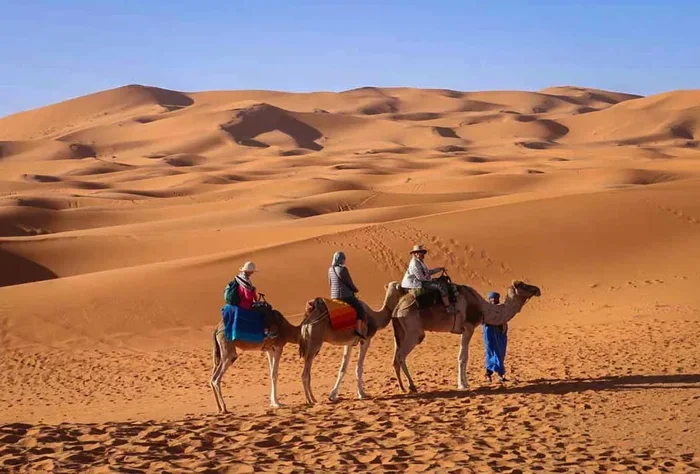
Featured image for Morocco desert dunes camels
Image source: planetjanettravels.com
Picture this: you wake up to the sound of waves crashing against the Mediterranean coast in Tangier. Five days later, you’re sitting atop a camel, watching the sun melt into a sea of golden sand dunes in the Sahara Desert. This isn’t a fantasy, it’s exactly what a well-planned 5-day excursion from Tangier to Erg Chebbi delivers.
Morocco is a country of incredible contrasts. In the north, you find European-influenced cities with cafes serving espresso. Drive south, and the landscape transforms into Berber villages clinging to mountainsides. Keep going, and you’ll reach the edge of the Sahara, where the silence is so profound you can hear your own heartbeat. This journey captures all of it in one unforgettable trip.
Many travelers make the mistake of trying to rush from Tangier to the desert in just two or three days. While possible, this approach means spending most of your vacation in a vehicle. A 5-day itinerary gives you breathing room to actually experience the places you visit, not just photograph them through a window. Think of it like the difference between speed-reading a novel and actually savoring each chapter.
Key Takeaways
- 5-Day Duration Advantage: Five days allows meaningful stops at Fez, Merzouga, and the Atlas Mountains without rushed travel days.
- Erg Chebbi vs. Erg Chigaga: Erg Chebbi features Morocco’s tallest dunes (up to 150 meters) and is closer to the popular Merzouga route.
- Best Travel Season: October through April offers comfortable temperatures, while summer months can exceed 45°C (113°F) in the desert.
- Camel Trekking Included: Most itineraries include a camel ride to a Berber desert camp for a traditional overnight experience.
- Cultural Immersion: The route passes through multiple Berber villages, offering authentic encounters with local nomadic communities.
- Total Distance: The round-trip journey covers approximately 1,200 kilometers (745 miles) through varied terrain.
- Budget Range: Mid-range tours typically cost €400-€700 per person, including accommodation, transport, and most meals.
📑 Table of Contents
Understanding the Journey: What Makes This Route Special
The route from Tangier to Erg Chebbi isn’t just about reaching a destination. It’s about traveling through time, culture, and geography all at once. Let’s break down what makes this particular path so remarkable.
The Geographic Transformation
Starting in Tangier, you’re at sea level on the Strait of Gibraltar. This strait is only 14 kilometers (8.7 miles) wide at its narrowest point, meaning on clear days you can see Spain from Morocco. The city sits where the Mediterranean Sea meets the Atlantic Ocean, a meeting point that has made it a strategic location for thousands of years.
As you travel south and east, the elevation changes dramatically. The Middle Atlas Mountains reach heights of over 3,000 meters (9,800 feet). The Rif Mountains in the north are lower but equally dramatic, with cedar forests and snow in winter. By the time you reach Erg Chebbi, you’re back down to around 500 meters (1,640 feet) elevation, but the landscape couldn’t be more different, vast, open desert stretching to every horizon.
Did You Know? Morocco’s highest point, Jebel Toubkal at 4,167 meters (13,671 feet), is visible from parts of the desert route on exceptionally clear days, even though it’s hundreds of kilometers away.
The Cultural Crossroads
Throughout this journey, you’ll encounter at least four distinct cultural zones. The northern coast has strong Andalusian influences from centuries of Spanish and Moorish interaction. The Middle Atlas is dominated by Berber (Amazigh) communities who have inhabited these mountains since before recorded history. The pre-Saharan regions show Arab cultural influence layered over Berber traditions. And finally, the desert regions near Erg Chebbi are home to nomadic and semi-nomadic peoples whose lifestyles remain connected to the rhythms of the desert.
This cultural layering is like reading a history book where each civilization added a new chapter without erasing the previous ones. You’ll hear Arabic, Amazigh (Berber), French, and sometimes Spanish all in the same marketplace.
Detailed Day-by-Day Breakdown
Understanding the structure of a typical 5-day tour helps you set proper expectations and prepare appropriately. Here’s how most well-designed itineraries flow.
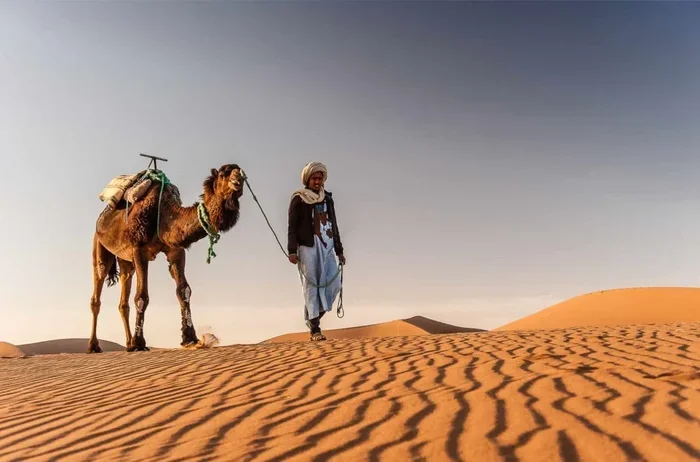
Visual guide about Morocco desert dunes camels
Image source: moroccanjourneys.com
Day 1: Tangier to Fez via the Middle Atlas
The journey typically begins early, around 7-8 AM, to maximize daylight hours. The first major stop is usually Volubilis, a UNESCO World Heritage Site containing some of the best-preserved Roman ruins in North Africa.
Volubilis was founded in the 3rd century BCE and became an important Roman outpost. At its peak, the city had about 20,000 inhabitants. The ruins include stunning mosaics still visible in situ, triumphal arches, and city walls. The site covers roughly 40 hectares (99 acres), giving you a sense of its former grandeur.
Think of Volubilis as Morocco’s answer to Pompeii, but with better weather and fewer crowds. Most visitors spend 1.5-2 hours exploring the site with a local guide who can explain the historical context and point out details you might otherwise miss.
After Volubilis, the route continues to Meknes, one of Morocco’s four imperial cities. While often overshadowed by Fez and Marrakech, Meknes has its own charm. The city was built largely by Sultan Moulay Ismail in the late 17th century, who reportedly kept a harem of 500 women and maintained a stable of over 12,000 horses. The scale of his ambition is visible in the massive walls, gates, and granaries still standing today.
You’ll arrive in Fez by late afternoon. The evening is typically free to explore the medina on your own, though staying close to your riad (traditional Moroccan house converted to a hotel) is wise for first-time visitors. Fez’s medina is a maze of over 9,000 alleys, and getting lost is almost guaranteed, though also part of the experience.
Day 2: Exploring Fez and the Middle Atlas
Fez deserves at least half a day of dedicated exploration. Founded in 789 CE, it’s one of the world’s oldest continuously operating cities and home to the world’s oldest university, the University of al-Qarawiyyin, established in 859 CE. For context, that’s 200 years before Oxford University was founded.
The Fez el-Bali (old medina) is a UNESCO World Heritage Site and contains over 13,000 historic buildings. The famous Chouara Tannery, operating since the 11th century, is one of the most photographed spots in Morocco. The tanning process hasn’t changed in nearly 1,000 years, using natural materials like pigeon droppings, cow urine, and plant tannins to treat animal hides.
Did You Know? Fez was once the world’s leading producer of leather goods, and its tanners still hand-process approximately 130 hides daily using traditional methods.
After lunch, the journey continues south through the Middle Atlas Mountains. The landscape transforms as you climb, with cedar forests replacing olive groves. The town of Ifrane, often called “Little Switzerland of Morocco,” is a surprising stop. Built by the French in the 1930s, it features European-style architecture and clean streets that feel distinctly out of place in rural Morocco.
By evening, you’ll typically reach Midelt or Erfoud, depending on the exact itinerary. These small cities serve as gateway towns to the Sahara.
Day 3: Reaching the Sahara Desert at Erg Chebbi
Day three is often considered the highlight of the entire journey, the day you finally reach the Sahara. After breakfast, the route continues through the Ziz Valley, a stunning palm-lined oasis that stretches for nearly 150 kilometers (93 miles).
The Ziz Valley is like a green ribbon woven through otherwise barren rock formations. Date palm groves create microclimates where farmers grow crops impossible in the surrounding desert. You’ll likely stop at a panoramic viewpoint where the scale of the valley becomes apparent, hundreds of thousands of palm trees stretching into the distance, with desert mountains rising on either side.
Erfoud, known as the “Gateway to the Sahara,” is a town built on fossils. The surrounding region contains some of the world’s richest fossil beds, with specimens dating back over 350 million years. Local artisans cut and polish these fossils into decorative items, creating a unique regional craft.
From Erfoud, the final approach to Erg Chebbi takes about 1-1.5 hours. The landscape becomes increasingly arid and otherworldly, often described as “lunar” by visitors who have seen the Moon landing footage. The first glimpse of the dunes from a distance is genuinely breathtaking, a wall of orange-gold sand rising unexpectedly from flat desert plains.
At the village of Merzouga, located on the edge of Erg Chebbi, you’ll meet your camel caravan. The ride into the desert takes approximately 1-1.5 hours, depending on which camp you’re heading to. Camels walk at roughly 4-5 km/h (2.5-3 mph), so the pace is gentle, almost meditative.
Day 4: Desert Experiences and Return Journey
Sunrise in the Sahara is a genuinely transformative experience. The interplay of light and shadow on the dunes creates patterns that change by the minute, shifting from deep purple to orange to brilliant gold. Most tours schedule an early wake-up call (around 5:30 AM) to catch this phenomenon.
After breakfast at the desert camp, you’ll have options for the morning. Some travelers choose to climb the nearest large dune (Erg Chebbi’s tallest reaches about 150 meters, roughly 492 feet). Others prefer sandboarding, which works exactly like snowboarding but on sand. A third option is simply sitting quietly and absorbing the silence, which in the deep desert is so complete you can hear your own breathing.
The return journey begins mid-morning, retracing the route north. Most itineraries include a stop in the Todra Gorge or Dades Valley (sometimes called the “Valley of a Thousand Kasbahs”) on the return leg. These areas feature dramatic canyon walls and ancient fortified villages built into the landscape.
The Todra Gorge has walls reaching 400 meters (1,312 feet) high in places, with a river running through a narrow channel at the bottom. Rock climbers from around the world visit here, but most tourists simply walk through the lower section, which is accessible without technical equipment.
By evening, you’ll typically reach Ouarzazate, known as the “Hollywood of Africa” due to its film studios where productions like Gladiator, Lawrence of Arabia, and Game of Thrones have been filmed.
Day 5: Return to Tangier via the High Atlas
The final day involves significant travel distance, typically 8-10 hours including stops. The route crosses the High Atlas Mountains through the Tizi n’Tichka pass, which reaches 2,260 meters (7,415 feet) elevation. The pass is often closed briefly in winter due to snow, so travel between November and March requires flexibility.
Most itineraries include a stop at the Ait Ben Haddou kasbah, another UNESCO World Heritage Site. This fortified village (ksar) dates back to the 17th century and has been featured in numerous films and TV shows. The earthen clay architecture is remarkable for its organic forms, with towers and walls that seem to grow from the hillside itself.
Think of Ait Ben Haddou as a real-life movie set, except people actually live in and maintain these buildings using traditional methods passed down through generations. The site demonstrates how North African architecture adapted to climate challenges, using thick walls for temperature regulation and communal structures for social cohesion.
From Ait Ben Haddou, the route continues northwest through the High Atlas, with the landscape gradually changing from desert to mountains to plains. You’ll pass through Marrakech’s outskirts without entering the city (unless specifically requested), and continue north through the Tadla plain and eventually reach the Atlantic coast before turning east back to Tangier.
Practical Information and Preparation Tips
Knowing what to expect and how to prepare can make the difference between a good trip and an exceptional one. Here’s what experienced travelers have learned.
What to Pack
Packing for a 5-day excursion that crosses multiple climate zones requires thought. Daytime temperatures in the desert can be warm even in winter (20-25°C / 68-77°F), but nighttime temperatures drop dramatically, sometimes below freezing in December and January. Layering is essential.
Essential items include: comfortable walking shoes (you’ll be on uneven surfaces), a light jacket for desert nights, sunscreen (the desert sun is intense), a scarf or shemagh (useful for sand protection), a small backpack for day trips, and a camera with extra batteries (cold desert nights drain batteries quickly).
For cultural considerations, pack modest clothing that covers shoulders and knees, especially when visiting religious sites. Women might want to bring a light scarf that can serve as a head covering when entering mosques or rural areas.
Money and Budgeting
Morocco’s currency is the Moroccan Dirham (MAD). As of recent exchange rates, 1 Euro equals approximately 11 MAD, and 1 USD equals approximately 10 MAD. The dirham is a closed currency, meaning you can’t officially obtain it outside Morocco, so you’ll need to exchange money or withdraw from ATMs upon arrival.
Credit cards are accepted in larger hotels and restaurants in cities, but cash is king in smaller towns, the medinas, and especially in desert areas. Plan to have cash available for tips, small purchases, and emergencies.
Tipping (baksheesh) is customary in Morocco. A general rule: 10-15% at restaurants (sometimes service is included, so check first), 20-50 dirhams per day for your driver/guide, 20-30 dirhams for hotel staff who help with luggage, and small amounts (10-20 dirhams) for anyone who helps you in the medina (finding your riad, showing you somewhere, etc.).
Health and Safety
Morocco is generally safe for tourists, with violent crime against visitors being rare. The most common issues are petty theft (pickpocketing in crowded areas) and scams (overcharging, fake guides). Standard travel precautions apply: keep valuables secure, be wary of unsolicited help from strangers, and agree on prices before accepting services.
For health considerations, tap water is not safe to drink in Morocco. Stick to bottled water, which is widely available and inexpensive. The food is generally safe, but travelers with sensitive stomachs should ease into street food gradually.
Did You Know? Morocco was the first country in Africa to be certified by the World Health Organization for eliminating trachoma, a leading cause of preventable blindness. The country has made significant public health investments in recent decades.
Photography Considerations
Morocco is incredibly photogenic, but there are important etiquette considerations. Always ask permission before photographing people, especially women in rural areas. Some communities charge small fees for photos, and a tip of 10-20 dirhams is appreciated.
Early morning and late afternoon light (the “golden hours”) produce the best results, especially in the desert. The midday sun creates harsh shadows and washed-out colors, though it can work for architectural details in the medinas.
Drones are technically regulated in Morocco and require permits. Most tours don’t include drone use, and bringing one without proper authorization can cause problems at airports and tourist sites.
Choosing the Right Tour Operator
The quality of your experience depends heavily on your choice of tour company. Not all operators are equal, and understanding the differences helps you make an informed decision.
Types of Tours Available
Group tours typically accommodate 10-15 people in a minibus or 4×4 vehicles. They’re more affordable and offer social interaction with other travelers. However, schedules are fixed, and individual preferences may not be accommodated.
Private tours cost more but offer flexibility. You can adjust departure times, spend longer at places you find interesting, and skip those that don’t appeal. Private tours are particularly valuable for families, photography enthusiasts, or travelers with specific interests.
Luxury tours include upgraded accommodations (4-5 star riads and luxury desert camps), private vehicles, and often additional experiences like private cooking classes or hot air balloon rides. They can cost 2-3 times more than standard tours but provide significantly more comfort.
Red Flags to Watch For
Be cautious of operators who offer significantly lower prices than competitors, as they may cut corners on accommodation quality, vehicle maintenance, or guide expertise. Extremely cheap tours (under €300 for 5 days) often mean shared rooms, basic camping, and less experienced drivers.
Check reviews on multiple platforms, not just the operator’s own website. Look for detailed reviews that mention specific guides, hotels, and experiences. Recent reviews (within the past 6-12 months) are most relevant.
Avoid operators who pressure you to book immediately with “today only” discounts. Reputable companies understand that travelers need time to make decisions and will respect your timeline.
Why This Journey Matters: The Bigger Picture
Beyond the immediate experiences, a 5-day excursion from Tangier to Erg Chebbi offers something increasingly rare in modern travel: a sense of journey, of transition between completely different worlds.
In an age of instant gratification and point-to-point flights, spending five days traveling overland through changing landscapes is almost a radical act. You see the gradients, the in-between places, the gradual transformation of language, dress, and custom. This kind of travel changes how you understand not just Morocco, but the concept of place itself.
Morocco has been a crossroads of civilizations for millennia. Phoenicians, Romans, Vandals, Byzantines, Arabs, Berbers, Portuguese, Spanish, French, and now tourists from every corner of the globe have all left their marks. Traveling this route, you literally pass through layers of history, each town representing a different chapter in a story that’s still being written.
The desert itself teaches lessons that are difficult to learn elsewhere. The silence, the vastness, the clarity of the night sky (with minimal light pollution, the stars are extraordinary), these experiences recalibrate your sense of scale and perspective. Many travelers describe their desert night as the most memorable part of their entire Morocco trip, not because of any specific activity, but because of the profound quiet and beauty of the natural environment.
Whether you’re a first-time visitor to Morocco or returning for a deeper exploration, this 5-day route offers the perfect balance of must-see highlights and authentic experiences. The memories created, from your first glimpse of the dunes to your final sunset in the Atlas Mountains, will stay with you long after you’ve returned home.
Frequently Asked Questions
How difficult is the journey from Tangier to Erg Chebbi?
The journey involves long driving days (4-6 hours average) on roads that range from excellent highways to occasionally rough mountain passes. It’s physically accessible to most travelers in reasonable health. The camel trek is gentle and suitable for all ages, though those with back problems should consider riding separately.
What is the best time of year for this excursion?
October through April offers the most comfortable weather, with daytime temperatures between 20-28°C (68-82°F) and cool nights. Summer months (June-August) can be extremely hot in the desert, with temperatures exceeding 45°C (113°F). Winter occasionally brings snow to mountain passes, which can cause delays.
Do I need a visa for Morocco?
Citizens of most Western countries (EU, USA, Canada, UK, Australia) can enter Morocco visa-free for stays up to 90 days. Your passport should be valid for at least 6 months beyond your entry date. Always check current requirements with your nearest Moroccan embassy before travel.
Is it safe to drink alcohol in Morocco?
Morocco is a Muslim country, but alcohol is available in licensed restaurants, hotels, and bars, particularly in tourist areas and larger cities. During your desert excursion, alcohol is generally not available, though some luxury camps may serve it. Respectful behavior in rural and religious areas is appreciated.
Can I customize a standard 5-day itinerary?
Yes, most tour operators offer customization options, especially for private tours. Common modifications include adding Marrakech, extending the desert stay, including cooking classes, or adding adventure activities like quad biking. Customization may affect the overall price depending on the changes requested.
What language is spoken in Morocco?
Morocco has two official languages: Modern Standard Arabic and Amazigh (Berber). French is widely used in business, government, and education, and is the primary foreign language for most Moroccans. In tourist areas and the desert regions, basic English is increasingly common, especially among younger generations and those working in tourism.