
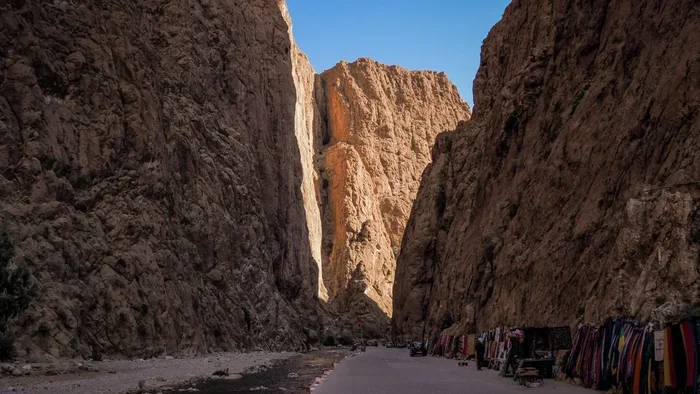
Featured image for Todra Gorge Morocco cliffs
Image source: pinyourfootsteps.com
A 3 day tour from Marrakech to Todra Gorge is one of Morocco’s most rewarding desert journeys, blending ancient kasbahs, dramatic canyon landscapes, and the golden Sahara dunes of Merzouga. This classic itinerary covers roughly 1,000 kilometers and takes travelers across the Atlas Mountains, through UNESCO-listed Ait Benhaddou, into the Todra Gorge cliffs, and out to Erg Chebbi’s towering sand seas. Most tours include camel treks, traditional Berber dinners, and overnight stays in desert camps under star-filled skies.
Imagine waking up in the bustling medina of Marrakech, with the smell of mint tea and freshly baked bread drifting through your riad courtyard. By sunset the next day, you could be sitting on a camel, watching the Sahara dunes turn from gold to deep orange as the sun dips below the horizon. That’s the magic of a 3 day tour from Marrakech to Todra Gorge, a journey that compresses centuries of Moroccan history, jaw-dropping landscapes, and warm Berber hospitality into one unforgettable adventure.
This route is often called the “Grand Loop” of southern Morocco. Think of it like a greatest hits album: Ait Benhaddou, the Dades Valley, Todra Gorge, and Erg Chebbi all feature on the same track list. Travelers choose this particular itinerary because it strikes a near-perfect balance between sightseeing, adventure, and comfort, even if you’re on a tight schedule.
Did you know that the Todra Gorge is actually part of a larger river system that’s been cutting through the eastern High Atlas mountains for roughly 6 million years? Or that Ait Benhaddou has stood as a filming location for Hollywood blockbusters like Gladiator and Lawrence of Arabia for decades? Throughout this guide, we’ll break down exactly what to expect, when to go, what to pack, and how to make the most of every hour on the road.
Key Takeaways
- Perfect Duration: Three days gives you enough time to cross the Atlas Mountains, explore key sites, and enjoy a Sahara sunset without rushing.
- Distance Covered: The loop from Marrakech to Todra Gorge and back spans roughly 900-1,000 kilometers through some of Morocco’s most varied terrain.
- UNESCO Highlights: Ait Benhaddou, a fortified village used as a Game of Thrones filming location, is a major stop along the route.
- Todra Gorge Specifics: The canyon walls reach 400 meters (1,300 feet) high and only narrow to about 10 meters wide at its tightest point.
- Desert Experience: Most itineraries include a camel ride at Erg Chebbi and an overnight in a Berber-style desert camp.
- Best Travel Seasons: Spring (March-May) and autumn (September-November) offer the most comfortable temperatures for both the desert and mountains.
- Budget Range: Tours typically cost between €150-€350 per person, depending on accommodation style and inclusions.
📑 Table of Contents
- What Is a 3 Day Tour from Marrakech to Todra Gorge?
- Day-by-Day Itinerary Breakdown
- Why This Tour Stands Out Among Morocco Trips
- How to Choose the Right Tour Operator
- What to Pack for Your 3 Day Tour
- Budgeting and Practical Tips
- Frequently Asked Questions About the 3 Day Marrakech to Todra Gorge Tour
What Is a 3 Day Tour from Marrakech to Todra Gorge?
A 3 day tour from Marrakech to Todra Gorge is a guided overland journey that loops through southern Morocco’s most iconic landscapes, starting and ending in Marrakech. The trip typically passes through the High Atlas Mountains via the Tizi n’Tichka pass, visits the UNESCO World Heritage Site of Ait Benhaddou, explores the rose-filled Dadès Valley, and reaches the towering cliffs of Todra Gorge before continuing to the Erg Chebbi dunes near Merzouga.
Who This Tour Is For
This tour appeals to a wide range of travelers. First-time visitors to Morocco love it because it touches nearly every “must-see” in southern Morocco without requiring complex planning. Adventure seekers appreciate the camel treks and canyon walks. Photographers, meanwhile, get a constantly changing backdrop: kasbahs, oases, gorges, and dunes all in three days.
It’s also popular with:
- Couples and honeymooners seeking a romantic Sahara sunset experience.
- Solo travelers who want the safety and companionship of a small group.
- Families with older children (typically age 8+) who enjoy outdoor activities.
- Backpackers wanting to cover a lot of ground efficiently without driving themselves.
Where the Tour Goes
The classic route forms a loop. From Marrakech, you head southeast over the Atlas Mountains, drop down to Ouarzazate (the “Hollywood of Africa”), then curve east toward Tinghir and Todra Gorge. From there, you continue south to Merzouga for the Sahara experience, and finally return northwest through the Dades Valley and back across the mountains to Marrakech.
When This Tour Happens
Tours operate year-round, though the best seasons are spring (March to May) and autumn (September to November). Summer temperatures in Merzouga can exceed 45°C (113°F), and winter nights in the desert can drop below freezing. October often hits the sweet spot: warm enough for swimming pools in Ouarzazate, cool enough for comfortable desert camping.
Day-by-Day Itinerary Breakdown
Understanding the structure of your tour helps you set realistic expectations. Here’s exactly what each day looks like on a typical 3 day tour from Marrakech to Todra Gorge.
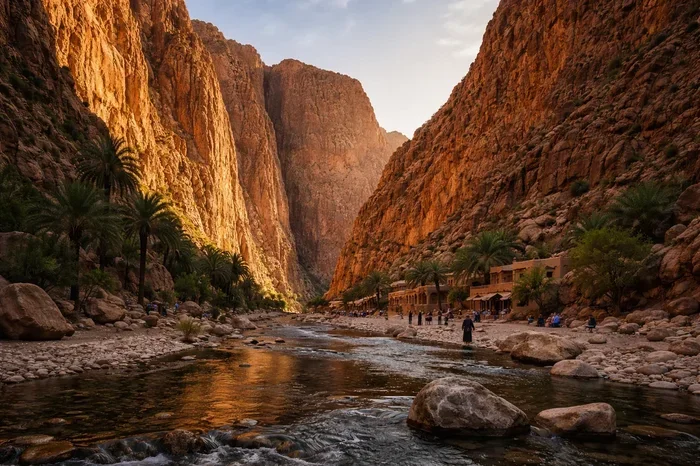
Visual guide about Todra Gorge Morocco cliffs
Image source: worldplacesexplained.com
Day 1: Marrakech to Ait Benhaddou and the Dades Valley
Most tours begin with an early morning pickup around 7:00-8:00 AM from your riad or hotel in Marrakech. Day 1 is the longest in terms of driving, roughly 6-7 hours total, but it’s broken up with frequent stops.
The first major landmark is the Tizi n’Tichka pass, which sits at 2,260 meters (7,415 feet) above sea level. Think of it as Morocco’s version of a mountain switchback road, similar to driving through parts of the Alps. The road climbs steadily for about two hours before reaching the summit, with panoramic views that often make travelers gasp.
After descending the eastern side of the Atlas, you arrive at Ait Benhaddou, a fortified earthen clay village (ksar) that has existed since at least the 11th century. You’ll typically spend 1-2 hours exploring the narrow lanes and climbing to the top of the highest tower for sweeping views. Fun fact: the village contains roughly 6-8 families still living within its original walls, while most residents now live in the modern village just across the river.
The afternoon continues through Ouarzazate, often called the “Door of the Desert,” and into the Dades Valley, famous for its “monkey fingers” rock formations and rose gardens. Day 1 typically ends with dinner and overnight in a hotel or kasbah-style guesthouse in the Dades or Tinghir region.
Day 2: Todra Gorge and the Sahara Desert
Day 2 starts with a short morning drive to Todra Gorge, the eastern terminus of your main itinerary. The gorge is essentially a slot canyon carved by the Todra River, with walls that rise up to 400 meters (1,300 feet) high on either side. At its narrowest point, the canyon floor is only about 10 meters (33 feet) wide, so you could literally touch both walls if you stretched out your arms.
Most tours allow 1-2 hours here for walking through the gorge, taking photos, or watching local climbers tackle the limestone cliffs. Did you know that Todra is considered one of the world’s premier rock climbing destinations? Routes range from beginner-friendly slabs to world-class multi-pitch climbs rated up to 8c.
From Todra, the journey continues south toward Merzouga and Erg Chebbi, where the real Sahara begins. The dunes here reach up to 150 meters (500 feet) tall, making them among the tallest in Morocco. You arrive in late afternoon, swap your 4×4 for a camel, and ride into the desert camp just as the sun begins to set.
The overnight in a Berber desert camp is arguably the highlight. You’ll sleep in traditional nomadic tents (or upgrade to “luxury” tents with private bathrooms), enjoy a tagine dinner under the stars, and be treated to live drumming and music around a campfire. The silence of the Sahara at night, broken only by distant camel bells, is something travelers consistently describe as life-changing.
Day 3: Sahara Sunrise, Return via Dades Valley
Day 3 begins early, often around 5:30 AM, to catch the sunrise over the dunes. Watching the dunes shift from purple to gold to bright orange is one of those “pinch me, I’m dreaming” travel moments. After breakfast in the camp, you ride your camel back to the meeting point (or, in some tours, you can opt for a 4×4 transfer back).
The return journey to Marrakech takes about 8-9 hours with stops. You’ll retrace part of your route through the Dades Valley, with optional detours to the Todra viewpoint, the rose products cooperative in Kelaa M’Gouna, or lunch in Ouarzazate. Most tours arrive back in Marrakech between 6:00-8:00 PM.
Why This Tour Stands Out Among Morocco Trips
Morocco offers countless tour options, but the 3 day Marrakech to Todra Gorge route consistently ranks among travelers’ favorites. Here’s why.
A Diverse Landscape in Just Three Days
Imagine driving from the Swiss Alps to the Mojave Desert, with stops at medieval castles along the way, in 72 hours. That’s essentially what this tour delivers. The geographic diversity alone is staggering: snow-capped Atlas peaks, lush river valleys, arid pre-Saharan plains, towering limestone gorges, and endless sand dunes, all within a single round trip.
Cultural Immersion Opportunities
Beyond the scenery, this tour offers authentic cultural exchanges. You’ll eat bread baked in communal clay ovens with Berber families in some villages, watch traditional weaving demonstrations, and sleep under the same stars that have guided nomadic caravans for centuries. It’s like stepping into a living museum, except the exhibits are happy to share tea with you.
Common cultural experiences include:
- Berber drumming performances at desert camps
- Henna painting sessions in some villages
- Traditional music performed with the oud and bendir drum
- Local markets (souks) on certain days of the week
- Nomadic family visits in the Merzouga region (sometimes optional add-ons)
Accessibility and Value
Compared to longer desert tours (like 5-7 day expeditions further south toward Mauritania or the Draa Valley), this 3 day tour hits the sweet spot of “maximum experience, minimum time off work.” It’s also relatively affordable, with budget tours starting around €150 per person and mid-range options around €250-€300.
How to Choose the Right Tour Operator
Not all 3 day tours from Marrakech to Todra Gorge are created equal. The difference between an unforgettable trip and a disappointing one often comes down to the operator you choose.
Group Size and Transport
Most tours run in groups of 12-16 people, though smaller “luxury” options with 4-6 travelers are increasingly popular. The vehicle matters too: a Toyota Land Cruiser or similar 4×4 provides more comfort on bumpy desert tracks than a stretched-out minivan. If you’re prone to motion sickness, ask whether the operator uses air-conditioned 4x4s versus older vans.
Accommodation Standards
The biggest variable is usually the desert camp. There are essentially three tiers:
- Standard camps: Communal tents with shared bathrooms, often mattresses and blankets on the floor.
- Mid-range camps: Private tents with proper beds and shared or private bathrooms.
- Luxury camps: Fully furnished tented suites with private bathrooms, sometimes even with air-conditioning or hot showers.
For the hotels along the route, expect 3-star to 4-star standards in mid-range tours, which typically means clean rooms, private bathrooms, air conditioning, and swimming pools in some properties.
What to Look for in Reviews
Beyond the standard star ratings, look for reviews that specifically mention:
- Driver-guide communication in English (or your preferred language)
- How stops are timed and whether they feel rushed
- The quality of meals included
- Whether the camel ride was enjoyable or felt like a “camel highway”
- How the operator handled unexpected issues (weather, vehicle problems)
Trusted Operator Categories
The market breaks down into three main types:
- Local Moroccan operators: Often the best value, with deep local knowledge. Examples include companies based in Marrakech that specialize in southern circuits.
- International tour companies: Larger brands like Intrepid, G Adventures, or local DMC partners offer more structured itineraries and English-speaking guides.
- Hotel-based bookings: Many riads and hotels in Marrakech offer tours, often subcontracted. Convenience is the upside, but pricing transparency varies.
What to Pack for Your 3 Day Tour
Packing smart can make or break your experience. The good news: you don’t need much. Most travelers overpack for this trip.
Clothing Essentials
Think layers. Mountain mornings can be cool (5-10°C), while desert afternoons can be hot (30-35°C even in spring). Pack:
- A light jacket or fleece for early mornings and desert nights
- Long pants and a long-sleeved shirt for cooler moments
- Shorts and t-shirts for daytime exploring
- A scarf or shemagh (also useful for desert sand and sun protection)
- Comfortable walking shoes for the Todra Gorge
- Sandals or flip-flops for the desert camp
Other Must-Haves
- Sunglasses and sunscreen: The Saharan sun is intense, even in winter.
- Reusable water bottle: Tap water isn’t safe; bottled water is usually provided but bring your own bottle.
- Headlamp or flashlight: Desert camps often have limited lighting.
- Camera with extra batteries: Cold desert nights and the visual feast will drain batteries quickly.
- Power bank: Charging opportunities in the desert camp may be limited or non-existent.
- Personal medications: Pharmacies are far between in remote areas.
What to Leave Behind
Resist the urge to bring your full wardrobe. Most travelers report wearing the same 4-5 outfits on rotation. Leave behind hairdryers (most hotels provide them), expensive jewelry, and anything you wouldn’t want to lose on a bumpy road. A small daypack for essentials is more useful than a large suitcase.
Budgeting and Practical Tips
Beyond the tour price, you’ll want to budget for extras and know a few insider tricks.
What’s Typically Included
Most 3 day tours from Marrakech to Todra Gorge include:
- Transportation in a 4×4 or minivan with driver-guide
- Two nights’ accommodation (one hotel, one desert camp)
- Breakfast and dinner daily (lunch is usually on you, around €5-€10 per meal)
- Camel ride to and from the desert camp
- Sandboarding in Merzouga (at some camps)
What’s Usually Extra
- Drinks beyond water and tea
- Lunches (around €5-€10 each)
- Entrance fees to certain sites (Ait Benhaddou typically costs €2-€3)
- Tips for driver-guide and camel handlers (around €10-€20 total is standard)
- Personal expenses and souvenirs
Money-Saving Tips
- Book directly with local operators rather than through international resellers to save 15-30%.
- Travel in shoulder season (March, April, October) for the best balance of price and weather.
- Join a group tour rather than going private if budget is a concern.
- Bring cash in dirhams for tips and small purchases; ATMs are scarce in remote areas.
Safety and Health Considerations
Morocco is generally very safe for tourists, and southern Morocco is particularly calm. That said, take basic precautions:
- Keep valuables secured in your vehicle or hotel safe.
- Stay hydrated, especially in the desert.
- Listen to your guide regarding camel safety (mounting and dismounting can be awkward).
- If you have respiratory issues, be aware that desert dust can aggravate symptoms.
- Travel insurance that covers adventure activities (camel riding, sandboarding) is recommended.
Frequently Asked Questions About the 3 Day Marrakech to Todra Gorge Tour
Below are answers to the most common questions travelers ask when planning this journey.