
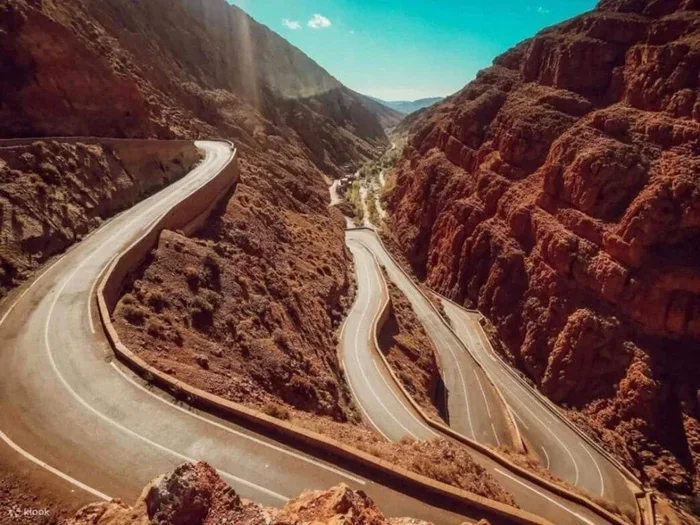
Featured image for Marrakech to Dades Valley desert tour
Image source: res.klook.com
A 6-day tour from Marrakech to the Dades Valley is one of Morocco’s most rewarding travel experiences. This extended journey takes you through the Atlas Mountains, into the Sahara Desert, and across stunning desert landscapes to reach the breathtaking Dades Valley. You’ll discover ancient kasbahs, traditional Berber villages, and some of North Africa’s most spectacular scenery. Perfect for travelers who want to see Morocco’s diverse landscapes without rushing, this tour balances adventure, culture, and relaxation.
Imagine waking up in a traditional Moroccan riad, the smell of mint tea and fresh bread filling the air. Outside your window, the Atlas Mountains stretch endlessly toward the horizon. By evening, you’re watching the sun set over golden Sahara dunes, painting the sky in shades of orange and pink. This is what a 6-day tour from Marrakech to the Dades Valley promises, and trust me, it delivers beyond expectations.
Morocco sits at the crossroads of Africa, Europe, and the Middle East. This unique position has shaped its culture, architecture, and landscapes for centuries. A journey from Marrakech to Dades Valley takes you through this diversity in just six days. You’ll cross snow-capped mountains, walk through ancient kasbahs, sleep under desert stars, and meet Berber people whose traditions date back thousands of years.
Many travelers only spend two or three days exploring Morocco. While that gives you a taste, it often leaves you wanting more. A 6-day tour gives you time to truly absorb the experience. You can linger in places you love, connect with locals, and discover hidden spots that rushed tours miss. Think of it like the difference between speed-reading a book and actually savoring every chapter. Both teach you something, but one stays with you forever.
Key Takeaways
- Duration and Route: A 6-day Marrakech to Dades Valley tour covers approximately 1,200 km through Morocco’s most diverse landscapes, including mountains, deserts, and valleys.
- Sahara Experience: The itinerary typically includes an overnight stay in the Sahara Desert at Merzouga, where you can ride camels and watch sunrise over Erg Chebbi dunes.
- UNESCO World Heritage Sites: The tour visits Ait Benhaddou, a fortified village famous for its appearance in films like Gladiator and Game of Thrones.
- Best Travel Season: October through April offers the most comfortable weather, with mild daytime temperatures and cool evenings in the desert.
- Cultural Immersion: You’ll stay in traditional riads, kasbahs, and Berber camps, experiencing authentic Moroccan hospitality along the way.
- Physical Activity Level: The tour is moderate in difficulty, with optional camel rides, short hikes, and walking through old medinas.
- Budget Range: Prices typically range from €400-800 per person, including accommodation, transport, guide, and most meals.
📑 Table of Contents
What Makes This Route So Special?
Morocco’s geography is like a compressed continent. Drive for just a few hours, and you might go from bustling cities to quiet mountains, from green valleys to endless desert. The route from Marrakech to the Dades Valley showcases this variety perfectly. It’s a journey through Morocco’s soul, revealing landscapes and cultures that have remained largely unchanged for centuries.
A Geographic Overview
The journey begins in Marrakech, a city of about 1 million people located in central Morocco. From there, you travel southeast, crossing the High Atlas Mountains through the stunning Tizi n’Tichka pass at 2,260 meters above sea level. This mountain crossing alone feels like entering a different world. The climate changes, the architecture shifts, and the pace of life slows down.
After crossing the mountains, you enter the arid pre-Saharan region. Here, the landscape transforms into dramatic gorges, palm-filled oases, and eventually the massive Erg Chebbi dunes near Merzouga. The Dades Valley lies in this transitional zone, where the Sahara meets the Atlas Mountains. It’s famous for its dramatic red cliffs, winding roads cut into the rock, and ancient kasbahs that look like something from a movie set.
The Cultural Significance
The regions along this route are home to the Amazigh people, also known as Berbers. They are the indigenous people of North Africa, with a history stretching back over 4,000 years. Their language, traditions, and architecture differ significantly from Arab Morocco. Visiting their villages feels like stepping into a living museum where ancient customs blend seamlessly with modern life.
Did You Know? The word “Berber” comes from the Greek word “barbaros,” meaning “foreigner.” However, the Amazigh people prefer their own name, which means “free people” or “noble men” in their native language.
Day-by-Day Breakdown of the 6-Day Itinerary
Understanding what each day brings helps you prepare mentally and physically. Here’s how a typical 6-day tour unfolds, though exact itineraries may vary based on your tour operator and personal preferences.
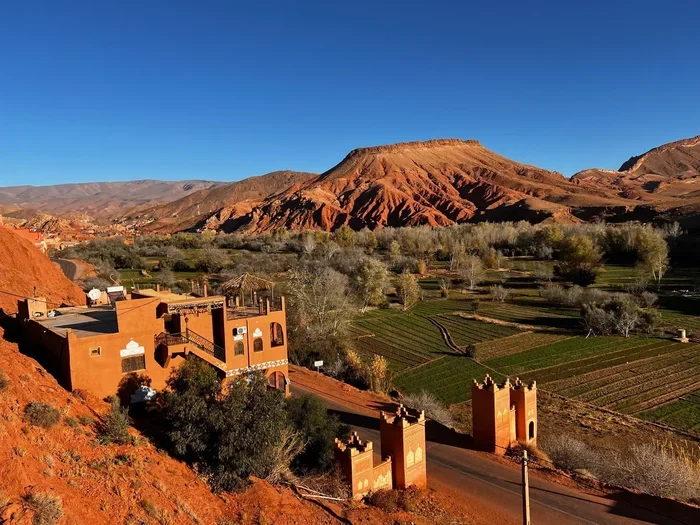
Visual guide about Marrakech to Dades Valley desert tour
Image source: desertbreeze-tours.com
Day 1: Marrakech to Ait Benhaddou and Ouarzazate
Your adventure begins early, usually around 7 or 8 AM, when your driver picks you up from your hotel in Marrakech. The first stop is the Tizi n’Tichka pass, where you’ll have time to stretch your legs and take photos of the stunning mountain scenery. The road winds through Berber villages where you can see traditional houses clinging to hillsides.
By midday, you arrive at Ait Benhaddou, a UNESCO World Heritage Site since 1987. This ancient fortified village, or ksar, has been used as a filming location for numerous Hollywood blockbusters. Movies like Gladiator, Lawrence of Arabia, and The Mummy were shot here. More recently, the Game of Thrones series used Ait Benhaddou as the setting for the city of Yunkai. Walking through its narrow alleys feels like traveling back in time.
After exploring Ait Benhaddou, you continue to Ouarzazate, known as the “Gateway to the Sahara.” This city is home to the Atlas Film Studios, one of the largest film studios in the world. You can visit the studios or simply enjoy lunch in this charming desert town before continuing your journey. Day one typically ends in the Dades Valley or nearby Tinghir, where you spend the night in a traditional kasbah hotel.
Day 2: Exploring the Dades Valley
Day two is often considered the highlight of the entire journey for many travelers. You wake up surrounded by the dramatic red cliffs of the Dades Valley, also called the “Valley of a Thousand Kasbahs.” Despite the name, the exact number of kasbahs remains unknown, but the valley is dotted with these ancient fortified structures throughout its length.
The morning is dedicated to exploring the valley’s most famous spot: the “Monkey Fingers” rock formations. These unique geological wonders, shaped by millions of years of erosion, look like giant fingers reaching toward the sky. Photographers love this spot, especially during the golden hours when the rocks glow in warm, reddish tones.
You’ll also visit traditional Berber villages where time seems to stand still. Women weave colorful carpets using techniques passed down through generations. Men tend to fields of roses and almonds. Children wave and smile as you pass. Lunch is typically served in a local restaurant or a family-run guesthouse, giving you a chance to taste authentic Moroccan cuisine like tagine and couscous.
Day 3: Dades Valley to Merzouga and the Sahara Desert
The third day takes you deeper into the desert. You’ll drive through the stunning Todra Gorge, where cliffs rise 400 meters on either side of a narrow river canyon. Even in summer, the gorge stays cool and provides habitat for wild monkeys and various bird species. It’s a popular spot for rock climbers, but you can simply enjoy the views and the refreshing shade.
From Todra Gorge, the journey continues toward Erfoud and eventually Merzouga, the gateway to Erg Chebbi. Erg Chebbi is one of Morocco’s two large Saharan ergs, or seas of dunes. The dunes here can reach heights of 150 meters, and the entire area covers about 22 kilometers north to south and 5 kilometers east to west. Standing at the edge of these massive sand formations, you realize why the Sahara has captured human imagination for millennia.
The highlight of day three is the camel ride into the desert. Camels, often called “ships of the desert,” have been used for transportation across the Sahara for thousands of years. The ride to your desert camp takes about 90 minutes, with the sunset painting the dunes in spectacular colors. At the camp, you’ll enjoy a traditional Berber dinner, music around a campfire, and sleep under a sky full of stars. With no light pollution, the Milky Way appears so bright you can almost touch it.
Day 4: Sahara Desert to Draa Valley
Day four begins with an early sunrise over the dunes, a magical experience that makes the 5 AM wake-up call worthwhile. After breakfast at the camp, you ride camels back to Merzouga, where your driver awaits. Some tours offer the option to return by 4×4 vehicle if you prefer not to ride camels again.
The journey continues toward the Draa Valley, Morocco’s longest valley, stretching approximately 200 kilometers from the Atlas Mountains to the Sahara. The valley is famous for its massive palm groves, some containing over a million date palms. It’s also home to historic kasbahs and traditional villages where Amazigh culture remains strong.
You’ll stop in towns like Zagora and Agdz, both historically important stops for caravans traveling between Marrakech and Timbuktu. These trading routes, known as the “Salt Roads,” brought wealth and cultural exchange across the Sahara for centuries. Today, the ancient caravan trails still exist, though they’re now traveled by 4×4 vehicles and tourists rather than camels and traders.
Day 5: Draa Valley to Ait Benhaddou and Ouarzazate
The fifth day brings you full circle, returning toward Ouarzazate but via a different route. You travel through the Anti-Atlas Mountains, which are older and more weathered than the High Atlas. The landscape here is otherworldly, with rock formations that look like they belong on Mars.
Along the way, you’ll visit the Skoura Oasis, a hidden gem that most rushed tours miss. This palm-filled oasis contains dozens of ancient kasbahs, including the beautiful Kasbah Amridil, which has been restored and turned into a museum. The oasis also supports diverse wildlife and agriculture, making it a green paradise in the middle of arid terrain.
Day five typically ends in Ouarzazate or the surrounding area, giving you another chance to explore the film studios or simply relax after several days of adventure.
Day 6: Return to Marrakech
The final day brings you back to Marrakech, but not without one last highlight. You cross the High Atlas Mountains again via the Tizi n’Tichka pass, this time with fresh eyes and deeper appreciation for the landscape. The journey takes about 4-5 hours, with stops along the way for photos and lunch.
Upon arrival in Marrakech, your driver takes you back to your hotel or riad, where you can relax and reflect on the journey. Many travelers find that arriving back in the bustling medina feels surreal after days in quiet mountains and silent deserts. It’s a contrast that highlights just how much variety Morocco offers in such a compact area.
Practical Information for Planning Your Trip
Now that you know what to expect each day, let’s talk about the practical details. When should you go? What should you pack? How much will it cost? These questions matter because good planning makes the difference between a stressful trip and a dream vacation.
Best Time to Travel
The best time for this tour is from October to April, when temperatures are milder. In summer (June through August), desert temperatures can exceed 45°C (113°F), making daytime travel uncomfortable and even dangerous. Winter (December and January) can be surprisingly cold at night in the desert, with temperatures dropping below freezing, but daytime remains pleasant.
Spring (March and April) and autumn (October and November) are particularly beautiful. The landscape turns green, wildflowers bloom in the valleys, and the weather is perfect for both desert activities and mountain exploration. If you want to avoid crowds, consider traveling in November or February, when tourist numbers drop but conditions remain good.
Did You Know? Despite being mostly desert, Morocco experiences snow in the Atlas Mountains, and some ski resorts operate from December through March. You can literally ski in the morning and visit the Sahara in the afternoon on certain tours.
What to Pack
Packing smart is essential for this trip. You’ll experience multiple climates, from cold mountain passes to hot desert days and freezing desert nights. Here’s what experienced travelers recommend:
- Clothing: Layers are key. Bring a warm jacket for the desert night, light long-sleeved shirts for sun protection, and comfortable pants. Avoid shorts if you want to respect local culture.
- Footwear: Comfortable walking shoes or hiking boots for uneven terrain. Sandals work for hotels and camel rides.
- Sun Protection: High-SPF sunscreen, sunglasses, and a hat or scarf (called a “cheche” locally) for protection against desert sun.
- Health Essentials: Personal medications, hand sanitizer, wet wipes, and a small first-aid kit. Water purification tablets can be useful.
- Camera Gear: Extra batteries and memory cards. Cold desert nights and hot days can drain batteries quickly.
- Miscellaneous: A headlamp for the desert camp, a power bank for charging devices, and a small backpack for day trips.
Budget Considerations
The cost of a 6-day tour varies depending on the level of luxury and what’s included. Budget tours start around €400 per person, while luxury tours can exceed €1,500. Most mid-range tours fall between €500-800 per person.
What’s typically included:
- Private or shared transport in a comfortable 4×4 vehicle or minivan
- Accommodation for 5 nights (hotels, riads, kasbahs, and desert camp)
- Breakfast and dinner daily (lunch is often on your own)
- Camel ride to and from the desert camp
- English-speaking driver/guide
- Fuel and road tolls
What’s usually not included:
- Flights to and from Marrakech
- Travel insurance
- Lunches and drinks
- Entry fees to monuments and attractions
- Tips for guides and drivers
- Personal shopping and souvenirs
Choosing the Right Tour Operator
With dozens of tour operators offering this route, choosing the right one can feel overwhelming. Here are key factors to consider that will help you make a smart decision.
Group vs. Private Tours
Group tours are more affordable and offer social interaction with fellow travelers. However, they follow fixed schedules and limit your flexibility. Private tours cost more but allow you to customize the itinerary, travel at your own pace, and spend more time at places you love. For a 6-day journey, many experienced travelers recommend private tours, as the extra cost is often worth the added comfort and flexibility.
Reputation and Reviews
Always check reviews on independent platforms like TripAdvisor, Google Reviews, and travel forums. Look for operators with consistently high ratings and detailed reviews from recent travelers. Be wary of companies with no online presence or only positive reviews posted within a short time frame, as these may be fake.
Guide Quality
The quality of your guide can make or break your experience. A good guide is knowledgeable, speaks excellent English (or your preferred language), has good relationships with local communities, and genuinely cares about your experience. Ask potential operators about their guides’ qualifications and experience. Some tours employ drivers who double as guides, while others use separate guides for cultural and historical context.
Vehicle Condition and Safety
Morocco’s roads can be challenging, especially in mountain areas and desert tracks. Make sure your tour uses modern, well-maintained vehicles with proper safety equipment. Air conditioning is essential for summer travel. Most reputable operators use Toyota Land Cruisers, Mercedes Sprinters, or similar vehicles designed for long-distance travel on varied terrain.
Tips for an Unforgettable Experience
Beyond the practical basics, certain approaches can transform your trip from good to life-changing. These insights come from experienced travelers and locals who know what makes a Morocco tour truly special.
Embrace the Unexpected
Morocco has a way of surprising you. Roads may be closed for repairs, weather might change your plans, or you might stumble upon a local festival no guidebook mentioned. The best experiences often come from these unplanned moments. Stay flexible, maintain a sense of humor, and trust that things usually work out. If your driver suggests a spontaneous stop at a village or viewpoint, say yes. These memories often become the highlights of your trip.
Learn Basic Arabic or Berber Phrases
You don’t need to become fluent, but learning a few key phrases transforms your interactions with locals. Words like “salam alaikum” (peace be upon you), “shukran” (thank you), and “la, shukran” (no, thank you) go a long way. Many Moroccans appreciate the effort, even if your pronunciation isn’t perfect. It shows respect for their culture and often leads to warmer interactions.
Respect Local Customs
Morocco is a Muslim country with conservative values, particularly in rural areas. Dress modestly, especially when visiting villages and religious sites. Avoid public displays of affection. Ask permission before photographing people, and be prepared for some women to refuse. During Ramadan, avoid eating, drinking, or smoking in public during daylight hours. These gestures of respect are deeply appreciated and often reciprocated with genuine hospitality.
Try Everything (Within Reason)
Moroccan cuisine is one of the world’s most underrated. Don’t just stick to familiar dishes. Try tagine (slow-cooked stew named after the clay pot it’s cooked in), couscous (a Friday tradition in many families), pastilla (a sweet and savory pie), and harira (a hearty soup). At breakfast, don’t miss msemen (flaky flatbread) and baghrir (Moroccan pancakes). For the adventurous, try sheep’s head, a local delicacy in some markets. Wash it all down with mint tea, Morocco’s national drink.
Did You Know? Moroccan mint tea contains so much sugar that it’s often called “Moroccan whisky.” Drinking three glasses is considered polite: the first is “gentle as life,” the second is “strong as love,” and the third is “bitter as death.”
Why This Journey Matters
Beyond the stunning photos and exciting adventures, a 6-day tour from Marrakech to the Dades Valley offers something deeper. It connects you with a culture and landscape that has shaped human history for thousands of years.
The routes you’ll travel have been used by traders, nomads, and conquerors for millennia. The kasbahs you’ll visit were built to defend against invasions and protect valuable goods. The Berber people you’ll meet have preserved their identity despite centuries of external influence. Understanding this history adds layers to every experience, turning sightseeing into a profound journey through time.
In our fast-paced world, where everything moves at digital speed, slowing down to explore Morocco at this pace feels almost revolutionary. You disconnect from constant notifications and reconnect with ancient rhythms. The call to prayer that echoes across valleys five times a day. The unhurried conversations over mint tea. The star-filled skies unpolluted by city lights. These experiences remind us what it means to be human and connected to something larger than ourselves.
Whether you’re a solo traveler seeking adventure, a couple looking for romance, or a family wanting to broaden your children’s horizons, this tour delivers. It challenges you physically, enriches you culturally, and leaves you with stories to tell for years to come. Morocco has a way of getting under your skin, and once you’ve experienced its magic, you’ll find yourself planning a return visit before you’ve even left.
So pack your bags, charge your camera, and prepare for the adventure of a lifetime. The Atlas Mountains, the Sahara Desert, and the Dades Valley are waiting to share their secrets with you. All you need to do is show up ready to embrace the journey.
Frequently Asked Questions
Is 6 days enough time to travel from Marrakech to the Dades Valley?
Yes, 6 days is an ideal duration for this route. It allows you to travel at a comfortable pace, spend quality time in each location, and experience the Sahara Desert without feeling rushed. Shorter tours often skip important stops or limit your time at key attractions.
Do I need to book the tour in advance?
Booking at least 2-4 weeks in advance is recommended, especially during peak season (October-April). This ensures availability with reputable operators and gives you time to prepare. Last-minute bookings are sometimes possible but may limit your choices and potentially increase costs.
Is the tour suitable for children and older travelers?
This tour is generally suitable for all ages, though the long drives and desert conditions may challenge very young children and those with mobility issues. The 6-day pace is more comfortable than shorter alternatives. Discuss any specific concerns with your tour operator before booking.
What type of accommodation should I expect?
Accommodation varies but typically includes traditional riads (courtyard houses), kasbah hotels, and a desert camp. Budget tours use simple but clean accommodations, while mid-range and luxury tours offer more comfortable options with amenities like pools and air conditioning. The desert camp provides basic but memorable overnight experience under the stars.
Can I customize the itinerary?
Most tour operators offer customizable private tours. You can add extra nights, modify stops, upgrade accommodations, or include special activities like cooking classes or guided hikes. Group tours typically follow fixed itineraries with limited flexibility.
What should I wear for the camel ride and desert camp?
Wear comfortable, loose-fitting clothing that covers your arms and legs for sun protection. Long pants and a light jacket are essential for the cold desert night. Closed-toe shoes are recommended for walking on sand. Your tour operator usually provides traditional scarves for additional protection against sun and sand.