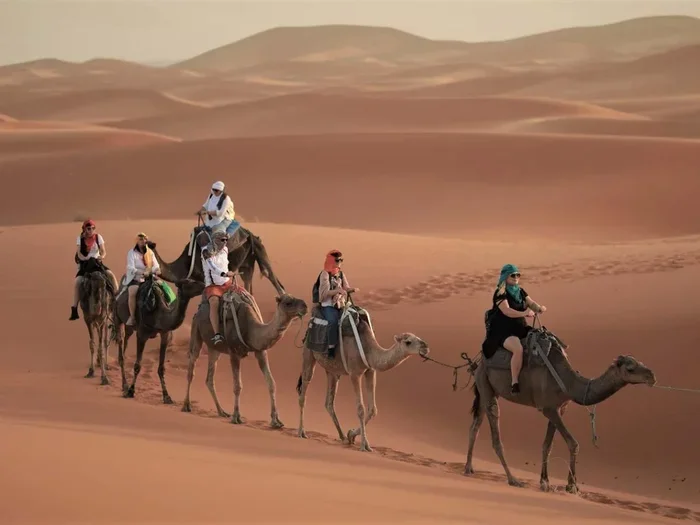
Featured image for Sahara desert camel trek
Image source: marrakech-desert-trips.com
A Tour 3 Dias Desde Marrakech a El Desierto Del Sahara is the perfect Moroccan adventure for travelers who want to experience the magic of the Sahara without rushing. Over three unforgettable days, you’ll cross the Atlas Mountains, visit ancient kasbahs, explore traditional Berber villages, and ride a camel into the towering Erg Chebbi dunes. This journey combines stunning landscapes, rich cultural encounters, and authentic desert camping for a once-in-a-lifetime experience.
Imagine standing on top of a golden sand dune, the sun melting into the horizon, and nothing but endless waves of sand stretching in every direction. That’s exactly what awaits you on a Tour 3 Dias Desde Marrakech a El Desierto Del Sahara. This isn’t just a trip; it’s a journey through some of the most breathtaking landscapes on Earth.
Morocco’s Sahara Desert has been captivating travelers for centuries, from ancient caravan traders to modern-day adventurers. And while you could try to see it all in one day, three days gives you the perfect balance. You’ll get to slow down, breathe in the silence of the desert, and truly connect with the culture and nature around you.
Whether you’re a solo backpacker, a couple on a romantic getaway, or a family looking for an unforgettable vacation, this three-day desert tour from Marrakech has something special for everyone. Let’s walk through everything you need to know to plan the adventure of a lifetime.
Key Takeaways
- Three Days Is the Sweet Spot: Two nights and three days gives you enough time to cross the Atlas Mountains, visit key landmarks, and enjoy a full desert experience without feeling exhausted.
- Erg Chebbi vs. Erg Chigaga: Erg Chebbi (near Merzouga) is more accessible from Marrakech and offers taller, more dramatic dunes, while Erg Chigaga requires longer travel but feels more remote.
- Camel Trekking Is a Must: Riding a camel into the sunset is the highlight of any Sahara tour and a memory you’ll never forget.
- Desert Camping Has Upgraded: Modern luxury and standard desert camps offer real beds, traditional music, and delicious tagine dinners under the stars.
- Packing Matters: Bring layers, sunscreen, a headscarf, and a camera with extra batteries, as desert temperatures swing wildly between day and night.
- Book With a Local Operator: Choosing a Moroccan-owned tour company supports local communities and ensures authentic cultural experiences.
- Best Time to Go: October through April offers the most comfortable temperatures for desert exploration.
📑 Table of Contents
- What Exactly Is a 3-Day Marrakech to Sahara Desert Tour?
- Why Choose 3 Days Instead of 2 or 4?
- The Best Route: Marrakech to Erg Chebbi (Merzouga)
- What to Expect: Accommodations, Food, and Desert Camp Options
- Practical Tips for Your 3-Day Sahara Adventure
- Choosing the Right Tour Operator
- Final Thoughts: Is a 3-Day Marrakech to Sahara Tour Worth It?
What Exactly Is a 3-Day Marrakech to Sahara Desert Tour?
A 3-day Marrakech to Sahara Desert tour is a guided overland journey that takes you from the bustling red city of Marrakech across the Atlas Mountains, through ancient kasbahs and lush valleys, and into the heart of the Sahara Desert. Think of it like a road trip where every stop tells a story.
The Basic Itinerary at a Glance
Most tours follow a similar route, though the exact stops can vary depending on the operator:
- Day 1: Marrakech → Atlas Mountains → Ait Ben Haddou → Ouarzazate → Dades Valley (or Todra Gorge)
- Day 2: Dades/Todra → Erfoud → Merzouga → Camel Trek → Desert Camp in Erg Chebbi
- Day 3: Early sunrise in the dunes → Camel trek back → Return to Marrakech via Draa Valley
Did You Know? The Sahara Desert covers an area of approximately 9.2 million square kilometers, making it the largest hot desert in the world. Yet only about 15% of it is actually sand; the rest is mostly rocky plains and mountains!
Who Is This Tour Perfect For?
This tour is ideal for anyone who wants more than just a quick desert photo. It’s perfect for:
- First-time visitors to Morocco who want a comprehensive introduction
- Adventure lovers seeking camel trekking and sandboarding
- Culture enthusiasts wanting to meet Berber communities
- Photographers chasing golden hour light over epic dunes
- Couples and honeymooners looking for a romantic escape
Why Choose 3 Days Instead of 2 or 4?
You might be wondering why three days is the “magic number” for this trip. The answer is simple: it’s the perfect balance between time and experience.
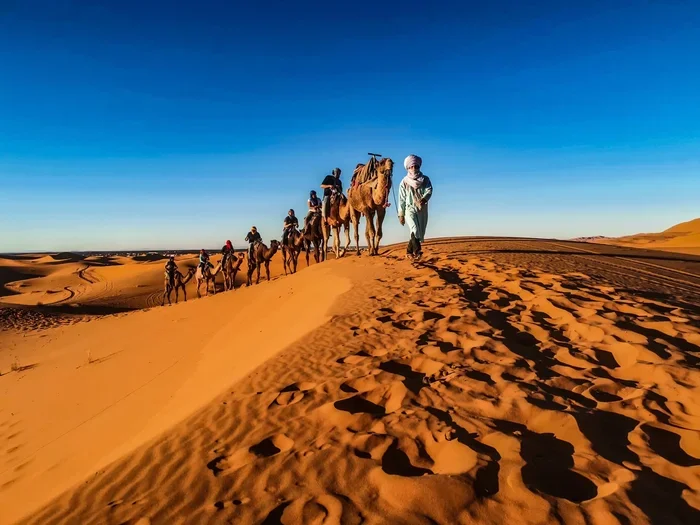
Visual guide about Sahara desert camel trek
Image source: saharansky.com
Why Not a 2-Day Tour?
A two-day tour from Marrakech to the Sahara is possible, but it’s exhausting. You’d spend more than 9 hours driving on the first day alone, leaving little time to enjoy the stops. Think of it like trying to eat a five-course meal in five minutes, technically possible, but not enjoyable.
With only two days, you’d likely skip places like the Todra Gorge, the Dades Valley, or Ait Ben Haddou, which are some of the most beautiful spots along the route.
Why Not a 4 or 5-Day Tour?
Longer tours do exist and are fantastic for travelers with more time. They often include extras like a visit to the Todra Gorge, hikes through the Atlas Mountains, or even a detour to the coastal town of Essaouira. However, for most travelers with limited vacation days, three days delivers the core Sahara experience efficiently.
Did You Know? According to Morocco’s Ministry of Tourism, the Marrakech-to-Merzouga route is one of the top three most-booked desert circuits in the country, with thousands of travelers taking the journey each month.
The Sweet Spot of Three Days
Three days lets you:
- Cross the Atlas Mountains without rushing
- Visit 2-3 major cultural landmarks
- Enjoy a full camel trek and overnight desert stay
- Return to Marrakech feeling refreshed, not drained
The Best Route: Marrakech to Erg Chebbi (Merzouga)
Most 3-day tours head toward Erg Chebbi, the famous dune field near the village of Merzouga. These dunes can reach up to 150 meters tall, which is about the height of a 50-story building! It’s a truly otherworldly landscape.
Day 1: Crossing the Atlas and the Valley of a Thousand Kasbahs
Your adventure begins early in Marrakech. After meeting your driver and guide, you’ll head south toward the Atlas Mountains.
The Tizi n’Tichka Pass
The first major highlight is the Tizi n’Tichka mountain pass, sitting at 2,260 meters above sea level. The winding road offers stunning views of Berber villages clinging to the hillsides. It’s a bit like driving through a real-life postcard.
Ait Ben Haddou
Next, you’ll visit the UNESCO World Heritage Site of Ait Ben Haddou, an ancient earthen clay city that has served as the backdrop for films like Gladiator, Lawrence of Arabia, and Game of Thrones. Walking through its narrow alleys feels like stepping back in time.
Did You Know? Ait Ben Haddou has been used as a filming location for over 20 Hollywood blockbusters, making it one of the most famous movie sets in the world.
Ouarzazate and the Dades Valley
Often called the “Hollywood of Africa,” Ouarzazate is home to film studios where many famous movies were shot. From there, you’ll continue through the Valley of a Thousand Kasbahs, eventually reaching the Dades Valley, where you’ll spend your first night in a charming riad or hotel.
Day 2: Into the Sahara Desert
Day two is when the real magic begins. After breakfast, you’ll drive through the Todra Gorge, a stunning canyon with towering limestone walls that rise 400 meters high.
Arrival in Merzouga
By late afternoon, you’ll arrive in Merzouga, the gateway to Erg Chebbi. Here, you’ll meet your camel caravan and begin the trek into the dunes. The camel ride takes about 1-1.5 hours, with the sunset painting the sand in shades of gold, orange, and pink.
Overnight in the Desert Camp
Your desert camp awaits. You’ll be greeted with mint tea, enjoy a traditional Berber tagine dinner, and gather around a campfire while local musicians play drums under a sky full of stars. Sleeping in a tent in the Sahara is something everyone should experience at least once in their life.
Think of it this way: imagine the quietest place you’ve ever been, then multiply that silence by a thousand. That’s the Sahara at night.
Day 3: Sunrise, Sandboarding, and the Journey Home
Most tours include an early morning wake-up call to watch the sunrise over the dunes. After breakfast at camp, you’ll trek back by camel or 4×4 to Merzouga, where your driver awaits.
The Return Journey
The return trip takes you through the Draa Valley, a stunning palm-lined oasis that stretches for miles. You’ll stop for lunch in a traditional town before crossing back over the Atlas Mountains and arriving in Marrakech by early evening.
What to Expect: Accommodations, Food, and Desert Camp Options
One of the most common questions travelers have is about comfort. The good news? You don’t have to rough it to enjoy the Sahara.
Accommodation on the Tour
- Night 1: A traditional riad or hotel in the Dades Valley, Todra Gorge, or nearby village. Expect comfortable rooms, hot showers, and often a swimming pool.
- Night 2: A desert camp in Erg Chebbi. Options range from basic nomad-style tents to luxury glamping experiences with private bathrooms and king-size beds.
Types of Desert Camps
Desert camps come in three main styles:
- Standard Camp: Communal tents with shared bathrooms, traditional Berber dining, and evening music around the fire.
- Luxury Camp: Private tents with ensuite bathrooms, plush bedding, and sometimes even air conditioning.
- Wild Camp: For adventurous travelers, some operators offer “wild” camping further into the dunes, away from other tourists.
Food on the Tour
Moroccan cuisine is one of the highlights of any trip. On a typical desert tour, you’ll enjoy:
- Tagine: Slow-cooked stews with chicken, lamb, or vegetables, named after the clay pot they’re cooked in
- Couscous: Often served on Fridays with seven vegetables, a Moroccan tradition
- Mint Tea: Called “Moroccan whiskey,” this sweet mint tea is a symbol of hospitality
- Fresh Bread: Baked daily in local ovens
Did You Know? Moroccan tagine dishes are cooked using a unique conical lid that circulates steam back into the dish, keeping meat tender and vegetables flavorful for hours.
Practical Tips for Your 3-Day Sahara Adventure
Preparation is the key to enjoying your desert tour. Here are some tried-and-true tips from seasoned travelers.
What to Pack
The desert can be surprisingly cold at night and hot during the day, so layers are essential.
- Clothing: Light layers for the day, warm jacket for the desert night, a scarf or shemagh for sand and sun
- Sun Protection: Sunscreen, sunglasses, and a wide-brimmed hat
- Footwear: Comfortable walking shoes plus sandals for the camel ride
- Tech Gear: Camera, extra batteries (cold nights drain batteries fast), and a power bank
- Extras: Headlamp, reusable water bottle, and a small backpack for daily essentials
Best Time to Go
The ideal months for a Sahara tour are October through April. During these months, daytime temperatures are pleasant (20-28°C / 68-82°F), and desert nights are cool but not freezing.
Summer months (June-August) can see desert temperatures soaring above 45°C (113°F), which makes daytime travel uncomfortable, though some travelers don’t mind the heat.
Health and Safety
- Stay hydrated; the dry desert air can dehydrate you faster than you realize
- Bring any personal medications, as pharmacies are rare in remote areas
- Trust your guide; they know the desert well and prioritize safety
- Listen to your body; if the camel ride is uncomfortable, speak up
Budget and Pricing
Prices for a 3-day Marrakech to Sahara tour vary widely based on accommodation and group size:
- Budget Tours: €150-€250 per person (shared group, standard camp)
- Mid-Range Tours: €250-€450 per person (smaller groups, better hotels)
- Luxury Tours: €450+ per person (private tours, luxury desert camp)
Always check what’s covered: meals, camel trek, accommodation, and transportation. Some tours include entrance fees to attractions, while others don’t.
Choosing the Right Tour Operator
Not all tour companies are created equal. Choosing the right one can make the difference between a magical trip and a stressful one.
What to Look For
- Reviews: Check TripAdvisor, Google Reviews, and travel forums
- Local Ownership: Moroccan-owned companies often provide more authentic experiences and support local communities
- Small Groups: Smaller groups (under 12 people) offer a more personal experience
- Transparent Pricing: No hidden fees, clear cancellation policies
- Experienced Guides: Look for guides who speak multiple languages and know the region well
Questions to Ask Before Booking
- What type of vehicle is used for the journey?
- How many people will be in my group?
- What meals are included?
- Which desert camp will we stay at?
- Is the camel ride included?
Did You Know? Many Moroccan tour operators are family-run businesses that have been guiding desert trips for generations. Booking with them directly often means better prices and more authentic experiences than going through large international companies.
Final Thoughts: Is a 3-Day Marrakech to Sahara Tour Worth It?
Without a doubt, yes. A Tour 3 Dias Desde Marrakech a El Desierto Del Sahara is one of the most rewarding travel experiences you can have in Morocco. It’s a journey that combines natural beauty, cultural richness, and adventure in a way few other trips can match.
You’ll come back with photos that will make your friends jealous, stories you’ll tell for years, and a newfound appreciation for the silence and beauty of the desert. Whether you’re watching the sun rise over Erg Chebbi, sharing mint tea with a Berber family, or sleeping under a sky so full of stars it looks like a painting, every moment will stay with you.
So pack your bags, charge your camera, and get ready for the adventure of a lifetime. The Sahara is waiting.
Frequently Asked Questions
How long is the drive from Marrakech to the Sahara Desert?
The drive from Marrakech to the Sahara Desert (Merzouga) takes about 9-10 hours one way, spread over two days on a 3-day tour. The route crosses the Atlas Mountains and passes through several scenic towns and valleys.
Is the 3-day Sahara tour from Marrakech worth it?
Yes, absolutely. A 3-day tour gives you the perfect balance of travel and experience. You’ll visit key landmarks, enjoy a camel trek, and spend a night in the desert, all without feeling rushed.
What is the best time of year to do a Marrakech to Sahara desert tour?
The best months are October through April, when temperatures are mild and pleasant. Summers can be extremely hot, especially in the desert, where temperatures often exceed 45°C (113°F).
Do I need to be fit to do a 3-day Marrakech to Sahara desert tour?
No, you don’t need to be highly fit. The tour involves some walking and a camel ride, but it’s suitable for most travelers in reasonable health. If you have mobility concerns, let your tour operator know in advance.
What should I wear on a 3-day Marrakech to Sahara desert tour?
Pack light, breathable clothing for daytime and warm layers for cold desert nights. A scarf or shemagh is helpful for sun and sand protection. Modest clothing is also respectful when visiting local villages and religious sites.
Can I do the 3-day Sahara tour from Marrakech with children?
Yes, children can enjoy this tour, and many families do it together. Camel rides, sandboarding, and desert camping are fun for kids. Just be sure to bring plenty of water, sun protection, and snacks for the journey.