
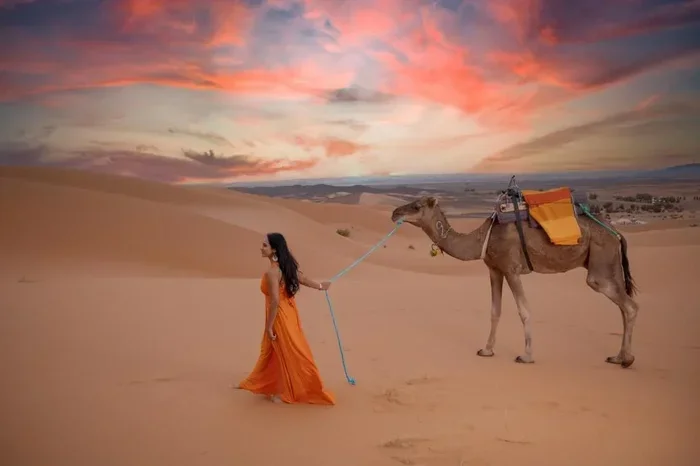
Featured image for Merzouga desert camels sunset
Image source: marrakech-desert-trips.com
A 2-day tour from Marrakech to Merzouga is the most popular way to experience the Sahara Desert in Morocco. This adventure takes you through the Atlas Mountains, Todra Gorge, and ends with a magical night in a Berber desert camp. Perfect for travelers with limited time who want to see Morocco’s most iconic landscapes, ride camels across golden dunes, and sleep under the stars in Erg Chebbi.
Picture this: You’re standing on top of a massive sand dune, the color of pure gold, watching the sun melt into the horizon. The Sahara stretches endlessly before you. There’s no noise except the soft footsteps of camels and the gentle whisper of the wind. This isn’t a dream. This is what awaits you on a 2-day tour from Marrakech to Merzouga.
Every year, over 2 million tourists visit Morocco, and the Marrakech to Sahara Desert route remains the number one requested experience. Why? Because in just 48 hours, you can journey from a bustling medieval medina to the world’s most famous desert. You sleep under more stars than you ever thought possible, eat tagine cooked over open flames, and ride camels like the nomads have done for thousands of years.
Did you know that Erg Chebbi’s dunes reach heights of 150 meters (492 feet)? That’s taller than the Statue of Liberty! This guide will tell you everything you need to know about this incredible journey, from what to pack to what to expect. Think of this as your friendly roadmap to the Sahara.
Key Takeaways
- Duration & Route: A 2-day Marrakech to Merzouga tour covers approximately 740km round trip, crossing the Atlas Mountains and reaching the Sahara Desert.
- What to Expect: Camel trek to Erg Chebbi dunes, overnight in a Berber desert camp, traditional Moroccan meals, and visits to UNESCO sites like Ait Ben Haddou.
- Best Time to Go: October through April offers the most comfortable temperatures, with winter nights reaching 0°C and summer days exceeding 45°C.
- Cost Range: Prices typically range from €80-€250 per person, depending on accommodation choices (standard camp vs. luxury camp).
- What’s Included: Transport in 4×4 or minivan, driver/guide, dinner and breakfast, camel ride, and desert camp accommodation.
- Physical Difficulty: Moderate – involves long drives (8-9 hours on Day 1) but no strenuous hiking; suitable for most fitness levels.
- Pro Tip: Bring a scarf, warm layers for desert nights, sunscreen, and a camera with extra memory cards for unforgettable sunrise shots.
📑 Table of Contents
- What Exactly Is the Marrakech to Merzouga 2-Day Tour?
- Why Should You Choose a 2-Day Tour?
- What Will You See and Do During the Tour?
- How Much Does It Cost and What’s Included?
- When Is the Best Time to Visit Merzouga?
- What Should You Pack for the Tour?
- Common Questions and Practical Tips
- Making the Most of Your Desert Experience
- Conclusion: Your Sahara Adventure Awaits
What Exactly Is the Marrakech to Merzouga 2-Day Tour?
Let’s break this down simply. A 2-day tour from Marrakech to Merzouga is a guided desert adventure that takes you from the “Red City” of Marrakech deep into the Sahara Desert. Merzouga is a small village located on the edge of Erg Chebbi, one of Morocco’s two large dune fields. Think of it as the gateway to the Sahara.
The Basic Route Explained
The journey follows a well-traveled path across southeastern Morocco. Here’s the simple version:
- Day 1: Marrakech → Atlas Mountains → Ait Ben Haddou → Ouarzazate → Todra Gorge → Merzouga
- Day 2: Camel sunrise → Return journey through different landscapes → Back to Marrakech
The drive covers approximately 740 kilometers (460 miles) total. To put that in perspective, that’s like driving from New York to Detroit and back, but instead of highways, you’re winding through mountain passes, ancient kasbahs, and finally, endless dunes.
Who Is This Tour For?
This tour is perfect for:
- Travelers with limited time in Morocco (weekend warriors)
- Adventure seekers wanting authentic desert experiences
- Photography enthusiasts chasing golden hour shots
- Couples looking for romantic experiences (desert sunsets, anyone?)
- Solo travelers wanting organized group adventures
- Families with kids aged 6 and up
Note: If you have more time, a 3-day tour lets you visit additional oases and the stunning Draa Valley, but 2 days is the sweet spot for most travelers.
Why Should You Choose a 2-Day Tour?
You might be wondering, “Why exactly two days? Why not one, or three?” Great question. Here’s why this duration works so well.
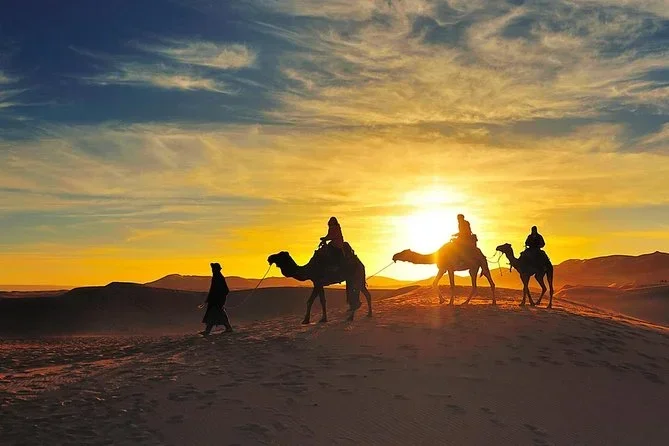
Visual guide about Merzouga desert camels sunset
Image source: media.tacdn.com
The Time Factor
The Sahara Desert is roughly 530 kilometers (330 miles) from Marrakech. If you tried to do this in one day, you’d spend 12+ hours in a car and miss the magic entirely. With two days, you actually get to experience the desert, not just photograph it from a distance.
Did you know? The Sahara is roughly the same size as the United States? That’s why you need at least one night in the desert to truly appreciate it.
The Experience Factor
Two days gives you:
- One full day of scenic driving through changing landscapes
- A sunset camel ride into the dunes
- A night sleeping under the Sahara stars
- A magical sunrise over the dunes
- The journey back with time to stop and explore
Think of it like this: visiting Morocco without seeing the Sahara is like visiting Italy without seeing Rome. You can do it, but you’d be missing the main event.
What Will You See and Do During the Tour?
Let’s walk through a typical itinerary. Imagine you’re making this journey tomorrow morning. Here’s what your 48 hours would look like.
Day 1: The Journey South
Morning Pickup (7:00-8:00 AM): Your driver picks you up from your Marrakech hotel or riad. The vehicles are usually air-conditioned 4x4s or minivans – important because summer temperatures regularly hit 40°C+ (104°F+).
Crossing the Atlas Mountains: You’ll drive over the stunning Tizi n’Tichka pass at 2,260 meters (7,415 feet) elevation. The road has 1,000+ curves and offers breathtaking views. Fun fact: This pass was built by the French in 1936 and remains one of Morocco’s most scenic drives.
Ait Ben Haddou Visit (UNESCO Site): This ancient mud-brick kasbah has stood for 300+ years and has been featured in movies like Gladiator, Lawrence of Arabia, and Game of Thrones. You’ll spend about 30-45 minutes exploring this living museum.
Lunch in Ouarzazate: Known as the “Hollywood of Africa,” this is where you’ll stop for a traditional Moroccan lunch (usually included in the tour price). Expect dishes like tagine (slow-cooked stew) or couscous.
Todra Gorge Stop: Before reaching the desert, you’ll pass through the dramatic Todra Gorge, where canyon walls rise 400 meters (1,312 feet) high. It’s like nature’s cathedral carved into red rock.
Arrival in Merzouga (Evening): By the time you arrive (around 5-6 PM), the sun is beginning its descent. This is the magic hour. You’ll meet your camels and begin the trek into Erg Chebbi.
The Camel Trek Experience
Your camel ride lasts approximately 1-1.5 hours, taking you deep into the dunes. Now, here’s an honest truth: camels are awkward to ride. They lurch when they stand up and sit down. It’s part of the adventure! Think of it like riding a horse that’s had too much coffee.
The reward? Watching the sunset paint the dunes in shades of orange, pink, and purple. This is the moment that makes every traveler’s jaw drop.
Night in the Desert Camp
You’ll arrive at your Berber camp as darkness falls. The camps range from basic (shared bathrooms, mattresses on the floor) to luxury (private tents with ensuite bathrooms). Most tours offer both options.
After dinner (typically Berber tagine with vegetables and meat), you’ll gather around a campfire. Berber musicians play traditional drums under the stars. The Milky Way is so bright here that you don’t need a telescope.
Did you know? Because Merzouga has almost zero light pollution, it’s one of the best stargazing spots on Earth. On a clear night, you can see up to 5,000 stars with the naked eye.
Day 2: Sunrise and Return
Most camps wake guests around 5:30 AM for the sunrise camel trek back to the village. Watching the first rays of light hit the dunes is genuinely breathtaking. You’ll feel like you’ve stepped into a painting.
After breakfast in Merzouga, you begin the return journey to Marrakech. The return route is slightly different, often taking you through the palm groves of Skoura or the Agdz valley. You’ll arrive back in Marrakech around 7-8 PM.
How Much Does It Cost and What’s Included?
Money matters, so let’s talk numbers. Tour prices vary based on what’s included and the level of comfort.
Price Breakdown
- Budget Tours: €80-€120 per person (shared group, standard camp)
- Mid-Range Tours: €120-€180 per person (smaller groups, better camps)
- Luxury Tours: €180-€250+ per person (private, luxury desert camp)
What’s Typically Included
- Hotel pickup and drop-off in Marrakech
- Transportation in air-conditioned vehicle
- English/French/Spanish speaking driver-guide
- One dinner and one breakfast
- Camel trek to and from the camp
- Desert camp accommodation
- Sandboarding (in some tours)
What’s NOT Usually Included
- Lunch (budget around €5-15 per meal)
- Drinks and snacks
- Tips for driver and camel guide (customary, around €10-15 total)
- Entrance fees to certain monuments
- Travel insurance
Pro tip: Always confirm what’s included before booking. Read the fine print. The cheapest option isn’t always the best deal.
Booking Options
You can book through:
- Online platforms: GetYourGuide, Viator, Booking.com
- Local agencies: Often cheaper and more flexible
- Your riad/hotel: Convenient but may include commission
- Direct with operators: Best prices, best communication
When Is the Best Time to Visit Merzouga?
Timing can make or break your desert experience. Let me explain when to go and when to avoid.
Season by Season
October to April (Best Time): Temperatures range from 20-28°C (68-82°F) during the day and can drop to 0-10°C (32-50°F) at night in winter. This is peak season. The weather is pleasant, skies are clear, and nights are cool but manageable with layers.
May to September (Challenging): Summer temperatures in Merzouga regularly exceed 45°C (113°F) during the day. Sand can reach 60°C (140°F). It’s doable, but not enjoyable for most people. January and February can be surprisingly cold at night, sometimes dropping below freezing.
Month-by-Month Breakdown
- January-February: Cold nights (0-5°C), quietest period, cheapest prices
- March-April: Ideal weather, wildflowers in the desert, moderate crowds
- May: Pleasant but warming up, fewer tourists
- June-August: Very hot, not recommended
- September-October: Excellent weather, popular time
- November-December: Cool, festive atmosphere, busy
Did you know? Merzouga gets fewer than 50mm of rain per year? That’s why the dunes exist. The desert has been bone-dry for thousands of years.
What Should You Pack for the Tour?
Packing smart is crucial. Remember: you’re going from city heat to mountain chill to desert cold, all in 48 hours.
Essential Items
- Lightweight, breathable clothing for daytime (cotton or linen)
- Warm layers (fleece or hoodie) for desert nights
- Comfortable walking shoes for the dunes
- Scarf or shemagh to protect from sand and sun
- Sunscreen (SPF 30+, desert sun is intense)
- Sunglasses with UV protection
- Sun hat or cap
- Reusable water bottle (staying hydrated is critical)
- Camera with extra batteries and memory cards
- Power bank for charging devices
- Headlamp or flashlight (helpful at night)
- Personal medications
What NOT to Bring
- Heavy luggage (space is limited in vehicles)
- Expensive jewelry
- Non-waterproof electronics
- High heels (obviously!)
Clothing Tips
Loose, long-sleeved clothing protects you from the sun better than shorts and t-shirts. Think “desert nomad chic.” Also, bright colors photograph amazingly well against the golden dunes. Leave the all-black outfits at home.
Pro tip: Bring wet wipes. Desert sand gets everywhere, and showers in basic camps can be limited.
Common Questions and Practical Tips
Let me answer the questions travelers ask most often.
Is It Safe?
Yes! Morocco is one of the safest countries in Africa. The Merzouga region is tourist-friendly, and local Berber communities are welcoming. Petty crime is rare on organized tours. Just use common sense: keep your valuables secure and don’t wander alone at night.
Do I Need Travel Insurance?
Strongly recommended. Medical emergencies, trip cancellations, and lost luggage can be expensive. Make sure your policy covers adventure activities like camel riding.
Can I Do This Tour with Kids?
Absolutely! Children aged 6+ usually do great. Kids love the camel rides and the novelty of sleeping in a tent. Bring entertainment for the long drives (tablets, books, snacks).
Will I Get Sick?
The biggest risk is sunburn and dehydration. Drink at least 3-4 liters of water daily. Avoid tap water. Stick to bottled water and cooked foods.
What Language Do They Speak?
Your guides will speak Arabic, Berber (the local language), and usually English or French. Some speak Spanish. Translation apps can help if you speak other languages.
Can I Charge My Phone?
Mid-range and luxury camps usually have charging stations (sometimes solar-powered). Basic camps may not. Bring a power bank to be safe.
What About Toilet Facilities?
Standard camps have shared squat or Western toilets. They’re basic but clean. Luxury camps offer private ensuite bathrooms. You’ll also stop at proper restaurants along the route.
Is the Camel Ride Suitable for Everyone?
Most people can ride camels, but it’s not recommended for those with severe back problems, recent surgeries, or in late-stage pregnancy. You can request a 4×4 transfer instead if camels aren’t your thing.
How Much Should I Tip?
Tipping isn’t mandatory but appreciated. Budget around €15-20 total: €10 for your driver and €5-10 for the camp staff and camel guide.
What if I’m a Solo Traveler?
Most tour operators offer single supplement options (usually €30-50 extra) or can match you with other solo travelers. It’s a great way to meet people from around the world.
Making the Most of Your Desert Experience
You want this trip to be unforgettable. Here’s how to maximize the magic.
Embrace the Culture
The Berber people have lived in this desert for over 4,000 years. Respect their traditions. Ask before photographing people. Learn a few Arabic or Berber phrases. “Shukran” (thank you) goes a long way. Try local mint tea, Morocco’s national drink. It’s made with gunpowder green tea and fresh mint, and it’s served everywhere.
Disconnect to Reconnect
The desert offers something rare in our modern world: genuine quiet. Turn off your phone for a few hours. Watch the stars. Listen to the silence. You’ll be surprised how refreshing this feels.
Capture the Moment
Golden hour in the desert lasts about 20 minutes. Have your camera ready. The dunes change colors from gold to orange to deep red. This is photography heaven.
Try Sandboarding
Many tours include sandboarding on the dunes. It’s like snowboarding but on sand. Hilarious, surprisingly fun, and you don’t need experience.
Stay Present
Don’t spend the whole trip behind a phone screen. Some moments are meant to be felt, not filmed. Trust me, your memory will thank you.
Conclusion: Your Sahara Adventure Awaits
A 2-day tour from Marrakech to Merzouga is more than just a trip. It’s a transformation. You leave the chaos of the city behind and find something rare: stillness. You swap traffic noise for desert silence, smartphones for starry skies, and routine for adventure.
Whether you’re a solo backpacker, a couple on a romantic getaway, or a family seeking unique experiences, this journey delivers. The landscapes are stunning, the culture is rich, and the memories will last forever.
You now know exactly what to expect, what to pack, when to go, and how much it’ll cost. The only thing left is to book your tour. The Sahara has been waiting for thousands of years. It’s time you met her.
Ready to ride into the sunset? Your Moroccan desert adventure is just two clicks away.