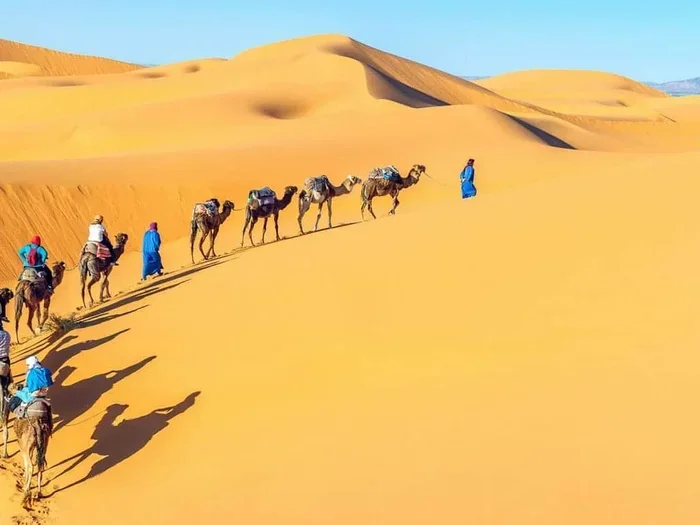
Featured image for Morocco desert dunes camel
Image source: steppestravel.com
An 11-day tour from Marrakech to Dades Valley offers one of the most complete Moroccan adventures available. This immersive journey covers imperial cities, the Atlas Mountains, Sahara Desert, and stunning gorges while introducing visitors to authentic Berber culture. Travelers experience camel trekking, traditional riads, and breathtaking landscapes that showcase Morocco’s incredible diversity, making it ideal for those seeking depth over speed.
Picture this: you wake up in a centuries-old riad in the heart of Marrakech, the call to prayer echoing through narrow alleys. By evening, you could be sitting around a campfire in the Sahara, watching stars paint the sky. Eleven days from Marrakech to Dades Valley isn’t just a trip—it’s a story you’ll tell for decades.
Morocco sits just 14 kilometers from Europe across the Strait of Gibraltar, yet feels worlds apart. With over 13 million tourists visiting annually (according to Morocco’s Ministry of Tourism 2023 data), the country has become Africa’s second-most visited destination. But here’s what most travelers miss: the real magic happens when you slow down. An 11-day adventure gives you permission to breathe, absorb, and connect with a culture that’s been welcoming visitors for over a thousand years.
This comprehensive guide covers everything you need to know about the 11-day Marrakech to Dades Valley route. Whether you’re a solo backpacker, a couple seeking adventure, or a family wanting meaningful travel experiences, you’ll find practical tips, honest insights, and the kind of details that turn a good trip into a life-changing one. Let’s dive in.
Key Takeaways
- Duration and Scope: 11 days allows travelers to explore Morocco beyond the typical 3-4 day rushed itineraries, covering over 1,200 kilometers of diverse terrain.
- Route Highlights: The journey passes through Marrakech, Ait Ben Haddou, Ouarzazate, Todra Gorge, and the iconic Dades Valley with its famous “Monkey Fingers” rock formations.
- Cultural Immersion: Travelers stay in traditional riads and kasbahs, eat authentic Moroccan cuisine, and meet Berber communities in remote mountain villages.
- Sahara Experience: A camel trek into Erg Chebbi or Erg Chigaga dunes is a highlight, with overnight camping under the Sahara stars.
- Best Travel Seasons: Spring (March-May) and autumn (September-November) offer the most comfortable temperatures for this extensive tour.
- Physical Requirements: Moderate fitness is needed for camel rides and walking in desert terrain, but no extreme athletic ability is required.
- Value Proposition: An 11-day tour provides better value than multiple shorter trips, with comprehensive transportation, guides, and accommodations included.
📑 Table of Contents
- Why Choose an 11-Day Tour from Marrakech to Dades Valley?
- The Complete 11-Day Itinerary Breakdown
- What to Expect: Accommodations, Food, and Transport
- Best Time to Take This Tour
- Practical Tips for Your 11-Day Adventure
- Choosing Your Tour Operator
- Beyond the Standard Route: Optional Add-Ons
- Final Thoughts: Making the Most of Your 11 Days
Why Choose an 11-Day Tour from Marrakech to Dades Valley?
The short answer? Depth. Morocco packs an astonishing variety of landscapes, cultures, and experiences into a relatively compact country. Trying to squeeze it all into 3-4 days is like reading every third page of a novel—you’ll get the plot but miss the poetry.
Think of an 11-day tour like a slow-cooked tagine versus a microwave dinner. Both feed you, but only one lets the flavors develop. With 11 days, you’re not constantly packing and unpacking. You settle into the rhythm of Moroccan travel—the mint tea rituals, the leisurely lunches, the unexpected conversations with artisans in their workshops.
The Numbers Behind the Experience
Did you know that Morocco has 9 UNESCO World Heritage Sites? An 11-day tour typically visits at least 4-5 of them, including the medina of Marrakech, Ait Ben Haddou, and the historic ksour of the Draa Valley. Compare that to shorter tours that might only cover 1-2 sites, and the value becomes clear.
The route from Marrakech to Dades Valley spans approximately 600 kilometers one way, but the actual journey (with detours and loops) covers closer to 1,200-1,500 kilometers. This distance includes:
- Two major mountain ranges (High Atlas and Anti-Atlas)
- Desert landscapes (Sahara fringe)
- Multiple river valleys (Draa, Todra, Dades)
- Dozens of traditional Berber villages
Who Is This Tour Perfect For?
This tour suits travelers who want more than surface-level sightseeing. If you’re the kind of person who researches restaurants before visiting a new city, who prefers staying in one place long enough to know the locals, or who feels guilty rushing through destinations, this itinerary was designed for you.
It’s particularly ideal for:
- Photography enthusiasts who need time to capture golden hour in different locations
- Culture seekers interested in Berber heritage and Islamic architecture
- Hikers and nature lovers wanting to explore gorges and mountain trails
- Slow travel advocates who believe journey matters as much as destination
The Complete 11-Day Itinerary Breakdown
Let’s walk through what your 11 days actually look like. While exact routes vary between tour operators, most follow a similar arc from Marrakech through the desert and back.
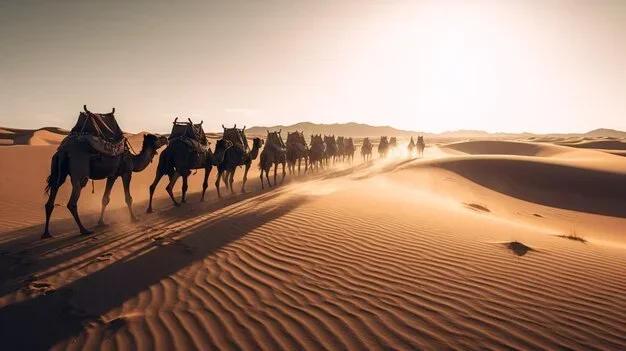
Visual guide about Morocco desert dunes camel
Image source: img.freepik.com
Days 1-2: Marrakech Discovery
Your adventure begins in Marrakech, a city founded in 1062 by the Almoravid dynasty. The medina alone contains over 100,000 residents living within its ancient walls. Spend your first day getting oriented—the famous Jemaa el-Fnaa square comes alive at night with food stalls, storytellers, and musicians.
Day two typically includes visits to the Bahia Palace, the Saadian Tombs, the Koutoubia Mosque (exterior view for non-Muslims), and the Majorelle Garden. Pro tip: arrive at the gardens right when they open at 8 AM to avoid crowds.
Did You Know? The Koutoubia Mosque’s minaret inspired the Giralda in Seville, Spain. Morocco and Spain share more architectural history than most people realize.
Day 3: Crossing the High Atlas via Tizi n’Tichka Pass
Today you leave Marrakech and climb into the Atlas Mountains. The Tizi n’Tichka pass reaches 2,260 meters (7,415 feet)—that’s higher than many European ski resorts. The drive takes about 4-5 hours with stops, winding through Berber villages where donkeys still outnumber cars.
You’ll visit a traditional argan oil cooperative along the way. Argan trees grow only in Morocco (and a tiny bit in Algeria), and the oil extraction process is so labor-intensive that a single liter takes about 20 hours to produce by traditional methods.
Day 4: Ait Ben Haddou and Ouarzazate
Ait Ben Haddou is Morocco’s most famous ksar (fortified village) and a UNESCO World Heritage Site since 1987. The earthen clay architecture has served as a backdrop for over 20 Hollywood films, including Gladiator, Lawrence of Arabia, and Game of Thrones.
Ouarzazate, known as the “Gateway to the Sahara,” sits at an elevation of 1,160 meters. The town houses the Atlas Film Studios—one of the largest movie studios in the world. If you’re a film buff, the studio tour is worth the detour.
Day 5-6: The Road to the Sahara
This stretch takes you through the Draa Valley, Morocco’s longest river valley at 1,100 kilometers. The valley contains over 300 kasbahs and is lined with millions of date palms—Morocco produces approximately 100,000 tons of dates annually.
Depending on your operator, you’ll either head to Erg Chebbi (near Merzouga) or Erg Chigaga (near M’Hamid). Both offer stunning dune experiences:
- Erg Chebbi: Taller dunes (up to 150 meters), more developed tourist infrastructure, easier access
- Erg Chigaga: More remote, fewer crowds, true wilderness experience requiring 4×4 access
Day 7: Sahara Desert Immersion
The camel trek into the dunes typically takes 1.5-2 hours, timed to catch the sunset—a daily phenomenon that draws “oohs” from even the most jaded travelers. Your Berber guides lead the camels while sharing stories of desert life.
Overnight in a desert camp, either standard (shared bathrooms, basic tents) or luxury (private bathrooms, proper beds, often called “glamping”). The night sky in the Sahara is something special—light pollution is virtually zero, making the Milky Way visible to the naked eye.
Did You Know? The Sahara Desert covers 9.2 million square kilometers—roughly the size of the United States. Yet only about 2.5 million people live there permanently.
Day 8-9: Todra and Dades Gorges
After sunrise in the desert (wake up call around 5:30 AM—worth every groggy moment), you’ll journey to the Todra Gorge. The gorge’s limestone cliffs rise 400 meters high, with a gap that narrows to just 10 meters wide in places. It’s a rock climber’s paradise, with routes for all skill levels.
The Dades Valley, your final major destination, is famous for its “Monkey Fingers” rock formations and the winding “Road of a Thousand Kasbahs.” The valley stretches about 125 kilometers and contains some of Morocco’s most spectacular geological formations.
Day 10: Return Through the Valley of the Roses
The route back to Marrakech passes through Kelaa M’Gouna, known as the Valley of the Roses. Every May, the region celebrates the Rose Festival, when over 4,000 tons of Damascus roses are harvested for rose water and cosmetics.
You’ll also stop at the Skoura palm grove, a hidden oasis with over 25,000 palm trees and several well-preserved kasbahs that most tourists never see.
Day 11: Final Day in Marrakech
Your last day typically includes shopping time in the medina’s souks (haggling expected—start at 40-50% of the asking price), a traditional hammam experience, or simply relaxing in a riad courtyard before departure.
What to Expect: Accommodations, Food, and Transport
Let’s get practical. Here’s what the actual travel experience looks like.
Where You’ll Sleep
Accommodations on this tour fall into three categories:
- Riads: Traditional Moroccan houses built around interior courtyards, often 200-400 years old, now converted to boutique hotels. Expect beautiful tilework, rooftop terraces, and attentive service.
- Kasbahs: Historic fortified buildings, some still family-owned, offering an authentic glimpse into Moroccan nobility’s lifestyle.
- Desert camps: Either basic Berber-style tents with shared facilities or luxury camps with proper beds, en-suite bathrooms, and even air conditioning.
Budget options run $80-120 per day total, mid-range $150-200, and luxury tours $250-400+. These prices typically include accommodation, transport, guide, most meals, and activities.
What You’ll Eat
Moroccan cuisine is among the most distinctive in North Africa. Your tour will likely include:
- Tagine: Named after the clay pot it’s cooked in, featuring slow-cooked meats and vegetables
- Couscous: Traditionally served on Fridays, the holy day in Islam
- Pastilla: A sweet-and-savory pie combining pigeon or chicken with almonds and cinnamon
- Harira: A hearty tomato-based soup, especially during Ramadan
- Mint tea: The national drink, prepared with green tea, fresh mint, and generous sugar
Vegetarian travelers will find plenty of options—Moroccan vegetable tagines are exceptional. Vegan travelers should communicate dietary needs in advance, as some smaller restaurants have limited vegan options beyond salads and bread.
How You’ll Travel
Most tours use 4×4 vehicles (Toyota Land Cruisers or similar) for the desert portions and comfortable minivans for highway stretches. Private tours offer flexibility; group tours (typically 8-12 people) offer social experiences and lower costs.
Roads in Morocco have improved dramatically, with over 1,800 kilometers of highway connecting major cities. However, mountain and desert roads remain challenging—motion-sensitive travelers should bring medication.
Best Time to Take This Tour
Timing matters more than you might think. Morocco’s climate varies dramatically by region and season.
Seasonal Breakdown
- Spring (March-May): Wildflowers bloom, temperatures are pleasant (20-28°C in Marrakech), and the Atlas passes are snow-free. This is peak season for good reason.
- Summer (June-August): Desert temperatures can exceed 45°C. Mountain areas remain comfortable. Not recommended for heat-sensitive travelers.
- Autumn (September-November): Similar to spring, with harvest season adding cultural activities. Excellent choice.
- Winter (December-February): Snow may block the Tizi n’Tichka pass. Desert nights drop below freezing but days are pleasant. Some operators suspend tours.
The sweet spots are March-April and October-November. You’ll avoid the worst crowds while enjoying comfortable temperatures for hiking and camel trekking.
Ramadan Considerations
If your tour coincides with Ramadan (dates shift yearly based on the lunar calendar), expect modified schedules. Restaurants may close during daylight, but the festive iftar (breaking of fast) celebrations offer unique cultural insights. Many travelers specifically time visits to experience Ramadan—it’s a personal preference.
Practical Tips for Your 11-Day Adventure
These insights come from seasoned Morocco travelers who’ve made the mistakes so you don’t have to.
Packing Essentials
The key word is layers. Desert temperature swings can exceed 30°C between day and night. Pack:
- Lightweight, long-sleeved shirts (sun protection + cultural respect)
- A warm fleece or jacket for desert nights and mountain mornings
- Comfortable walking shoes plus sandals
- Scarf or shemagh (useful for sand, sun, and visiting religious sites)
- Reusable water bottle (tap water isn’t safe—your tour provides bottled)
- Universal adapter (Morocco uses Type C and E plugs)
- Headlamp (essential for desert camps)
- Camera with extra batteries and memory cards
Money Matters
The Moroccan Dirham (MAD) is a closed currency—you can’t buy it outside Morocco or take it home. Current exchange rates hover around 10 MAD per 1 USD. ATMs are widely available in cities but rare in remote areas. Bring some euros or dollars as backup for smaller towns.
Tipping is expected but not mandatory. Budget approximately 10% at restaurants and 100-200 MAD per day for guides and drivers over an 11-day tour.
Health and Safety
Morocco is generally safe for tourists. The 2023 Global Peace Index ranks it as Africa’s second-most peaceful country. That said, normal precautions apply:
- Watch for pickpockets in crowded medinas
- Use bottled water only
- Carry hand sanitizer and wet wipes (restroom facilities vary)
- Consider travel insurance that covers medical evacuation
- Register with your embassy if traveling for extended periods
No vaccinations are required for entry, but hepatitis A, typhoid, and tetanus boosters are recommended by most health authorities.
Cultural Etiquette
Morocco is a Muslim country with conservative social norms, especially in rural areas. To show respect:
- Ask permission before photographing people
- Dress modestly (shoulders and knees covered in rural areas)
- Remove shoes when entering homes or mosques
- Use your right hand for eating and greeting
- Avoid public displays of affection
- Refuse offers of food or drink politely at first—your host will insist again
Learning a few Arabic or Berber phrases goes a long way. “Shukran” (thank you), “Salam alaikum” (peace be upon you), and “La shukran” (no thank you) are essential.
Choosing Your Tour Operator
Not all 11-day tours are created equal. Here’s how to evaluate options.
Questions to Ask Before Booking
- Group size: Smaller groups (4-8 people) offer more flexibility but cost more; larger groups (12+) are social but rushed
- Inclusions: Confirm what’s covered—some tours exclude entrance fees, drinks, or optional activities
- Accommodation style: Specify “mid-range” or “luxury” clearly, as definitions vary
- Guide qualifications: Licensed guides have official credentials; ask to see them
- Vehicle condition: Older vehicles break down more often in remote areas
- Cancellation policy: Look for flexibility, especially if booking months ahead
Red Flags to Avoid
- Prices significantly below market rate (likely hidden costs or quality issues)
- No reviews or reviews only from their own website
- Pressure to pay full amount upfront via wire transfer
- Vague itineraries that change once you arrive
- Reluctance to provide company registration details
Reputable operators often belong to professional associations and carry proper insurance. Don’t hesitate to ask for documentation.
Beyond the Standard Route: Optional Add-Ons
If you have flexibility in your schedule, consider these extensions that pair perfectly with the 11-day Dades Valley tour.
Chefchaouen (The Blue City)
Located in the Rif Mountains, this town looks like it belongs in a fairy tale. All buildings are painted in various shades of blue. Adding 2-3 days here transforms your trip, though it requires a separate transfer north.
Essaouira (Coastal Escape)
This Atlantic coast town offers beaches, fresh seafood, and a more relaxed vibe. It’s a 2.5-hour drive from Marrakech, making it a perfect final stop before flying out.
Fez and Meknes
While most 11-day tours focus on southern Morocco, you can design a route that includes Morocco’s spiritual and cultural capitals. Fez’s medina is the world’s largest car-free urban zone, with over 9,000 alleyways.
Volubilis Roman Ruins
Between Fez and Meknes lie Morocco’s best-preserved Roman ruins, a UNESCO site dating to the 3rd century BCE. History buffs shouldn’t miss it.
Final Thoughts: Making the Most of Your 11 Days
An 11-day tour from Marrakech to Dades Valley isn’t just another vacation—it’s an immersion into one of the world’s most fascinating crossroads of culture, where Africa meets the Mediterranean, where Berber traditions blend with Arab heritage, and where ancient medinas give way to endless desert dunes.
The beauty of this route lies in its rhythm. You start in the organized chaos of Marrakech, climb through mountains that seem to touch the sky, descend into valleys carved by millennia of water, and end among the surreal rock formations of Dades. Each day reveals a different facet of Morocco.
Pack your patience alongside your camera. Embrace the unexpected—a spontaneous invitation to a Berber wedding, a sunset that paints the dunes crimson, a conversation with a craftsman who’s practiced his trade for 40 years. These moments don’t appear in itineraries, but they’re what you’ll remember longest.
Morocco has welcomed travelers for centuries, from medieval explorers to modern backpackers. With proper planning, an 11-day adventure from Marrakech to Dades Valley will show you why. The question isn’t whether to go—it’s when.
Frequently Asked Questions
How much does an 11-day tour from Marrakech to Dades Valley cost?
Prices vary significantly based on accommodation style and group size. Budget tours start around $800-1,200 per person, mid-range options run $1,500-2,200, and luxury experiences can exceed $3,500. These costs typically include transportation, accommodations, guide services, most meals, and major activities like camel trekking.
Is 11 days enough to see Morocco properly?
An 11-day tour provides a solid introduction to southern Morocco, covering major highlights between Marrakech and Dades Valley. While you won’t see everything (Morocco could easily fill months of travel), this duration strikes an excellent balance between depth and practicality for most travelers with limited vacation time.
What’s the best time of year for this tour?
March through May and September through November offer the most comfortable temperatures and clearest skies. These shoulder seasons avoid both the scorching summer heat (which can exceed 45°C in the desert) and the winter snow that occasionally blocks mountain passes. April and October are particularly pleasant.
Do I need to be physically fit for this tour?
Moderate fitness is helpful but not essential. The most demanding activities are camel rides (1-2 hours), walking in desert sand, and exploring gorges on foot. Most travelers of average fitness complete the tour comfortably. If you have mobility concerns, discuss them with your operator beforehand so accommodations can be made.
Is Morocco safe for Western tourists?
Morocco is generally considered safe for tourists, ranking as one of Africa’s most stable countries. Petty crime like pickpocketing can occur in crowded medinas, similar to any major tourist destination. Following standard precautions, respecting local customs, and traveling with reputable operators minimizes risks considerably.
Can I customize this 11-day itinerary?
Private tours offer extensive customization, allowing you to add stops, adjust pacing, choose accommodation styles, and focus on specific interests like photography, hiking, or cultural immersion. Group tours follow fixed itineraries with limited flexibility. Discuss your preferences with operators before booking to find the best match.