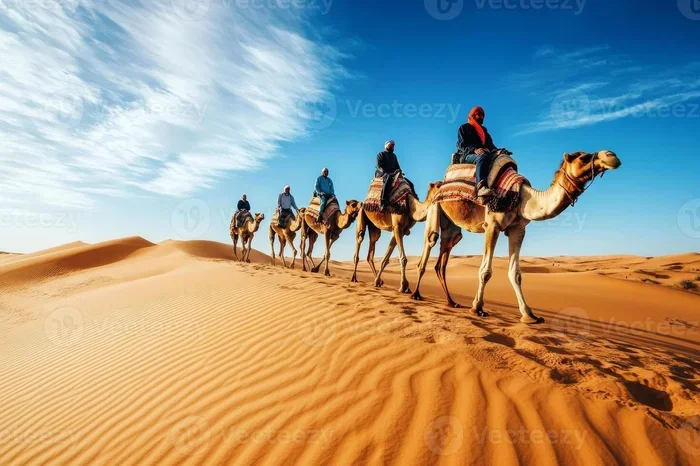
Featured image for Sahara Desert camel caravan
Image source: static.vecteezy.com
A private 13 day tour from Fes to Sahara Desert is the ultimate way to experience Morocco’s diverse landscapes, rich history, and vibrant culture at your own pace. This journey takes you from the spiritual capital of Fes through the Middle Atlas Mountains, across stunning desert dunes, and into the colorful chaos of Marrakech. With a private guide and vehicle, you get flexibility, comfort, and authentic experiences that group tours simply can’t match.
Picture this: you’re sipping mint tea in a 9th-century medina, watching craftsmen hammer copper like their great-grandfathers did. Tomorrow, you’ll be crossing snow-dusted mountains. The day after? Riding a camel into the Sahara as the sun melts into golden dunes. This isn’t a dream — it’s day three of a private 13 day tour from Fes to Sahara Desert.
Morocco packs more visual drama into one country than most continents do. Ancient imperial cities sit alongside snow-capped peaks. Berber villages cling to cliffsides above fertile valleys. And then there’s the Sahara — a sea of sand so vast it defies comprehension. Trying to see all this in a week feels like speed-reading a novel. Thirteen days? That’s when Morocco truly opens up to you.
A private tour changes everything. No waiting for stragglers. No rigid schedules. Your driver knows that you love photography, so he stops at that perfect viewpoint. Your guide shares the local gossip about that ksar you’re walking through. This is travel designed around you, not the other way around.
Key Takeaways
- Perfect Duration: 13 days is the sweet spot for exploring Morocco without feeling rushed, covering roughly 2,000 kilometers of diverse terrain.
- Private Means Flexible: You control the pace, stop when you want, and customize stops based on your interests.
- Two Major Desert Entries: You can enter via Merzouga (Erg Chebbi) or Zagora (Erg Chigaga) — each offers a unique desert experience.
- UNESCO Heritage Sites: The tour visits at least four UNESCO World Heritage Sites, including Fes and Ait Ben Haddou.
- Best Travel Seasons: Spring (March-May) and fall (September-November) offer the most comfortable temperatures.
- What to Pack: Layers are essential because temperatures swing dramatically between cold mountains and hot deserts.
- Cost Value: Private tours offer better value than you think when split between 2-4 travelers, often comparable to group tours.
📑 Table of Contents
- Why Choose a Private 13 Day Tour from Fes to Sahara Desert?
- The Classic Route: Fes to Sahara Desert Itinerary Overview
- What to Expect: Accommodations and Desert Camps
- Practical Tips for Your Private 13 Day Tour from Fes to Sahara Desert
- Choosing the Right Tour Operator
- Why 13 Days is the Magic Number
- Making Your Private 13 Day Tour from Fes to Sahara Desert Memorable
- Conclusion: Your Moroccan Adventure Awaits
Why Choose a Private 13 Day Tour from Fes to Sahara Desert?
Let’s be honest: Morocco can feel overwhelming for first-time visitors. The medinas are mazes. The languages shift every few hundred kilometers (Arabic, Berber, French, and sometimes Spanish all overlap). Bargaining is an art form. Having a private guide is like having a translator for the entire country.
The Freedom Factor
Think of a private tour like renting a car versus taking the bus. The bus is cheaper, sure. But the car? You stop when you want. You detour down that interesting side road. You linger at the viewpoint for twenty minutes because the light is perfect. That’s the private tour difference.
With your own driver-guide, you can:
- Adjust start times based on your energy level each day
- Skip attractions that don’t interest you
- Add spontaneous stops at villages or viewpoints
- Ask endless questions without feeling like you’re holding up a group
- Choose your accommodations from budget riads to luxury desert camps
Did You Know?
Morocco welcomed approximately 14.5 million tourists in 2023, with Fes being one of the top three most-visited cities. Yet the Sahara Desert region still feels uncrowded — especially on routes like Erg Chigaga, where you might share a dune with only a handful of other travelers.
The Classic Route: Fes to Sahara Desert Itinerary Overview
Most private 13 day tours from Fes follow a similar geographical arc, though the exact stops vary. Think of it like a giant U-shape on the map. You start in Fes in the north, dip down into the Sahara, then curve west through the Draa Valley to reach Marrakech before returning north to Casablanca.
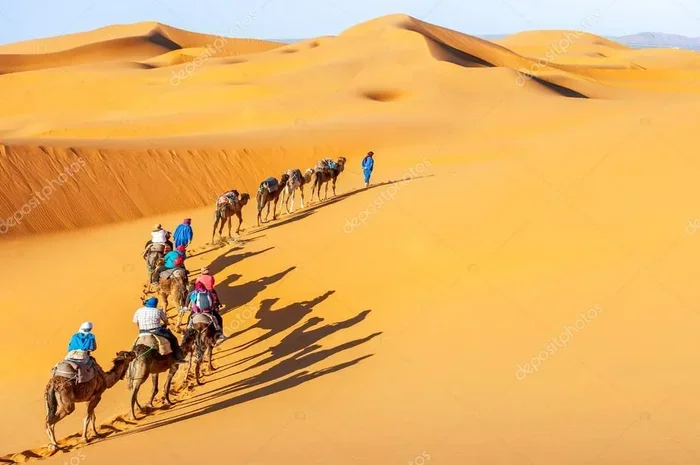
Visual guide about Sahara Desert camel caravan
Image source: st2.depositphotos.com
Day 1-2: Exploring Fes
Fes is Morocco’s spiritual and intellectual capital. Founded in 789 AD, it’s home to the world’s oldest continuously operating university — the University of al-Qarawiyyin, established in 859 AD. That’s older than Oxford by almost 200 years.
Your guide will lead you through Fes el-Bali, the ancient medina that’s a UNESCO World Heritage Site. Picture narrow alleys so tight that donkeys still carry goods here. The smell of spices mingles with cedar wood and leather. It’s sensory overload in the best way.
Must-see spots include:
- Al-Qarawiyyin Mosque and University
- Chouara Tanneries (yes, those famous colorful vats)
- Bou Inania Medersa (an ancient Islamic school)
- Nejjarine Museum of Wooden Arts
- The Jewish Quarter (Mellah)
Day 3-4: Middle Atlas Mountains
Leaving Fes, you climb into the Middle Atlas. The landscape changes dramatically within an hour — from bustling city to cedar forests and volcanic lakes. This region feels like Morocco’s Switzerland.
The famous Barbary macaques live in the Cedar Forest near Azrou. These are North Africa’s only native primates, and they live completely wild right here. Stop, watch them interact, and take photos. They’re surprisingly photogenic.
Midelt, your overnight stop, sits at about 1,500 meters elevation. It’s known for apples and fossils. The surrounding region has some of the world’s richest fossil deposits from the Jurassic period — around 150 million years old.
Day 5-6: Sahara Desert Entry (Merzouga Route)
This is the moment everyone’s been waiting for. You reach Merzouga, the gateway to Erg Chebbi — those massive sand dunes that rise up to 150 meters tall. The Sahara isn’t just sand; it’s an entire ecosystem with specialized plants, animals, and people who’ve adapted to extremes.
Your camel awaits. The trek into the desert takes about 90 minutes, and you’ll arrive at your luxury desert camp just as the sun begins its dramatic descent. This is the Sahara at golden hour, and it’s genuinely one of Earth’s most spectacular sights.
At the camp, you’ll enjoy:
- Berber drums and music around a campfire
- Traditional tagine dinner (slow-cooked stew with meat and vegetables)
- Stargazing like you’ve never experienced — the Milky Way is so bright it casts shadows
- Sunrise over the dunes the next morning
Did You Know?
The Sahara Desert covers approximately 9.2 million square kilometers — roughly the size of the United States. Yet Erg Chebbi is just a tiny 22-kilometer-long section. It’s the ocean; this is a beautiful, sandy cove.
Day 7: Todra and Dades Gorges
After the Sahara, the route west takes you through two of Morocco’s most dramatic gorges. The Todra Gorge features cliff walls that rise 400 meters on either side of a narrow canyon — close enough to touch both walls in some spots.
Local Berber families live in these canyons, maintaining traditional lifestyles. You might be invited for tea. Accept it. This is the real Morocco, away from the tour bus circuit.
Day 8-9: Ait Ben Haddou and Ouarzazate
Now comes the Hollywood Morocco moment. Ait Ben Haddou is a fortified village (ksar) that has starred in films like Gladiator, Lawrence of Arabia, and Game of Thrones. It’s a UNESCO site and arguably the most photographed historical location in Morocco.
Walk across the river and explore the earthen architecture. The clay buildings have stood for centuries and still house families. Your guide will explain how the kasbahs were built — by hand, by families, layer by layer of packed earth.
Day 10-11: Draa Valley and Zagora
The Draa Valley stretches south from Ouarzazate, a ribbon of green oases cutting through rocky desert. Date palms number in the millions here. Ancient kasbahs line the route, many crumbling, some beautifully restored.
If you have time, a visit to a desert oasis town like Agdz or Zagora shows how people have survived in this harsh environment for centuries through ingenious irrigation systems called foggaras.
Day 12-13: Marrakech Finale
Your journey culminates in Marrakech, Morocco’s “Red City” thanks to its distinctive red sandstone buildings. This is sensory overload defined — snake charmers, story-tellers, henna artists, and musicians compete for your attention in the famous Jemaa el-Fnaa square.
Major Marrakech attractions include:
- Jemaa el-Fnaa Square (UNESCO Masterpiece of Oral Heritage)
- Majorelle Garden and Berber Museum
- Bahia Palace
- Saadian Tombs
- Koutoubia Mosque (the city’s landmark)
From Marrakech, you’ll transfer to Casablanca for your departure flight, or extend your stay in Marrakech if time allows.
What to Expect: Accommodations and Desert Camps
One of the joys of a private tour is choosing your comfort level. Morocco’s tourism infrastructure has exploded in the past decade, and you can find everything from backpacker hostels to five-star luxury.
Riads: Morocco’s Hidden Gems
A riad is a traditional Moroccan house built around an interior courtyard. The word literally means “garden” in Arabic. Staying in a riad feels like staying in someone’s beautiful, art-filled home — because historically, that’s exactly what they were.
Most riads feature:
- Interior courtyards with fountains or orange trees
- Tile work (zellige) and carved plaster
- Roof terraces with city views
- Traditional breakfast with fresh bread, honey, and mint tea
Desert Camp Options
Your Sahara night can be as rustic or luxurious as you want:
Standard Desert Camp: A traditional Berber tent with shared facilities. Communal dinner around a fire. Authentic and atmospheric. Budget-friendly.
Luxury Desert Camp: Private tent with ensuite bathroom, proper beds, fine dining, and often a private dune viewing area. These have popped up across the Sahara in recent years and they’re spectacular.
Mid-Range Comfort: A good compromise — private tents with shared bathroom facilities. Still feels adventurous.
Did You Know?
The luxury desert camp industry in Morocco grew by over 200% between 2015 and 2023. Today, you can find glamping in the Sahara with full amenities — running water, electricity, even Wi-Fi in some locations. The romance of the desert meets modern comfort.
Practical Tips for Your Private 13 Day Tour from Fes to Sahara Desert
Let’s talk logistics. This is the stuff that makes your trip actually work smoothly.
Best Time to Travel
Morocco has three distinct travel seasons:
Spring (March-May): Wildflowers bloom in the Atlas Mountains. Temperatures are mild everywhere. Crowds are building but not overwhelming. This is peak season for good reason.
Fall (September-November): Similar to spring but harvest season adds colorful markets. The desert is still warm but not scorching. Excellent choice.
Winter (December-February): Snow covers the High Atlas. Desert nights get cold (sometimes below freezing). Some mountain passes close. Fewer tourists, lower prices.
Summer (June-August): Desert temperatures can exceed 45°C (113°F). Not recommended unless you handle heat well and prioritize the coast or mountains.
What to Pack
Packing for a 13-day Morocco tour requires strategy. You’re covering four climate zones:
- Layers: Mornings in the desert can be cold; afternoons hot. Mountains add another variable.
- Modest clothing: For mosque visits and conservative areas. Shoulders and knees covered.
- Comfortable walking shoes: For medina exploration and gorges.
- Scarf or shawl: Doubles as sun protection and warmth.
- Sunscreen and sunglasses: The Saharan sun is intense.
- Camera with extra batteries: Cold desert nights drain batteries fast.
- Small daypack: For camel treks and day trips.
Money and Budgeting
Morocco uses the Moroccan Dirham (MAD). The exchange rate hovers around 10 MAD to 1 USD, though this fluctuates.
Budget considerations for a private tour:
- Tour cost: Typically $1,500-$3,500 per person for a 13-day private tour, depending on accommodation level
- Tips: Budget $10-15 per day for your driver, $5-10 for guides
- Souvenirs and extras: Allow $200-500 depending on shopping habits
- Meals not included: Morocco is affordable — $15-30 per day covers delicious food
Health and Safety
Morocco is generally very safe for tourists. Petty crime exists in tourist areas like any country, but violent crime against tourists is rare. Common-sense precautions apply:
- Drink bottled water (your tour vehicle will have it)
- Use sunscreen religiously
- Trust your guide’s restaurant recommendations
- Keep valuables secure in crowded medinas
The biggest health concern is usually the long drives. Your driver will stop every 1.5-2 hours for breaks, which is essential.
Did You Know?
Morocco has invested heavily in road infrastructure. The highways connecting Fes, Marrakech, and the desert are modern and well-maintained. Some mountain roads remain challenging, but your driver knows them intimately.
Choosing the Right Tour Operator
Not all private tours are created equal. The difference between a great tour and a mediocre one usually comes down to the operator.
What to Look For
Local expertise: Choose a Morocco-based company. They know the routes, have the relationships, and handle problems better when they arise.
Driver-guides versus drivers plus guides: Many tours have a driver who’s also your guide. This works well for most travelers. If you want deep historical or cultural context, ask for specialist guides at major sites.
Vehicle quality: Morocco’s roads are good, but long-distance travel deserves a comfortable, air-conditioned vehicle. Make sure the operator uses modern 4x4s or SUVs.
Customization options: Good operators let you tweak the itinerary. If you want to add a cooking class in Fes or skip something, they should accommodate.
Transparent pricing: Understand what’s included. Most private tours cover vehicle, driver, fuel, accommodation, and breakfast. Dinner and entrance fees are sometimes separate.
Red Flags to Avoid
- Pressure sales tactics from booking inquiries
- Vague itineraries that don’t specify accommodations
- No references or reviews from past travelers
- Operators pushing commission-based shopping stops
- Lack of insurance and licensing information
The Authentic Experience
The best tour operators balance the famous sites with authentic local experiences. This means visiting a family-run argan oil cooperative, not just a tourist shop. Meeting a Berber elder who tells stories from his youth, not just checking off Instagram-worthy spots.
Ask potential operators how they incorporate local experiences. The answer tells you everything about their values.
Why 13 Days is the Magic Number
You could do Morocco in seven days. You could spend a month. But 13 days hits a sweet spot that experienced travelers recognize.
Beyond the Highlights
Shorter tours rush through Morocco’s greatest hits. You see the Sahara but barely experience it. You walk through Ait Ben Haddou but don’t understand its history. Thirteen days gives you time to absorb each location.
Consider what “experiencing” the Sahara means versus “seeing” it:
- Day 1 in the desert: Arrive, watch sunset, dinner, sleep
- Day 2 in the desert: Sunrise, breakfast, optional camel ride or hike, then continue journey
One night feels rushed. Three nights might be too long for most travelers. Two nights in the desert creates the perfect rhythm.
Pacing for Real Travel
Thirteen days also allows for buffer time. Flights get delayed. Someone gets sick. A particular village captures your heart and you want to stay longer. With two weeks, you have flexibility without feeling like you’re wasting a day.
Most private 13 day tours from Fes to Sahara Desert include:
- 2 nights in Fes (exploration)
- 1-2 nights Middle Atlas region (slow transition)
- 1-2 nights in the Sahara (desert immersion)
- 1 night Dades/Tinghir area (gorges exploration)
- 1-2 nights Ouarzazate/Ait Ben Haddou (film history and architecture)
- 1 night Draa Valley (oasis landscapes)
- 2-3 nights Marrakech (final exploration)
This pacing ensures you’re not exhausted by day seven, which is when rushed travelers often burn out.
Making Your Private 13 Day Tour from Fes to Sahara Desert Memorable
Here’s the thing about Morocco: the country doesn’t just show itself to you. It requires engagement. Talk to your guide. Ask questions. Try foods you’re nervous about. Accept invitations for tea. These moments create the memories that last decades.
Some practical ways to deepen your experience:
Cultural Etiquette
- Greet people properly: A handshake with your right hand, sometimes touching your heart afterward
- Ask before photographing people: Especially in rural areas
- Dress modestly at religious sites: Cover shoulders and knees
- Remove shoes: When entering mosques or someone’s home
- Use your right hand: For eating and giving/receiving items
Food Adventures
Moroccan cuisine rewards the adventurous. Some essentials to try:
- Tangia: Marrakech’s signature slow-cooked meat dish
- Pastilla: Sweet and savory pie, Fes specialty
- Msemen: Flaky flatbread, perfect for breakfast
- Fresh orange juice: In Marrakech’s Jemaa el-Fnaa, less than $1
- Atay: Mint tea, the national drink
Street food in Morocco is generally safe and delicious. Follow your guide’s recommendations, and you’ll eat well throughout the journey.
Souvenir Shopping
Morocco offers some of the world’s best handicrafts. Quality varies wildly, so here’s what to know:
- Berber carpets: Genuine ones are investment pieces. Look for cooperatives that pay fair wages to weavers.
- Argan oil: Buy from cooperatives in the Souss region, not tourist shops.
- Leather goods: Fes and Marrakech have the best, but inspect quality carefully.
- Spices: Fresh rasps and dried mint are excellent.
- Ceramics: Safi is the pottery capital; Salé has beautiful blue work.
Your guide can help you navigate bargaining, which is expected in medinas but inappropriate in fixed-price shops. Starting at 40-50% of the asking price is typical for serious negotiation.
Did You Know?
The Moroccan government has implemented strict authenticity laws. Items labeled as “Berber” must be genuinely Berber-made. Cooperative-produced goods come with certificates of origin. This protects both artisans and buyers from cheap imitations.
Conclusion: Your Moroccan Adventure Awaits
A private 13 day tour from Fes to Sahara Desert isn’t just a vacation. It’s a journey through time, culture, and some of Earth’s most dramatic landscapes. You’ll trace ancient caravan routes. You’ll meet people whose lives connect to centuries of tradition. You’ll stand in landscapes that feel otherworldly.
What makes the private tour format special isn’t luxury — it’s intimacy. You move at your pace. You ask the questions you want answered. You stay longer where your heart calls. You leave earlier when you’ve seen enough. This is travel as it should be.
Thirteen days gives you time to see Morocco’s diversity — the spiritual depth of Fes, the alpine feel of the Atlas, the vast silence of the Sahara, the cinematic drama of Ait Ben Haddou, and the sensory explosion of Marrakech. These aren’t checkboxes on a tour; they’re experiences that reshape how you see the world.
Start planning your private 13 day tour from Fes to Sahara Desert today. Talk to local operators. Read recent reviews. Ask questions. Morocco is waiting, and it rewards travelers who approach it with curiosity and respect. Your journey into the heart of North Africa promises to be one of the great adventures of your life.
Frequently Asked Questions
How much does a private 13 day tour from Fes to Sahara Desert typically cost?
Most private 13 day tours from Fes to Sahara Desert cost between $1,500 and $3,500 per person, depending on accommodation choices. Luxury options with high-end riads and premium desert camps run higher, while mid-range tours offer excellent value. The cost typically includes private vehicle, driver-guide, accommodation, and breakfast.
Is a private tour worth it compared to a group tour in Morocco?
Yes, especially for travelers who value flexibility and authentic experiences. Private tours let you set your own pace, customize stops, and ask questions freely. For couples, families, or small groups of 3-4 people, private tours often cost only slightly more than group tours while offering significantly better experiences.
What is the best time of year for a Sahara Desert tour from Fes?
Spring (March to May) and fall (September to November) offer the most comfortable weather for a Sahara Desert tour from Fes. Temperatures are mild in the mountains and bearable in the desert. Summer brings extreme heat (over 45°C in the Sahara), while winter nights can drop below freezing.
How many days should I spend in the Sahara Desert itself?
Most travelers find two days and one night in the Sahara Desert ideal. This gives you time to arrive by camel, watch the sunset, enjoy dinner under the stars, experience sunrise, and continue your journey. One night feels rushed, while three or more might be too long for most itineraries.
What should I wear and pack for this type of tour?
Pack layers since temperatures swing dramatically between cold mountain mornings and hot desert afternoons. Modest clothing covers shoulders and knees for religious sites. Comfortable walking shoes are essential. Don’t forget sunscreen, sunglasses, a scarf for sun protection, and a camera with extra batteries for the brilliant stargazing.
Are the desert camps safe and comfortable for tourists?
Yes, modern desert camps in Morocco are very safe and comfortable. Standard camps offer traditional Berber tents with communal facilities, while luxury camps provide private tents with ensuite bathrooms, proper beds, and gourmet meals. Both include security, and the camps have been developed specifically to welcome international tourists safely.