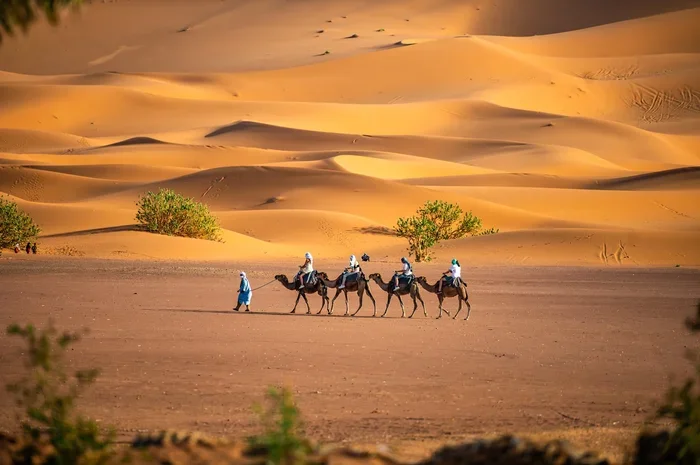
Featured image for Sahara desert camels Merzouga
Image source: merzouga-tours.com
Looking for adventure without the long commitment? The Marrakech to Merzouga 1 day tour packs an entire Saharan experience into a single, action-packed day. You’ll travel through the stunning Atlas Mountains, visit UNESCO World Heritage kasbahs, ride a camel across the iconic Erg Chebbi dunes, and watch a sunset that looks painted across the sky. It’s the perfect taste of Morocco’s desert magic for travelers short on time.
Imagine standing at the edge of a sea of golden sand, watching the sun melt into the horizon like a giant ball of fire. That’s exactly what awaits you on a Marrakech to Merzouga 1 day tour. But here’s the honest truth: this adventure is ambitious. You’ll be traveling roughly 560 kilometers round-trip, crossing mountain passes, exploring ancient fortresses, and riding a camel, all before returning to your Marrakech hotel late at night.
Think of it like running a marathon versus a leisurely jog. A 3-day tour lets you savor the journey. A 1 day tour? It’s a sprint, but oh, what a sprint it is. You see landscapes that will make your jaw drop, meet Berber nomads who’ve called this desert home for centuries, and collect memories that last a lifetime. The early start (usually around 6:00 AM) is the price you pay for witnessing the Sahara’s most magical moments in a single day.
Whether you’re a backpacker counting days, a business traveler with limited vacation time, or simply someone who wants to see if you love the desert before committing to longer trips, this tour delivers. In this guide, I’ll walk you through exactly what to expect, how to prepare, and how to make the most of every single minute of your day in the Moroccan Sahara.
Key Takeaways
- Distance and Duration: The one-day Marrakech to Merzouga tour covers roughly 560 km (350 miles) round-trip and takes about 14-16 hours total.
- Route Highlights: You’ll pass through the High Atlas Mountains, the Draa Valley, and the Todra Gorge area.
- Camel Ride: A traditional camel trek across the Erg Chebbi dunes is included in most itineraries.
- Best Season: October through April offers the most comfortable temperatures for this long desert day.
- What to Pack: Light layers, sunscreen, a scarf, sunglasses, and a fully charged camera are essentials.
- Not for Everyone: This is a very long day; travelers with back problems or young children may prefer a 2-3 day tour.
- Booking Tip: Book with a licensed local operator for the best price, safety, and authentic experience.
📑 Table of Contents
- Who, What, Where, When, and Why: The Essentials Explained
- The Route and What You’ll See: A Journey Through Five Landscapes
- The Camel Ride: What to Expect and How to Prepare
- Sunset in the Sahara: The Moment That Makes It All Worth It
- Practical Tips: Making Your Day Smooth and Enjoyable
- Is This Tour Right for You? Honest Reflections
- Conclusion: Your Sahara Adventure Awaits
Who, What, Where, When, and Why: The Essentials Explained
Before we dive into the details, let’s answer the five basic questions that every traveler asks first. Consider this your quick orientation session.
Who Is This Tour For?
This tour is perfect for time-pressed travelers, adventure seekers, and first-time Morocco visitors. If you’re based in Marrakech and only have one free day, this is your best chance to see the Sahara. It’s also ideal for people who want a “test run” before committing to a longer desert expedition.
However, it’s not ideal for everyone. Families with very young children, elderly travelers with mobility issues, and people with severe back problems should consider a 2-day or 3-day tour instead. The long hours in the vehicle (roughly 8-9 hours of driving) can be tiring.
What Exactly Is the Tour?
The Marrakech to Merzouga 1 day tour is a guided day trip that combines overland travel with desert activities. You leave Marrakech in the early morning, cross the Atlas Mountains, visit cultural landmarks along the way, arrive at Merzouga in the afternoon, ride a camel into the Erg Chebbi dunes, watch the sunset, and return to Marrakech by late evening.
Think of it as a “greatest hits” album of southern Morocco. You don’t get deep cuts or extended solos, but you get all the chart-toppers in one sitting.
Where Is Merzouga?
Merzouga is a small village on the edge of the Sahara Desert in southeastern Morocco. It sits near the Algerian border, about 560 km southeast of Marrakech. The village is famous for being the gateway to Erg Chebbi, one of the world’s most stunning sand dune fields, with some dunes reaching heights of 150 meters (nearly 500 feet).
To put that in perspective, the dunes of Erg Chebbi are taller than the Eiffel Tower. That’s some serious sand.
When Is the Best Time to Go?
The best months are October through April, when daytime temperatures are pleasant (20-28°C / 68-82°F). Summer months (June-August) can see desert temperatures soar above 45°C (113°F), which makes the long day uncomfortable and even dangerous.
Winter brings cold nights in the desert (sometimes dropping below 5°C / 41°F), but daytime tours remain enjoyable. Just bring warm layers for the camel ride and sunset viewing.
Why Take This Tour?
Because no Morocco trip is complete without seeing the Sahara, and this tour makes it possible in just one day. According to Morocco’s National Tourism Office, the Sahara Desert is the country’s #1 bucket-list attraction, drawing visitors from every corner of the globe. A 1 day tour lets you check this incredible experience off your list without rearranging your entire itinerary.
The Route and What You’ll See: A Journey Through Five Landscapes
Here’s where the magic happens. Your day will unfold across five distinct geographical zones, each more stunning than the last.
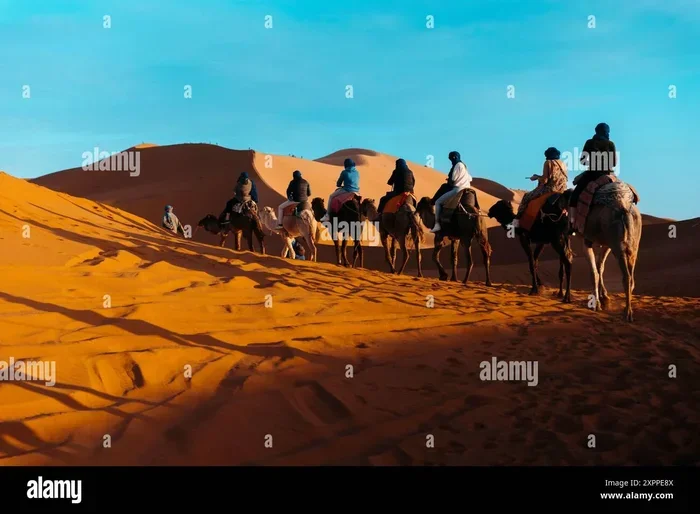
Visual guide about Sahara desert camels Merzouga
Image source: c8.alamy.com
Zone 1: The High Atlas Mountains
Your journey begins with a drive over the Tizi n’Tichka pass, which sits at 2,260 meters (7,415 feet) above sea level. The winding roads offer panoramic views of Berber villages clinging to hillsides, terraced fields, and snow-capped peaks (in winter and early spring).
Did you know? The Atlas Mountains get their name from the ancient Greek Titan, Atlas, who was said to hold up the sky. Early Greek explorers thought these peaks were so massive they must have been supporting the heavens.
Keep your camera ready for:
- Mountain panoramas from roadside viewpoints
- Traditional Berber villages with red-earth houses
- Argan oil cooperatives (great for a quick photo stop and free tasting)
- Mule-loaded caravans that look straight out of a history book
Zone 2: Ouarzazate: The “Hollywood of Africa”
After crossing the mountains, you’ll reach Ouarzazate, often called the “Gateway to the Sahara”. This small city is famous for its film studios (Atlas Studios has hosted productions like Gladiator, Lawrence of Arabia, and Game of Thrones).
Many tours stop at the Taourirt Kasbah, a 19th-century fortress that looks like a sandcastle built by giants. It’s a UNESCO-listed site and one of the most photogenic spots in southern Morocco.
Zone 3: The Draa Valley
Continuing south, you’ll wind through the Draa Valley, Morocco’s longest river valley. This region is dotted with ancient kasbahs, palm groves, and traditional Berber villages that have remained largely unchanged for centuries.
The contrast here is striking. After the barren mountains, you’ll suddenly see lush green palm trees stretching for miles, with mud-brick kasbahs rising like crowns from the landscape.
Zone 4: Todra Gorge and the Pre-Desert
Depending on your route, you may pass through or near the Todra Gorge, a stunning canyon with 400-meter-high (1,300-foot) rock walls. Even a brief photo stop here is worth it. The gorge is a popular spot for rock climbers from around the world.
As you continue toward Merzouga, the landscape gradually transforms. Mountains give way to rocky plains, then to hamada (stone desert), and finally, to the first whispers of sand.
Zone 5: Erg Chebbi: The Sahara’s Crown Jewel
Finally, you arrive at Erg Chebbi, where dunes can reach 150 meters high. This is the moment you’ve been waiting for. The first glimpse of these massive sand mountains, glowing copper in the afternoon light, is unforgettable.
Your camel will be waiting. It’s time to ride into the sunset.
The Camel Ride: What to Expect and How to Prepare
Let’s be honest: a camel ride is one of those experiences that sounds romantic in theory but feels awkward in practice, especially for the first five minutes. Then it becomes magical.
How Does a Camel Ride Work?
Camels are typically saddled in a line, and you ride one at a time (with a guide leading your camel). The ride into the dunes usually lasts about 45 minutes to 1 hour, taking you deep enough into Erg Chebbi to escape roads and crowds.
Your camel will stand up in two stages: first the back legs (expect a lurch forward), then the front legs (expect a lurch backward). It’s a bit like a rocking boat, but you’ll get used to it quickly.
What to Wear for the Camel Ride
- Long pants: Protects your legs from chafing against the saddle.
- Closed-toe shoes: Sandals will fill with sand in seconds.
- A scarf (cheche): Traditional Berber scarves protect your face from sun and blowing sand. Most tours provide these.
- Sunglasses: Sand + sun = painful eyes without protection.
Did You Know?
Camels can drink up to 40 gallons of water in just 15 minutes. That’s like a human drinking 500 glasses of water in one sitting. They’ve evolved to survive in the desert in ways we can’t even imagine.
Sunset in the Sahara: The Moment That Makes It All Worth It
There’s a reason “Sahara sunset” is on every photographer’s bucket list. The way the light paints the dunes in shades of orange, pink, and gold is something no filter can replicate.
What Happens During Sunset?
Most tours position you atop a high dune for the sunset viewing. You’ll have about 20-30 minutes of golden light as the sun sinks toward the horizon. The dunes cast long shadows, and the entire landscape transforms into a painting.
After sunset, you’ll ride your camel back to the meeting point, where your driver and vehicle are waiting.
Photography Tips
- Use the golden hour: Shoot in “RAW” format for better editing flexibility.
- Capture silhouettes: Position yourself so the sun is behind your camel for stunning silhouettes.
- Watch for patterns: The wind creates beautiful ripple patterns in the sand.
- Protect your gear: Fine sand can damage cameras. Bring a protective bag.
The Return Journey
After sunset, you’ll have dinner (often included) at a local restaurant in Merzouga village, then begin the long drive back to Marrakech. Most tours arrive back between 9:00 PM and 11:00 PM, depending on traffic and road conditions.
Practical Tips: Making Your Day Smooth and Enjoyable
A little preparation goes a long way. Here are the insider tips that can transform your day from “survival mode” to “unforgettable.”
What to Pack
- Light, breathable clothing for the daytime drive
- A warm jacket for the evening return (desert and mountain temperatures drop quickly)
- Sunscreen (SPF 30+): The Moroccan sun is intense, even in winter.
- A refillable water bottle: Stay hydrated throughout the day.
- Snacks: A small energy bar can help during the long drive.
- A power bank: Your phone battery will thank you.
- Motion sickness medication: The winding mountain roads can be tough on sensitive stomachs.
Booking Tips: How to Choose the Right Tour
- Check reviews: Look for operators with 4.5+ star ratings on TripAdvisor or Google.
- Confirm what’s included: Camel ride, dinner, and hotel pickup should be standard.
- Ask about group size: Smaller groups (under 15) offer a more personal experience.
- Book directly with local operators: They often offer better prices than international booking platforms.
Common Pitfalls to Avoid
- Don’t wear white: Sand will mark it immediately, and you won’t be able to shake it out.
- Don’t bring valuables: Leave expensive jewelry at your hotel.
- Don’t expect luxury: This is an adventure tour, not a five-star experience.
- Don’t underestimate the drive: This is a marathon day. Be prepared mentally.
Is This Tour Right for You? Honest Reflections
Let’s keep it real. The Marrakech to Merzouga 1 day tour is incredible, but it’s not for everyone. Here’s an honest breakdown.
The Pros
- Time-efficient: See the Sahara in just one day.
- Cost-effective: Usually priced between €80-€150 ($85-$160), making it more affordable than multi-day tours.
- Variety: Mountains, valleys, kasbahs, and dunes, all in one trip.
- Cultural immersion: Visit Berber villages and learn about traditional desert life.
The Cons
- Exhausting: 14-16 hours is a long day, period.
- Limited sunset time: You’ll see the sunset, but you won’t have time for stargazing or a desert camp experience.
- Rushed feel: You won’t get to linger at any single location.
- Not suitable for everyone: Medical conditions, pregnancy, or back issues may make this impractical.
The Verdict
If you have the stamina and the curiosity, this tour delivers an experience of a lifetime. Just go in with realistic expectations, bring a sense of humor, and prepare for a very long but very rewarding day.
Conclusion: Your Sahara Adventure Awaits
The Marrakech to Merzouga 1 day tour is one of those travel experiences that stays with you long after you’ve returned home. You’ll remember the mountain switchbacks that made your stomach flip, the kasbah walls that seemed to whisper ancient secrets, the moment your camel first stood up, and the sunset that painted the dunes in colors you didn’t know existed.
Yes, it’s a long day. Yes, your legs will be sore, and you’ll probably fall asleep the moment your head hits the pillow. But when someone asks you, “What was the highlight of your Morocco trip?” you’ll know exactly what to say.
So book the tour, charge your camera, set your alarm for 5:30 AM, and get ready for an adventure that proves you don’t need a week to change your life. Sometimes, one perfect day is enough.
The Sahara has been waiting for thousands of years. It’s time you finally met.
Frequently Asked Questions
How long is the Marrakech to Merzouga 1 day tour?
The tour typically lasts 14-16 hours, including driving time, stops, the camel ride, and sunset viewing. You’ll usually leave around 6:00 AM and return between 9:00 PM and 11:00 PM.
Is the 1 day tour to Merzouga worth it?
Yes, if you’re short on time and want to see the Sahara. While it’s a long day, you’ll experience mountains, kasbahs, and the iconic Erg Chebbi dunes. However, for a more relaxed experience with stargazing and overnight camping, consider a 2-day or 3-day tour instead.
What is included in the Marrakech to Merzouga day tour?
Most tours include hotel pickup and drop-off, air-conditioned transportation, an English-speaking driver/guide, a camel ride to the dunes, and sometimes dinner. Always confirm inclusions before booking, as extras like drinks and tips are typically not covered.
Can children join the Marrakech to Merzouga tour?
It’s not recommended for children under 8 due to the long drive and camel ride. For older kids who can handle long days in a vehicle, it can be an amazing experience. Bring snacks, entertainment, and plan for frequent breaks.
What should I wear for the camel ride in Merzouga?
Wear long pants, a long-sleeved shirt, closed-toe shoes, and sunglasses. A scarf is essential to protect your face from sun and sand. Avoid white or delicate fabrics, as sand and sweat can stain them.
How much does the Marrakech to Merzouga 1 day tour cost?
Prices range from €80 to €150 (around $85-$160 USD) per person, depending on the operator, group size, and inclusions. Booking directly with a local operator often gets you the best rate and most authentic experience.