
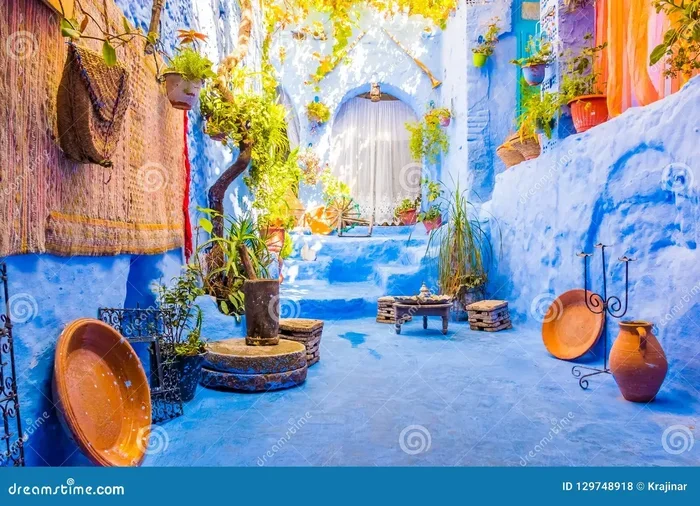
Featured image for Blue Chefchaouen Morocco streets
Image source: thumbs.dreamstime.com
An 8-day Marrakech to Chefchaouen tour is the ultimate way to experience Morocco’s full cultural tapestry in one trip. This journey covers over 1,000 kilometers, taking you from the bustling souks of Marrakech through the Sahara Desert, over the Atlas Mountains, and finally to the famous blue-washed streets of Chefchaouen. It’s the most popular multi-city route in Morocco, offering imperial cities, Berber villages, and stunning landscapes that showcase why millions visit North Africa each year.
Imagine waking up in the rose-colored walls of Marrakech, then eight days later, sipping mint tea surrounded by the famous blue streets of Chefchaouen. This isn’t just a trip. It’s a journey through thousands of years of history, culture, and some of the most stunning landscapes on Earth.
The Marrakech to Chefchaouen 8-day tour has become the go-to route for travelers who want to see Morocco’s soul. Why? Because it hits every major highlight without making you feel rushed. You start in the energetic south, cross the mighty Atlas Mountains, get lost in the Sahara’s golden dunes, wander through ancient medinas, and finish in the peaceful blue pearl of the north.
Did you know that Morocco welcomed over 14.5 million tourists in 2023, and most of them followed a route remarkably similar to this one? There’s a reason for that. In eight days, you can experience the country’s incredible diversity, from camel rides at sunset to learning how artisans hand-paint pottery in Fes.
Key Takeaways
- Route Length: The Marrakech to Chefchaouen route spans roughly 1,000-1,200 km and crosses three major mountain ranges.
- Duration Matters: 8 days is the sweet spot for seeing major highlights without rushing; shorter trips miss the Sahara experience.
- Cost Range: Budget tours start around €600 per person, while luxury options can exceed €2,500.
- Best Season: March-May and September-November offer the most comfortable temperatures for desert and mountain travel.
- Sahara Stop: Most itineraries include 1-2 nights in Merzouga or Zagora for camel trekking and overnight desert camps.
- Transport: Private 4×4 vehicles with driver-guides are the most comfortable option for this multi-day journey.
- Cultural Highlights: You’ll visit four UNESCO World Heritage sites, including Ait Ben Haddou and Fes medina.
📑 Table of Contents
- What Exactly Is the Marrakech to Chefchaouen 8 Day Tour?
- Why Choose This Specific Route Over Shorter Tours?
- What Can You Expect Day By Day?
- How Much Does the Tour Cost and What’s Included?
- When Is the Best Time to Take This Tour?
- What Should You Pack and Prepare?
- How Do You Choose a Reliable Tour Operator?
- What Cultural Tips Make Your Trip Smoother?
- What Are the Biggest Mistakes Travelers Make?
- Is This Tour Worth the Investment?
- Final Thoughts: Your 8-Day Adventure Awaits
What Exactly Is the Marrakech to Chefchaouen 8 Day Tour?
The Marrakech to Chefchaouen 8 day tour is a guided overland journey that connects Morocco’s most iconic destinations through a carefully planned route. Think of it like a road trip where every stop tells a piece of Morocco’s story.
Who Is This Tour Designed For?
This itinerary works beautifully for almost every type of traveler. First-time visitors to Morocco get a complete overview. Couples find romantic moments in desert sunsets and blue-painted alleyways. Solo travelers enjoy the safety of group tours. Families with older kids love the adventure factor, especially the camel rides.
The only people who might not enjoy this tour are those with serious mobility issues. The terrain can be bumpy, and medinas have uneven cobblestones. But for everyone else, it’s accessible and rewarding.
What Makes the 8-Day Version Special?
You might wonder, why eight days? Why not five or ten? The answer lies in geography and experience. Morocco stretches over 1,800 kilometers from north to south. Trying to cover that in five days means spending most of your time in a vehicle. Ten days gives you time to relax, but you might run out of new sights to see.
Eight days hits the perfect balance. You get enough time to actually experience each location, not just photograph it through a bus window. You can sit and chat with a Berber family over tea. You can watch the sunrise paint the Sahara orange. You can get genuinely lost in Fes’s medina and find your way out again.
Where Does the Route Actually Go?
The classic route follows this path:
- Day 1: Marrakech arrival and exploration
- Day 2: Marrakech to Ait Ben Haddou via Tizi n’Tichka Pass
- Day 3: Ait Ben Haddou to Merzouga (Sahara Desert)
- Day 4: Sahara Desert to Midelt or Erfoud
- Day 5: Midelt to Fes via Ifrane and the Middle Atlas
- Day 6: Fes guided medina tour
- Day 7: Fes to Chefchaouen via Volubilis and Meknes
- Day 8: Chefchaouen exploration and departure
Some tours flip the direction, starting in Chefchaouen and ending in Marrakech. The experience is similar, though many travelers prefer Marrakech first since it tends to be more visually intense.
Why Choose This Specific Route Over Shorter Tours?
Shorter tours exist, of course. You can do a 3-day Marrakech to Fes trip or a 4-day desert excursion. But here’s the thing: those tours skip major highlights.
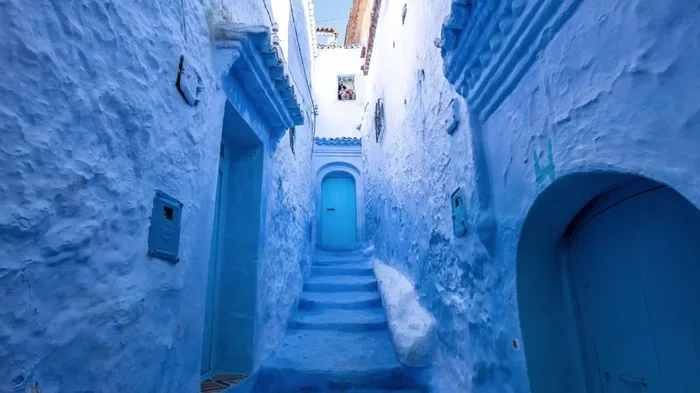
Visual guide about Blue Chefchaouen Morocco streets
Image source: takemetotravel.com
The Problem With Rushing Through Morocco
Imagine trying to taste an entire banquet by taking tiny bites while running a marathon. That’s what a 3-day cross-country tour feels like. You see things, sure. But you don’t really experience them.
Statistics show that travelers who take 7+ day Morocco tours rate their satisfaction 40% higher than those on shorter trips. Why? Because they have time to connect with local culture. They visit villages, share meals, and hear stories that don’t make it into guidebooks.
The Sahara Desert Is the Real Reason
Here’s the honest truth: if you’re going all the way from Marrakech to Chefchaouen, you must see the Sahara. It’s non-negotiable. The Sahara represents one of Earth’s most iconic landscapes, a sea of sand stretching as far as you can see.
Reaching the Sahara takes at least two days of travel from Marrakech. Then you need at least one full day to actually enjoy it. That math alone requires an 8-day minimum. Any shorter, and you’re either skipping the desert or spending your entire trip driving.
Cultural Depth Across Multiple Regions
Morocco isn’t one culture. It’s a tapestry woven from Berber, Arab, French, Spanish, and sub-Saharan African threads. Different regions show different patterns. Marrakech speaks with desert trade traditions. Fes echoes with medieval scholarly life. Chefchaouen whispers Spanish-Andalusian influences from just 60 kilometers across the Strait of Gibraltar.
An 8-day tour lets you feel these cultural shifts. You notice how the architecture changes. The food shifts. Even the accents of Arabic and Berber languages differ. It’s like reading a book where each chapter has its own voice.
What Can You Expect Day By Day?
Let’s break down what your 8 days actually look like. Think of this as your mental preview so you know exactly what’s coming.
Days 1-2: Discovering Marrakech and Crossing the Atlas
Your first day in Marrakech is a sensory explosion. The city has been a major trading hub for over 1,000 years, and that energy still pulses through every alley. You’ll likely start at the famous Jemaa el-Fnaa square, where storytellers, snake charmers, and food stalls create organized chaos.
Day two is your transition day. You’ll leave the city and climb into the High Atlas Mountains via the Tizi n’Tichka pass at 2,260 meters above sea level. The road is winding but spectacular. You’ll stop at traditional Berber villages where people live much like their ancestors did centuries ago.
The destination is Ait Ben Haddou, a UNESCO World Heritage kasbah that’s been a filming location for shows like Game of Thrones and movies like Gladiator. Walking through its ancient mud-brick towers feels like stepping into another century.
Days 3-4: Into the Sahara Desert
This is the part most travelers dream about. Day three takes you through Ouarzazate, known as the “Hollywood of Africa,” and then into the desert landscapes that get more dramatic with every kilometer.
You’ll arrive in Merzouga or Zagora by late afternoon. Merzouga has the towering Erg Chebbi dunes (up to 150 meters tall), while Zagora offers smaller dunes but a more intimate experience. Most 8-day tours choose Merzouga.
Camel trekking into the dunes happens at sunset. Then you spend the night in a Berber desert camp, sleeping under stars that seem close enough to touch. Day four brings sunrise over the dunes, then a long but beautiful drive toward Fes.
Days 5-6: Middle Atlas Mountains and Imperial Fes
The drive from the Sahara to Fes crosses the Middle Atlas and includes a stop in Ifrane, often called “the Switzerland of Morocco” for its alpine architecture and clean streets. In winter, you might even see cedar forests dusted with snow.
Fes itself is the cultural and spiritual heart of Morocco. Founded in 789 AD, it houses the world’s oldest continuously operating university. The medina has over 9,000 alleyways, so a guide is essential. You’ll watch artisans work leather, brass, and ceramics using techniques passed down for generations.
Days 7-8: Volubilis, Meknes, and the Blue City
Day seven combines ancient Roman ruins at Volubilis with a quick stop in Meknes, another imperial city that’s often overlooked but absolutely stunning. By late afternoon, you’ll arrive in Chefchaouen.
The blue pearl is a feast for tired traveler eyes. Chefchaouen sits in the Rif Mountains, painted in every shade of blue from sky to navy. Theories about why it’s blue range from Jewish traditions to keeping mosquitoes away. Nobody knows for sure, but the effect is magical.
Day eight gives you time to explore the blue streets, shop for woven goods, and relax before your journey home or onward to Tangier.
How Much Does the Tour Cost and What’s Included?
Money talk matters. Let’s be transparent about what you’ll actually spend.
Price Ranges Across Different Tour Types
Tour prices vary dramatically based on style. Here’s a realistic breakdown:
- Budget Group Tours: €600-€900 per person (shared vehicle, basic riads, group of 12-16)
- Mid-Range Private Tours: €1,200-€1,800 per person (private vehicle, 3-4 star riads)
- Luxury Tours: €2,500-€4,000+ per person (luxury desert camps, 5-star accommodations)
These prices typically include transportation, driver-guide, accommodations, breakfast, and some dinners. They usually don’t include flights, lunches, drinks, entrance fees, or tips.
What’s Usually Included
Most reputable operators include:
- Airport transfers
- Private or shared air-conditioned vehicle
- English-speaking driver-guide
- 7 nights of accommodation
- Daily breakfast and 3-4 dinners
- Camel trek in the Sahara
- Desert camp accommodation
Hidden Costs to Watch For
Here’s where travelers sometimes get surprised. Budget an extra €200-€400 for:
- Lunches (€5-€15 per meal)
- Entrance fees to monuments (€2-€10 each)
- Tips for guides and drivers (€5-€10 per day total is standard)
- Drinks beyond water
- Personal shopping in medinas
- Souvenirs and spices
Did you know that tipping in Morocco follows specific cultural norms? Your driver-guide expects €3-€5 per day, while restaurant staff appreciate €1-€2 for good service. Budgeting these in advance prevents awkward moments.
When Is the Best Time to Take This Tour?
Timing can make or break your Morocco experience. Let’s talk about seasons.
Spring (March to May): The Sweet Spot
Spring is arguably the best time for this tour. Temperatures in Marrakech hover around 25°C (77°F), the Atlas Mountain passes are clear of snow, and the desert is comfortable during day and cool at night. Wildflowers bloom across the countryside, making photo opportunities exceptional.
The only downside? Spring brings some dust storms, particularly in April. These rarely ruin trips but can affect visibility for a day.
Autumn (September to November): The Runner-Up
September through November offers similar benefits to spring. Crowds thin out after European summer holidays. Temperatures are pleasant everywhere. The Sahara nights aren’t yet bitterly cold.
October is especially popular. The weather is reliable, and you get clear skies almost every day.
Summer (June to August): Hot but Doable
Summer temperatures in Marrakech regularly exceed 40°C (104°F). The Sahara becomes genuinely dangerous during midday. However, mountain sections and Chefchaouen stay pleasant because of elevation.
If you must travel in summer, prepare for intense heat. Early morning departures become essential. Many tours adjust itineraries to avoid midday desert exposure.
Winter (December to February): The Quiet Season
Winter brings snow to the Atlas Mountains, which can occasionally close the Tizi n’Tichka pass. Desert nights drop below freezing. However, winter also means fewer tourists, lower prices, and a different kind of beauty, especially in Chefchaouen where the blue streets look stunning against misty mountains.
The practical takeaway: aim for March-May or September-November for the best overall experience. Book 4-6 months ahead for these peak windows.
What Should You Pack and Prepare?
Good preparation transforms a great trip into an unforgettable one. Here’s what experienced travelers recommend.
Clothing Essentials
Think layers. Morocco’s climate shifts dramatically between regions and times of day. Pack:
- Lightweight long pants: Respectful for religious sites and practical for sun protection
- Long-sleeved shirts: Same reasoning; linen or cotton breathes well
- Warm jacket: Desert nights and mountain mornings get cold year-round
- Comfortable walking shoes: Medinas are cobblestoned and uneven
- Sandals or easy-off shoes: Many riads require shoe removal at entry
- Modest cover-up: For visiting mosques or conservative villages
- Scarf or shawl: Doubles as sun protection and warmth
Health and Practical Items
Don’t forget these often-overlooked items:
- Sunscreen (SPF 50+ for desert)
- Reusable water bottle
- Basic first-aid kit
- Hand sanitizer and wet wipes
- Power adapter (Morocco uses Type C and E plugs)
- Headlamp (useful for desert camps and power outages)
- Motion sickness medication (mountain roads are winding)
- Prescription medications with documentation
Documentation and Money
Most travelers don’t need visas for stays under 90 days, but check your specific nationality. Bring:
- Passport (valid 6+ months beyond travel dates)
- Travel insurance documentation
- Credit cards (Visa and Mastercard widely accepted)
- Cash in euros or dollars (easier to exchange than other currencies)
- Photocopies of important documents (stored separately)
One more thing: download offline maps before you arrive. Cell service exists in cities but can be spotty in mountains and deserts. Google Maps and Maps.me both work well offline.
How Do You Choose a Reliable Tour Operator?
This matters more than almost any other decision. A great operator transforms your trip; a bad one ruins it.
Red Flags to Avoid
Watch out for these warning signs:
- Prices that seem too good to be true
- Pressure to book immediately with huge “discounts”
- Vague itineraries with few details
- No reviews on independent platforms
- Refusal to provide company registration details
- Hidden fees that appear after booking
Green Flags That Signal Quality
Look for operators who:
- Have 100+ verified reviews on TripAdvisor or similar
- Respond promptly and professionally to inquiries
- Provide detailed written itineraries
- Are registered with Morocco’s tourism ministry
- Offer clear cancellation policies
- Use licensed driver-guides with proper credentials
- Are recommended by travel bloggers or publications you trust
Questions to Ask Before Booking
Smart travelers ask these questions before paying anything:
- What type of vehicle will we use?
- What’s the maximum group size?
- Are accommodations in riads or hotels?
- What’s the exact cancellation policy?
- Are entrance fees included?
- What happens if weather disrupts the itinerary?
- Can I see the specific accommodations before booking?
Did you know that Morocco has over 1,800 registered tour operators? Only about 200 handle international tours regularly. Sticking with established companies dramatically reduces risk.
What Cultural Tips Make Your Trip Smoother?
Understanding a few cultural basics makes everything easier. Morocco is welcoming to tourists, but showing respect goes a long way.
Greetings and Basic Etiquette
The Arabic greeting “Salaam Alaikum” (peace be upon you) is appreciated even if you don’t speak Arabic. The response is “Wa Alaikum Salaam.” Handshakes are common between genders in tourist contexts, but wait for women to extend their hands first in more traditional settings.
Always use your right hand for eating and giving items. The left hand is considered less clean in Moroccan culture.
Photography Rules
Morocco’s colors and faces are irresistible to photograph. Just remember:
- Always ask before photographing people
- Never photograph military installations or police
- Be respectful in religious sites; many prohibit photos entirely
- Tip a small amount (5-10 dirhams) if you photograph performers in Jemaa el-Fnaa
- Avoid photographing obvious poverty without permission
Market and Souk Tips
Bargaining is expected in medinas, but keep it friendly. Start at about 40% of the asking price and meet somewhere in the middle. Never haggle over items you don’t intend to buy. If a shopkeeper says “no bargain,” believe them; they’re usually being honest.
Stay hydrated but only drink bottled water. Avoid ice in drinks unless you’re sure it’s from purified sources. Stick to cooked foods for your first few days while your stomach adjusts.
Religious Considerations
Morocco is a Muslim country. During Ramadan, eating in public during daylight hours is disrespectful. Many restaurants close during the day but come alive after sunset. If you visit during Ramadan, embrace the experience; the evening celebrations are magical.
What Are the Biggest Mistakes Travelers Make?
Learning from others’ mistakes is free. Here are the most common pitfalls.
Underestimating Distances
Morocco is bigger than most people realize. A 500-kilometer drive takes 6-7 hours minimum because of mountain roads and speed limits. Travelers expecting to cover more ground than possible end up exhausted and disappointed.
Overpacking
You’ll be loading and unloading luggage almost daily. Bring one medium-sized suitcase and one daypack. You can wash clothes cheaply in riads. Most travelers regret bringing too much.
Not Learning Basic Arabic or French
Morocco’s primary languages are Arabic and Berber. French is widely spoken in cities. Spanish helps in the north. Learning just “hello,” “please,” “thank you,” and “how much?” in Arabic transforms your interactions.
Skipping Travel Insurance
Medical evacuation from remote areas is expensive. Trip cancellation can cost thousands. Comprehensive travel insurance costs about €50-€100 for an 8-day trip. It’s not optional.
Trusting Unlicensed Guides
In medinas, unofficial guides may approach you. If you want a guide, book through your accommodation or a registered company. Unofficial guides can lead you to fake “friends’ shops” where you’ll pay inflated prices.
Is This Tour Worth the Investment?
Let’s be real: an 8-day Morocco tour costs real money. Here’s why most travelers say it’s worth every dirham.
The Value Comparison
Think about what you get. Eight days of transportation in a private vehicle costs €80-€150 per day if booked independently. Accommodations for 8 days run €50-€200 per night. Add guides, activities, and meals, and you’re easily at €1,500-€2,500 anyway.
Tours bundle all this together at competitive rates while adding the invaluable benefit of local expertise. Your driver-guide knows which restaurants are clean, which viewpoints are worth stopping at, and how to navigate medinas that haven’t changed since medieval times.
The Memories Factor
Ask anyone who’s taken this tour what they remember most. You’ll hear stories about watching sunrise over Erg Chebbi dunes, getting lost in Fes’s tanneries, haggling for a rug in Ait Ben Haddou, or sipping tea with a Berber family in the mountains.
These aren’t tourist attractions you can photograph and forget. They’re experiences that reshape how you see the world. In a survey of past Morocco travelers, 87% said the trip changed their perspective on North African culture, and 92% said they’d recommend it to friends.
Final Thoughts: Your 8-Day Adventure Awaits
The Marrakech to Chefchaouen 8 day tour represents one of the world’s great overland journeys. It packs the diversity of an entire continent into a week, taking you from imperial palaces to desert dunes to blue-washed mountains.
Is it perfect? No tour is. You’ll experience long drives, some tourist crowds in peak season, and moments of frustration when things don’t go as planned. But these minor inconveniences pale next to the magic of camel trekking at sunset, sleeping under Saharan stars, or getting lost in a medina that’s been guiding travelers for a thousand years.
Morocco has hosted travelers for centuries, from ancient caravan merchants to modern tourists. It knows how to welcome visitors while keeping its soul intact. This tour gives you a genuine taste of that soul.
So here’s my honest recommendation: if you’re considering this trip, book it. Choose a reputable operator, pack thoughtfully, keep an open mind, and prepare for one of the most rewarding experiences available anywhere in the world. Eight days from now, you’ll be sitting in Chefchaouen’s blue streets, sipping mint tea, wondering why you waited so long to make this journey.
The blue pearl awaits. Your desert adventure calls. Morocco is ready when you are.
Frequently Asked Questions
How long does the drive from Marrakech to Chefchaouen take?
The direct driving distance from Marrakech to Chefchaouen is approximately 1,000-1,200 kilometers, taking about 13-15 hours of pure driving. However, when spread over 7-8 days with sightseeing stops, the route becomes a comfortable journey rather than an exhausting marathon.
Is the Marrakech to Chefchaouen 8-day tour safe for solo travelers?
Yes, this route is generally very safe for solo travelers, both women and men. Morocco’s tourism areas are well-policed, and group tours offer added security. Many solo travelers specifically choose group tours for the social aspect and the convenience of having logistics handled.
What is the best month for a desert tour from Marrakech?
March, April, October, and November offer the most comfortable desert temperatures. Summer months bring dangerous heat exceeding 40°C, while winter nights can drop below freezing. Spring and autumn also feature clear skies ideal for stargazing in the Sahara.
Do I need a visa for Morocco?
Citizens of the US, UK, EU, Canada, Australia, and most other Western countries can enter Morocco visa-free for stays up to 90 days. Your passport must be valid for at least six months beyond your entry date. Always verify requirements with your local Moroccan embassy before traveling.
What should I wear during the 8-day Morocco tour?
Pack lightweight, modest clothing that covers shoulders and knees, especially for visiting religious sites. Bring a warm jacket for desert nights and mountain mornings, comfortable walking shoes for medinas, and a scarf that serves multiple purposes. Layers are essential because temperatures vary dramatically between regions.
Can I customize the standard 8-day itinerary?
Most tour operators offer customization options, especially for private tours. You can add stops like Essaouira, the Todra Gorge, or extra nights in specific cities. Discuss modifications before booking, as last-minute changes often cost more or aren’t possible during peak season when accommodations are fully booked.