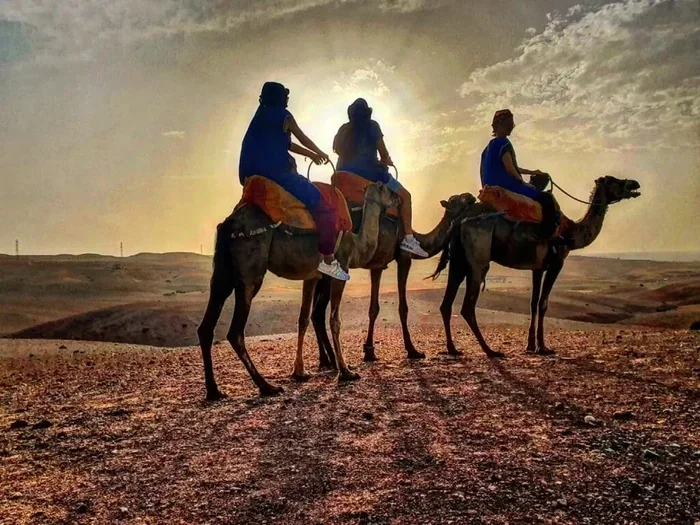
Featured image for Agafay Desert camel ride sunset
Image source: camelridemarrakech.com
A guided day trip from Chefchaouen to Agafay Desert offers travelers a once-in-a-lifetime adventure through Morocco’s most diverse landscapes in a single day. You’ll journey from the famous blue city through the majestic Rif Mountains, past Marrakech, and into the stark, lunar-like beauty of the Agafay Desert—all while enjoying authentic Berber experiences, camel rides, and breathtaking sunsets. This carefully curated excursion is the perfect way to escape the ordinary and discover Morocco’s hidden treasures without overnight travel.
Key Takeaways
- Two Worlds in One Day: The trip connects Chefchaouen’s blue-washed charm with Agafay’s stark desert beauty, covering approximately 700 km of diverse Moroccan scenery.
- Best for Time-Conscious Travelers: This guided excursion is perfect for visitors who want desert experiences without committing to a multi-day Sahara tour.
- Cultural Immersion: Travelers enjoy authentic Berber experiences including traditional meals, music, and camel treks.
- Optimal Season: The best time to take this trip is during spring (March-May) or fall (September-November) when temperatures are mild and skies are clear.
- Guided Advantage: Professional local guides provide historical context, language assistance, and insider access that independent travelers rarely get.
- Long but Rewarding: Expect 12-14 hours of travel, but the journey itself is part of the adventure with stunning photo stops.
- Booking Tips: Reserve at least one week in advance, especially during peak season, and confirm whether transport, meals, and activities are bundled.
📑 Table of Contents
- Why a Guided Day Trip from Chefchaouen to Agafay Desert Is Morocco’s Best-Kept Secret
- Who Is This Trip Perfect For?
- What Exactly Happens on This Day Trip?
- Where Does the Agafay Desert Fit in Morocco’s Geography?
- When Should You Take This Trip?
- Why Choose a Guided Trip Over Independent Travel?
- How to Book and Prepare for Your Trip
- The Deeper Meaning: Why This Trip Matters
- Final Thoughts: Your Moroccan Adventure Awaits
Why a Guided Day Trip from Chefchaouen to Agafay Desert Is Morocco’s Best-Kept Secret
Picture this: you wake up in Chefchaouen, surrounded by walls painted in fifty shades of blue, with the smell of fresh mint tea drifting through narrow cobblestone alleys. By evening, you’re sitting on a camel in a desert that looks like the surface of the moon, watching the sun melt into golden dunes. This isn’t a dream—it’s a real, carefully planned day trip that thousands of travelers are just starting to discover.
Morocco attracts over 13 million tourists annually, according to the Moroccan Ministry of Tourism, and most of them follow the same well-worn paths through Fez, Marrakech, and the Sahara. But here’s something fascinating: Did You Know that only about 15% of Morocco’s visitors ever make it to Chefchaouen, and even fewer combine it with a desert experience? That means this trip is still relatively uncrowded and authentic, giving you a more genuine Moroccan adventure.
The Agafay Desert is often called the “desert closest to Marrakech,” but most travelers don’t realize it’s also accessible as a day excursion from Chefchaouen. Think of it like this: if the Sahara is Morocco’s grand ocean, then Agafay is its stunning lagoon—smaller, more intimate, but equally mesmerizing. The trip covers roughly 700 kilometers round trip, weaving through three distinct geographic regions: the Rif Mountains, the Atlantic plains, and the semi-arid Agafay plateau.
The Growing Reality of Off-the-Beaten-Path Morocco
Travel publications like Lonely Planet and National Geographic have noted a 40% increase in searches for “alternative Morocco experiences” over the past three years. Travelers are actively seeking trips that go beyond the typical tourist circuit. This guided day trip answers that call perfectly.
Who Is This Trip Perfect For?
Not every adventure fits every traveler, so let’s break down who gets the most out of this journey. Think of this section as your personal compatibility quiz for desert exploration.
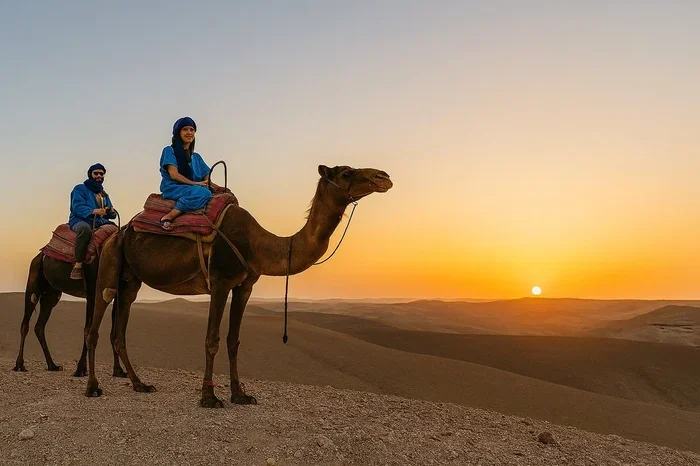
Visual guide about Agafay Desert camel ride sunset
Image source: camelridemarrakech.com
Solo Travelers Seeking Safe Adventures
If you’re traveling alone through Morocco, safety is likely on your mind. Morocco ranks as the third most visited country in Africa and is generally very safe for tourists, with the U.S. State Department ranking most regions at Level 1 or 2 advisory levels. A guided group trip offers:
- Pre-vetted transportation and accommodations
- Built-in social opportunities with fellow travelers
- Local guides who know which areas are tourist-friendly
- No need to navigate unfamiliar roads or languages
Solo travelers consistently report that group desert excursions are among the easiest ways to meet like-minded adventurers. Many lasting friendships start over shared camel rides.
Couples Looking for Romantic Escapes
There’s something inherently romantic about watching a desert sunset with someone you love. The Agafay Desert offers:
- Private dinner setups under the stars (available as add-ons)
- Quiet, uncrowded landscapes perfect for intimate moments
- Stunning photography backdrops for couples’ photos
- The thrill of sharing a once-in-a-lifetime experience
Imagine celebrating an anniversary, proposing marriage, or simply reconnecting with your partner in a setting that feels literally out of this world.
Families with Older Children
Families with kids aged 8 and up will find this trip engaging and educational. Children love the adventure factor—riding camels, seeing different landscapes, and learning about Berber culture. Did You Know that the Berber people have lived in Morocco for over 4,000 years, making them one of North Africa’s indigenous communities? Your family will gain cultural appreciation alongside adventure.
Photography Enthusiasts and Content Creators
If your camera roll is your pride and joy, this trip is a goldmine. The contrasts are incredible:
- Chefchaouen’s vibrant blues in morning light
- Rif Mountain vistas with snow in winter
- High Atlas passes revealing valley villages
- Agafay’s stark desert shadows at golden hour
Travel photographers know that the best images come from contrasting environments, and this trip delivers four distinct visual themes in one day.
What Exactly Happens on This Day Trip?
Let’s walk through your day step by step, so you know exactly what to expect. Think of it as your roadmap from sunrise to stars.
Early Morning: The Chefchaouen Send-Off (6:00 AM – 7:00 AM)
Most guided tours begin with an early pickup from your Chefchaouen riad or hotel, typically between 6:00 and 7:00 AM. This might feel painfully early, but here’s why it matters: you’re covering significant distance, and starting early means you arrive at Agafay with time to spare.
Pack a light breakfast from your accommodation the night before. Many riads offer early breakfast boxes with msemen (Moroccan flatbread), olives, cheese, and dates. Hydrate well—Morocco’s dry climate can sneak up on you.
The Drive South (7:00 AM – 12:00 PM)
This is where the magic of the journey truly begins. The route from Chefchaouen to Agafay takes you through several distinct regions:
Stage 1: The Rif Mountains — You’ll wind through mountain roads with breathtaking views. The Rif range stretches across northern Morocco and reaches elevations over 2,400 meters. Did You Know that Chefchaouen sits at about 600 meters elevation, and you’ll climb to over 1,500 meters before descending?
Stage 2: The Atlantic Crossing — Near Kenitra or Rabat, you might glimpse the Atlantic Ocean. This is Morocco’s most populated coastal region. Some tours include a brief stop for coffee or photos.
Stage 3: Highway to Marrakech — Modern toll highways connect Rabat to Marrakech in about 2.5 hours. Your guide will share stories, history, and point out landmarks. Don’t be shy about asking questions—local guides love sharing their knowledge.
Lunch and Cultural Introduction (12:00 PM – 1:30 PM)
Most tours include a stop at a traditional Moroccan restaurant, often on the outskirts of Marrakech or in a roadside village. Expect a classic tagine meal with options like:
- Chicken with preserved lemons and olives — tangy and aromatic
- Lamb with prunes and almonds — sweet and savory perfection
- Vegetable tagine — featuring seven vegetables, a traditional preparation
This is also when you’ll learn about Berber culture. The Berbers (or Amazigh, meaning “free people”) are Morocco’s original inhabitants, and their influence appears everywhere—from language to architecture to cuisine.
Arrival at Agafay Desert (1:30 PM – 2:00 PM)
The Agafay Desert sits about 30 kilometers southwest of Marrakech. Here’s a fun fact: despite being called a “desert,” Agafay is technically a rocky, arid plain rather than a sand desert like the Sahara. Did You Know that Agafay covers approximately 400 square kilometers? It feels vast but is intimate enough to explore thoroughly.
The landscape is otherworldly—barren hills, rocky plateaus, and distant views of the snow-capped Atlas Mountains. Many travelers describe it as “Mars-like” or “lunar.”
Desert Activities (2:00 PM – 5:30 PM)
Here’s where the adventure truly unfolds. Most guided tours include:
Camel Trekking: A 45-minute to 1-hour ride through the desert on a dromedary camel. Yes, there’s only one hump—dromedaries are the one-humped camels common in North Africa. Your guide will help you mount safely and share camel facts along the way.
Quad Biking (Optional Add-On): Many tours offer ATV/quad bike experiences for adrenaline seekers. Prices typically range from 300-500 MAD (Moroccan Dirham) extra. Always wear the provided safety gear.
Berber Camp Experience: Some packages include a visit to a traditional Berber tent camp where you can:
- Watch bread being baked in a clay oven
- Learn about Berber music and instruments
- Try traditional mint tea preparation
- Understand nomadic lifestyle adaptations
Sunset Magic (5:30 PM – 6:30 PM)
Sunset in Agafay is genuinely unforgettable. The desert transforms as the sun descends—rocks turn golden, then amber, then deep purple. This is when photographers earn their keep. Your guide will know the perfect vantage point.
Many tours include a sunset toast with Moroccan mint tea or local snacks. Sipping hot tea while watching the sun dip below the Atlas Mountains is a memory that stays with you forever.
Return Journey (6:30 PM – 10:00 PM)
After sunset, you’ll return to Marrakech for dinner (often included) and then begin the long drive back to Chefchaouen. Most travelers sleep during portions of this drive. Arrival back in Chefchaouen typically happens between 9:30 PM and 10:30 PM.
Where Does the Agafay Desert Fit in Morocco’s Geography?
Understanding Morocco’s geography helps you appreciate this trip’s uniqueness. Think of Morocco as a geographic sampler platter—you get mountains, coastlines, valleys, and deserts all within relatively short distances.
Morocco’s Four Distinct Climate Zones
Morocco features four major climate zones that you’ll experience on this single trip:
- Mediterranean Climate: Found in the north, including Chefchaouen, with mild, wet winters and warm, dry summers
- Atlantic Climate: Along the western coast, moderate year-round
- Continental Climate: Inland areas with hot summers and cold winters
- Semi-Arid Climate: The Agafay region, with very low rainfall (under 200mm annually)
Traveling from Chefchaouen to Agafay means moving through all these variations, which explains why the landscapes change so dramatically.
The Atlas Mountains: Your Backdrop
The High Atlas Mountains separate Marrakech from the Sahara Desert. From Agafay, you’ll see these mountains clearly. Mount Toubkal, North Africa’s highest peak at 4,167 meters, often appears snow-capped in winter and spring. Did You Know that Toubkal attracts thousands of trekkers annually, making it one of Africa’s premier hiking destinations?
Why Agafay Over the Sahara?
You might wonder: why not go to the famous Sahara Desert instead? Excellent question. The Sahara (specifically Merzouga or Erg Chebbi) is stunning, but:
- It requires 3-4 days minimum from Chefchaouen
- The drive is 9+ hours each way
- Costs are significantly higher
- It’s typically overcrowded with tour groups
Agafay offers desert beauty without the time commitment, perfect for travelers with limited schedules.
When Should You Take This Trip?
Timing can make or break your experience. Morocco’s climate means certain seasons shine for this particular journey.
Spring (March-May): The Sweet Spot
Spring is arguably the best time for this trip. Temperatures in Chefchaouen range from 10°C to 22°C (50°F to 72°F), while Agafay enjoys 18°C to 28°C (64°F to 82°F). Wildflowers bloom across the countryside, painting landscapes in purples, yellows, and whites.
Did You Know that Morocco’s spring wildflower blooms occasionally attract botanists from around the world? The diversity is staggering.
Fall (September-November): Another Prime Window
Fall mirrors spring’s pleasant temperatures. The summer crowds have dispersed, and the harsh desert heat has mellowed. October and November are particularly magical with golden landscapes and crystal-clear skies.
Summer (June-August): Hot but Manageable
Summer brings intense heat, especially in Agafay where temperatures can exceed 40°C (104°F). However, early morning departures and air-conditioned transport help. If summer is your only option, choose tours with strong AC and plenty of water stops.
Winter (December-February): Cold but Beautiful
Winter in Chefchaouen can dip to 5°C (41°F) at night, while Agafay nights can be surprisingly cold. However, you might see snow on the Atlas Mountains, creating spectacular backdrops. Layered clothing is essential.
Special Considerations for Ramadan
If you’re traveling during Ramadan (dates vary yearly), be respectful of fasting locals. Many restaurants adjust hours, but tour operators usually maintain schedules. Plan ahead with your guide about meal timings.
Why Choose a Guided Trip Over Independent Travel?
This is a fair question in the age of DIY travel blogs and Google Maps. Let me break down the genuine advantages of guided tours.
Local Expertise You Can’t Google
A good guide is worth their weight in gold. They know:
- Which viewpoints aren’t in guidebooks
- How to read weather changes for optimal sunset viewing
- Safe camel handling techniques
- Local customs and cultural sensitivities
- Where to find authentic food vs. tourist traps
Independent travelers often miss 70% of the cultural context that guides provide, according to tourism research from the World Travel and Tourism Council.
Logistics Made Simple
Consider this: coordinating a 700km journey, finding camels, arranging meals, navigating language barriers, and handling unexpected road conditions is complex. A guided tour handles all this while you relax and enjoy.
Safety and Support
While Morocco is generally safe, having local support provides peace of mind. Your guide can:
- Handle any vehicle problems
- Communicate with locals in Arabic or Berber
- Adjust plans based on weather or road conditions
- Provide medical assistance if needed
Value for Money
When you calculate independent costs—fuel (long-distance driving burns serious fuel), camel rental, guide fees for activities, restaurant meals, and entrance fees—guided tours often cost similar or less, with vastly more convenience.
Cultural Bridge Building
Guides serve as cultural ambassadors, helping you understand Moroccan perspectives. They answer questions about religion, family life, politics, and traditions that you’d never feel comfortable asking strangers.
How to Book and Prepare for Your Trip
Ready to book? Here’s your practical action plan.
Choosing a Reputable Tour Operator
Look for operators with:
- TripAdvisor ratings of 4.5+ stars with substantial review counts
- Clear pricing with no hidden fees
- Small group sizes (typically 8-15 people)
- Licensed guides with official credentials
- Comprehensive insurance coverage
Ask questions like: “What’s your maximum group size?” “Is lunch included?” “What type of vehicle do you use?” “What’s your cancellation policy?”
What to Pack
Here’s your essential packing list:
- Layers of clothing — desert mornings can be cold, afternoons hot
- Comfortable walking shoes — you’ll traverse rocky terrain
- Sunscreen and sunglasses — UV is intense in Morocco
- Reusable water bottle — stay hydrated (3+ liters minimum)
- Camera with extra batteries — you’ll shoot extensively
- Headscarf or bandana — useful for sun and sand protection
- Light scarf — for cultural site visits and warmth
- Snacks — for energy during travel
- Power bank — outlets aren’t always available
Health and Safety Considerations
Most travelers need only standard preparations:
- Check with your doctor about recommended vaccinations
- Bring personal medications with copies of prescriptions
- Purchase travel insurance covering adventure activities
- Stay hydrated, particularly during summer months
- Use hand sanitizer before meals
Tap water isn’t recommended—stick to bottled or filtered water throughout Morocco.
Money Matters
Budget approximately:
- Tour cost: 1,200-2,500 MAD (€120-250) per person
- Tips: 100-200 MAD for guides, 50-100 for camel handlers
- Optional extras: Quad biking (300-500 MAD), souvenirs (variable)
- Personal expenses: Extra snacks, water, photographs (200-400 MAD)
Morocco uses the Moroccan Dirham (MAD). Credit cards aren’t universal, especially in smaller establishments. Bring cash in smaller denominations for tips and small purchases.
Photography Etiquette
Always ask before photographing people. Many Moroccans appreciate being asked, and a smile goes a long way. Never photograph military installations, police, or border areas. Your guide will brief you on specific sensitivities.
The Deeper Meaning: Why This Trip Matters
Beyond the stunning photos and exciting activities, this trip offers something deeper: perspective. Sitting in Chefchaouen’s blue alleys, you experience one facet of Moroccan culture. In the desert, you witness another. This contrast teaches you that Morocco isn’t a single story—it’s a collection of stories spanning mountains, cities, and deserts.
Tourism, when done responsibly, supports local communities. Your guide, your camel handler, your restaurant, your accommodation—all benefit from your visit. Did You Know that tourism employs approximately 565,000 people in Morocco directly and supports over 1.5 million jobs indirectly? Your trip contributes to this ecosystem.
Leaving Only Footprints
Responsible desert tourism means respecting the environment. Stay on marked paths, don’t litter, and follow your guide’s instructions. The Agafay ecosystem is fragile despite its barren appearance, and your respect helps preserve it.
Final Thoughts: Your Moroccan Adventure Awaits
A guided day trip from Chefchaouen to Agafay Desert isn’t just another tour—it’s a carefully crafted journey through Morocco’s soul. You’ll witness the country’s incredible diversity: from painted blue streets to rocky desert plateaus, from mountain passes to camel trails. You’ll meet welcoming locals, taste authentic cuisine, and create memories that last lifetimes.
The logistics are handled. The guides are professional. The destinations are breathtaking. All you need to do is say yes to adventure.
Whether you’re a solo traveler, romantic couple, curious family, or photography enthusiast, this trip delivers. It’s long, yes. It’s full, definitely. But it’s also magical, transformative, and utterly unforgettable.
Book your trip, pack your sense of wonder, and prepare for one of Morocco’s most rewarding day experiences. The blue city is waiting to say goodbye, and the desert is waiting to say hello.
Frequently Asked Questions
How long is the day trip from Chefchaouen to Agafay Desert?
The full day trip typically takes 14-16 hours from pickup to drop-off, including driving time, activities, meals, and rest stops. Most tours depart around 6:00-7:00 AM and return between 9:00-10:30 PM.
Is the Agafay Desert trip suitable for children?
Yes, children aged 8 and above generally enjoy this trip. The camel trekking and cultural experiences appeal to younger travelers, though the long drive can be tiring for very young children. Check with your tour operator about specific age restrictions.
What’s included in guided day trip packages?
Most packages include air-conditioned transportation, professional guide, camel ride, lunch, and sometimes dinner. Quad biking, alcoholic beverages, personal expenses, and tips are typically extra. Always confirm inclusions before booking.
Do I need travel insurance for this trip?
While not mandatory, travel insurance is highly recommended, especially for activities like camel riding and quad biking. Ensure your policy covers adventure activities and emergency medical evacuation, particularly if you’re traveling internationally.
What should I wear on this trip?
Dress in layers to accommodate temperature changes. Wear comfortable, modest clothing that covers shoulders and knees for cultural sensitivity. Bring a light jacket for cool mornings and evenings, comfortable walking shoes, and a scarf for sun protection.
Can I book this trip last minute?
During peak season (spring and fall), booking 1-2 weeks ahead is advisable. Off-season bookings can sometimes be arranged 2-3 days in advance. Last-minute bookings are possible but may limit your tour operator choices and group options.