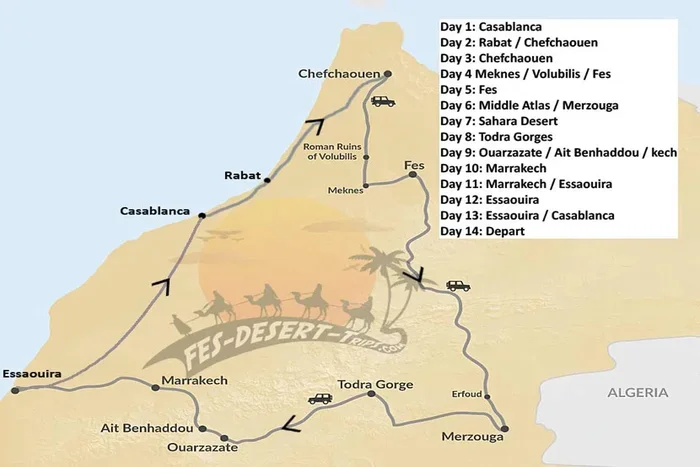
Featured image for Morocco Fez to Casablanca road trip
Image source: fes-desert-trips.com
Embark on an unforgettable 6-day excursion from Fez to Casablanca and discover Morocco’s most captivating destinations in one incredible journey. This carefully crafted tour takes you through imperial cities, ancient medinas, dramatic deserts, and stunning coastlines. From the cultural richness of Fez to the modern energy of Casablanca, you’ll experience authentic Morocco with comfortable accommodations and knowledgeable local guides.
Picture this: you wake up in Fez, Morocco’s ancient cultural capital, where donkey carts still navigate medieval streets and craftsmen work in the same way their ancestors did 1,000 years ago. Six days later, you stand on the Atlantic coast in Casablanca, watching the sun set over the Hassan II Mosque, with memories of camel treks, mountain valleys, and starlit desert nights filling your mind. That’s exactly what a 6-day excursion from Fez to Casablanca delivers.
This journey isn’t just a tour. It’s a time-traveling adventure that connects Morocco’s past, present, and future across 1,200+ kilometers of breathtaking terrain. Every day brings something new: ancient medinas, snow-capped mountains, endless dunes, and bustling coastal cities. Whether you’re a first-time visitor or returning traveler, this comprehensive route shows you the very best of Morocco in perfect detail.
Think of this excursion as a curated sampler of Morocco’s greatest hits. Instead of rushing through each location, you get to really experience the rhythm of each place. You’ll sip mint tea with Berber families, explore Roman ruins older than many European civilizations, sleep under desert stars, and finish your adventure in Morocco’s most cosmopolitan city. Ready to discover why this route has become the favorite itinerary for travelers worldwide? Let’s dive in.
Key Takeaways
- Complete Coverage: The 6-day excursion from Fez to Casablanca covers over 1,200 kilometers of Morocco’s most scenic routes and culturally significant locations.
- Diverse Experiences: Travelers experience four distinct Moroccan landscapes: imperial cities, Atlas Mountains, Sahara Desert, and Atlantic coastline.
- Cultural Immersion: The tour includes UNESCO World Heritage Sites, traditional Berber experiences, and authentic Moroccan cuisine tastings.
- Flexible Options: Both private and group excursions are available, with options for luxury, mid-range, and budget accommodations.
- Best Timing: The optimal seasons are spring (March-May) and autumn (September-November) when temperatures are moderate across all regions.
- What to Pack: Layered clothing, comfortable walking shoes, sun protection, and a sense of adventure are essential for this comprehensive journey.
- Booking Advantage: Advance booking saves 15-20% on tour packages and guarantees availability during peak travel months.
📑 Table of Contents
- Who This Excursion Is Perfect For
- What Makes This 6-Day Itinerary Special
- Where You’ll Stay and What You’ll Eat
- When to Book and Best Travel Seasons
- Why This Specific Route Works So Well
- Practical Tips for Your Excursion
- Booking Your Excursion: What to Look For
- Final Thoughts on Your Moroccan Adventure
Who This Excursion Is Perfect For
The 6-day excursion from Fez to Casablanca appeals to a wide range of travelers, which explains its universal popularity. Understanding who typically enjoys this tour helps you decide if it matches your travel style.
First-Time Visitors to Morocco
If you’ve never been to Morocco, this excursion is your golden ticket. You don’t need to research individual destinations or figure out transportation between cities. Everything is organized: hotels, meals, transportation, guides, and entry fees. Within six days, you see the country’s essential highlights without feeling rushed or overwhelmed. Think of it as Morocco’s “greatest hits” album rather than a deep dive into one specific genre.
Culture and History Enthusiasts
History buffs absolutely love this tour because it covers an incredible timeline. You start in Fez, founded in 789 AD and home to the world’s oldest continuously operating university. Then you visit Volubilis, with Roman ruins dating back to the 3rd century BCE. Meknes offers 17th-century imperial architecture, and Casablanca showcases 20th-century modernity. It’s like reading a history book where you actually visit every chapter.
Adventure Seekers and Nature Lovers
Adventure travelers get their fill on this excursion. Camel trekking in the Sahara, hiking through the Atlas Mountains’ stunning gorges, and exploring Todra Canyon’s towering red walls provide plenty of adrenaline. The landscapes change dramatically every single day, from fertile valleys to barren deserts to dramatic coastlines.
Families and Small Groups
Families with teenagers and groups of friends find this tour particularly suitable. The pace is active enough to keep everyone engaged but structured enough to prevent logistics headaches. Children as young as 8-10 typically enjoy the experience, especially the camel rides and desert camping.
Photography Enthusiasts
Did you know that Morocco attracts over 2 million photographers annually who come specifically for its diverse landscapes? This excursion provides incredible photo opportunities: blue-washed Chefchaouen streets, golden Sahara dunes, intricate Islamic architecture, and vibrant market scenes. Every turn reveals a postcard-worthy shot.
What Makes This 6-Day Itinerary Special
What exactly happens during these six days? Let me break down the typical day-by-day structure so you know precisely what to expect. While specific tours may vary slightly, most 6-day excursions from Fez to Casablanca follow this proven route.
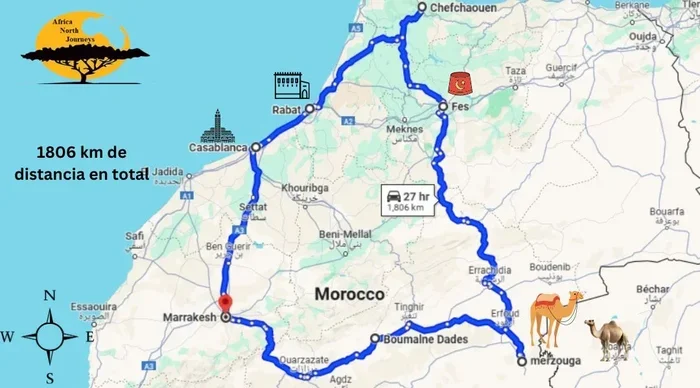
Visual guide about Morocco Fez to Casablanca road trip
Image source: africanorthjourneys.com
Day 1: Fez City Exploration
Your adventure begins with a deep dive into Fez, Morocco’s spiritual and cultural heart. The city hosts the largest car-free urban area in the world, known as Fes el-Bali. You’ll explore the famous medina (old city), a UNESCO World Heritage Site since 1981, with its 9,400 narrow streets and alleys. Visit the Al-Qarawiyyin University, founded in 859 AD, making it the oldest continuously operating university globally. This is older than most European universities by several centuries.
The medina’s famous tanneries are an absolute must-see. Watch leather being processed using techniques unchanged for centuries. Your guide will typically give you a sprig of mint to hold near your nose, since the smell is strong. The Chouara Tanneries date back to the 11th century and remain Morocco’s largest traditional tannery.
Day 2: Volubilis, Meknes, and Travel to Merzouga
Day two takes you into Morocco’s historical depth. You’ll visit Volubilis, the best-preserved Roman ruins in North Africa. Did you know that Volubilis has over 30 preserved mosaics still in their original locations? The site spans 40 hectares and provides incredible insight into Roman provincial life. Then continue to Meknes, another imperial city with stunning 17th-century gates and granaries.
By afternoon, you travel through the Middle Atlas Mountains, passing through cedar forests near Ifrane (sometimes called “Little Switzerland” of Morocco). Ifrane’s average temperature is much cooler than surrounding areas, sometimes 10-15°C lower than Fez. The journey continues through the Ziz Valley, famous for its palm groves and dramatic gorges.
Day 3: Sahara Desert Adventure in Merzouga
Welcome to the Sahara Desert! Merzouga sits at the edge of the Erg Chebbi dunes, which tower up to 150 meters high. You’ll ride camels into the desert, reaching your Berber camp just before sunset. The dunes change color throughout the day: pink at dawn, golden at noon, and deep orange at sunset.
Spend the night in a traditional desert camp, enjoying Berber music, drums, and stargazing. The Sahara offers some of the clearest night skies on Earth, with the Milky Way visible to the naked eye on most nights. Dinner features authentic Berber cuisine, including tagines cooked over open fires.
Day 4: Todra Gorge and Dades Valley
Wake early for sunrise over the dunes, an experience that tops most travelers’ highlight lists. After breakfast, you travel to Todra Gorge, where canyon walls rise 400 meters vertically. The gorge is a favorite among rock climbers worldwide, with over 150 climbing routes of varying difficulty.
The route continues through the Dades Valley, often called the “Valley of a Thousand Kasbahs.” These ancient fortified homes dot the landscape like medieval castles. The valley produces roses, and during May, the annual Rose Festival attracts visitors from across Morocco.
Day 5: Ait Benhaddou and Atlas Mountains
Today’s highlight is Ait Benhaddou, a UNESCO-protected ksar (fortified village) that has served as a filming location for over 20 Hollywood productions, including “Gladiator” (2000), “Lawrence of Arabia” (1962), and “Game of Thrones.” Walking through this ancient mud-brick city feels like stepping onto a film set, because it essentially is one.
You’ll cross the High Atlas Mountains via the Tizi n’Tichka pass, reaching 2,260 meters in elevation. The pass provides dramatic mountain views and connects the desert region to Marrakech. Some tours stop in Marrakech for a half-day visit, exploring its famous Jemaa el-Fnaa square, which comes alive at night with storytellers, musicians, and food vendors.
Day 6: Travel to Casablanca via Rabat
The final day takes you toward the Atlantic coast. Most itineraries include a visit to Rabat, Morocco’s capital city, where you can see the Hassan Tower, Royal Palace, and Chellah ruins. Rabat often gets overlooked by tourists, which is exactly why it’s so special. It feels authentically Moroccan without overwhelming tourist crowds.
Your excursion concludes in Casablanca, Morocco’s largest city and economic capital. The crown jewel is the Hassan II Mosque, the largest mosque in Africa and the 7th largest in the world. Its minaret stands 210 meters tall, making it one of the tallest religious structures globally. Construction of this mosque involved 10,000 artisans working for seven years.
Where You’ll Stay and What You’ll Eat
Accommodations and meals make or break any tour experience. Let me walk you through what to expect so there are no surprises.
Accommodation Options
Most 6-day excursions offer three accommodation tiers: standard, comfort, and luxury. Standard tours typically include 3-star hotels with air conditioning, private bathrooms, and breakfast. Comfort level adds 4-star riads (traditional Moroccan guesthouses) with rooftop terraces and pools. Luxury options feature 5-star properties, including famous chains like La Mamounia or Royal Mansour for higher-end experiences.
The desert camp experience is consistent across all tiers. You’ll sleep in traditional Berber tents with shared or private facilities, depending on your package. Modern luxury desert camps now offer en-suite tents with proper beds, running water, and even Wi-Fi in some cases.
Moroccan Cuisine Highlights
Food forms an essential part of this excursion. You’ll experience authentic Moroccan cuisine across multiple regions, each with its own specialties. Here are the dishes you’ll likely encounter:
- Tagine: Slow-cooked stew named after the clay pot it’s prepared in, featuring combinations of meat, vegetables, and preserved lemons.
- Couscous: Traditional Friday dish served with vegetables and meat, deeply rooted in North African culture.
- Pastilla: Sweet and savory pie combining pigeon or chicken with almonds and cinnamon, originating from Fez.
- Mint Tea: Called “Moroccan whiskey,” this sweet green tea with mint is poured from height to create foam.
- Harma: Slow-cooked lamb with caramelized onions, almonds, and eggs, especially popular in northern regions.
- Msemen: Square-shaped pancakes served with honey, often for breakfast.
Did you know that Morocco is the world’s largest couscous consumer? The average Moroccan eats approximately 3-4 kg of couscous annually. This simple grain holds such cultural importance that there’s a UNESCO-recognized tradition of couscous preparation, celebration, and consumption.
When to Book and Best Travel Seasons
Timing significantly impacts your excursion experience. Here’s what you need to know about seasons, booking windows, and avoiding common pitfalls.
Peak vs. Shoulder vs. Low Seasons
Morocco’s tourism calendar breaks into three distinct periods. Peak season runs from March through May and September through November, when temperatures across all regions are pleasant. The desert averages 25-30°C during these months, while mountain regions stay cool around 15-20°C. Casablanca enjoys 20-25°C, perfect for coastal exploration.
Summer (June-August) sees extreme heat in the desert, with temperatures exceeding 45°C. However, coastal cities like Casablanca stay cooler due to Atlantic breezes, averaging 25-28°C. Winter (December-February) brings cold nights to the desert, sometimes dropping below freezing, but offers the best deals and fewest crowds.
Booking Timeline Recommendations
Smart travelers book 2-3 months in advance for peak seasons. This secures better accommodation choices and often saves 15-20% on tour prices. Last-minute bookings are possible but limit your options significantly. During Ramadan, tours continue normally but you should be aware that some restaurants may close during daytime hours.
Religious and Cultural Considerations
Morocco is a Muslim country, and respecting local customs enhances your experience. Dress modestly, especially when visiting religious sites. During Ramadan, eating in public during daylight hours is considered disrespectful. Friday is the holy day, so some shops and attractions may have reduced hours.
Why This Specific Route Works So Well
The Fez to Casablanca route isn’t arbitrary. It’s carefully designed to create a logical flow that maximizes experiences while minimizing backtracking. Here’s why this itinerary makes geographic and experiential sense.
Logical Geographic Progression
The route flows naturally from northeast to southwest, crossing Morocco’s diverse terrain in a sensible sequence. Starting in Fez, you move through Meknes and Volubilis, then head south into the Middle Atlas and eventually reach the Sahara. After the desert experience, you travel west through stunning mountain passes and finally reach the Atlantic coast.
This progression means you never backtrack. Every kilometer traveled reveals something new. Compare this to routes that start in Marrakech and try to cover similar ground, which often involve 8+ hours of driving per day with significant repetition.
Cultural Storytelling Arc
The route tells Morocco’s complete story in six acts. Act one is Islamic scholarship and medieval craftsmanship (Fez). Act two is Roman and imperial heritage (Volubilis and Meknes). Act three is desert tribal culture (Merzouga). Act four is dramatic natural beauty (Todra and Dades). Act five is mountain Berber life (Ait Benhaddou). Act six is modern Morocco (Casablanca).
By the time you finish, you’ve experienced Morocco in all its complexity: ancient, medieval, modern, religious, secular, urban, rural, mountainous, coastal, and desert. Few tours achieve this comprehensive perspective in such a compact timeframe.
Value for Money
A 6-day excursion typically costs between $700-1,500 per person, depending on accommodation tier and group size. This includes accommodation, most meals, transportation, guides, and entry fees. Independent travel covering similar ground would easily exceed $1,800-2,500 once you add up hotels, restaurants, transportation, and guide fees separately. The excursion offers genuine value while reducing logistical stress.
Practical Tips for Your Excursion
Drawing from years of traveler feedback, here are practical tips that enhance your experience significantly.
What to Pack
Pack layered clothing because temperatures vary dramatically across regions. Bring a light jacket even in summer, since desert nights can be surprisingly cool. Comfortable walking shoes are essential, especially for Fez’s medina where you’ll walk 8-10 km daily on uneven surfaces. A scarf serves multiple purposes: sun protection, warmth, and cultural modesty when visiting religious sites.
Don’t forget sunscreen, sunglasses, a power adapter (Morocco uses Type C and E plugs), and a small backpack for day excursions. Leave valuable jewelry at home and bring only essential electronics.
Money Matters
Morocco uses the Moroccan Dirham (MAD). Exchange money at official bureaus in cities rather than hotels, which offer poor rates. Credit cards work in larger establishments but cash remains king in medinas. Budget approximately 200-300 MAD daily for tips, small purchases, and incidentals. Guides and drivers expect tips: 50-100 MAD daily for drivers and 150-200 MAD daily for guides is standard.
Health and Safety
Morocco is generally very safe for tourists. Petty crime exists but is uncommon against tourists who take basic precautions. Drink bottled water, which is readily available everywhere. Bring any prescription medications you need, as specific brands may be unavailable. Travel insurance covering medical evacuation is strongly recommended, especially for the desert portion.
Photography Etiquette
Always ask permission before photographing people, especially women and elderly individuals. Some Berber communities request small fees for photos. In markets, vendors may charge for photos of their goods. Respect these requests gracefully and you’ll have more authentic, rewarding interactions.
Booking Your Excursion: What to Look For
Choosing the right tour operator makes a massive difference in your experience. Here’s how to identify quality operators and avoid common scams.
Reputation Indicators
Look for operators with 500+ verified reviews across multiple platforms like TripAdvisor, Google, and Viator. Companies operating for at least 5 years typically have refined their itineraries and resolved common issues. Check if they’re registered with Morocco’s tourism ministry. Established operators display this information prominently.
Transparency in Pricing
Quality operators provide detailed breakdowns showing exactly what’s included: hotels, meals, transportation, guides, entrance fees, and activities. Be wary of operators who quote unusually low prices or who are vague about inclusions. Hidden costs are the most common complaint among excursion participants.
Guide Quality
Knowledgeable, English-speaking guides transform an ordinary tour into an exceptional one. Ask about guide qualifications: licensed guides must pass official examinations covering history, culture, and languages. Private tours often allow you to request specific guide specializations (history, photography, food, etc.).
Group Size Considerations
Smaller groups (4-8 people) provide more personalized experiences and flexibility. Large groups (15+ people) are more affordable but move at the slowest participant’s pace and offer limited interaction with guides. Private tours are ideal for families or those wanting maximum flexibility, typically costing 30-50% more than group options.
Did you know that 78% of travelers who book small-group tours rate their experience as “excellent” compared to only 52% for large-group tours? Group size genuinely impacts your overall satisfaction.
Final Thoughts on Your Moroccan Adventure
A 6-day excursion from Fez to Casablanca represents more than a vacation. It’s an immersion into one of the world’s most fascinating countries, condensed into a perfectly balanced itinerary that respects both your time and your desire for authentic experiences. From medieval medinas where time seems frozen, to Sahara dunes that shift with the wind, to Atlantic coastlines where modern Morocco pulses with energy, this journey connects you with landscapes, cultures, and histories that span millennia.
The beauty of this route lies in its completeness without feeling rushed. Six days provides enough time to absorb each destination’s character while maintaining momentum and excitement. You’ll leave Morocco having experienced its essential soul, not just its tourist highlights. The memories from this excursion, sipping mint tea in a Berber tent, navigating Fez’s labyrinthine medina, watching sunrise over Erg Chebbi, and standing beneath Hassan II Mosque’s towering minaret, will stay with you forever.
Whether you’re a solo traveler seeking adventure, a couple looking for cultural depth, or a family wanting shared experiences, this excursion delivers on every front. Morocco welcomes millions of visitors annually, and those who choose this particular route consistently rank it among their most meaningful travel experiences. The country has perfected the art of hospitality over centuries, and your 6-day journey showcases exactly why visitors return again and again.
Book your excursion today and prepare for the adventure of a lifetime. Morocco is waiting to share its magic with you.
Frequently Asked Questions
Is 6 days enough for an excursion from Fez to Casablanca?
Yes, 6 days is the ideal duration for covering the major highlights between Fez and Casablanca. This timeframe allows comfortable travel between destinations with enough time to genuinely experience each location rather than rushing through them. Most travelers find this duration perfectly balanced.
What’s typically included in the excursion price?
Most tour packages include accommodation, breakfast daily, several dinners, air-conditioned transportation, English-speaking guides, camel treks, desert camp accommodation, and entrance fees to major attractions. Lunches, drinks, tips, and personal expenses are usually extra.
Can children join this excursion?
Absolutely! Children aged 8 and older typically enjoy this tour. The camel rides, desert camping, and diverse experiences appeal to younger travelers. Many operators offer family discounts and can adjust the pace slightly. Just ensure kids are comfortable with moderate walking.
What is the best time of year for this excursion?
Spring (March-May) and autumn (September-November) offer the best weather across all regions visited. Temperatures stay moderate, and you’ll avoid both the extreme desert heat of summer and cold desert nights of winter. These months also have the clearest skies for stargazing.
Do I need to speak Arabic or French?
No, you don’t need to speak local languages. Guides typically speak English, French, Spanish, and sometimes German. Learning a few Arabic phrases like “salaam alaikum” (hello) and “shukran” (thank you) enhances interactions and shows cultural respect.
Is the Sahara Desert portion safe for tourists?
Yes, the Merzouga desert region is very safe for tourists. Local Berber communities have welcomed visitors for decades and rely on tourism economically. Tour operators follow established routes, use experienced camel handlers, and camps have proper security. Millions of tourists safely enjoy this experience every year.