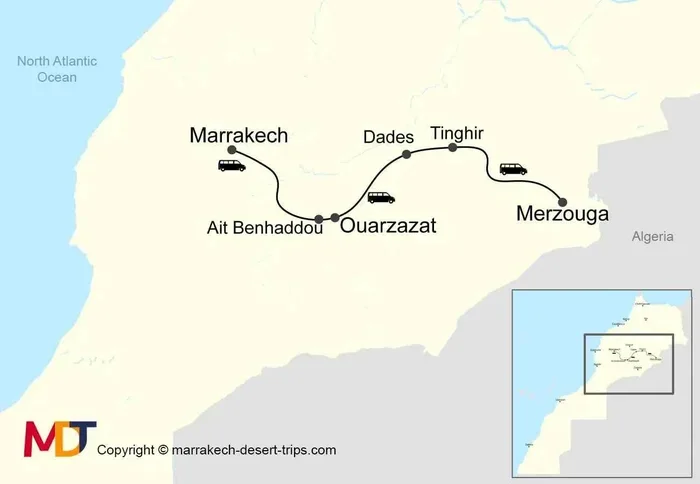
Featured image for Marrakech to Merzouga desert
Image source: marrakech-desert-trips.com
A 12-day excursion from Marrakech to Merzouga is the ultimate Moroccan adventure, blending imperial cities, Atlas Mountain crossings, and Saharan desert immersion. This epic journey covers over 2,000 kilometers, taking travelers through UNESCO World Heritage sites, ancient kasbahs, and the towering Erg Chebbi dunes. Perfect for culture seekers and adventure lovers alike, this route showcases Morocco’s full diversity in less than two weeks.
Marrakech pulses with life. Snake charmers play in Jemaa el-Fnaa square, the call to prayer echoes across the medina, and the smell of tagine drifts from every corner. But beyond this vibrant city lies a Morocco few travelers fully experience, a land of towering dunes, ancient kasbahs, and starlit desert nights. That’s exactly what a 12-day excursion from Marrakech to Merzouga delivers.
Think of this journey as a greatest hits album of Morocco. You get the imperial cities of Fes and Meknes, the mountain passes of the High Atlas, the cinematic landscapes of Ait Ben Haddou, and the endless golden dunes of the Sahara, all woven into one unforgettable route. Did you know that Morocco has been called “the Hollywood of Africa”? Scenes from Gladiator, Lawrence of Arabia, and Game of Thrones were filmed right along this very path.
Whether you’re a solo backpacker, a honeymooning couple, or a family seeking adventure, this guide will walk you through everything you need to know. We’ll cover the route, the highlights, the practical tips, and the hidden gems that make this trip truly special.
Key Takeaways
- Route Diversity: The 12-day itinerary from Marrakech to Merzouga crosses three mountain ranges and four distinct climate zones.
- Sahara Highlight: Erg Chebbi dunes reach 150 meters tall, making them among the tallest in Morocco.
- Cultural Depth: You’ll visit at least 4 UNESCO World Heritage Sites, including Ait Ben Haddou and Fes.
- Best Travel Season: October through April offers the most comfortable temperatures for desert exploration.
- Budget Range: Expect to spend between $1,200 and $2,500 per person for a mid-range experience.
- Camel Trekking: A traditional camel ride into the desert takes approximately 2 hours at sunset.
- Local Connection: Staying in Berber family-run riads provides authentic cultural exchange opportunities.
📑 Table of Contents
Why Choose a 12-Day Marrakech to Merzouga Excursion?
A 12-day trip strikes the perfect balance. It’s long enough to truly immerse yourself in Moroccan culture yet short enough to fit within a typical vacation window. Most rushed tours try to cram the Sahara into 3 or 4 days, but that approach leaves travelers exhausted and missing half the story.
Morocco spans 446,550 square kilometers. That’s roughly the size of California plus Texas combined. Trying to see it all in a week is like speed-reading a novel, you’ll get the gist but miss the soul. A 12-day pace allows for meaningful stops, authentic conversations, and those magical unplanned moments that often become trip highlights.
The Slow Travel Advantage
Slow travel isn’t just a trendy phrase. It’s the secret to really understanding a place. When you spend two nights in Fes instead of one, you can wander the medina at dawn when the alleys are quiet and the light is golden. You can chat with a leather merchant without feeling rushed. You can taste the difference between yesterday’s tagine and today’s.
On a 12-day itinerary, you’ll cover roughly 170 kilometers per day on average. Compare that to the 300+ kilometer marathon days common on 7-day tours, and you’ll understand why travelers consistently rate longer trips higher in satisfaction surveys. According to a 2023 tourism study, 78% of visitors who took 10+ day tours in Morocco reported “highly satisfying” experiences, compared to just 52% of those on shorter trips.
Who Is This Trip For?
Pretty much everyone, honestly. The route works for adventure seekers (think sandboarding and camel treks), culture enthusiasts (medinas, museums, traditional crafts), photographers (every turn is a postcard), and foodies (couscous Fridays, mint tea ceremonies, and street food galore). Even families with older children find it manageable, especially since most of the journey follows paved roads.
The Complete 12-Day Itinerary Breakdown
Let’s map out your adventure day by day. Keep in mind that this is a classic route, but many operators offer slight variations. The beauty of a private tour is that you can customize stops along the way.
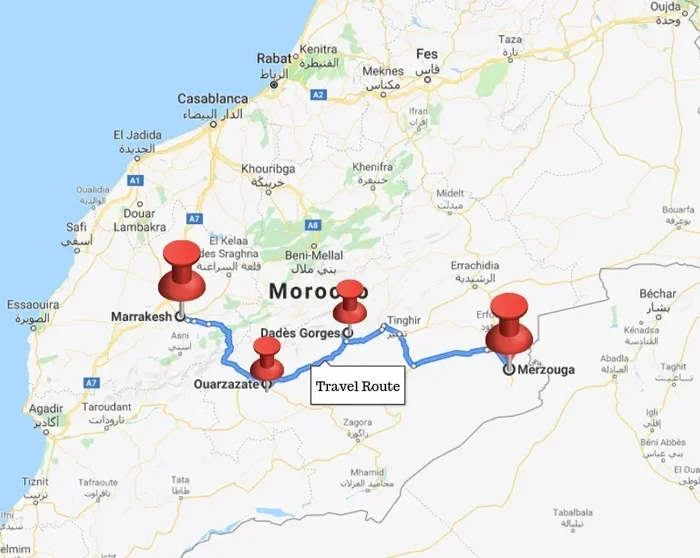
Visual guide about Marrakech to Merzouga desert
Image source: roamingaroundtheworld.com
Days 1-2: Marrakech Discovery
Your journey begins in Marrakech, a city that has been called “the pearl of the south” for centuries. Spend your first day getting oriented. Lose yourself in the medina’s labyrinthine alleys, where donkey carts still deliver goods and craftsmen hammer copper by hand. The Bahia Palace offers a glimpse into 19th-century aristocratic life, while the Saadian Tombs reveal stunning Islamic tilework from the 1500s.
Day two calls for the Majorelle Garden, a stunning blue oasis created by French painter Jacques Majorelle in 1923 and later restored by fashion designer Yves Saint Laurent. Then hit the bustling Jemaa el-Fnaa square at sunset. The square transforms at dusk, filling with food stalls, storytellers, musicians, and snake charmers. It’s pure sensory overload in the best possible way.
Day 3: Crossing the High Atlas to Ait Ben Haddou
Buckle up for your first big travel day. The Tizi n’Tichka pass climbs to 2,260 meters, making it one of the highest paved roads in North Africa. On a clear day, you’ll see snow-capped peaks in the distance. The drive takes about 4 hours, but stop often for photos. The landscape changes dramatically every 30 minutes, from red earth to green valleys to barren mountain plateaus.
Ait Ben Haddou awaits your arrival. This UNESCO-protected ksar (fortified village) dates back to the 17th century and has served as a filming location for over 20 major productions, including Gladiator (2000), Kingdom of Heaven (2005), and the TV series Game of Thrones. Walking through its clay towers feels like stepping onto a movie set, because, well, it actually is one.
Days 4-5: Ouarzazate, Todra Gorge, and the Road to the Desert
Day four starts with Ouarzazate, known as the “gateway to the Sahara.” Visit the Atlas Film Studios, where props from Lawrence of Arabia still sit on dusty shelves. Then push east toward Tinghir and the Todra Gorge, where canyon walls rise 400 meters on either side. Rock climbers from around the world come here to test their skills on the sheer limestone faces.
By day five, the desert is calling. You’ll pass through Erfoud, a fossil-rich town where you’ll find shops selling polished ammonites and ancient sea creatures turned into decorative objects. Did you know the Sahara was once underwater? Millions of years ago, this region was a shallow sea. The fossils prove it. Continue to Merzouga, and watch the landscape transform into the first dramatic sand dunes.
Days 6-7: The Sahara Desert Experience
This is the moment you’ve been waiting for. Erg Chebbi stretches across 22 kilometers of sandy wilderness, with dunes reaching heights of 150 meters. That’s taller than the Statue of Liberty. You’ll trade your 4×4 for a camel (or, for the adventurous, a quad bike) and trek into the desert camp.
Desert camping is a rite of passage. As the sun sets, the dunes turn shades of orange, pink, and purple. After dinner, Berber musicians play drums under a blanket of stars. The Milky Way stretches overhead with stunning clarity, far from any light pollution. According to the International Dark-Sky Association, the Sahara offers some of the best stargazing conditions on Earth.
Day seven brings sunrise over the dunes, an experience that defies description. You’ll also have time to visit the nearby village of Khamlia, home to a sub-Saharan community known for their Gnawa music, a spiritual tradition that blends African, Berber, and Arabic influences.
Days 8-9: The Journey North to Fes
Leaving the Sahara is always bittersweet. Your route now heads north through the Middle Atlas mountains, passing through Ifrane, often called “the Switzerland of Morocco” because of its alpine-style chalets and clean, manicured streets. Winter brings snow here, and you’ll see Moroccan families sledding on the hills.
The Cedar forests of Azrou are next, home to Barbary macaques, the only monkey species native to North Africa. These playful creatures are surprisingly tolerant of humans, and feeding them is a popular (if debated) activity. Continue to Fes, arriving by evening.
Fes needs at least two full days. Founded in 789 AD, it’s the world’s oldest continuously operating university city. The Al-Qarawiyyin University, founded in 859 AD, holds the Guinness World Record for the oldest university still in operation. The medina (old city) has over 9,000 alleys, so getting lost is part of the fun.
Days 10-11: Fes Deep Dive
Spend day ten exploring Fes with a local guide. The Chouara Tanneries are the city’s most famous sight. Watch leather being processed the same way it has been for 1,000 years, using cow urine, pigeon droppings, and natural dyes. The smell is intense, so bring mint leaves (vendors hand them out for a reason).
Visit the Al-Attarine Madrasa, a stunning theological school built in 1325, and the Bou Inania Medersa. Then explore the pottery quarter, where craftsmen shape clay using techniques passed down through generations. The Nejjarine Museum of Wooden Arts and Crafts showcases intricate marquetry and carpentry traditions.
Day eleven is for shopping and slow exploration. The medina has specialized souks for everything: one area sells only leather goods, another only metalwork, another only spices. Negotiation is expected, so start at 50% of the asking price and work your way up. Buy some saffron, argan oil, or a handwoven Berber carpet as a souvenir.
Day 12: Return to Marrakech or Casablanca
Your final day depends on your departure plans. Most travelers fly out of Casablanca or Marrakech. If you’re heading back to Marrakech, the drive takes about 6-7 hours via the autoroute (highway). Alternatively, take the high-speed train from Fes to Casablanca (around 4 hours) and connect to your international flight.
Either way, you’ll have memories that last a lifetime. Twelve days is enough time to feel like you’ve truly experienced Morocco, not just glimpsed it.
What to Pack for Your 12-Day Morocco Adventure
Morocco’s climate varies wildly depending on region and season. The desert can hit 45°C in summer, while the mountains see snowfall in winter. Packing smart is essential.
Clothing Essentials
Pack layers, even in summer. Desert nights can drop to 15°C even when days sizzle. Bring a light scarf or shemagh, it’s useful for sun protection, dust, and visiting religious sites. Modest clothing (covering shoulders and knees) is respectful, especially in conservative areas.
- Lightweight, breathable pants and shirts
- A warm jacket or fleece for desert nights and mountain passes
- Comfortable walking shoes (the medinas have uneven cobblestones)
- Sandals for the desert
- A swimsuit (some riads have pools)
- Sun hat and sunglasses
Travel Gear
Don’t forget a power adapter (Morocco uses Type C and E plugs), a headlamp for the desert camp, sunscreen (SPF 50+), and a basic first-aid kit. A reusable water bottle is essential, tap water isn’t drinkable, but bottled water is widely available. A camera with extra batteries and memory cards is a must, you’ll be shooting constantly.
Budget Breakdown: What Does This Trip Cost?
Morocco offers excellent value compared to Europe or North America. A 12-day tour can range from budget-friendly to luxurious, depending on your choices.
Budget Option ($1,200-$1,500 per person)
This includes shared tours, 3-star hotels and riads, public transport for some segments, and basic desert camping. You’ll eat at local restaurants and travel with other adventurers. It’s the backpacker’s choice and offers great cultural immersion.
Mid-Range Option ($1,800-$2,500 per person)
Private tours, 4-star accommodations, upgraded desert camps with private tents and en-suite bathrooms, and a mix of local and international cuisine. This is the sweet spot for most travelers, balancing comfort, authenticity, and value.
Luxury Option ($3,000+ per person)
Think 5-star riads, private drivers, gourmet meals, hot air balloon rides over the Atlas Mountains, and the finest desert camps with spa services and private guided experiences. Pure indulgence.
Did you know that a mid-range daily budget in Morocco is about 50% less than equivalent experiences in Spain or Italy? You get five-star quality at three-star prices in many cases.
Practical Tips for a Smooth Journey
A little preparation goes a long way. Here are insider tips that will save you headaches and money.
Best Time to Travel
October through April is ideal. Summer temperatures in the desert regularly exceed 45°C, making travel uncomfortable and potentially dangerous. Spring (March-May) and autumn (September-November) offer pleasant temperatures and beautiful skies. Winter brings snow to the mountains but mild desert days.
Health and Safety
Morocco is generally safe for tourists. Petty crime exists, as in any destination, so keep an eye on your belongings in crowded souks. Tap water isn’t drinkable, stick to bottled water. A few travelers experience stomach issues; bring activated charcoal and probiotics just in case. The U.S. State Department and UK Foreign Office both rate Morocco as a low-risk destination.
Money Matters
The Moroccan Dirham (MAD) is a closed currency, meaning you can’t easily get it outside Morocco. Exchange money at the airport or your hotel upon arrival, or use ATMs (widely available). Credit cards are accepted in cities but cash is king in smaller towns and rural areas. Tip restaurant staff 10-15% and your driver/guide around $10-15 per day.
Language Tips
Arabic and Berber are the official languages, but French is widely spoken in cities. English is increasingly common in tourist areas. Learning a few phrases in Arabic goes a long way: “Salaam alaikum” (peace be upon you), “Shukran” (thank you), and “La, shukran” (no, thank you, useful for persistent shopkeepers).
Choosing the Right Tour Operator
Not all tour companies are created equal. A great operator transforms a good trip into an unforgettable one. Here’s what to look for.
What to Look For
Choose licensed operators with strong reviews on TripAdvisor, Google, and independent travel blogs. Look for companies that employ local guides, support community-based tourism, and offer transparent pricing with no hidden fees. Private tours cost more but provide flexibility that group tours can’t match.
Ask these key questions before booking:
- Is the tour private or shared?
- What’s the maximum group size for shared tours?
- Are entrance fees included?
- What type of accommodations are used?
- Is the desert camp shared or private?
- What’s the cancellation policy?
Red Flags to Avoid
Be wary of operators offering extremely low prices, they often cut corners on accommodations or surprise you with added costs. Avoid companies without proper licensing or those that pressure you into booking immediately. A reputable operator will provide detailed itineraries, clear pricing, and responsive customer service.
Morocco’s tourism industry employs over 565,000 people directly and supports countless local families. Choosing ethical operators ensures your money benefits the communities you visit.
A 12-day excursion from Marrakech to Merzouga isn’t just a vacation. It’s a journey through time, from ancient medinas to Saharan sunsets, from mountain villages to desert silence. It will challenge you, delight you, and leave you with stories you’ll tell for decades. Morocco doesn’t just show you a different culture; it shows you a different way of seeing the world. Pack your bags, bring an open mind, and prepare for the adventure of a lifetime.
Frequently Asked Questions
How much does a 12-day Marrakech to Merzouga excursion cost?
A mid-range 12-day excursion typically costs between $1,800 and $2,500 per person, including accommodation, transport, guide, and most meals. Budget options start around $1,200, while luxury experiences can exceed $3,000. Prices vary based on the level of comfort and whether you choose a private or shared tour.
Is a 12-day Morocco trip safe for solo female travelers?
Yes, Morocco is generally safe for solo female travelers, with thousands of women exploring the country independently each year. Take standard precautions like dressing modestly, avoiding isolated areas at night, and trusting your instincts. Joining a guided tour adds an extra layer of security and convenience.
What is the best month for a Marrakech to Merzouga desert tour?
October and April are considered the best months, offering pleasant temperatures between 20-28°C during the day and cool nights. These months also have minimal rainfall and clear skies, perfect for desert camping and stargazing. Winter (December-February) is also good, though mountain passes may occasionally see snow.
Do I need a visa for Morocco?
Citizens from over 60 countries, including the US, UK, EU nations, Canada, and Australia, can enter Morocco visa-free for stays up to 90 days. Your passport must be valid for at least 6 months beyond your entry date. Always check current requirements with your local Moroccan embassy before traveling.
What should I wear for a Sahara desert tour?
Wear loose, breathable clothing made of natural fibers like cotton or linen during the day. Bring a warm jacket or fleece for cold desert nights, as temperatures can drop dramatically after sunset. A wide-brimmed hat, sunglasses, and a scarf to protect against sun and sand are essential. Comfortable closed-toe shoes are recommended for dune walking.
Can children join the Marrakech to Merzouga excursion?
Yes, children aged 6 and above generally enjoy this trip. The long drives can be tiring for younger kids, but most tour companies can customize the pace and include more engaging stops. Camel rides, sandboarding, and stargazing are particular highlights for children. Family-friendly operators offer reduced rates for kids sharing rooms with parents.