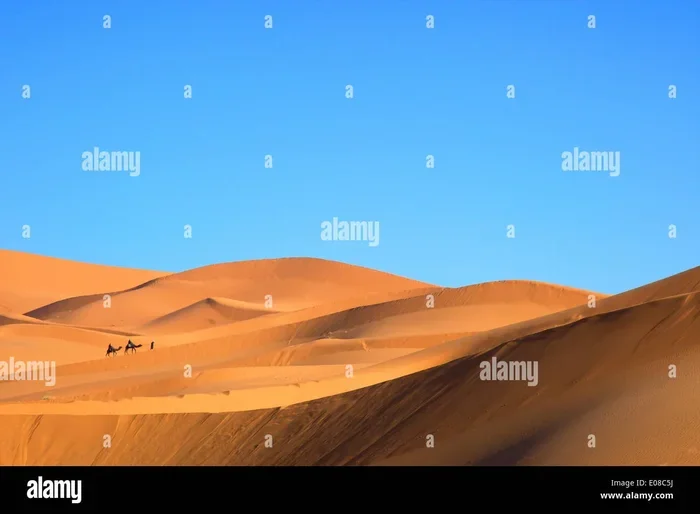
Featured image for Morocco desert Merzouga camels
Image source: c8.alamy.com
A 6 day tour from Marrakech to Merzouga is the ultimate way to experience Morocco’s diverse landscapes and rich culture in one unforgettable journey. This extended adventure takes you through the Atlas Mountains, ancient kasbahs, stunning gorges, and ends with camel treks into the Erg Chebbi dunes. It’s the perfect balance of depth and pace, giving you time to truly absorb the magic of the Sahara Desert.
Marrakech pulses with energy the moment you arrive. Spices fill the air, snake charmers play melodies in Jemaa el-Fnaa square, and donkey carts weave through narrow alleys. But beyond the city’s red walls lies another Morocco entirely, one of sweeping deserts, ancient trading posts, and mountain passes that have connected Africa for centuries.
The journey from Marrakech to Merzouga is often called Morocco’s greatest adventure. It’s a route that travelers have taken for thousands of years, crossing the Atlas Mountains to reach the edge of the Sahara. Today, you can follow those same paths in comfort, experiencing the country’s incredible diversity over six unforgettable days.
Why six days instead of three or four? Think of it like this: rushing through Morocco is like reading only the highlights of a great novel. You get the plot, but you miss the poetry. Six days gives you time to slow down, to watch sunset paint the dunes gold, to share mint tea with Berber families, and to truly feel the rhythm of this remarkable country.
Key Takeaways
- Optimal Duration: Six days strikes the perfect balance between seeing major highlights and avoiding rushed travel fatigue
- UNESCO Sites: The route includes Ait Ben Haddou, a UNESCO World Heritage Site featured in Hollywood films
- Diverse Landscapes: You’ll cross four major geographic zones including mountains, valleys, gorges, and desert
- Cultural Immersion: The longer itinerary allows authentic Berber village visits and traditional music experiences
- Sahara Magic: Camel trekking and overnight camping under Saharan stars is the unforgettable highlight
- Seasonal Timing: October through April offers the best weather for desert adventures
- Value Proposition: A 6 day tour costs significantly less per day than shorter tours while covering more ground
📑 Table of Contents
- What Makes the Marrakech to Merzouga Route Special
- Day-by-Day Breakdown of the Perfect 6 Day Marrakech to Merzouga Tour
- Essential Tips for Planning Your 6 Day Marrakech to Merzouga Tour
- Understanding the Cultural Experience
- Costs and Booking Your Tour
- What to Expect on Your Sahara Desert Night
- Making the Most of Your Marrakech to Merzouga Adventure
What Makes the Marrakech to Merzouga Route Special
The route from Marrakech to Merzouga covers roughly 560 kilometers, but the distance tells you nothing about the journey. You’re essentially crossing an entire country, moving from the bustling streets of a medieval imperial city to the silent, endless dunes of the Sahara. It’s like driving from Paris to the surface of the moon.
Did you know that the Sahara Desert covers an area larger than the United States? It’s roughly 9.2 million square kilometers, making it the largest hot desert in the world. Yet your journey touches just one tiny corner of it, the Erg Chebbi dunes near Merzouga, where some dunes rise over 150 meters high.
The Geographic Zones You’ll Cross
Your 6 day tour passes through four distinct geographic zones:
- High Atlas Mountains: The Tizi n’Tichka pass climbs to 2,260 meters, offering dramatic mountain scenery
- Pre-Saharan Steppes: Rolling hills and rocky plateaus that look like another planet
- Desert Valleys: The Draa and Todra valleys feature lush palm groves amid stark landscapes
- Sahara Desert: The Erg Chebbi sea of sand, where the horizon seems infinite
Each zone has its own climate, its own culture, and its own food. In the mountains, you’ll eat warm tagines by the fire. In the valleys, you’ll taste dates fresh from palm trees. In the desert, you’ll sip mint tea under stars so bright you’ll swear you can reach up and touch them.
Day-by-Day Breakdown of the Perfect 6 Day Marrakech to Merzouga Tour
Here’s how a well-designed 6 day tour typically unfolds. Keep in mind that exact itineraries vary by operator, but the flow follows a logical geographic progression that makes the journey feel natural and unhurried.
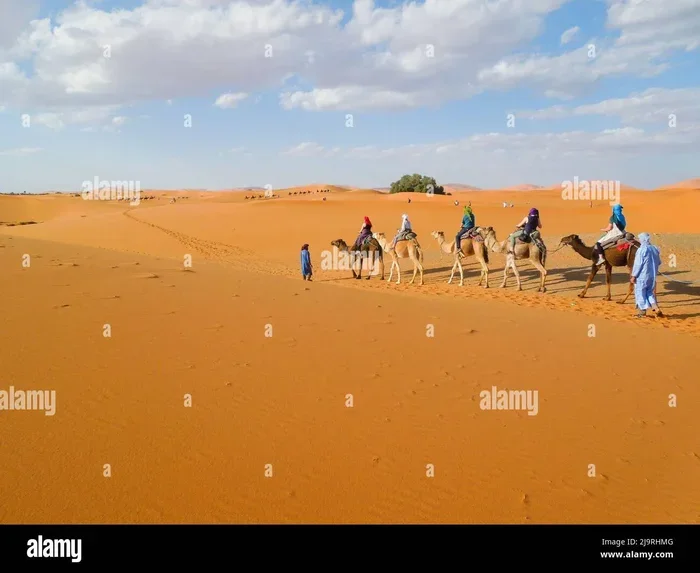
Visual guide about Morocco desert Merzouga camels
Image source: c8.alamy.com
Day 1: Marrakech to Ait Ben Haddou and Ouarzazate
Your adventure begins early, usually around 7 or 8 AM. The first stop is the Tizi n’Tichka pass, where your driver pulls over for photos. The mountains here look like crumpled paper, layers of rock folded over each other millions of years ago.
By late morning, you arrive at Ait Ben Haddou, a fortified village (ksar) that looks like something from a dream. This UNESCO World Heritage Site has appeared in over 20 Hollywood films, including Gladiator, Lawrence of Arabia, and Game of Thrones. Walking through its narrow clay passages feels like stepping back to medieval times.
After lunch, you continue to Ouarzazate, known as the “Gateway to the Sahara.” The city is home to Atlas Film Studios, where many famous movies were made. Most tours include a quick stop here before continuing to your overnight stop in the Draa Valley or Skoura.
Day 2: Draa Valley to Todra Gorges
Day two is about valleys and gorges. The Draa Valley stretches over 200 kilometers and is lined with date palms, creating a green ribbon through otherwise harsh terrain. You’ll pass through small Berber villages where life hasn’t changed much in centuries.
The Todra Gorges are the day’s climax. These limestone cliffs tower 400 meters high, with a narrow passage where the Todra River has carved its way through. Rock climbers come from around the world to scale these walls, but you don’t need to be a climber to appreciate the sheer scale. Stand at the bottom, look up, and feel very, very small.
You overnight in a traditional kasbah hotel or riad in the Tinghir area. The evening is usually filled with the smell of wood fires and the sound of distant drums.
Day 3: Todra to Merzouga and the Sahara
This is the day everything has been building toward. After breakfast, you drive through increasingly desert-like landscapes toward Merzouga, a small village on the edge of the Erg Chebbi dunes.
Upon arrival, you meet your camel caravan. Yes, camels. These “ships of the desert” have carried traders across the Sahara for over 1,000 years. Climbing onto a camel is an experience in itself: they lurch up front legs first, then back legs, creating a rocking motion that takes some getting used to.
The trek into the dunes takes about 1.5 to 2 hours. Your Berber guide leads the way as the sun begins its descent, painting the sand in shades of orange, pink, and gold. Did you know that Sahara temperatures can swing by over 30 degrees Celsius between day and night? Daytime might hit 40°C while nighttime can drop below freezing.
You arrive at your desert camp, a cluster of traditional nomadic tents surrounded by endless dunes. Dinner is served under the stars, usually featuring tagine and fresh bread cooked in the sand. After dinner, Berber musicians play drums around a campfire, and you can climb a nearby dune for some of the best stargazing of your life.
Day 4: Sahara Exploration Day
This is where the 6 day tour really shines. While shorter tours rush you back to civilization, day four gives you time to actually experience the desert. Many tours offer options like:
- 4×4 Desert Excursions: Visit nomadic families living in the desert and explore seasonal lakes
- Sandboarding: Slide down the dunes on boards, similar to snowboarding
- Quad Biking: Ride ATVs across the desert landscape
- Extended Camel Treks: Spend more time exploring the dunes on traditional transport
The highlight is usually a visit to Khamlia, a small village inhabited by descendants of sub-Saharan African traders. Here you can listen to Gnawa music, a spiritual genre that blends African and Moroccan traditions.
Day 5: Return Through Erfoud and the Ziz Valley
Day five begins with a sunrise over the dunes, an experience so beautiful it’s worth waking up early for. After a final camel ride back to Merzouga, you start the journey back toward the mountains.
The route takes you through Erfoud, known for its fossil workshops. The region was once underwater, and you can find ancient sea creatures preserved in the local marble. Many travelers purchase polished fossils as souvenirs here.
The Ziz Valley provides afternoon scenery, with its dramatic gorge lined with palm trees. You’ll pass through Midelt, known as the “Apple City,” before crossing the Middle Atlas Mountains. Your overnight stop is usually in the cedar forests near Azrou or Ifrane.
Day 6: Return to Marrakech via Ifrane and the Middle Atlas
The final day takes you through some of Morocco’s most surprising landscapes. Ifrane is often called “Little Switzerland” because of its European-style architecture and alpine feel. Clean streets, red roofs, and ski resorts in winter make it feel nothing like the desert you just left.
The Middle Atlas features the famous Azrou cedar forest, home to Barbary macaques, Morocco’s only native monkey species. These playful creatures are the only non-human primates living north of the Sahara in Africa. Your driver will usually stop for a quick visit, though you should keep food hidden as the monkeys can be aggressive beggars.
You arrive back in Marrakech by late afternoon, with just enough time to freshen up before heading to the famous Jemaa el-Fnaa square for a final dinner of grilled meats and fresh orange juice.
Essential Tips for Planning Your 6 Day Marrakech to Merzouga Tour
A successful desert tour requires some preparation. Here are the key things to know before you go.
Best Time to Travel
The ideal season is October through April, when temperatures are pleasant during the day and cool at night. Summer (June to August) can be brutal, with desert temperatures exceeding 45°C. Winter nights can be surprisingly cold, with temperatures sometimes dropping below freezing in the dunes.
What to Pack
Pack light but smart. Here’s your desert survival kit:
- Layers: Mornings and evenings can be cool even in warmer months
- Scarf or Shemagh: Essential for protecting your face from sand during camel rides
- Sunscreen and Sunglasses: The desert sun is intense
- Comfortable Walking Shoes: You’ll be walking on sand and rocky terrain
- Camera: You’ll regret not having extra memory cards
- Headlamp: Useful for desert camp bathrooms and stargazing
Choosing a Tour Operator
Not all tours are created equal. Look for these qualities when booking:
Small group sizes: Private tours or small groups (under 8 people) offer a more personal experience than large bus tours. You’ll have more flexibility to stop for photos and ask questions.
Local guides: Companies based in Marrakech or Merzouga tend to have better local knowledge and connections than international operators reselling local services.
Transparent pricing: Make sure you understand what’s included. Most tours include transportation, accommodation, breakfast, and dinner, but entrance fees and tips are usually extra.
Accommodation quality: The desert camp can range from basic shared tents to luxury “glamping” with private bathrooms. Know what you’re booking.
Understanding the Cultural Experience
A 6 day tour is more than a sightseeing trip. It’s a chance to engage with Morocco’s living culture, particularly the Berber (Amazigh) people who have inhabited this region for thousands of years.
Berber Hospitality
Berber hospitality is legendary. If you visit a village, you’ll almost certainly be offered mint tea, often called “Moroccan whiskey.” The ritual of preparing and serving tea is itself a cultural experience. Did you know that pouring tea from a height creates a foam on top, which is considered a sign of a skilled host?
The tea is poured from high above the glass, both to cool it slightly and to aerate it, creating that characteristic frothy top. Accept it graciously, even if you’re full. Refusing is considered impolite.
Music and Traditions
Throughout your journey, you’ll encounter different musical traditions. In the desert, listen for the deep rhythms of Berber drums. In Khamlia, you’ll hear Gnawa music with its distinctive metallic castanets and hypnotic melodies. Each region has its own songs, often performed at celebrations and gatherings.
Respectful Travel
When visiting villages or taking photos of people, always ask permission first. A smile and gesture toward your camera usually gets you a “yes.” Tipping is customary: your driver and guide will appreciate a tip at the end of the tour, typically around 10-15% of the tour cost split between them.
Costs and Booking Your Tour
Prices for a 6 day Marrakech to Merzouga tour vary based on accommodation choices and group size. Here’s a general breakdown of what to expect:
- Budget Tours: €300-500 per person, shared group, basic desert camping
- Mid-Range Tours: €500-900 per person, small group or private, standard desert camp
- Luxury Tours: €1,000+ per person, private tour, luxury desert camp with private tents
Most operators charge per person for shared tours, with discounts for larger groups on private tours. Always confirm whether meals, entrance fees, and camel trek are included in the quoted price.
How to Book
You have three main options for booking your 6 day tour:
Online Booking Platforms: Sites like Viator, GetYourGuide, and TourRadar offer reviews and easy comparison shopping. The advantage is consumer protection and verified reviews. The disadvantage is you often pay a premium for the platform’s commission.
Direct Booking with Local Operators: Contact Moroccan tour companies directly through their websites or WhatsApp. This usually gives you the best price and allows more customization. Check reviews on TripAdvisor before booking.
Booking Through Your Riad: Your accommodation in Marrakech can often arrange tours, but they typically add a commission. Use this option for convenience but not for the best price.
What to Expect on Your Sahara Desert Night
The overnight in the desert is the emotional heart of the entire journey. Here’s what makes it special.
The Desert Camp Experience
Your camp typically consists of traditional nomadic tents, with shared or private bathrooms depending on your booking level. The tents are surprisingly comfortable, with mattresses, blankets, and pillows. The real luxury is the silence.
After dinner, you’ll gather around a campfire. The Berber staff might play drums and sing traditional songs. Some tours include henna painting for visitors, where local women decorate your hands with traditional designs.
The Night Sky
If the sky is clear, which it usually is in the desert, the stars will take your breath away. Away from city lights, you can see thousands of stars, the Milky Way, and even planets with the naked eye. Many tours provide telescopes, but your eyes are usually enough.
Did you know that desert air has minimal light pollution and humidity, making it one of the best places on Earth for stargazing? Some professional observatories are built in deserts for this exact reason.
Sunrise Over the Dunes
Wake up before dawn on your last morning in the desert. Climb a nearby dune (it takes about 15-20 minutes) and watch the sun rise over the Sahara. The sand shifts from deep purple to gold as light spreads across the landscape. It’s a moment you’ll remember forever.
Making the Most of Your Marrakech to Merzouga Adventure
After six days on the road, you’ll return to Marrakech a changed traveler. The journey gives you something rare in modern travel: time to disconnect, time to absorb, time to wonder. The Sahara has a way of putting things in perspective.
Before you go, keep these final tips in mind:
- Stay Hydrated: Drink water constantly, even if you don’t feel thirsty
- Protect Your Electronics: Sand gets everywhere, so keep phones and cameras in sealed bags when not in use
- Learn Basic Arabic or Berber: A simple “salaam alaikum” (peace be upon you) goes a long way
- Embrace the Unplanned: Some of the best moments happen when you stop trying to control everything
- Take Less Stuff: You’ll wish you had packed lighter by day three
The 6 day tour from Marrakech to Merzouga isn’t just a trip. It’s a passage through landscapes and cultures that have shaped human history. From the High Atlas passes where Berber traders once led caravans to the dunes where nomads still follow ancient patterns, you’re walking in footsteps that go back thousands of years.
Whether you’re watching camels silhouetted against a desert sunset, listening to drums echo across the dunes, or sharing mint tea with a Berber family, these are the moments that make travel meaningful. The best 6 day tour from Marrakech to Merzouga isn’t just about seeing Morocco. It’s about feeling it, one kilometer at a time.
So pack your bags, charge your camera, and prepare for an adventure that will stay with you long after you’ve returned home. The Sahara is waiting.
Frequently Asked Questions
How long does the drive from Marrakech to Merzouga take?
The drive takes approximately 9-10 hours without stops, which is why a 6 day tour is ideal. It allows you to break the journey into manageable segments while visiting major attractions along the way, including Ait Ben Haddou, the Todra Gorges, and the Draa Valley.
Is the 6 day Marrakech to Merzouga tour suitable for families with children?
Yes, this tour is family-friendly for children typically aged 5 and above. The camel rides are gentle, and most accommodations welcome families. However, be prepared for long driving days and bring entertainment for kids. Some operators offer shorter driving days for families upon request.
What type of accommodation is included in the desert?
The desert camp usually includes traditional Berber tents with mattresses, blankets, and pillows. Standard camps have shared bathroom facilities, while luxury camps offer private en-suite tents. All meals (dinner and breakfast) are typically included in your desert stay.
Do I need travel insurance for the 6 day desert tour?
Yes, travel insurance is highly recommended. Your policy should cover medical emergencies, trip cancellation, and evacuation. Make sure your insurance specifically covers desert activities like camel trekking and any adventure sports you might participate in.
Can I do the 6 day tour in summer?
While possible, summer tours (June-August) are challenging due to extreme desert temperatures exceeding 45°C during the day. Spring (March-May) and autumn (September-November) are the best times, offering pleasant temperatures and clear skies. Winter tours are also popular but nights can be very cold.
What’s the best way to pay for the tour?
Most tour operators accept a mix of payment methods. You can typically pay a deposit via bank transfer or PayPal when booking, with the balance paid in cash (Dirhams or Euros) upon arrival. Credit cards are accepted in Marrakech but rarely in desert areas, so carry sufficient cash for souvenirs and tips.