
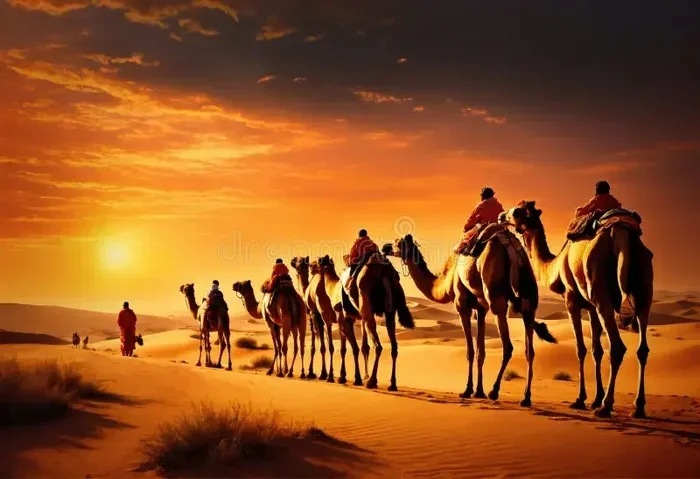
Featured image for Morocco desert camel caravan sunset
Image source: thumbs.dreamstime.com
Our tour di 8 giorni da Marrakech a Erg Chebbi is the perfect way to experience Morocco’s most iconic landscapes in just over a week. This 8-day journey takes you from the bustling souks of Marrakech through the Atlas Mountains, ancient kasbahs, and lush oases, culminating in the breathtaking Sahara Desert at Erg Chebbi. You’ll ride camels into the dunes, sleep under the stars in a Berber camp, and discover the rich culture of southern Morocco along the way.
Picture this: you’re standing atop a massive sand dune, golden grains stretching in every direction, the sky painted in shades of orange and pink as the sun sets over the Sahara. Just a week ago, you were wandering through the chaotic, colorful souks of Marrakech, sipping mint tea in a quiet riad courtyard. Now, you’re in the middle of one of the world’s greatest deserts, about to sleep under a canopy of stars in a traditional Berber tent. This is the magic of a tour di 8 giorni da Marrakech a Erg Chebbi, and it’s the kind of trip that changes people.
Morocco sits just 14 kilometers from Spain across the Strait of Gibraltar, yet it feels like a completely different world. The country welcomed a record 14.5 million tourists in 2023, according to Morocco’s Ministry of Tourism, and desert tours remain one of the top reasons people visit. An 8-day itinerary strikes the perfect balance: long enough to soak in the diverse landscapes, short enough to fit into most vacation schedules.
Whether you’re a solo traveler seeking adventure, a couple on a romantic getaway, or a family looking for an educational journey, this guide will walk you through everything you need to know. From the route itself to what to pack, from costs to cultural tips, we’ve got you covered. Let’s dive into the desert adventure of a lifetime.
Key Takeaways
- Comprehensive Route: The 8-day tour covers roughly 1,200 kilometers, looping from Marrakech through the Atlas Mountains, Draa Valley, and Sahara before returning via Ouarzazate.
- Desert Highlight: Erg Chebbi’s dunes reach up to 150 meters tall, making them among the tallest in Morocco and a true highlight of the journey.
- Best Travel Season: October through April offers the most comfortable temperatures, with daytime highs between 20°C and 28°C in the desert.
- Cultural Immersion: You’ll visit UNESCO World Heritage Sites like Aït Benhaddou and experience Berber, Arabic, and Sahrawi cultures firsthand.
- Adventure Activities: Camel trekking, sandboarding, 4×4 desert excursions, and starlit dinners are all included in most itineraries.
- Practical Packing: Layered clothing is essential because desert temperatures can swing 25°C between day and night.
- Budget-Friendly Option: Group tours start around €400-€600 per person, while private tours range from €800-€1,500 depending on luxury level.
📑 Table of Contents
- What Exactly Is a Tour Di 8 Giorni Da Marrakech a Erg Chebbi?
- Why Choose 8 Days for This Journey?
- The Detailed Day-by-Day Breakdown
- When to Go: Timing Your Trip Perfectly
- How Much Does This Tour Cost?
- What to Pack: The Essentials
- Cultural Etiquette and Practical Tips
- Choosing the Right Tour Operator
- Final Thoughts: Why This Trip Is Worth It
What Exactly Is a Tour Di 8 Giorni Da Marrakech a Erg Chebbi?
Let’s break this down simply. “Tour di 8 giorni” means “8-day tour” in Italian, which tells us this itinerary has Italian-speaking roots or is popular among Italian travelers. “Da Marrakech a Erg Chebbi” means “from Marrakech to Erg Chebbi.” So we’re talking about an 8-day round-trip journey that starts in Marrakech, Morocco’s fourth-largest city, and ends at Erg Chebbi, one of the Sahara’s two famous dune seas in the country.
The Route Explained Simply
Think of this tour like a giant loop, similar to a figure-eight drawn on a map. You start in Marrakech in the northwest, head southeast across the High Atlas Mountains, dip down into the Sahara at Erg Chebbi, then loop back northwest through a different scenic route via Ouarzazate, often called the “Hollywood of Africa” because movies like Gladiator and Lawrence of Arabia were filmed there.
The journey covers approximately 1,200 to 1,400 kilometers total, depending on exact stops. You’ll travel by comfortable 4×4 vehicle or minivan, with a driver-guide who knows the terrain, the languages, and the best photo spots. Most tours include hotel stays in cities and towns, plus one or two nights in a desert camp.
Who Is This Tour For?
This trip suits a wide range of travelers, including:
- Adventure seekers who want authentic desert experiences
- Culture lovers interested in Berber traditions, kasbahs, and medinas
- Photographers chasing dramatic landscapes and golden-hour light
- Couples and honeymooners seeking romantic desert moments
- Families with older children who can handle long drives
- Solo travelers who prefer small group tours for safety and friendship
Did You Know? Erg Chebbi’s dunes are about 30 million years old, formed during a period when the Sahara was much wetter. The wind patterns over millions of years sculpted them into the massive waves of sand you see today, some reaching 150 meters high, taller than the Statue of Liberty!
Why Choose 8 Days for This Journey?
You might wonder why 8 days is the “sweet spot” for this tour. Here’s the thing: Morocco is geographically diverse. The Sahara isn’t right next to Marrakech; it takes serious travel time to get there. Let’s compare options.
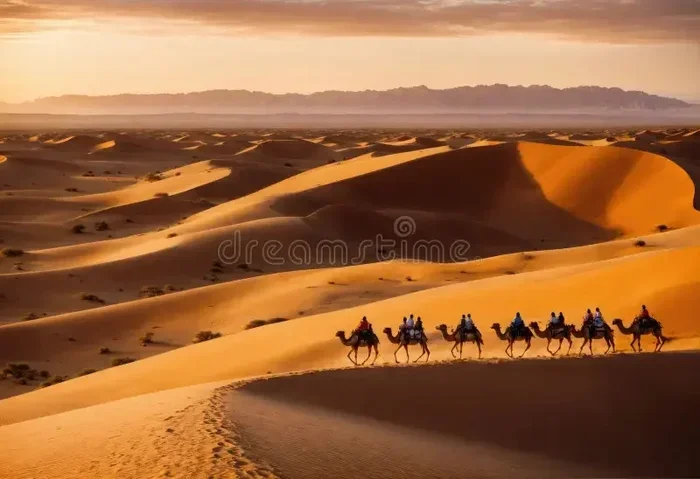
Visual guide about Morocco desert camel caravan sunset
Image source: thumbs.dreamstime.com
3-Day Tours: Too Rushed
A 3-day Marrakech to Erg Chebbi tour exists, but it’s essentially a sprint. You spend around 16 to 20 hours in a vehicle over three days, with very little time to actually enjoy stops. It’s like watching a movie on fast-forward; you see everything, but you don’t experience anything.
5-Day Tours: Better, But Limited
Five days gives you a taste of the desert and a couple of kasbahs, but you’ll skip either the Todra Gorge or the Draa Valley. It’s a solid choice for travelers with limited time, but it lacks depth.
8-Day Tours: The Perfect Balance
With 8 days, you can comfortably visit:
- The Atlas Mountains and Tizi n’Tichka pass
- Aït Benhaddou (UNESCO site)
- Ouarzazate and the film studios
- The Draa Valley with its millions of date palms
- Todra Gorge or Dades Gorge
- Erg Chebbi with a full day and night in the desert
- Different return route scenery
10+ Day Tours: For Slow Travelers
If you have the time, longer tours add extras like Chefchaouen, the northern coast, or the Atlas Mountains hiking. But for most travelers, 8 days hits the sweet spot between immersion and practicality.
Did You Know? Morocco has 9 UNESCO World Heritage Sites, and a typical 8-day desert tour usually includes at least one or two, making it one of the most culture-rich trips you can take in North Africa.
The Detailed Day-by-Day Breakdown
Now let’s get into the meat of the itinerary. While exact stops vary by operator, here’s a typical structure for a tour di 8 giorni da Marrakech a Erg Chebbi.
Day 1: Marrakech to the Atlas Mountains
Your adventure begins bright and early, usually around 7 or 8 AM, when your driver picks you up from your riad or hotel. The first leg takes you over the Tizi n’Tichka pass, which sits at 2,260 meters above sea level. That’s higher than many ski resorts in Europe!
Along the way, you’ll stop at a traditional Berber village to stretch your legs, sip mint tea, and watch locals in their daily routines. The High Atlas Mountains are home to the Berber people, Morocco’s indigenous inhabitants who have lived here for over 4,000 years. By late afternoon, you arrive in Ouarzazate, often called the “door of the desert.”
Day 2: Ouarzazate to the Dades Valley
Day 2 is all about kasbahs and canyons. You’ll visit Aït Benhaddou in the morning, a stunning fortified village that has served as a backdrop for over 20 Hollywood films, including Gladiator (2000), The Mummy (1999), and even Game of Thrones.
After lunch, you drive through the “Road of a Thousand Kasbahs” to the Dades Valley, famous for its dramatic red-rock formations and ancient mud-brick fortresses. You’ll overnight in a traditional kasbah hotel, where you can cool off in a swimming pool and enjoy a home-cooked tagine dinner.
Day 3: Dades Gorge to Merzouga
Morning brings a drive through the Todra Gorge, where canyon walls rise 400 meters on either side of you. Imagine two skyscrapers of red rock leaning toward each other, with a narrow river running between them. Rock climbers come from all over the world to scale these walls.
By afternoon, you’ll reach Merzouga, the small desert village at the edge of Erg Chebbi. Here, you swap your 4×4 for a camel. Yes, a real camel! These “ships of the desert” have been used for transportation across the Sahara for thousands of years. Your camel trek lasts about 1 to 1.5 hours, taking you deep into the dunes as the sun begins its descent.
Day 4: The Sahara Desert Experience
This is the day everyone remembers. You wake up in your desert camp, probably around 6 AM, to catch the sunrise over the dunes. The play of light on sand creates shifting patterns of gold, orange, and red. It’s the kind of view that makes you understand why people travel thousands of miles to see it.
After breakfast, you can try sandboarding (basically snowboarding on sand), take a 4×4 excursion deeper into the dunes, or simply relax. Evening brings the iconic Sahara experience: Berber drumming around a campfire, traditional music, and a starlit dinner under the Milky Way. The Sahara has some of the darkest skies on Earth, so on clear nights, you can see thousands of stars.
Day 5: Return to the Draa Valley
After a second night in the desert (or sometimes returning to Merzouga), you begin the journey back westward. The return route often takes you through the Draa Valley, a stunning green ribbon of oases stretching for about 200 kilometers. The valley is lined with millions of date palms, and it’s one of Morocco’s most photogenic regions.
You’ll stop in small towns like Agdz and Zagora, where life moves at a slower pace. This is a great day for buying locally made carpets, silver jewelry, or saffron, which is grown in the region and exported worldwide.
Day 6: Exploring the Draa Valley
Day 6 lets you dive deeper into southern Moroccan culture. You might visit a local family for lunch, learn how traditional pottery is made, or explore a ksar (fortified village) on foot. The Draa Valley is less touristy than other regions, so interactions with locals feel more genuine and warm.
Day 7: Return via Ouarzazate
The journey continues back toward Ouarzazate, where you might visit the Atlas Film Studios if you skipped them earlier. These studios are among the largest in the world and have produced films like Alexander and TV series like Prison Break.
You’ll overnight in Ouarzazate or push on to the Atlas Mountains for the final night, depending on your itinerary.
Day 8: Back to Marrakech
The final day is a scenic drive back over the Atlas Mountains to Marrakech. You’ll arrive in the afternoon, giving you time to explore the city’s famous medina, visit the Jardin Majorelle, or shop for last-minute souvenirs in the souks. Most tours end with a drop-off at your hotel or the airport.
When to Go: Timing Your Trip Perfectly
Morocco’s climate varies dramatically by region, and timing your tour di 8 giorni da Marrakech a Erg Chebbi can make or break your experience.
The Best Months: October to April
These months offer the most comfortable weather. In the desert, daytime temperatures range from 20°C to 28°C (68°F to 82°F), perfect for exploring. Nights can be cold, dropping to 5°C to 10°C (41°F to 50°F), so pack layers.
Avoid: June, July, and August
Summer in the Sahara is brutal. Temperatures regularly exceed 45°C (113°F), and sandstorms are common. It’s not just uncomfortable; it can be dangerous. Most tour operators either avoid these months or significantly modify their itineraries.
Shoulder Seasons: April-May and September-October
These are arguably the ideal times. Temperatures are warm but not extreme, and tourist crowds are thinner than in peak winter months (December-February), when Europeans flock to Morocco for sunshine.
Ramadan Considerations
If you travel during Ramadan (dates change yearly based on the Islamic lunar calendar), be aware that restaurants may be closed during the day, and the rhythm of life changes. It’s a fascinating cultural experience, but it can affect tour logistics. Many operators still run tours normally.
Did You Know? The Sahara Desert covers approximately 9.2 million square kilometers, an area roughly the size of the United States. Morocco’s section, including Erg Chebbi, represents only a tiny fraction, yet it’s among the most accessible parts of the desert for tourists.
How Much Does This Tour Cost?
Pricing varies widely based on the type of tour, level of luxury, and whether it’s a group or private experience. Here’s a realistic breakdown.
Budget Group Tours: €400-€600 per person
These tours typically include 4 to 6 people, basic hotel accommodations, one night in a standard desert camp, and shared transport. Meals are often included, but drinks and tips are extra. They’re perfect for budget-conscious travelers and solo adventurers.
Mid-Range Tours: €700-€1,000 per person
This range offers smaller groups (usually 4 people or fewer), better hotels (often charming riads and kasbahs), upgraded desert camps with private bathrooms, and more inclusions like guided tours and activities.
Luxury Private Tours: €1,500-€3,000+ per person
Private tours mean you set the pace, with a dedicated guide and driver. Accommodations are top-tier, including luxury desert camps with king-sized beds, gourmet meals, and exclusive experiences like private camel treks at sunset.
What’s Typically Included
- Transportation in 4×4 or minivan with driver-guide
- Accommodation for 7 nights (mix of hotels, riads, and desert camp)
- Breakfast daily, plus most dinners
- Camel trek to/from the desert camp
- Sandboarding in Erg Chebbi
- Pickup and drop-off at your Marrakech hotel
What’s Usually NOT Included
- International flights to Morocco
- Lunches (usually €5-€10 per meal)
- Drinks (alcohol is limited and pricey in Morocco)
- Entrance fees to certain attractions
- Tips for driver-guide (€3-€5 per day is standard)
- Travel insurance
- Personal expenses and souvenirs
Money-Saving Tips
Book in advance (2-3 months) for better rates. Travel in shoulder seasons. Consider joining a group tour instead of going private. Eat lunch at local markets instead of tourist restaurants. Bargain politely in souks; starting at 50% of the asking price is normal.
What to Pack: The Essentials
Packing smartly can transform your experience. Forget the suitcase full of outfits; you need versatile layers and practical items.
Clothing
- Light layers: T-shirts and long-sleeved shirts for daytime
- Warm jacket: Essential for cold desert nights, even in spring
- Comfortable pants: Avoid shorts in rural areas out of respect for local culture
- Sun hat and sunglasses: The desert sun is intense
- Scarf or shemagh: Useful for sand protection and warmth
- Swimwear: Many hotels have pools
Footwear
- Sturdy walking shoes: For kasbahs and gorges
- Sandals or flip-flops: For the desert camp
Gear and Accessories
- Sunscreen (SPF 50+): Non-negotiable
- Reusable water bottle: Stay hydrated; aim for 3 liters daily in the desert
- Power bank: Electricity can be unreliable in remote areas
- Camera with extra batteries: You’ll take more photos than you think
- Headlamp or flashlight: Desert camps have minimal lighting
- Basic first-aid kit: Band-aids, pain relievers, and any personal medications
What to Leave Behind
Heavy electronics, expensive jewelry, formal wear, and large amounts of cash. The desert is casual, and your luggage space is limited.
Did You Know? The temperature swing between day and night in the Sahara can reach 25°C to 30°C (45°F to 54°F) within just 12 hours. That’s why layered clothing is so crucial, even when daytime temperatures feel hot.
Cultural Etiquette and Practical Tips
Morocco is a Muslim country with conservative customs, but it’s also incredibly welcoming to tourists. Following a few simple guidelines will enrich your experience.
Dress Modestly
Cover shoulders and knees, especially in rural areas. You don’t need to wear a hijab (headscarf), but modest dress shows respect. Beachwear is fine at hotel pools but not in town.
Ask Before Photographing People
Many Moroccans are happy to pose for photos, especially in tourist areas, but always ask first, particularly with women, elders, and children. A smile and gesture go a long way.
Try the Local Cuisine
Tagine (slow-cooked stew), couscous, msemen (flatbread), harira (soup), and mint tea are must-tries. Eating at small local restaurants (called “restaurants populaires”) is cheaper and more authentic than tourist spots.
Learn Basic Arabic or Berber Phrases
“Salam alaikum” (peace be upon you) and “shukran” (thank you) open doors. Most tourist areas have French and English speakers, but effort is appreciated.
Bargain Politely
Bargaining is expected in souks and markets. Start at 50% of the asking price and negotiate up. It’s a friendly interaction, not a confrontation. If you can’t agree on a price, walk away; often, the seller will call you back with a better offer.
Respect Ramadan
During Ramadan, avoid eating, drinking, or smoking in public during daylight hours. Many restaurants close during the day but offer special iftar (breaking-fast) meals at sunset, which can be a wonderful cultural experience if you’re invited.
Choosing the Right Tour Operator
Not all tour operators are equal. Here’s how to find a reputable one for your tour di 8 giorni da Marrakech a Erg Chebbi.
Research Reviews and Reputation
Check platforms like TripAdvisor, Google Reviews, and GetYourGuide. Look for companies with consistently high ratings (4.5+ stars) and hundreds of reviews. Pay attention to recent feedback, as quality can change.
Ask the Right Questions
Before booking, ask:
- What’s the maximum group size?
- What type of vehicle will we use?
- Are entrance fees included?
- What’s the accommodation standard?
- Is the desert camp shared or private?
- What’s your cancellation policy?
- Do you provide travel insurance recommendations?
Red Flags to Watch For
Prices that seem too good to be true often are. Watch out for operators who pressure you to book immediately, lack clear contracts, or refuse to provide detailed itineraries. Reputable companies welcome questions and provide transparent pricing.
Recommended Booking Platforms
For group tours: GetYourGuide, Viator, and TourRadar are reliable. For private tours, consider local Moroccan agencies with strong online reputations, like Marrakech Desert Trips, Sahara Discovery Tours, or similar established companies.
Direct Booking Benefits
Booking directly with a Moroccan agency often saves 10-20% compared to international platforms. Many companies offer personalized itineraries, and direct communication ensures your preferences are accommodated.
Final Thoughts: Why This Trip Is Worth It
There’s something transformative about standing in the Sahara, surrounded by silence and sand that has existed for millions of years. The tour di 8 giorni da Marrakech a Erg Chebbi isn’t just a vacation; it’s an experience that connects you to ancient trade routes, vibrant cultures, and landscapes that feel almost otherworldly.
From the chaos and color of the medinas to the calm of the desert nights, every day brings something new. You’ll taste tagine cooked over open fires, hear stories from Berber guides whose families have lived in these mountains for generations, and watch sunsets that will be etched into your memory forever.
This trip is also remarkably accessible. You don’t need to be an experienced hiker or extreme adventurer. The infrastructure for desert tourism in Morocco is well-developed, with comfortable transportation, quality accommodations, and English-speaking guides readily available.
So, whether you’re planning months ahead or booking a spontaneous escape, the 8-day Marrakech to Erg Chebbi tour delivers an experience that consistently ranks among travelers’ “trips of a lifetime.” Pack your sense of adventure, bring your camera, and prepare for the journey of a lifetime. The Sahara is waiting.
Frequently Asked Questions
How long does it take to drive from Marrakech to Erg Chebbi?
The direct drive from Marrakech to Erg Chebbi takes approximately 8 to 9 hours without stops, which is why most tours spread this journey over two days. The 8-day itinerary breaks up the drive with scenic stops in the Atlas Mountains, Aït Benhaddou, and the Dades Valley, making the journey as enjoyable as the destination.
Is the camel ride safe and suitable for beginners?
Yes, camel rides in Erg Chebbi are very safe and suitable for all fitness levels. The camels are well-trained and led by experienced Berber guides. The ride is gentle, and the guides help you mount and dismount. Most rides last 1 to 1.5 hours, and you can request shorter rides if needed.
What is the weather like in Erg Chebbi throughout the year?
Erg Chebbi has a desert climate with extreme temperature variations. Winter (December-February) brings daytime highs of 18-22°C and nighttime lows near freezing. Summer (June-August) is intensely hot, with daytime temperatures exceeding 45°C. Spring and autumn are ideal, with comfortable daytime highs between 25°C and 32°C and cool nights around 10-15°C.
Are there toilets and showers at the desert camp?
It depends on the camp standard. Budget camps typically have shared basic facilities, while mid-range and luxury camps offer private or shared bathrooms with hot showers. All camps have toilet facilities, though they may be simpler than what you’re used to at Western hotels. The experience is part of the desert adventure.
Can I do this tour with children?
Yes, but it’s best suited for children aged 6 and up. Younger kids may struggle with the long drives (some days involve 4-5 hours of travel). Bring entertainment like tablets, books, and snacks. Children typically love the camel rides and desert experience, making it a memorable family adventure.
Do I need a visa to travel to Morocco?
Most travelers from Europe, North America, Australia, and many other countries don’t need a visa for stays under 90 days. You just need a valid passport with at least 6 months of validity beyond your travel dates. However, requirements vary by nationality, so always check with the Moroccan embassy or consulate in your country before booking.