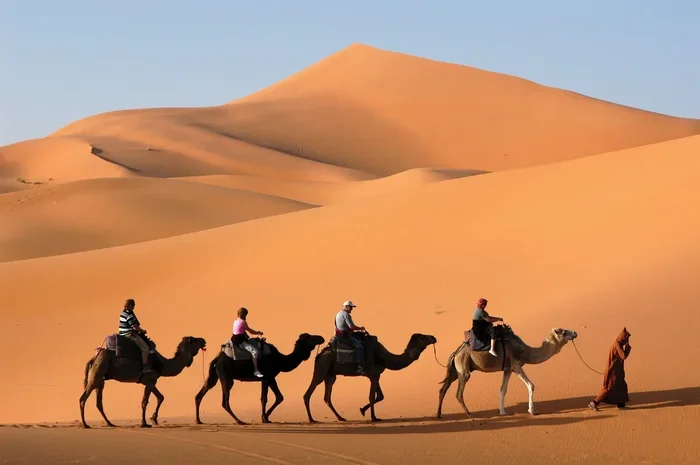
Featured image for Marrakech Sahara camel caravan
Image source: cdn.britannica.com
A Private 14 Day Tour from Marrakech to Sahara Desert is the ultimate way to experience Morocco’s diverse landscapes, ancient cities, and vibrant Berber culture in just two weeks. This journey covers everything from the bustling souks of Marrakech to the towering dunes of Erg Chebbi, including coastal Essaouira, imperial Fez, and the stunning Todra Gorges. With a private driver and customized itinerary, travelers enjoy flexibility, comfort, and authentic local experiences that group tours simply cannot match.
Key Takeaways
- 14 days is the ideal duration: This timeframe allows you to explore Morocco’s major highlights without feeling rushed, covering roughly 2,500 km of varied terrain.
- Private tours offer unmatched flexibility: You control the pace, stops, and detours, making the journey personalized to your interests and energy levels.
- The route spans five distinct regions: From Marrakech to the Atlantic coast, through the Atlas Mountains, into the Sahara, and back via imperial cities.
- Desert camping is a highlight: Sleeping under the stars in a luxury Berber camp at Erg Chebbi is often called the trip’s most magical experience.
- Best seasons are spring and autumn: March to May and September to November offer comfortable temperatures ranging from 20°C to 28°C (68°F to 82°F).
- Budget ranges widely: Private tours typically cost between $1,800 and $4,500 per person depending on accommodation tier and inclusions.
- Advance booking is essential: Top desert camps and riads fill up 3-6 months ahead during peak season, especially October and April.
📑 Table of Contents
- Why a Private 14 Day Tour from Marrakech to Sahara Desert Is Morocco’s Best Adventure
- What Makes This Route Special: The Big Picture
- When to Go: Timing Your Perfect Moroccan Journey
- How a Private Tour Works Behind the Scenes
- Where You’ll Stay: A Peek at the Accommodation Experience
- What You’ll Experience Day by Day: Highlights and Hidden Gems
- Essential Tips for Your Private 14 Day Morocco Adventure
- The Bottom Line: Is This Tour Worth It?
Why a Private 14 Day Tour from Marrakech to Sahara Desert Is Morocco’s Best Adventure
Imagine waking up to the call to prayer echoing over a red-earth kasbah, sipping mint tea with a Berber family in a mountain village, and watching the sun melt into golden dunes at the edge of the Sahara. This is exactly what a Private 14 Day Tour from Marrakech to Sahara Desert delivers, and it does so at a pace that lets you actually feel each place you visit.
Morocco is a country of contrasts. In a single day, you can move from snow-capped mountain passes to palm-filled valleys, from Atlantic surf towns to silent desert plains. But here’s the thing: trying to see all of this in a rushed three-day tour is like reading every third page of a great novel. You get the plot, but you miss the soul. A two-week private journey changes that completely.
Did you know that Morocco welcomes over 13 million tourists annually, according to the Moroccan Ministry of Tourism, and the Marrakech-to-Sahara route remains the country’s most popular circuit? Yet most visitors still only see a fraction of what this route offers. A private 14-day format opens doors that standard tours leave closed, from hidden family-run riads to sunrise camel treks that feel like your own personal discovery.
What Makes This Route Special: The Big Picture
Think of this tour as a giant clockwise loop across Morocco’s heartland. You start in the vibrant chaos of Marrakech, swing west toward the Atlantic, slice up through the Middle Atlas Mountains, dive deep into the Sahara, and return via the imperial cities of Fez, Meknes, and Rabat.
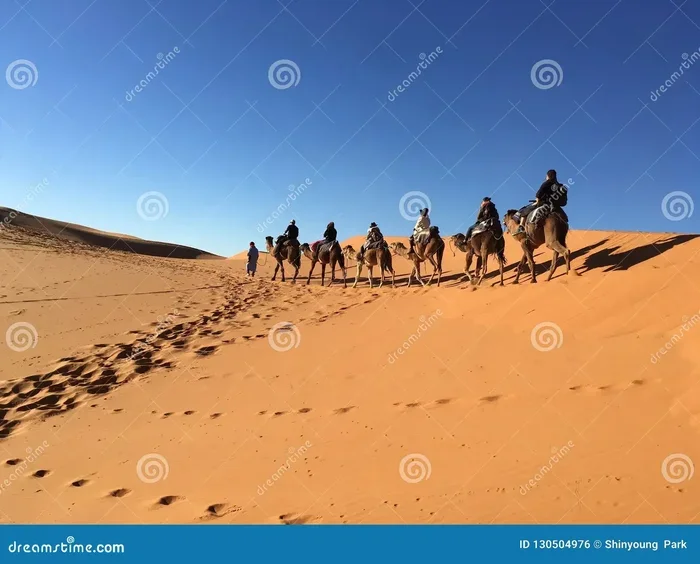
Visual guide about Marrakech Sahara camel caravan
Image source: thumbs.dreamstime.com
Here’s a simple analogy: if Morocco were a cake, Marrakech would be the colorful frosting, the Atlas Mountains would be the sponge layers, the Sahara would be the caramel center, and the imperial cities would be the rich filling. A 14-day private tour lets you taste every layer.
Who Is This Tour Best Suited For?
This experience is ideal for travelers who value depth over speed. It’s perfect for couples seeking a romantic adventure, families wanting flexible daily schedules, photographers chasing golden-hour light, and culture lovers eager to understand Morocco beyond surface-level sightseeing. If you’re the type who hates being herded onto a bus at 6:30 a.m. with 30 strangers, a private tour is your answer.
What You Actually Cover in 14 Days
- Day 1-2: Marrakech exploration, including Jardin Majorelle and Bahia Palace
- Day 3: Day trip to the coastal gem of Essaouira
- Day 4-5: Ait Benhaddou, Ouarzazate, and the Road of a Thousand Kasbahs
- Day 6-7: Todra and Dades Gorges, plus Rose Valley
- Day 8-9: Merzouga and the Erg Chebbi dunes
- Day 10-11: Drive north through Errachidia, Midelt, and Ifrane
- Day 12: Full day in Fez with a local guide
- Day 13: Meknes, Volubilis, and transfer toward Rabat
- Day 14: Rabat sightseeing and return to Casablanca or Marrakech
When to Go: Timing Your Perfect Moroccan Journey
The timing of your trip matters more than you might think. Morocco’s geography creates wildly different climate zones, and the Sahara can swing from freezing nights at 5°C (41°F) in winter to scorching days of 45°C (113°F) in summer.
Spring (March-May): The Sweet Spot
This is widely considered the best season. Wildflowers bloom in the Atlas valleys, daytime temperatures hover around 22-26°C (72-79°F), and the desert nights are pleasantly cool. Easter week is particularly busy, so book early.
Autumn (September-November): The Photographer’s Dream
Light turns golden and crisp. October is statistically the busiest month for desert tours, with temperatures dropping to a comfortable 25-30°C (77-86°F) during the day. Many travelers say autumn light makes the dunes look like they’re glowing from within.
Summer and Winter Considerations
Summer tours are possible but require serious heat preparation, especially in the desert. Winter offers dramatic snow-capped Atlas views and fewer crowds, but you’ll need warm layers for desert nights. A good operator will adjust your itinerary either way.
Did You Know? The Sahara Desert actually cools dramatically after sunset. Even in October, nighttime temperatures near Merzouga can drop to 8°C (46°F). Always pack a warm jacket for desert evenings.
How a Private Tour Works Behind the Scenes
Let’s pull back the curtain. A private tour isn’t just a bigger taxi, it’s a completely different travel system. Here’s what you’re really paying for.
Your Driver, Your Guide, Your Schedule
You’ll typically have an English-speaking driver-guide with a 4×4 vehicle. Unlike group tours with fixed timings, you decide when to leave each morning. Want to linger over breakfast? Done. Want to stop for photos at a random roadside viewpoint? Your driver will happily pull over.
Accommodation Variety
Private tours open up accommodation options. Instead of being stuck at pre-booked tourist hotels, you can stay in family-run riads (traditional Moroccan guesthouses), desert luxury camps with private tents, and even restored kasbahs. Many travelers say the riad experience, with its rooftop terraces and home-cooked tagines, becomes a highlight in itself.
Cost Transparency and What’s Included
A typical private 14-day package includes:
- Private air-conditioned 4×4 vehicle and fuel
- English-speaking driver-guide
- 13 nights of accommodation (mix of riads and hotels)
- Daily breakfast and most dinners
- Camel trek to desert camp
- Local guides in Marrakech and Fez
Not usually included: lunches, drinks, entry fees, tips, and personal shopping. Budget around $25-$40 per day for lunches and incidentals.
Where You’ll Stay: A Peek at the Accommodation Experience
One of the most delightful surprises of a private Morocco tour is the variety of places you’ll sleep. Each region has its own architectural flavor.
Marrakech Riads: Living History
A riad is a traditional Moroccan house built around a central courtyard, often with a fountain or orange tree. Staying in a riad in the medina is like sleeping inside a living museum. Many feature intricate zellige tilework, hand-carved plaster, and rooftop views over the old city.
Desert Luxury Camps: Comfort in the Wild
Forget roughing it. Modern Sahara camps feature private tented suites with proper beds, en-suite bathrooms, and even gourmet dinners served under the stars. Merzouga and Erg Chebbi have become famous for these “glamping” experiences, and they’re the highlight for most travelers.
Kasbahs and Mountain Lodges
Along the route, you’ll find restored kasbahs (fortified houses) and small mountain lodges, places where the Atlas Mountains’ dramatic scenery is right outside your window. Many are family-run, meaning your hosts might invite you for traditional Berber music around a fire pit.
What You’ll Experience Day by Day: Highlights and Hidden Gems
While every operator customizes slightly differently, here’s a realistic look at the moments that make this trip unforgettable.
The Magic of Marrakech’s Souks
Marrakech’s medina is a sensory overload in the best way. Think of it as a giant living marketplace where every alley leads to a different specialty: leather dyers, spice mountains, lantern workshops, and rug merchants. Your local guide will navigate the chaos and explain haggling customs. Most travelers spend at least two full days here.
Essaouira’s Atlantic Charm
This port town feels completely different from the inland cities. With its whitewashed medina, blue-shuttered windows, and fresh seafood, it’s a breath of salty air. The Game of Thrones was partly filmed here, but locals prefer to focus on the excellent windsurfing and laid-back vibe.
The Atlas Pass and Berber Villages
Crossing the Tizi n’Tichka pass at over 2,260 meters (7,415 feet) is dramatic. You’ll stop at traditional Berber villages where life has changed little in centuries. Tea with a local family here is often cited as a trip-defining moment.
Ait Benhaddou: Hollywood’s Favorite Backdrop
This UNESCO-listed ksar (fortified village) has appeared in Gladiator, Lawrence of Arabia, and Game of Thrones. Climbing to the top gives you sweeping views over the Ounila Valley, and your guide will explain how filmmakers have been drawn here for decades.
The Sahara: Where Time Stops
Reaching the dunes of Erg Chebbi is emotional. These massive golden mountains rise up to 150 meters (500 feet) high, and watching the sunset paint them orange and pink is something photographs struggle to capture. Your camel trek into the camp usually happens in the late afternoon, perfectly timed for sunset.
Fez: Morocco’s Intellectual Heart
Fez is Morocco’s oldest imperial city and home to the world’s oldest continuously operating university, the University of al-Qarawiyyin, founded in 859 AD. Its medieval medina (Fes el Bali) is a UNESCO World Heritage Site and a labyrinth of 9,000 alleys. A local guide here is essential, or you’ll get completely lost.
Volubilis: Roman Morocco
These Roman ruins near Meknes are among North Africa’s best-preserved archaeological sites. You’ll see towering columns, intricate mosaics, and views over rolling farmland. It’s a peaceful contrast after the medina intensity.
Essential Tips for Your Private 14 Day Morocco Adventure
Having a great trip isn’t just about where you go. It’s about how you prepare. Here are practical tips from travelers who’ve done this route.
Packing Smart
- Bring layers: desert days are hot, but mountain mornings can be chilly
- Pack a scarf or shemagh for desert sand and sun protection
- Comfortable walking shoes are essential, especially for Fez and Marrakech
- Modest clothing (covering shoulders and knees) is respectful and recommended
- A power bank is useful since some riads have limited outlets
Money Matters
Morocco uses the Moroccan Dirham (MAD). Credit cards work in hotels and larger restaurants, but cash is king in medinas and small shops. Withdraw from ATMs in cities rather than exchanging currency at airports, which gives better rates. Budget around 200-300 MAD ($20-$30) per person per day for lunches, tips, and small purchases.
Health and Safety
Morocco is generally very safe for tourists. Tap water isn’t recommended, so stick to bottled water, which your driver will always have available. The sun in the desert is intense, even in cooler months, so sunscreen, hats, and sunglasses are non-negotiable. Most operators provide 24/7 support, which adds peace of mind.
Photography Etiquette
Always ask before photographing people, especially in Berber villages. Many are happy to be photographed and will even pose proudly, but respect matters. In return, you’ll often be invited to share mint tea, one of Morocco’s most cherished traditions.
Booking Tips
- Book at least 3-4 months ahead for peak season
- Read reviews on independent platforms, not just testimonials on company websites
- Confirm exactly what’s included before paying deposits
- Ask about vehicle type and guide language qualifications
- Request a detailed day-by-day itinerary in writing
The Bottom Line: Is This Tour Worth It?
Let’s be honest. A private 14-day Morocco tour isn’t cheap, but when you calculate what you’d spend on flights, hotels, transfers, guides, and tickets if you planned it all yourself, the value becomes clear. More importantly, you’re paying for an experience that’s hard to replicate: the freedom to linger at a kasbah sunset, the comfort of knowing every detail is handled, and the access to local knowledge that turns a sightseeing trip into a genuine cultural exchange.
Morocco consistently ranks among the world’s most-visited destinations, and the Marrakech-to-Sahara circuit remains its crown jewel. Whether you’re a first-time visitor or returning for a deeper exploration, a two-week private journey hits the perfect balance. It’s long enough to feel like an adventure, varied enough to keep you constantly surprised, and structured enough to ensure you don’t miss the essentials.
So, start researching, shortlist a few reputable operators, and prepare for what might just be your favorite trip yet. The Sahara is waiting, and trust me, it’s even more magical in person than in any photograph.
Frequently Asked Questions
How much does a private 14 day tour from Marrakech to Sahara Desert cost?
Private 14-day tours typically range from $1,800 to $4,500 per person, depending on accommodation tier, group size, and inclusions. Mid-range options with quality riads and a luxury desert camp usually fall around $2,400-$3,200 per person for two travelers sharing.
Is 14 days enough to see Marrakech and the Sahara?
Yes, 14 days is actually considered the ideal duration for this route. It allows comfortable travel days, meaningful time in major cities like Fez and Marrakech, plus a full desert experience without feeling rushed. Shorter tours of 7-10 days require significant compromises.
What is the best time of year for a Sahara Desert tour?
Spring (March to May) and autumn (September to November) are the best seasons. Temperatures are mild, ranging from 20°C to 28°C during the day, with cool but not freezing nights. Summer desert temperatures can exceed 45°C (113°F), making travel uncomfortable.
Do I need a visa for Morocco?
Most Western travelers, including citizens of the US, UK, EU, Canada, and Australia, can enter Morocco visa-free for stays up to 90 days. Your passport should be valid for at least six months beyond your entry date. Always check the most up-to-date requirements before traveling.
Is a camel ride safe and is it mandatory?
Camel rides to desert camps are safe and operated by experienced Berber guides. The ride typically lasts 60-90 minutes and is included in most tour packages. While highly recommended for the experience, alternative 4×4 transfers to camp are usually available for those who prefer not to ride.
Can this tour be customized for families with children?
Absolutely. Private tours are highly flexible and easily adapted for families. Operators can shorten driving segments, add kid-friendly activities like pottery workshops or donkey rides, and recommend family-suitable desert camps. Many families say it’s one of the best trips they’ve taken with children.