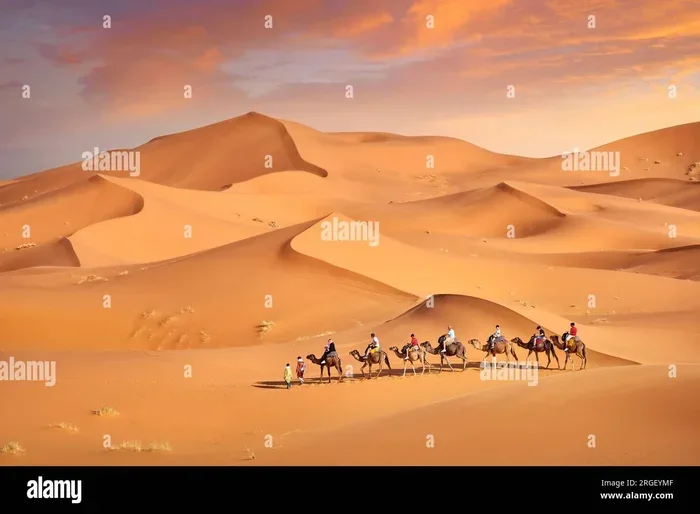
Featured image for Erg Chebbi desert camels
Image source: c8.alamy.com
The Marrakech to Merzouga 1 Day Tour is an exhilarating journey through Morocco’s most breathtaking landscapes. Covering over 560 kilometers in one day, this adventure takes you from the vibrant city of Marrakech to the golden dunes of the Sahara Desert in Erg Chebbi. Experience camel rides, traditional Berber culture, and stunning desert vistas—all within a single, unforgettable day.
Picture this: You wake up before dawn in the bustling streets of Marrakech. By sunset, you’re sitting atop a camel, watching the Sahara Desert transform into a sea of liquid gold. This isn’t a dream—it’s the Marrakech to Merzouga 1 Day Tour, one of Morocco’s most ambitious and rewarding adventures.
Most travelers assume exploring the Sahara requires a multi-day expedition. While 3-day and 4-day tours certainly exist, a well-organized day tour makes this dream accessible to anyone with limited time. The journey covers approximately 560 kilometers (348 miles), weaving through some of North Africa’s most spectacular scenery. Think of it like driving from London to Edinburgh, but every mile reveals a completely different world—from snow-dusted mountains to palm-fringed valleys to endless sand dunes.
This comprehensive guide covers everything you need to know. We’ll explain the route, highlight must-see stops, share insider tips, and help you decide if this marathon journey matches your travel style. Whether you’re a photographer chasing perfect light, an adventurer seeking bucket-list experiences, or a culture enthusiast eager to meet Berber communities, this tour delivers.
Key Takeaways
- Epic Distance: The tour covers approximately 560 kilometers (348 miles) one way, making it one of the longest single-day tours in Morocco.
- Scenic Diversity: You’ll pass through the Atlas Mountains, cedar forests, Ziz Valley, and finally the Erg Chebbi dunes.
- Camel Experience: A traditional camel ride at sunset is a highlight, typically lasting 45 minutes to an hour.
- Berber Culture: The route passes through authentic Berber villages, offering glimpses into centuries-old traditions.
- Timing Matters: Starting at 4:00 AM and returning around 10:00 PM is standard due to the vast distance.
- Photography Opportunities: From snow-capped peaks to golden dunes, every kilometer offers stunning photo opportunities.
- Physical Preparation: Long sitting hours require comfort breaks, and the temperature variation demands layered clothing.
📑 Table of Contents
- What Exactly Is the Marrakech to Merzouga 1 Day Tour?
- The Complete Route: Where Exactly Will You Go?
- What Will You Experience at Merzouga?
- Why Choose a Day Tour Over Multi-Day Options?
- How Should You Prepare for the Tour?
- When Is the Best Time to Book This Tour?
- What Does the Tour Typically Cost?
- Choosing the Right Tour Operator
- Making the Most of Your Day
- Final Thoughts: Is the Marrakech to Merzouga 1 Day Tour Worth It?
What Exactly Is the Marrakech to Merzouga 1 Day Tour?
The Marrakech to Merzouga 1 Day Tour is a guided excursion that transports travelers from the imperial city of Marrakech to the edge of the Sahara Desert at Merzouga within a single day. Merzouga is a small village located on the edge of Erg Chebbi, home to some of Morocco’s tallest sand dunes—reaching heights of 150 meters (492 feet).
Here’s the simple breakdown: You start in Marrakech, travel through the High Atlas Mountains via the Tizi n’Tichka pass, descend into the Draa-Tafilalet region, pass through Todra Gorge area towns, and finally reach the desert. The tour includes transportation in a 4×4 vehicle or minivan, a camel ride to the dunes, and typically returns you to your Marrakech accommodation late at night.
Who Is This Tour Designed For?
This tour appeals to several types of travelers:
- Time-Constrained Visitors: Tourists with only 2-3 days in Morocco who still want to see the Sahara
- Adventure Seekers: Travelers who enjoy long, scenic drives and unique experiences
- Photography Enthusiasts: Photographers seeking diverse landscapes in a single day
- Budget Travelers: Budget-conscious visitors (day tours cost less than multi-day options)
When Did This Route Become Popular?
The Marrakech-Merzouga route gained significant popularity in the early 2000s when Morocco’s tourism infrastructure expanded. While caravan routes connecting Marrakech to Timbuktu existed for centuries, modern tourism made this accessible to international visitors. Today, hundreds of travelers complete this journey daily during peak season.
The Complete Route: Where Exactly Will You Go?
Understanding the route helps you appreciate what makes this tour special. The journey follows a specific path through Morocco’s diverse geography.
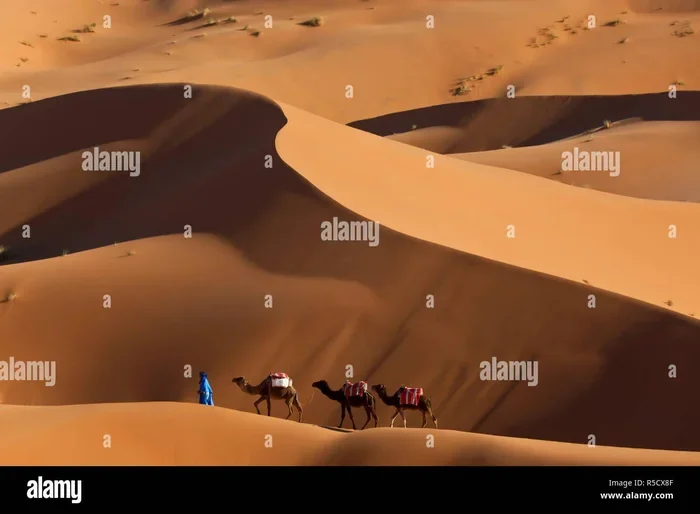
Visual guide about Erg Chebbi desert camels
Image source: c8.alamy.com
Stage 1: Crossing the High Atlas Mountains (0-200 km)
The adventure begins with the dramatic ascent through the High Atlas Mountains. The Tizi n’Tichka pass sits at 2,260 meters (7,415 feet) above sea level. Think of it as Morocco’s version of the Alps, but with mud-brick villages clinging to hillsides instead of ski resorts. Did you know the High Atlas range contains Mount Toubkal, North Africa’s highest peak at 4,167 meters?
Stage 2: Cedar Forests and Berber Villages (200-350 km)
After descending the mountains, the landscape transforms. The road passes through:
- Azrou Cedar Forest: Home to the endangered Barbary macaque monkeys—the only primate species native to North Africa, found nowhere else in the world
- Midelt: Known as Morocco’s “Apple Capital,” famous for its fruit orchards
- Errachidia: A gateway city to the Sahara region
Stage 3: The Ziz Valley Approach (350-450 km)
The Ziz Valley represents one of the journey’s most stunning segments. This lush palm oasis cuts through otherwise arid terrain like a green ribbon. The valley contains over 150,000 palm trees and dates back to the 7th century. Imagine an emerald river of palm trees stretching as far as the eye can see—that’s the Ziz Valley.
Stage 4: The Final Push to Merzouga (450-560 km)
The last stretch takes you through the town of Erfoud, known for its fossil workshops and dates. From here, it’s roughly 60 kilometers to Merzouga. The landscape becomes increasingly desert-like, with sand appearing at the roadside. The first glimpse of Erg Chebbi’s massive dunes on the horizon creates an unforgettable moment.
What Will You Experience at Merzouga?
Reaching Merzouga is just the beginning. The desert experience itself makes the long journey worthwhile.
The Camel Ride Experience
Camels have been used in the Sahara for over 3,000 years. They’re perfectly adapted to desert conditions—they can survive a week without water and withstand temperature swings of 50°C. Your typical camel ride lasts 45-60 minutes, taking you from the meeting point deep into the dunes for sunset viewing.
Pro tip: Mounting and dismounting a camel can feel awkward. The animal stands up front-back, which surprises first-time riders. Hold on tight during those moments!
Watching the Sahara Sunset
Sunset over Erg Chebbi ranks among Earth’s most spectacular natural shows. The sand changes color throughout the day—pale gold at noon, deep orange at sunset, and almost purple at twilight. Photographers should arrive at the viewing spot at least 20 minutes before sunset for optimal lighting.
Optional Activities
Depending on your tour operator and timing, you might enjoy:
- Sandboarding: Gliding down dunes on a board (similar to snowboarding)
- Quad Biking: Motorized dune exploration
- Berber Music: Traditional drumming sessions around campfires
- Star Gazing: The Sahara offers some of the world’s darkest skies with exceptional visibility
Why Choose a Day Tour Over Multi-Day Options?
Both options have merits. Understanding the trade-offs helps you make the right choice.
Advantages of the 1-Day Tour
- Time Efficiency: Perfect for travelers with packed itineraries
- Lower Cost: Day tours typically range from €60-100 versus €150-300 for multi-day options
- Less Planning: One day means one hotel booking, simpler logistics
- Exciting Challenge: The marathon nature appeals to adventure-minded travelers
Drawbacks to Consider
- Exhaustion Factor: Expect 18-20 hours of activity
- Limited Desert Time: You spend perhaps 2-3 hours in the actual desert
- No Overnight Camping: Missing the famous Sahara night sky and traditional dinner experience
- Physical Demand: Long sitting periods can cause discomfort
The choice essentially comes down to this: Do you want to see the Sahara or experience it deeply? A day tour shows you the Sahara. A multi-day tour lets you live it.
How Should You Prepare for the Tour?
Proper preparation makes the difference between a memorable adventure and a miserable ordeal.
What to Wear and Pack
Dress in layers. Temperatures can swing dramatically—from near-freezing at the mountain passes (especially winter mornings) to 30°C+ at the desert. Here’s your packing checklist:
- Comfortable clothing: Loose, breathable fabrics work best
- Sturdy shoes: Closed-toe options protect against sand
- Sunglasses: Desert glare is intense
- Sunscreen: SPF 30 minimum, even in winter
- Hat or scarf: Protection from sun and blowing sand
- Camera with extra batteries: Cold mornings and long days drain batteries quickly
- Snacks and water: Tours don’t always include frequent food stops
- Hand sanitizer and tissues: Bathroom facilities along the route can be basic
Health and Physical Preparation
The tour involves approximately 14 hours of vehicle travel. People with back problems, severe motion sickness, or circulation issues should consider alternatives. If you’re prone to car sickness, take medication 30 minutes before departure and sit in the front seat if possible.
Did you know motion sickness affects roughly 1 in 3 people? The winding mountain roads make preparation worthwhile.
Mental Preparation
This is genuinely a long day. Embrace the journey rather than counting hours. Bring a book, download podcasts, or chat with fellow travelers. Many tourists say the journey itself becomes their favorite memory—not just the destination.
When Is the Best Time to Book This Tour?
Timing dramatically affects your experience. Morocco has distinct seasons, each offering different advantages.
Peak Season (October-April)
The cooler months draw the most tourists. Temperatures range from 15-25°C during the day, perfect for exploring. Winter nights in the desert can drop below freezing, but daytime conditions remain pleasant.
Shoulder Season (May and September)
These months offer a balance—warmer temperatures but fewer crowds. May sees desert temperatures rising, while September begins cooling after the summer peak.
Summer Considerations (June-August)
Summer desert temperatures regularly exceed 45°C (113°F). While tours still operate, the heat can be dangerous. If summer is your only option, ensure your operator provides adequate water and air-conditioned vehicles.
Optimal Booking Timing
Book at least 1-2 weeks in advance during peak season. Last-minute bookings sometimes work but limit your operator choices. Reputable companies fill up quickly from October through March.
What Does the Tour Typically Cost?
Understanding pricing helps you budget appropriately and avoid scams.
Standard Pricing Range
The Marrakech to Merzouga 1 Day Tour costs between €60-120 per person. Price variations depend on:
- Group size: Smaller groups cost more per person
- Vehicle type: Private tours cost more than shared options
- Inclusions: Some tours include meals, others don’t
- Operator reputation: Established companies charge premium rates
What’s Typically Included
Standard inclusions cover:
- Hotel pickup and drop-off in Marrakech
- Air-conditioned transportation
- English-speaking driver/guide
- Camel ride to the dunes
- Fuel costs
What’s Usually Excluded
Budget for these additional costs:
- Lunch (€8-15 typically)
- Drinks and snacks
- Tips for driver and camel handler
- Optional activities (quad biking, sandboarding)
- Personal expenses
Red Flags to Avoid
Be cautious of tours priced significantly below €50. These often involve:
- Overcrowded vehicles
- Rushed itineraries
- Hidden fees
- Unlicensed operators
- Poor vehicle conditions
Choosing the Right Tour Operator
Your operator determines your experience quality. Here’s how to choose wisely.
Research Strategies
- Read recent reviews: Check TripAdvisor, Google Reviews, and booking platforms for feedback from the past 3-6 months
- Verify licensing: Legitimate operators display tourism licenses
- Check vehicle age: Older vehicles break down more frequently
- Confirm guide language skills: Ensure your guide speaks your language fluently
- Compare itineraries: Detailed itineraries indicate professional operators
Questions to Ask Before Booking
- What type of vehicle will be used?
- How many passengers typically share the vehicle?
- Where do you stop for meals?
- What happens if the vehicle breaks down?
- Do you provide water and snacks?
- What’s your cancellation policy?
Reputable operators answer these questions confidently. Hesitation or vague responses suggest problems ahead.
Making the Most of Your Day
Even on a packed schedule, small choices enhance your experience significantly.
Capture the Journey, Not Just the Destination
The most stunning photo opportunities occur during transit—the morning light over the Atlas Mountains, Berber children waving from roadside villages, dramatic shadows in the Ziz Valley. Don’t save your camera for the dunes alone.
Engage with Your Guide
Local guides possess deep knowledge about Moroccan culture, history, and geography. Ask questions. Learn Berber words. Request stories about their families and communities. These conversations transform a tour into a cultural exchange.
Pace Yourself
The excitement might tempt you to rush through stops. Take time to absorb each location. Sit quietly for five minutes at the mountain pass. Walk slowly through the palm groves. Let the desert silence sink in. These moments often become the day’s most treasured memories.
Stay Hydrated and Fed
Long travel days drain energy quickly. Drink water consistently throughout the journey, not just when thirsty. Eat a substantial breakfast before departure. Purchase snacks at rest stops. Dehydration and hunger amplify travel fatigue.
Final Thoughts: Is the Marrakech to Merzouga 1 Day Tour Worth It?
Absolutely—if you go in with realistic expectations. This isn’t a relaxing vacation day; it’s an adventure marathon. But the rewards match the effort.
Consider what you’re gaining: One of the world’s great natural wonders, a journey through Morocco’s most diverse landscapes, authentic cultural encounters, and memories that last a lifetime. Few single-day experiences anywhere offer this much variety and impact.
The key to satisfaction lies in preparation. Choose a reputable operator, pack appropriately, embrace the early start, and welcome the journey itself as part of the experience. Approached correctly, this tour showcases Morocco’s incredible diversity—from imperial cities to mountain peaks to endless desert dunes—all within a single, remarkable day.
Your Sahara sunset awaits. The dunes have stood for millennia, and they’ll be there when you’re ready. The only question is whether you’ll be there to see them.
Frequently Asked Questions
How long does the Marrakech to Merzouga 1 day tour actually take?
The full tour typically lasts 18-20 hours from pickup to drop-off, with approximately 14 hours spent in the vehicle. Expect a 4:00 AM departure and a 10:00-11:00 PM return to your Marrakech accommodation.
Is one day really enough to experience the Sahara?
While you won’t have time for overnight camping or extended desert exploration, one day is enough to see the dunes, ride camels, watch the sunset, and return. It’s perfect for time-constrained travelers, though multi-day tours offer deeper experiences.
What’s the best season for this day tour?
October through April offers the most comfortable temperatures, with daytime highs of 15-25°C. Avoid June-August when desert temperatures exceed 45°C, making the experience uncomfortable and potentially dangerous.
Do I need to be physically fit for this tour?
Moderate fitness helps, as the tour involves long sitting periods and walking on sand. People with severe back problems, mobility issues, or serious medical conditions should consult their doctor before booking.
What should I bring on the Marrakech to Merzouga day tour?
Pack layers of clothing, sunglasses, sunscreen, a hat, comfortable closed-toe shoes, snacks, water, a camera, and any personal medications. Bring a scarf to protect against blowing sand during the camel ride.
Can children join this Marrakech to Merzouga tour?
Children aged 6 and above generally handle the tour well, though the long hours may tire younger kids. Bring entertainment, snacks, and comfort items. Some operators offer family-friendly vehicles with extra space.