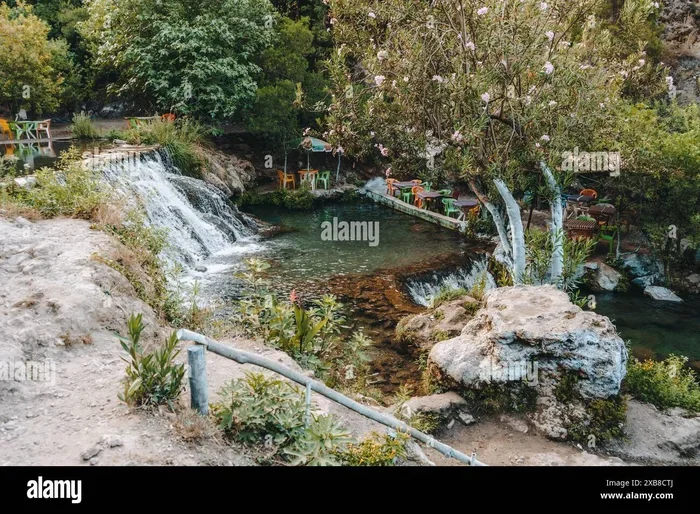
Featured image for Akchour waterfalls Morocco nature
Image source: c8.alamy.com
A 5-day tour from Tangier to Akchour Falls is the perfect way to explore northern Morocco’s most stunning landscapes and vibrant cities. This immersive journey takes you through the blue-painted streets of Chefchaouen, the roaring cascades of Akchour, the ancient medinas of Fez, and the coastal charm of Asilah. Designed for travelers seeking both adventure and cultural depth, it balances guided exploration with free time. Whether you’re a nature lover, history buff, or photography enthusiast, this tour delivers an unforgettable Moroccan experience.
Picture this: you’re standing at the foot of a thundering waterfall, mist kissing your face, surrounded by emerald-green mountains that seem to stretch into infinity. Behind you lies the blue-washed magic of Chefchaouen. Ahead, the ancient call of Fez awaits. And it all started just five days ago in the bustling port city of Tangier. This is not a dream. This is the 5-day tour from Tangier to Akchour Falls, one of Morocco’s most underrated adventure circuits.
Northern Morocco is a land of contrasts. You have the Mediterranean breeze of the coast, the rugged peaks of the Rif Mountains, and centuries-old imperial cities that whisper stories of dynasties past. Most travelers rush through on day excursions, missing the soul of the region. But spending five intentional days? That changes everything. You get to slow down. You get to taste the tagines, hear the call to prayer echo across ancient walls, and hike trails where few tourists venture.
Did you know that Akchour Falls attracts over 100,000 visitors annually, yet it remains one of Morocco’s best-kept secrets? According to Morocco’s National Tourism Office, the Rif Mountains region has seen a 35% increase in tourist arrivals over the past three years, thanks largely to social media showcasing Chefchaouen and its natural wonders. If you’re considering a Moroccan adventure that goes beyond the typical Marrakech-Sahara route, this 5-day tour is your golden ticket.
Key Takeaways
- Comprehensive Itinerary: The 5-day tour covers Tangier, Chefchaouen, Akchour Falls, Fez, Volubilis, Meknes, and Asilah, offering a well-rounded Moroccan experience.
- Akchour’s Natural Beauty: Akchour Falls is a hidden gem in the Rif Mountains, featuring breathtaking cascades and hiking trails suitable for all levels.
- Cultural Immersion: Beyond nature, the tour includes guided visits to UNESCO sites, traditional medinas, and artisan workshops.
- Perfect Duration: Five days is ideal for travelers who want depth. It’s long enough to explore meaningfully but short enough to fit most vacation schedules.
- Small Group Advantage: Most tours operate with small groups (8-15 people), ensuring a personalized and authentic experience.
- Best Travel Seasons: Spring (March-May) and autumn (September-November) offer the most comfortable weather for hiking and sightseeing.
- Booking Tips: Reserve at least 2-3 weeks in advance, especially during peak season, and choose operators with local guides for richer cultural insights.
📑 Table of Contents
- What Is the 5-Day Tour from Tangier to Akchour Falls?
- Detailed Day-by-Day Itinerary Breakdown
- Where Are These Destinations Located?
- When Is the Best Time to Take This Tour?
- Why Choose a Guided Tour Over Independent Travel?
- What to Pack for Your 5-Day Akchour Adventure
- How Much Does the 5-Day Tour Cost?
- Tips for an Unforgettable Experience
- Conclusion: Your Moroccan Adventure Awaits
What Is the 5-Day Tour from Tangier to Akchour Falls?
The 5-day tour from Tangier to Akchour Falls is a guided expedition through northern Morocco’s most scenic and culturally rich destinations. Think of it as a carefully curated sampler platter, but instead of food, you’re sampling landscapes, traditions, and ancient cities. The route typically runs from Tangier south into the Rif Mountains, loops through Chefchaouen and Akchour, continues east to Fez and Volubilis, then returns to the coast via Meknes and Asilah.
Who Is This Tour For?
This tour is perfect for travelers who want more than a surface-level Moroccan experience. It’s designed for:
- Nature enthusiasts who love hiking and waterfalls
- Culture seekers drawn to ancient medinas and history
- Photography lovers chasing vibrant colors and dramatic landscapes
- Small-group travelers who prefer intimate, guided experiences
- First-time visitors to Morocco who want a safe, well-organized introduction
Think of it like a greatest hits album of northern Morocco, except every track is a masterpiece.
What Makes This Route Special?
Most Morocco tours focus on the south, Marrakech, the Sahara, the Atlas Mountains. This tour flips the script. It celebrates the north, a region often overshadowed but equally mesmerizing. The Rif Mountains are older than the Atlas. Chefchaouen is older than Marrakech as a tourist hotspot. And Akchour Falls? It’s nature’s own masterpiece, often compared to scenes from Jurassic Park.
Detailed Day-by-Day Itinerary Breakdown
Let’s walk through what your five days will actually look like. While specific schedules vary by operator, most follow a similar rhythm. Here’s a typical itinerary:
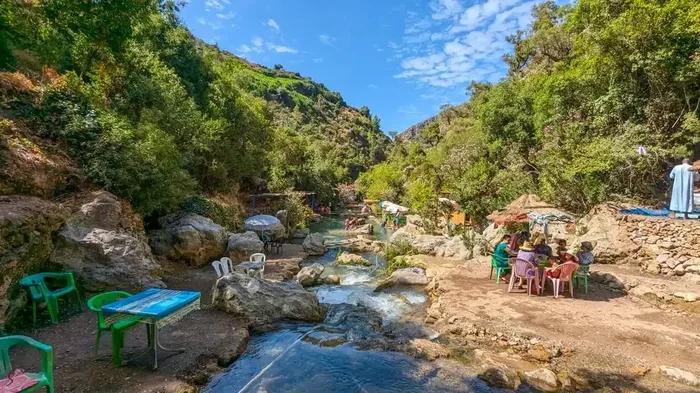
Visual guide about Akchour waterfalls Morocco nature
Image source: mementomorocco.com
Day 1: Tangier to Chefchaouen
Your adventure begins in Tangier, Morocco’s gateway between Europe and Africa. After a morning pickup, you’ll travel approximately 2.5 hours into the Rif Mountains. The drive itself is scenic, winding through terraced farmland and olive groves. By early afternoon, you’ll arrive in Chefchaouen, the famous blue city.
Spend your first afternoon exploring the medina’s blue-washed alleyways. Why is Chefchaouen blue? There are several theories. Some say it was introduced by Jewish refugees in the 1930s as a symbol of the sky and heaven. Others believe it keeps mosquitoes away. Either way, the result is Instagram gold.
Pro tip: Head to the Spanish Mosque for sunset. The panoramic view of the blue city against the mountains is unforgettable.
Day 2: Akchour Falls and God’s Bridge
Day two is the crown jewel of the tour. After breakfast, you’ll drive roughly 30 minutes to Akchour, a small village nestled in a lush valley. From here, a moderate 2-hour hike leads you to the main waterfalls, where water cascades 30+ meters into a crystal-clear pool. The trail follows the river, passing through rock formations, wild fig trees, and traditional Berber villages.
Continue to God’s Bridge (Pont de Dieu), a natural rock arch spanning the gorge. It’s a bit more challenging, but the views are worth every step. Pack swimwear if you want to take a dip in the pools, the water is refreshing, especially in summer.
Did you know? The Akchour region is home to over 120 bird species, including the endangered Egyptian vulture. Birdwatchers, bring your binoculars!
Day 3: Chefchaouen to Fez via Volubilis
Say goodbye to Chefchaouen and head east toward Fez, one of the world’s oldest continuously inhabited cities. En route, you’ll stop at Volubilis, a UNESCO World Heritage Site featuring some of the best-preserved Roman ruins in North Africa. Walk among the mosaics, triumphal arches, and ancient columns. It’s like stepping into a 2,000-year-old time machine.
By late afternoon, you’ll reach Fez. Settle into your riad (traditional Moroccan house) in the medina and prepare for the next day’s deep dive into history.
Day 4: Exploring Fez
Fez is Morocco’s spiritual and intellectual capital, home to the world’s oldest university, Al-Qarawiyyin, founded in 859 AD. That’s older than Oxford. Your guided tour will take you through the labyrinthine medina, a UNESCO site with over 9,000 alleys. Yes, you read that right. Bring comfortable shoes and a good sense of direction, or just trust your guide.
Highlights include the Chouara Tanneries, the Bou Inania Medersa, and the Al-Attarine Madrasa. You’ll also visit artisan workshops where craftsmen still practice centuries-old methods of pottery, brasswork, and leather production.
Interesting fact: Fez’s medina has no cars. Donkeys and mules still serve as the primary delivery vehicles. It’s like stepping back into the Middle Ages.
Day 5: Fez to Tangier via Meknes and Asilah
Your final day combines history and coastal charm. Stop first in Meknes, another imperial city, known for its massive gates, the stunning Bab Mansour, and the Mausoleum of Moulay Ismail. Then continue to Asilah, a laid-back coastal town famous for its whitewashed walls decorated with colorful murals.
By evening, you’ll return to Tangier, completing a 5-day loop that feels like a month of experiences compressed into one unforgettable journey.
Where Are These Destinations Located?
Geography nerds, this one’s for you. Understanding where these places sit on the map helps you appreciate the journey.
The Starting Point: Tangier
Tangier sits at the northwestern tip of Africa, where the Mediterranean Sea meets the Atlantic Ocean. Just 14 kilometers separate it from Spain. In fact, on a clear day, you can see the lights of Tarifa from Tangier’s coast. It has long been a crossroads of cultures, shaped by Berbers, Arabs, Portuguese, Spanish, French, and British influences.
The Blue Heart: Chefchaouen
Chefchaouen nestles in the Rif Mountains, roughly 110 kilometers southeast of Tangier. At an elevation of about 600 meters, it enjoys a milder climate than coastal cities, cooler summers, and crisp winters.
The Natural Wonder: Akchour
Akchour lies just 30 minutes from Chefchaouen, deep in the Talassemtane National Park. The park covers roughly 60,000 hectares and protects one of Morocco’s last remaining cedar forests, along with the endangered Barbary macaque.
The Imperial Cities: Fez and Meknes
Fez and Meknes sit in central-northern Morocco, about 200 kilometers east of Chefchaouen. Fez is Morocco’s third-largest city, while Meknes is smaller but equally historic, both served as imperial capitals during different Moroccan dynasties.
The Coastal Gem: Asilah
Asilah is located on the Atlantic coast, roughly 50 kilometers south of Tangier. Its ramparts and Portuguese-influenced architecture make it a favorite weekend escape for Moroccans and a peaceful contrast to busier Tangier.
When Is the Best Time to Take This Tour?
Timing can make or break your experience. Northern Morocco has a Mediterranean climate, meaning hot, dry summers and mild, wet winters.
Spring (March-May): The Sweet Spot
Spring is arguably the best time. Temperatures range from 18-25°C (64-77°F), perfect for hiking Akchour Falls without breaking a sweat. The landscapes are lush and green after winter rains, and wildflowers dot the hillsides. Tourist crowds are moderate, and prices are reasonable.
Autumn (September-November): A Close Second
Autumn mirrors spring’s mild weather. The summer crowds have dispersed, and the light is gorgeous for photography. October is especially magical, with golden hues painting the Rif Mountains.
Summer (June-August): Hot but Vibrant
Summer brings heat, especially inland. Temperatures in Fez can exceed 40°C (104°F). However, coastal areas like Tangier and Asilah stay milder. If you travel in summer, plan hikes for early morning and embrace afternoon siestas.
Winter (December-February): Quiet and Cool
Winter is the low season. Temperatures drop to 5-15°C (41-59°F), and rain is common. However, snow occasionally dusts the Rif Mountains, creating stunning vistas. Akchour Falls are most powerful in winter due to rainfall, a true spectacle for nature lovers.
Did you know? According to Morocco’s meteorological data, Akchour receives an average of 800mm of rainfall annually, more than double the national average. That’s why the waterfalls are so impressive year-round.
Why Choose a Guided Tour Over Independent Travel?
You might be wondering: can I do this trip solo? Absolutely. But should you? Let’s weigh the options.
The Convenience Factor
A guided tour handles all logistics. Transportation, accommodation, meals (in most cases), and entry fees are bundled. You don’t have to negotiate taxi fares, figure out bus schedules, or worry about getting lost in Fez’s 9,000-alley medina. It’s like having a personal concierge for five days.
Local Expertise
Local guides bring places to life. They share stories you won’t find in guidebooks. For example, did you know that Chefchaouen once served as a refuge for Jewish refugees fleeing the Spanish Inquisition? Or that Volubilis was once home to 20,000 inhabitants at its peak? These details add richness to your journey.
Safety
Morocco is generally safe for tourists, but navigating unfamiliar terrain, especially hiking trails, can be tricky. Guided tours provide added security, particularly for solo female travelers or those unfamiliar with local customs.
Cost-Effectiveness
Surprisingly, guided tours often cost less than independent travel. Operators negotiate group rates on hotels, restaurants, and entrance fees. When you factor in the time saved and stress avoided, the value becomes clear.
The Social Element
Tours create instant camaraderie. You’ll share meals, hikes, and sunsets with fellow travelers. Many travelers forge friendships that last long after the trip ends. It’s like summer camp, but for adults, and in Morocco.
What to Pack for Your 5-Day Akchour Adventure
Packing smart can make your trip infinitely more enjoyable. Here’s a practical checklist:
Clothing Essentials
- Modest, lightweight clothing: Morocco is conservative. Cover shoulders and knees, especially in religious sites.
- Comfortable walking shoes: You’ll walk a lot, especially in Fez and on the Akchour hike.
- A light jacket or sweater: Evenings in the Rif Mountains can be chilly, even in summer.
- Swimwear: For those refreshing dips in Akchour’s pools.
- A scarf or shawl: Doubles as sun protection and a respectful cover-up.
Gear and Gadgets
- Daypack: For hikes and daily excursions.
- Reusable water bottle: Stay hydrated; tap water isn’t drinkable.
- Camera or smartphone: You’ll want to capture every blue wall and waterfall.
- Power adapter: Morocco uses Type C and F plugs.
- Headlamp or flashlight: Fez’s medina alleys can be dark at night.
Health and Hygiene
- Sunscreen and sunglasses: The Moroccan sun is intense.
- Basic first-aid kit: Band-aids, pain relievers, and motion sickness pills.
- Hand sanitizer and toilet paper: Public restrooms may lack supplies.
- Personal medications: Pharmacies are available, but bring your essentials.
How Much Does the 5-Day Tour Cost?
Tour prices vary based on accommodation level, group size, and inclusions. Here’s a general breakdown:
Budget Options ($400-$600 per person)
These tours use 3-star hotels or traditional riads, shared transport, and group sizes of 12-20 people. Meals are often included, but entrance fees may not be. Great for backpackers and budget travelers.
Mid-Range Options ($700-$1,000 per person)
These tours feature 4-star riads, smaller groups (8-12 people), and most meals included. Guides are typically licensed and English-speaking. This is the sweet spot for most travelers.
Luxury Options ($1,500-$3,000+ per person)
Private tours with 5-star accommodations, personal guides, and premium experiences like cooking classes or hot air balloon rides. Ideal for honeymooners and luxury seekers.
Money-saving tip: Book directly with local operators instead of international agencies. You’ll save 20-30% on average. Sites like Viator and GetYourGuide offer reviews, but local agencies like Morocco Desert Tours or Chefchaouen Travel often provide better rates and more authentic service.
Tips for an Unforgettable Experience
Beyond logistics, here are insider tips to elevate your trip:
Embrace the Local Pace
Morocco operates on “Moroccan time,” which means flexibility. Don’t rush. Sit in a medina café, sip mint tea, and watch the world go by. The best experiences happen when you slow down.
Learn a Few Arabic Phrases
“Salam alaikum” (peace be upon you) and “shukran” (thank you) go a long way. Moroccans appreciate the effort, even if your pronunciation is imperfect.
Bargain Respectfully
In souks, haggling is expected. Start at 40-50% of the asking price and negotiate from there. Always smile and be polite. Bargaining is a social ritual, not a battle.
Respect Local Customs
Ask permission before photographing people. Avoid public displays of affection. Dress modestly. These small gestures earn big respect.
Try the Local Cuisine
Don’t just eat at your hotel. Venture into local restaurants. Try tagine, couscous, pastilla, and harira soup. Street food like msemen (Moroccan pancakes) and grilled merguez sausages are must-tries.
Did you know? Morocco is home to over 30,000 restaurants, and tagine dishes vary by region. The northern version often features seafood, reflecting the coastal influence.
Conclusion: Your Moroccan Adventure Awaits
A 5-day tour from Tangier to Akchour Falls is more than a vacation. It’s a journey through time, nature, and culture that leaves you forever changed. You’ll return home with photos that capture the eye, stories that captivate friends, and memories that warm your heart for years.
Northern Morocco is a region that rewards curiosity. Whether you’re hiking to Akchour Falls, getting lost in Fez’s medina, or watching the sunset over Chefchaouen’s blue rooftops, every moment offers something new. The Rif Mountains, the imperial cities, the Atlantic coast, they’re all waiting for you.
So, what are you waiting for? Pack your bags, charge your camera, and prepare for the adventure of a lifetime. Morocco isn’t just a destination. It’s an experience that stays with you long after you’ve returned home. Book your tour today, and discover why so many travelers fall in love with this captivating corner of North Africa.
Frequently Asked Questions
What is included in the 5-day tour from Tangier to Akchour Falls?
Most tours include accommodation, transportation, an English-speaking guide, and some meals. Specific inclusions vary by operator, so always check the itinerary details before confirming your reservation. Entrance fees to monuments and optional activities like cooking classes may cost extra.
Is the hike to Akchour Falls difficult?
The hike is moderate, suitable for most fitness levels. The trail to the main falls is approximately 2 hours round trip with some uneven terrain. The extension to God’s Bridge is more challenging, with steeper sections, but optional. Wear sturdy shoes and bring water.
What is the best time of year to visit Akchour Falls?
Spring (March-May) and autumn (September-November) are ideal, offering mild temperatures and beautiful scenery. Summer can be hot, while winter brings cooler weather but the falls are at their most powerful due to seasonal rains.
Do I need a visa to travel to Morocco?
Visa requirements depend on your nationality. Many countries, including the US, UK, EU nations, and Canada, can stay visa-free for up to 90 days. Check with your local Moroccan embassy or consulate for specific requirements before traveling.
Is Morocco safe for tourists?
Morocco is generally very safe for tourists. Petty crime like pickpocketing can occur in crowded areas, so stay alert. Guided tours add an extra layer of security, and Moroccans are known for their warm hospitality toward visitors.
Can I customize the 5-day tour itinerary?
Many operators offer customizable private tours. You can add destinations, upgrade accommodations, or include special experiences like cooking classes or private tours. Private tours cost more but offer flexibility that group tours cannot match.