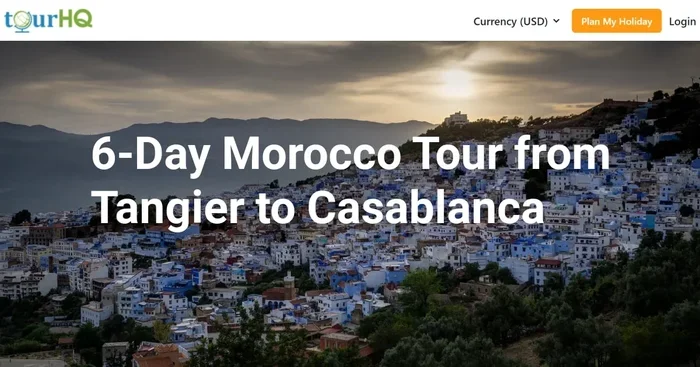
Featured image for Tangier to Casablanca scenic tour
Image source: res.cloudinary.com
A 5 day tour from Tangier to Casablanca is the perfect way to experience Morocco’s diverse landscapes, from the Mediterranean charm of Tangier to the Atlantic elegance of Casablanca. This itinerary covers imperial cities like Fez and Marrakech, the stunning Atlas Mountains, and the magical Sahara Desert. Travelers get a deep cultural immersion while enjoying comfortable transport, expert guides, and authentic Moroccan hospitality throughout the journey.
Picture this: you wake up to the sound of Atlantic waves in Tangier, spend the next day wandering through the blue-painted streets of Chefchaouen, then find yourself watching the sun set behind golden Sahara dunes just three days later. By the end of your trip, you’re sipping mint tea in a bustling Marrakech souk, wondering how five days could possibly feel like five lifetimes.
A 5 day tour from Tangier to Casablanca is more than just a vacation. Think of it as a time machine that takes you through centuries of history, across three mountain ranges, and into the heart of Berber, Arab, and French colonial cultures. You will taste tagines slow-cooked over open flames, hear the call to prayer echo through medieval medinas, and sleep under stars so bright they seem close enough to touch.
Whether you are a first-time visitor to Morocco or a seasoned traveler seeking new adventures, this route covers the absolute best the country has to offer. Let us walk you through everything you need to know to plan the journey of a lifetime.
Key Takeaways
- Route Overview: The tour starts in Tangier (north) and ends in Casablanca (west), covering roughly 900-1000 km of Morocco’s most scenic regions.
- Best Time to Travel: Spring (March-May) and autumn (September-November) offer the most comfortable temperatures for this multi-city journey.
- Must-See Stops: Chefchaouen, Fez, Merzouga Sahara Desert, and Marrakech are the four essential highlights of this route.
- Budget Range: Prices typically range from €450-€1200 per person, depending on accommodation tier (standard, mid-range, or luxury).
- Travel Style: Most tours operate as private or small-group experiences with air-conditioned vehicles and English-speaking guides.
- Cultural Preparation: Understanding basic Moroccan customs and a few Arabic or French phrases significantly enhances the travel experience.
- Booking Tip: Reserve at least 2-3 months in advance during peak season (October-April) to secure the best guides and riad availability.
📑 Table of Contents
- What Exactly Is a 5 Day Tour from Tangier to Casablanca?
- Where Does the Journey Take You? A Geographic Breakdown
- When Is the Best Time to Take This Tour?
- Why Choose a Guided Tour Instead of Traveling Independently?
- How Much Does a 5 Day Tour from Tangier to Casablanca Cost?
- What Should You Pack and How Should You Prepare?
- Final Thoughts: Why This Tour Is Worth Every Moment
What Exactly Is a 5 Day Tour from Tangier to Casablanca?
A 5 day tour from Tangier to Casablanca is a structured travel package that takes visitors across northern, central, and southern Morocco, ending on the Atlantic coast. It typically begins with pickup from Tangier’s port, airport, or hotel, and concludes with drop-off in Casablanca, often at the Mohammed V International Airport or a city-center hotel.
Who Is This Tour Designed For?
This tour is built for travelers who want depth, not just snapshots. It suits solo adventurers, couples on romantic getaways, families with older children, and small groups of friends. If you are the type of person who likes to truly understand a place rather than just photograph it, this itinerary will feel like it was made for you.
Most operators offer two versions: a private tour (just you and your guide) and a small-group tour (usually 8-15 people). Private tours cost more but allow flexibility. Group tours are budget-friendly and great for meeting fellow travelers.
What Does the Typical Itinerary Look Like?
While exact routes vary by operator, the classic 5-day itinerary follows this pattern:
- Day 1: Tangier to Chefchaouen to Fez
- Day 2: Explore Fez, then travel toward the Sahara via Merzouga
- Day 3: Sahara Desert experience, then travel to Ouarzazate or Dades Valley
- Day 4: Cross the Atlas Mountains to Marrakech
- Day 5: Explore Marrakech, then transfer to Casablanca
Some operators tweak this route slightly, swapping the order of Marrakech and Fez, or adding a stop at Essaouira. The core experience, however, stays remarkably consistent.
Where Does the Journey Take You? A Geographic Breakdown
Think of Morocco as a layered cake. The 5 day tour from Tangier to Casablanca cuts across nearly every layer: the Mediterranean coast, the Rif Mountains, the Middle Atlas, the Sahara, the High Atlas, and finally the Atlantic plains.
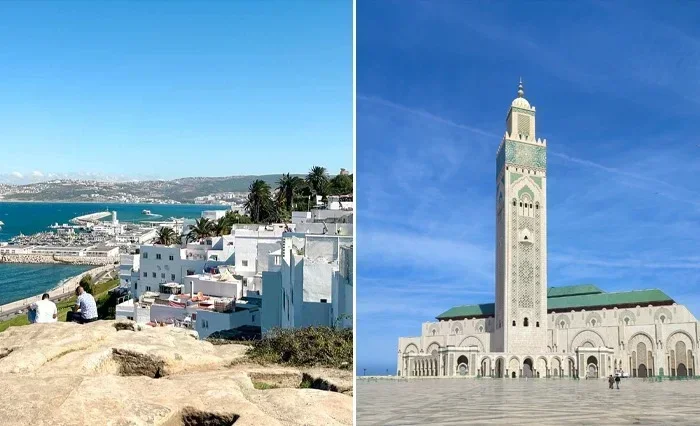
Visual guide about Tangier to Casablanca scenic tour
Image source: moroccotourismagency.com
The Northern Stretch: Tangier to Chefchaouen
Tangier sits at the very tip of Africa, where the Mediterranean Sea meets the Atlantic Ocean. Legend says Hercules once separated these two oceans here. From Tangier, you travel southeast into the Rif Mountains. The drive takes about 2.5 hours and climbs through terraced farmland and cork oak forests.
Chefchaouen, the famous “Blue City,” sits at an elevation of about 600 meters. Its streets are painted in dozens of shades of blue, from powder to cobalt. The city was founded in 1471 and remains one of Morocco’s most photographed destinations. Fun fact: Chefchaouen was closed to foreigners until 1920, which is why its Andalusian-influenced architecture remains so pristine.
The Imperial Heart: Fez
From Chefchaouen, the route heads south to Fez, Morocco’s cultural and spiritual capital. Founded in the 9th century, Fez is home to the world’s oldest continuously operating university, the University of al-Qarawiyyin, established in 859 AD. That is older than Oxford by nearly 200 years.
The Fez medina (Fes el-Bali) is a UNESCO World Heritage Site and contains over 9,000 narrow alleys. Getting lost here is part of the experience. The city’s tanneries, pottery workshops, and spice markets offer an unbroken link to medieval Moroccan life.
The Desert Frontier: Merzouga and Erg Chebbi
Day two of your 5 day tour from Tangier to Casablanca pushes deeper into the country, toward the Algerian border and the famous Erg Chebbi dunes. These dunes reach heights of up to 150 meters and stretch for nearly 30 kilometers.
You will likely arrive by camel caravan at a desert camp just as the sun sets. The silence here is unlike anything you have ever experienced. There is no city noise, no traffic, no hum of electricity. Just wind, stars, and the soft crackle of a desert fire.
The Mountain Crossing: Dades Valley to Marrakech
The drive from the Sahara region to Marrakech is long (about 8-9 hours) but spectacular. You cross the High Atlas Mountains via the Tizi n’Tichka pass at over 2,260 meters above sea level. In winter, you might even see snow-capped peaks while looking down at sunny valleys.
Along the way, you pass through Ouarzazate, known as the “Hollywood of Africa” for its film studios. Movies like Gladiator, Lawrence of Arabia, and Game of Thrones have been filmed here.
The Final Leg: Marrakech to Casablanca
The last day moves from Marrakech to Casablanca, a distance of about 240 km that takes roughly 2.5 hours by highway. Casablanca, Morocco’s largest city, is the economic and business hub. Its iconic Hassan II Mosque is one of the few mosques in Morocco open to non-Muslim visitors and features the world’s tallest minaret at 210 meters.
When Is the Best Time to Take This Tour?
Timing can make or break your experience on a 5 day tour from Tangier to Casablanca. Because the route crosses multiple climate zones, you want to choose a season that works for all of them.
Spring (March to May): The Sweet Spot
Spring is widely considered the best time for this journey. Temperatures in the north are pleasant (18-25°C), the desert is warm but not scorching, and the Atlas passes are clear of snow. Wildflowers bloom across the Middle Atlas, making the drive between Fez and Merzouga especially beautiful.
Did you know? April is the prime rose blooming season in the Dadès Valley. The M’Goun Rose Festival, held annually in mid-May, draws travelers from around the world.
Autumn (September to November): Close Second
Autumn mirrors spring in many ways, with comfortable temperatures and clear skies. October is particularly popular because it coincides with the date harvest, when you can find fresh dates in nearly every souk.
Summer (June to August): Hot but Affordable
Summer temperatures in the Sahara can exceed 45°C (113°F), which makes daytime activities challenging. However, summer offers the lowest prices and fewest crowds. If you travel in summer, focus on early morning and late afternoon desert excursions.
Winter (December to February): Magical but Cold
Winter brings snow to the Atlas Mountains and surprisingly cold nights in the desert (sometimes below freezing). However, the Sahara under a clear winter sky is unforgettable, and you will encounter far fewer tourists.
Why Choose a Guided Tour Instead of Traveling Independently?
You could, in theory, plan this trip yourself. Morocco has a good train network and affordable buses. But there are several compelling reasons to choose a guided 5 day tour from Tangier to Casablanca instead.
Logistics Made Simple
Think of it this way: planning this route independently is like trying to bake a five-layer cake without a recipe. You will spend hours researching bus schedules, negotiating riad prices, and figuring out how to get from the Sahara to Marrakech. A guided tour handles all of that. You simply show up and enjoy.
Access to Local Knowledge
A good Moroccan guide is worth their weight in gold. They know which souk vendors are honest, which restaurants serve authentic cuisine, and which viewpoints are not in any guidebook. They also bridge the language gap, as French and Arabic dominate daily life outside tourist zones.
Safety and Comfort
Morocco is generally very safe for tourists, but having a guide removes the small hassles of getting scammed on taxis, overpaying for crafts, or ending up in uncomfortable situations in unfamiliar neighborhoods.
Cultural Bridge
Morocco is a deeply cultural country with strong religious and social norms. A guide helps you navigate these gracefully, ensuring you show proper respect at mosques, in rural villages, and during tea invitations with local families.
How Much Does a 5 Day Tour from Tangier to Casablanca Cost?
Tour prices vary widely based on accommodation tier, group size, and inclusions. Here is a general breakdown for 2025-2026.
Budget Tier (€450-€650 per person)
Includes standard hotels or riads (traditional Moroccan guesthouses), shared group transport, breakfast daily, and a driver-guide. Accommodation is clean and comfortable but not luxurious. Camel trek and desert camp stay are usually included.
Mid-Range Tier (€700-€900 per person)
This tier upgrades to well-rated 3-4 star riads with air conditioning, smaller group sizes (typically 6-10 people), and often includes some dinners. You stay in atmospheric properties in the medinas.
Luxury Tier (€1000-€1200+ per person)
Luxury tours feature private vehicles, stays in 5-star riads and desert camps (some with private tents and en-suite bathrooms), and personal guides. Some include hot air balloon rides or private cooking classes as extras.
What’s Typically Included vs. Excluded?
Most tours include: hotel pickup in Tangier, drop-off in Casablanca, transportation, driver-guide, accommodation, breakfast, and the camel trek.
Most tours exclude: lunches, some dinners, entry fees to monuments (about €5-€15 per site), drinks, tips, and personal shopping.
Pro tip: Budget an extra €100-€200 in cash for meals, tips, and souvenirs. The dirham (Moroccan currency) is closed currency, meaning you cannot get it outside Morocco, so plan to withdraw from ATMs upon arrival or exchange at the airport.
What Should You Pack and How Should You Prepare?
Preparation makes a huge difference on a 5 day tour from Tangier to Casablanca. The route covers everything from snowy mountains to scorching dunes, so layering is essential.
Clothing Essentials
- Modest clothing: Shoulders and knees covered for both men and women, especially in religious areas
- Light layers: T-shirts for the day, a warm jacket for the Atlas and desert nights
- Comfortable walking shoes: Medinas have uneven cobblestones
- Sun protection: Wide-brimmed hat, sunglasses, SPF 30+ sunscreen
- Scarf or shawl: Doubles as sun protection, warmth, and respectful cover for entering religious sites
Practical Items
- Universal power adapter (Morocco uses Type C and E plugs)
- Reusable water bottle (tap water is not drinkable)
- Small backpack for daily excursions
- Headlamp or flashlight (especially for the desert camp)
- Basic first aid kit including motion sickness pills (those mountain roads can be winding!)
Cultural Etiquette Tips
- Always use your right hand for eating and greeting
- Ask before photographing people, especially women
- Refuse tea politely the first time if offered; accept on the second offer
- Bargain in souks but keep it friendly and respectful
- Avoid public displays of affection
Final Thoughts: Why This Tour Is Worth Every Moment
A 5 day tour from Tangier to Casablanca is not just a trip across Morocco. It is a journey through time, culture, and some of the most beautiful landscapes on Earth. In just five days, you will stand in cities older than most Western nations, sleep beneath Saharan stars, cross snow-capped mountains, and walk through medinas that have not changed in centuries.
The best part? You do not need to be an experienced traveler to enjoy this itinerary. You do not need to speak Arabic or French. You simply need curiosity, an open mind, and a willingness to let Morocco surprise you.
So go ahead, book that tour. Pack that bag. And get ready for a journey that will stay with you long after the desert sand has been shaken from your shoes.
The magic of Morocco is waiting.
Frequently Asked Questions
Is 5 days enough to travel from Tangier to Casablanca?
Yes, 5 days is enough to experience the major highlights of northern and central Morocco, including Tangier, Chefchaouen, Fez, the Sahara Desert, and Marrakech. While you will not see everything, you will get a rich and authentic overview of the country’s diversity. If you have more time, 7-10 days allows for a more relaxed pace.
Do I need a visa for Morocco?
Most Western passport holders (USA, UK, Canada, EU, Australia) can enter Morocco visa-free for stays up to 90 days. Your passport must be valid for at least 6 months beyond your entry date. Always check current entry requirements with your local Moroccan embassy before traveling.
Is Morocco safe for tourists?
Morocco is one of the safest countries in North Africa for tourists. Violent crime against visitors is extremely rare. The main concerns are petty scams, overcharging by taxi drivers, and aggressive souvenir vendors in tourist areas. Traveling with a reputable guide significantly reduces these issues.
What is the best month to visit Morocco?
April, May, September, and October are widely considered the best months. Temperatures are moderate across all regions, the desert is not extreme, and the mountain passes remain accessible. Spring brings wildflowers; autumn brings the date harvest. Both seasons offer excellent photography conditions.
What should I wear in Morocco as a tourist?
Modest, comfortable clothing is recommended. Cover your shoulders and knees, particularly in medinas and religious sites. Loose-fitting cotton and linen are ideal for hot weather. Women do not need to cover their hair except when entering actual mosques. Light scarves are versatile and respectful accessories.
Can I customize the standard 5 day tour from Tangier to Casablanca?
Yes, most operators offer customizable itineraries, especially for private tours. Common customizations include adding Essaouira, swapping the order of Fez and Marrakech, adding cooking classes, or upgrading to luxury desert camps. Discuss your preferences with the tour operator when booking to create the perfect itinerary for your interests and pace.