
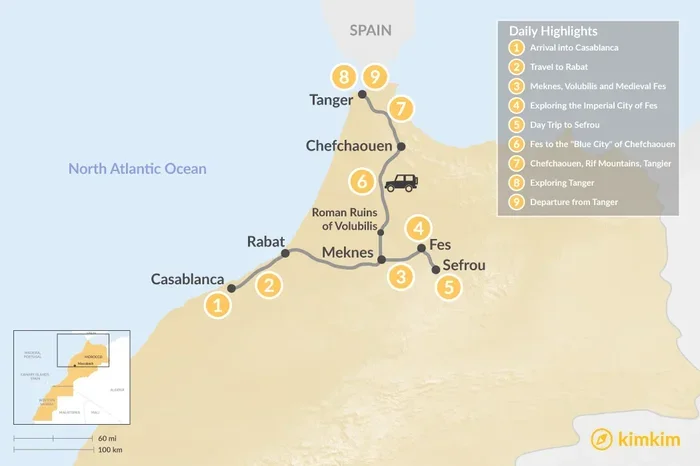
Featured image for Tangier Fes Morocco road
Image source: cdn.kimkim.com
A Tangier to Fes tour itinerary is one of Morocco’s most rewarding travel experiences, covering roughly 600 kilometers of diverse landscapes, imperial cities, and cultural landmarks. This route typically takes 3 to 7 days and includes stops in Chefchaouen, Volubilis, Meknes, and the Roman ruins along the way. Travelers can choose between private tours, group tours, or self-guided road trips, each offering a different pace and style of adventure. Whether you’re drawn to blue-painted streets, ancient history, or bustling medinas, this journey showcases Morocco’s northern heart.
Picture this: you’re standing at the meeting point of two seas in Tangier, where the Atlantic Ocean kisses the Mediterranean. The salty breeze carries whispers of ancient traders, spies, and artists who once called this port city home. Now, imagine trading that coastal breeze for the snow-capped Middle Atlas Mountains as you make your way south toward Fes, Morocco’s spiritual and intellectual capital.
The journey from Tangier to Fes is more than just a transfer between two cities. Think of it as a cross-section of Morocco itself. You’ll pass through the country’s most photogenic village, walk among 2,000-year-old Roman columns, explore one of the world’s oldest medieval cities, and watch landscapes transform from coastal plains to fertile valleys to dramatic mountain passes.
Did you know that Morocco welcomed a record 14.5 million tourists in 2023, with the Tangier-Fes corridor being one of the most popular routes? According to Morocco’s Ministry of Tourism, this northern circuit consistently ranks among the top three self-drive itineraries for first-time visitors. The reason is simple: every few hours, the scenery, the architecture, and even the local accent change dramatically. It’s like traveling through several countries in one trip.
Key Takeaways
- Optimal Trip Length: Plan for 4 to 5 days to comfortably cover the Tangier to Fes route without rushing through key attractions.
- Must-Visit Stop: Chefchaouen, the famous “Blue City,” is the most photographed destination along the route and worth at least one full day.
- UNESCO World Heritage: The Roman ruins of Volubilis are a UNESCO World Heritage Site and shouldn’t be skipped.
- Best Transport Options: Private drivers, guided tours, and rental cars are all viable; trains work for parts of the journey but miss scenic stops.
- Budget Considerations: A mid-range budget of $80-150 per day covers accommodation, meals, transport, and entrance fees comfortably.
- Best Travel Season: Spring (March-May) and autumn (September-November) offer ideal weather for sightseeing and hiking.
- Cultural Etiquette: Dress modestly, ask before photographing people, and learn basic Arabic or French phrases for a smoother experience.
📑 Table of Contents
Understanding the Tangier to Fes Route
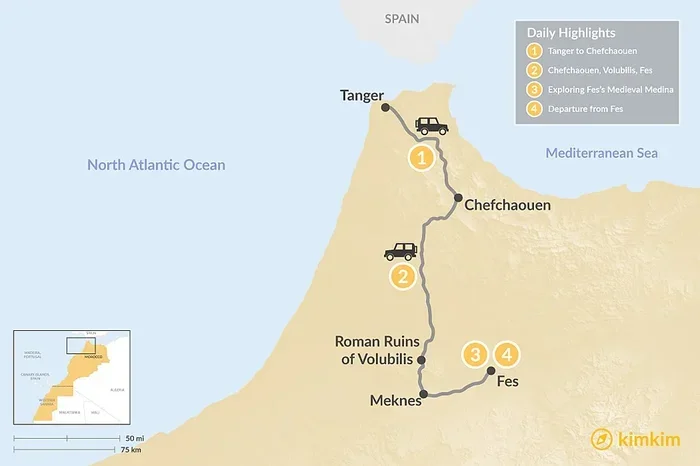
Before we dive into the day-by-day plan, let’s get our bearings. Think of Morocco’s geography like a clock face. Tangier sits at roughly 10 o’clock in the far northwest, while Fes rests near 12 o’clock in the north-central interior. The straight-line distance is about 250 kilometers, but the actual driving route stretches to around 600 kilometers because the road winds through mountains and detours to key sights.
What Makes This Route Special
This isn’t a highway sprint. It’s a curated showcase of Morocco’s diversity. Here’s what you’re signing up for:
- Coastal charm in the starting point of Tangier
- Mountain scenery through the Rif Mountains
- The famous Blue City of Chefchaouen
- Ancient Roman ruins at Volubilis
- Imperial city grandeur in Meknes
- Spiritual depth and medieval medina in Fes
Who Is This Route For?
This itinerary suits almost everyone. Solo travelers find it safe and welcoming. Couples love the romantic landscapes. Families appreciate the manageable distances. History buffs go wild for the ruins. Photographers can’t put their cameras down. Even budget backpackers can do it affordably with public transport and hostels.
When to Travel
The best windows are spring (March to May) and autumn (September to November). Summer temperatures often exceed 40°C (104°F) in the interior, while winter nights in the mountains can drop below freezing. April and October are sweet spots: wildflowers bloom in spring, and autumn brings harvest colors and comfortable temperatures in the 20-25°C range.
Day-by-Day Itinerary Options
How many days should you spend? That depends on your travel style and budget. Here are three tested options that work for different travelers.
Visual guide about Tangier Fes Morocco road
Image source: cdn.kimkim.com
Option 1: The Express 3-Day Itinerary
If you’re short on time, this fast-paced version hits the highlights. It’s ideal for cruise passengers with limited shore time or travelers combining Morocco with Spain.
Day 1: Tangier to Chefchaouen (3 hours driving)
Start early to maximize your day. Leave Tangier by 8 AM and arrive in Chefchaouen by lunchtime. Spend the afternoon wandering the blue-painted medina, photographing the famous Ras El Ma waterfall, and watching locals doing laundry at the communal washing spots. Yes, it’s as photogenic as Instagram suggests, but it’s also a real, living town.
Day 2: Chefchaouen to Meknes via Volubilis (4 hours driving with stops)
Leave Chefchaouen after breakfast and drive about two hours to Volubilis. Spend two hours exploring the Roman ruins. The mosaics, triumphal arch, and panoramic views are stunning. After lunch nearby, continue to Meknes (one hour) for an evening stroll through Place El Hedim and a sunset view of the imperial gates.
Day 3: Meknes to Fes (1 hour driving)
Sleep in, enjoy a leisurely breakfast, and reach Fes by late morning. Spend your final day exploring the Fes el-Bali medina, visiting Al-Qarawiyyin University (founded in 859 AD, making it the oldest continuously operating university in the world), and watching the famous Chouara Tanneries from a terrace above.
Option 2: The Classic 5-Day Itinerary
This is the sweet spot for most travelers. You get extra time in Chefchaouen, a relaxed pace through Volubilis, and unhurried exploration of Fes.
Day 1: Arrival and Tangier Exploration
Don’t rush on day one. After settling into your hotel, walk the medina, visit the Kasbah Museum, and stand at Cape Spartel where the Atlantic meets the Mediterranean. End your day at Café Hafa with mint tea and ocean views. Tangier was a favorite of Beat Generation writers like Paul Bowles and William Burroughs, and you’ll feel why as you watch the sunset.
Day 2: Tangier to Chefchaouen
The drive takes you through the scenic Rif Mountains with several photo stops. Arrive in Chefchaouen by early afternoon. Spend the rest of the day getting lost in the blue alleys. The Spanish Mosque hike at sunset is a must; it’s a 30-minute uphill walk that rewards you with panoramic views of the entire blue city bathed in golden light.
Day 3: Full Day in Chefchaouen
Use this day to explore beyond the medina. Visit the Akchour waterfalls (a one-hour drive plus 45-minute walk), tour the Kasbah Museum and its peaceful gardens, or take a Spanish-language cultural tour to understand the region’s unique history. Chefchaouen was actually controlled by Spain until 1956, which is why you’ll find Spanish restaurants alongside Moroccan tagines here.
Day 4: Chefchaouen to Volubilis, then Meknes
This is your history day. Volubilis deserves at least two hours. Bring water and a hat; there’s little shade. After exploring, drive 30 minutes to Moulay Idriss, a holy town where Morocco’s founding father is buried. Pilgrims still visit his shrine. Continue another 30 minutes to Meknes for the night.
Day 5: Meknes to Fes
Spend the morning exploring Meknes highlights: the grand Bab Mansour gate, the Sahrij Swani granary, and the Mausoleum of Moulay Ismail. Then it’s a short one-hour drive to Fes. Check into a traditional riad (a Moroccan courtyard house, often converted into boutique hotels) and prepare for two nights of medina magic.
Option 3: The In-Depth 7-Day Itinerary
For travelers who want to slow down, this extended version adds day hikes, cooking classes, and artisan workshops. It’s perfect for cultural immersion.
The first five days follow the classic plan above. Then add:
Day 6: Deep Fes
Skip the rush. Spend this day with a local guide exploring the medina’s hidden corners. Visit the Al-Attarine Madrasa with its stunning zellige tilework (geometric mosaic tilework traditional to Morocco), tour the Nejjarine Museum of Wooden Arts and Crafts, and take a hands-on ceramics or weaving workshop. In the evening, attend a traditional Gnawa music performance if your schedule aligns.
Day 7: Fes and Departure
Use your final morning for last-minute shopping in the medina’s souks. Moroccan leather goods, ceramics, and spices are famous worldwide. Then head to the airport or onward to your next destination.
Planning Your Transport and Logistics
Getting from Tangier to Fes isn’t complicated, but choosing the right transport shapes your whole experience. Let’s break down your options.
Option A: Private Driver or Guided Tour
For most travelers, this is the best choice. A private driver costs roughly $80-120 per day and includes the vehicle, fuel, and an English-speaking guide who doubles as a cultural translator. Benefits include:
- Door-to-door service with no luggage hauling
- Flexibility to stop for photos whenever you want
- Local knowledge about hidden viewpoints and restaurants
- No navigation stress
- Safe driving on mountain roads
Reputable companies like Tangier Tours, Morocco Desert Tours, and Medina Tours all offer this route with vetted drivers. Book at least two weeks ahead during peak season.
Option B: Self-Drive Rental Car
Adventurous travelers love this option. Rental cars cost about $30-50 per day, and Morocco’s roads are generally well-maintained. However, there are a few things to know:
- You’ll need an International Driving Permit alongside your home license
- Driving in medinas is restricted; most tourists park outside and walk in
- Mountain roads between Chefchaouen and Volubilis can be tight with hairpin turns
- Petrol stations are easy to find on main routes but rare in remote areas
- Police checkpoints are common; carry your passport at all times
Option C: Public Transport
This is the budget option but requires more time and patience. CTM and Supratours operate air-conditioned buses between major cities. The Tangier-Chefchaouen route has direct buses (about 4 hours), Chefchaouen to Fes requires a transfer in Meknes (about 6 hours total), and Tangier to Fes direct takes around 7 hours. Grand taxis (shared taxis) are faster but cram up to six passengers in one car.
Option D: Train
Morocco’s train network connects Tangier to Fes directly in about 4.5 hours. Tickets cost around $15-25. However, this skips Chefchaouen and Volubilis entirely, so it’s only worthwhile if you don’t want to see the inland sights.
Where to Stay Along the Route
Accommodation ranges from budget-friendly hostels to luxurious riads. Here’s what to expect in each city.
Tangier: A Mix of Old and New
Stay in the medina for an authentic experience or in the Ville Nouvelle for modern comforts. A mid-range riad costs $50-80 per night, while luxury options like Fairmont Tangier run $200+.
Pro tip: Many riads offer rooftop terraces with sea views. Ask when booking.
Chefchaouen: The Riad Capital
This small town is famous for its boutique riads. Expect to pay $30-60 for a charming room with traditional tilework and courtyard views. Lina Ryad & Spa and Riad Cherifa are excellent mid-range options.
Meknes: Often Overlooked
Most travelers sleep here for one night only, which means accommodations are decent but less atmospheric than Chefchaouen or Fes. Riad Yacout and Hotel Transatlantique offer solid mid-range comfort.
Fes: The Crown Jewel
Fes has the country’s highest concentration of stunning riads. Prices range from $40 for a simple courtyard room to $400+ for palatial suites. Riad Fes, Karawan Riad, and Dar Roumana are highly rated. Book early during Ramadan and the Fes Festival of World Sacred Music (usually June).
What to Eat Along the Way
Moroccan cuisine is one of the trip’s biggest highlights. Here’s your food roadmap.
Must-Try Dishes
- Tangier: Fresh seafood at Le Saveur du Poisson, a tiny restaurant where you’ll likely share tables with locals
- Chefchaouen: Goat cheese, which the region is famous for, plus mountain trout
- Meknes: Olive-based dishes; the region produces some of Morocco’s best olive oil
- Fes: The city’s famous pastilla (a sweet and savory meat pie), plus harira soup and lamb with prunes
Food Safety Tips
Eat at busy restaurants where food is made fresh. Avoid raw vegetables unless you’re sure of the water source. Stick to bottled water. Most medina restaurants are clean, but if a place is empty at lunchtime, there’s usually a reason.
Did you know? Morocco is the world’s largest exporter of sardines, and you’ll find them prepared at least five different ways on most menus.
Essential Tips for a Smooth Trip
Money Matters
The Moroccan Dirham (MAD) is a closed currency. You can’t buy it outside Morocco or take it home. Exchange money at official bureaus or withdraw from ATMs. Credit cards work in riads and larger restaurants but not in souks. Budget roughly 300-400 MAD ($30-40) per person per day for meals at mid-range restaurants.
Dress and Cultural Etiquette
Morocco is a Muslim country, but it’s relatively liberal, especially in tourist areas. Dress modestly, covering shoulders and knees. At mosques, you’ll need to remove shoes. During Ramadan, eating in public during daylight hours can offend locals; respect this by eating discreetly in your riad.
Language Tips
Arabic and Berber are official languages, but French is widely spoken in business and tourism. English is increasingly common in hotels and restaurants. Learning a few basic phrases like “Salam Alaikum” (peace be upon you), “Shukran” (thank you), and “Bslama” (goodbye) goes a long way.
Health and Safety
Morocco is generally very safe for tourists. Petty theft can happen in crowded medinas, so keep your wallet secure. The tap water isn’t drinkable; stick to bottled water. Most travelers don’t need vaccinations beyond routine ones, but check with your doctor before departure.
When Things Go Wrong
Flights get delayed. Buses break down. Riads occasionally overbook. Don’t panic. Moroccan hospitality culture means someone will help you. Stay patient, smile, and remember that flexibility is part of the adventure.
Conclusion: Your Tangier to Fes Adventure Awaits
A Tangier to Fes tour itinerary is more than a vacation. It’s a journey through time, culture, and some of North Africa’s most stunning landscapes. In just one week, you’ll stand where Roman senators debated two millennia ago, get lost in the world’s largest car-free urban area, and watch the sun set over a city painted entirely in blue.
The beauty of this route is its flexibility. Cruise through it in three days if you’re pressed for time. Savor it over seven days if you want to truly absorb the culture. Either way, you’ll leave with a camera full of photos, a suitcase full of souvenirs, and a heart full of memories.
Start planning today. Book your flights, reserve your first riad, and prepare for the trip of a lifetime. Morocco is waiting, and the road from Tangier to Fes is one of the most rewarding journeys you’ll ever take.
Ready to start? Your adventure begins the moment you step off the plane in Tangier.
Frequently Asked Questions
How long does it take to travel from Tangier to Fes?
The direct drive from Tangier to Fes takes about 4.5 to 5 hours by car, but most travelers spend 3 to 7 days on the route to enjoy stops in Chefchaouen, Volubilis, and Meknes. A well-paced 5-day itinerary is ideal for most visitors.
What is the best stop between Tangier and Fes?
Chefchaouen, the famous “Blue City,” is the most popular and photogenic stop along the route. It’s nestled in the Rif Mountains and offers stunning blue-painted streets, hiking trails, and a relaxed atmosphere that contrasts with Morocco’s busier imperial cities.
Is it safe to drive from Tangier to Fes?
Yes, the route is generally safe for self-driving, though mountain roads can be winding and narrow. International Driving Permits are required, and you should keep your passport with you at all police checkpoints. Many travelers prefer hiring a private driver for added comfort and local expertise.
What is the best time of year to travel from Tangier to Fes?
Spring (March to May) and autumn (September to November) offer the most pleasant weather, with temperatures between 20-25°C. Summer can be extremely hot in the interior, while winter nights in the mountains can drop below freezing.
How much does a Tangier to Fes tour cost?
A mid-range budget of $80-150 per day covers a private driver, comfortable riad accommodation, meals, and entrance fees. Budget travelers can manage on $40-60 per day using public transport and hostels, while luxury tours range from $200-400 per day.
Do I need a guide for the Fes medina?
Yes, hiring a local guide for at least a few hours in the Fes medina is highly recommended. The medina has over 9,000 narrow alleys that are easy to get lost in, and guides provide cultural context about the Chouara Tanneries, Al-Qarawiyyin University, and other historic sites that you might otherwise miss.