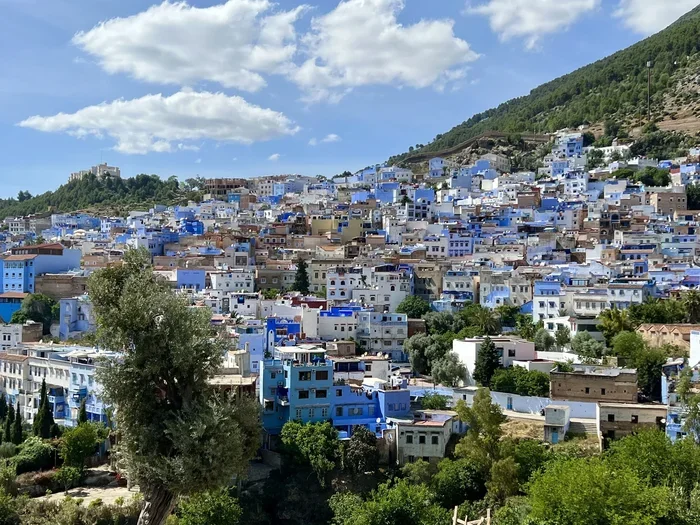
Featured image for Tangier Chefchaouen Morocco landscape
Image source: images.squarespace-cdn.com
A 6 day tour from Tangier to Chefchaouen is the perfect way to experience northern Morocco’s most stunning destinations in one trip. This journey combines the iconic blue pearl of Chefchaouen with the golden dunes of Merzouga, the imperial cities of Fes and Meknes, and the historic ruins of Volubilis. Travelers enjoy a mix of guided sightseeing, scenic drives through the Rif and Atlas Mountains, camel treks, and authentic Moroccan cultural experiences. It’s an ideal route for first-time visitors who want depth, variety, and unforgettable memories.
Imagine waking up in a blue-washed mountain town, then watching the sun set over orange Sahara dunes just days later. That is exactly what a 6 day tour from Tangier to Chefchaouen offers, and it is one of the most rewarding ways to discover Morocco’s northern and southern gems in a single, unforgettable journey.
Morocco is a country of contrasts. In the north, you find cool mountain air, Spanish-influenced architecture, and the famously blue streets of Chefchaouen. Drive a little further, and you enter ancient medinas filled with spice markets and craftsmen who still work the same way their great-grandparents did. Keep going south, and the landscape shifts into desert, where silence stretches as far as the eye can see and stars fill the entire sky at night.
Most travelers who land in Tangier want to see Chefchaouen, but savvy explorers know the smartest move is to extend that trip into a multi-day loop. A well-designed six-day itinerary does exactly that. It gives you the famous blue city, the cultural depth of Fes, the cinematic dunes of Merzouga, and the comfort of returning to Tangier with stories for a lifetime. This guide walks you through every detail, so you can plan with confidence and enjoy every single moment.
Key Takeaways
- Complete Northern Morocco Experience: A 6-day route covers Tangier, Chefchaouen, Fes, Merzouga Sahara, and more, giving travelers a well-rounded introduction to Morocco.
- Chefchaouen is the Visual Highlight: The blue-painted old town is the most photographed location on the entire route and a major reason travelers book this itinerary.
- Sahara Desert is the Adventure Peak: Camel rides, overnight Berber camps, and sunrise over Erg Chebbi dunes make day four the emotional high point of the journey.
- Comfortable Pacing: Six days allows travelers to avoid rushed bus tours while still covering major sites at a relaxed, enjoyable speed.
- Best Season to Travel: Spring (March-May) and autumn (September-November) offer the most pleasant weather for both mountain towns and desert excursions.
- Private vs. Group Tours: Both options exist, but private tours offer flexibility to stop for photos, adjust pace, and customize the Chefchaouen experience.
- Cultural Immersion Matters: Stays in riads, traditional meals, and local guides transform the trip from sightseeing into genuine connection with Moroccan culture.
📑 Table of Contents
- What Is a 6 Day Tour from Tangier to Chefchaouen?
- Why Choose a 6 Day Tour Instead of a Shorter Trip?
- Day-by-Day Breakdown of the Perfect Itinerary
- Where to Stay During the Tour
- When Is the Best Time to Take This Tour?
- How to Choose the Right Tour Operator
- What to Pack and Practical Tips for the Journey
- Why This Tour Is More Than Just Sightseeing
What Is a 6 Day Tour from Tangier to Chefchaouen?
A 6 day tour from Tangier to Chefchaouen is a guided, multi-city travel experience that begins in the port city of Tangier on Morocco’s northern coast and loops through some of the country’s most iconic destinations before returning. Think of it as a curated tasting menu of Morocco. Instead of rushing through one city, you sample several regions, each with its own flavor, architecture, food, and landscape.
Who Is This Tour Designed For?
This tour is built for travelers who want more than a quick beach holiday or a generic bus excursion. It is perfect for:
- First-time visitors to Morocco who want to see the highlights without the stress of planning every detail themselves.
- Photographers and culture lovers drawn to Chefchaouen’s blue walls, Fes’s medieval alleys, and the Sahara’s golden horizons.
- Couples and families looking for a balance between adventure, comfort, and cultural learning.
- Solo travelers who want the safety and structure of a guide but still crave authentic local encounters.
The beauty of a six-day itinerary is its rhythm. You get enough time in each place to truly feel it, but you are never stuck too long. It is the Goldilocks length, not too short, not too long.
What Does the Itinerary Typically Include?
While every operator personalizes things slightly, most 6-day tours from Tangier follow a similar route:
- Day 1: Tangier to Chefchaouen via the Rif Mountains
- Day 2: Chefchaouen to Volubilis, Meknes, and Fes
- Day 3: Full day exploring Fes with a local guide
- Day 4: Fes to Merzouga Sahara via the Middle Atlas and Ziz Valley
- Day 5: Camel trek, desert camp, and sunrise over Erg Chebbi
- Day 6: Merzouga to Tangier via Errachidia, Midelt, and Ifrane
This route is sometimes called the “Grand Loop of Northern Morocco” because it forms a wide circle that brings you back to your starting point without retracing the same roads.
Why Choose a 6 Day Tour Instead of a Shorter Trip?
You might wonder, why not just book a 2-day or 3-day trip from Tangier to Chefchaouen? The short answer is depth. The long answer is even more compelling.
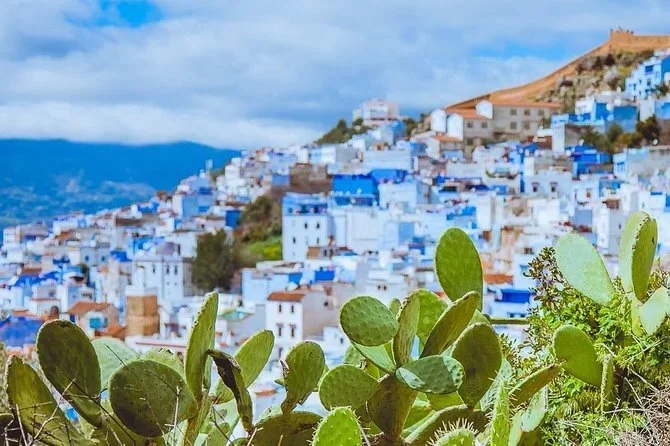
Visual guide about Tangier Chefchaouen Morocco landscape
Image source: media.tacdn.com
Morocco is like a layered cake. Chefchaouen is the icing, beautiful and instantly appealing. But underneath, you have rich cultural layers like Fes, dramatic natural layers like the Atlas Mountains, and exotic layers like the Sahara. A short trip gives you icing only. A 6 day tour gives you the whole cake.
The Real Value of Time
Travel experts often say the best trips have a slow heartbeat. Rushing from Tangier to Chefchaouen and back in 48 hours means you barely scratch the surface. You snap a few pictures of blue walls, eat one tagine, and you are gone.
With six days, you can sit in a cafe in Chefchaouen’s main square and watch local life unfold. You can wander the tanneries of Fes without feeling like you are running late. You can ride a camel into the Sahara at sunset and actually sleep under the stars. Those moments take time, and time is what makes a trip memorable.
Did You Know?
According to the Moroccan Ministry of Tourism, multi-day tours that include both imperial cities and desert destinations account for nearly 40% of all guided tourism revenue in the country. Travelers overwhelmingly prefer itineraries that combine cultural cities with natural wonders, and the Tangier-Chefchaouen-Sahara loop is one of the top three requested routes.
Cost vs. Experience Comparison
A 2-day Chefchaouen trip might cost €80-120, while a 6 day tour typically ranges from €450-900 per person. The longer trip may seem more expensive, but when you divide the cost by six days, you are paying roughly the same per day for a far richer experience, including accommodation, transport, guides, and most meals.
Think of it this way: would you rather have a quick coffee or a long dinner with friends? Both are nice, but one creates memories that last.
Day-by-Day Breakdown of the Perfect Itinerary
Let’s walk through the journey step by step so you know exactly what to expect. Consider this your virtual preview.
Day 1: Tangier to Chefchaouen
Your adventure begins in Tangier, a city that sits at the crossroads of Africa and Europe. After a morning pickup, you drive south along the coastal road, then turn inland toward the Rif Mountains. The drive itself is part of the magic. Winding roads reveal rolling green hills, terraced farms, and small Berber villages that seem untouched by time.
By early afternoon, you arrive in Chefchaouen, often called the “Blue Pearl of Morocco.” The town is famous for its blue-painted buildings, a tradition that began in the 1930s and remains one of the most photogenic sights in North Africa.
Afternoon highlights:
- Stroll through the medina’s narrow blue alleys
- Visit the Plaza Uta el-Hammam, the main square
- Explore the Kasbah Museum and its beautiful gardens
- Watch the sunset from the Spanish Mosque viewpoint
Overnight: A traditional riad inside the medina, where you will fall asleep to the sound of the call to prayer echoing across the valley.
Day 2: Chefchaouen to Fes via Volubilis and Meknes
After breakfast, you say goodbye to the blue city and head toward Fes. The journey includes two incredible stops that make this day unforgettable.
Volubilis: This UNESCO World Heritage Site contains some of the best-preserved Roman ruins in North Africa. Walking among the mosaic floors, triumphal arches, and ancient columns is like stepping into a history book. Did You Know? Volubilis was once the capital of the Kingdom of Mauretania and home to around 20,000 inhabitants during its peak in the 3rd century.
Meknes: Often called the “Versailles of Morocco,” Meknes is one of the country’s four imperial cities. You will visit the impressive Bab Mansour gate, the Sahrij Swani granary, and the Mausoleum of Moulay Ismail.
By evening, you arrive in Fes, Morocco’s spiritual and cultural capital.
Overnight: A riad in the Fes medina, often with a rooftop view over the oldest part of the city.
Day 3: Full-Day Exploration of Fes
Fes is not a city you rush. It is a city you wander, get lost in, and find yourself again. With a local guide, you explore the medieval medina, a UNESCO site and one of the largest car-free urban zones in the world.
Must-see stops include:
- Al-Qarawiyyin University: Founded in 859 AD, it is the oldest continuously operating university in the world.
- Chouara Tanneries: The famous leather dyeing pits, where hides are still processed using methods unchanged for centuries.
- Bou Inania Medersa: A stunning 14th-century theological college with intricate tilework and carvings.
- Nejjarine Square: A beautiful plaza with a decorated fountain and artisan workshops.
This day gives you a deep cultural foundation. You will understand why Fes is considered the soul of Morocco.
Day 4: Fes to Merzouga Sahara
This is the longest driving day of the trip, but it is also one of the most scenic. You leave Fes after breakfast and cross the Middle Atlas Mountains, passing through cedar forests where wild Barbary macaques often appear.
Midelt: Known as the “Apple Capital” of Morocco, this small town is a perfect lunch stop.
Ziz Valley: A stunning palm-lined oasis that looks like a green ribbon stretched across the desert landscape.
Errachidia and Erfoud: Gateway towns to the Sahara, where you can see fossils and date palms.
By late afternoon, you arrive in Merzouga, a small desert village sitting at the edge of Erg Chebbi, the famous sand sea. The dunes here can reach 150 meters high, and the color changes throughout the day from gold to deep orange to pink.
Overnight: A desert camp or a luxury desert hotel, depending on your preference.
Day 5: Sahara Desert Experience
This is the day many travelers say they will remember for the rest of their lives.
Morning: Camel trek into the dunes. The ride is slow and rhythmic, almost meditative. Your camel guide leads you deep into Erg Chebbi while you sway gently on the camel.
Sunset: Watching the sun melt into the dunes is a once-in-a-lifetime moment. The silence of the Sahara is so complete that you can almost hear your own heartbeat.
Evening: Traditional Berber dinner under the stars, with live drumming and music around a campfire.
Overnight: A luxury Berber tent camp with proper beds, blankets, and even private bathrooms in the upgraded versions.
Day 6: Merzouga to Tangier
Wake early to watch the sunrise over the Sahara. There is nothing quite like it. The dunes glow pink and gold, and the cool morning air carries a silence that feels sacred.
After breakfast at camp, you ride camels back to Merzouga, where your driver waits to begin the long journey north.
Stops along the way:
- Ifrane, often called the “Switzerland of Morocco” for its alpine-style architecture and clean streets
- Azrou, famous for its cedar forests and playful monkeys
- Lunch break in the Middle Atlas region
You arrive back in Tangier by early evening, just in time for a farewell dinner overlooking the Strait of Gibraltar.
Where to Stay During the Tour
One of the joys of a guided tour is that your accommodation is curated for you. Here is what you can expect at each stop.
Riads in Chefchaouen and Fes
A riad is a traditional Moroccan house built around an interior courtyard. Staying in one feels like stepping into a secret world. Most riads used on this tour offer:
- Beautifully tiled courtyards
- Rooftop terraces with mountain or medina views
- Authentic Moroccan breakfast with msemen, olives, honey, and mint tea
- Air conditioning and Wi-Fi
Pro tip: ask your tour operator if you can book a room with a view. In Chefchaouen, that means blue rooftops cascading down the hillside. In Fes, it means a sea of minarets and tiled domes.
Desert Camp in Merzouga
You have two main choices for the Sahara night:
Standard Berber Camp: Traditional nomad-style tents with shared bathrooms, mattresses, blankets, and a communal dinner. Authentic, simple, and budget-friendly.
Luxury Desert Camp: Private tents with en-suite bathrooms, proper beds, electricity, and even hot showers. Perfect for honeymooners or anyone wanting comfort under the stars.
Either way, sleeping in the Sahara is unforgettable. The Milky Way stretches directly overhead, and the only sound is wind moving sand.
Mid-Range Hotels in Transit Towns
In places like Meknes, Midelt, or Errachidia, you will stay in comfortable 3- or 4-star hotels. These are clean, modern, and offer a chance to rest before the next day’s adventure.
When Is the Best Time to Take This Tour?
Timing can make or break a Morocco tour. Here is what you need to know.
Season by Season Breakdown
Spring (March-May): Arguably the best time. Chefchaouen is green and flowery, the Atlas Mountains are lush, and desert temperatures are comfortable, usually between 25-30°C during the day and cool at night.
Summer (June-August): Hot, especially in the Sahara, which can exceed 45°C. Mountain towns like Chefchaouen stay pleasant, but the desert portion can be uncomfortable.
Autumn (September-November): Another excellent window. Crowds thin out, temperatures are mild, and the desert is magical for stargazing.
Winter (December-February): Chefchaouen can be chilly and even snowy in higher elevations. The Sahara gets cold at night, sometimes below 5°C, though daytime temperatures remain mild.
Did You Know?
According to World Weather Online, Tangier averages 300 sunny days per year, more than Miami or Los Angeles. This makes it one of the sunniest cities in the world, and a reliable destination almost any time you choose to visit.
Best Months Specifically
If you want the absolute sweet spot, go in April, May, September, or October. You will avoid the extreme heat of summer and the rainier winter weeks, while enjoying comfortable temperatures everywhere from Chefchaouen to the Sahara.
How to Choose the Right Tour Operator
Not all tours are created equal. Choosing the right operator can mean the difference between a magical trip and a frustrating one.
What to Look For in a Tour Company
- Licensed and insured: Make sure the company is officially registered with Morocco’s tourism authority.
- Small group or private: Smaller groups mean more flexibility, better access to guides, and a more personal experience.
- Experienced local drivers: Mountain roads can be tricky, and a skilled driver makes all the difference.
- Transparent pricing: Confirm what is included and what is not. Camel rides, entrance fees, and meals should be clearly stated.
- Strong reviews: Check TripAdvisor, Google, and independent travel forums for honest feedback.
Questions to Ask Before Booking
- What type of vehicle will we use?
- How many people are in the group?
- Is the desert camp shared or private?
- Are entrance fees to monuments included?
- What is the cancellation policy?
Reputable operators will answer all of these clearly and without hesitation.
Private vs. Group Tours
Private tours cost more but offer flexibility. You can stop for photos whenever you want, linger longer in Chefchaouen, or skip a site that does not interest you. Group tours are cheaper and offer built-in camaraderie, especially for solo travelers. Both are excellent, and the right choice depends on your travel style and budget.
What to Pack and Practical Tips for the Journey
Packing smart keeps you comfortable across very different climates, from chilly Rif Mountains to scorching Sahara days.
Clothing Essentials
- Layers: Mornings can be cold, afternoons warm, and evenings cool again.
- Modest attire: Morocco is conservative. Cover shoulders and knees in religious sites.
- Comfortable walking shoes: Medinas have uneven cobblestones.
- Scarf or shawl: Useful for sun protection, warmth, or covering your head in religious areas.
Useful Items to Bring
- Power adapter (Morocco uses type C and E plugs)
- Reusable water bottle
- Sunscreen (SPF 30 or higher)
- Camera or smartphone with extra storage
- Small daypack for excursions
- Cash in small denominations for tips and market shopping
Health and Safety Tips
- Drink bottled water only
- Avoid tap water in salads or ice cubes
- Carry basic medications like motion sickness pills for mountain roads
- Keep valuables in your hotel safe
- Trust your guide’s advice on local customs
Did You Know?
The average tip in Morocco is around 10% at restaurants and €2-5 per day for drivers and guides. Tipping is not mandatory but is deeply appreciated and considered part of the local culture.
Why This Tour Is More Than Just Sightseeing
The most powerful travel experiences are not about ticking boxes. They are about transformation. A 6 day tour from Tangier to Chefchaouen gives you that.
You come home with more than photos. You come home with stories. Stories about the Berber musician who played drums around the campfire. The tannery worker who showed you how leather is dyed. The shopkeeper in Chefchaouen who invited you in for mint tea even though you did not buy anything. The camel that sneezed on your shoulder and made you laugh until you cried.
These moments cannot be scheduled. They happen when you slow down, stay open, and let Morocco work its quiet magic on you.
The Emotional Geography of the Trip
Each day brings a different emotional tone. Chefchaouen is peaceful and dreamlike. Fes is intense and thought-provoking. The Atlas Mountains are humbling in their scale. The Sahara is vast, silent, and almost spiritual. By the end of six days, you will have traveled not just across Morocco, but through a wide spectrum of human experience.
A Trip Worth Repeating
Many travelers who take this tour end up booking a second one to explore the south, the coast, or Marrakech. That is the highest compliment a journey can receive: it makes you want to come back.
Whether you are a first-timer or a returning visitor, a 6 day tour from Tangier to Chefchaouen remains one of the most balanced, beautiful, and culturally rich ways to discover the real Morocco. From the blue alleys of Chefchaouen to the golden silence of the Sahara, every day offers something new.
Book with a trusted operator, pack light, bring curiosity, and prepare for one of the most rewarding trips of your life. Morocco is waiting, and it has a story to share with you.
Frequently Asked Questions
How much does a 6 day tour from Tangier to Chefchaouen typically cost?
A 6 day tour from Tangier to Chefchaouen generally costs between €450 and €900 per person, depending on whether you choose a shared group tour or a private experience. The price usually includes accommodation, transport, a driver, breakfast, and selected activities like the camel trek.
Is a 6 day tour enough time to see Chefchaouen and the Sahara?
Yes, six days is the perfect amount of time. It allows you to spend a full night in Chefchaouen, explore Fes with a local guide, enjoy a camel trek in the Sahara, and still have a relaxed pace without feeling rushed. Many travelers consider six days the ideal length for this route.
What is the best time of year to take a Tangier to Chefchaouen tour?
The best months are April, May, September, and October. During these months, Chefchaouen has pleasant weather, mountain roads are clear, and the Sahara is comfortable for camel rides and camping. Summer can be extremely hot in the desert, while winter brings cold nights in the Sahara.
Do I need a visa to travel from Europe to Tangier?
Most European, American, and Canadian passport holders do not need a visa for stays under 90 days in Morocco. However, requirements can change, so always check with your local Moroccan embassy or consulate before booking your trip.
Is it safe for solo travelers to join this tour?
Yes, this tour is very safe for solo travelers, especially when booked through a reputable operator. You will be with a professional driver throughout, stay in well-reviewed riads and hotels, and have the chance to meet other travelers if you choose a group tour option.
Can the tour be customized to include Marrakech instead of returning to Tangier?
Absolutely. Many operators offer customizable itineraries. You can end the tour in Marrakech, Essaouira, or even Casablanca for an additional transfer fee. Just mention your preferences when booking, and most companies will happily adjust the route to fit your plans.