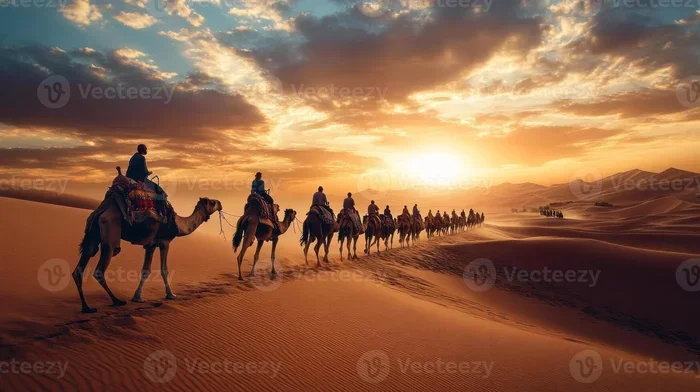
Featured image for Sahara desert camel caravan sunset
Image source: static.vecteezy.com
A 9-day tour from Tangier to Erg Chebbi is the ultimate Moroccan adventure, taking you from the Mediterranean coast to the majestic Sahara Desert. This carefully crafted itinerary covers imperial cities, ancient medinas, stunning mountain passes, and the towering dunes of Erg Chebbi. Travelers experience authentic Berber culture, camel trekking, and nights under the stars in luxury desert camps. It’s the most comprehensive way to see Morocco’s diverse landscapes and rich heritage in one unforgettable journey.
Imagine standing at the top of a sand dune that stretches as far as your eyes can see, with the sun setting behind you and painting the sky in shades of orange and pink. That’s exactly what awaits you at the end of a 9-day tour from Tangier to Erg Chebbi. This isn’t just a trip; it’s a journey through time, culture, and some of the most diverse landscapes on Earth.
Morocco sits at the crossroads of Africa, Europe, and the Arab world, and this tour captures all three influences in one incredible route. You start where the Mediterranean Sea meets the Atlantic Ocean in the north, and finish deep in the Sahara Desert where ancient camel caravans once traveled. In between, you’ll walk through medieval medinas, cross the Middle Atlas Mountains, and discover why Morocco has been captivating travelers for centuries.
What makes this particular itinerary special is its thoroughness. Rather than rushing through the country in three or four days, you have nine full days to actually absorb what you’re seeing. You can sip mint tea with a Berber family, watch artisans create intricate zellige patterns, and yes, ride a camel into the sunset. This guide will walk you through everything you need to know to plan, book, and enjoy the adventure of a lifetime.
Key Takeaways
- Comprehensive Route: The tour covers approximately 1,500 kilometers, crossing four distinct geographic zones from coast to desert.
- Cultural Immersion: Travelers visit four UNESCO World Heritage Sites, including the medinas of Fes and Marrakech.
- Desert Experience: Erg Chebbi’s dunes reach heights of 150 meters, offering some of the most spectacular sunrise and sunset views in North Africa.
- Best Travel Season: October through April offers the most comfortable temperatures, with daytime averages between 18-25°C.
- Authentic Encounters: The journey includes stays in traditional riads, Berber camps, and opportunities to meet local artisans.
- Photography Paradise: From the blue streets of Chefchaouen to the golden dunes, the route offers countless stunning photo opportunities.
- Practical Duration: Nine days provides the ideal balance between thorough exploration and comfortable pacing.
📑 Table of Contents
- What Is a 9-Day Tour from Tangier to Erg Chebbi?
- When Is the Best Time to Take This Tour?
- Where Does the Tour Go? Day-by-Day Breakdown
- Why Choose a Guided Tour Over Independent Travel?
- How Much Does a 9-Day Tour from Tangier to Erg Chebbi Cost?
- What Should You Pack for This Tour?
- Tips for Getting the Most from Your Tour
- Choosing the Right Tour Operator
- Conclusion: Your Adventure Awaits
What Is a 9-Day Tour from Tangier to Erg Chebbi?
A 9-day tour from Tangier to Erg Chebbi is a guided overland journey that traverses Morocco from its northernmost tip to one of the world’s most spectacular deserts. Think of it as a carefully curated road trip where every stop tells a story. You’re not just moving from point A to point B; you’re following ancient trade routes, discovering imperial history, and experiencing the geographic transformation from coastal plains to mountain ranges to endless sand dunes.
The Route Explained Simply
Picture Morocco as a rectangle. Tangier sits in the top-left corner, right where the Mediterranean kisses the Atlantic. Erg Chebbi is in the bottom-right area, deep in the eastern Sahara. The route connects these points like a giant letter “S” through the heart of the country.
The journey typically flows like this: Tangier to Chefchaouen to Fes to the Middle Atlas to Merzouga (the gateway to Erg Chebbi), then back west through the Todra Gorge, Ouarzazate, and finally Marrakech or back to the coast. It’s a loop that exposes you to virtually every type of landscape Morocco has to offer.
Who Is This Tour For?
This tour appeals to a remarkably wide range of travelers. History buffs love the medieval medinas and ancient kasbahs. Photographers can’t get enough of the colorful streets and dramatic landscapes. Adventure seekers thrill at the camel treks and desert camping. Food enthusiasts discover Moroccan cuisine at its finest, from street food tagines to elaborate palace dinners.
Did you know that Morocco welcomes over 13 million tourists annually, and desert tours like this one rank among the top three experiences visitors seek? The 9-day format hits the sweet spot for most international travelers, especially those flying into Tangier from European cities like Madrid, Paris, or London, which are all just a short flight away.
When Is the Best Time to Take This Tour?
Timing can make or break your desert adventure. While Morocco is a year-round destination, the 9-day Tangier to Erg Chebbi route has clear seasonal sweet spots that will dramatically affect your experience.
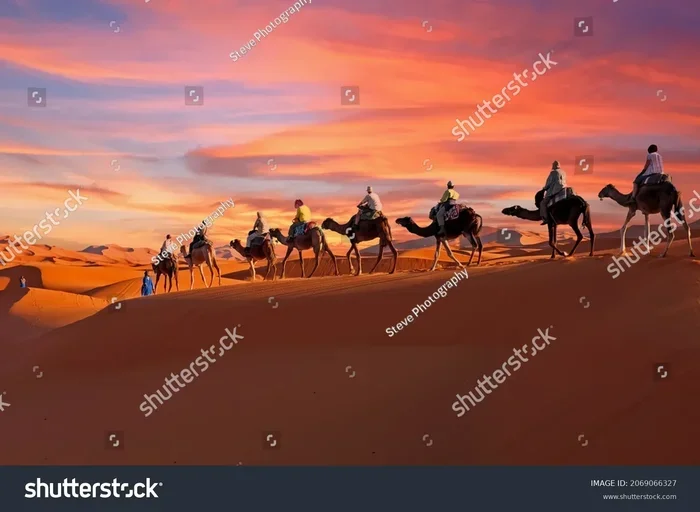
Visual guide about Sahara desert camel caravan sunset
Image source: shutterstock.com
Peak Season: October to April
The months between October and April represent the gold standard for this tour. During this window, daytime temperatures across the route typically hover between 18°C and 25°C (65-77°F), making it comfortable for walking through medinas and climbing dunes alike.
The desert nights can get surprisingly cold, dropping to around 5°C (41°F) in winter months, which is why quality desert camps provide warm blankets and heaters. But those chilly nights come with crystal-clear skies perfect for stargazing, and you can see the Milky Way with the naked eye from Erg Chebbi on most evenings.
Shoulder Seasons: March-May and September-October
These transitional months offer a balance between pleasant weather and fewer crowds. Prices for accommodations tend to be slightly lower, and you’ll have more flexibility in booking tours and restaurants. Spring brings wildflowers to the Middle Atlas, creating stunning photo opportunities you won’t get other times of year.
Summer Considerations: June to August
Summer in Erg Chebbi is no joke. Temperatures regularly exceed 45°C (113°F), and the sand becomes hot enough to be uncomfortable. However, cities like Tangier and coastal areas remain pleasant, and mountain stops offer relief. If summer is your only option, you can still do this tour, but you’ll need to plan around the midday heat and prioritize air-conditioned comfort.
Where Does the Tour Go? Day-by-Day Breakdown
The beauty of a well-designed 9-day tour lies in its logical progression. You’re never rushing, never bored, and each day builds on the excitement of the previous one. Here’s what a typical itinerary looks like.
Days 1-2: Tangier and Chefchaouen
Your adventure begins in Tangier, a city that’s been a gateway between continents for over 2,000 years. The first day usually involves exploring the medina, visiting the legendary Café Hafa where Beat Generation writers once pondered life, and soaking in views where two seas meet.
Day two takes you to Chefchaouen, the famous “Blue City” nestled in the Rif Mountains. Did you know that Chefchaouen was painted blue by Jewish refugees in the 1930s? The tradition stuck, and now the entire medina glows in shades of azure and cobalt. You’ll wander narrow lanes, photograph countless doorways, and feel like you’ve stepped into a dream.
Days 3-4: Fes, the Cultural Capital
Fes needs at least two days to appreciate properly. It’s home to the world’s oldest continuously operating university, the University of al-Qarawiyyin, founded in 859 AD. That’s over 1,160 years of uninterrupted education, a fact that surprises most visitors.
The Fes el-Bali medina is a UNESCO World Heritage Site and a labyrinth of 9,400 alleys. You’ll watch craftsmen work with brass, leather, and ceramics using methods unchanged for centuries. The famous Chouara Tanneries offer a sensory experience unlike any other, though the smell is famously strong.
Days 5-6: The Middle Atlas and Sahara Gateway
Leaving Fes, you cross through the Middle Atlas Mountains, passing through Ifrane, often called “Little Switzerland of Morocco” for its alpine architecture and clean streets. The landscape transforms from cedar forests to volcanic plateaus.
By day six, you reach Merzouga, the small desert town that serves as the jumping-off point for Erg Chebbi. This is where your camel awaits. The trek into the dunes takes about 90 minutes, with the towering sand mountains gradually revealing themselves like ocean waves frozen in time.
Days 7-8: Erg Chebbi and the Desert Experience
Nowhere else in Morocco offers this experience. Erg Chebbi’s tallest dune, known as Erg Chebbi itself, reaches about 150 meters high. Some dunes in the Sahara can reach 200 meters, but the unique thing about Erg Chebbi is how the dunes seem to rise directly from flat terrain, creating dramatic visual impact.
You’ll spend at least one night in a desert camp, sleeping under canvas (or under the stars if you prefer). Traditional Berber music, drumming around a campfire, and meals of tagine and fresh bread round out the experience. Sunrise the next morning is non-negotiable; climbing a nearby dune to watch the sun crest the Sahara is a memory that stays with travelers forever.
Day 9: The Return Journey
Depending on your chosen route, day nine might take you through Todra Gorge (a stunning canyon with 400-meter cliffs), the Dades Valley with its famous “Monkey Fingers” rock formations, or to Ouarzazate, the “Hollywood of Africa” where movies like Gladiator and Lawrence of Arabia were filmed.
Most tours conclude either in Marrakech, where you can extend your stay, or loop back to Fes or Tangier. The flexibility is part of what makes this itinerary so popular.
Why Choose a Guided Tour Over Independent Travel?
Morocco is absolutely doable as an independent traveler, but a guided 9-day tour offers specific advantages that many travelers find worthwhile. Let’s break down why this format works so well.
Logistics Made Simple
Morocco’s roads can be confusing. GPS navigation is helpful but not always reliable in remote areas. A local driver-guide knows the roads, speaks multiple languages (usually Arabic, French, English, and sometimes Spanish), and handles all the logistics. You simply sit back and enjoy the scenery through the window.
Consider this: driving from Tangier to Merzouga covers roughly 700 kilometers of road, with sections that wind through mountain passes and cross remote desert terrain. Having someone who knows the conditions, weather patterns, and best viewpoints transforms the journey from stressful to spectacular.
Cultural Translation
Morocco’s official languages are Arabic and Amazigh (Berber), with French serving as the lingua franca in business and tourism. While many younger Moroccans speak English, having a guide bridges communication gaps in markets, small villages, and traditional establishments. You’ll learn things no guidebook tells you, like why mint tea is poured from such height (to create a foam on top) or what the geometric patterns in mosques actually symbolize.
Safety and Support
Morocco is generally very safe for tourists, with a strong tourism infrastructure. However, having a guide means you have someone to handle unexpected situations, from minor travel hiccups to medical emergencies. Tour companies vet their drivers carefully and maintain relationships with accommodations and services throughout the route.
Access to Authentic Experiences
Good tour operators have relationships with local families, artisans, and musicians. These connections provide access to experiences you simply can’t book online. Sharing a meal with a Berber family in the Atlas Mountains or watching a private Gnawa music performance in Essaouira adds layers to your trip that independent travel rarely achieves.
How Much Does a 9-Day Tour from Tangier to Erg Chebbi Cost?
Tour prices vary significantly based on accommodation standards, group size, and inclusions. Here’s what to expect in terms of investment.
Budget Tier: $800-1,200 per person
Budget tours typically use shared transportation in minivans with up to 15 passengers, basic but clean riad accommodations, and standard desert camps. Meals are often included, but entrance fees to monuments are usually extra. This tier attracts young travelers, backpackers, and those prioritizing cost savings.
Mid-Range Tier: $1,200-2,000 per person
This sweet spot offers smaller groups (usually 4-8 people), better-located riads with traditional architecture and modern amenities, upgraded desert camps with private bathrooms, and more inclusive pricing. Most travelers find this tier offers the best value, balancing comfort with authentic experience.
Luxury Tier: $2,500-5,000+ per person
Luxury tours feature private vehicles, 4-star and 5-star riads, premium desert camps with en-suite bathrooms and king beds, private guides, and highly personalized itineraries. Some luxury tours include hot air balloon rides, private cooking classes, or helicopter tours. This tier appeals to honeymooners and travelers seeking high-end experiences.
What’s Typically Included
Most reputable tours include: airport transfers, ground transportation, driver-guide services, accommodation (8 nights), breakfast daily, some dinners (especially in the desert), camel trek to/from the desert camp, and basic activities. Not typically included: lunches, drinks, entrance fees, tips, and personal expenses. Always read the fine print before booking.
What Should You Pack for This Tour?
Packing for a 9-day tour that crosses multiple climate zones requires thought. You’ll experience coastal humidity, mountain crispness, and desert extremes. Here’s a practical packing list.
Clothing Essentials
Modest, lightweight clothing works for most situations. Long pants and long-sleeved shirts protect against sun and respect local customs. A warm jacket is essential for desert nights and mountain evenings, even in spring and fall. A scarf or shemagh serves multiple purposes: sun protection, warmth, dust barrier, and style.
Comfortable walking shoes are non-negotiable. You’ll walk on cobblestones, sand, and uneven terrain. Sandals are fine for riads but not for medina exploration or dune climbing.
Gear and Accessories
Sunscreen (SPF 30+), sunglasses, and a wide-brimmed hat protect against intense sun, especially in the desert where reflection from sand doubles exposure. A reusable water bottle keeps you hydrated; your guide will help you refill at safe sources.
A power bank keeps your phone and camera charged during long driving days. While most riads have outlets, you might not always be near one when you want it. A flashlight or headlamp helps in the desert camp and older medina alleys with limited lighting.
Health and Personal Items
Basic medications for upset stomach, headaches, and motion sickness. Hand sanitizer and wet wipes are surprisingly useful in remote areas. Morocco has pharmacies in every city, but they might not carry your specific brands.
If you wear glasses, bring a backup pair. Sandstorms (rare but possible) can be challenging for contact lens wearers. A small daypack carries essentials during excursions while leaving your main luggage in the vehicle.
Tips for Getting the Most from Your Tour
Beyond the logistics, certain approaches can elevate your tour from good to unforgettable. These tips come from seasoned travelers and experienced guides.
Embrace the Unexpected
Tours rarely go exactly as planned. A sandstorm might delay your desert arrival. A local festival might close roads. A spontaneous invitation to tea might extend your afternoon. Flexibility transforms these from frustrations into memorable experiences.
Did you know that accepting mint tea when offered is considered polite in Morocco, even if you’re not thirsty? The ritual of tea-making is a social custom that opens conversations and connections. Saying yes to these small offerings often leads to the most meaningful travel moments.
Engage with Your Guide
Your guide is more than a driver; they’re a cultural ambassador, historian, and friend. Ask questions about everything. Why are doorways shaped differently in different cities? What does that call to prayer mean? How do families celebrate weddings here? The more you engage, the more you learn.
Many guides have worked in tourism for over a decade and possess fascinating knowledge passed down through generations. They know which restaurant serves the best pastilla in Fes, which tannery offers the most authentic demonstrations, and which viewpoint captures the perfect photo of the dunes.
Respect Local Customs
Morocco is a Muslim country with conservative values in many areas. Modest dress (covered knees and shoulders for both men and women), respectful behavior in religious sites, and asking permission before photographing people show cultural awareness. These small courtesies earn warm welcomes and authentic interactions.
During Ramadan (the month of fasting), be especially mindful. Eating, drinking, or smoking in public during daylight hours is considered disrespectful. Many restaurants close during the day and open after sunset, when iftar (breaking the fast) becomes a celebration.
Stay Connected but Disconnect
You’ll have WiFi in most accommodations and often in the vehicle. Stay connected enough for safety and communication, but take opportunities to unplug. Watching the Sahara sunset without checking your phone creates a different kind of memory than scrolling while you watch.
The desert in particular offers a rare chance to experience genuine darkness and silence. Without light pollution, the stars become so dense they seem to form a blanket overhead. This is the moment when many travelers feel the profound impact of their journey.
Choosing the Right Tour Operator
The tour operator you choose significantly affects your experience. With dozens of companies offering similar itineraries, how do you select the right one?
What to Look For
Established companies with verifiable reviews on platforms like TripAdvisor, Google, and GetYourGuide typically offer more reliability. Look for operators who have been in business for at least 5-7 years, as this longevity suggests consistent quality.
Small group sizes (ideally 4-8 people) provide more flexibility and personal attention than large bus tours of 15-20 people. You’ll have more interaction with your guide and more flexibility to stop at interesting points along the route.
Red Flags to Avoid
Be wary of prices that seem too low. A 9-day tour with accommodation, transport, and desert experience cannot realistically cost $400 without cutting corners somewhere. Extremely cheap tours often have hidden costs, poor accommodations, or aggressive upselling.
Avoid operators who pressure you to book immediately or offer prices significantly lower than competitors. Also be cautious of operators who don’t clearly explain what’s included and excluded in their pricing.
Questions to Ask Before Booking
What’s the maximum group size? What type of vehicle will be used? Which accommodations are included (specific names if possible)? What’s the cancellation policy? Are entrance fees included? What’s the guide’s language capability and experience level? Can the itinerary be customized?
Reputable operators answer these questions clearly and provide written confirmations. If a company is vague or evasive, consider alternatives.
Conclusion: Your Adventure Awaits
A 9-day tour from Tangier to Erg Chebbi represents one of the world’s great travel journeys. In less than two weeks, you traverse an entire country, experiencing coastal cities, mountain villages, ancient medinas, and one of the planet’s most legendary deserts. The route packs a remarkable variety of experiences into a manageable timeframe.
What makes this tour special isn’t just the destinations, though they’re spectacular. It’s the transitions between them. Watching the landscape change from Mediterranean blue to Rif Mountains green to Atlas cedar forests to pre-Saharan scrubland to endless Sahara dunes creates a narrative arc that shorter trips simply can’t match.
The cultural depth adds another layer. Morocco’s blend of Arab, Berber, African, and European influences creates a unique identity expressed in its food, music, architecture, and daily life. Experiencing this firsthand, with a knowledgeable guide to provide context, creates understanding that guidebooks and websites can’t provide.
Whether you’re a first-time visitor to Morocco or a returning traveler seeking deeper exploration, the Tangier to Erg Chebbi route delivers. It’s comprehensive yet comfortable, adventurous yet accessible, exotic yet welcoming. The memories you create, from sunrise over the dunes to haggling in a Marrakech souk to sharing tea with strangers who become friends, will stay with you long after you’ve returned home.
Start researching tour operators, checking your calendar for optimal travel dates, and beginning to plan your packing list. The Sahara awaits, and this 9-day tour might just be the journey that changes how you see the world, or at the very least, how you see North Africa.
Frequently Asked Questions
What is the best time of year to do a 9-day tour from Tangier to Erg Chebbi?
The best months are October through April when temperatures are comfortable for both city exploration and desert adventures. Daytime temperatures range from 18-25°C, and nights in the desert stay cool but not extreme. Spring (March-May) offers wildflowers and mild weather, while fall (September-October) provides excellent visibility and comfortable touring conditions.
How long is the drive from Tangier to Erg Chebbi?
The direct driving distance is approximately 700 kilometers, taking about 10-12 hours of pure driving. However, the 9-day tour breaks this into manageable 3-5 hour daily segments, allowing you to stop at Chefchaouen, Fes, the Middle Atlas, and other points of interest along the way. The complete circuit covering all destinations typically spans 1,500-1,800 kilometers.
Is the camel ride safe for beginners?
Yes, camel rides are perfectly safe for beginners. The camels used for tourism are trained, gentle, and accustomed to carrying passengers. Guides lead the camels and ensure proper mounting and dismounting. The ride into Erg Chebbi covers about 1.5 kilometers and takes roughly 90 minutes at a slow, steady pace. Pregnant women and people with severe back problems might want to consider alternatives.
Do I need a visa for this tour?
Most nationalities, including EU citizens, UK, USA, Canada, Australia, and Japan, receive a 90-day tourist visa on arrival in Morocco. You simply need a passport valid for at least 6 months beyond your travel dates. Always check the specific requirements for your nationality before traveling, as rules can change. Your tour operator can also advise on entry requirements.
What type of accommodation can I expect in the desert?
Desert camps range from basic traditional Berber tents with shared facilities to luxury camps with private bathrooms, electricity, and comfortable beds. Most mid-range tours offer “comfort” camps with private tented rooms, proper beds with warm bedding, shared or private bathroom facilities, and communal dining areas. Even basic camps provide an authentic atmosphere with traditional music and meals.
Can I customize a 9-day Tangier to Erg Chebbi tour?
Absolutely. Most reputable tour operators offer customizable itineraries. You can add stops in Essaouira, extend your stay in Marrakech, include cooking classes, or add adventure activities like hot air balloon rides or quad biking in the desert. Private tours offer the most flexibility, while small group tours can often accommodate special requests with advance notice. Discuss your preferences with the operator before booking.