
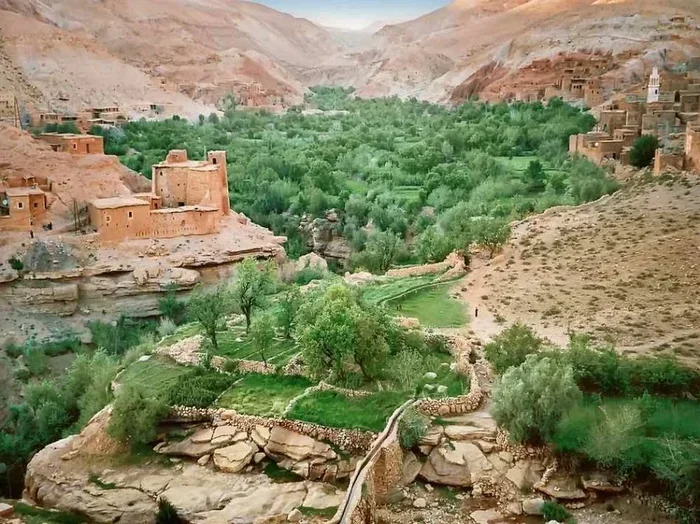
Featured image for Marrakech to Dades Valley landscape
Image source: i.pinimg.com
A 1-day tour from Marrakech to the Dades Valley takes you on a thrilling journey through the Atlas Mountains, across the Tizi n’Tichka pass, and into one of Morocco’s most spectacular landscapes. This adventure packs dramatic mountain scenery, ancient kasbahs, lush oases, and the famous Dades Gorges into a single unforgettable day. Perfect for travelers with limited time, this tour offers an authentic glimpse of southern Morocco’s natural beauty and Berber culture just a few hours from the bustling city of Marrakech.
If you’ve ever dreamed of escaping the bustling souks and vibrant chaos of Marrakech for a day of jaw-dropping natural beauty, a one-day tour to the Dades Valley might be your perfect answer. Imagine trading the scent of spices and mint tea for the crisp mountain air of the High Atlas, then watching the landscape transform from arid plains to lush green valleys dotted with crumbling kasbahs and ancient villages clinging to hillsides.
This iconic day trip packs an incredible amount of diversity into roughly twelve hours, taking you from the imperial city of Marrakech all the way to one of Morocco’s most photogenic regions. Think of it like opening a storybook where every page turn reveals a more spectacular illustration than the last. By the time you return to your riad in the evening, you’ll have crossed mountain passes, visited a UNESCO World Heritage site, and stood in awe before dramatic rock formations carved by centuries of wind and water.
Whether you’re a nature lover, a culture enthusiast, or simply someone who appreciates stunning views, this journey delivers on every front. In this comprehensive guide, we’ll walk you through everything you need to know about the Marrakech to Dades Valley one-day tour, from what you’ll see along the way to practical tips that will make your adventure smooth, enjoyable, and truly memorable.
Key Takeaways
- Distance and Duration: The Dades Valley sits about 310 km southeast of Marrakech, and the round-trip journey takes roughly 10-12 hours including stops.
- Scenic Highlights: You’ll cross the High Atlas Mountains, visit the UNESCO-listed Ait Ben Haddou, and walk through the rose-scented Dadès Gorges.
- Cultural Encounters: The route passes through traditional Berber villages where locals have lived for centuries, offering authentic cultural insights.
- Best Time to Go: Spring (March-May) and autumn (September-November) offer the most comfortable temperatures for this long day trip.
- Physical Demand: This tour involves a lot of driving but includes short, easy walks suitable for most fitness levels.
- Booking Tips: Reserve through reputable operators with small-group options for a more personal experience and better guide interaction.
- Photography Opportunities: Bring your camera fully charged because every turn reveals a postcard-worthy view you won’t want to miss.
📑 Table of Contents
- What Is the Dades Valley and Why Should You Visit?
- The Route from Marrakech to the Dades Valley: What You’ll See
- What to Expect on Your Tour Day: Hour by Hour
- Practical Tips for Your Dades Valley Day Trip
- The Best Time of Year for This Tour
- Frequently Asked Questions About the Tour (Detailed Insights)
- Making the Most of Your Marrakech to Dades Valley Adventure
What Is the Dades Valley and Why Should You Visit?
The Dades Valley, known locally as “Valée du Dadès,” is a breathtaking region nestled in the eastern part of the High Atlas Mountains in southern Morocco. It’s often called the “Road of a Thousand Kasbahs” because the route leading into it is lined with ancient fortified clay villages that look like something straight out of a movie set. In fact, several Hollywood films, including “Gladiator” and “Lawrence of Arabia,” have used this landscape as a backdrop.
A Geographic Wonder
The valley stretches roughly 30 kilometers through the foothills of the Atlas Mountains, carved by the Dadès River over millions of years. The river acts like nature’s sculptor, slowly cutting through red and orange rock to create dramatic gorges, towering cliffs, and bizarrely shaped formations that locals have nicknamed the “Monkey Fingers” because of their twisted, finger-like appearance.
Think of the valley as Morocco’s answer to the Grand Canyon, but with a unique twist: instead of being barren desert, it’s surprisingly green. The valley floor is dotted with date palms, almond trees, and rose gardens, while the surrounding mountains provide a stunning contrast of deep red cliffs against blue skies. This blend of fertile oasis and rugged stone makes the Dades Valley unlike anywhere else in Morocco.
A Cultural Treasure Trove
Beyond its natural beauty, the Dades Valley is home to Berber communities who have maintained their traditional way of life for generations. The Amazigh (Berber) people are the original inhabitants of North Africa, predating even the Arab conquests, and their culture remains vibrant here. Visitors can explore traditional villages, share mint tea with local families, and learn about ancient customs that have been passed down through countless generations.
Did You Know? Morocco produces approximately 4,000 tons of roses annually in the Dadès Valley region, particularly in the nearby M’Goun Valley. Every May, the town of Kelaa M’Gouna hosts the famous Rose Festival, where locals celebrate the rose harvest with parades, music, and the creation of rose water and cosmetics.
The Route from Marrakech to the Dades Valley: What You’ll See
The journey from Marrakech to the Dades Valley is often described as a highlight in itself, not just a means of transportation. The route covers roughly 310 kilometers one way and takes you through three distinct geographical zones: the plains around Marrakech, the towering High Atlas Mountains, and finally the pre-Saharan landscapes of southern Morocco.
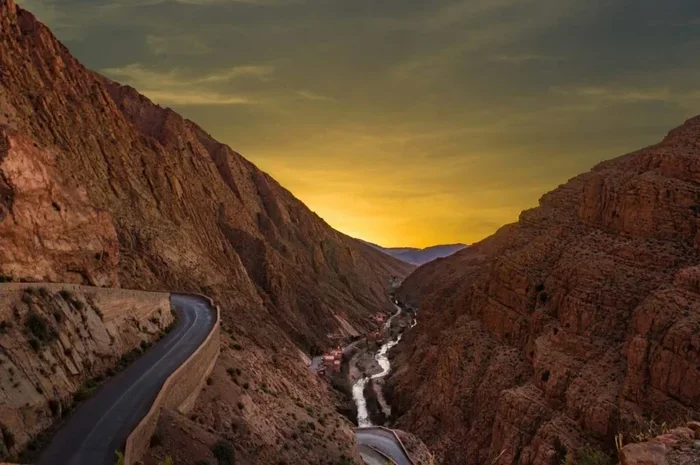
Visual guide about Marrakech to Dades Valley landscape
Image source: marrakech-desert-trips.com
Stage 1: Marrakech to the High Atlas Mountains
Your adventure begins in Marrakech, where your guide will typically pick you up early in the morning, around 7:00 or 7:30 AM. The first stage takes you southeast through the Haouz plains, a relatively flat agricultural region dotted with olive groves and small villages. This drive lasts about 90 minutes and serves as a gentle warm-up for the dramatic scenery ahead.
As you leave the plains behind, you’ll notice the landscape gradually changing. The flat farmland gives way to rolling hills, and the distant peaks of the Atlas Mountains begin to emerge on the horizon, often capped with snow during winter months. It’s like watching a movie screen slowly come into focus, with each kilometer revealing more detail.
Stage 2: Crossing the Tizi n’Tichka Pass
The Tizi n’Tichka pass is the highest major mountain pass in Morocco, sitting at approximately 2,260 meters (7,415 feet) above sea level. The word “Tizi” means “pass” in the Berber language, and “Tichka” refers to the challenging terrain. This stretch is often considered the most dramatic part of the journey, with winding mountain roads offering spectacular panoramic views.
During the climb, your driver will navigate roughly 100 hairpin turns, each one revealing a new perspective on the valleys below. On clear days, you can see for miles in every direction, with snow-capped peaks in the distance and tiny Berber villages perched improbably on hillsides. Your guide will likely stop at one or two viewpoints so you can stretch your legs, snap photos, and soak in the views.
Travel Tip: The mountain roads can be challenging for those prone to motion sickness. If you’re sensitive, consider taking medication about 30 minutes before departure, and always sit in the front seat if possible.
Stage 3: The UNESCO World Heritage Site of Aït Ben Haddou
After descending from the Atlas Mountains, the route continues toward Ouarzazate, often called the “Gateway to the Sahara.” Along the way, you’ll visit the famous Aït Ben Haddou, a UNESCO World Heritage Site since 1987. This ancient ksar (fortified village) is one of the most iconic landmarks in Morocco, with its towering mud-brick structures climbing up the hillside like a sandcastle frozen in time.
Aït Ben Haddou has served as the backdrop for numerous famous films and TV shows, including “Gladiator,” “The Mummy,” “Game of Thrones,” and “Prince of Persia.” Walking through its narrow alleys feels like stepping onto a film set, and the views from the top of the village are absolutely spectacular. Most tours allow about 30-45 minutes for exploration, which is enough time to climb to the top and take plenty of photos.
The village is still inhabited by a handful of families, though most residents have moved to the modern village across the river. The traditional buildings are maintained through ongoing restoration efforts, and local artisans often demonstrate their crafts, from pottery to weaving.
Stage 4: Ouarzazate and the Road of a Thousand Kasbahs
Continuing eastward from Aït Ben Haddou, you’ll pass through Ouarzazate, sometimes nicknamed “Hollywood of Africa” because of its famous film studios. While most tours don’t stop here for long, the drive continues along what’s officially called the “Route of a Thousand Kasbahs,” though in reality, there are only about 150 kasbahs scattered along this stretch.
The landscape here begins to take on a more arid, pre-Saharan character, with dramatic rock formations, palm groves, and the occasional oasis town. This is the Morocco you see in postcards: rugged, beautiful, and timeless.
Stage 5: Entering the Dades Valley
The final leg of the journey takes you into the heart of the Dades Valley. As you approach, you’ll notice the road narrowing and the cliffs rising dramatically on either side. The valley is famous for its dramatic gorges, particularly the “Dades Gorges,” where the river has carved a path through towering red limestone cliffs over millions of years.
Most tours include a stop at the most spectacular section of the gorges, where you can take a short walk along the valley floor. The rock formations here are truly otherworldly, with the famous “Monkey Fingers” rock formations rising from the landscape like giant twisted fingers reaching toward the sky.
What to Expect on Your Tour Day: Hour by Hour
Understanding the flow of your tour day helps you prepare mentally and physically for what’s ahead. Here’s a typical itinerary breakdown that helps set expectations.
Morning Schedule
7:00-7:30 AM: Hotel pickup in Marrakech. Your driver-guide will arrive at your accommodation, usually in a comfortable 4×4 or minivan, depending on your group size.
9:30-10:00 AM: Crossing the Atlas Mountains. You’ll be in the mountains by mid-morning, with photo stops at scenic viewpoints.
12:00-12:30 PM: Arrival at Aït Ben Haddou. After a brief stop at a panoramic viewpoint, you’ll explore the UNESCO site.
Midday to Afternoon
1:00-2:00 PM: Lunch break in Ouarzazate or a nearby town. Most tours include a traditional Moroccan lunch at a local restaurant, typically featuring tagine (slow-cooked stew), couscous, or grilled meats.
2:00-4:00 PM: Drive along the Route of a Thousand Kasbahs toward the Dades Valley, with photo stops along the way.
4:00-4:30 PM: Arrival at the Dades Valley and exploration of the gorges. You’ll have time for a short walk and photos of the dramatic rock formations.
Return Journey
5:00-5:30 PM: Begin the return journey to Marrakech. The drive back follows the same route, so you’ll see familiar landscapes from a different perspective in the afternoon light.
8:00-8:30 PM: Return to Marrakech. After a long but rewarding day, you’ll be dropped off at your accommodation.
Did You Know? A typical day tour from Marrakech to the Dades Valley involves approximately 8-9 hours of actual driving time, making it one of the longest day trips available from the city. If you have more time, consider splitting this into a two-day tour with an overnight stay in the Dades Valley or the Sahara Desert.
Practical Tips for Your Dades Valley Day Trip
Proper preparation can make the difference between a good trip and an unforgettable one. Here are essential tips that experienced travelers swear by.
What to Wear and Bring
The mountain weather can be unpredictable, so dressing in layers is absolutely essential. Mornings in the Atlas Mountains can be surprisingly cold, especially from October through April, while afternoons in the valley tend to be warm and pleasant. Bring a light jacket or fleece, comfortable walking shoes, sunscreen, sunglasses, and a hat.
Don’t forget to pack:
- A refillable water bottle (your guide will usually provide water, but extras are helpful)
- Camera with extra batteries (cold mountain air drains batteries faster than you’d expect)
- Light snacks in case you get hungry between meals
- Hand sanitizer and tissues (restroom facilities along the route can be basic)
- Small denomination cash for tips, souvenirs, and any unexpected purchases
Health and Comfort Considerations
The long driving hours can be tiring, especially if you’re not used to mountain roads. To stay comfortable, bring a small travel pillow or neck cushion. Stay hydrated throughout the day, even if you don’t feel particularly thirsty. The dry mountain air can dehydrate you faster than you’d notice.
If you have any medical conditions or mobility concerns, discuss these with your tour operator beforehand. Most tours involve walking on uneven terrain, particularly at Aït Ben Haddou and in the Dades Gorges, so comfortable shoes with good grip are non-negotiable.
Choosing the Right Tour Operator
The quality of your experience depends heavily on your tour operator. Look for companies with strong reviews on platforms like TripAdvisor or Viator. Small-group tours (typically 4-8 people) generally offer a more personalized experience than larger bus tours, and the vehicles are often more comfortable.
Ask these questions before booking:
- What’s the maximum group size?
- Is lunch included in the price?
- What’s the pickup and drop-off policy for hotels outside central Marrakech?
- Are entrance fees to Aït Ben Haddou included?
- What’s the cancellation policy?
Photography Tips
The Dades Valley offers some of the most photogenic landscapes in Morocco, but the bright sun can be challenging. The best light typically occurs in the early morning and late afternoon when shadows are softer and colors are more saturated. When you arrive at the gorges in the late afternoon, you’ll be treated to gorgeous golden hour lighting that makes the red cliffs glow like fire.
For Aït Ben Haddou, the highest point of the village offers the best overall perspective, so make sure to climb to the top rather than just exploring the lower levels. Your guide can point out the best vantage points.
The Best Time of Year for This Tour
While the Dades Valley can be visited year-round, certain seasons offer significantly better experiences than others. Understanding the seasonal variations helps you choose the optimal time for your adventure.
Spring (March to May)
Spring is arguably the best time for this tour. Temperatures are mild and pleasant, ranging from about 15°C to 25°C (59°F to 77°F) during the day. The Atlas Mountains are often covered in wildflowers, creating stunning color contrasts against the rocky terrain. This is also rose season, so if you visit in May, you might catch the famous Rose Festival in the nearby M’Goun Valley.
Autumn (September to November)
Autumn offers similar benefits to spring, with comfortable temperatures and clear skies. October is particularly popular because the summer heat has broken but the winter chill hasn’t yet arrived. The light during autumn is also gorgeous, with golden hues that enhance the natural beauty of the landscape.
Summer (June to August)
Summer can be challenging, especially in the Dades Valley where temperatures regularly exceed 38°C (100°F). While the higher elevations remain cooler, the valley floor can be uncomfortably hot. If you must travel in summer, start as early as possible and bring plenty of water.
Winter (December to February)
Winter brings cooler temperatures and the possibility of snow in the Atlas Mountains, which creates spectacular scenery. However, some passes can occasionally close due to snow, and mornings can be quite cold. If you don’t mind bundling up, winter offers fewer crowds and dramatic snow-capped mountain views.
Did You Know? The Dadès Gorges experience over 300 days of sunshine per year, making it one of the sunniest regions in Morocco. This abundance of sunshine contributes to the area’s reputation for producing high-quality roses, dates, and other agricultural products.
Frequently Asked Questions About the Tour (Detailed Insights)
How Long Is the Drive from Marrakech to the Dades Valley?
The one-way drive takes approximately 5-6 hours, depending on traffic and weather conditions. The total round trip, including stops, usually spans 10-12 hours, making it one of the longest day tours available from Marrakech.
Is One Day Enough to Visit the Dades Valley?
While one day is certainly enough to experience the highlights, the journey is quite long. If you can spare an extra day, consider an overnight stay to enjoy the valley at sunrise or sunset without rushing back. Many travelers find a two-day tour to be much more relaxing.
What Should I Wear for This Tour?
Wear comfortable, breathable clothing with layers, since mountain temperatures can vary significantly throughout the day. Closed-toe walking shoes are essential, especially for exploring Aït Ben Haddou and the rocky areas of the Dades Gorges.
Is the Tour Suitable for Children?
Yes, most tours accommodate children, though the long drive can be challenging for very young kids. Bring entertainment, snacks, and plan for frequent comfort stops. Children typically love the dramatic landscapes and the chance to explore the ancient kasbahs.
Can I Customize the Tour Itinerary?
Many operators offer private tour options that allow customization. You can request additional stops, longer exploration time at specific locations, or modifications to the route. Private options are more expensive but offer maximum flexibility for your group’s interests.
What’s the Difference Between Visiting the Dades Valley and the Todra Gorges?
The Dades Valley and Todra Gorges are nearby but offer different experiences. The Dades Valley features broader landscapes with kasbahs and rose gardens, while the Todra Gorges are narrower, more dramatic canyon walls favored by rock climbers. Some tours combine both in a single day, though this makes for an even longer trip.
Making the Most of Your Marrakech to Dades Valley Adventure
By now, you should have a comprehensive understanding of what awaits you on this incredible day trip. The journey from Marrakech to the Dades Valley is more than just a sightseeing tour; it’s an immersive experience that connects you with Morocco’s diverse landscapes, rich history, and vibrant culture in a single unforgettable day.
From crossing the majestic Atlas Mountains to exploring the ancient alleys of Aït Ben Haddou, and from driving along the legendary Road of a Thousand Kasbahs to standing in awe before the dramatic Dades Gorges, every moment offers something special. This tour showcases the incredible diversity of Morocco, a country where snow-capped mountains, fertile valleys, ancient cities, and endless desert landscapes coexist in stunning harmony.
As you plan your trip, remember that the best experiences come from being present in the moment. Take time to truly absorb the views, engage with local people, and savor the unique flavors of Moroccan cuisine along the way. Whether you’re a first-time visitor to Morocco or a seasoned traveler seeking new adventures, the Dades Valley day trip from Marrakech promises memories that will last a lifetime.
Pack your camera, bring your sense of wonder, and prepare for one of the most spectacular day trips you’ll ever take. The Dades Valley is waiting to reveal its secrets, and the journey there is just as rewarding as the destination itself.