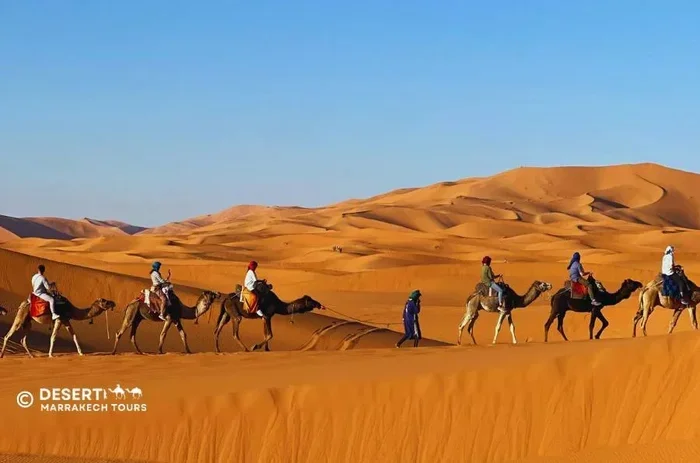
Featured image for Marrakech Fes desert tour
Image source: desertmarrakechtours.com
An 8 day tour from Marrakech to Fes is the perfect way to experience Morocco’s most spectacular landscapes and cultural treasures in one unforgettable journey. This carefully crafted itinerary takes you through the Atlas Mountains, ancient kasbahs, the stunning Sahara Desert, and four imperial cities, blending adventure with authentic Moroccan culture. Designed for travelers who want depth over speed, this tour offers the ideal balance of guided exploration and free time.
Picture this: you wake up to the sound of camels walking past your tent, their bells chiming softly in the cool desert air. The sunrise paints the Sahara dunes in shades of gold and orange, and you realize this is the moment you crossed an entire continent to experience. This is just one day during an 8 day tour from Marrakech to Fes, and it’s only the beginning.
Morocco is a country that feels like several countries in one. In the span of a week, you can wander through medinas older than most European cities, stand atop mountain passes where snow falls in summer, and lose yourself in some of the largest sand dunes on Earth. The route from Marrakech to Fes captures all of this and more, which explains why it remains Morocco’s most popular multi-day tour.
Whether you’re a solo traveler, a couple on a romantic getaway, or a family looking for adventure, this journey offers something for everyone. The 8-day format strikes the perfect balance, giving you enough time to truly absorb each destination without feeling rushed. Let me walk you through everything you need to know to plan this trip of a lifetime.
Key Takeaways
- Comprehensive Route: An 8-day itinerary covers approximately 1,200 kilometers, linking Marrakech to Fes through diverse landscapes including mountains, valleys, deserts, and plains.
- Camel Trekking Included: Most tours feature a camel ride into the Sahara Desert at Erg Chebbi, with overnight stays in traditional Berber desert camps.
- Four UNESCO Sites: The journey typically visits Ait Ben Haddou, the Medina of Fes, and other World Heritage locations recognized for their cultural significance.
- Best Travel Seasons: Spring (March-May) and autumn (September-November) offer the most comfortable temperatures for this multi-day adventure.
- Cultural Immersion: Travelers experience Berber, Arab, and nomadic cultures through homestays, local cuisine, and traditional music performances.
- Budget Range: Prices typically range from $800 to $1,800 per person, depending on accommodation levels and inclusions.
- Small Group Advantage: Tours limited to 12-16 travelers provide more authentic experiences and access to remote locations larger buses cannot reach.
📑 Table of Contents
What Is an 8 Day Tour from Marrakech to Fes?
An 8 day tour from Marrakech to Fes is a guided or semi-guided overland journey that crosses Morocco from south to north, covering the country’s most iconic landscapes and cultural landmarks. Think of it as a greatest hits playlist of Moroccan travel, where every stop has been carefully chosen to showcase the country’s incredible diversity.
The tour typically follows a southern route through the Atlas Mountains before heading east toward the Sahara Desert, then loops north through the Middle Atlas and Ziz Valley regions before arriving in Fes. Along the way, you’ll visit ancient kasbahs, traditional Berber villages, dramatic gorges, and four of Morocco’s imperial cities.
Who Is This Tour Designed For?
This itinerary appeals to a remarkably wide range of travelers. Adventure seekers love the camel trekking and desert camping. Culture enthusiasts appreciate the historical depth of cities like Fes and Ait Ben Haddou. Photographers find endless inspiration in the changing landscapes, from snow-capped peaks to rolling dunes.
Did you know that Morocco welcomes over 13 million tourists annually, with the Marrakech-Fes corridor being one of the most traveled routes? This popularity has led to a well-developed tourism infrastructure, meaning you can find tours ranging from budget-friendly to luxury, all following similar routes but offering vastly different experiences.
What Makes 8 Days the Ideal Duration?
Shorter tours of 3-4 days rush through the highlights, leaving travelers exhausted and unsatisfied. Longer tours of 10-14 days often include redundant stops. The 8-day format hits the sweet spot, allowing two days for major city exploration, two days for desert experiences, and ample time for the journey itself.
Consider the math: Morocco spans approximately 446,550 square kilometers. To truly appreciate this diversity, you need time. An 8-day journey covers roughly 1,200 kilometers, but the actual experience involves dozens of stops, interactions, and cultural moments that transform distance into discovery.
The Complete Day-by-Day Itinerary Breakdown
Understanding the flow of an 8 day tour from Marrakech to Fes helps you appreciate what you’re booking. While specific itineraries vary by operator, most follow a similar structure refined over decades of tourism experience.
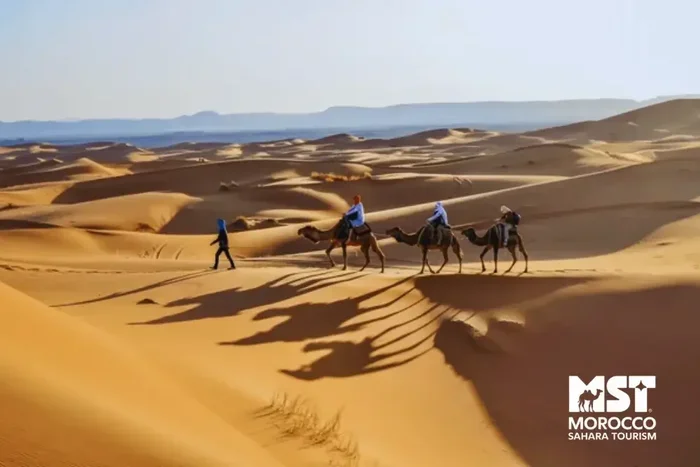
Visual guide about Marrakech Fes desert tour
Image source: moroccosaharatourism.com
Day 1-2: Marrakech Exploration
Your adventure begins in Marrakech, the “Red City” known for its distinctive pink sandstone buildings and vibrant medina. The first two days typically include guided visits to major landmarks such as Jemaa el-Fnaa square, the Koutoubia Mosque, the Bahia Palace, and the Saadian Tombs.
Think of Marrakech as a sensory feast. The medina operates like a living museum where craftsmen still practice trades passed down through generations. You’ll watch metal being hammered into lanterns, leather being dyed in ancient pits, and carpets being woven by hand, techniques unchanged for centuries.
Pro tip: Most tours include airport pickup and a welcome dinner featuring traditional tagine and Moroccan mint tea. The first day often includes an orientation walk to help you navigate the medina’s 9,000+ lanes and alleyways.
Day 3: Crossing the High Atlas Mountains
Day three takes you over the Tizi n’Tichka pass, which sits at 2,260 meters (7,415 feet) above sea level. This mountain crossing is one of the most scenic drives in North Africa, with winding roads revealing panoramic views of Berber villages clinging to hillsides.
Imagine driving through a landscape where every turn reveals a new postcard view. The High Atlas range forms a natural barrier between Marrakech and the desert, and crossing it feels like passing from one climate zone to another. Spring brings wildflowers, while winter occasionally dusts the peaks with snow.
The highlight of this day is usually a visit to Ait Ben Haddou, a UNESCO World Heritage Site since 1987. This fortified village (ksar) has served as a filming location for productions including Gladiator, Lawrence of Arabia, and Game of Thrones.
Day 4-5: Sahara Desert Experience
The desert portion of your 8 day tour from Marrakech to Fes typically occupies days four and five. After passing through Ouarzazate, often called the “Hollywood of Africa,” and the stunning Todra or Dades Gorges, you’ll arrive at the edge of the Sahara at Merzouga or Erg Chebbi.
Here’s where the magic happens. You’ll swap your touring vehicle for a camel and ride into the dunes as the afternoon light softens. The trek takes approximately 1-2 hours, with stops to take photos and appreciate the surreal landscape.
Did You Know? The Erg Chebbi dunes reach heights of up to 150 meters (492 feet), and on clear nights, the Sahara offers some of the darkest skies on Earth, perfect for stargazing. Many desert camps now include astronomy sessions with telescopes.
Your overnight accommodation is a traditional Berber camp, where you’ll sleep in nomad-style tents, enjoy a drum-circle performance around a campfire, and feast on Berber cuisine before retiring under a canopy of stars.
Day 6-7: The Road North Through the Middle Atlas
After sunrise over the dunes (an experience many travelers call life-changing), you’ll journey north through increasingly varied landscapes. The Ziz Valley offers spectacular palm groves carved by ancient rivers, and the Middle Atlas mountains reveal cedar forests home to Barbary macaques.
Think of this transition as Morocco showing off its many personalities. One moment you’re in arid desert; the next, you’re in forests that look like they belong in Switzerland. Ifrane, often called “the Switzerland of Morocco,” is a popular stop where you might spot the famous Atlas lions carved from local stone.
Days six and seven often include visits to Midelt for its apple orchards, the Ziz Gorges, and potentially a stop at a local nomad family for tea. The pace becomes more relaxed as you leave the desert behind.
Day 8: Arrival in Fes
Your final day begins with the approach to Fes, often via the scenic Middle Atlas route through the cedar forests. Upon arrival, a guided tour of the Fes el-Bali medina, another UNESCO World Heritage Site, typically concludes the journey.
Fes is considered Morocco’s cultural and spiritual capital, home to the world’s oldest continuously operating university, the University of al-Qarawiyyin, founded in 859 CE. That’s older than Oxford University by nearly 300 years.
The medina contains over 9,000 narrow lanes and is best explored on a guided tour, as independent navigation is nearly impossible. Highlights include the Bou Inania medersa, the tanneries, and the Nejjarine Museum of Wooden Arts and Crafts.
What Does the Tour Typically Include?
Understanding inclusions helps you compare options and budget appropriately. Most reputable 8-day tours include the following elements.
Transportation and Driver
All ground transportation in a climate-controlled vehicle, usually a 4×4 or minivan, comes standard. Drivers double as informal guides, sharing local knowledge and stopping at scenic viewpoints. For desert sections, vehicles typically include 4×4 capabilities to handle sand conditions.
The drive between destinations might sound tedious, but it’s actually one of the most enjoyable parts. Your driver knows exactly where to pull over for the best photos, the freshest orange juice, and the most authentic roadside experiences.
Accommodation
Seven nights of accommodation are included, ranging from standard riads (traditional Moroccan guesthouses) to luxury desert camps. Budget tours typically use 3-star hotels and basic desert tents, while premium options include 5-star riads and private luxury camps with en-suite bathrooms in the desert.
Practical tip: Always verify what “desert camp” means in your specific tour. Some are shared tent camps with communal facilities, while others offer private tents with attached bathrooms. The price difference can be significant.
Meals and Activities
Most tours include breakfast daily, several dinners (especially the desert dinner and welcome/farewell meals), and the camel trek. Some also include lunches, though many travelers prefer to choose local restaurants for midday meals.
Activities like cooking classes, henna painting, traditional music performances, and guided medina tours are often included or available as add-ons. These cultural experiences transform a sightseeing trip into genuine cultural exchange.
How to Choose the Right Tour Operator
The success of your 8 day tour from Marrakech to Fes depends heavily on your choice of operator. With dozens of companies offering similar itineraries, selection criteria matter.
Reputation and Reviews
Look for operators with consistently high ratings on platforms like TripAdvisor, GetYourGuide, and Viator. Read recent reviews specifically, as service quality can change with ownership or staffing. Companies operating for 10+ years generally offer more refined experiences.
Did you know that Morocco’s tourism industry employs over 565,000 people directly, with many small operators being family-run businesses? This often translates to more personal service but also means quality varies significantly between providers.
Group Size Considerations
Small groups of 8-12 travelers offer more intimate experiences and access to smaller riads that can’t accommodate large buses. Larger groups of 16-20 are more affordable but move at a faster pace with less flexibility.
Think of group size like choosing between a cozy family restaurant and a large banquet hall. Both serve good meals, but the experience feels entirely different. For photographers or those seeking deeper cultural connections, smaller groups almost always win.
Price vs. Value Analysis
Budget tours starting around $800-1,000 per person use shared accommodation in basic hotels and larger vehicles. Mid-range tours ($1,200-1,500) offer better hotels, smaller groups, and more included activities. Luxury tours ($1,800+) feature premium riads, private guides, and exclusive experiences.
The old saying “you get what you pay for” applies strongly here. A $50 savings isn’t worth it if it means missing the sunrise camel ride or staying in a poorly located hotel far from the medina action.
When to Travel: Best Seasons and Timing
Timing your 8 day tour from Marrakech to Fes correctly can mean the difference between an amazing trip and a miserable one. Morocco’s climate varies dramatically by region and season.
Optimal Travel Windows
Spring (March to May) and autumn (September to November) are widely considered the best times to travel. Temperatures are mild across all regions, ranging from 15-25°C (59-77°F) in the desert and cities. The landscape is either blooming or golden, creating perfect photography conditions.
Summer (June to August) brings extreme heat, particularly in the desert where temperatures can exceed 45°C (113°F). Winter (December to February) is generally mild but desert nights can drop below freezing, and mountain passes occasionally close due to snow.
Booking Timing
Book 3-6 months in advance for peak season travel (April-May and September-October). Last-minute bookings are possible but limit your accommodation and tour options. Shoulder season travel offers better prices and fewer crowds, often the best combination of value and experience.
Did You Know? Morocco’s tourism peaks during the rose festival in May in the Dadès Valley, when the region’s rose bushes bloom and locals celebrate with festivals, parades, and rose-infused products. Timing your visit to coincide with this can add a unique cultural element.
Practical Tips for an Unforgettable Experience
Beyond the tour itself, certain preparations and mindset adjustments will dramatically improve your experience on an 8 day tour from Marrakech to Fes.
What to Pack
Pack layers, even in summer. Desert temperatures swing dramatically from 40°C (104°F) at noon to 10°C (50°F) at night. A light jacket, scarf, and warm sweater are essential. Modest attire is recommended, particularly when visiting religious sites, though Morocco is relatively liberal compared to some neighboring countries.
For the desert specifically, bring a headlamp, hand sanitizer, wet wipes, and a small daypack for camera gear. The fine Sahara sand gets everywhere, so leave valuables in your main luggage and bring only essentials on the camel trek.
Health and Safety
Morocco is generally very safe for tourists, with low violent crime rates and a strong tourism police presence. The main concerns are petty theft in crowded medinas and the occasional stomach upset from food or water adjustments.
Pack a basic first-aid kit including rehydration salts, anti-diarrheal medication, and any personal prescriptions. Bottled water is readily available and recommended throughout the trip. Most travelers experience no health issues beyond mild adjustment in the first day or two.
Cultural Etiquette
Understanding a few cultural basics enriches your experience dramatically. Ask permission before photographing people, especially in rural areas. Remove shoes when entering mosques or traditional homes. Use your right hand for greetings and eating, as the left is considered unclean.
Tipping is appreciated and expected in many situations. Your tour guide, driver, and restaurant staff all rely on tips as significant income. Budget approximately $5-10 per day for guide/driver tips, distributed at the tour’s end.
The Moroccan people are renowned for their hospitality, often considered among the warmest in the world. A smile and a simple “Salaam Alaikum” (peace be upon you) opens countless doors and conversations. Embrace the invitation to share mint tea, which is the cornerstone of Moroccan social culture.
Remember that an 8 day tour from Marrakech to Fes isn’t just a vacation; it’s an immersion into one of the world’s most fascinating cultures. Every meal shared, every conversation with a local, every camel ride into the sunset adds a thread to the rich tapestry of memories you’ll carry home. The desert stars, the mountain passes, the ancient medinas, they all become part of your story, a story you’ll tell for years to come.
Morocco has been welcoming travelers for centuries, from medieval caravans crossing the Sahara to modern tourists exploring by air-conditioned minivan. The routes have changed, the comforts have improved, but the magic remains the same. Your 8-day adventure awaits, and trust me, it’s even better than you’ve imagined.
Frequently Asked Questions
How much does an 8 day tour from Marrakech to Fes typically cost?
Prices range from approximately $800 to $1,800 per person, depending on accommodation quality, group size, and inclusions. Budget tours use 3-star hotels and shared transport, while luxury options include premium riads and private guides. The mid-range sweet spot of $1,200-$1,500 typically offers the best value with small groups and comfortable accommodations.
What is the best time of year for this tour?
Spring (March-May) and autumn (September-November) offer the most comfortable temperatures across all regions. Expect daytime highs of 20-25°C (68-77°F) in the desert and cities. Summer can be extremely hot, especially in the Sahara, while winter brings cold desert nights and occasional snow in mountain passes.
Is the camel ride in the Sahara safe for beginners?
Yes, camel rides during an 8 day tour from Marrakech to Fes are completely safe for beginners. The camels are well-trained, and guides accompany every trek. The ride is gentle and slow-paced, though you may experience some initial discomfort as you adjust to the camel’s gait. Most travelers find the experience much easier than anticipated.
What should I pack for the desert portion of the tour?
Pack a headlamp or flashlight, warm layers for cold desert nights, sunscreen, a scarf for sand protection, comfortable closed-toe shoes, and a small daypack for essentials. Avoid bringing unnecessary valuables on the camel trek, as fine sand can damage electronics. Most tour operators provide a detailed packing list upon booking.
Can I customize the itinerary or add extra days?
Most tour operators offer customization options, including extending your stay in Marrakech or Fes, adding Chefchaouen (the Blue City), or including cooking classes and spa experiences. Private tours are particularly flexible. Discuss modifications with your operator before booking, as prices and availability vary based on your requests.
Do I need a visa for Morocco, and what about currency?
Citizens of most Western countries, including the US, UK, Canada, and EU nations, can enter Morocco visa-free for stays up to 90 days. The currency is the Moroccan Dirham (MAD), and it’s best to exchange money upon arrival or withdraw from ATMs. Credit cards are accepted in larger establishments, but cash is essential for medina shopping and small vendors.